
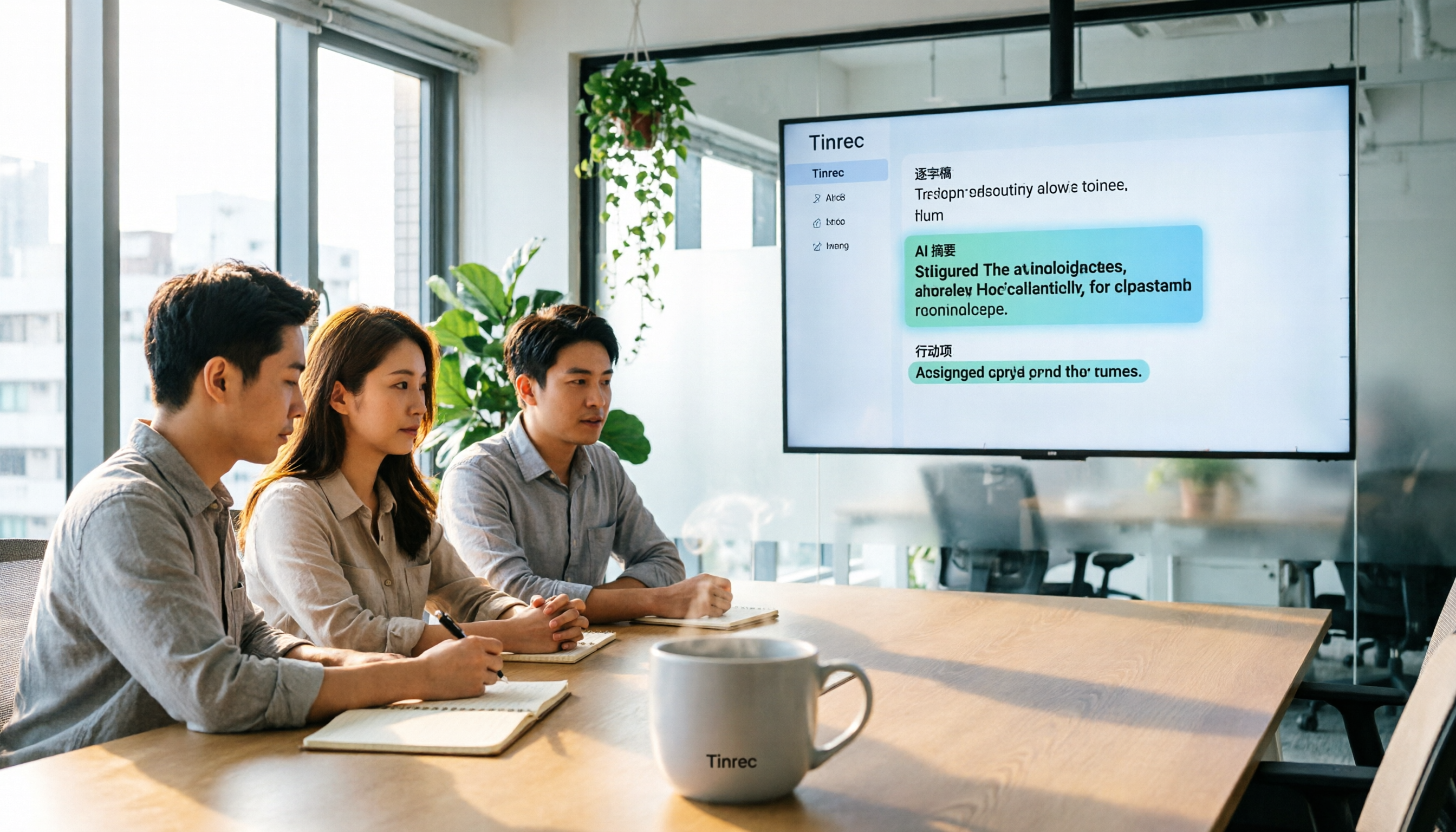
Turn recordings into transcripts and summaries in minutes
Upload audio or video for multilingual transcription, AI notes, and action items
Want to Buy Google Meet Premium? First, Understand You're Not Actually Buying "Meet"
Many people search for "how to purchase google meet premium," thinking there's a standalone "Google Meet Premium" product they can buy directly with a credit card.
In reality, Google Meet's advanced features are bundled into Google One or Google Workspace subscriptions.
What you really need to do is figure out which plan covers the features you need, then decide which entry point to upgrade from.
An even more common misconception is that buying Premium automatically gives you full meeting notes, transcripts, and follow-up summaries.
But Google Meet's recording, transcription, and AI summary features have clear eligibility differences across plans.
This article lays it all out for you.
Before You Buy, Understand These 4 Key Points
First, do you need "meeting features" or "cloud storage"?
Google One Premium offers 2TB of storage and unlocks some advanced Meet features.
If you already need cloud storage, this is a cost-effective path.
But if you need more comprehensive meeting notes and team management, Google One alone may not be enough.
Second, Google Meet's recording features aren't the same across all plans.
The free version of Google Meet lets you host meetings, but features like recording, saving to the cloud, and generating transcripts require an eligible subscription.
According to Google Meet's official documentation, only the Google One Premium 2TB plan qualifies for some advanced Meet features.
Google Workspace, depending on the edition, offers different levels of recording, watermarking, and translation capabilities.
Third, transcripts and AI summaries are not the same thing.
A transcript is a word-for-word text record, while an AI summary is a condensed overview of key points.
Google Meet's built-in features lean toward the former; follow-up task tracking, cross-meeting search, and team knowledge retention usually require additional tools.
Fourth, cross-platform meeting organization matters more than you think.
Today you're on Meet, tomorrow on Zoom, and the day after on Teams. If each platform's records are scattered, reviewing them later becomes a nightmare.
A tool that unifies meeting notes across platforms is often more valuable than a single platform's Premium plan.
Google One Premium: The Most Direct "Meet Premium" Entry Point
If your need is to "unlock Meet recording, noise cancellation, and longer meeting durations," Google One Premium is currently the most direct entry point.
Google One Premium provides 2TB of storage and qualifies for some advanced Google Meet features, such as noise cancellation, meeting recording, and watermarks (eligibility required).
Purchasing is simple: log into your Google account, go to the Google One page, select the Premium 2TB plan, and complete payment.
Note that Google One Premium's Meet features are geared toward "personal use."
Recorded videos are saved to your Google Drive, but transcripts, AI summaries, and task organization still need to be handled manually or with other tools.
If you only have 2–3 meetings a week and mainly want to record and archive them, Google One Premium is sufficient.
Google Workspace: Best for Teams Needing Watermarks, Translation, and Management Features
If you need more advanced Meet features like watermarks, real-time speech translation, and attendance reports, Google Workspace is the official route.
According to Google Meet's official documentation, watermarking requires an eligible Google Workspace subscription.
Speech Translation (real-time), Studio sound, and Studio look require an eligible Google Workspace or Google One AI Premium subscription.
Google Workspace's strength lies in team management: admins can centrally control members' Meet features, recording permissions, and data retention.
However, Workspace's billing is more complex, requiring admin access in the Admin Console, making it harder for individual users to purchase directly.
If you're a regular employee rather than a company admin, this route usually requires your company's IT department.
Tinrec: Turning Meet Meetings into Searchable, Collaborative Assets
Tinrec is an AI meeting notes and collaboration tool designed for individuals and teams.
It supports real-time recording, bot-free online meeting transcription, audio/video file import, and real-time translation, and automatically generates summaries, chapters, action items, and mind maps.
Bot-free recording is Tinrec's most notable feature.
Stop organizing recordings by hand
Upload audio or video and automatically get a transcript, summary, and action items
Tinrec's desktop app captures your computer's system audio directly, so you don't need to add a meeting bot to Google Meet.
Just open Tinrec desktop, start recording, and get real-time transcripts.
This is a thoughtful design for users who don't want unfamiliar bot accounts appearing in meetings.
The post-meeting workflow is where Tinrec differs most from Google Meet's built-in features.
After recording in Google Meet, you get a video file and possibly a transcript.
Tinrec goes further by generating AI summaries, chapters, and action items, and you can even ask it: "Who mentioned the budget in the last meeting?"
It doesn't just return keyword search results; it answers based on semantic understanding.
Team spaces keep meeting data from scattering.
The team version centralizes meeting recordings, transcripts, summaries, and action items in one space, allowing members to view and reuse historical meeting data.
Admins can manage roles, seats, sharing permissions, usage, and audits, turning every conversation into sustainable team knowledge.
Who is it for?
If you have multiple online meetings a week and want more than just video archives—like quick key-point summaries, action item tracking, and unified cross-platform meeting management—Tinrec is a more complete solution than buying Meet Premium alone.
Beyond Google One and Tinrec: What Other Options Are There?
Otter.ai: A mature choice for English meetings, with a generous free tier of 300 minutes per month. The Pro plan costs about USD 8.49/user/month when billed annually, including 1,200 minutes of in-app recording and 10 file imports per month. However, its experience with Chinese meetings isn't as natural as Tinrec's, and it only recently added desktop capabilities. If you primarily record English content, Otter.ai is worth considering.
Fireflies.ai: Its strengths are meeting automation and sales analytics, with the Pro plan at USD 10/seat/month. But it relies mainly on meeting bots, and "unlimited transcription" is still subject to storage and AI credit limits. If you need extensive CRM integrations and sales meeting analytics, it's worth a look; if you just want bot-free recording and Chinese meeting organization, Tinrec is more straightforward.
Notta: A transcription tool with significant overlap with Tinrec. The free tier offers 120 minutes per month, and the Pro plan costs about USD 8.17/month when billed annually. Notta's multilingual transcription is solid, but for team spaces, AI Q&A, and agent-based post-processing, Tinrec is better suited for users who want to turn meetings into team assets.
Pitfall Guide: 4 Common Mistakes When Buying Meet Premium
Pitfall 1: Assuming there's a standalone product called "Google Meet Premium."
Google doesn't have a separate Meet Premium subscription button.
You must upgrade through Google One or Google Workspace to unlock advanced Meet features.
When searching "how to purchase google meet premium," content that directs you to buy "Meet Premium" directly is often misleading or omits key prerequisites.
Pitfall 2: Focusing only on recording, ignoring post-meeting organization.
Recording is easy; organizing is painful.
If you expect Premium to automatically produce trackable action items and meeting minutes, you'll likely be disappointed.
Google Meet's built-in features lean toward recording and transcripts; for summaries, action item tracking, and cross-meeting search, consider pairing it with tools like Tinrec.
Pitfall 3: Overlooking cross-platform needs.
Your company uses Meet, clients use Zoom, and contractors use Teams—meeting notes end up scattered across three platforms.
A single platform's Premium can't solve this.
Choosing a tool that unifies cross-platform meetings will save you more effort in the long run.
Pitfall 4: Sharing one account across the team.
Many people share a single Google One account to save money.
This leads to messy recording files, unmanageable permissions, and unclear data ownership when a member leaves.
If meeting notes need to be shared and managed by a team, choosing a plan with team spaces and seat management is much healthier than sharing a personal account.
Summary: Which One Should You Choose?
If you only need to record Meet meetings occasionally and already need 2TB of cloud storage, Google One Premium is the most straightforward choice.
If you need watermarks, real-time translation, and team management, and your company already uses Google Workspace, ask your admin to confirm your edition's eligibility.
If you have multiple meetings a week and need transcripts, AI summaries, action item tracking, and unified cross-platform meeting data, Tinrec is currently the more complete solution.
Scenario-based recommendations:
- Just need recording + cloud storage → Google One Premium
- Need watermarks, translation, team control → Google Workspace
- Need transcripts, summaries, action items, AI Q&A → Tinrec
- Team needs shared meeting data, seat and usage management → Tinrec Team Plan
- Only record English meetings on a budget → Otter.ai free tier
We recommend starting with free trials: Google One offers a trial period, and Tinrec's free version includes basic credits to test recording, import, and summary features.
Only by actually using them will you know which plan best fits your meeting habits.
References
- How To Purchase Google Meet Premium 2026 (FULL GUIDE) - YouTube
- How To Purchase Google Meet Premium Tutorial - YouTube
- Premium Meet features for Google Workspace - Google Meet Help
- How To Purchase Google Meet Premium 2025 Guide - YouTube
- I want to purchase google meet premium - Google Workspace Admin Community
Turn every recording into actionable outcomes
Get 60 free transcription minutes when you sign in. No credit card required.
Related Reading
You might also like

Where Is the Google Meet Chat Box in 2026? A Step-by-Step Guide for Desktop and Mobile
Can't find the chat box in Google Meet? This guide walks you through the exact location of the chat feature on both desktop and mobile apps, explains why some users can't see it, how hosts can disable messaging, and how to access chat history after the meeting ends.

Google Meet 2026 Complete Guide: No-Install Meetings + Bot-Free Recording & Transcription
Struggling with Google Meet? This guide covers everything from creating meetings, sharing links, and screen sharing to pairing with Tinrec for bot-free recording and transcription. Tested by a small team manager, it saves you two afternoons of trial and error—turn online meetings into searchable, trackable team knowledge.

Google Meet Meeting Notes in 2026: Real-World Test—Transcribe Transcripts and Action Items Without Bots
Tired of manually jotting down notes during Google Meet calls? This hands-on review breaks down bot-free recording, Chinese transcription, AI summaries, and team spaces to find the best meeting notes solution for U.S. professionals.

How to Record Google Meet: 3 Methods Tested, and the Best One for Chinese Meetings
Recording in Google Meet isn't just about hitting a button—account eligibility, host permissions, and file storage all play a role. This article walks you through real-world scenarios to explain Meet's recording limitations and offers an alternative that keeps your meeting flow uninterrupted when built-in recording isn't the right fit.

Google Meet on Laptop in 2026: Can You Join Meetings Without Downloading an App?
Do you really need to download an app to use Google Meet on a laptop? This hands-on guide tests the web version and PWA installation process, covering everything from creating and joining meetings to screen sharing and recording, plus a complete tutorial and FAQs for using Google Meet on a laptop.

Google Meet Meeting Notes 2026: How to Auto-Transcribe and Get AI Summaries Without Bots
Tired of taking manual notes during Google Meet? This guide shows you how to use a bot-free desktop recording method to turn Meet meetings into transcripts, summaries, and action items in real time, and organize them into searchable, collaborative team resources.
How to Share Your Screen on Google Meet in 2026: Complete Guide for Desktop, Mobile, Audio, and Common Issues
This tutorial provides step-by-step instructions for sharing your entire screen, a single window, or a Chrome tab in Google Meet, covering both desktop and mobile versions, how to configure audio sharing, and common reasons why the share option might be missing.

The Complete Guide to Google Meet Companion Mode in 2026: Hybrid Meeting Participation Features and a 5-Step Setup Tutorial
What is Google Meet Companion Mode? This article fully explains Companion Mode's features, use cases, and setup steps, helping meeting room and remote participants interact fairly in hybrid meetings, and compares AI meeting notes tools suitable for teams.

How to Share Screen with Audio on Google Meet in 2026: 3 Methods Explained
Want to share your screen with audio on Google Meet? This guide covers three ways to share audio—using a Chrome tab, your entire screen, and the Android app—plus common troubleshooting tips and settings advice for smooth playback of videos, music, or presentation sounds.