
Turn recordings into transcripts and summaries in minutes
Upload audio or video for multilingual transcription, AI notes, and action items
A Voice Recorder Isn't Just for Recording—It's for Saving Your Time
Many people think a voice recorder is just a dedicated device for capturing audio, but the real difference lies in what happens after recording.
If you record a two-hour meeting and only capture the audio, you'll still have to listen back, transcribe, and summarize the key points yourself. Record a three-hour lecture, and you won't have time to listen to it all before the exam. Interview for hours, and you'll struggle to find the key requirements mentioned when writing your report.
So before choosing a voice recorder, ask yourself one thing: Do you just need to "record," or do you need to "quickly use the recording afterward"?
These two needs lead to completely different products. The former prioritizes audio quality, battery life, and discretion; the latter focuses on transcription, summarization, search, and organization.
4 Key Factors to Understand Before Buying a Voice Recorder
1. Your Use Case Determines Microphone Configuration
For one-on-one conversations or small-room recordings, a mono voice recorder is usually sufficient. But in large conference rooms, classrooms, or lecture halls where speakers are farther away, look for a model with stereo recording to preserve audio depth and spatial cues.
Generally, I first check the signal-to-noise ratio (SNR). The higher the SNR, the less background noise interference and the cleaner the voice. For current products, an SNR of 60 dB or above is a good benchmark.
2. Battery Life Should Cover Your Longest Use Case
One advantage of voice recorders is more stable battery life than phones. But battery life varies widely—some can record for over 20 hours continuously, while others need frequent charging.
If you often record full-day courses or meetings, prioritize battery life. If you only record occasional half-hour interviews, you can weigh this factor less.
3. AI Features Are the New Differentiator
In the past two years, voice recorders have evolved beyond simple hardware. Some models now integrate AI transcription, summarization, and Q&A, generating transcripts, key points, and even to-do lists right after recording.
However, note that AI features can impact battery life, and transcription quality varies significantly between products. Test with your own recordings rather than relying on official accuracy claims.
4. How Will You Manage Recordings Afterward?
Many people overlook this: audio files accumulate quickly. If your tool only records and files are scattered, finding a specific meeting segment three months later becomes a nightmare.
So if you have long-term recording needs, consider file management, search, and export capabilities. This directly determines whether you'll "record and forget" or "record and easily find later."
Tinrec: Best for Chinese Meeting Notes After Real-World Testing
Tinrec is an AI meeting notes tool for individuals and teams. Unlike traditional voice recorders, it doesn't just record—it organizes content into actionable data.
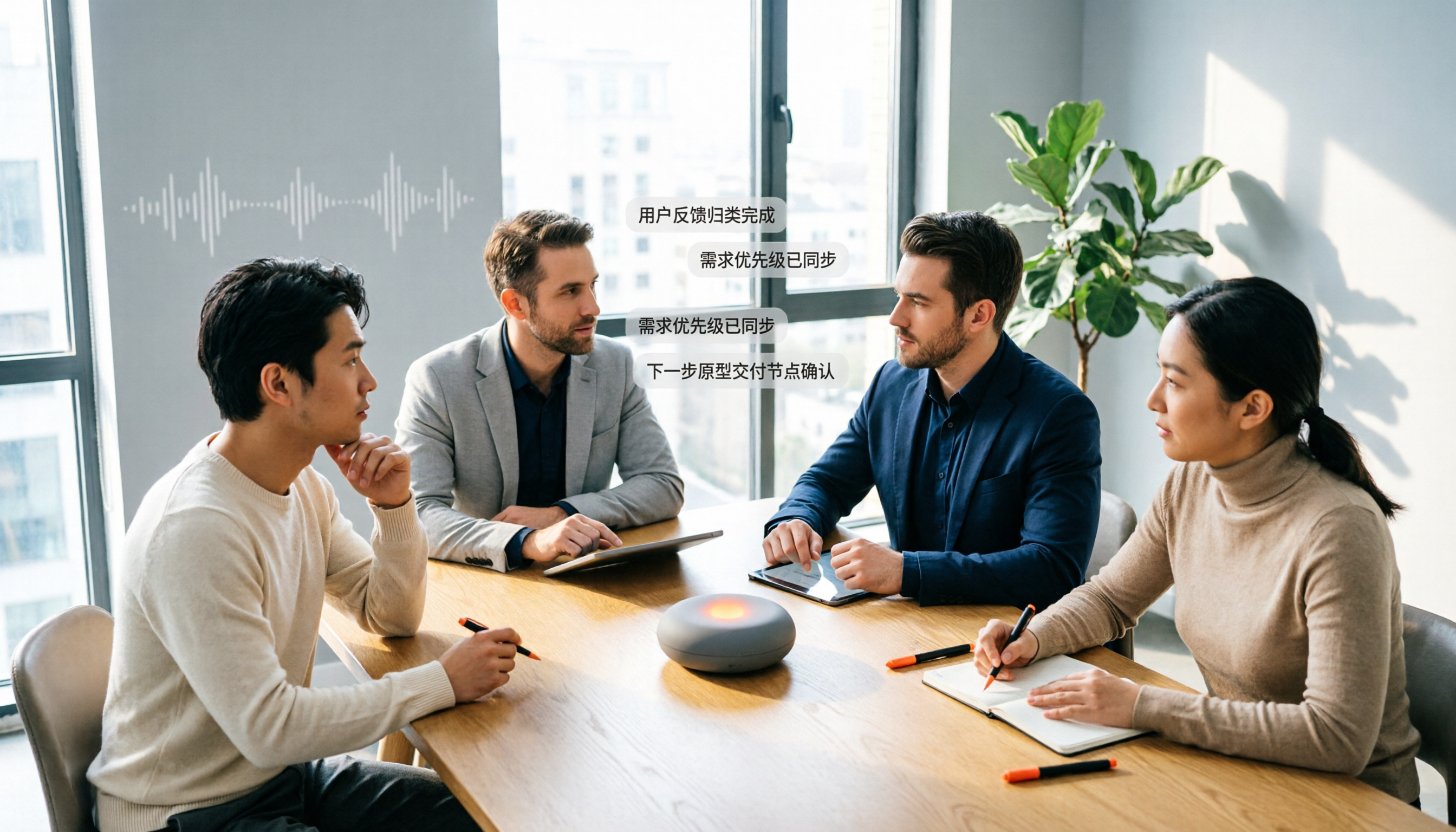
For example: Start Tinrec during a meeting, and it generates a transcript in real time. When the meeting ends, AI summaries, chapters, and to-do items are already generated. Who's responsible for what, deadlines—just check the results, no need to re-listen for two hours.
The AI Q&A feature is even more useful. After recording, you can ask Tinrec: "Who mentioned the budget in the last meeting?" It uses semantic understanding to give you the answer directly, not just keyword search results. For those who frequently review past meetings, this saves a significant amount of time.
Stop organizing recordings by hand
Upload audio or video and automatically get a transcript, summary, and action items
Its input sources are also flexible. Besides live recording, the desktop version can capture system audio from your computer, recording online meetings on Zoom, Google Meet, Microsoft Teams, etc., without needing a bot to join. You can also upload pre-recorded audio or video files for processing, and it works on mobile, desktop, and web.
Note that Tinrec is not a traditional hardware recorder but a software tool. If you need a fully offline, standalone device without a phone or computer, a traditional recorder is better. But if you mainly record meetings, lectures, or interviews and want quick post-recording organization, Tinrec is worth trying.
Best for: Users who need Chinese meeting transcription, want to avoid manual transcript editing, want AI-powered key point retrieval, or need centralized meeting data management.
Other Voice Recorders to Consider Besides Tinrec
SONY ICD-UX560F
A classic long-recording voice recorder with up to 27 hours of battery life, suitable for long lectures or meetings. Audio quality is stable, but post-recording organization is still manual. If you only need simple recording without AI transcription and summarization, this is a reliable hardware choice.
Victory K50
Designed for call recording and evidence gathering, it's compact and discreet, ideal for low-profile recording. However, it lacks Tinrec's AI summarization, Q&A, and team collaboration features, so you'll need separate solutions for data organization.
Ergonomic Technology VR20CK
Known for affordability and ease of use, it's suitable for student lectures or language learning. The price is low, but features are basic. If you're on a budget and only need basic recording, consider it; but if you want direct key point summaries, you'll need additional tools.
INJA Micro Pen Voice Recorder
The pen design suits users needing discreet recording, with up to 36 hours of battery life. It's convenient, but like other hardware recorders, its core function is "recording," and transcription and organization still require extra steps.
Pitfall Guide: 3 Common Mistakes When Choosing a Voice Recorder
Mistake 1: Focusing Only on Battery Life, Ignoring Post-Recording Efficiency
Many recorders boast 30 or 40 hours of recording, but if you record 30 hours and spend 60 hours organizing, that battery life becomes a burden.
Right approach: Estimate your actual monthly recording time and the time needed to organize it. If organization time far exceeds recording time, prioritize tools with AI transcription and summarization.
Mistake 2: Overlooking File Management and Search Capabilities
Audio files only accumulate. If your tool doesn't support search, tagging, or centralized management, you'll have to open files one by one to find content after three months.
Right approach: Include "findability after recording" in your evaluation. Tools that support transcript search, AI Q&A, or team spaces save significant time in the long run.
Mistake 3: Treating Voice Recorders and AI Meeting Tools as Mutually Exclusive
They can actually complement each other. Traditional recorders are great for offline, discreet, long-duration field recordings; AI meeting tools excel at quick organization, search, and collaboration.
For example, use a recorder on-site, then import the audio into Tinrec for transcription, summaries, and to-dos. Combining both covers more work scenarios.
Summary: How to Choose
If you only need a hardware device for long recordings, the SONY ICD-UX560F or INJA pen recorder are solid choices.
If you need discreet recording, consider the Victory K50 or Ergonomic Technology VR20CK.
But if your goal is quick organization, search, and follow-up after recording, Tinrec is the better direction. It connects "recording" and "organization," saving the most manual work.
Start with the free version, record a meeting or lecture, and experience the transcription and summarization quality. If it works well, then consider upgrading—no need to invest heavily upfront.
References
- Top 10 Voice Recorder Must-Buys, August 2026 - Yahoo Shopping Daily
- [2025 Picks] 5 Voice Recorder Recommendations! Long Recording Time, Large Capacity, Great for Meetings, Learning, and Evidence
- [2026 Voice Recorder Guide] How to Protect Yourself with Sound? 7 Handpicked Voice Recorders Without Pitfalls - SeventeenDesign's Salon
- Expert-Monitored Top 10 Voice Recorder Ranking | mybest
- [2025 Latest] 8 Popular Voice Recorder Recommendations, Your Learning Helper! - Hedgehog Push
Turn every recording into actionable outcomes
Get 60 free transcription minutes when you sign in. No credit card required.
Related Reading
You might also like

How to Choose a Voice Recorder in 2026: A 5-Step Guide from PTT Reviews to AI Meeting Transcription
PTT recommendations for voice recorders often focus solely on audio quality, overlooking the time spent on playback and transcription. This article compiles real discussions from PTT users, guiding you through 5 steps to decide between a physical voice recorder and an AI recording tool, comparing use cases for Sony, Mrobo, JNN, and Tinrec.

Otter vs Notta 2026: Which Transcription Tool Actually Saves You OT Hours?
Otter and Notta are among the most discussed transcription tools on Reddit, but for Hong Kong users, the real concerns are Cantonese accuracy, Zoom meeting notes, and AI summarization. This article compares the pros and cons of both tools in real meeting scenarios and introduces a better alternative for Chinese-language meetings and team collaboration.

2026 Free AI Voice Recorder Plans: 3 Options Compared
AI voice recorders have become popular tools for meetings, interviews, and classes. This article highlights 3 noteworthy AI voice recorders and recording solutions, including Tinrec, which supports meeting recording without bots, PLAUD, and Penpower AI Voice Recorder. We compare free allowances, core features, and ideal use cases to help you quickly determine which one fits your needs.

Transkriptor vs Notta 2026 Buying Guide: Hands-On Test and Recommendations for Two Transcription Tools
Transkriptor and Notta are both popular AI transcription tools, but they suit different use cases. This article compares language support, custom vocabulary, real-time transcription, pricing plans, and team collaboration to help you decide which one better fits your meeting notes and transcript needs.

5 Best Voice Recorder Apps for Android in 2026: From Quick Notes to Team Collaboration
With so many voice recorder apps available, how do Android users choose? This article redefines the true value of recording tools across four dimensions—audio quality, post-recording organization, cross-device sync, and team collaboration—and compares five popular options.
Yating Transcriber Limits Tested in 2026: Free Credits, Hours, and Usage Thresholds Explained
How much free credit does Yating Transcriber offer? Is it normal for upload progress to stall at 99%? This article outlines the main limitations of Yating Transcriber, including free tier, paid hours, single-session length, and multi-device usage, and highlights scenarios where alternative AI meeting note tools might be worth considering.
3 Best Recording Apps with Transcription in 2026: Free vs. AI-Powered—Which Is Worth It?
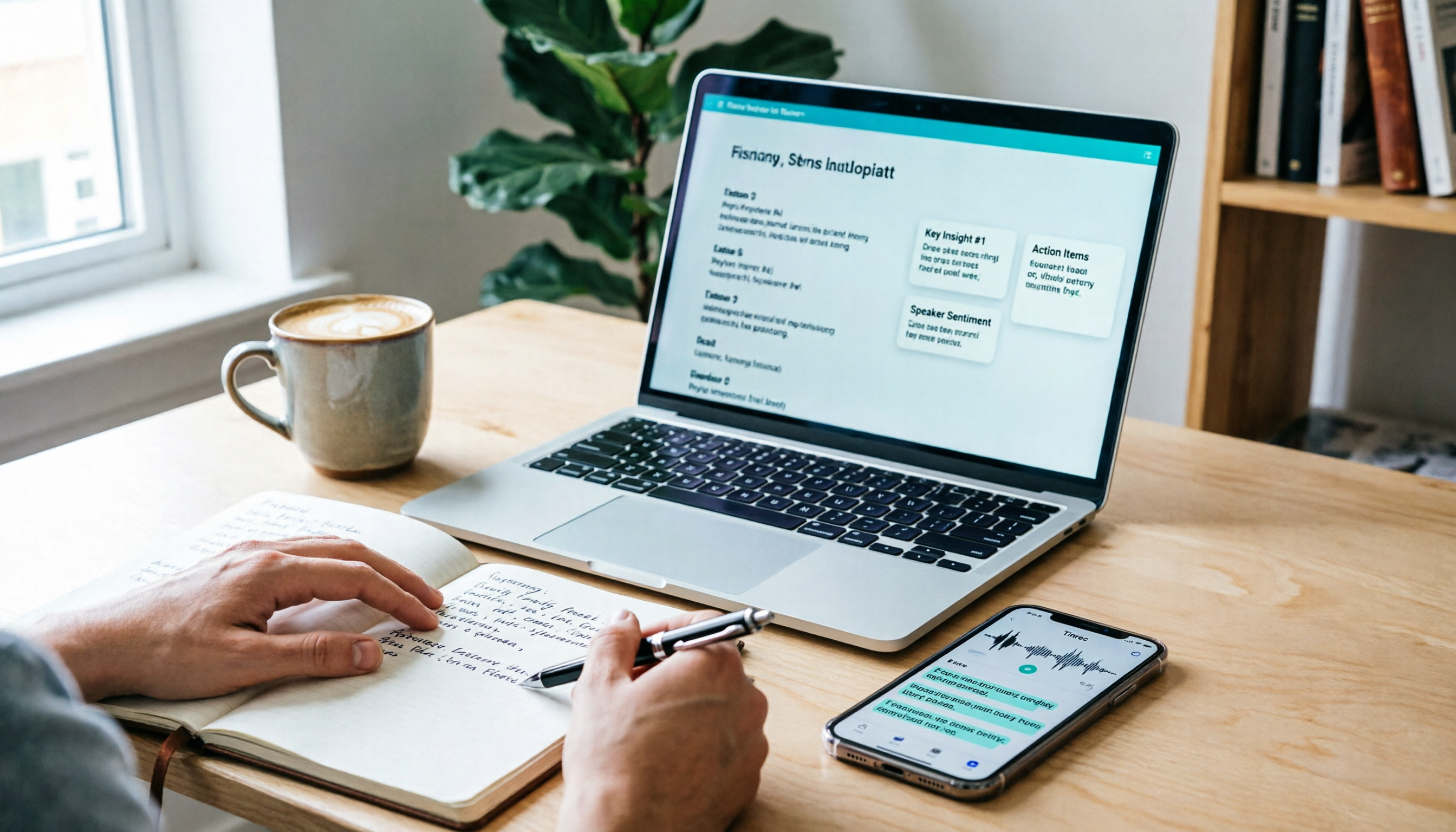
With so many recording apps that transcribe audio to text, how do you choose? This article compares Tinrec, Yating Transcription, and iPhone Voice Memos based on the real needs of office workers, students, and freelancers, covering transcription, AI summarization, free tiers, and cross-platform support to help you quickly decide which is best for meeting notes and interview transcripts.

2026 Voice-to-Text Tool Comparison: TurboScribe or Notta—Which One Is Right for You?
TurboScribe and Notta are both AI voice-to-text tools, but they serve very different purposes. One focuses on batch transcription and translation, while the other specializes in real-time meeting notes. This article breaks down the differences and helps you choose the right tool for your needs without making a costly mistake.
5 Best iPhone Recording Apps Compared in 2026: Which One Is Best for Organizing Meetings and Interviews?
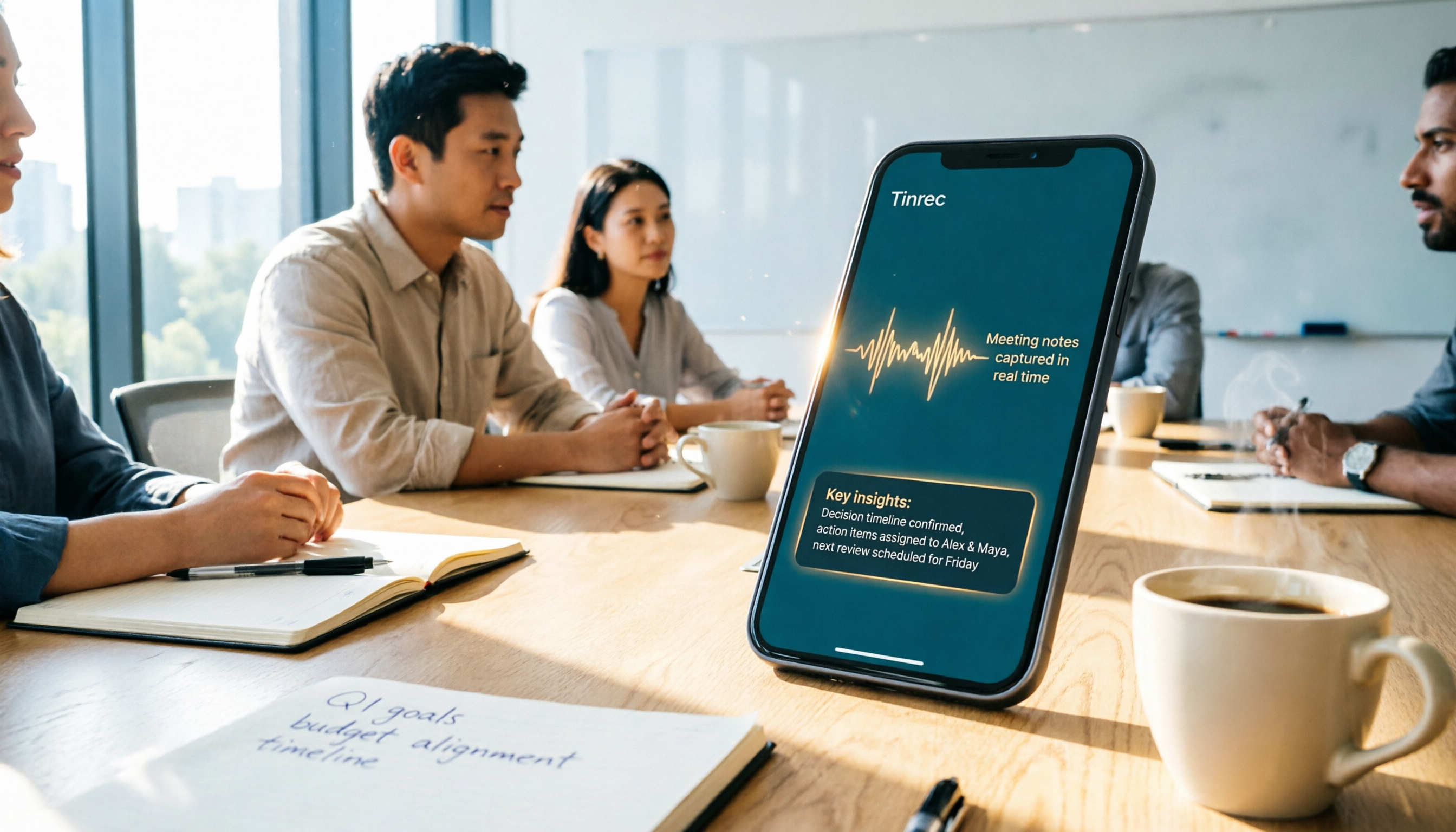
How do you choose an iPhone recording app? This article compares built-in Voice Memos, Voice Recorder, Tinrec, and other tools in terms of recording, transcription, AI summarization, and team collaboration, helping you find the best solution for organizing meetings, classes, and interviews.