
Turn recordings into transcripts and summaries in minutes
Upload audio or video for multilingual transcription, AI notes, and action items
How to Choose iPhone Call Recording: Understand Your Key Priorities First
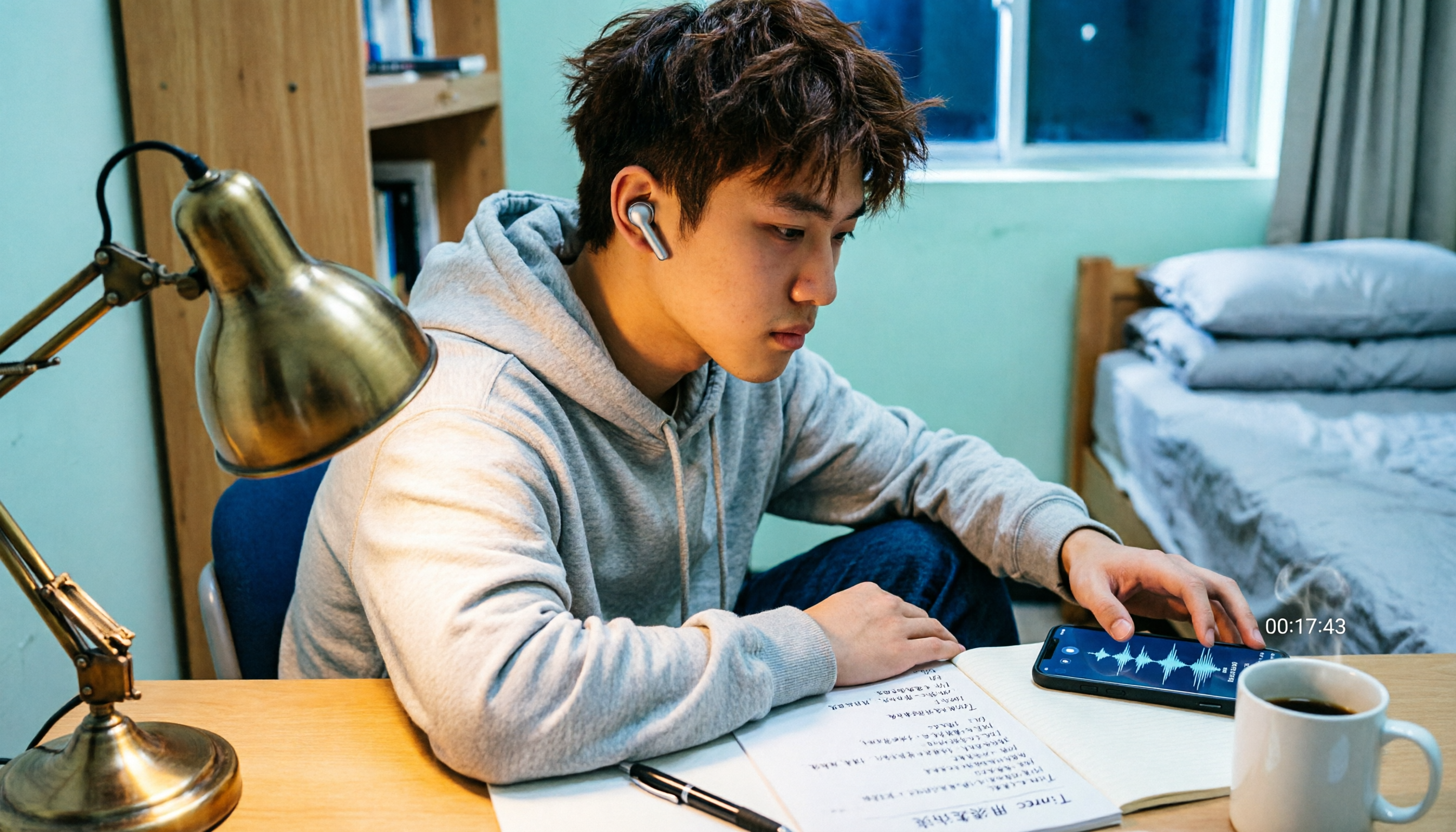
Last semester, I needed to record several interviews for my graduation project. The interviewees called me on their iPhones, and I thought I could just hit the record button—but I quickly found out that iPhones don't have a direct call recording button. Later, I realized this issue comes down to three scenarios: whether your iOS version is new enough, whether you're okay with the other party hearing a notification tone, and whether you need just an audio file or a ready-to-use transcript. These three questions will determine whether you should go with built-in features, free apps, or third-party tools.
This article is a summary of what I've learned through trial and error, written from a student's perspective, with a particular focus on free limits and real-world usability.
iOS Built-in Call Recording: Free, but Know the Limitations First
If you've updated to iOS 18 or later, your iPhone actually has a built-in call recording feature. My personal workflow is: during a call, I open the "Voice Memos" app or the system's recording prompt, and when recording starts, the other party hears a notification that says "This call will be recorded." The recorded file is saved in Voice Memos, where you can replay it, but it won't automatically generate a transcript for you.
For students, this feature has two main benefits. First, it's free—no need to download any apps. Second, it has a low learning curve, making it suitable for situations where you need to keep a record on the fly. However, its limitations are clear: the other party will always know you're recording, and there's no transcription feature. If you're recording interviews, you'll have to go back and manually transcribe everything, which isn't time-efficient for students with busy schedules.
Free Third-Party Apps: My Experience with Call Recorder
I found an app called "Call Recorder™" on the App Store. It shows as free to download, but after using it, I realized the free version has limited capabilities—like restrictions on recording count and length—and you need a subscription to unlock full features. It typically works through three-way calling to record, so your carrier must support three-way calling, which you should verify before using it in the U.S.
My personal take is that this type of app works as a quick fix for someone who records calls occasionally. But if you're like me and have frequent interviews and discussions, you'll quickly hit limits on usage or features. Plus, it still produces just an audio file, so you'll still need to put in the effort to organize the key points.
Stop organizing recordings by hand
Upload audio or video and automatically get a transcript, summary, and action items
Another Approach: Record the Call First, Then Use AI for Transcription
I later discovered that what really helps students isn't just "whether you can record," but "how to quickly turn the recording into notes." Tools like Tinrec take a different route than pure recording apps. Instead of directly intervening in phone call recording, they let you upload the audio file or online meeting content you've recorded, and then automatically convert it into transcripts, summaries, and to-do items.
My own approach is: if the interviewee is okay with using speakerphone or an online meeting, I record the entire conversation on my computer or phone, then upload it to Tinrec for processing. After transcription, I not only get the full transcript, but I can also ask AI questions like "What are the key points of this interview?" or "What budget constraints did the interviewee mention?"—saving a ton of time on re-listening. For students who need to organize interview data or group discussion notes, this is much more practical than a simple recording app.
How to Combine Free Options for Maximum Savings
If you're on a tight budget like me, here's what I'd suggest:
- When you need a quick record and the other party doesn't mind the notification tone, use iOS built-in call recording—it's zero cost.
- For occasional call recording without spending money, try the free version of Call Recorder, but don't expect unlimited recording or automatic organization.
- If you need transcripts and key points right after recording, consider AI-powered tools like Tinrec. Start with the free version or a short-term plan, and decide whether to pay based on your actual usage.
Reminders for Student Use
Always respect the other party before recording. In the U.S., recording a call with one-party consent is generally legal, but if it's an interview or group discussion, it's better to let the other person know in advance to avoid any disputes later. Also, "free" apps often come with usage limits or feature restrictions, so read the subscription terms carefully before downloading—don't wait until you're mid-recording to find out you need to pay to unlock features.
Conclusion: Decide Whether You Need an Audio File or Notes
If you just need to keep a record of the call, iOS built-in recording or a free call recording app is enough. But if you're like me and need to turn the recording into a report, find key points, and track action items, relying solely on a recording app will be painful. Instead of spending time re-listening, let the right tools handle the recording, and then use AI to convert it into usable data. For students, the most cost-effective combo is: free recording features for "capturing," and AI-powered tools for "using."
References
- Call Recorder™ App - App Store
- How to Record iPhone Calls? 5 Methods Revealed!
- Free iPhone Call Recording Methods (2026) | iOS 26 Built-in Features + App Comparison
- Top 4 iPhone Call Recording Apps in 2026: Solve Call Recording and Transcription Challenges - Tinrec Blog
- Top 5 Free Mobile Recording Apps in 2023: Side Recording, Ringtones, and Voiceovers
Turn every recording into actionable outcomes
Get 60 free transcription minutes when you sign in. No credit card required.
Related Reading
You might also like
2026 Google Meet Hardware License Buying Guide: 3 Channels and Pitfalls to Avoid
Want to purchase Google Meet hardware licenses for your meeting rooms but unsure whether to order through the Admin console or a reseller? This article covers 3 purchasing channels, hidden limits on license quantities, and the complete process from ordering to device activation, helping you avoid roadblocks.

2026 Google Meet Interview Background Guide: 5 Types to Boost Your Professional Image
Using Google Meet for job interviews? A poorly chosen background can hurt your first impression. This guide covers 5 types of virtual interview backgrounds, size specs, and setup steps to help you project professionalism with confidence.

Does Otter.ai Support Chinese in 2026? Testing Simplified Chinese Limits and Traditional Chinese Meeting Alternatives
Otter.ai officially supports Simplified Chinese, but Traditional Chinese is not listed in its language options. This article covers Otter's Chinese support scope, the free 300-minute limit, practical notes for users in Taiwan, and alternative tools for Traditional Chinese meetings.

Otter.ai vs Tinrec 2026: 5-Dimension Comparison for Chinese Meetings
Does Otter support Chinese? The answer: only Simplified Chinese; Traditional Chinese, Taiwanese, and mixed Chinese-English are not officially supported. This article compares Otter.ai and Tinrec across 5 dimensions to help you choose for Chinese meetings, Taiwanese accents, and team collaboration.

The Complete Guide to Otter for Chinese Transcription in 2026: Official Support, Real Limitations, and a Better Alternative for Traditional Chinese
Can Otter.ai really transcribe Chinese? This hands-on guide cuts through the noise: official support is limited to Simplified Chinese, Traditional Chinese and Taiwanese accents are unreliable, free quotas and export limits apply, and why Tinrec is a more practical choice for Chinese-language meetings.

Using Phone Call Recordings as Evidence in 2026: 3 Legal Conditions + Key Differences Between Civil and Criminal Cases
Can phone call recordings be used as evidence? This article explores the differences between criminal and civil proceedings, outlining 3 legal conditions for recording evidence, 3 situations that may violate criminal privacy laws, and key considerations before recording calls to help you preserve conversations safely.

5 Best To-Do List Apps of 2026 Compared: TickTick, Things 3, Microsoft To Do—Which One Is Worth It?
A practical comparison of 5 to-do list apps frequently discussed on PTT, including TickTick, Things 3, and Microsoft To Do. We evaluate them based on real needs—categorization, subtasks, cross-platform support, shared lists, and home screen badge counts—to help you find the perfect task manager.

2026 AI Meeting Notes Tools Compared: How to Choose the Best Voice-to-Text App (Reddit & PTT Insights)
Spending two hours in a meeting and another two organizing the notes? This guide breaks down the AI meeting notes tools most discussed on PTT and online communities, helping you build a sustainable workflow from recording to transcript to action items to team sharing. We compare Tinrec, Otter, Notta, and others in real-world scenarios to help you find the option that actually saves you time.

4 To-Do Apps Compared in 2026: Which Free Plan Works Best for Students?
A senior information management student tests Apple Reminders, Microsoft To Do, Google Tasks, and Pomodoro timer apps across class, group project, and final exam scenarios to determine which to-do app suits students best and whether free tiers are sufficient.