

Turn recordings into transcripts and summaries in minutes
Upload audio or video for multilingual transcription, AI notes, and action items
Can You Record Your Own Police Interview? 2026 Guide to Taiwan Interrogation Recording Laws & Tinrec
When police ask you to give a statement, many people's first thought is, "I'll secretly record it myself—that's better than having them write it down wrong later." The conclusion up front: generally not allowed, and not recommended. Taiwan's criminal procedure follows the principle of investigative confidentiality, and in practice, it is widely held that parties cannot record audio or video on their own. What you should actually do is request that police record the entire session according to law, verify the written statement, and have a lawyer present if necessary. This article will clarify the legal points and also demonstrate how, in lawful recording scenarios, you can use Tinrec to turn meeting, interview, and lecture recordings into transcripts, summaries, and action items.
Can You Record Your Own Police Statement? Conclusion First: Generally Not Allowed
If you are being questioned as a defendant or criminal suspect, police are generally required by law to record the entire session, and to video record when necessary. This is required by Article 100-1, Paragraph 1 and Article 100-2 of the Criminal Procedure Code—it is not about you using your own phone to record.
But "police must record" does not equal "you can record." Under the principle of investigative confidentiality, including past interpretations by the Ministry of Justice and practical discussions, it is generally held that citizens reporting to judicial police agencies or undergoing criminal investigation may not record on their own. Secret recording may be stopped and could lead to legal disputes such as violation of privacy.
There is also a common distinction: when questioned by police as a defendant, police usually record; as a complainant or witness, they may not. But regardless of status, it is advisable not to risk recording privately.
Legally Protected Recording: Police Should Record Anyway
Article 100-1, Paragraph 2 of the Criminal Procedure Code stipulates that if the recording content does not match the written statement, in principle the portion of the statement that does not match the recording cannot be used as evidence, except in urgent situations where recording was not possible.
So the key point you should dispute is the "police recording," not your own recording. During the statement, you can confirm whether police are recording the entire session, ask officers to note important matters, and carefully verify the statement content before signing.
If you are concerned that the statement is inaccurate, you can later request the prosecutor or court to access the interrogation audio and video recordings. This is safer than secretly recording on your own and has a stronger legal basis.
Can't Record Yourself? Here Are 4 Correct Steps to Protect Yourself
Step 1: Confirm that police are recording audio and video according to law. If not, you can request it on the spot and ask officers to note it in the statement.
Step 2: Request a lawyer to be present. During investigation, when questioning a defendant or suspect, you can appoint a defense attorney to be present—this is the most basic form of self-protection.
Step 3: After the statement is completed, verify it word by word. Do not sign casually due to pressure. If there are errors, ask officers to correct them or note your opinions on the statement.
Step 4: Later request access to the recording. If you really need to confirm the interrogation process, this is the legal channel, not secretly recording yourself.
How to Organize Lawful Recordings? Tinrec's Core Capabilities
Tinrec is an AI meeting notes and collaboration tool for individuals and teams. It is not a tool for secretly recording interrogations, but is suitable for lawful meetings, interviews, lectures, client communications, and all recording scenarios where consent has been obtained.
Tinrec turns recordings into searchable, summarizable, queryable, and exportable data. For the average office worker, the most noticeable benefit is not having to spend an hour organizing notes after a meeting.
Real-time audio to text: text appears as you record, and meeting content is captured simultaneously. You can view the transcript during recording to confirm no key points are missed.
Bot-free online meeting recording: Tinrec desktop version captures computer system audio to handle online meetings on Zoom, Google Meet, Microsoft Teams, Webex, etc., without needing an extra meeting bot to join.
AI summaries and chapters: long meetings are automatically organized into summaries, chapters, and key points, allowing you to quickly review the discussion flow without listening to the entire recording from the start.
Stop organizing recordings by hand
Upload audio or video and automatically get a transcript, summary, and action items
Action item extraction and AI Q&A: Tinrec organizes action items from discussions and allows you to continue asking questions about the meeting content, such as "What budget constraints did the client mention?" or "Who is responsible for next week's proposal?"
Multi-format export and Agent post-processing: results can be taken to Notion, Google Docs, OneNote, Dropbox, etc., for further use, and can also generate reports, tables, and meeting minutes.
Team spaces and governance: the team version provides independent team spaces, meeting data belongs to the team, and you can manage members, roles, seats, usage, audit logs, audio recycle bin, and team hotwords.
Tinrec's Practical Applications in Lawful Scenarios
Scenario 1: Company weekly meetings and project meetings. After a two-hour meeting, Tinrec has already generated a transcript, summary, and action items. Who is responsible for what and what the deadlines are—all clear at a glance.
Scenario 2: Client interviews and requirements communication. Sales or customer success teams can obtain consent before recording, then use Tinrec to organize client requirements, objections, and commitments, and export them as follow-up tracking documents.
Scenario 3: Course and lecture learning. Upload course recordings to Tinrec to quickly generate transcripts and chapters. When reviewing, search keywords directly instead of listening to the recording repeatedly.
Scenario 4: Research interviews and content creation. After interviews, Tinrec can help organize viewpoints, citation materials, and summaries, making writing or research analysis more efficient.
5 Things to Consider When Choosing a Recording Organization Tool
Legality and consent: First confirm whether recording is allowed in the situation. At a police statement, you generally cannot record on your own; for meetings and interviews, it is recommended to obtain participant consent. Tinrec is suitable for lawful and consented recording organization needs.
Chinese and multilingual experience: If you often handle Chinese meetings or mixed Chinese-English content, pay attention to whether the tool is smooth. Tinrec covers Chinese, Traditional Chinese, and multilingual meeting scenarios, and supports real-time translation and bilingual viewing.
Post-meeting organization capabilities: Transcription is only the first step. Tinrec further provides summaries, chapters, action items, AI Q&A, and Agent post-processing, making recordings truly usable as work data.
Team collaboration and governance: If meeting data needs to be shared, personal tools are insufficient. Tinrec team version provides team spaces, member and seat management, usage analysis, and audit logs, and can hand over team resources when members leave.
Quota and pricing: Tinrec has a free version to experience basic quotas, as well as weekly cards, Pro monthly, and annual plans. The team version offers a 7-day trial for first-time eligible users, 1 free seat, and 300 minutes of team shared import quota; team monthly is USD 29.80 per paid seat per month, annual is USD 199 per paid seat per year, about USD 16.58 per month. Paid seats provide 2,000 minutes of team shared import quota per month, and real-time recording is currently not deducted by minutes under an active team plan. Actual prices and benefits are subject to the official purchase page.
Frequently Asked Questions
Q1: Can I record my own police statement? A: Generally no. Under investigative confidentiality, it is widely held that parties cannot record audio or video on their own. Secret recording may be stopped and carries legal risks.
Q2: Will police record my statement? A: When judges or prosecutors question a defendant, or judicial police question a criminal suspect, they should generally record the entire session, and video record when necessary. For complainants or witnesses, it may not be recorded.
Q3: What if police do not record? A: You can request it on the spot and ask officers to note it in the statement. Later, you can also request the prosecutor or court to access relevant audio and video recordings.
Q4: Can Tinrec be used to record police statements? A: Not recommended, and it should not be. Tinrec is suitable for lawful meetings, interviews, lectures, and consented recording organization, not as a tool to circumvent investigative confidentiality.
Q5: Is Tinrec's free version enough? A: The free version is suitable for light experience, allowing you to try recording, import, summary, and transcription with basic quotas. If you have regular weekly meeting needs, consider Pro monthly or annual plans.
Q6: What is the difference between Tinrec team and personal versions? A: Personal version data is managed under a personal account; team version provides independent team spaces, member and seat management, shared benefits, usage analysis, audit logs, and audio recycle bin.
Conclusion
Recording your own police statement is usually not the correct way to protect yourself. What you should do is request that police record according to law, verify the statement, have a lawyer present, and later access records through legal channels.
If you have lawful meeting, interview, or lecture recording needs, Tinrec can help you turn recordings into transcripts, summaries, action items, and team data. The free version lets you experience basic quotas; the team version is suitable for teams that need sharing, governance, and long-term accumulation of meeting content.
References
- What rights can I assert during interrogation? — Full recording | Legispedia
- Can investigation statements be recorded? You thought investigative confidentiality only regulated prosecutors and investigators?
- LawBank Legal News - Public recording police enforcement as counter-evidence: Ministry of Justice to further review (2026-01-24)
- Ministry of Justice - Regulations on the Custody of Audio and Video Recordings by Prosecutorial and Judicial Police Agencies
- Other: Can police statements be recorded? - PttLifeLaw - PTT
Turn every recording into actionable outcomes
Get 60 free transcription minutes when you sign in. No credit card required.
Related Reading
You might also like

6 Best Audio Recording Software in 2026: Free vs Paid, From Recording to AI Meeting Notes
Meeting's over, and the recording file just sits on your computer—nobody wants to open it again. This guide uses real scenarios to explain the core capabilities of recording software and the differences between 6 common approaches, plus 5 buying checkpoints and FAQs to help you go from 'just recording' to 'actually using it.'

3 iPhone Notes Alternatives Tested in 2026: You Can't Change Fonts, But You Can Improve Note-Taking Efficiency
iPhone Notes doesn't let you change fonts—only heading, bold, italic, and color styles. We tested 3 alternative tools, breaking down font limitations, buying criteria, and pitfalls, and using Tinrec as an example of how voice-to-text can boost meeting note efficiency.
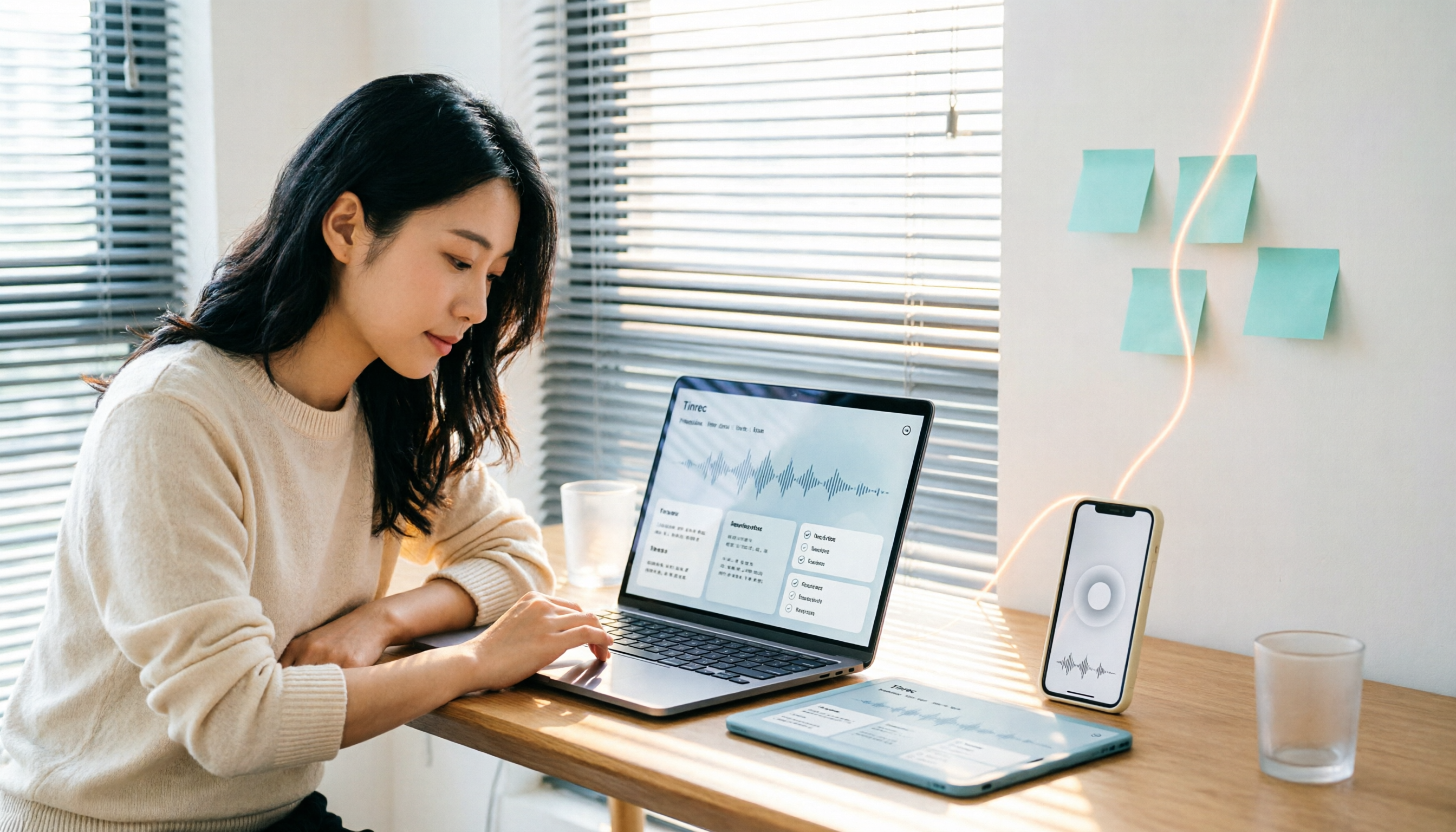
3 Ways to Screen Record in 2026: Windows, Mac, and iPhone Shortcuts Plus What to Do After Recording
How do you pull up screen recording? This guide covers the built-in shortcuts and limitations for Windows (Win + G), Mac (Command + Shift + 5), and iPhone (Control Center), compares built-in recording, meeting note tools, and post-recording organization, and explains why turning recordings into transcripts, summaries, and action items is the real time-saver.

3 iPhone Photo Text Tools Compared: Is the Built-in Feature Enough?
Adding text to photos on iPhone doesn't require downloading an editing app. This hands-on comparison covers three methods: the built-in Markup tool, CapCut, and third-party editing apps. It walks you through using the built-in feature to add text, change fonts and colors, and highlights practical tips like protecting the original image and font limitations.

5 Screen Recording Solutions Tested and Compared in 2026: The Easiest Way to Capture System Audio
Recording your screen but getting no sound is a common pain point. This article starts with the principles of system audio capture, compares 5 practical screen recording solutions, and shares the method I found easiest after hands-on testing.

3 Memo Recording Methods Compared in 2026: Can iPhone Built-in, Notta, or Tinrec Save You Cleanup Time?
How do you record audio in iPhone Notes? This article covers three built-in recording methods and compares iPhone built-in Notes, Notta, Otter.ai, and Tinrec. From post-recording organization and cross-platform export to AI meeting minutes, find the most time-saving memo recording workflow.
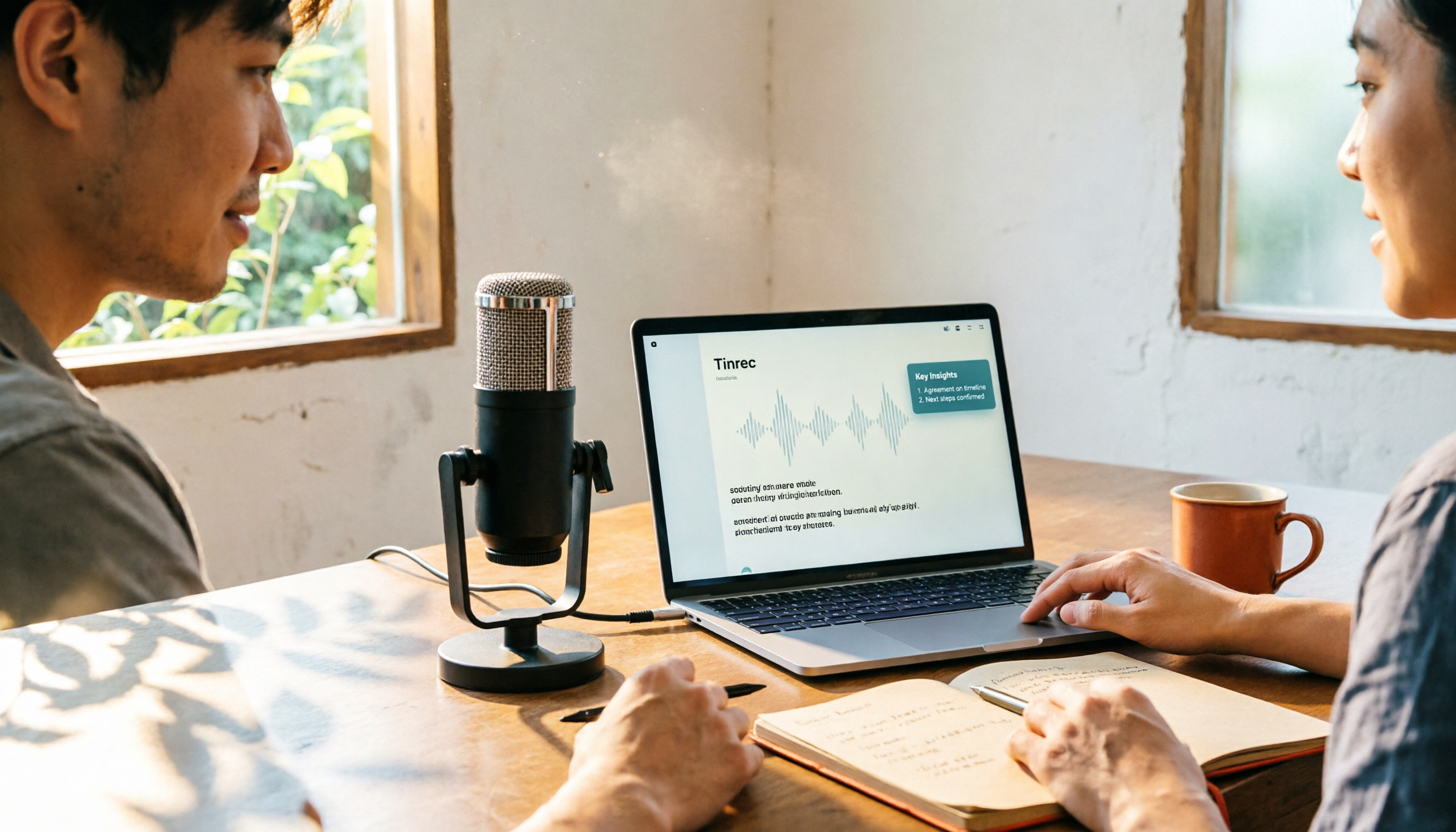
CapCut Desktop Recording 2026: Voiceover Steps & 4 Transcription Tools Compared
Can CapCut desktop record audio? Yes. This guide walks you through the complete voiceover recording steps in CapCut desktop, then answers the real question most people get stuck on: how to turn recordings into usable transcripts and meeting notes. It covers 4 key selection points and compares Tinrec, CapCut, Notta, and Otter.ai, with common pitfalls and scenario-based recommendations.
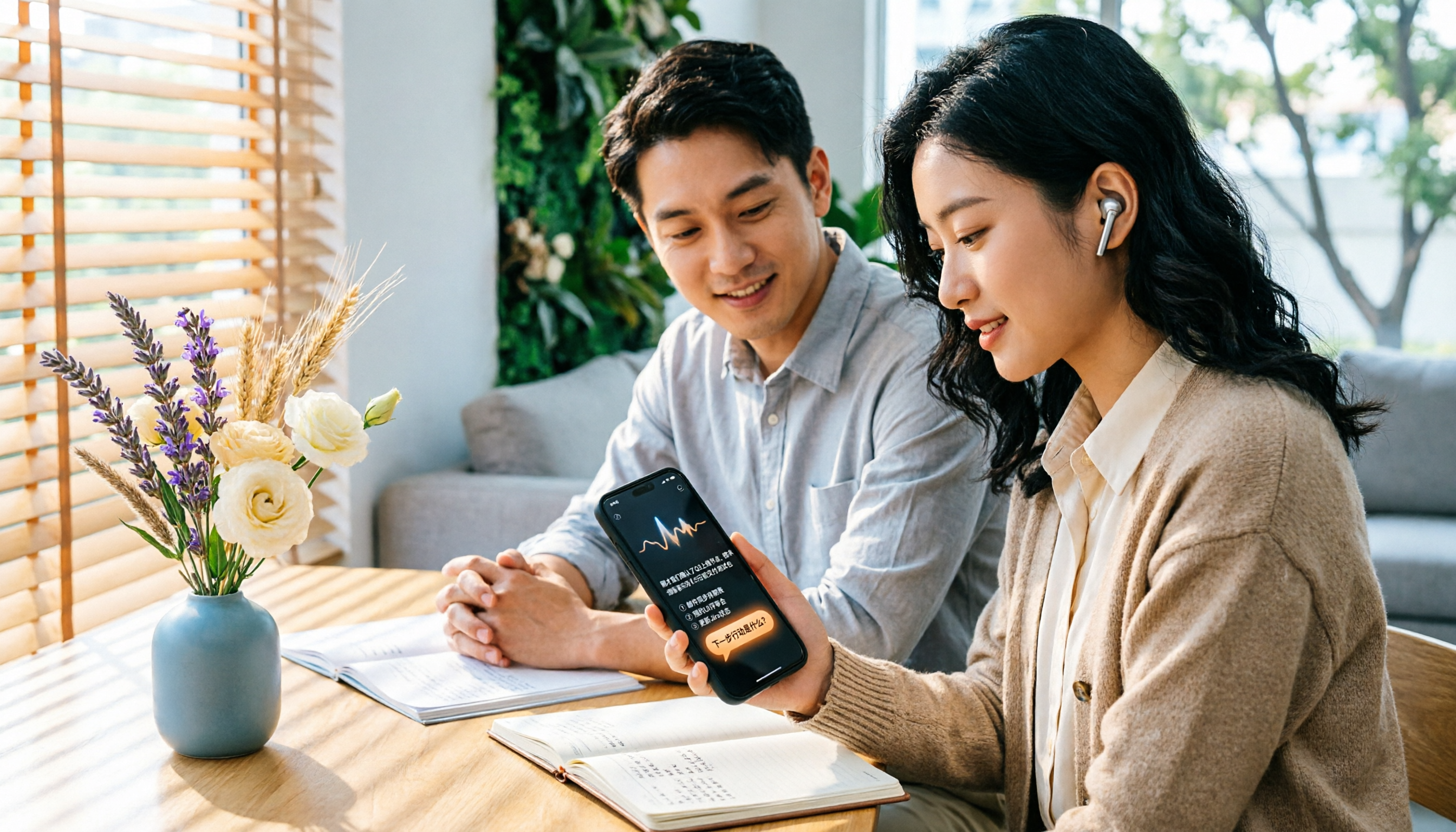
4 iPhone Voice Memos Organization Tools Compared: Where Are Recordings Stored? Tinrec Saves the Most Time
iPhone Voice Memos are stored locally by default, or in iCloud if sync is enabled. This article shows you where to find files and tests 4 organization tools. Tinrec stands out for Chinese transcription and AI Q&A, ideal for turning recordings into transcripts and to-dos.
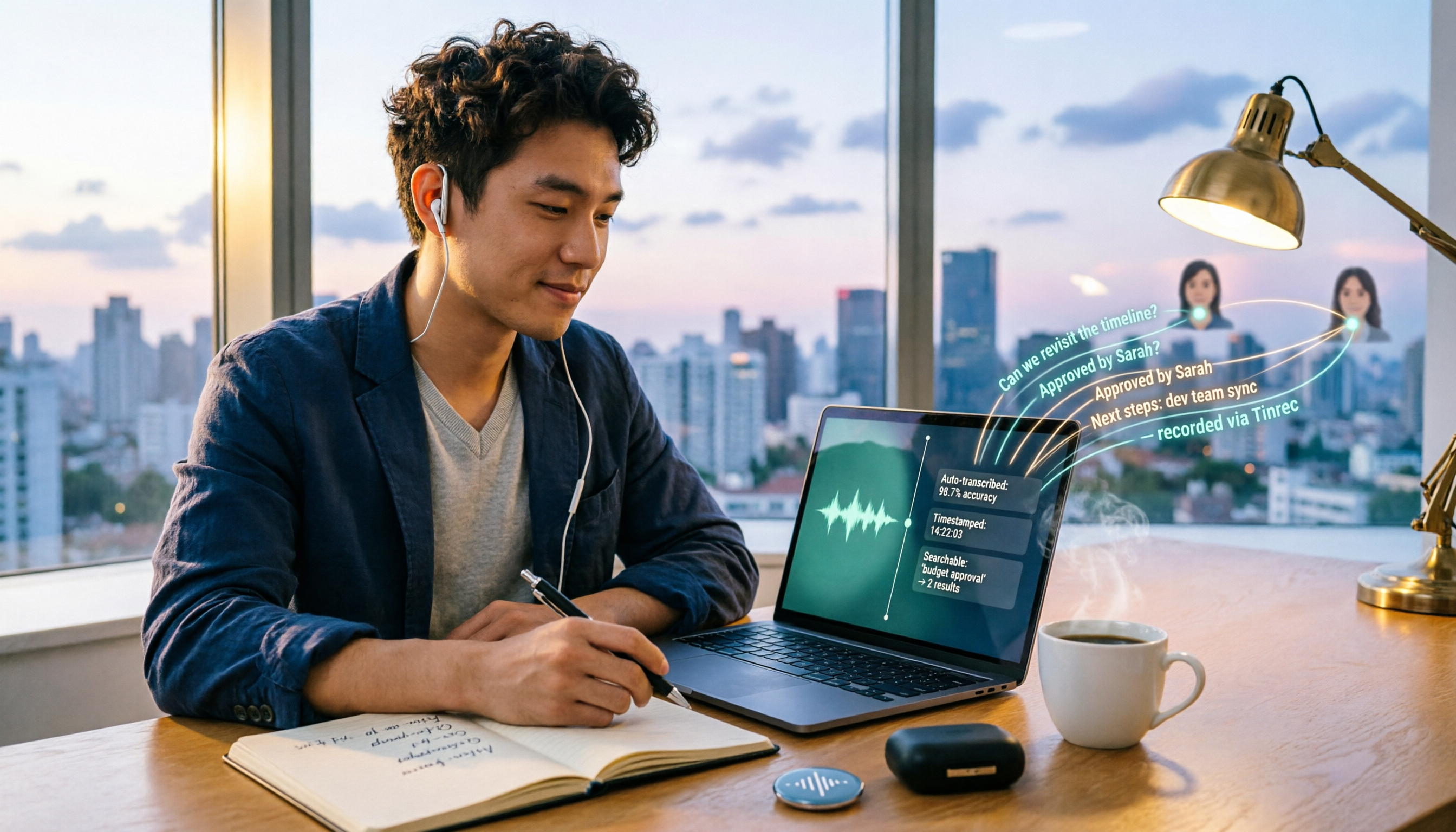
How to Record Computer Screen Audio in 2026: 3 Methods + Automatic Meeting Transcription
How do you record computer screen audio? This guide covers screen recording methods that still work in 2026, including Windows Game Bar, built-in Mac tools, and FonePaw. It also explains how Tinrec uses desktop bot-free recording and AI organization to turn meeting content into searchable, trackable data when you need transcripts and meeting notes instead of just video.