
Turn recordings into transcripts and summaries in minutes
Upload audio or video for multilingual transcription, AI notes, and action items
When You See an Unfamiliar Ancient Script, You Don't Need a Dictionary—You Need a Way to Recognize It Instantly
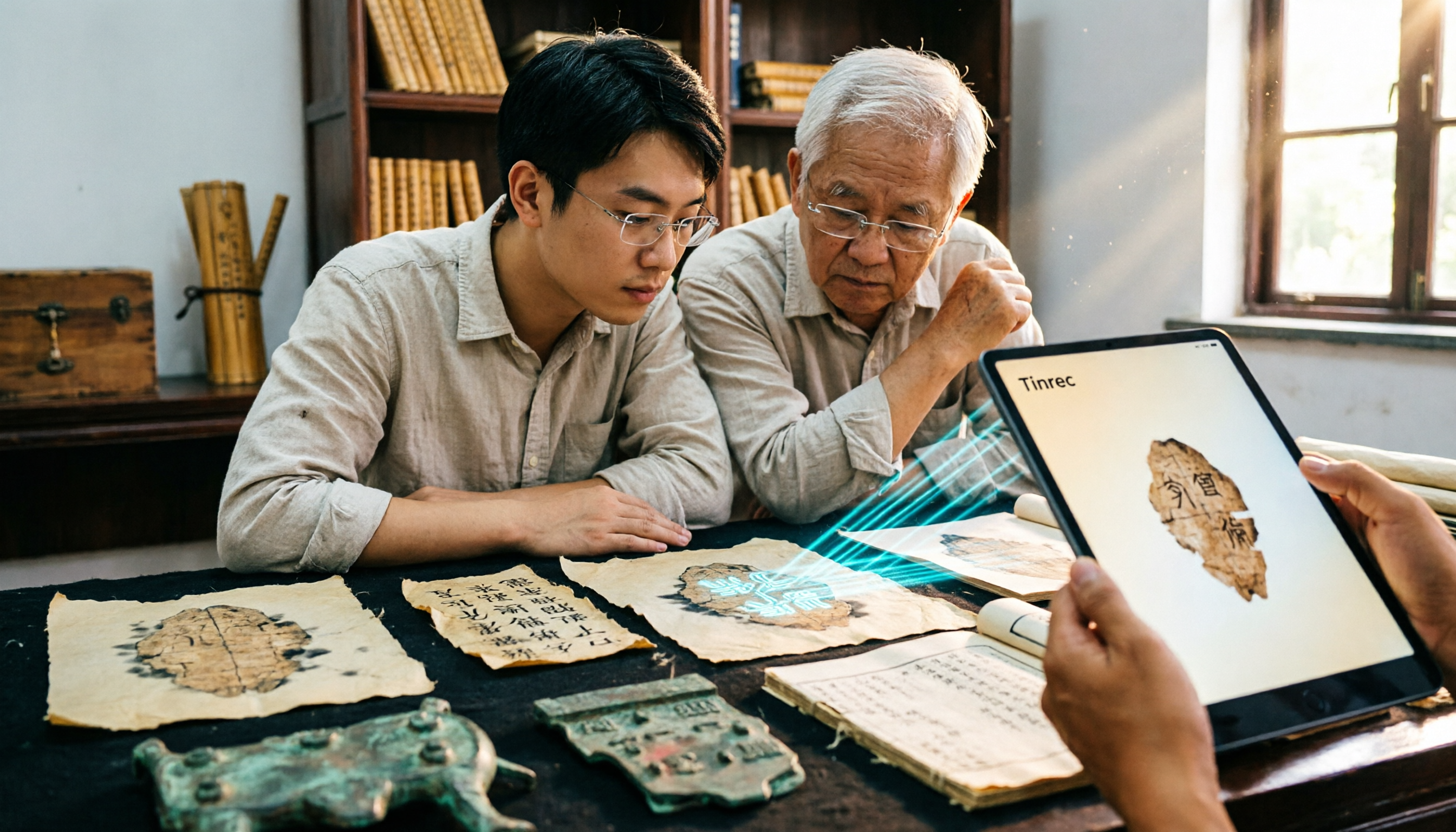
Standing in a museum staring at an inscription on a bronze vessel, unable to make out a single character, you can only take a photo and look it up when you get home.
You have a calligraphy rubbing or a photocopy of an ancient text in hand, and the signature character looks like a guessing game no matter how you look at it.
What's more troublesome is that many ancient scripts simply aren't found in modern dictionaries—they're oracle bone script, bronze inscriptions, small seal script, and the same character can have over a dozen variants across different dynasties.
If you've encountered these situations, this article is for you. Let me start with the conclusion: this is not a lab data report, but rather my hands-on comparison of the tools currently available that can actually be used, telling you who each one is suited for.
Before Choosing an Ancient Script Photo Recognition Tool, Understand These 4 Key Points
Recognition Scope: Some tools only recognize modern traditional Chinese characters and give up when they encounter oracle bone script or bronze inscriptions; others specialize in excavated texts. You need to first figure out which type you encounter most often so you don't download the wrong one.
Character Database Source: Ancient script recognition relies heavily on databases. Whether there's a text research institution or a long-accumulated character form database behind it directly affects the credibility of the results. Generally, I first check where the tool's character database comes from, rather than just looking at how pretty the interface is.
Input Method: Taking a photo, scanning, handwriting, or manually selecting radicals—the experience varies greatly. Also note that ancient books are vertically arranged, and excavated texts are often rubbings or photos of artifacts, which are completely different from the processing logic of ordinary horizontal text.
Usage Barrier: Whether registration is required, whether there's a free quota, whether it's web-only or also has an app—these all affect whether you'll actually use it long-term.
Yuncong Smart Ancient Book Digitization Platform—Top Choice for Traditional Ancient Books and Ancient Script Recognition
Yuncong Smart is a platform focused on traditional Chinese character recognition, supporting recognition of rare ancient books and traditional ancient newspaper texts, and can also handle vertical OCR.
It offers an app for traditional Chinese character photo recognition—just scan with your phone to recognize ancient scripts. For those who frequently visit libraries and archives, or have a batch of ancient book photocopies on hand, this "snap and get results" workflow saves a tremendous amount of time flipping through books for comparison.
In actual use, it's closer to a complete "ancient book digitization" workflow rather than simple character lookup. Its official positioning is to build high-quality traditional Chinese OCR recognition systems for enterprises and cultural institutions, using AI to assist in organizing and disseminating cultural content.
A few practical scenarios:
- You have a batch of traditional ancient books or old newspapers to organize into searchable text—vertical recognition is key.
- You see an unfamiliar ancient script and can directly photograph it for comparison, much faster than looking up radicals one by one.
- Cultural institutions or research teams need to digitize collections—this kind of platform-oriented solution is more suitable than a standalone app.
Stop organizing recordings by hand
Upload audio or video and automatically get a transcript, summary, and action items
Note: The strength of such platforms lies in OCR for traditional ancient books and newspapers. If you need to recognize excavated texts like oracle bone script or bronze inscriptions, you'll need to pair it with the specialized databases mentioned later—OCR alone may not be enough.
Who it's for: Users who need to process large volumes of traditional ancient books, old newspapers, or want to digitize collection texts.
Besides Yuncong, What Other Options Are There?
East China Normal University Chinese Character Digital Platform: Aimed at digitizing ancient scripts and excavated physical text materials from successive dynasties, it began construction in the late 1990s and in 2019 released the ancient script intelligent recognition tool "Shang-Zhou Bronze Inscription Smart Mirror." Ordinary users can also use a mini-program to search for unfamiliar ancient scripts. Its advantage is its academic background and accumulation of excavated text data—if you're looking up excavated texts like bronze inscriptions, this research-oriented platform will be more on point than general OCR. The downside is that it leans toward research and teaching purposes, not a consumer app for casual snap-and-check.
Zijian Calligraphy Intelligent Recognition App: In addition to modern Chinese characters, it also supports one-tap photo recognition of ancient scripts like oracle bone script, and can analyze Chinese character structure. For calligraphy enthusiasts, it satisfies both "character recognition" and "understanding character form structure" needs—areas that platform-type tools like Yuncong focus less on. However, it's more of a personal calligraphy aid; processing large volumes of ancient documents is not its strength.
Chinese Characters Ancient and Modern Database: Built by Academia Sinica, it's a database search focused on character form evolution, not a photo recognition tool. Its value lies in looking up how a character's form has changed from ancient to modern times, suitable for use alongside the aforementioned tools—first use an app to recognize the character, then come here to trace its origins.
Pitfall Guide: The 3 Most Common Mistakes When Looking for Ancient Script Recognition Tools
Pitfall 1: Assuming one tool can recognize all ancient scripts. Oracle bone script, bronze inscriptions, small seal script, clerical script, and regular script variant characters often have different databases behind them. Currently, no single tool can handle them all. It's recommended to choose based on the type of script you encounter most often.
Pitfall 2: Photos too blurry or lighting incorrect. Ancient script recognition is very sensitive to image quality, especially for inscriptions on artifacts or rubbings—reflections, shadows, and angles all affect results. Before shooting, try to fill the frame with the character and avoid reflections to significantly improve success rates.
Pitfall 3: Treating OCR as omnipotent. General OCR has inherent limitations with vertical text, variant characters, and rare characters. To truly recognize excavated texts, pairing with a professional platform that has an academic character database will be much more accurate than relying solely on OCR.
Conclusion: Which One Should You Choose?
Simply put, each of these tools has its own forte:
- To process large volumes of traditional ancient books, old newspapers, vertical text → Yuncong Smart Ancient Book Digitization Platform (photo app + vertical OCR)
- To look up bronze inscriptions, excavated texts, or for research and teaching → East China Normal University Chinese Character Digital Platform
- Calligraphy enthusiasts who want to casually photograph oracle bone script and see character structure → Zijian Calligraphy Intelligent Recognition App
- To look up how a character evolved from ancient to modern times → Chinese Characters Ancient and Modern Database
If you only occasionally encounter unfamiliar ancient scripts in museums or calligraphy works, I'd suggest starting with Yuncong, which has a photo recognition app—scan and get results, the lowest barrier.
If you actually have a batch of ancient books to organize, then don't just look at a single tool—combine photo recognition with character form databases for much better results than using just one.
A reminder: ancient script recognition still has its limits. For important research or citations, it's still advisable to cross-reference the original rubbing or authoritative character database.
References
- Chinese Characters Ancient and Modern Database
- Yuncong Smart Ancient Book Digitization Platform_Traditional Ancient Book Newspaper OCR-Yuncong Smart
- This database from East China Normal University is amazing—snap a photo of an unfamiliar ancient script and get it instantly!_Tencent News
- What software can recognize oracle bone script by photo?_Apps_Calligraphy_Users
- Image Recognition
Turn every recording into actionable outcomes
Get 60 free transcription minutes when you sign in. No credit card required.
Related Reading
You might also like

2026 Video Note-Taking Tools Compared: Which One Turns a 2-Hour Lecture into Exam-Ready Notes?
A week before finals, I opened a dozen lecture recordings and couldn't find the key points. This student-perspective comparison of 4 video note-taking tools covers whether they accept your video files, whether they produce summaries and action items, whether you can ask follow-up questions, and whether the free tier is enough. I also share my full-semester experience with Tinrec, including its workflow and limitations.

The Complete Guide to Image Text Recognition in 2026: OCR Principles, Tool Selection, and Practical Workflow
Should you use an online tool, a mobile app, or built-in features for image text recognition? This article starts with OCR principles, helps you assess image types and choose the right tool, walks through the complete workflow from cropping and recognition to proofreading and archiving, and explains which tool to use for meeting recordings.

2026 Voice Recorder Guide: Turn Meeting Audio into Transcripts and AI Summaries with Action Items
Most people searching for a "voice recorder" actually need a tool that turns meeting audio into usable text. This guide covers common misconceptions, four key factors for choosing the right tool, and a hands-on review of Tinrec's bot-free meeting recording, AI Q&A, and team spaces, plus a brief look at Otter.ai, Notta, and Granola for different use cases and pitfalls to avoid.

4 Best EPUB to PDF Converters in 2026: Which Free Version Is Good Enough?
Bought an ebook but can't open it? This article shares hands-on testing of 4 online EPUB to PDF converters, comparing free limits, file size restrictions, layout preservation, and privacy handling, with step-by-step instructions and pitfalls to avoid.

2026 Comparison of 4 Work Summary Video Tools: Which Saves More Time for Transcription and AI Summarization?
The bottleneck in organizing work summary videos is often not transcription accuracy, but what to do with the text afterward. This article starts with four key points for selection, tests how Tinrec handles existing video files, records online meetings without bots, and uses AI follow-up questions. It also briefly reviews Notta, TurboScribe, and Granola for their suitable scenarios, and concludes with a pitfalls guide and a 6-step starter.

2026年4款录音转文字工具实测对比:中文会议与会后整理谁最省时间?
多数人把“录音转成文字”当成终点,结果只是把重听换成重读。这篇从常见误区切入,先讲清楚挑工具的4个关键点,再实测比较 Tinrec、Notta、PLAUD Note 与 Otter.ai,并整理出中文使用者最常踩的4个坑,最后依中文会议、跨平台、团队共用等情境给出明确选型建议。

2026 Short Video Learning Tools Comparison: Turn Videos into Q&A Notes — Which Saves the Most Time?
How can you improve short video learning efficiency? The key is usually not rewatching, but which path you choose to 'keep' the video. This article compares three tools—Tinrec, Otter.ai, and TurboScribe—across five dimensions: video import, Chinese materials, summary organization, AI Q&A, and export/sharing. It also includes a copy-paste question template and a 6-step quick start checklist.

4 Video Link Extraction Tools Tested and Compared in 2026: Which One Can Directly Generate Transcripts?
Saved a bunch of video links but never opened them? The problem isn't downloading—it's content organization. This article compares the actual differences among 4 video link extraction tools, covering link import, transcription, AI summaries, and team collaboration, with key buying factors and common pitfalls to help you find a tool that truly saves organizing time.
2026 Audio-to-Text Tools Compared: Why Tinrec Beats Tongyi for Team Meeting Notes
Drawing from a mid-level manager's real experience with 15 meetings a week, this comparison examines how Tongyi, Monica, and Tinrec differ in Chinese meeting transcription. It explains why Tinrec's bot-free online meeting recording, AI Q&A, action item extraction, and team workspace make it better suited for teams that need to retain meeting data, with recommendations for choosing between personal and team plans.