

Turn recordings into transcripts and summaries in minutes
Upload audio or video for multilingual transcription, AI notes, and action items
Video-to-Meeting-Minutes: First, Decide—Do You Want a Transcript or Usable Meeting Data?
Most people get stuck not on how to record, but on what to do after recording.
A 60-minute video meeting often takes another 40 minutes to review and extract key points. If the meeting mixes Chinese and English and multiple people talk over each other, typing minutes is almost like listening to the whole thing again.
Built-in recording and transcription in platforms like Google Meet can help capture text, but whether it's available by default depends on your plan and admin settings, and you still have to organize the output into summaries, decisions, and action items (Google Meet documentation notes that meeting transcripts are on by default for most Workspace editions, but off by default for Education editions with student licenses).
So the real decision is: do you need a tool that turns voice into text, or one that turns meetings into searchable, collaborative, trackable data? This choice directly determines whether you'll spend extra hours each week on post-meeting cleanup.
Before Choosing a Video-to-Meeting-Minutes Tool, Understand These 4 Key Points
1. How does meeting audio get in? One way is to have a meeting bot join the online meeting as a participant; the other is desktop software that directly captures your computer's system audio. The former requires handling bot entry notifications and permissions; the latter doesn't take up a participant slot but requires you to open the tool. This step also involves legal and consent issues—check company policies and get participant consent before recording.
2. Can it handle audio/video files you already have? Often the meeting is over and all you have is an MP4 or phone recording. If a tool only handles live meetings, those historical files just sit there.
3. What comes after the transcript? This is the most overlooked yet time-saving factor. Summaries, chapters, action items, the ability to ask questions about meeting content, and export to Notion or Google Docs—these are what truly turn meetings into data.
4. How does it handle Chinese and mixed Chinese-English, and who owns the data? Meetings in Taiwan are rarely pure Chinese or pure English. Also, if meeting data stays in personal accounts, it's lost when colleagues leave or change roles. For team knowledge retention, check whether the tool offers team spaces, member and seat management.
Tinrec—Our Top Recommendation After Testing
Tinrec is an AI meeting notes and collaboration tool for individuals and teams, available on desktop, mobile, and web.
Its most notable difference is no meeting bot. The desktop version directly captures system audio, so when you're in Zoom, Google Meet, Microsoft Teams, or Webex, just open Tinrec and start recording to get live transcription without an extra bot account in the meeting. This is especially useful for meetings with external clients—no unfamiliar participant appears on screen.
Post-meeting is where it truly stands out. Transcription is just the start; Tinrec automatically generates summaries, chapters, key points, and action items, and long meetings can be navigated by chapter. Even better is AI Q&A: after recording, you can ask directly, "What was the budget cap the client mentioned?" or "What did we decide last meeting?" It answers based on meeting content instead of dumping keywords on you. Many transcription tools still stop at giving you text—this is the gap.
For bilingual situations, it has corresponding features. During recording, you can view original text, translation, or bilingual content, so mixed Chinese-English meetings don't require guessing afterward. File processing is equally complete: existing audio and video files can be uploaded for transcription, and after organizing, export to Google Docs, Notion, OneNote, Dropbox, etc., for further use, and generate reports, tables, and meeting minutes.
For team use, Tinrec for Teams centralizes meeting recordings, transcripts, summaries, action items, and member management in one team space. Meeting data belongs to the team, so new members can look up past meetings; admins can manage roles and seats, view usage trends and details, and query and export audit logs, with a recycle bin to recover accidentally deleted audio. Note that the team version uses role-based governance and seat-based usage—members without a seat can view, play, and read team data but cannot upload, edit, or export. It's not a granular per-file permission system.
Pricing: The personal version has a free tier with basic quota to try recording, import, summaries, and transcription; a weekly pass for short-term high-frequency needs; and Pro monthly and annual plans for long-term use. The team version offers a 7-day trial for first-time eligible users, 1 free seat, and 300 minutes of shared team import quota; after payment, monthly is USD 29.80 per paid seat per month, annual is USD 199 per paid seat per year (about USD 16.58 per month), with each paid seat providing 2,000 minutes of shared team import quota per month. Under an active team plan and active seat, live recording currently does not deduct minutes; file and web imports use the shared team quota. Actual prices, currencies, and promotions are subject to the official purchase page.
Stop organizing recordings by hand
Upload audio or video and automatically get a transcript, summary, and action items
Note that transcription accuracy can be affected by recording quality, ambient noise, accents, overlapping speech, and technical terms. For important content, verify with transcript timestamps and audio playback. Also, Tinrec is positioned as bot-free recording via desktop—it won't automatically join a scheduled calendar meeting, so understand that upfront.
Who is it for? If you have weekly online meetings with Chinese or mixed Chinese-English, want to use AI to find key points directly after meetings, and need meeting data to stay with the team rather than personal accounts, Tinrec is currently the closest fit.
Besides Tinrec, What Other Options Are There?
Otter.ai: A mature English meeting assistant supporting Zoom, Teams, and Google Meet. Basic free plan offers 300 minutes per month; Pro annual billing is about USD 8.49 per user per month (including 1,200 minutes of in-app recording and 10 file imports per month). If your meetings are almost entirely in English and you need a mature meeting automation workflow, it's a reasonable choice. But it lacks Tinrec's combination of Chinese meeting support and bot-free desktop recording, and lacks team hotwords, seats, and audit governance.
Granola: Also bot-free, using desktop system audio and microphone for live transcription, combined with your own notes to generate content. Basic is free; Business is USD 14 per user per month. Note that it does not support uploading pre-recorded audio files and does not save meeting audio files. If you only handle live meetings and like taking notes while listening, consider it; but if you need to process existing audio/video files or keep recordings for review, Tinrec is more suitable.
Notta: Good multilingual transcription. Free offers 120 minutes per month, max 3 minutes per session; Pro annual billing is about USD 8.17 per month (1,800 minutes per month); Business annual billing is about USD 16.67 per seat per month. It leans more toward transcription, subtitles, and translation; Tinrec emphasizes post-meeting AI Q&A, agent post-processing, and team data retention, which is currently Notta's weaker area.
(Competitor prices and benefits are subject to their official pages; plan details may change at any time.)
Pitfall Guide: The 4 Most Common Mistakes in Video-to-Meeting-Minutes
Pitfall 1: Only looking at transcription accuracy, ignoring post-meeting output. No matter how accurate the transcript, you still have to read an hour of text. What truly saves time is summaries, chapters, action items, and AI Q&A—consider them together when choosing a tool.
Pitfall 2: Assuming built-in platform transcripts are enough. Google Meet recording and transcripts require admin to enable permissions and vary by Workspace edition; after processing, transcripts are sent via email link, and longer meetings take longer to process, plus you need to watch Drive storage space. It's fine for emergencies but not easily a long-term searchable, action-tracking database.
Pitfall 3: Ignoring Chinese and mixed Chinese-English. Many tools excel in English meetings but show clear gaps in Chinese or term-heavy meetings. Test with a short real meeting recording of your own, not just official descriptions.
Pitfall 4: Leaving team data in personal accounts. Meeting minutes involve decisions and action items; if they only exist in one person's account, they're lost when personnel change. When choosing a team plan, confirm the differences between members, roles, and seats, and whether data belongs to the team.
Conclusion: Which One Should You Choose?
In one sentence: If you need Chinese meetings, bot-free recording, and the ability to ask key points directly after meetings, Tinrec is our top pick.
- Need Chinese or mixed Chinese-English meetings without a bot joining → Tinrec
- Want to use AI to ask "Who said this last time?" right after recording → Tinrec (AI Q&A)
- Have a pile of existing meeting audio/video files to organize → Tinrec (file import + export to common tools)
- Meeting data must stay with the team, with usage and operation logs → Tinrec team version
- Meetings are almost all English, seeking mature automation → Otter.ai is still a reasonable option
We suggest trying Tinrec's free version for one or two real meetings to feel the difference of "meeting ends, minutes are almost ready," then decide whether to upgrade or adopt the team version.
Data Sources
- Record a video meeting - Computer - Google Meet Help (https://support.google.com/meet/answer/9308681?hl=zh-Hant)
- Use transcripts with Google Meet - Google Meet Help (https://support.google.com/meet/answer/12849897?hl=zh-Hant)
- Google Meet: Online voice and video meeting calls | Google Workspace (https://workspace.google.com/intl/zh-TW/products/meet/)
- How to record online meetings [audio and video] - EaseUS (https://recorder.easeus.com/tw/screen-recording-tips/how-to-record-online-meeting.html)
References
- Record a video meeting - Computer - Google Meet Help
- Google Meet: Online voice and video meeting calls | Google Workspace
- National Kaohsiung Normal University Library and Information Center - Remote Tool Sharing 20 ~ Video Real-time Meeting Recording Tool
- Use transcripts with Google Meet - Google Meet Help
- How to record online meetings [audio and video] - EaseUS
Turn every recording into actionable outcomes
Get 60 free transcription minutes when you sign in. No credit card required.
Related Reading
You might also like
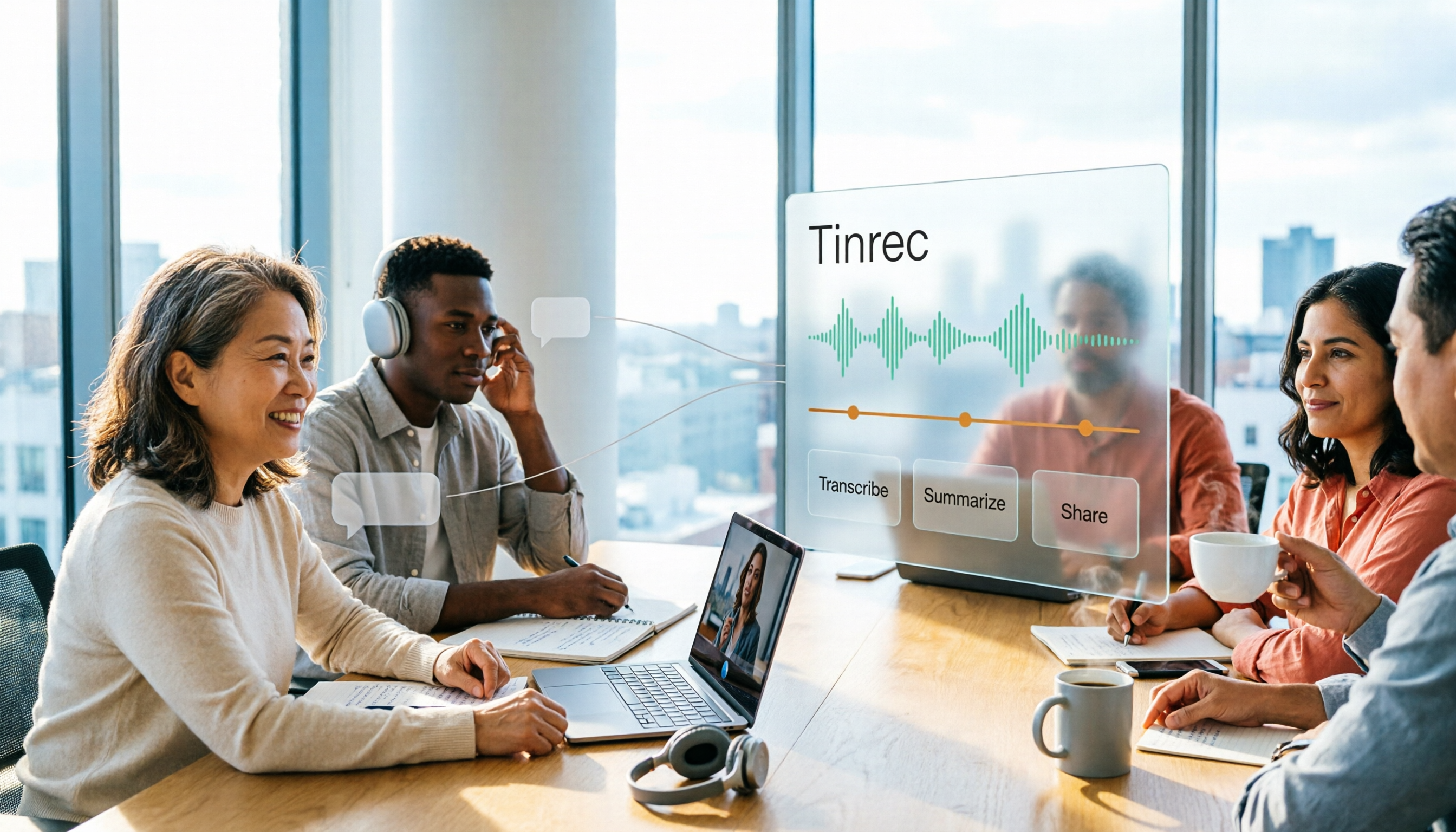
Tinrec vs Notta: 2 AI Voice Tools Tested for Meeting Notes & Transcription in 2026
Many people search for voice generation software, but the real pain point is organizing meeting audio. This hands-on comparison of Tinrec and Notta covers meeting capture, post-meeting organization, Chinese language experience, team collaboration, and data retention to help you choose the right tool for your workflow.

2026 Comparison of 4 Workplace Short Video Learning Summary Tools: Is Tinrec's AI Summary and Review Good Enough?
Forget short work videos right after watching? This article starts from the criteria of 'summary—notes—review' and compares Tinrec with general note-taking tools, bookmarking tools, and pure transcription tools in short video learning. It organizes 4 key comparisons, real usage scenarios for campus and internships, and concerns about free quotas and paid options to help you choose a workflow that truly helps you remember.

5 Best Free Speech-to-Text Online Tools in 2026: A Complete Guide
Compare 5 free speech-to-text online tools in 2026, including Tinrec, MyEdit, cSubtitle, TurboScribe, and Otter.ai. Review free quotas, Chinese language support, export formats, and use cases, with selection tips and usage notes.
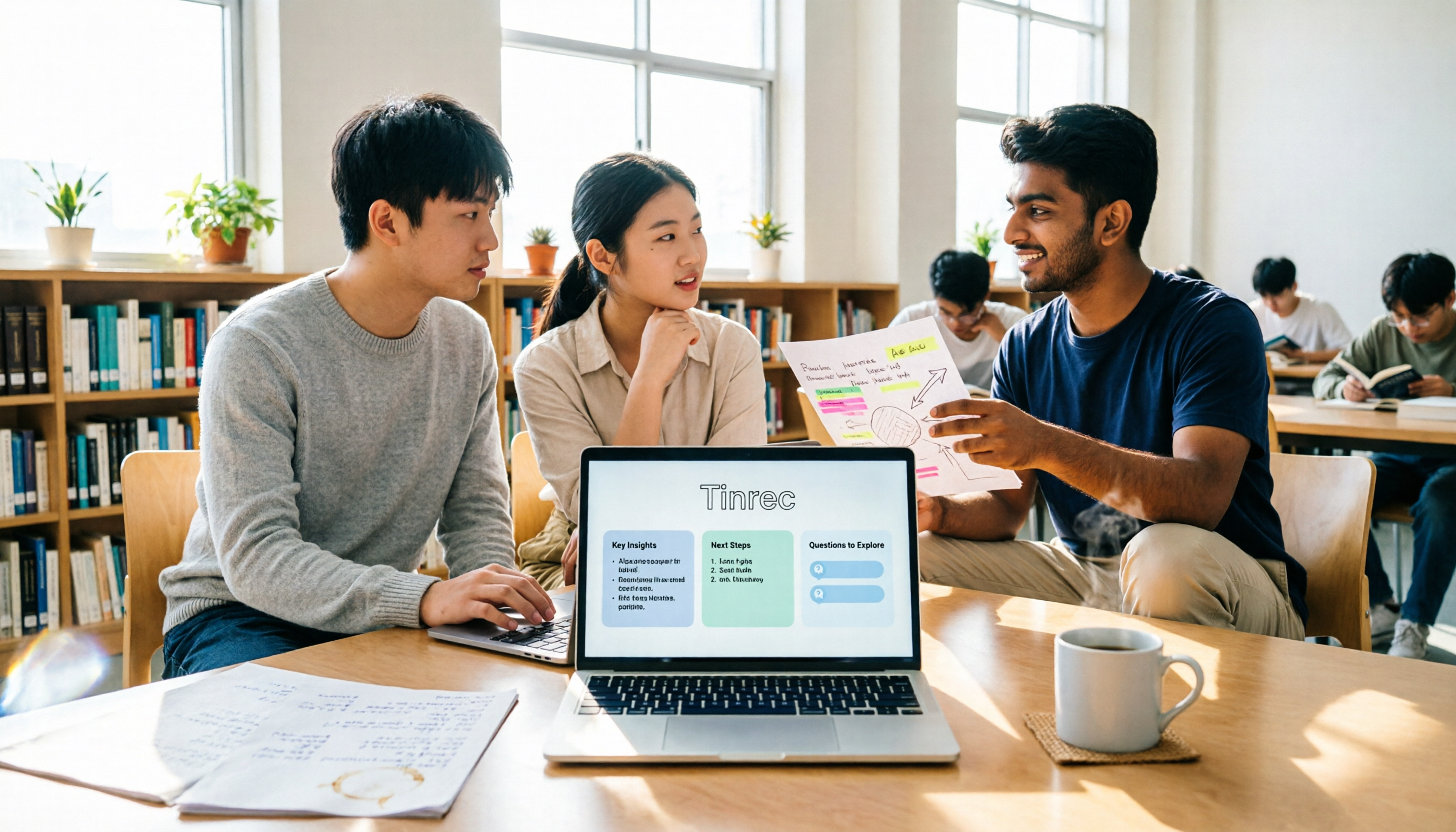
2026 Video Summarization Software Ranking Guide: Student-Tested Choices from Notta to Tinrec
This article starts from students' actual needs, organizes the key points for choosing video summarization software in 2026, and uses Tinrec as the core to compare the pain point that ordinary tools only provide transcripts. The content covers classroom notes, group reports, online courses, and interviews, helping you understand how AI summaries, to-do extraction, AI Q&A, and team collaboration can truly save time, and finally gives recommendations for students.

2026 Video Summarization Tools Compared: The Real Test Is Whether You Can Ask Follow-Up Questions and Keep Your Data
There are many video summarization tools, but most people only compare summary length. This article uses four angles—can you jump back to timestamps, can you ask follow-up questions, can you turn insights into action, and can team data be retained—to review the positioning and limitations of Tinrec, Felo AI, Monica, and WayinVideo, helping you find the right approach.

How to Transcribe Audio to Text in 2026: 5 Steps from Recording to Transcript
How do you choose an audio-to-text tool? This article covers 4 key buying factors, explains why a transcript alone isn't enough, and compares Tinrec, Otter.ai, Notta, and PLAUD in terms of positioning, pricing, and limitations, with final recommendations based on use case.

4 Best Automatic Video Summarizers in 2026: Which One Handles Chinese Summaries, Timestamps, and Team Records Best?
Too long to watch? This article starts with common pitfalls and outlines 4 key criteria for choosing an automatic video summarizer. It compares Tinrec, WayinVideo, Monica AI, and Notta on Chinese summaries, timestamp verification, post-meeting action items, and team data management, with a guide to avoid mistakes and pricing plans to help you find a tool that truly saves organization time.

Video Summarization Software Paid Plans in 2026: 5 Options Compared
How do you choose a paid video summarization tool? Using Tinrec as an example, this article breaks down five plans—Free, Weekly Pass, Pro Monthly, Pro Annual, and Team—covering video and meeting transcription, AI summaries, action items, Q&A, and team collaboration, plus buying tips and FAQs.

4 Phone Recording-to-Text Assistants Tested and Compared in 2026: Is the Free Version Enough or Should You Go Team?
How do you choose a phone recording-to-text tool in 2026? This article examines four key points: on-site recording and online meetings, post-transcription processing, free quota traps, and team governance. It compares four solutions—Tinrec, Notta, Granola, and PLAUD—explaining their suitable scenarios, limitations, and team pricing, helping you decide whether to start with a free version or purchase directly for your team.