
Turn recordings into transcripts and summaries in minutes
Upload audio or video for multilingual transcription, AI notes, and action items
Where Are iPhone Voice Recordings? Pain Points & Navigation Before Transcription
After a meeting or interview ends, staring at the "Voice Memos" app on your phone, the first question is often "Where are my iPhone voice recordings?" The second pain point is: "This long audio file—do I really have to listen again and manually type a transcript?" Audio recordings have extremely low information density, and re-listening is very costly.
This article will first provide a visual guide to organizing and exporting files from the native iPhone recorder, then address the subsequent transcription pain point by comparing 5 popular voice-to-text tools on the market. It includes a detailed multi-dimensional comparison table, practical step-by-step operations, and a FAQ section.
Quick navigation tip: If you only want to organize phone recordings, read the first section. If you want to quickly convert audio files into meeting minutes and action items, check out AI tools like Tinrec that focus on downstream workflows. If extreme cost-free is your priority, consider open-source solutions.
Find & Organize Your Audio Files: iPhone Recorder Basic Tutorial
Before transcribing your recordings, you need to locate and organize files in the built-in "Voice Memos" app (located in the "Utilities" folder). According to Apple's official guide, you can categorize efficiently as follows:
1. Use Smart Folders & Favorites
Recordings from Apple Watch, recently deleted recordings, and "Favorites" are automatically categorized into smart folders. To mark an important meeting as a favorite:
- In the recording list, tap the recording you want to mark, then tap the "star" icon.
- Or tap "Edit" at the top of the list, select multiple recordings, then tap the folder icon and choose "Favorites".
2. Create Dedicated Meeting or Lecture Folders
For easy export to AI tools later, create dedicated folders:
- Tap "Edit" at the top of the list, select recordings, tap the folder icon, then tap "Move to Folder".
- Tap the add icon, enter a folder name (e.g., "Weekly Meeting") and save.
3. Delete & Reorder
Go to the folder list, tap "Edit", then drag the handles on the right to reorder folders, or tap the delete icon to remove unwanted categories. Once organized, you can share and save the audio files to the "Files" app or iCloud for subsequent transcription.
5 AI Voice-to-Text Tool Reviews: Methodology & Criteria
After finding the files, turning "time-based content" into "scannable, searchable, actionable text" is the ultimate goal for most work and study scenarios.
- Test sample & environment: A 30-minute indoor in-person meeting recording (mixed Chinese and English, with light air conditioner background noise).
- Evaluation dimensions: Word error rate, real-time capability, summary quality, AI query ability, price, and free credits.
- Tools evaluated: 5 common solutions on the market (Tinrec, Yating Transcriber, GoodTape, Whisper, Feishu Minutes).
Comparison Table of 5 Popular Transcription Tools & Scenario Analysis
Below are the objective data and feature comparisons from this test:
Stop organizing recordings by hand
Upload audio or video and automatically get a transcript, summary, and action items
| Dimension | Tinrec | Yating Transcriber | GoodTape | Whisper (Open Source) | Feishu Minutes |
|---|---|---|---|---|---|
| Language Support | Auto-recognizes 10 languages (including Chinese, Japanese, English) | Primarily Chinese/Taiwanese | Multilingual | Multilingual | Primarily Chinese/English |
| Real-time Transcription | Yes (no delay) | Yes | Upload only | Requires coding skills | Yes |
| Summary & Action Items | Auto-generates decisions & tasks | No, pure transcript | Only basic summary | No | Yes, but tied to Feishu ecosystem |
| AI Conversational Query | Yes (semantic Q&A) | No | No | No | No |
| Price & Free Credits | 100 minutes free/month | Pay per credit/point | 3 free uploads/month | Completely free (requires hardware) | Tied to Feishu paid plan |
Scenario Analysis & Edge Cases
- Meetings & Project Management: If you need not just text but "conclusions and tasks," Tinrec's workflow can extract decision summaries directly, significantly reducing manual sorting time. However, its free tier only offers 100 minutes per month; heavy users should evaluate the paid version.
- Taiwanese Language Context: If meetings involve extensive in-depth Taiwanese conversations, Yating Transcriber's localized recognition performs relatively well.
- Developers & Geeks: If you have a high-end GPU and highly value privacy, self-hosting Whisper is the most cost-free and secure technical solution.
From Audio to Decisions: AI Recording Assistant Practical Tutorial
Using a multi-platform tool with a complete workflow as an example, here are 4 practical steps to turn recordings into productivity.
Step 1: Real-time Voice-to-Text During Recording
In a physical meeting or lecture, open the tool. Tap the record button on the home page, and the system will transcribe speech to text in real time—no need to wait until the meeting ends. You can instantly review what was just said at any time.
Step 2: Transcribe Existing Audio Files
If you have old recordings found and exported from your iPhone earlier, choose "Upload Audio" on the interface. After uploading, the system quickly processes it, automatically generating a full transcript and a structured AI meeting summary simultaneously.
Step 3: Transcribe Online Videos/Podcasts
For online courses on YouTube or podcasts, no additional recording is needed. Simply copy the video or audio URL and paste it into the "Video to Text" parsing field. The tool will automatically translate the content, perfect for self-study or content creators.
Step 4: AI Conversational Query
Traditional transcripts usually only allow Ctrl+F to search for specific words. With the AI conversational query feature, you can directly ask questions about the recording (e.g., "What deliverables did we decide on for next Wednesday in that meeting?"). The AI understands the semantics of the recording and provides answers directly, making information retrieval as simple as asking a real person.
FAQ: Common Questions About Recording & Transcription
Q1: Can I transfer iPhone recordings to my computer or cloud?
Yes. In "Voice Memos," tap the recording you want to export, press the share icon, choose "Save to Files" or use iCloud Drive or AirDrop. You can then access the audio file on your computer for further transcription using AI tools.
Q2: If in-person meeting recordings have muffled voices, can AI still transcribe them?
If there is excessive background noise or the speaker is too far away, most AI will have recognition issues. It is recommended to keep the device as close to the speaker as possible when recording. If the audio quality is acceptable, modern AI tools generally have basic noise reduction and semantic inference capabilities.
Q3: Can online meetings like Teams or Meet be recorded and transcribed directly?
Most video conferencing software has built-in real-time captions, but if you need a full meeting summary and action items afterwards, we suggest opening a third-party AI tool's "real-time voice-to-text" feature on your computer to capture the audio, or upload the recording file to an AI platform for analysis after the meeting.
Q4: Where can I find a completely free voice-to-text tool?
If you have programming skills and a sufficiently powerful computer, OpenAI's open-source Whisper is the best completely free option. If you lack technical expertise, you can use the free credits offered by various online tools (e.g., 100 minutes per month or a limited number of uses) for light needs.
Q5: My recording is too long; can I just view the highlights?
This is precisely the pain point of traditional manual transcription. Modern AI tools with integrated workflows not only provide a transcript but also automatically summarize "key decisions" and "next action items" at the top, helping users quickly scan the essence of a one-hour meeting.
Q6: Can I directly translate a foreign language recording into English?
Many multilingual tools (covering Chinese, Japanese, English, German, etc.) can automatically provide English translations after recognizing foreign language courses or meetings, greatly reducing the comprehension barrier for cross-language communication and learning.
Turn every recording into actionable outcomes
Get 60 free transcription minutes when you sign in. No credit card required.
Related Reading
You might also like
2026 Complete Guide to vocol ai: Turn Meeting, Class, and Interview Recordings into Actionable Data
A comprehensive guide for knowledge workers on vocol ai voice-to-text tools. Using Tinrec as an example, learn how AI can automatically transform meetings, classes, interviews, and online videos into searchable, summarized, and queryable structured data. Includes key buying considerations and a step-by-step walkthrough to help you stop drowning in audio files.

2026 Real-World Comparison of 3 Notta Alternatives: Which Performs Better for Chinese Meetings and AI Q&A?
Still looking for a Notta alternative? We tested Tinrec, Plaud Note, and Otter.ai across transcription quality, AI features, and pricing to help you pick the best voice-to-text tool for your needs.
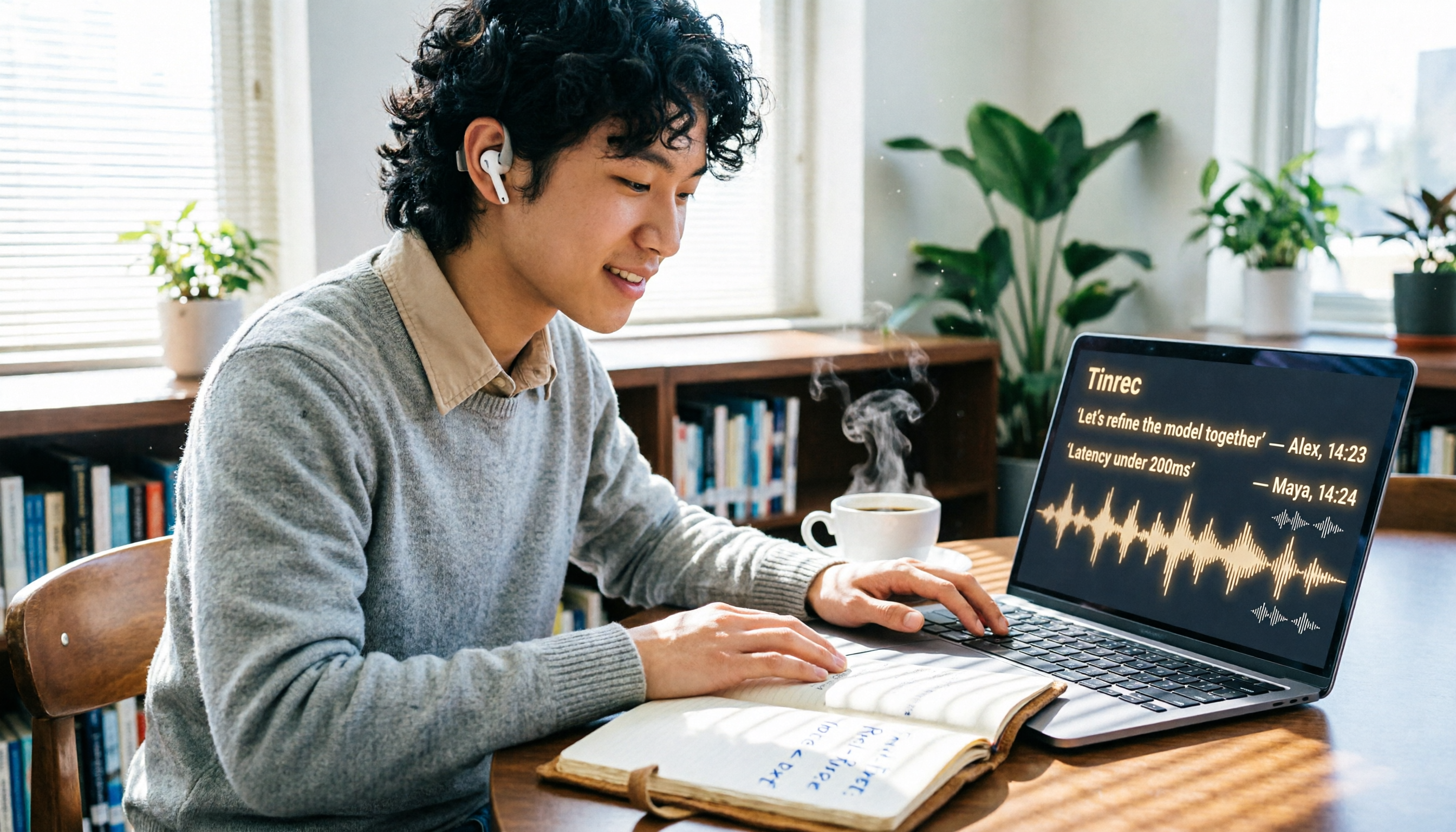
2026 Review of 3 Transcription Apps for Students: Notta Isn't the Top Pick—Here's Why
A senior student tests three speech-to-text tools for lectures and group discussions, comparing free minute limits, Chinese accuracy, and AI features of Notta, Otter.ai, and Tinrec to find the best fit for students.

2026 Real-World Comparison of 4 Notta Alternatives: Which Saves the Most Time for Chinese Meeting Minutes?
What are the alternatives to Notta? This article tests 4 recording-to-text tools including Tinrec, evaluating Chinese transcription, AI summaries, multi-platform support, and pricing to help you choose the best app for meetings, classes, and interviews.
2026 Hands-on Comparison of 3 AI Recording & Transcription Tools: Which Works Best for Chinese Meetings and Learning?
It's not just about transcribing audio to text; it's about organizing it into usable knowledge. This article hands-on tests three tools: Tinrec, Notta, and Fireflies, evaluating them on Chinese accuracy, AI summarization, multi-source support, and real-world experience to help you find the best AI recording assistant for meetings, courses, and online videos.

2025 Hands-On Review of 3 AI Recording Tools for Students: Tinrec's Free Tier Is the Most Surprising
A senior student tested these tools for a semester, comparing Tinrec, Notta, and Otter.ai on free tiers, AI summarization, cross-platform support, and student plans. Find out which one is best for lecture recording and exam review.
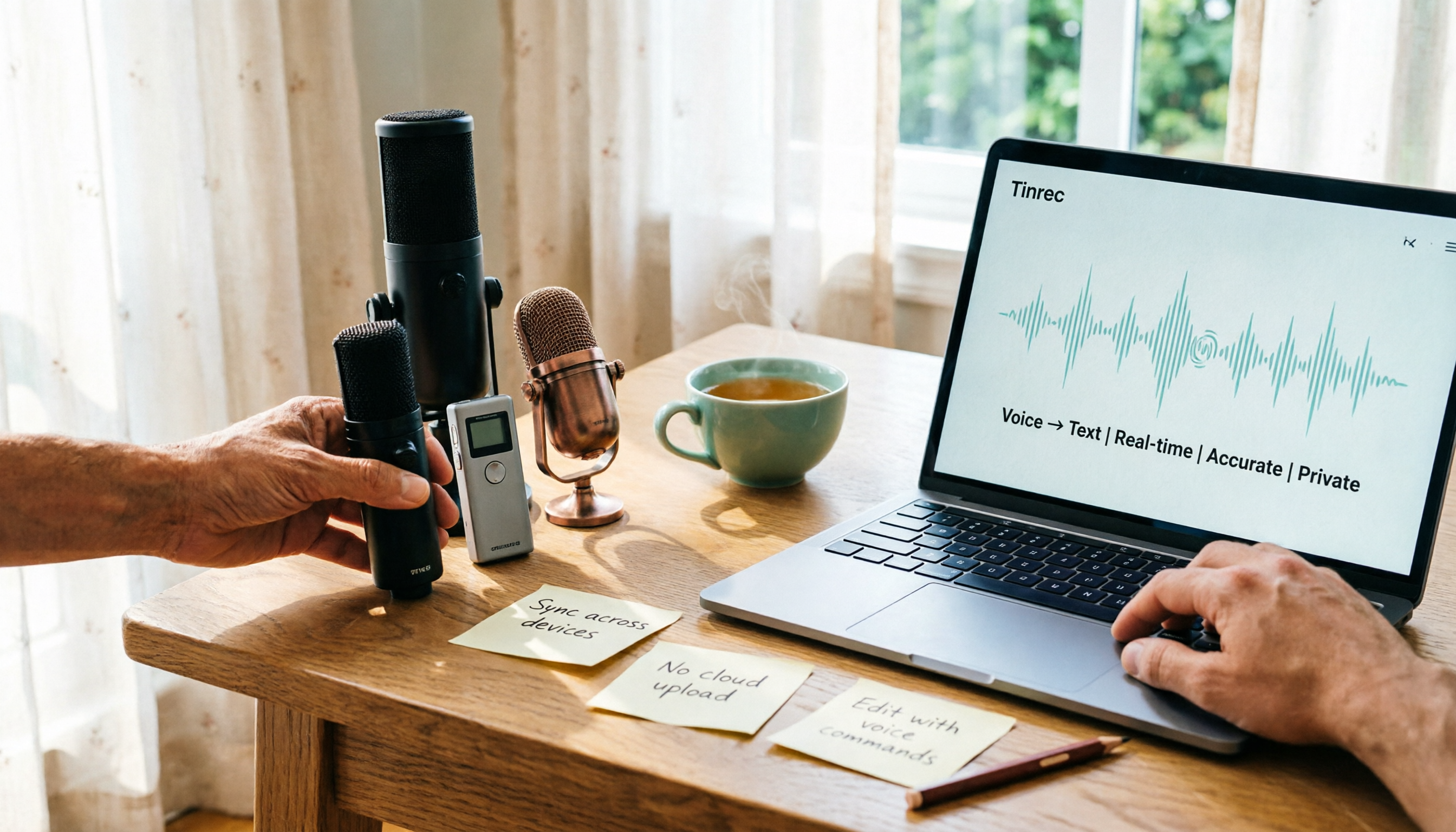
2026 Four Transcription Tools Tested and Compared: From Plaud Note Pro to Tinrec, My Journey to Choosing the Right One
After seeing heated discussions about Plaud Note Pro on Dcard, I actually tested four transcription tools. This article shares my trial journey from hardware recorders to software solutions, and why I ultimately chose Tinrec as my productivity core.

2026 Hands-On Comparison of 3 Speech-to-Text Apps: A Time-Saving Tool for Recording Natural Gas and Propane Prices in Nottawa
When comparing natural gas and propane prices in Nottawa, the most time-consuming part is recording calls and organizing quotes. This article tests three speech-to-text apps—Tinrec, Otter.ai, and Notta—evaluating Chinese recognition, AI summaries, cross-platform use, and free tiers to help you choose the best tool for recording supplier quotes and service details.

2026 Comparison of 4 Speech-to-Text Apps: Notta AI Not the Best? This App is the Top Pick
Hong Kong office workers test 4 speech-to-text tools including Notta and Tinrec to see which one offers the best Cantonese recognition, most useful AI features, and biggest time savings. Read this review before deciding.