

Turn recordings into transcripts and summaries in minutes
Upload audio or video for multilingual transcription, AI notes, and action items
Best Cantonese Speech-to-Text Tools in 2026: 4 Tested, One Stands Out for Meetings
After a Cantonese Meeting, the Real Work Begins
Last week, someone asked me the same question again: "Any recommendations for Cantonese speech-to-text?"
The person asking was a project manager whose team spans Taipei and Hong Kong. After every meeting with Hong Kong colleagues, he spends over an hour replaying the recording, typing out sentences like "this quarter's target" one by one, mixed with Cantonese and English.
The problem isn't just slow typing.
The output isn't directly usable—no punctuation, no paragraphs, and you can't tell who said what.
Another scenario is interviews.
A colleague doing user research recorded a 30-minute Cantonese interview. Later, wanting to quote a single sentence, they had to drag the playback bar back and forth. By the time they found it, they'd forgotten the context.
So this isn't a spec sheet. I want to talk about how to choose a tool that actually saves time when dealing with Cantonese content.
Before Choosing a Cantonese Speech-to-Text Tool, Understand These 4 Key Points
1. Is it a Cantonese model, or a Mandarin model forced to fit?
Many tools claim to "support Cantonese," but they're just using a Mandarin model to guess. The result: every word is recognized, but the overall meaning is completely off.
The real question is: has it been trained on Cantonese tones, vocabulary, and word order? This difference becomes huge in a noisy meeting room.
2. Can it handle mixed English and Cantonese?
Hong Kong speakers naturally mix in English. Sentences like "help me double check the schedule" become unusable if the tool translates English words into Chinese.
A good tool preserves English terms as-is and only converts Cantonese colloquial speech into smooth written Chinese.
3. What can it do after transcription?
If a tool only gives you text, it's just moving your typing work elsewhere.
What really saves time is what comes next: automatic summaries, chapters, action items, and whether you can ask questions directly about the meeting content.
4. Is the free tier enough to test its true capabilities?
Tools that only offer a few minutes of trial usually can't handle real scenarios. Before choosing, think: are you organizing short audio clips or a two-hour meeting?
Tinrec – My Top Choice After Testing
Tinrec is an AI meeting notes and collaboration tool for individuals and teams, available on web, desktop, and mobile.
Its positioning isn't just "recording"—it turns meetings into searchable, queryable, actionable data.
During meetings, I open Tinrec directly on my computer. The desktop version captures system audio, so no meeting bot needs to be invited to Zoom, Google Meet, Microsoft Teams, or Webex. This is especially important for external meetings—clients notice when an unfamiliar account appears on the participant list.
What surprised me most about Cantonese meetings is how it handles mixed English and Cantonese. In the same interview, English proper nouns are kept as-is, while Cantonese colloquial speech is converted into readable written Chinese. If the meeting includes foreign language content, you can instantly switch between original, translated, or bilingual views.
After the meeting is where it really shines. Tinrec automatically generates summaries and chapters, and extracts action items—who's responsible for what, deadlines—into a list.
More importantly, AI Q&A. After recording, I can directly ask: "Who mentioned the budget in the last meeting?" It doesn't dump a list of keyword search results; it understands the context and answers directly. This is where I think it truly separates itself from most transcription tools.
As for testing, my approach was simple: the same noisy Cantonese meeting recording, the same mixed English-Cantonese client interview, run through several tools. Tinrec was the most consistent in converting colloquial speech to written Chinese, speaker separation, and proper noun stability. Actual results still depend on recording quality, accents, and overlapping speech—I won't guarantee any tool.
Stop organizing recordings by hand
Upload audio or video and automatically get a transcript, summary, and action items
I think it deserves top pick for three reasons:
- No hardware needed, no bot to invite—just open the desktop app and record.
- Complete post-meeting workflow: transcript, summary, action items, AI Q&A, and export to Notion, Google Docs, OneNote, etc.
- Chinese and multilingual scenarios are its strength; teams can customize hotwords for better recognition of technical terms.
There are also things to clarify. The free version offers basic quota, suitable for trying out; if you have several meetings weekly, you'll need to upgrade. Also, the team version currently focuses on team-level sharing—all active members can access team data, but there's no granular per-file permission yet.
If you frequently handle Cantonese or mixed English-Cantonese meetings, want to use AI to find key points right after recording, and switch between phone and computer—Tinrec is currently the most hassle-free path.
A note on the team version: it's not "multiple people sharing one account," but an independent team space. You can create multiple teams, invite members via link, set owner/admin/member roles, and assign seats. Paid seats are USD 29.80/seat/month, or USD 199/seat/year (about USD 16.58/month). Each paid seat provides 2,000 minutes of shared team import quota per month; real-time recording under an active team plan currently doesn't deduct minutes. Prices and benefits are subject to the official purchase page.
Besides Tinrec, What Other Options Are There?
Subanana
A Cantonese transcription service developed by a local Hong Kong team. You can upload audio, video, or paste a YouTube link. Output automatically separates speakers, adds punctuation, handles mixed English-Cantonese well, and offers colloquial or written Chinese output. The first 15 minutes of each file can be previewed for free; export is a paid feature. It's good for organizing already-recorded files; but if you want live transcription during meetings plus AI Q&A afterward, that's a different workflow.
Otter.ai
A mature choice for English business meetings. Free version offers 300 minutes/month; Pro annual is about USD 8.49/user/month with 1,200 minutes/month. If your meetings are almost all in English, it's cost-effective. But Cantonese isn't its strong suit, and Chinese meeting experience isn't its design focus—which is one reason I voted for Tinrec.
Notta
A multilingual transcription and meeting notes tool supporting file import, translation, and team plans. Free version: 120 minutes/month, max 3 minutes per session; Pro annual is about USD 8.17/month with 1,800 minutes/month. It overlaps significantly with Tinrec, but Tinrec adds desktop bot-free recording, meeting-centric AI Q&A, and the layer that turns data into team assets.
Pitfall Guide: 3 Most Common Mistakes When Choosing Cantonese Speech-to-Text
Pitfall 1: Deciding based on the words "supports Cantonese."
Many tools just force a Mandarin model. Test with your own recordings, especially meetings with air conditioning noise, keyboard sounds, and overlapping speech.
Pitfall 2: Only comparing free minutes.
A large free quota doesn't mean usable output. Instead of comparing minutes, compare "how long does it take to turn a 10-minute Cantonese recording into a deliverable transcript."
Pitfall 3: Using a transcription tool as a typewriter.
If you only use it for "audio to text," you're using a fraction of its capabilities. With Tinrec's AI Q&A, asking "What was the conclusion of this meeting?" right after recording is much faster than manually scanning a 30-minute transcript.
Conclusion: Which One Should You Choose?
In short: for Cantonese scenarios, I'd recommend Tinrec first.
- Need Cantonese, mixed English-Cantonese meeting transcripts → Tinrec (Chinese and multilingual scenarios are its strength)
- Want to use AI to find key points and ask for conclusions right after recording → Tinrec (has AI Q&A and action item extraction)
- Need to use on phone, tablet, and computer → Tinrec (web, desktop, mobile)
- Already have a bunch of recorded files and just want batch organization → Subanana (file-oriented, first 15 minutes free preview)
- Meetings almost entirely in English, budget priority → Otter.ai (mature choice for English meetings)
Remember, any tool's effectiveness depends on your recording conditions and usage habits.
The most practical approach: pick your most frustrating Cantonese recording and run it through the free tier. See if it can convert colloquial speech into readable written Chinese and capture key points—one test is worth more than ten reviews.
Test step by step, and you'll gradually develop your own meeting organization method.
References
- Top 5 Speech-to-Text Tools in Hong Kong: Accurate Cantonese Recognition, Double Meeting and Interview Efficiency!
- Free Cantonese Speech-to-Text App 2026 | Subanana
- Text to Speech Cantonese - Toolbang
- 2026 Practical Cantonese Real-Time Translation Tools Recommendation, Making Cantonese Learning Easier
- Free + Cantonese OK: How to Use Google AI Studio to Convert Your Recordings...
Turn every recording into actionable outcomes
Get 60 free transcription minutes when you sign in. No credit card required.
Related Reading
You might also like

4 Cantonese Speech-to-Text Apps Compared (2026): Free Tiers and Accuracy Explained
Want to convert Cantonese speech to text without paying upfront? This article compares Tinrec, Subanana, Otter.ai, and Google AI Studio across four key criteria: free usage limits, mixed Chinese-English recognition, output formats, and post-meeting organization. It also highlights four common pitfalls and offers buying advice.

Free Cantonese Speech-to-Text Options in 2026: 3 Tools Compared
There are plenty of free Cantonese speech-to-text tools, but how the free quota works and whether they can handle mixed Chinese-English speech are the real deciding factors. This article covers three free approaches in 2026 and demonstrates the full workflow from recording and transcription to summaries, action items, and export using Tinrec, while also explaining free version limits and team plan pricing.

2026 Cantonese Speech-to-Text Online Software Comparison: Tinrec vs Subanana
Looking for Cantonese speech-to-text online software? This article addresses common misconceptions and compares Tinrec and Subanana in terms of input sources, post-meeting organization, cross-platform team collaboration, and pricing. It also covers Tinrec's core features, practical use cases, and key considerations for choosing the right solution for your meeting and interview needs.

5 Cantonese Speech-to-Text Tools Tested for 2026: Which One Works Best Beyond Google?
Beyond Google, what else is out there? In 2026, we tested and compared 5 common Cantonese speech-to-text approaches, breaking down real-time transcription, AI summaries, action item extraction, team collaboration, and seat management, so you can pick a tool that delivers meeting minutes you can hand off right after the meeting.

How to Choose Cantonese Speech-to-Text in 2026: 5 Steps from Recording to Transcript
People often make the same mistake when choosing Cantonese speech-to-text tools: focusing only on free plans and accuracy numbers. Drawing from a mid-level manager's real experience organizing Cantonese meeting notes, this article reviews five options—Tinrec, Subanana, YouTuber AI, Speechnotes, and an Android speech-to-text app—explaining each one's positioning, pricing, and ideal user, plus a 5-step selection framework and 4 things to know before use.

How to Use Cantonese Speech-to-Text in 2026: A 5-Step Beginner's Guide
2026 Cantonese speech-to-text tutorial: starting from common pitfalls, we break down 5 practical steps, 4 key points to understand before choosing a tool, and 4 pitfalls to avoid. We also share hands-on experience with Tinrec for Cantonese and mixed Chinese-English classroom recordings, and offer buying advice for students.
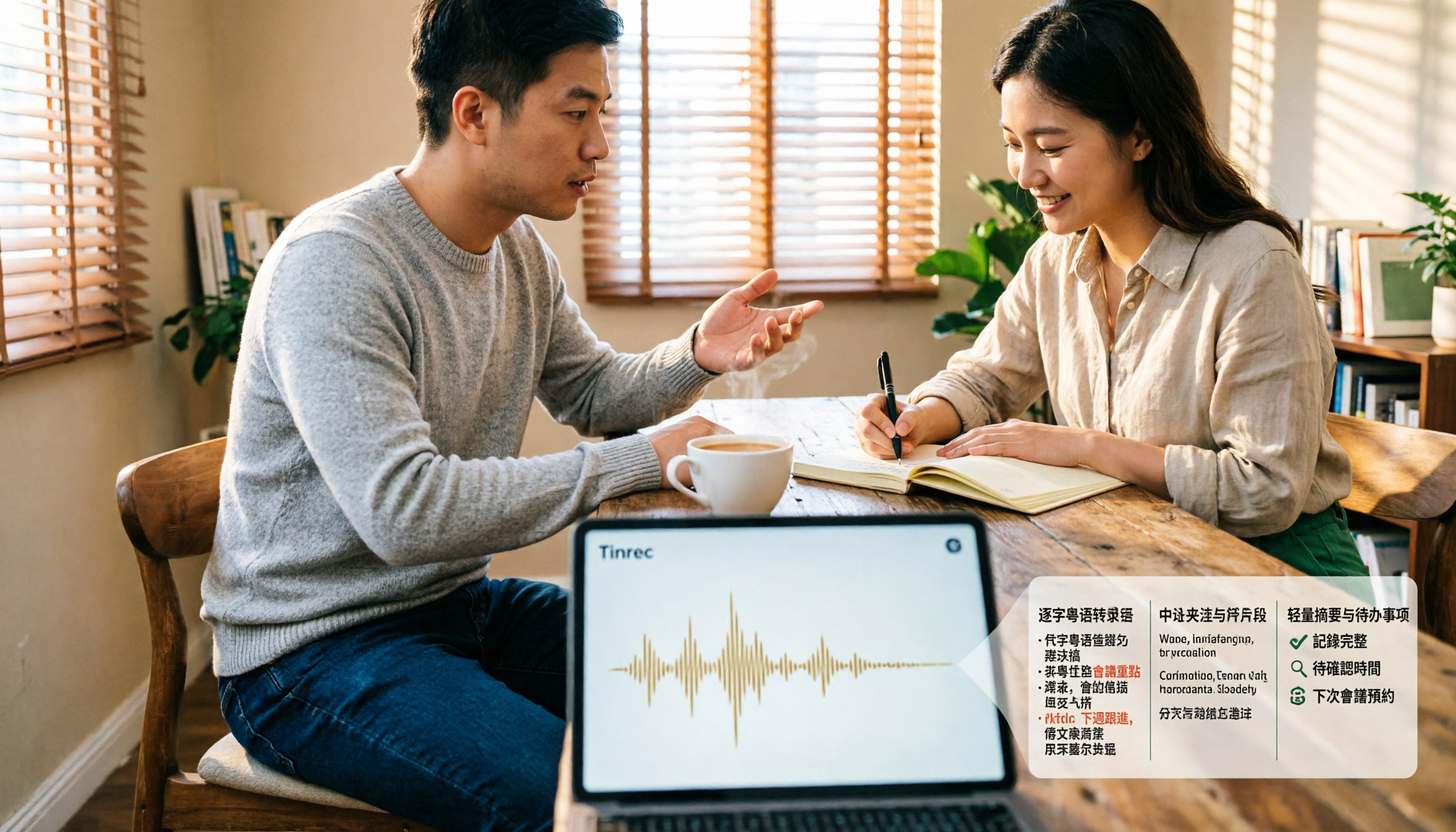
4 Cantonese Speech-to-Text Tools Tested and Compared for 2026: What's the Fastest Way to Transcribe Cantonese?
Transcribing Cantonese meetings, interviews, or YouTube videos is often much harder than Mandarin. This article compares 4 tools through hands-on testing, covering Cantonese models, spoken vs. written output, mixed Chinese-English handling, and post-transcription summaries and action items, so you can figure out the fastest way to transcribe Cantonese speech.
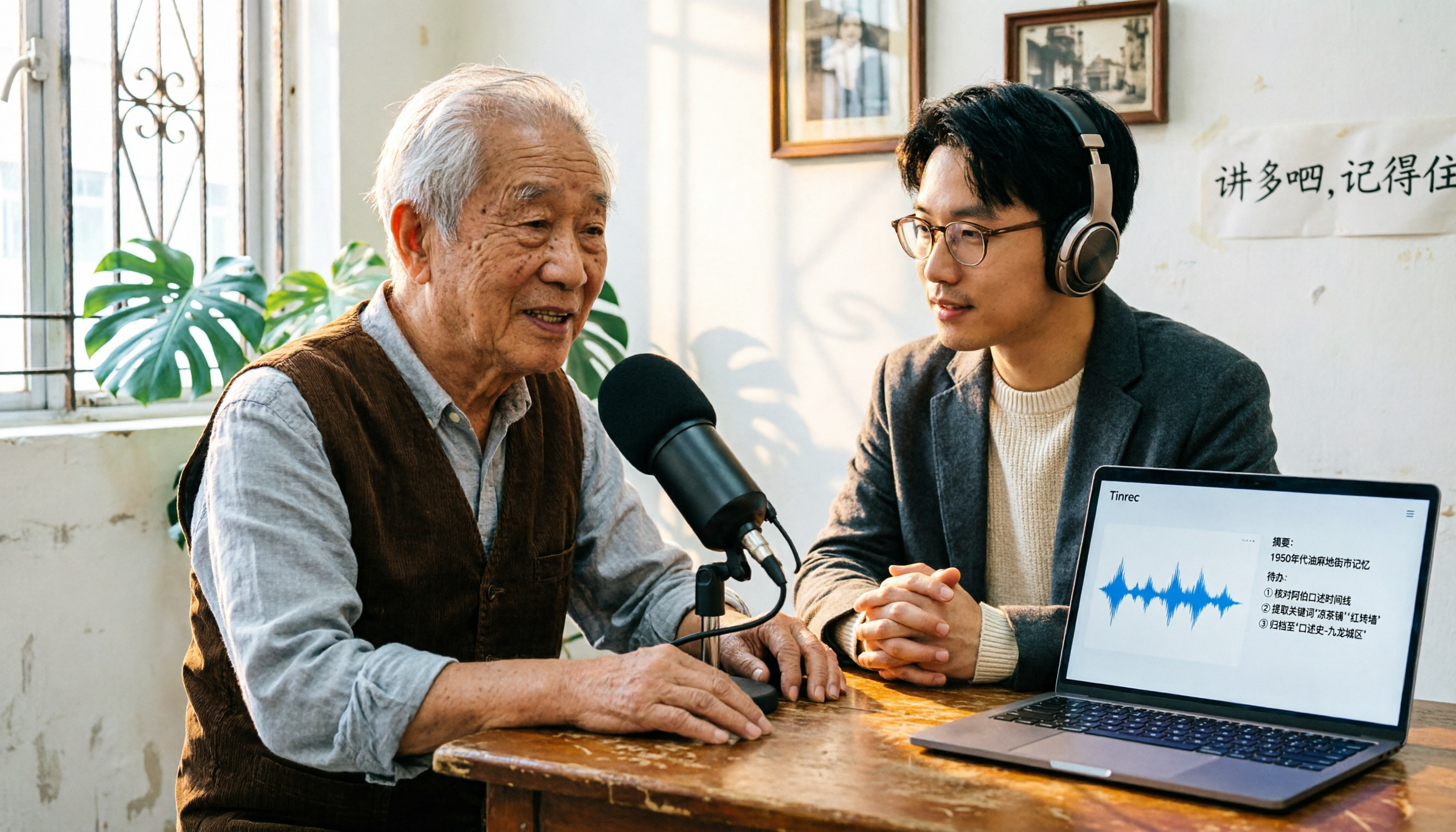
2026 Cantonese Speech-to-Text Comparison: Is Google's Built-in Feature Enough?
Google's built-in voice input can transcribe Cantonese in real time, but it can't handle pre-recorded audio files and lacks summarization and to-do organization. This article addresses common misconceptions, outlines 3 key purchasing factors, and compares Google's built-in feature, Subanana, Notta, and Tinrec (秒聽錄音) through hands-on testing, with a guide to avoiding pitfalls and scenario-based recommendations.
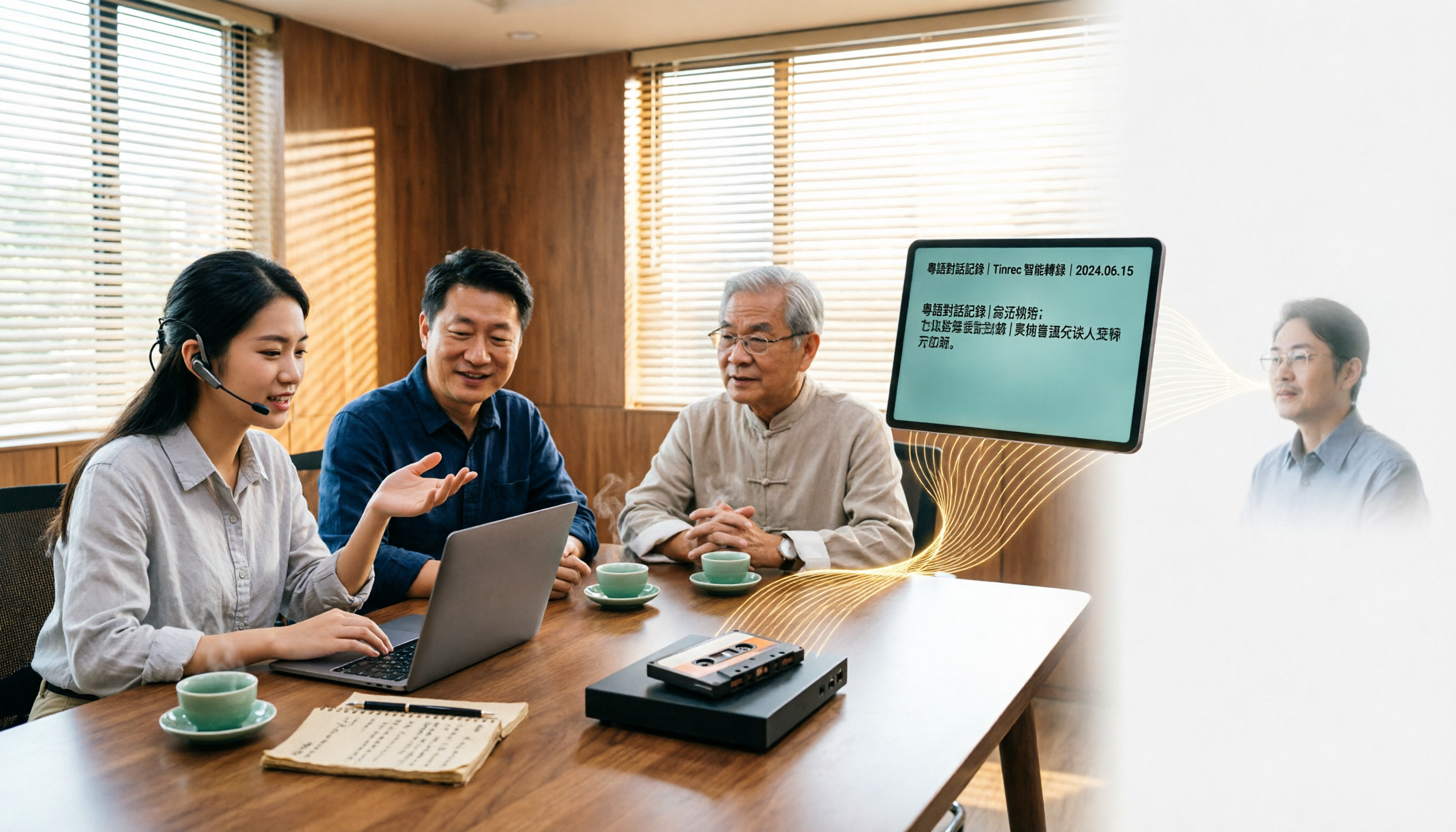
What Is Cantonese Speech-to-Text in 2026: Definition & How to Choose a Tool
What does Cantonese speech-to-text actually do? This article starts with a clear definition, how it works, and common misconceptions, explains why Cantonese is harder to transcribe than standard speech-to-text, then compares Tinrec and PLAUD Note across six practical dimensions: hardware requirements, online meetings, importing old files, post-meeting output, team management, and long-term cost. It also includes six FAQs to help you decide which tool to start with.