
Productivity Tips

4 Northeast Chinese Speech-to-Text Tools Tested: Which Handles Accent and Slang Best?
Many people speak Northeast Chinese, but few speech-to-text tools can understand it well. We tested 4 tools, comparing accent handling, custom vocabulary, post-meeting organization, and cross-platform collaboration, and share Tinrec's real-world performance in Chinese meeting transcription, bot-free recording, and team data retention.
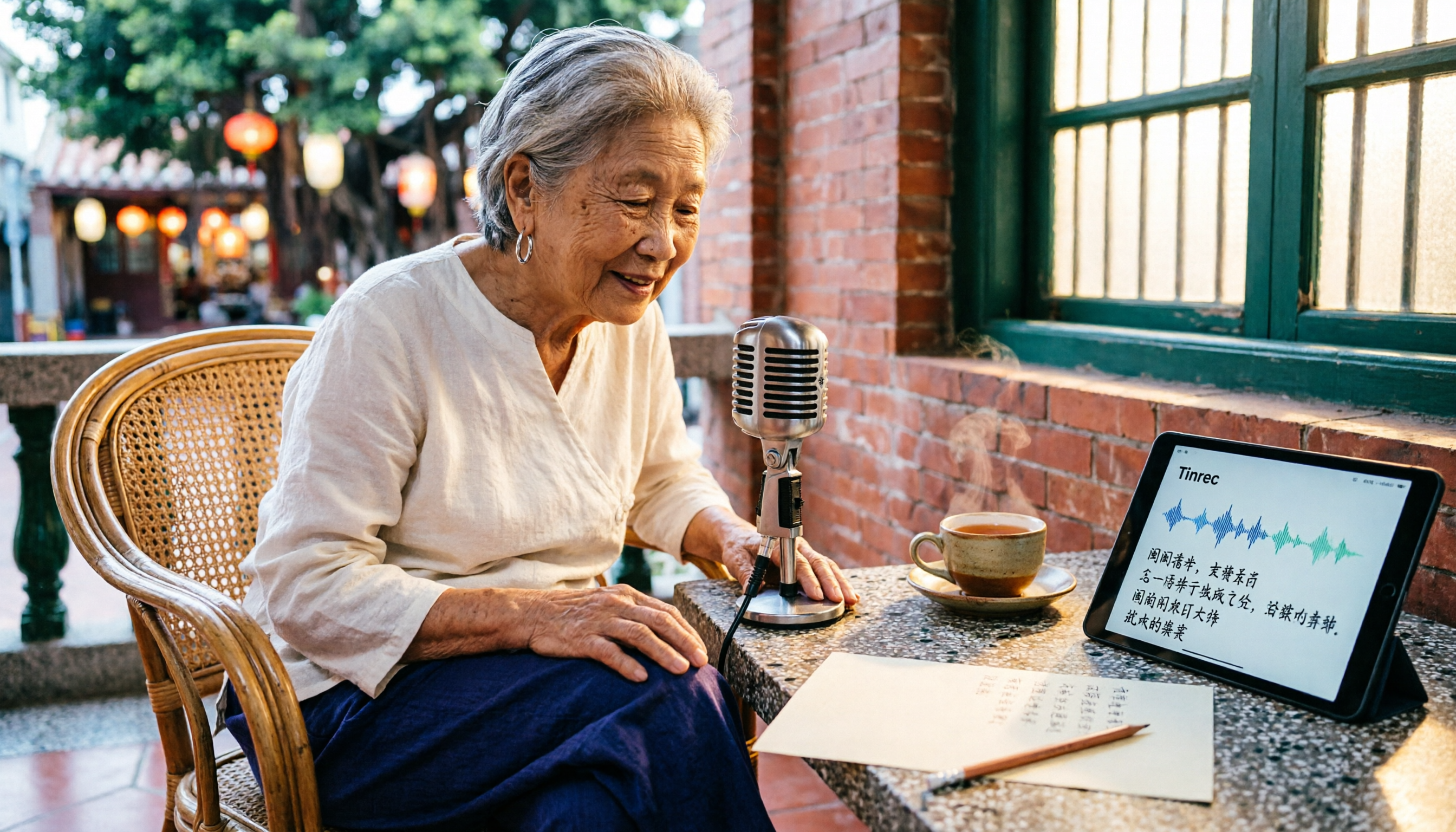
2026 Comparison of 3 Taiwanese Hokkien Speech-to-Text Tools: Which Is Best for Transcribing Taiwanese Recordings?
Taiwanese Hokkien speech-to-text is often confused with 'Taiwanese pronunciation tools,' but they are opposite functions. This article first clarifies the difference between TTS and STT, then outlines 4 key points for choosing a Taiwanese Hokkien transcription tool. It compares Tinrec, Yating Transcription, Notta, and VoxBox, and includes a guide to avoid pitfalls and selection advice.

Free Hakka Speech-to-Text Options in 2026: 4 Tools Compared
Hakka speech-to-text isn't as simple as dropping in a recording. This article addresses three common misconceptions, reviews 4 free options in 2026, and uses Tinrec to demonstrate the full workflow from recording and transcription to AI summaries and conversational queries. It includes 5 buying tips and FAQs to help students and researchers avoid common pitfalls.

4 Sichuan Dialect Speech-to-Text Tools Tested: How to Choose for Accented Transcription and Organization in 2026
Turning Sichuan dialect meeting recordings into text often gets stuck not on recording, but on what to do afterward. This article starts with the differences in dialect recognition and accent tolerance, outlines 4 key buying factors, and compares Tinrec, Otter.ai, Notta, and PLAUD in terms of positioning and limitations. It also includes common pitfalls and scenario-based recommendations to help you decide which tool truly fits your Sichuan dialect and mixed-language meeting needs.

4 Best Sichuan Dialect Speech Recognition Tools in 2026: Chinese Dialect Meeting Transcription Made Simple
Sichuan dialect is not just "accented Mandarin." Its checked tones with tense vowels, lack of distinction between flat and curled tongue initials, and unique vocabulary cause many transcription tools to fail. This article breaks down 4 key purchasing factors using real meeting scenarios, tests Tinrec's bot-free online meeting recording, AI summaries, and Q&A, and briefly reviews the applicable scenarios and limitations of Otter.ai, Notta, and PLAUD Note.

4 Cantonese Meeting Transcription Tools Compared in 2026: From Verbatim Transcripts to AI Follow-Up Questions
The hardest part of Cantonese meetings isn't slow typing—it's the mixed Chinese-English speech that's hard to catch, the 20,000-word transcript no one wants to read afterward, and data scattered across individual accounts. This article starts from real usage scenarios, explains 4 key points for choosing a tool, then hands-on compares Tinrec, Subanana, CantoSub, and PLAUD Note Pro, and finally gives you a ready-to-follow starter checklist.

4 Cantonese Subtitle Generators Compared in 2026: How Tinrec Differs from Subanana
Adding subtitles to Cantonese videos: should you transcribe manually or let AI handle it? This article takes a decision-oriented approach to compare 4 Cantonese subtitle generators in 2026, with an in-depth look at Tinrec's real-time transcription, bot-free online meeting recording, AI summaries and action items, team collaboration, and pricing tiers to help you determine which workflow best fits your video and meeting needs.

How to Look Up Taiwanese Hokkien Translations in 2026: Free Online Pronunciation Resources + Tinrec Meeting Transcription
Why is Taiwanese Hokkien (Tâi-gí) translation harder than English? This guide covers free online pronunciation resources, the Ministry of Education dictionary, iTaigi, and other lookup tools, and explains how Tinrec handles full meetings and interviews—real-time recording to text, bilingual comparison, AI summaries, and Q&A—filling the gap that word lookup tools can't.