
Blog - Page 9 - Tinrec

3 Ways to Use Google Meet on a Laptop in 2026: Which Is Easiest?
How does Google Meet actually work on a laptop? This article starts with the three most common misconceptions, then compares three methods—browser version, desktop app, and Google Workspace integration—through hands-on testing, explaining who each is for and where the limits are. Finally, it covers how to keep records after a meeting, including Tinrec desktop's bot-free recording and the team version's practical approach.
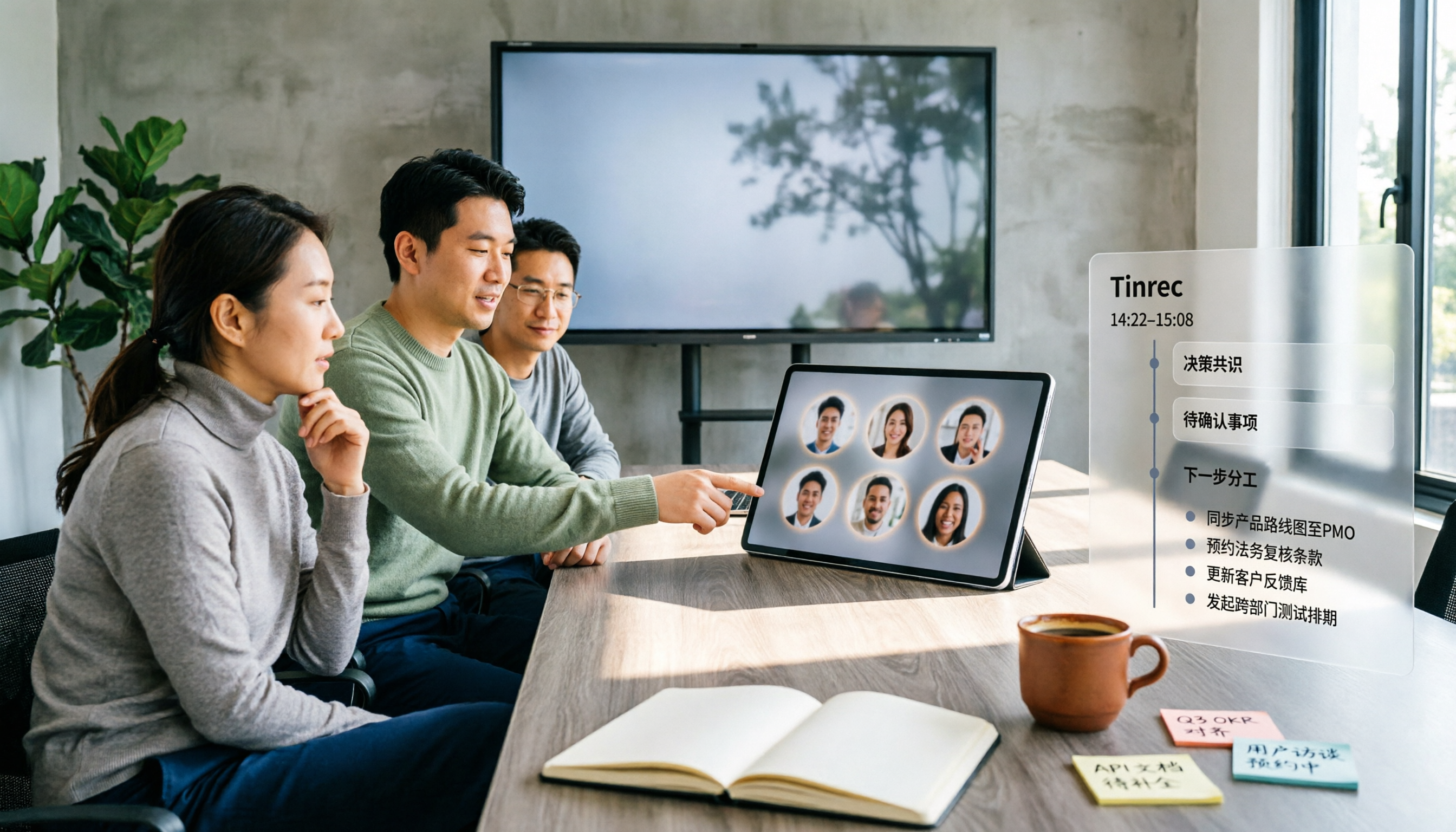
5 Google Meet Companion Mode Alternatives Compared for 2026: From Second Screen to Post-Meeting Organization
Many people think Google Meet's Companion mode is a meeting notes feature, but it actually just lets a second device help you 'participate' in a meeting—microphone and video are off by default, and it doesn't generate transcripts. This article starts with three common misconceptions, compares 5 hybrid meeting approaches, and explains how Tinrec fills the gap in post-meeting organization.

3 Ways to Change Your Name in Google Meet (2026): Which One Won't Affect Your Meeting Notes?
Your Google Meet display name isn't a per-meeting setting—it follows your Google Account. This article covers three ways to change it and their limitations, then explains why instead of just changing your name, you should use Tinrec to capture meeting transcripts, summaries, action items, and team knowledge together. Includes step-by-step instructions and FAQ.

2026 Comparison of 3 Meeting Transcription Tools: Google Meet Is a Video Call, But Meeting Notes Don't Write Themselves
Google Meet is indeed a video calling service, but 'being able to call' doesn't mean 'being able to keep trackable meeting records.' This article starts with definitions, breaks down 4 key points for choosing a meeting transcription tool, compares Tinrec, Otter.ai, Notta, and Granola in hands-on tests, and summarizes 4 common purchasing pitfalls to help you decide which tool suits your meeting scenarios.

How to Use Google Meet in 2026: 5 Steps to Join a Meeting + Post-Meeting Transcription
From getting a meeting link and using in-meeting features to organizing transcripts afterward, this guide breaks down how to use Google Meet in 5 steps. It also compares built-in recording and transcription with Tinrec for Chinese meeting organization, action item extraction, and team knowledge retention, helping you decide which approach fits your meeting scenario.
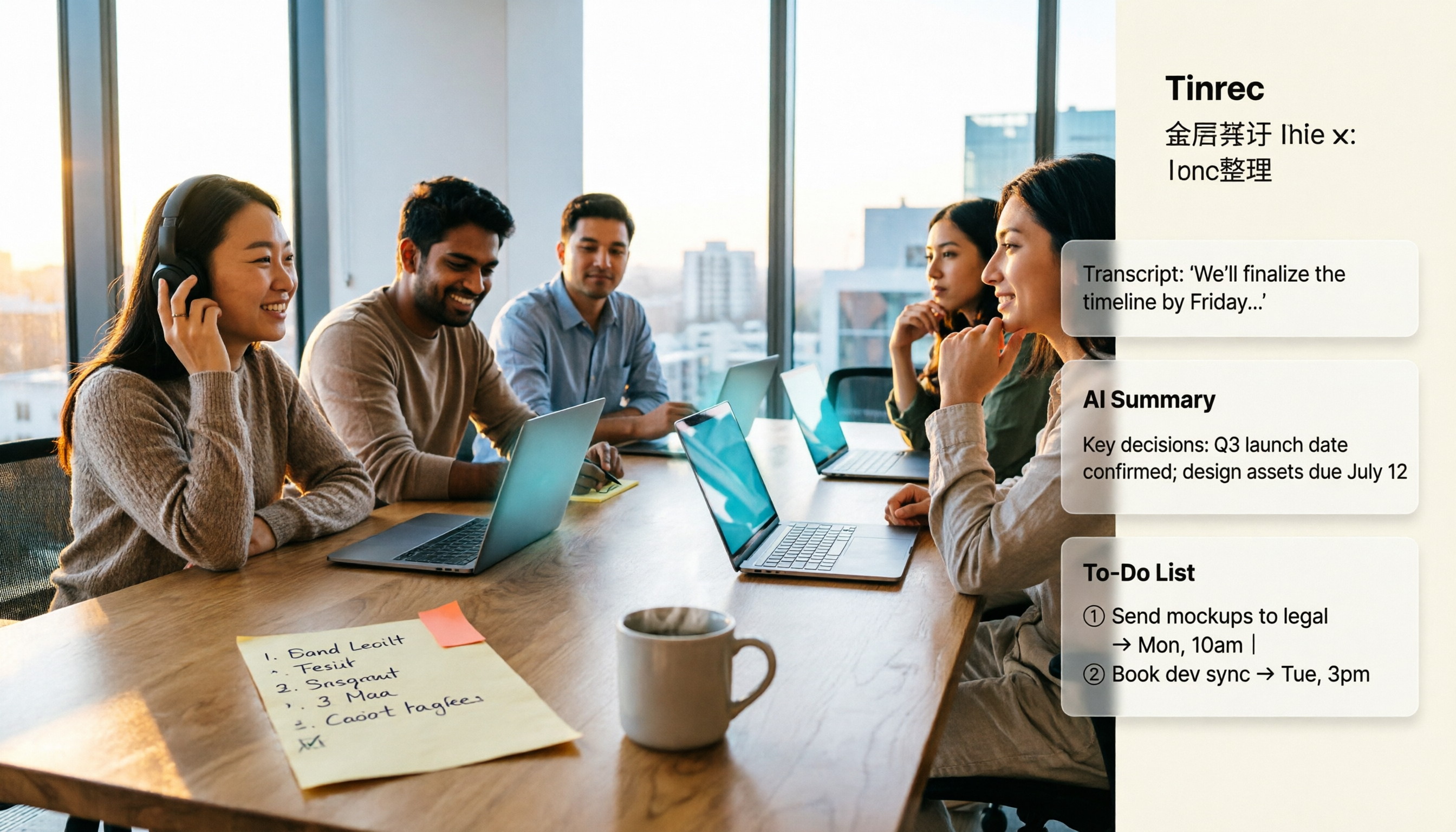
Google Meet vs Discord in 2026: Which Is Better for Formal Meetings? A 3-Way Comparison with Tinrec
Google Meet and Discord each have strengths: Meet offers more stable video and meeting flow, while Discord lets you join voice channels with zero friction and includes text channels. But both lack post-meeting organization. This article uses 4 key selection criteria, hands-on testing insights, and a pitfalls guide to break down the real use cases for each tool, and shows how Tinrec fills the gap with transcripts, AI summaries, action items, and team knowledge retention.

Google Meet Camera Not Working in 2026 vs Tinrec: 5 Troubleshooting Steps to Save Your Meeting Notes
Your Google Meet camera suddenly goes black right before the weekly meeting, and 10 people are waiting on you. This article draws on a mid-level manager's real-world experience: first, 5 Google Meet camera troubleshooting steps you can complete in under 3 minutes, then why fixing the camera only solves half the problem—the real time sink is post-meeting transcripts, summaries, and action items—and how Tinrec takes over with desktop-based, bot-free recording.

Google Meet Screen Sharing: Complete Guide for 2026 (3 Modes, Audio Settings, and 5 Common Mistakes)
A complete 2026 guide to Google Meet screen sharing: the three desktop sharing modes (tab, window, entire screen), sharing tab audio, mobile instructions, the 5 most common pitfalls, and how to capture meeting content afterward as a searchable, actionable record.