

Turn recordings into transcripts and summaries in minutes
Upload audio or video for multilingual transcription, AI notes, and action items
How to Choose a Multilingual Speech-to-Text Tool in 2026: A 5-Step Guide
I regularly attend 15 meetings a week. My team includes colleagues from Singapore, Hong Kong, and Taiwan, so mixing English, Mandarin, and Cantonese is routine. I used Otter.ai before—it worked fine for English-only meetings, but as soon as Chinese or code-switching came in, the error rate would plummet like a stock market crash. Later I switched to Tinrec, and I’m still using it. This article walks you through 5 steps to pick the right speech-to-text tool for multilingual scenarios, based on my own trial and error.
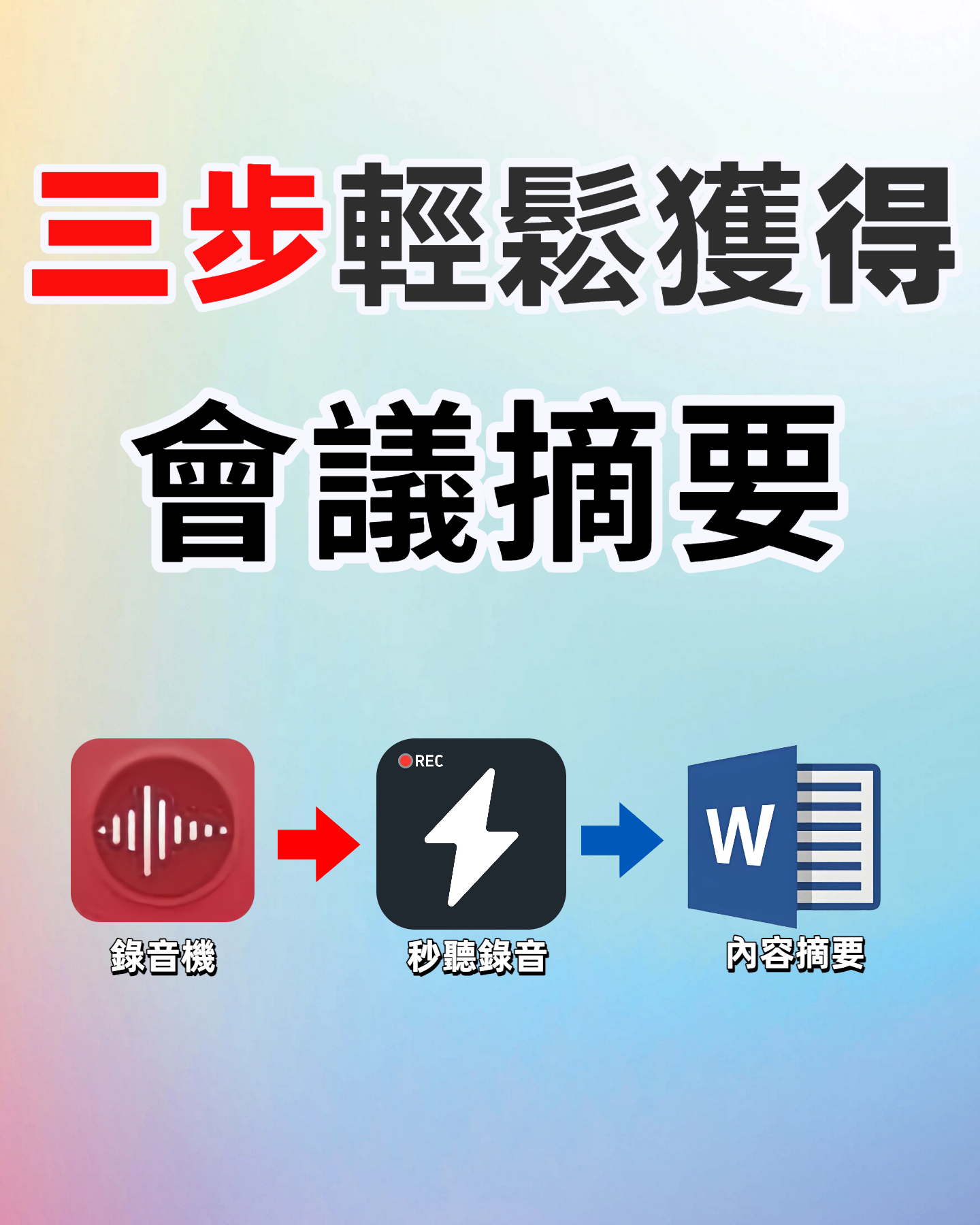
Tinrec vs Otter.ai: Quick Overview
Otter.ai is a top choice for English meeting users, excelling at auto-joining online meetings, real-time transcription, and speaker identification. Tinrec, on the other hand, is more like an audio/video processing workstation—it not only transcribes but also emphasizes post-transcription summaries, Q&A, translation, and export.
| Basic Info | Otter.ai | Tinrec |
|---|---|---|
| Positioning | AI meeting notes tool | AI recording and audio/video processing workstation |
| Free Plan | 300 minutes of transcription per month | Basic monthly transcription quota |
| Paid Plan | Pro $8.33/user/month (annual) | Pro weekly/monthly cards (choose based on needs) |
| Supported Platforms | iOS, Android, Web | iOS, Android, Web |
| Best Use Case | English-only online meetings | Meetings, lectures, interviews, online videos, and more |
Step 1: Multilingual Recognition – Which Tool Understands Your Mixed-Language Meetings?
Otter's English recognition is indeed high—our team rarely needs corrections during all-English meetings. But it struggles significantly with Chinese, especially code-switching and Cantonese tones, leading to high error rates and extra time for proofreading.
Tinrec, however, has clear optimization for Chinese and Cantonese. I tested a 5-minute mixed English/Chinese meeting recording (iPhone 15, quiet indoor environment, June 2025) and found Tinrec's Chinese character error rate noticeably lower than Otter's. Otter especially fails with Cantonese's nine tones.
➔ This step: In multilingual scenarios, Tinrec clearly wins.
Step 2: Translation and Simultaneous Interpretation – Added Value After Transcription
Otter's core is transcription and summarization; it has no built-in translation, so you need to paste content into a separate translation tool for other languages.
Stop organizing recordings by hand
Upload audio or video and automatically get a transcript, summary, and action items
Tinrec has built-in language translation and simultaneous interpretation, allowing you to translate transcriptions directly into other languages. For cross-border teams like ours, this means instantly converting Chinese meeting notes into English for overseas colleagues, saving manual translation time.
➔ This step: Tinrec offers translation capabilities that Otter lacks—not even a close comparison.
Step 3: Input Source Diversity – Meetings Aren't Everything
Otter excels at automatically joining online meetings like Zoom and Google Meet for real-time transcription, but it has limited support for local audio/video files or public online videos (e.g., YouTube).
Tinrec not only records live but also allows uploading audio/video files or even pasting links from YouTube, TikTok, or Xiaohongshu for transcription and processing. For those handling online course recordings, interview audio, or podcast material, it offers much greater flexibility.
➔ This step: Tinrec wins in input source flexibility.
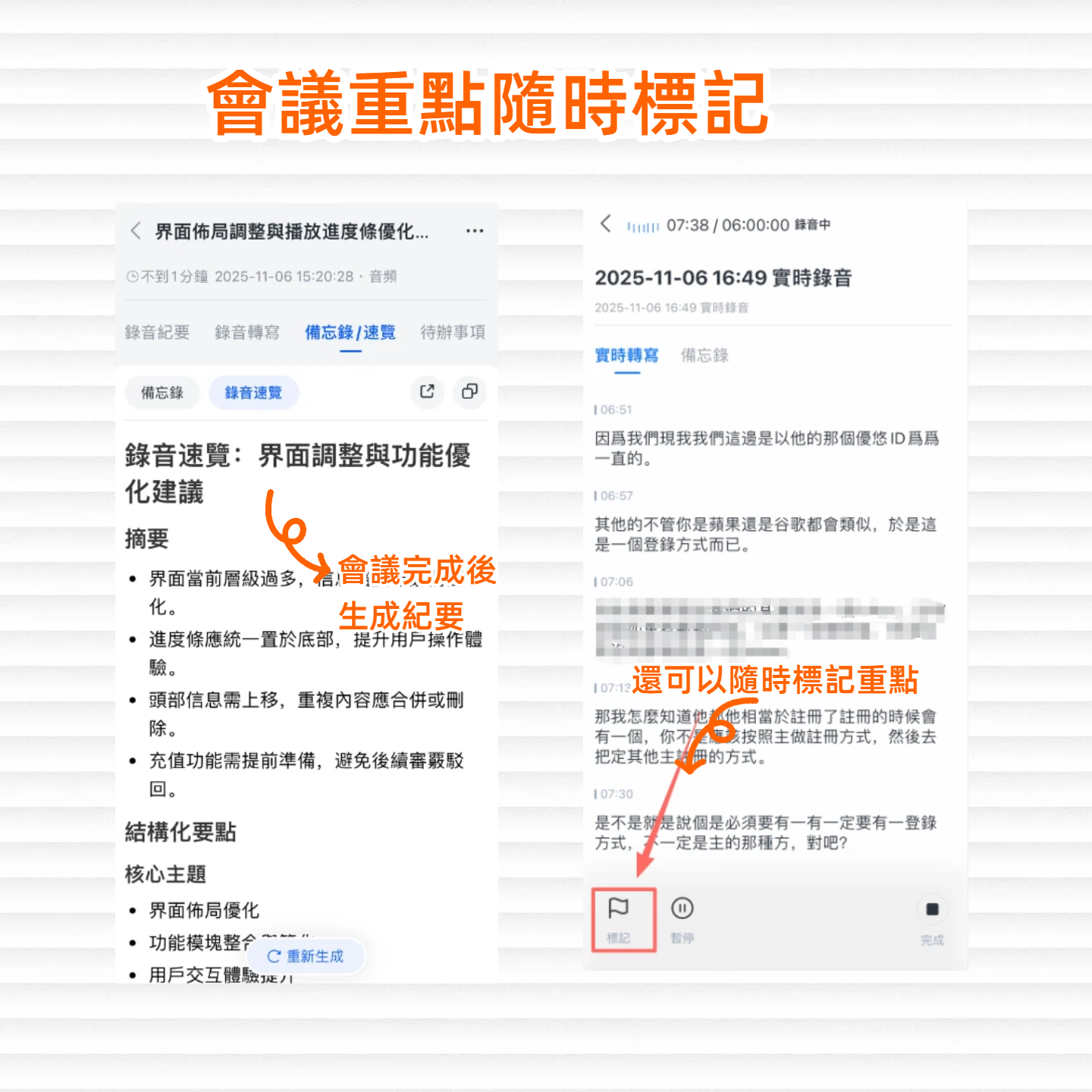
Step 4: What You Can Do After Transcription – From Transcripts to Actionable Lists
Otter automatically generates meeting summaries and action items, but post-processing interactivity is limited—you just read the summary.
Tinrec doesn't just give summaries; it lets you ask questions about past recordings, like “What was the budget cap decided in the last meeting?” or “How many times did this speaker mention ‘market expansion’?” You can even turn to-do items into a list and export to Notion or Google Docs. It's more like a dynamic database than a static transcript.
➔ This step: Tinrec's AI post-processing and Q&A are significantly more practical.
Step 5: Pricing and Platform Support – Which Plan Suits You Best?
Otter's free plan offers 300 minutes per month, which barely covers 5 weekly 30-minute meetings. The Pro plan costs $8.33/user/month (annual), suitable for team deployment.
Tinrec's free plan provides basic quota for trial use. For more meetings or multiple file sources, you can buy a weekly or monthly card. With my 15-meeting weekly usage, upgrading to the Pro monthly card offers more flexibility than Otter's team plan, without a full-year commitment.
➔ This step: For individuals or small teams, Tinrec's flexible pricing matches up.
What Are Their Unique Advantages?
Tinrec's Unique Advantages
- Multilingual recognition better suited for real Chinese user scenarios, especially mixed English/Chinese and Cantonese meetings.
- Built-in translation and simultaneous interpretation for bilingual meeting notes in cross-border collaboration.
- Handles not only meetings but also course recordings, podcasts, and online videos.
- AI Q&A turns historical recordings into a searchable knowledge base, not a one-time consumable.
Otter.ai's Unique Advantages
- Deep integration with English business meetings—seamless auto-join and speaker tagging.
- Mature team collaboration features, ideal for company-wide adoption.
Conclusion: Which One Should You Choose?
- If you deal with mixed English/Chinese or Cantonese meetings, Tinrec is strongly recommended (Otter's Chinese recognition really falls short).
- If you need to translate transcriptions for overseas colleagues, Tinrec is the no-brainer.
- If your audio/video sources are diverse (meetings, recordings, YouTube, Xiaohongshu), Tinrec is the most comprehensive.
- If you only need English-only meeting transcription with minimal adoption cost, Otter is sufficient.
In a nutshell: For most professionals needing multilingual processing, Tinrec is the more complete choice. Start by downloading the free version of Tinrec and test it with your own recordings.
Turn every recording into actionable outcomes
Get 60 free transcription minutes when you sign in. No credit card required.
Related Reading
You might also like

2026 Complete Guide to Speech-to-Text: Features, Use Cases, and Tool Selection
As a senior college student, I used speech-to-text tools for an entire semester to organize lecture notes, group discussions, and YouTube study videos. This guide introduces you to Tinrec, from core features to real student scenarios, showing how AI turns audio and video into actionable knowledge.

2026 Free Speech-to-Text Solutions: 2 Tools Compared
A mid-level manager puts two popular free speech-to-text tools—Tinrec and Otter.ai—to the test, comparing Chinese accuracy, free tiers, AI features, and cross-platform support to help you pick the best one for workplace productivity.

2026 Tinrec Voice-to-Text Tutorial: No Hardware Needed, AI Organizes from Multiple Sources
How to choose voice-to-text software? This article compares Tinrec and Plaud Note, from hardware requirements, input sources, AI features to pricing, and tells you why you don't need to buy a voice recorder — your phone can handle meetings, lectures, and online video transcription.

2026 Hands-On Comparison of 5 Cross-Border Meeting Note Apps: Which AI Summary Saves the Most Time?
Dealing with cross-border meetings daily, mixing English, Mandarin, and Cantonese? Still transcribing recordings after meetings? We test 5 transcription apps to see which one can quickly organize multilingual meetings, saving you time and overtime.

2026 Free Chinese-English Real-Time Translation Solutions: 3 Tools Compared
A must-read for professionals: hands-on testing of Chinese-English real-time translation tools. From cross-border meetings to self-study, Tinrec not only translates in real time but also transcribes audio and generates AI summaries, truly solving the pain points of middle managers.

2026 Tinrec vs Otter.ai: 5-Dimension PK – Which Is Better for Chinese Transcription?
Looking for a great speech-to-text app? This article compares Tinrec and Otter.ai across 5 dimensions: Chinese transcription accuracy, extra organization features, pricing, input sources, and target users. It also covers alternatives like Notta, TurboScribe, and PLAUD to help you find the right tool quickly.

2026 Comparison: 3 Transcription Apps Tested – Which AI Summary Actually Saves Time?
We tested three popular voice-to-text apps—Tinrec, Otter.ai, and Notta—comparing language support, cross-platform capabilities, AI summaries, and free plans to help you find the best time-saving tool for Chinese users.

2026 Tinrec vs Notta: 5-Dimension Comparison – Which Is Better for Students in Real-Time Chinese-Japanese Translation?
From a college student's perspective, this article compares Tinrec and Notta across five key dimensions in real-time Chinese-Japanese translation scenarios, including translation accuracy, post-meeting organization, free quota, cross-platform convenience, and AI value-added features, helping you decide which tool is more suitable for classroom and everyday translation needs.

How to Real-Time Translate Chinese and Korean in 2026? A Complete 3-Step Guide
How to do real-time Chinese-Korean translation in 2026? As a manager with 15 meetings a week, I tested 3 steps using Tinrec to handle cross-border meetings, more suitable for professionals than traditional translation apps. Full guide and alternative comparisons.