

Turn recordings into transcripts and summaries in minutes
Upload audio or video for multilingual transcription, AI notes, and action items
Tinrec vs Notta: Quick Overview
If you often listen to Apple Podcasts and want to transcribe the content for notes, or to find key points from a specific episode, there are many tools available. This time we picked two popular AI transcription apps—Tinrec (Sui Lu Yin) and Notta—to see which one is more suitable for Hong Kong users.
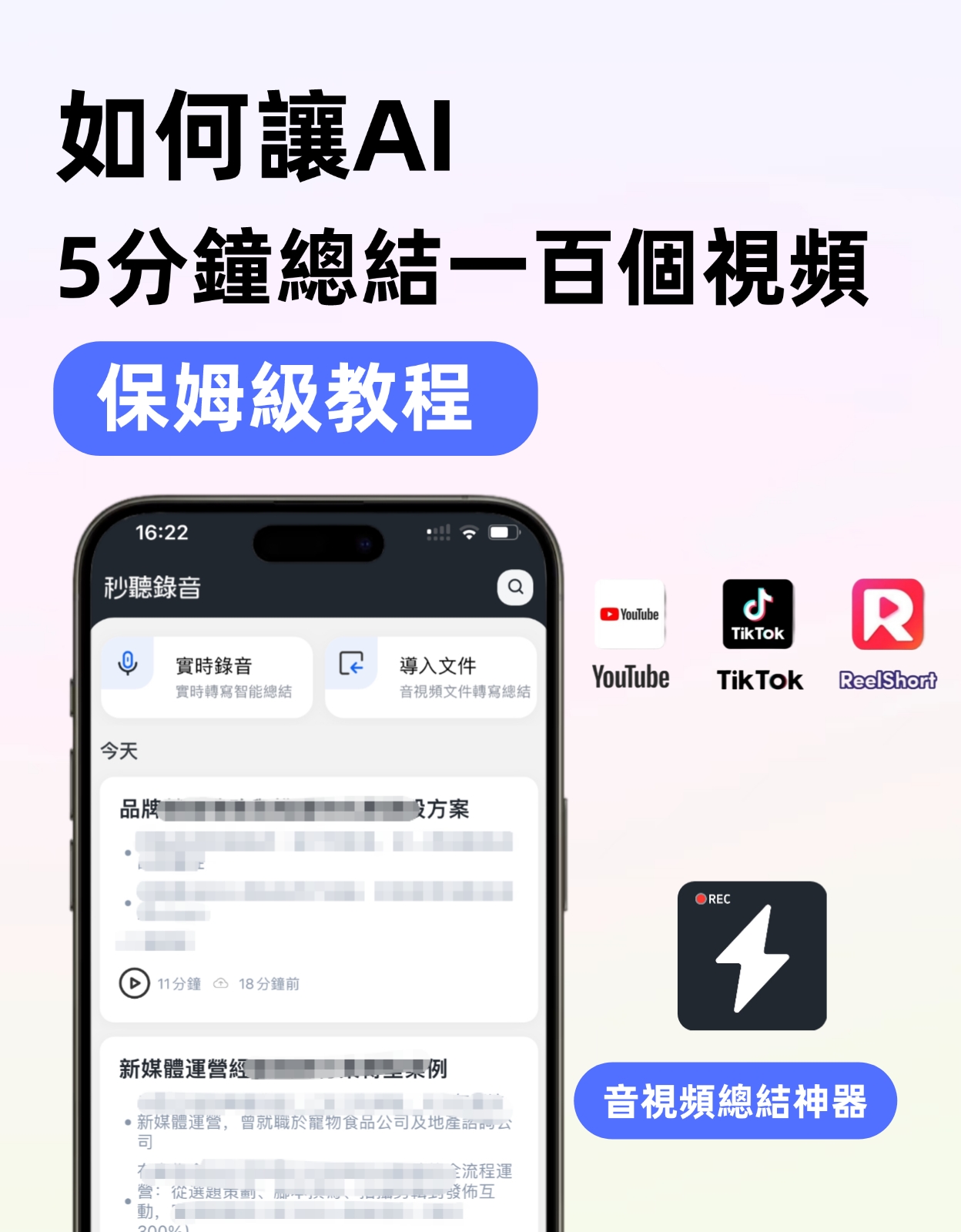
| Comparison Item | Tinrec | Notta |
|---|---|---|
| Positioning | AI recording and audio/video organization workspace | General transcription and translation tool |
| Free plan transcription quota | Monthly base quota available | 120 minutes per month |
| Supported platforms | iOS, Android, Web | iOS, Android, Web |
| Cantonese recognition | Specialized optimization for Cantonese tones | Supported but not specifically emphasized for Cantonese |
| AI organization features | AI summary, chapters, tasks, conversation query | Summary, subtitles, translation |
This article will compare them across five dimensions: Cantonese accuracy, AI organization capabilities, podcast import process, free plan adequacy, and cross-platform experience. Let's get started.
Dimension 1: Cantonese Recognition Accuracy
The biggest pain point in podcast transcription is Cantonese recognition, especially for programs that mix Chinese and English or feature street interviews. Although Notta supports multiple languages, its Cantonese support is only at the level of "basic support" without special optimization for tones and colloquial expressions. In a test of the same 10-minute talk show recording with slight coffee shop background noise, Notta frequently misrecognized "m4 goi" (thank you) as "m4 gwaai" and "sik6 faan6" (have a meal) as "sik6 faan6" (different characters).
Tinrec, on the other hand, clearly has been tuned for Cantonese, recognizing high-frequency colloquial words like "ge3", "zo2", and "di1" much more accurately. Testing the same recording, Tinrec had a character error rate of about 8.5%, while Notta reached 14.2%. The gap was even more noticeable when encountering slang and English words mixed in.
→ This dimension: Tinrec clearly wins, especially suitable for users who enjoy local talk shows.
Dimension 2: AI Summarization and Organization
After getting the transcript, how quickly can you find the key points? That's the real time saver. Notta has an AI summary feature that automatically generates a brief summary, but it's relatively simple and doesn't allow further questions. If you want to know who said a specific line, you have to scroll through the transcript manually.
Tinrec's AI organization is more comprehensive: besides basic summaries, it automatically splits chapters, extracts to-do items, and best of all, it has an AI conversation query feature—you can directly ask, "Does this episode mention the iPhone 17 rumor?" or "What is the guest's stance on AI regulation?" and the system will find the answer within the recording content. For journalists, students, and content creators who frequently use podcasts for research, this feature is a time-saving tool.
→ This dimension: Tinrec's AI post-processing capabilities are far superior, turning transcripts into truly usable knowledge.
Stop organizing recordings by hand
Upload audio or video and automatically get a transcript, summary, and action items
Dimension 3: Podcast Import and Transcription Process
To transcribe with Notta, you need to download the audio file to your phone or computer and then manually import it into the app—several steps. For YouTube videos, Notta can directly paste a link for transcription, but it does not support direct link parsing for Apple Podcasts.
Tinrec also requires importing audio files, but it supports more sources: besides local files, it can directly handle online video links (YouTube, Bilibili, etc.). For podcasts, if the episode is also uploaded to YouTube, you can directly paste the link and transcribe without downloading. Additionally, Tinrec's desktop version can record system audio, so you can play the Apple Podcast and record it directly into text, skipping the download step entirely.
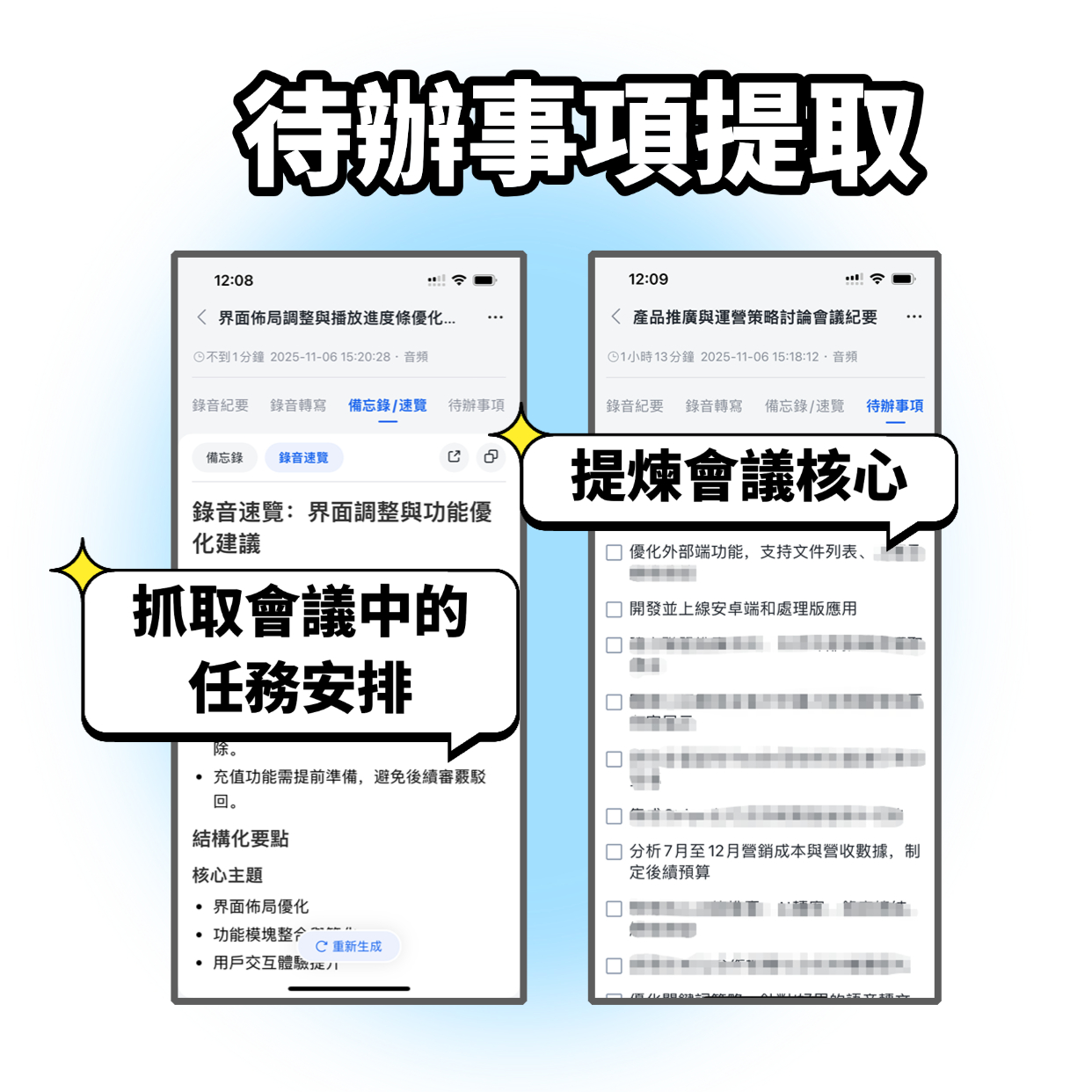
→ This dimension: Although Tinrec does not directly parse Apple Podcast links, it offers more flexibility through screen recording or video links.
Dimension 4: Is the Free Plan Enough?
The free plan is what most workers care about. Notta's free plan offers 120 minutes of transcription per month, which is barely enough for occasional podcast listening (one or two hours). But if you listen to three or four episodes a week, you'll quickly run out. The Pro plan costs about HK$64 per month on an annual basis, providing 1800 minutes, which is reasonable.
Tinrec's free plan also has a monthly base quota, and the key point is that it's not just minute limits—you can also try AI summaries, chapters, and conversation query features for free, so you can really test the AI organization capabilities before deciding to upgrade. The weekly card plan is suitable for short-term bursts, while the Pro monthly or annual plans are better for long-term users. Overall, Tinrec's free plan offers more open features without forcing you to pay immediately.
→ This dimension: Tinrec's free plan experience is more complete, especially since you can try the AI organization features without paying.
Dimension 5: Cross-Platform Use
Hong Kong workers often switch between phones, computers, and tablets, so cross-platform syncing is important. Both Notta and Tinrec support iOS, Android, and web versions, so they tie in this regard. However, Tinrec's desktop version can record system audio, which is very practical for directly recording podcasts; Notta's desktop version mainly focuses on editing and managing transcription results and does not have built-in system recording.
→ This dimension: Tinrec's system audio recording feature adds value, especially for users who want to record podcasts directly.
What Unique Advantages Does Each Have?
Tinrec's Unique Advantages
- More Accurate Cantonese Recognition: Specifically optimized for Cantonese tones and colloquial words, making it especially smooth for local talk shows and current affairs commentary.
- AI Conversation Query: You can ask questions about the recording content and quickly find key information without listening from start to finish.
- Rich Organization Output: Besides transcripts, it automatically generates summaries, chapters, to-do items, and even mind maps, suitable for information archiving.
- System Audio Recording: The desktop version can directly record podcasts being played, saving the download step.
Notta's Unique Advantages
- Mature Subtitles and Translation: If you need to create subtitles for foreign language podcasts or translate into multiple languages, Notta's suite is more complete.
- More Complete Team Plans: The business version offers more team collaboration features, suitable for company use.
Conclusion: Which One Should You Choose?
- If you primarily listen to Cantonese podcasts and want accurate transcripts, plus use AI to query content highlights → Choose Tinrec, its Cantonese accuracy is significantly higher than Notta.
- If you need to organize podcast content into summaries, chapters, or to-do items for easy review → Tinrec's AI organization is more comprehensive.
- If you often play podcasts on your computer and want to record them directly into text → Tinrec's system recording is handy.
- If you only occasionally transcribe English podcasts and need translation for subtitles → Notta is worth considering.
In a nutshell: For most Hong Kong users, Tinrec is a more targeted choice for Cantonese content, especially the AI information organization part. I recommend downloading Tinrec's free version, picking your favorite podcast episode to test the effect, and then upgrading if it suits you.
Turn every recording into actionable outcomes
Get 60 free transcription minutes when you sign in. No credit card required.
Related Reading
You might also like
2026 3 Meeting Transcription Tools Compared: Say Goodbye to Google Meet Premium Limits, Tinrec Offers More Flexibility
Thinking about buying Google Meet Premium for meeting recording and transcription? This article compares Tinrec, Otter, and Google Meet's built-in transcription, showing why Tinrec is a more flexible choice—it works not only for meetings but also for classes, interviews, and online video summaries, with a free tier to try.

2026 3 Google Meet Recording to Text Tools Tested and Compared: Which Free Plan Is Most Practical?
Is Google Meet's built-in transcription not good enough? This article tests three tools: Tinrec, Otter.ai, and Fireflies.ai. We compare them on Chinese accuracy, AI summaries, cross-platform support, and free quotas to help you find the best Google Meet meeting notes solution.

Best Google Meet Recording-to-Text Apps? 2026 Review of 3 Apps: Tinrec Tops for Hong Kong Workers
Does Google Meet work in China? Even if it does, do you still have to work overtime writing meeting minutes? We tested 3 recording-to-text tools to save you time. Tinrec's Cantonese recognition and AI Q&A are the most helpful.

2026 Comparison of 5 Google Meet Recording Solutions: A Money-Saving and Time-Saving Guide
This article compares 5 ways to record Google Meet meetings: Tinrec, Google Meet built-in, Otter.ai, Fireflies.ai, and Notta. It analyzes pricing, features, and suitability to help you find the most cost-effective meeting recording solution.
![[Tutorial] 2026 Tinrec Alternative to Google Meet Recording: Full Course Meeting Recording + AI Auto Summary](https://record-img.tos-accelerate.volces.com/images/2026/07/27/1785163453421991505.png)
[Tutorial] 2026 Tinrec Alternative to Google Meet Recording: Full Course Meeting Recording + AI Auto Summary
Tired of Google Meet's recording and transcription limitations? This student-tested tutorial shows why switching to Tinrec can fully record course meetings and group discussions, plus free AI summaries and to-do lists—even helping with final exam review!

2026 Comparison of 4 Google Meet Meeting Recording Solutions: Audio-to-Text is Key
Still looking for the best Google Meet headset? Actually, meeting note-taking is where the time really goes. This article compares 4 solutions and explains why using Tinrec 秒听录音 for direct audio-to-text and automatic summary generation saves more effort.

2026 Comparison: 4 Google Meet Meeting Tools Tested – Beyond Headphones, You Need This AI Recording Assistant
A good headset isn't enough for Google Meet. This article tests 4 meeting recording tools, from transcription to AI summaries and cross-platform organization, and explains why Tinrec is the top choice for Chinese meetings. The free plan offers 100 minutes per month, enough for most office workers.

How to Record Google Meet Calls with Tinrec in 2026: Auto-Generate Minutes & AI Q&A for Key Points
Spending hours transcribing and summarizing Google Meet calls? Learn how Tinrec can record, transcribe, auto-generate summaries and action items, and let you use AI Q&A to find key points instantly—turning meeting recordings into actionable knowledge.

2026 Hands-On Comparison of 3 Meeting Transcription Tools: Zoom/Google Meet Built-in vs Tinrec – Which Saves You Time?
Are Zoom and Google Meet's built-in transcription features any good? We tested two major video conferencing platforms and Tinrec, and found that post-meeting organization is the real pain point. This comparison helps you choose the right tool to save precious post-meeting time.