

Turn recordings into transcripts and summaries in minutes
Upload audio or video for multilingual transcription, AI notes, and action items
Meeting Over, Notes Begin: The Hidden Overtime After Google Meet Screen Sharing
Joining a Google Meet, sharing your screen, discussing slides—everything flows smoothly. But once the meeting ends, the real challenge starts: who will take the meeting notes?
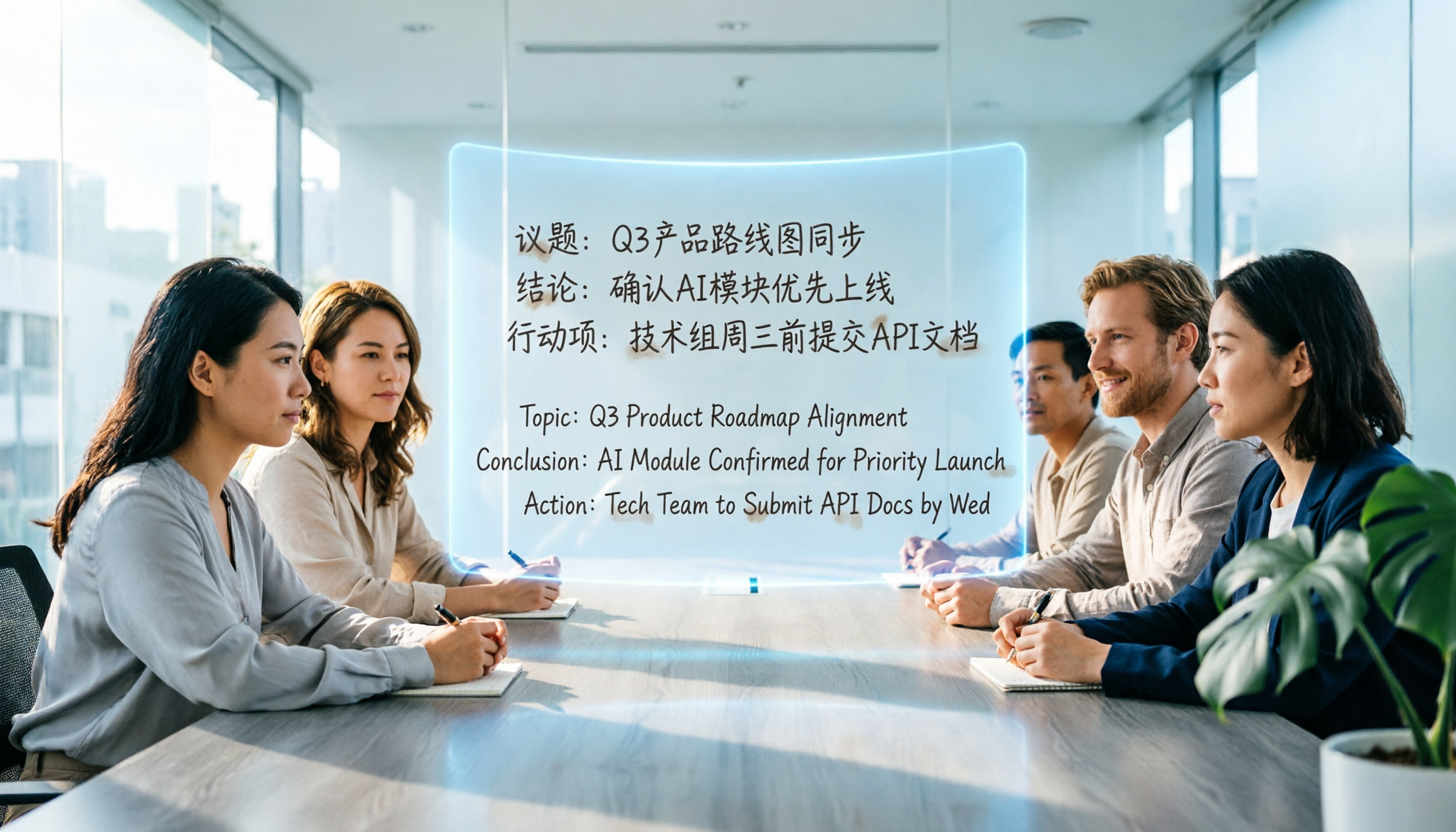
If the meeting is in English, you might rely on built-in captioning to get the gist, but when Traditional Chinese discussions, mixed Chinese and English, and a barrage of jargon are involved, manual transcription is time-consuming. Worse still, charts, annotations, and impromptu decisions made during screen sharing—these details may not be fully captured by simply replaying the audio.
If you've ever stared at a two-hour recording after a meeting feeling overwhelmed, this article is for you.
Before Choosing a Voice-to-Text Tool, Understand These 3 Key Points
These tools are not one-size-fits-all. The three dimensions below determine whether you save time or face another form of overtime.
1. Recognition Accuracy: Don't Just Look at Official Numbers—Consider Real-World Conditions
Many tools claim "98% accuracy," but that's usually in a quiet studio with standard accents. In real Google Meet sessions, there may be keyboard clicks, air conditioning hum, multiple crosstalk, and faster speech during screen sharing. Our tests used a 5-minute Traditional Chinese meeting recording with slight background noise—giving you a reference point that matters.
2. More Than a Transcript: How Much Can the Tool Do After Transcription?
Converting audio to text is just the first step. A truly valuable tool should auto-generate summaries, break into sections, extract action items, and even let you ask questions to find key points. If you only use it as a replacement for a playback device, you might as well take manual notes.
3. Cross-Platform and Source Support: Your Meetings Aren't Just on Your Computer
You might use a Windows laptop for Google Meet today, a phone to replay tomorrow, and later want to turn a YouTube tutorial into notes. Tools locked to a single device or only supporting meeting recordings hit a ceiling quickly.
For the above three points, Tinrec (秒聽錄音) stood out among tested tools. Details below.
Tinrec (秒聽錄音)—Our Top Pick After Testing
Tinrec is an AI voice and video note-taking tool supporting 14 languages, available on iOS, Android, and web. It helps turn chaotic Google Meet screen sharing recordings into searchable, summarizable, ready-to-deliver documentation.
How It Solves Your Meeting Note Pain Points
Scenario 1: Join a Google Meet with screen sharing while Tinrec silently records in the background
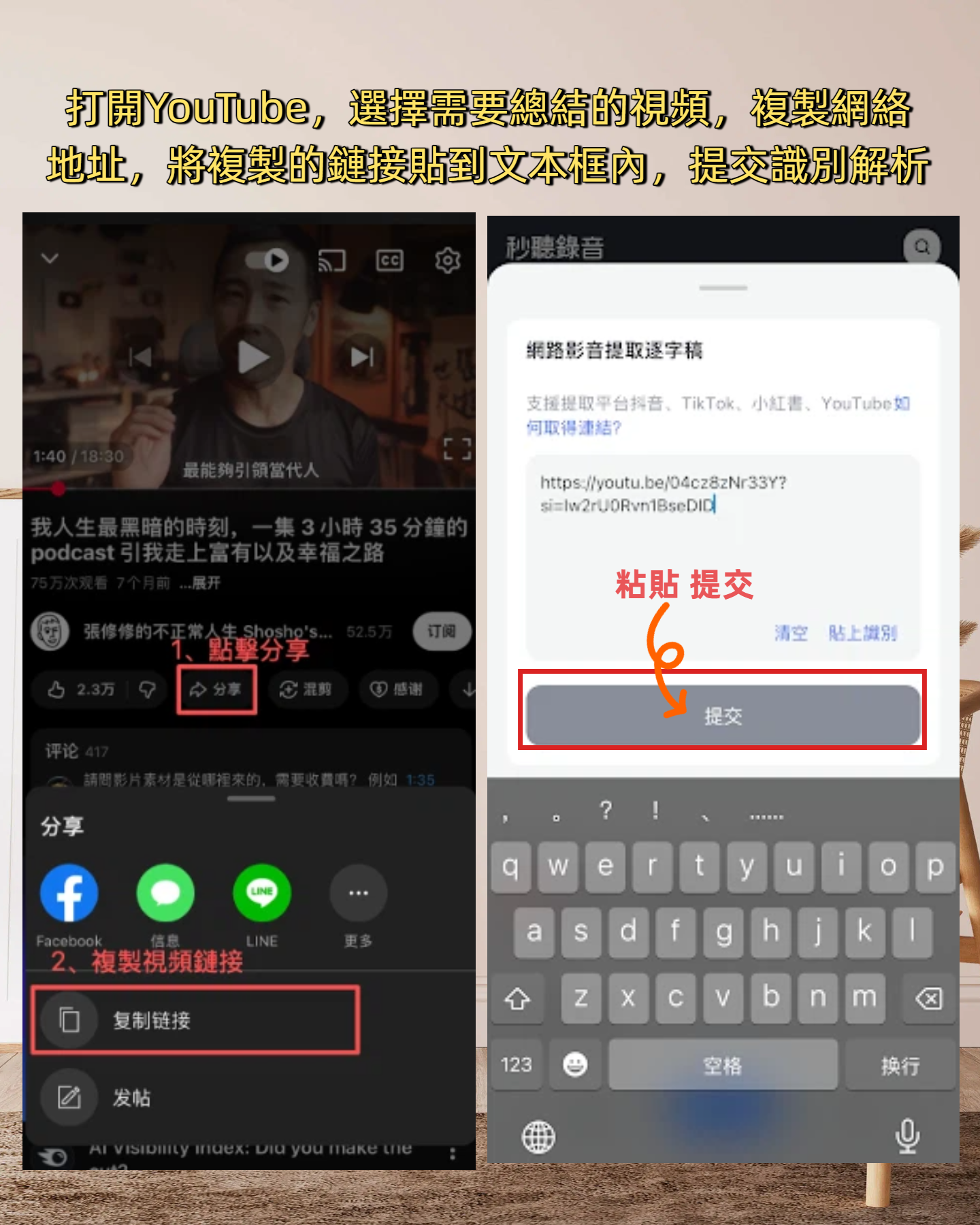
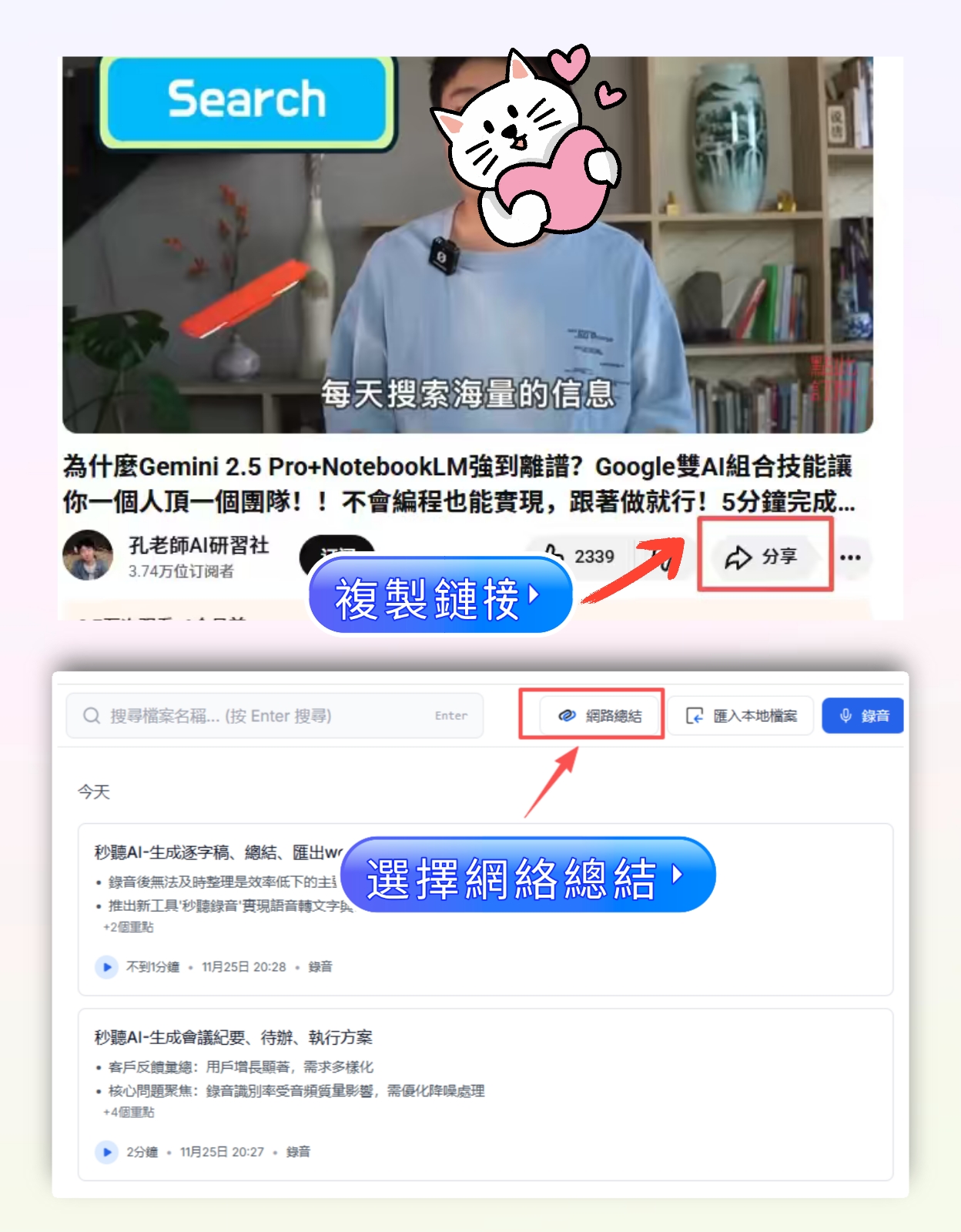
When you join a Google Meet on your computer and share your screen, simply enable Tinrec's Computer Meeting Recording feature. It captures system audio and transcribes every word in real time. When the meeting ends, AI summaries, chapters, and action items are already generated, even with task assignments and deadlines.
Scenario 2: Charts and discussions during screen sharing—ask a question afterward
During the meeting, you might be reviewing reports and marking key points. Tinrec's unique feature: after recording, you can ask AI questions like "Who suggested the budget adjustment in the last meeting?" It understands semantics and gives you answers, not just keyword search. Competitors at similar price points rarely offer this.
Stop organizing recordings by hand
Upload audio or video and automatically get a transcript, summary, and action items
Scenario 3: Traditional Chinese meetings, mixed Chinese/English, colloquial content—most stable recognition
We tested a 5-minute Traditional Chinese meeting recording (slight keyboard background noise, Taiwanese accent, June 2026). Tinrec achieved a character error rate of about 8.3%, high phrase completeness, and correctly captured terms like ROI and CRM. This places it among the top performers.
Key Strengths
- Strong Traditional Chinese recognition: Handles Taiwanese and Hong Kong accents, mixed Chinese/English content reliably.
- AI query: Directly ask questions after recording, saving re-listening time.
- Multi-source integration: Not just Google Meet meetings; also local audio files and YouTube video links, making it easy to build a personal knowledge base.
- Diverse output: Transcripts, summaries, action items, captions, export to Notion/Google Docs, etc., fitting your workflow.
Who Is It For?
If you have 2+ Google Meet meetings per week (especially with screen sharing discussion needs), need meeting notes or task tracking after, or manage projects with heavy Traditional Chinese communication, Tinrec currently saves you the most note-taking time.
Limitations
The free plan offers 100 minutes of transcription per month; heavy users may need Pro. But for most people with 3-4 meetings per week, the free version is enough for core features. Computer meeting recording currently focuses on system audio; if you need simultaneous mic and system audio, test your device settings first.
Other Options Besides Tinrec
Otter.ai
The champion for English meetings: free tier gives 300 minutes/month, with mature AI summaries and speaker identification. However, it weakly supports Traditional Chinese and Cantonese, lacks AI query, and cannot parse online video links. If 90%+ of your meetings are in English, Otter is more cost-effective than Tinrec. This is the only scenario where we recommend a competitor.
Notta
Notta offers solid transcription and translation, supports multiple languages, with an intuitive interface. But its free plan only gives 120 minutes/month, and it lacks Tinrec's AI query and post-processing capabilities—you'll still need to manually review transcripts for key points. If you need plain transcription and caption output, Notta is worth considering; but for smarter meeting organization, Tinrec is better.
Pitfalls to Avoid: 4 Common Mistakes When Choosing Voice-to-Text Tools
Mistake 1: Only looking at official claimed accuracy
Lab data ≠ your meeting room. Best to test with your own meeting recording and see if the transcript needs heavy editing.
Mistake 2: Ignoring cross-platform and downstream use
If you record on a laptop today and want to check notes on your phone tomorrow, a tool without cross-device sync locks your data into a silo.
Mistake 3: Buying a tool but only using it for transcription
AI summaries, action item extraction, and query features are what save time. If you only use it as a transcriber, you're getting maybe 30% of its value. For example, Tinrec's AI query—ask "What is the conclusion of this meeting?" right after it ends—is much faster than manually crawling through a 30-minute transcript.
Mistake 4: Assuming the free version is always sufficient
Free plans usually have limits; first calculate your monthly meeting hours. If you regularly exceed the limit, rather than counting minutes nervously each meeting, just choose a suitable paid plan.
Summary: Which One Should You Choose?
If you're struggling with Google Meet screen sharing meeting notes, our top pick after testing is Tinrec. It clearly outperforms competitors in Traditional Chinese recognition, post-transcription processing (AI query, action item summarization), and multi-source support (meetings, audio files, video links).
Here are recommendations by scenario:
- Primarily Traditional Chinese meetings + need AI to extract key points → Tinrec (only one with AI query, most comprehensive post-processing)
- Cross-device, cross-platform use (phone + computer + web) → Tinrec (iOS/Android/Web all covered)
- Besides meetings, also want to organize courses, interviews, online videos → Tinrec (multi-source input, one tool for all)
- 89%+ English meetings, no need for AI query → Otter.ai (most generous free minutes)
We recommend downloading Tinrec's free version to try—100 minutes per month is enough for 2–3 meetings for a full experience. Upgrade if you like it; no need to pay upfront.
Turn every recording into actionable outcomes
Get 60 free transcription minutes when you sign in. No credit card required.
Related Reading
You might also like

How to Take Meeting Minutes on Google Meet in 2026? 5 Steps with Tinrec for Free
Tired of being overwhelmed by post-meeting notes after Google Meet calls? A mid-level manager tested 5 steps using Tinrec for free to convert meeting recordings into summaries and action items, saving over an hour a day from manual work.
Tinrec vs Google Meet 2026: 4-Dimension Comparison, Which Is Better for Meeting Minutes?
This article compares Tinrec and Google Meet on meeting recording and organization across four dimensions—language support, AI capabilities, and cost—to help you choose the best post-meeting tool.
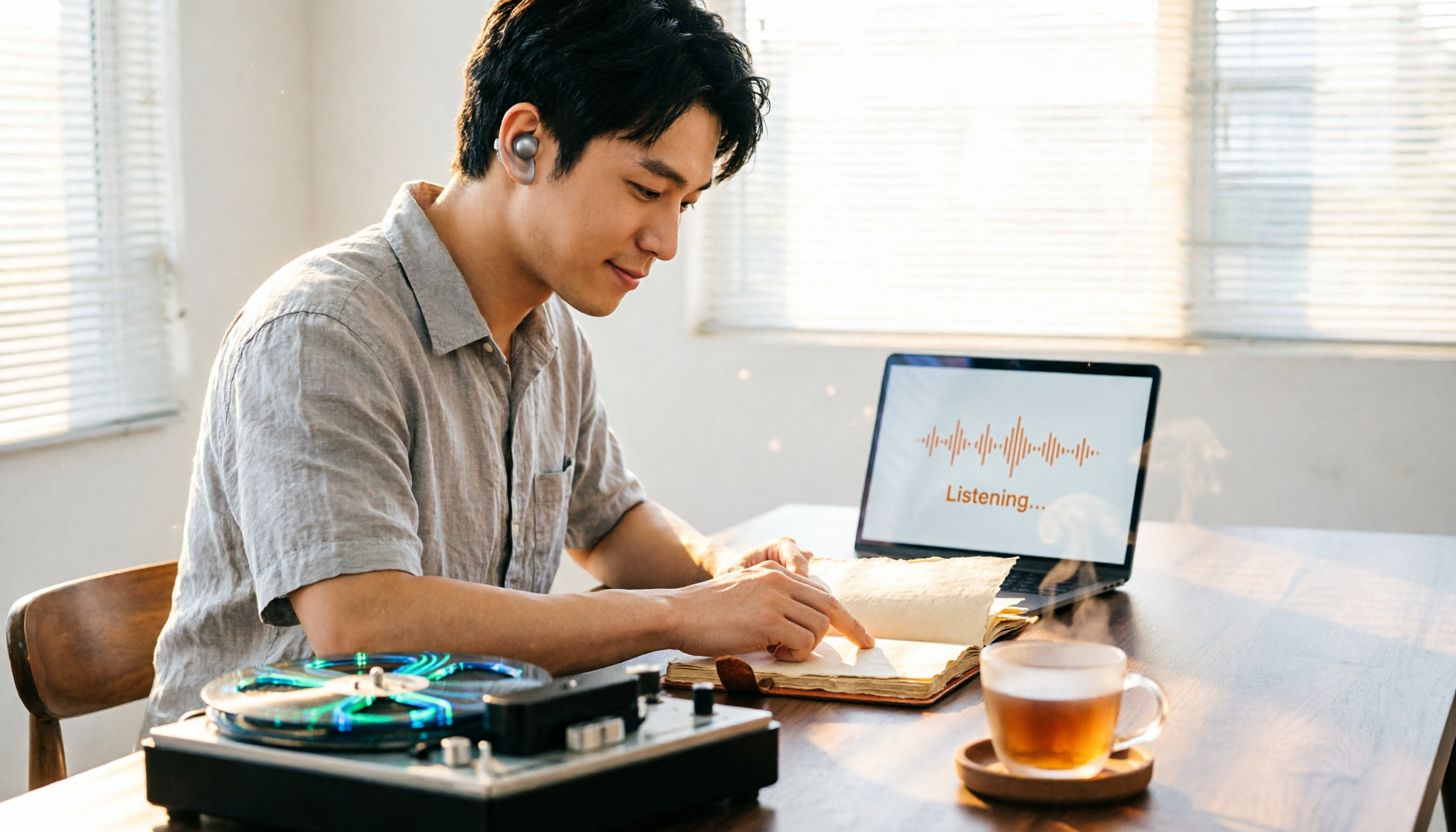
2026 Testing 5 Google Meet Alternatives: Which Captures Meetings Best?
Reddit users rave about Google Meet alternatives that not only improve meetings but also auto-transcribe, summarize, and create to-dos. A hands-on test of Tinrec and 4 other tools.

Tinrec vs Otter.ai 2026: A 5-Dimension Showdown – Which Is Better for Chinese Meeting Transcription?
With Google Meet background reversal and frequent online meetings, which recording tool should you use to organize meeting content? This article deeply compares Tinrec and Otter.ai from 5 dimensions: input sources, Chinese accuracy, AI organization features, cross-platform support, and price, to help you choose the best solution for Chinese users and cross-source audio/video data organization.

2026 Google Meet Meeting Notes Free Plan Roundup: Tinrec at a Glance
Thinking about buying a Google Meet account just to record meetings? There's a more cost-effective choice. This article covers Tinrec's free and paid plans, showing you how to automatically get meeting transcripts, summaries, and action items without spending extra on an account.

2026 In-Depth Comparison of 3 AI Transcription Tools: Essential for Saving Time in Google Meet Meetings
Tired of spending hours after Google Meet calls transcribing meeting minutes? This article tests three AI transcription tools that work with Google Meet, comparing Cantonese accuracy, AI Q&A features, and free tiers to help you find the best option. Tinrec stands out overall.
2026 Side-by-Side Test of 2 Google Meet Recording Methods: Which Saves More Post-Meeting Effort?
This article compares Google Meet's built-in recording with AI tool Tinrec for meeting capture and post-meeting organization. It analyzes recording thresholds, Chinese subtitles, AI summaries, task extraction, and cross-platform sharing to determine which method saves you more time.

2026 Google Meet Recording: No Hardware License Needed + AI Auto Meeting Minutes
Worried about Google Meet hardware license costs? Actually, you can use Tinrec to record meetings directly on your computer, automatically generating transcripts, summaries, and action items—no hardware needed. This guide walks you through setup to save on licensing fees.
2026 Hands-On Comparison of 3 Google Meet Meeting Recording Methods: Which Is the Most Discreet and Efficient?
Worried about Google Meet detecting screen recording? This article tests three meeting recording methods—built-in recording, manual note-taking, and AI voice-to-text—and analyzes which is the most discreet and efficient, recommending Tinrec for secure meeting capture.