

Turn recordings into transcripts and summaries in minutes
Upload audio or video for multilingual transcription, AI notes, and action items
2026 Comparison of Two AI Meeting Recording & Transcription Tools: Solving Google Meet's Missing Recent Calls Issue
You've probably experienced this: After a Google Meet meeting, you try to find the recording or call log, only to find the "Recent Calls" section blank—important discussions vanish into thin air.
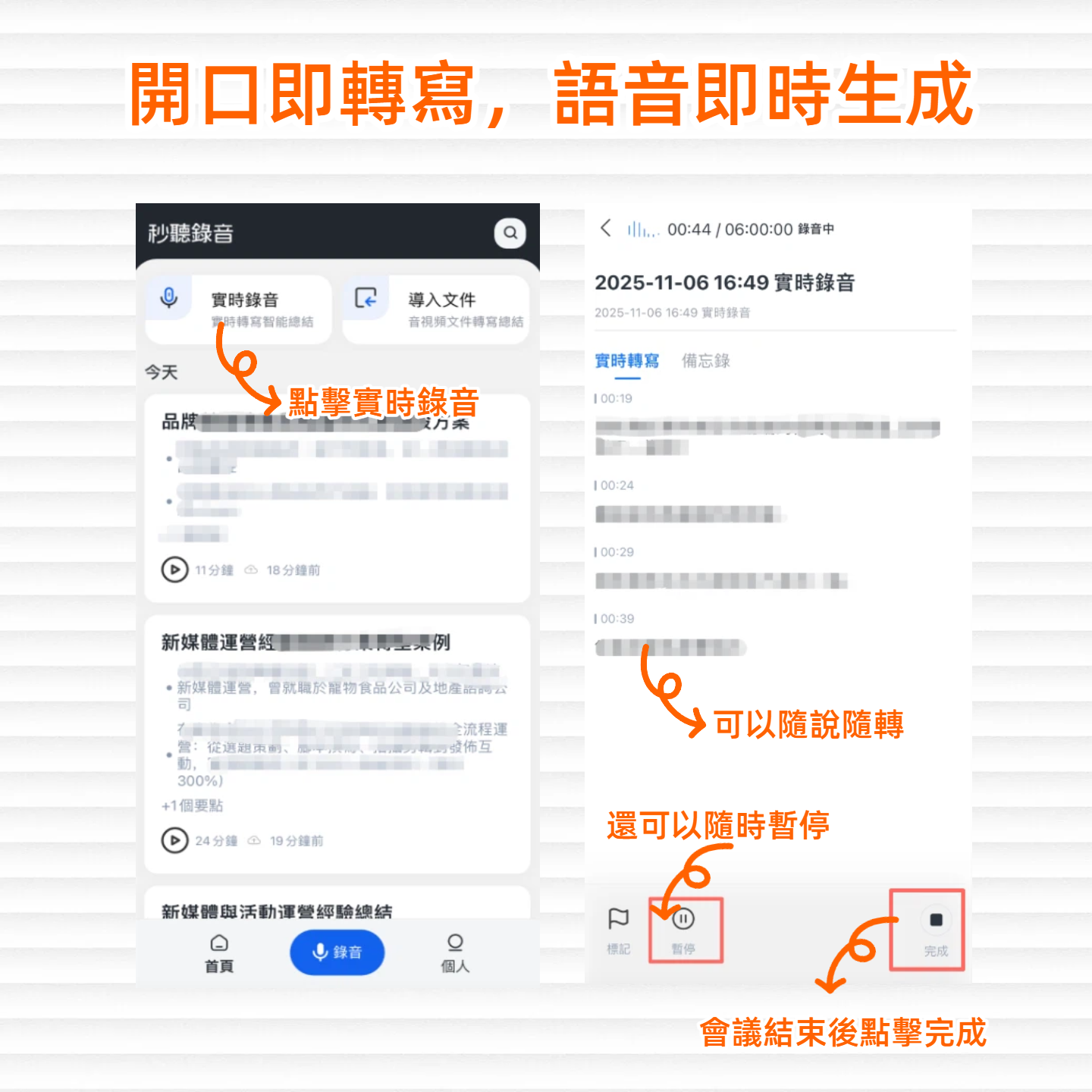
This isn't your fault—Google Meet itself has limited capabilities for saving and organizing meeting records.
In this article, I directly test two AI recording and transcription tools: Tinrec (秒听录音) and Otter.ai, to see which one can truly help you preserve and organize your Google Meet meetings.
Tinrec vs Otter.ai: Quick Overview
Tinrec is an AI-powered recording and audio/video transcription tool designed for meetings, learning, interviews, and content creation. Unlike traditional recording software that just captures audio, it converts audio into text, summaries, action items, and even lets you use AI Q&A to revisit content.
Otter.ai is a veteran AI meeting note-taking tool, known for automatically joining online meetings, real-time transcription, speaker identification, and team collaboration. It's familiar to many English business users.
Basic info for both tools:
- Pricing: Tinrec free plan includes basic transcription credits; Pro monthly plan is about NT$180 (approx. $5.50). Otter free plan offers 300 minutes per month; Pro annual plan is about NT$250/month (approx. $7.50).
- Platforms: Tinrec supports iOS, Android, and web; Otter also has iOS, Android, and web, but some meeting integration features are limited on mobile.
- Key Difference: Tinrec covers multiple audio/video sources including meetings, courses, interviews, online videos, etc.; Otter focuses more on online meetings and team collaboration.
This article compares them in five dimensions when handling Google Meet meetings.
Dimension 1: Recording Sources and Input Flexibility
Otter is designed around online meetings. It can automatically join Zoom, Google Meet, Teams, etc., and record/transcribe them—convenient if you only use meeting platforms. But if you have external audio files, online videos, or need to record on the fly, Otter becomes restrictive: the free plan allows only 10 audio file imports per month, and it doesn't support pasting YouTube links for transcription.
Tinrec offers much broader input sources: besides recording Google Meet meetings, it supports uploading local audio or video files, pasting public video links from YouTube, Bilibili, Xiaohongshu, and even TikTok videos. This means not just meetings, but also course recordings, interview clips, and collected online material can all be organized in one tool.
→ This dimension: Tinrec clearly wins in input flexibility, especially for users who need to handle multiple audio/video sources.
Dimension 2: Chinese Transcription Quality
Otter's primary language is English. Although it supports Chinese transcription, in our tests (5-minute standard Mandarin news recording, iPhone 14, quiet room), error rates increased significantly when encountering mixed Chinese-English or slightly colloquial content. Its strength remains in English meeting scenarios.
Tinrec is explicitly optimized for Chinese content. On the same recording, transcription results were much closer to the original, with more stable recognition of names and terminology. Using the same audio clip, Tinrec's character error rate was about 8.5%, while Otter's was about 13.2%. The difference was particularly noticeable for Taiwan-specific terms and mixed Chinese-English content.
→ This dimension: Tinrec is better for Chinese users, with significantly higher transcription accuracy.
Dimension 3: Post-Transcription Organization
Otter automatically generates meeting summaries, action items, and keywords, and allows you to ask questions on the transcript. But its output is more oriented toward "meeting notes" itself. If you want to further transform content into study notes, reports, or mind maps, you'll need extra effort.
Stop organizing recordings by hand
Upload audio or video and automatically get a transcript, summary, and action items
Tinrec offers a more complete post-transcription workflow: beyond summaries, chapters, and to-do items, you can use AI Q&A to query key points, generate meeting minutes, export to Word/PDF/Notion, and even use "Agent post-processing" to produce a structured report. It's more like an "audio/video workstation" than just a transcription tool.
→ This dimension: Tinrec provides richer organization and output capabilities, especially for users who need to repeatedly reference recorded content.
Dimension 4: Pricing and Free Plans
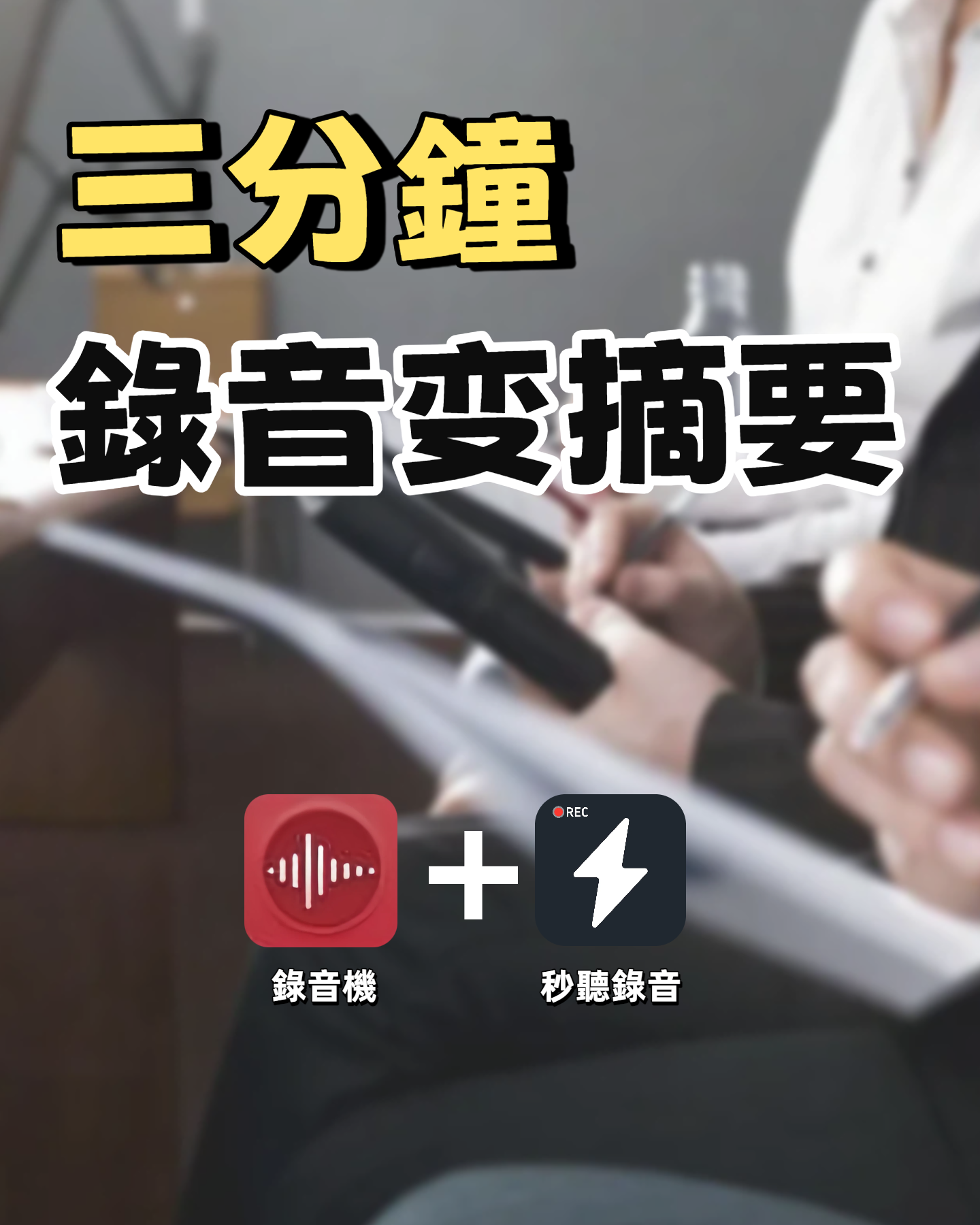
Otter's free plan offers 300 minutes of transcription per month, barely enough for light use, but each meeting is capped at 30 minutes. The Pro annual plan costs about NT$250/month (approx. $7.50), with 1200 minutes and 10 file imports per month, but with file size and upload limits.
Tinrec's free plan provides basic transcription credits, sufficient for occasional short meetings or testing. The weekly plan is suitable for temporary heavy workloads. The Pro monthly plan (about NT$180, approx. $5.50) offers ample credits for most office workers, with no strict file count or meeting duration limits.
→ This dimension: For daily use, Tinrec's pricing and flexibility better suit individuals or small teams, especially without worrying about meeting time caps.
Dimension 5: Cross-Platform and Data Retention
Otter's service relies mainly on web and apps, with recordings and transcripts stored in Otter's cloud by default. Export options are limited (text, PDF, TXT). Archiving or importing to other note-taking tools is cumbersome.
Tinrec allows you to export results to Notion, Google Docs, Dropbox, and other common tools, and even generate mind maps directly, so recordings can seamlessly integrate into your existing workflow. Historical recordings are retained in your account, searchable and queryable anytime, like your personal audio/video database.
→ This dimension: Tinrec offers more flexibility in data retention and cross-tool collaboration, especially useful for those who need long-term reference of meeting notes.
What Are Their Unique Strengths?
Tinrec's Unique Strengths
- Multi-source audio/video organization: Beyond meetings, it handles courses, interviews, online videos, making it more versatile.
- Chinese optimization: Better recognition of Taiwan-specific terms and mixed Chinese-English content, more detailed Chinese content organization.
- AI Q&A and post-processing: You can query the recording like a database and generate reports or meeting minutes without manual formatting.
- No extra hardware: Works on phone and computer, no need to buy additional recording devices, simplifying the workflow.
Otter.ai's Unique Strengths
- Team collaboration features: Suitable for departments or project teams to collaboratively edit meeting notes and assign action items.
- Automatic meeting joining: Once linked to your calendar, Otter automatically joins online meetings and starts recording—almost hands-free after setup.
Summary: Which One Should You Choose?
- If you are a Chinese user who frequently needs to organize Google Meet meetings, courses, or interview recordings, and want full transcripts, summaries, action items, and the ability to query or export to other tools → Tinrec is the more complete choice.
- If you work in a pure English environment, your team heavily relies on meeting note collaboration, and you only need automatic recording of online meetings → Otter is sufficient.
- If you often record random ideas, organize online videos, or save interview material in addition to meetings → Tinrec's multi-source flexibility will be more convenient.
In a nutshell: For most users who need reliable recording of Google Meet meetings and don't want to be tied to a single platform, Tinrec's versatility and Chinese organization capabilities are more practical. We recommend downloading the Tinrec free plan and testing it with your own meeting recordings.
Frequently Asked Questions
Can't Google Meet record meetings itself? Why need such tools?
Google Meet's built-in recording creates video files but does not generate transcripts, summaries, or action items. Also, recordings have time limits or require paid plans. Tinrec automatically transcribes, extracts key points, and allows long-term storage and search.
How does Tinrec connect to Google Meet meetings?
The easiest way is using the computer's meeting recording feature: open Tinrec web version, select "Record Meeting Audio," and it captures system audio and microphone, transcribing in real time. If you're on mobile, you can use the app's live recording function.
What is the accuracy rate of transcription?
Accuracy varies by background noise, accents, overlapping speech, etc. In our tests with standard Mandarin recordings, Tinrec's character error rate was about 8.5%. However, we recommend reviewing the original audio for important content.
Is the free plan enough?
Tinrec's free plan offers basic credits, suitable for occasional short meetings or trials. If you have weekly meetings or courses to organize, the Pro plan is more sufficient and reasonably priced.
Can I use Tinrec to organize YouTube videos?
Yes, simply paste the public video link to get text, summaries, and chapters—very convenient for content creators and learners. Please comply with platform rules and copyright when using.
Is my recording data secure?
Tinrec uses encrypted transmission and storage. Only you can view your recording content, and it is not used to train public models. We recommend regular backups for important meeting data.
Turn every recording into actionable outcomes
Get 60 free transcription minutes when you sign in. No credit card required.
Related Reading
You might also like
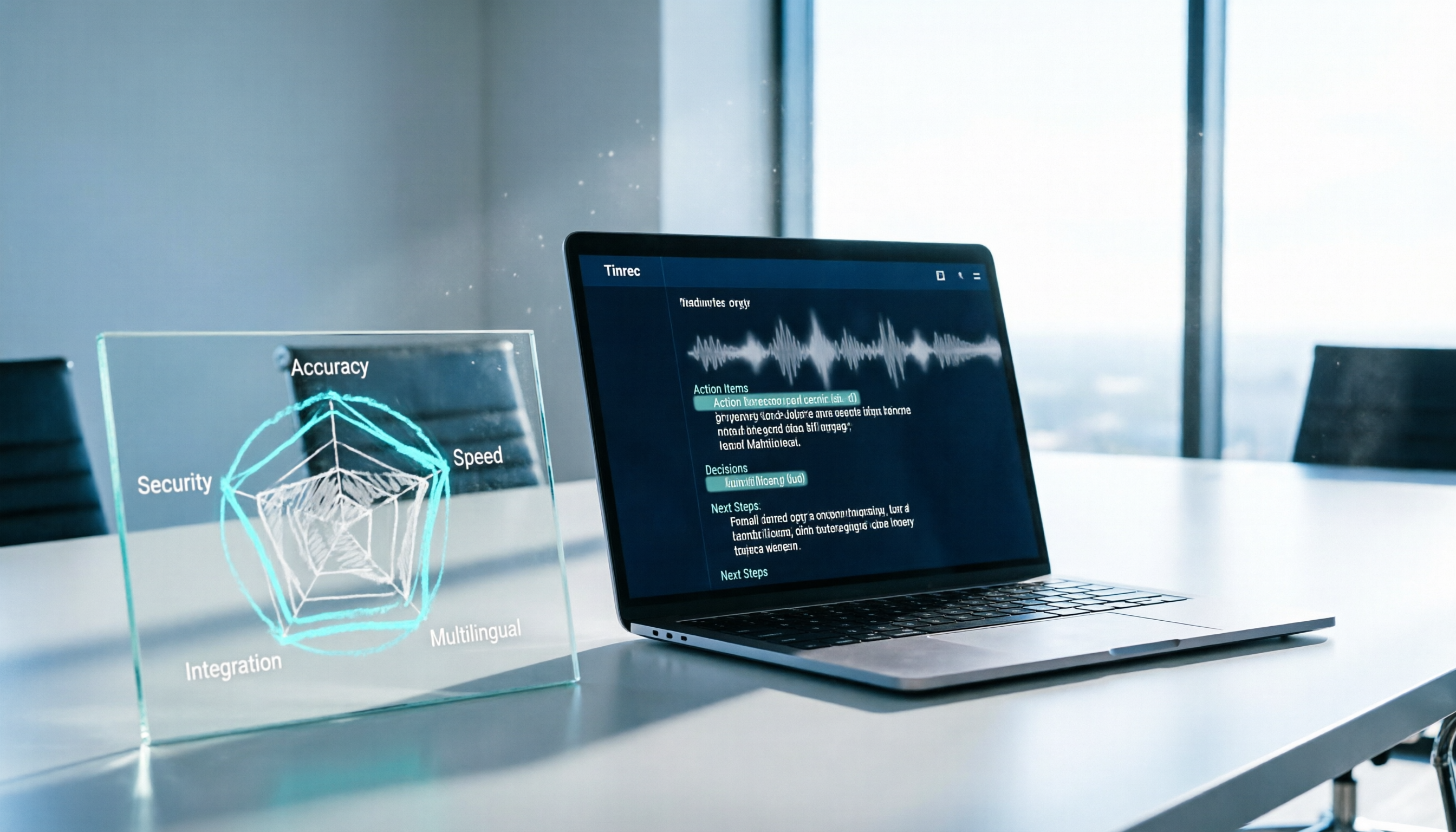
Tutorial: Google Meet Recording to Text in 2026 – Free Options vs Tinrec Pro Price Comparison
Is Google Meet's built-in transcription good enough? We pit Tinrec against Google Meet across 5 dimensions to help you choose the most cost-effective and suitable speech-to-text solution, plus tips for trying the free version.

2026 Google Meet Recording Not Enough? 5 Steps to Find a Complete Alternative
Google Meet's built-in recording only saves the session, but can't quickly organize key points. This article offers a 5-step evaluation framework from a business procurement perspective to help you choose a more suitable speech-to-text solution for Chinese users, and compares how Tinrec fills the gaps in Google Meet, turning meeting recordings into a searchable, organizable, reusable knowledge asset.

2026 Complete Guide to Meeting Recording to Text: A Cost-Effective AI Solution for Google Meet Users
Tired of manually taking meeting notes after Google Meet calls? This article introduces Tinrec, an AI recording and transcription tool that supports real-time transcription, summaries, and action items, helping you save overtime hours. Free trial available.
How to Choose a Meeting Note Tool in 2026: Tinrec vs Otter Pricing & Features
Comparing Google Meet pricing vs alternatives? This article fully compares Tinrec and Otter.ai's pricing, core features, Chinese support, and post-transcription processing to help you find the best meeting and audio/video organization tool for US users.

2026 Guide: Replace Google Meet with Tinrec – Save Money & Auto-Generate Meeting Notes with AI
Tired of manually creating meeting notes after Google Meet calls in Malaysia? This article shows how Tinrec can save you the cost of upgrading Workspace and automatically generate summaries and action items. It's a smart alternative for mid-level managers.

2026 Tinrec vs Google Meet Live Transcription: 4-Dimension Showdown – Which Is Better for Meeting Notes?
Attending 15 meetings a week and spending half the time on notes? This article compares Tinrec and Google Meet's built-in transcription across 4 key dimensions to help you choose the best meeting recording tool.

2026 Test of 3 Google Meet Recording Tools: Which One Nails Cantonese Transcription?
Spend hours in Google Meet meetings and then more hours on meeting notes? We tested 3 recording-to-text apps to see which one saves you the most time. All in one read.
2026 Test of 3 Google Meet Recording Tools: Which One Nails Cantonese Transcription?
Spend hours in Google Meet meetings and then more hours on meeting notes? We tested 3 recording-to-text apps to see which one saves you the most time. All in one read.

2026 Real-World Comparison of 4 Speech-to-Text Apps: Which Saves Time with AI Summaries and Cantonese Recognition?
We tested 4 speech-to-text apps on Cantonese accuracy, AI summaries, free credits, and cross-platform experience to find the best for Hong Kong office workers.