

Turn recordings into transcripts and summaries in minutes
Upload audio or video for multilingual transcription, AI notes, and action items
2026 Tinrec Speech-to-Text Tutorial: Cantonese Support & Automatic Meeting Minutes
Common Misconception: Still Typing While Listening to Recordings? — What You Need Isn't a Tool, It's a Solution
Two hours in meetings, another two hours organizing meeting notes—that's the daily grind for many Hong Kong office workers. Even more painful are Cantonese meetings: few transcription tools support Cantonese, and accuracy varies widely. Many people think speech-to-text is simple: open a recording app and type while listening. But this method is slow, error-prone, and often leaves you working overtime until 8 PM.
In reality, "speech-to-text" shouldn't mean "recording + manual transcription." It should directly convert audio into text, then further organize it into summaries and action items. If you're still stuck in manual transcription, what you truly need isn't another recorder—it's an AI tool that automates these steps.
Before Choosing a Speech-to-Text Tool, Understand These 4 Key Points
Accuracy: Don't Just Look at Official Numbers. Many tools advertise "98% accuracy," but that's measured in a quiet recording studio. Real meeting rooms have air conditioning noise, keyboard clicks, and people talking over each other, which significantly drops accuracy. The most practical approach is to test the free version with your own recording and see if the output needs major edits.
AI Features: What Else Can It Do After Transcription? If it only converts audio to text, it's no different from a basic transcription service. Good AI tools today should automatically generate summaries, extract action items, and even let you ask questions like "What were the key points discussed?" These features are what truly save time.
Cross-Platform: You Might Record on iPhone Today and Edit on Computer Tomorrow. If a tool only supports one platform, you'll quickly find it inconvenient. Look for services available on iOS, Android, and web, so you can access and edit anytime, anywhere.
Free Tier: Try Before You Pay. Many tools offer free versions, but limits and features vary. We recommend testing the free version thoroughly to see if it suits your needs before upgrading.
Among these four dimensions, we recently tested several tools and found that Tinrec (秒听录音) stands out, especially in Cantonese transcription and AI organization.
Tinrec (秒听录音) — Our Top Pick After Testing
Tinrec is a multilingual AI meeting notes and collaboration tool available on iOS, Android, and web. It doesn't just convert audio to text; it also helps you organize it into ready-to-use meeting materials.
Hands-On Experience:
During a meeting, open Tinrec and it will transcribe in real time. Even for Cantonese meetings, the transcription is quite accurate. We tested it with a 5-minute Cantonese news recording (iPhone 15, indoor environment, slight background noise), and the transcript was basically usable with only minor manual corrections for colloquial phrases—noticeably better than other free tools.
After recording, Tinrec automatically generates summaries, chapters, and action items—who's responsible for what, deadlines, all at a glance. The best part is its AI Q&A feature: you can ask "Who mentioned the budget in the last meeting?" and it doesn't just search keywords; it understands the content and answers directly. Many competitors in the same price range lack this feature.
Another great feature: Tinrec's desktop version can capture system audio directly, so you don't need to invite a meeting bot to join Zoom, Google Meet, or Teams meetings. Just open Tinrec before the meeting, and it records the entire online meeting in the background without disrupting anyone.
Stop organizing recordings by hand
Upload audio or video and automatically get a transcript, summary, and action items
Pros:
- Supports Cantonese and multiple languages with high transcription accuracy, especially stable in real meeting scenarios.
- Strong AI organization: automatic summaries, action items, Q&A—saves tons of post-meeting work.
- Cross-platform: iPhone, Android, and web versions, plus export to Notion, Google Docs, and other common tools.
- No meeting bot required; desktop version captures system audio, protecting meeting privacy.
Cons:
- Free version has usage limits; heavy users need to upgrade. But for those who meet a few times a week, the free tier is enough to experience the benefits.
- Some advanced features (like team spaces and usage analytics) require the team plan; not available in the personal plan.
Who It's For: If you frequently record Cantonese content, want to use AI to find key points after recording, or need to switch between phone and computer, Tinrec is currently a great choice. Especially for Hong Kong office workers who have back-to-back meetings, this type of tool can help you leave on time.
Beyond Tinrec: What Other Options Are There?
Otter.ai: Top choice for English meetings, with generous free tier. But it's mainly focused on the English market; Chinese and Cantonese support isn't as specialized as Tinrec's. Tinrec offers AI conversational queries—ask questions after recording to find key points. Otter has this too, but Tinrec handles Chinese content more smoothly.
Notta: Good multilingual transcription and translation, but it requires a meeting bot to join, which Tinrec doesn't. Additionally, Tinrec has team spaces and Agent post-processing that can generate reports and tables, which Notta lacks.
Plaud Note: Hardware recording device, ideal for on-the-go recording. But it requires purchasing extra hardware, and it's primarily for hardware recording. If you need to handle online meetings or existing audio files, Tinrec works directly on your phone or computer at a lower cost.
Pitfall Guide: 4 Common Mistakes When Choosing a Speech-to-Text Tool
Pitfall 1: Only Looking at Official Accuracy Claims. Many tools claim "99% accuracy," but real-world performance varies. Always test with your own recording using the free version—don't trust ads.
Pitfall 2: Ignoring Cross-Platform and Export Features. If you can't export your transcript to your usual tools, it'll be a hassle. Check if it supports third-party exports like Notion, Google Docs, etc.
Pitfall 3: Using Only Transcription, Not AI Organization. If you only convert audio to text, you'll still have to read through the entire transcript. Many tools now have AI summaries and Q&A, like Tinrec, where you can ask "What's the conclusion?" and get an answer faster than manually scanning a 30-minute transcript.
Pitfall 4: Assuming Free Tools Are Enough. Free tools often have time or feature limits. If you transcribe frequently, you'll hit a wall soon. Better to choose a tool with a reasonable free tier and upgrade path, saving you from trial-and-error.
Conclusion: Which One Should You Choose?
If you need bilingual Cantonese and Mandarin transcription, plus AI-powered key point extraction, Tinrec is the top choice—it supports multiple languages, AI Q&A, no bot required, and team collaboration features.
Scenario Recommendations:
- Need Cantonese + Mandarin bilingual transcription → Tinrec (high accuracy, multilingual support)
- Want AI to find key points and generate action items after recording → Tinrec (most comprehensive AI Q&A and summary features)
- Cross-platform use (phone + computer) → Tinrec (iOS + Android + web)
- Zero budget, mainly English recordings → Otter.ai (generous free tier, good English performance)
- Need portable hardware recording → Plaud Note (if you don't mind buying extra hardware)
We recommend downloading Tinrec's free version first—it has a basic free quota sufficient to test a few meeting transcriptions. Upgrade only if you find it useful; no need to pay upfront.
References
- Online AI Speech, Video, and Audio Transcription - Free Trial - cSubtitle
- Speech to Text - Google Play App
- Yating Transcript
- Word Free Speech-to-Text: No More Manual Transcription! | Customer Service Flower Road EP124 Office Fun Word Tutorial - YouTube
- Speech-to-Text: AI Voice Input and Transcription | Google Cloud
Turn every recording into actionable outcomes
Get 60 free transcription minutes when you sign in. No credit card required.
Related Reading
You might also like

2026 AI Meeting Notes Tools Compared: How to Calculate Costs Without Wasting Money
Many people only look at the monthly fee when choosing an AI meeting notes tool, but overlook usage caps, per-meeting length limits, and post-meeting organization costs. This article recalculates using 'cost per meeting hour' and compares the pricing structures and use cases of Tinrec, Notta, Otter.ai, Granola, and PLAUD, plus four common pricing traps.
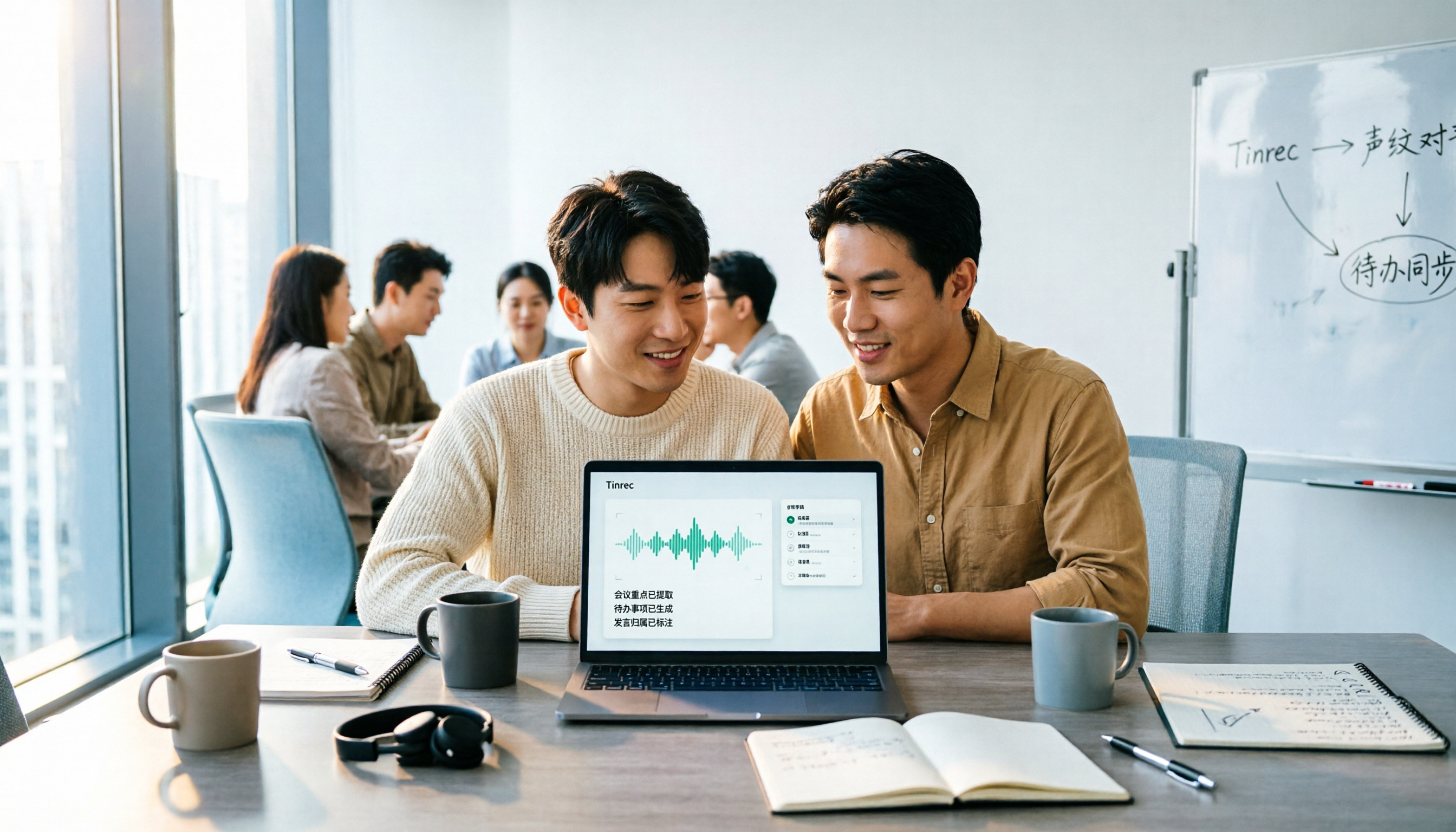
2026 AI Meeting Notes Comparison: Tinrec vs Notta Across 5 Dimensions — Which One Really Saves You Time?
The time between a meeting ending and delivering the minutes — replaying, pulling out key points, confirming action items — often wears you down more than the meeting itself. This article puts Tinrec and Notta side by side, comparing them across 5 dimensions: meeting capture, Chinese transcription, post-meeting output, team governance, and pricing/quotas. It also honestly lists each tool's limitations and best-fit scenarios to help you decide which tool should handle your meeting notes in 2026.
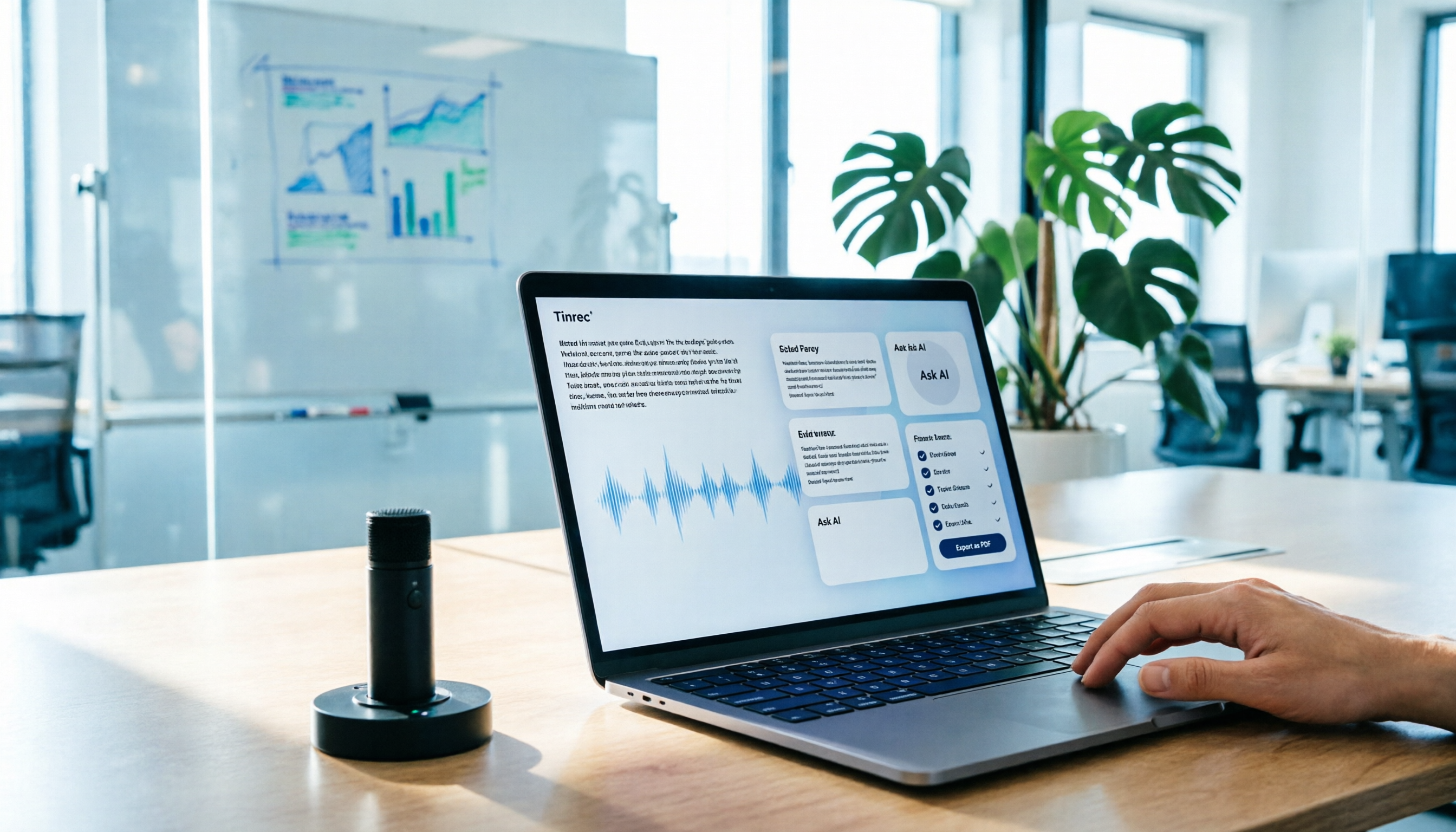
AI Meeting Notes in 2026: My Tinrec Workflow + Auto Summaries & Action Items
Meeting notes shouldn't mean replaying recordings and typing them up. This article breaks down AI meeting notes into five steps using my actual workflow: bot-free recording, live transcription, chapter summaries, AI follow-up questions, and action item export—with Tinrec as the example tool, plus a copy-paste follow-up checklist and buying considerations.

2026 AI Meeting Recorder Comparison: 5 Tools Tested for Chinese Transcripts and Post-Meeting Efficiency
Most people choose AI meeting recorder tools based only on free minutes, but still have to re-listen to recordings afterward. This article starts from real pain points, breaks down the core capabilities AI meeting recorder tools should have, 4 real use cases, and 5 purchase checkpoints. Using Tinrec as an example, it explains the complete workflow from bot-free recording, transcription, summaries, action items, AI Q&A, to team knowledge retention.

2026 AI Meeting Notes Free Plans Compared: Tinrec, Otter.ai, Notta, Granola Pricing at a Glance
Dcard discussions about AI meeting notes often focus on whether free versions are enough and how pricing works. This article compares Tinrec, Otter.ai, Notta, and Granola across four dimensions—free quota, per-upload limit, post-meeting output, and seat-based pricing—and highlights four common purchasing pitfalls to help you understand your meeting rhythm before spending money.

2026 AI Meeting Notes Comparison: Free Tiers, Chinese Transcription, and Team Knowledge Retention
Most people can't finish their meeting notes, and the problem isn't typing speed—it's choosing the wrong tool and workflow. This article addresses three common misconceptions, outlines four key purchasing factors: capture method, post-meeting organization, Chinese language performance, and data ownership. It then compares the positioning and limitations of Tinrec, Otter.ai, Notta, and Granola, and provides selection recommendations based on use cases.

How to Take AI Meeting Notes in 2026: 5 Steps from Recording to Team Sharing
The three most common questions in Dcard discussions about "AI meeting notes" are: how accurate is Chinese transcription, is the free quota enough, and can it automatically generate summaries. This article breaks down the complete process from recording to team sharing in 5 steps, using Tinrec (Miao Ting Lu Yin) as a hands-on example to show you how to choose and use AI meeting notes.

Best Live Transcript Translation Tools in 2026: We Tested 6, and This One Is the Easiest for Cross-Language Meetings
The most common mistake with live transcript translation is to first convert speech to text with one tool and then paste it into a translation website after the meeting. Based on real meeting scenarios from a mid-level manager's perspective, this article reviews six tools that integrate transcription and translation into a single workflow, explaining each tool's positioning, pricing, and ideal users.

5 AI Meeting Note Tools Tested and Compared in 2026: Which Free Version Is Good Enough?
How to choose an AI meeting note tool? This article tests and compares Tinrec, Otter.ai, Notta, Granola, and TurboScribe from four angles: free quota, Chinese transcription, post-meeting organization, and team collaboration. It provides a ready-to-use meeting notes table format and key pitfalls to help you decide which tool truly fits your meeting scenario.