
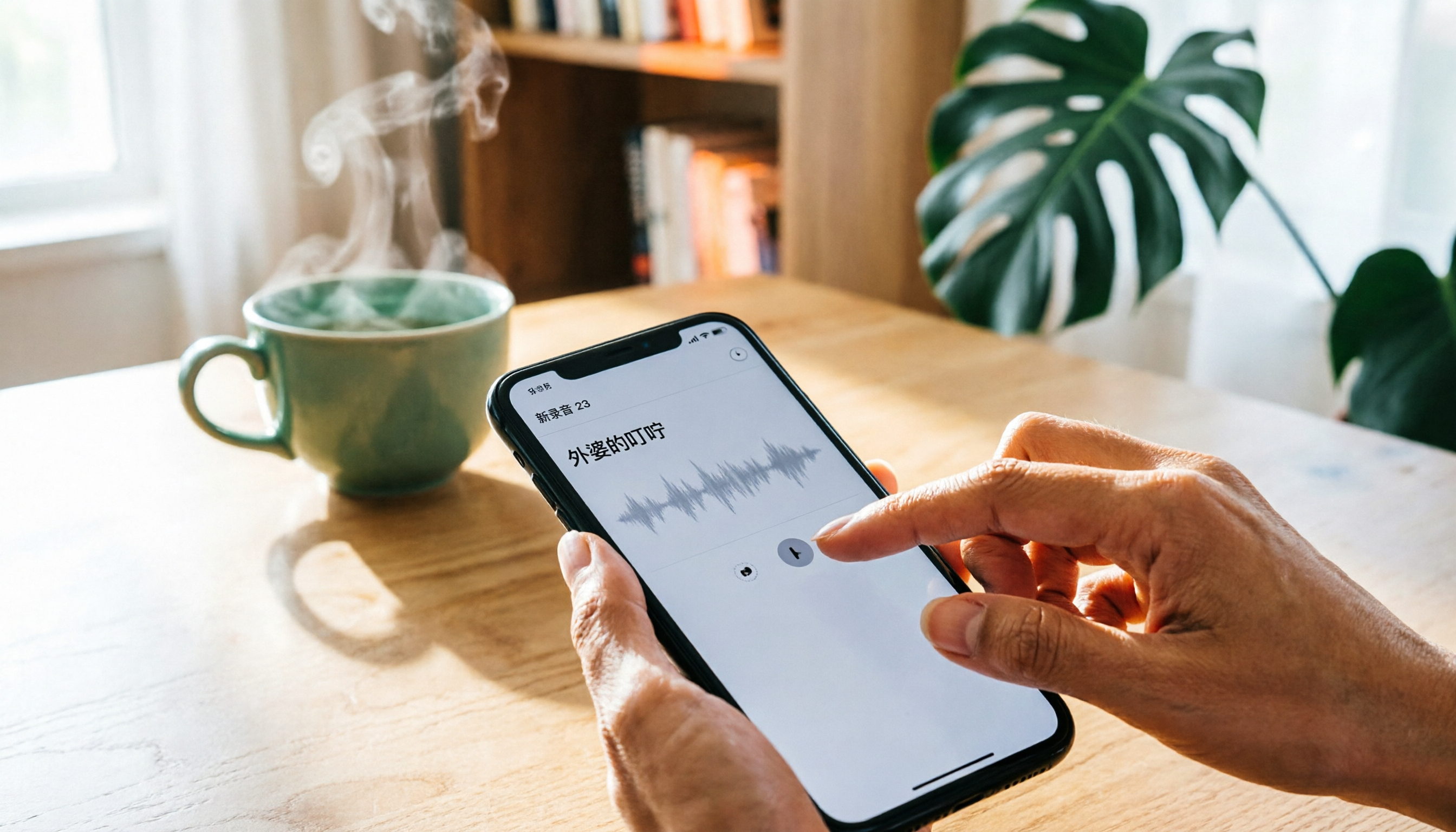
Turn recordings into transcripts and summaries in minutes
Upload audio or video for multilingual transcription, AI notes, and action items
Renaming iPhone Voice Memos Is Easy, but Many People Look in the Wrong Place
Many users think they need to go into the Files app to rename iPhone recordings, only to search endlessly without success. In fact, you can rename recordings right in the Voice Memos app—just tap the recording's name, and it takes less than 30 seconds.
The following steps use the built-in Voice Memos app on iPhone; the process is nearly identical on iPad and iPod touch.
Why Are Default Recording Names So Odd?
By default, iPhone recordings aren't named "Recording 1" or "Recording 2"—they're named after your location. For example, if you record a meeting in downtown San Francisco, the recording might automatically be called "San Francisco." If you record at home, it might use your neighborhood's name.
This happens because Location Services is enabled in Settings, and Voice Memos automatically detects your location to name recordings.
Here's the problem: If you often record in the same area, multiple recordings will share the same name, making them hard to find. So knowing how to rename recordings is a basic skill for managing your audio files.
3 Steps to Rename iPhone Voice Memos
Step 1: Open the Voice Memos App
Find the Voice Memos icon on your home screen and tap it to see the list of all recordings.
Step 2: Tap the Recording You Want to Rename
The recording will expand to show the playback screen and the recording name. At this point, tap the recording name directly.
Step 3: Enter a New Name
The name becomes editable. Use the keyboard to delete the old name and type in the new one. After typing, tap "Done" on the keyboard or tap anywhere else on the screen, and the new name takes effect immediately.
That's all there is to it. No need to go into Settings or the Files app—just tap the name right on the recording to change it.
Don't Want Automatic Location-Based Naming? Turn Off This Setting
If you find it annoying that every recording is named after your location, you can turn off this feature.
Here's how:
- Open the Settings app on your iPhone.
- Scroll down and tap "Voice Memos."
- Find the "Location-Based Naming" option.
- Toggle it off.
Once disabled, new recordings will use a generic default name like "New Recording" or "New Memo" instead of automatically using your location. After that, you can manually rename them to something recognizable, such as "Client Meeting March 5" or "Weekly Sync Key Points."
Note: This setting only affects future recordings. Existing recordings won't be renamed automatically—you'll need to handle them manually one by one.
Stop organizing recordings by hand
Upload audio or video and automatically get a transcript, summary, and action items
3 Practical Habits for Organizing Your Recordings
Renaming is just the first step. To find recordings faster, consider adopting these habits:
1. Rename Immediately After Recording
Right after a meeting or interview, rename the recording to something meaningful. Don't wait a week—by then, you'll have forgotten what the recording is about.
2. Use a Consistent Naming Format
For example, "Date_Subject_Type": "20260305_ClientMeeting_Recording." A consistent format helps you quickly identify content, especially when you have many recordings.
3. Regularly Delete Unwanted Recordings
iPhone recordings take up storage space. Spend a few minutes each month deleting recordings you no longer need, or back them up to the cloud first, to keep your list clean.
After Renaming, What Else Can You Do?
Renaming is just the beginning of managing your recordings. If you've recorded meetings, interviews, or lectures, you'll often need to process the content afterward.
For example, with Tinrec, you can upload your iPhone recordings to this type of AI meeting tool, which automatically generates transcripts, summaries, and action items. This saves you from having to listen back and type everything manually—saving you a lot of time.
However, when using any recording or transcription tool, remember to comply with local laws and obtain consent from participants when necessary.
Frequently Asked Questions
Q: Will renaming affect the recording content?
No. Renaming only changes the display name; the audio file itself remains unchanged.
Q: Can I change the recording date?
Voice Memos doesn't allow you to directly change the recording date. The date is automatically recorded based on when the recording was made.
Q: Can I recover deleted recordings?
Yes. Voice Memos has a "Recently Deleted" folder where deleted recordings are kept for a period of time, and you can restore them from there.
Q: Is there a length limit for recording names?
Generally, there's no strict limit, but it's best not to make names too long, as they may not display fully in the list, affecting readability.
Summary
Renaming iPhone voice memos is a simple 3-step process: tap the recording, tap the name, and enter a new name. The real headache is the default location-based naming, which causes many recordings to share the same name.
After turning off "Location-Based Naming" and adopting the habit of renaming immediately after recording, you won't have to hunt around for your recordings. If you also need to organize meeting notes after recording, consider using AI tools like Tinrec to transcribe and summarize, saving you time on manual work.
References
- Search and rename recordings in Voice Memos on iPhone - Apple Support (Taiwan)
- Search and rename recordings in Voice Memos on iPod touch - Apple Support (Taiwan)
- iPhone Voice Memos: How to Change Location-Based Naming - IN Gazette
- How to Rename Recordings on iPhone - Baidu Experience
- Search and rename recordings in Voice Memos on iPad - Apple Support (Taiwan)
Turn every recording into actionable outcomes
Get 60 free transcription minutes when you sign in. No credit card required.
Related Reading
You might also like

for mac google meet: Audio Permissions, Recording, and Transcript Handoff for Google Meet on Mac
Recording Google Meet on a Mac usually gets stuck not because you cannot find the record button, but because macOS separates 'capture system audio' and 'use microphone' into two independent authorizations. This article proceeds in three parts—permission setup, recording, and post-meeting organization—explaining how to determine which layer is causing meeting audio not to be recorded, and how to organize the recording into a transcript, summary, and to-dos and hand it off to a colleague.

How to Change Your Google Meet Background on Mobile: Check Account and Version Requirements First, Then Follow the Pre-Meeting or In-Meeting Path
When you're told to join a client-facing meeting and only have your phone on hand, the last thing you want is to discover five minutes before the call that you can't find the background option. This article first explains what's required to use backgrounds on mobile (account type, app version, device permissions), then walks through two paths step by step—one before you join the meeting and one during it—and closes with a pre-meeting checklist and alternatives if you can't find the option.

Google Meet 2026 APK Installed: Choosing a Meeting Notes Tool on Android — First Look at the Mobile vs. Desktop Organization Gap
Installing the Google Meet 2026 APK is just the first step. This article uses four dimensions to narrow down meeting notes tools that claim to 'support Google Meet' to two or three options, focusing on the real-world gap between Android mobile and desktop post-meeting organization. Each dimension includes specific questions you should confirm with the product page or vendor.

Google Meet 2026 Meeting Notes Capability Review: Where Built-in Transcription Ends and How to Split Post-Meeting Action Items and Deliverables
A practical mid-level manager's review of Google Meet 2026 recording and transcription coverage, explaining the responsibility boundaries for post-meeting summaries, action items, and deliverables, with recommendations for Chinese and mixed Chinese-English meetings, data storage, and team handoffs.

Which Google Meet 2026 APK Should You Install? Android Install Source Guide, Meeting Prerequisites, and Backup Recording Handoff Order When Nothing Was Recorded
When you're assigned to join a Google Meet on an Android phone and handle post-meeting notes, first clarify whether you're attending, hosting, or responsible for organizing. Then decide whether to install from the official app store or a third-party APK source, what prerequisites are needed to sign in, and how to use audio recording and transcription in order to fill in the transcript and action items and hand them off when the meeting wasn't recorded.

Google Meet 2026 Meeting Notes Capabilities: Where Built-In Transcription Ends and How to Split Post-Meeting To-Dos and Deliverables
Google Meet 2026 recording and transcription are not automatically enabled by default, and post-meeting summaries, to-dos, and deliverables still have coverage boundaries. This article walks through the actual workflow to assess built-in platform capabilities, explains the differences in organizing Chinese and mixed Chinese-English meetings, the distinction between data storage and team spaces, and offers recommendations for dividing post-meeting to-dos, deliverables, and data storage.

How to Choose a Google Meet Note-Taking Tool for Windows: Four Dimensions to Narrow Down from Cross-Device Gaps to Two or Three Options
Meetings happen on Google Meet on a Windows PC, but organizing often gets picked up on a phone or another device. This article uses four dimensions (how audio gets in, how far post-meeting output goes, the organizing gap between Windows and phone, and whether data stays in a personal or team space) to narrow down candidate tools to two or three, with specific questions to ask product pages or vendors for each dimension.
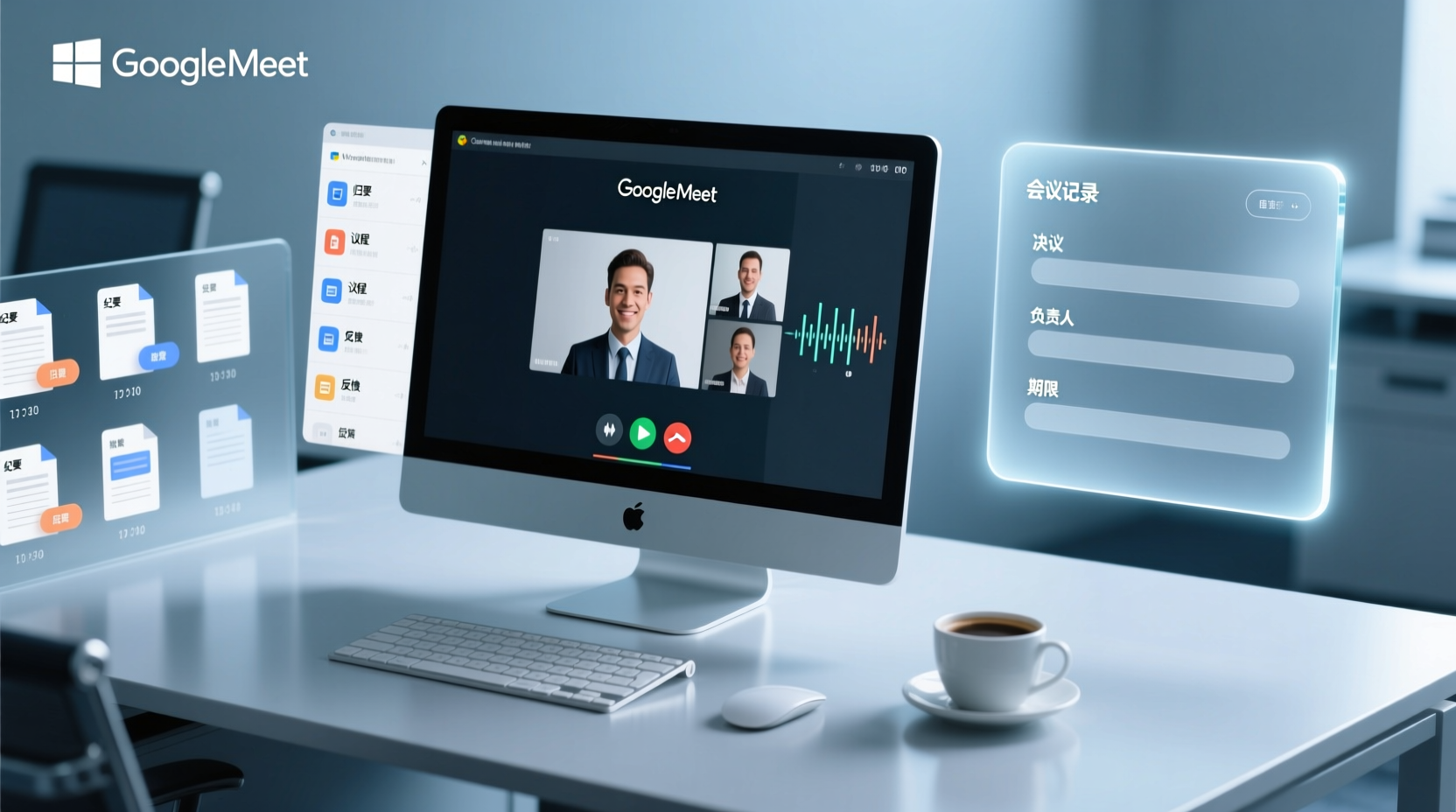
How to Choose a Google Meet Meeting Notes Tool for PC: Narrow a Dozen Options to Two or Three with Four Dimensions, and What to Confirm with Vendors for Each
After a Google Meet call on a Windows PC, what you actually need to deliver is decisions, owners, deadlines, and an archivable record. This article uses four dimensions to help you narrow a dozen tools that claim Google Meet support down to two or three, with specific questions to confirm on product pages or with vendors for each dimension.

What You Need for Google Meet: Pre-Meeting Role Checklist and Post-Meeting Handoff
From the perspective of administrative assistants and project coordinators, this guide breaks down the prerequisites for joining or hosting a Google Meet by role, including account requirements, organizational settings, recording permissions, and extra conditions for external attendees. It also provides a pre-meeting checklist and a post-meeting handoff sequence for transcripts, decisions, and action items.