

Turn recordings into transcripts and summaries in minutes
Upload audio or video for multilingual transcription, AI notes, and action items
Opening My Notebook Before Finals, I Realized I'd Missed Three Assignments
Last semester, I took a project-based course where the professor threw new material at us every week, and group meetings often got rescheduled at the last minute. I thought I could keep track of everything in my head, but the night before midterms, I flipped open my notebook and found three assignments I'd completely forgotten to do.
That feeling of dread? I never want to experience it again.
So I started seriously researching to-do apps. Not just downloading the first one I found—I spent an entire semester installing and rotating through several popular apps on my phone. This article is my honest review after all that trial and error, written specifically for students like me who are constantly chasing after a mountain of tasks.
Before Choosing a To-Do App, Understand These 4 Key Points
First: Is Cross-Device Sync Done Right?
Students use apps in fragmented ways—jotting things down on their phone in class, organizing on a computer back at the dorm, and reviewing on a tablet during commutes. If an app can't sync across devices, you'll quickly abandon it. My own standard is: if I enter something on my phone, it must show up on my computer immediately.
Second: Are Reminders Direct Enough?
The core function of a to-do app is "reminders." But some apps have weak reminder systems—notifications pop up, you swipe them away, and they're gone. A good reminder should reach you at the right time on the right device, and let you set recurring alerts so you never miss that weekly group meeting.
Third: Can You Break Big Tasks into Smaller Steps?
Student to-dos are rarely as simple as "write a report." They're multi-step tasks like "find sources, read literature, draft an outline, build slides." If an app only lets you create single items, you'll still need a separate notebook to break things down—which just adds extra work.
Fourth: Is the Free Tier Enough for You?
This matters most for students. We're on a tight budget, and every dollar we can save counts. Some apps severely limit their free versions and push you to pay within days; others offer a free tier that's plenty for everyday classes and group work. I'll break down each one below.
My Go-To Combo: Google Tasks + Google Calendar
Let me start with the bottom line: if you already use Google Calendar, Google Tasks is the no-brainer choice, and the free version is more than enough.
Here's how I use it: when a professor suddenly announces a proposal due next week during class, I pull out my phone, add "Submit proposal draft" to Google Tasks, and set a due date. Because it integrates with Google Calendar, I can see that task right on my calendar without even switching apps.
My favorite feature is "subtasks." For a big task like preparing a final project, I break it into subtasks like "find sources," "read three papers," "write research motivation," and "create slides." Checking each one off gives me a clear sense of progress.
One small detail I love: you can star the most important tasks. My habit is to open Google Tasks every morning, tackle the starred items first, then handle the rest—this way, I don't get buried under a pile of minor stuff.
The free version has no time limits at all, which is incredibly generous. For students, Google Tasks is a zero-cost, high-reward option—I've already convinced three classmates to switch.
Stop organizing recordings by hand
Upload audio or video and automatically get a transcript, summary, and action items
Beyond Google Tasks, These Apps Are Worth Trying
Apple Reminders
If you're an iPhone user, Apple's built-in Reminders app is actually quite capable. Its biggest strength is deep Siri integration—you can just say, "Hey Siri, remind me to submit my assignment tomorrow at 3 PM," without typing a thing. With iCloud sync, it works across your iPhone, iPad, and Mac.
But there's a clear limitation: if you use an Android phone or a Windows PC, you're out of luck. In contrast, Google Tasks works on phones, tablets, and computers alike, so Google wins on cross-platform support.
Microsoft To Do
Microsoft To Do has a clean interface and integrates well with Outlook. If your school runs on Microsoft 365, this is worth considering.
However, after trying it myself, I found that the "My Day" feature—while well-intentioned in helping you re-prioritize daily—feels redundant for students. Our tasks often span multiple days as part of larger projects, and re-sorting them every day disrupts the flow. Google Tasks' list-based approach is more intuitive: you open it and see everything at once, with no extra organizing step.
Pomodoro Timer Apps
If you need to "break time into chunks to get things done," Pomodoro timer apps are worth a shot. The core idea is to work in 25-minute focused sprints with 5-minute breaks, which works wonders for students with serious procrastination issues.
But these aren't pure to-do tools—they're more like time-management aids. I use them alongside Google Tasks: Google Tasks handles my to-do list, and I fire up a Pomodoro timer when I need to force myself to focus. If you only use a Pomodoro app, your task list becomes scattered, which is the biggest gap compared to Google Tasks.
Avoid These 3 Common Mistakes When Choosing a To-Do App
Mistake 1: Thinking More Features Are Always Better
I fell into this trap at first, downloading apps packed with features. I ended up spending half an hour just setting up categories, tags, and priority levels—leaving little time to actually record my tasks. For students, simplicity and the ability to jot things down quickly matter far more than feature bloat.
Mistake 2: Ignoring Cross-Device Needs
My roommate once used a mobile-only to-do app. Every time he came back to the dorm and needed to organize his report on the computer, he had to pull out his phone to cross-check—super annoying. If you're like me and use a phone, computer, and tablet regularly, make sure to pick an app with cross-platform sync.
Mistake 3: Overloading Your To-Do List
This one comes from painful personal experience. For a while, I added every single thing I wanted to do to my list. Opening it each day to see 20+ unfinished items was overwhelming, and I eventually gave up entirely. Then I switched to listing only the 3–5 most important tasks per day, and my completion rate shot up. Google Tasks' star feature is a great tool for keeping me focused on what truly matters.
Bottom Line: Which One Should Students Pick?
If you're a student like me—on a budget, needing cross-device sync, and wanting a simple, easy-to-use to-do app—my advice is straightforward:
- Need a free, cross-platform option that integrates with Google Calendar → Google Tasks (top pick; the free version is fully sufficient)
- Only use iPhone and want voice-based quick entry → Apple Reminders (Siri integration is super convenient)
- Your school uses Microsoft 365 and you want Outlook integration → Microsoft To Do
- Struggle with procrastination and need a Pomodoro timer to stay focused → Pomodoro timer app (but pair it with a to-do list app)
My daily setup is Google Tasks for managing tasks and a Pomodoro timer for managing focus. Both are free, and together they form a complete student productivity system.
Don't rush to download a bunch of apps. Start with the free version of Google Tasks, use it for a week, and if it feels right, then consider adding other tools. Tools are meant to save you time, not add to your burden.
References
- Reminders App - App Store
- To-Do List and Task Management App | Microsoft To Do
- Google Tasks - Google Play
- "Never Forget a To-Do Again" #Newbie Survival Guide #Useful App Sharing - Work Forum | Dcard
- Stop Letting Chaos Rule Your Day! A Curated List of To-Do Apps to Double Your Productivity This Year » BetweenGos Career Platform
Turn every recording into actionable outcomes
Get 60 free transcription minutes when you sign in. No credit card required.
Related Reading
You might also like
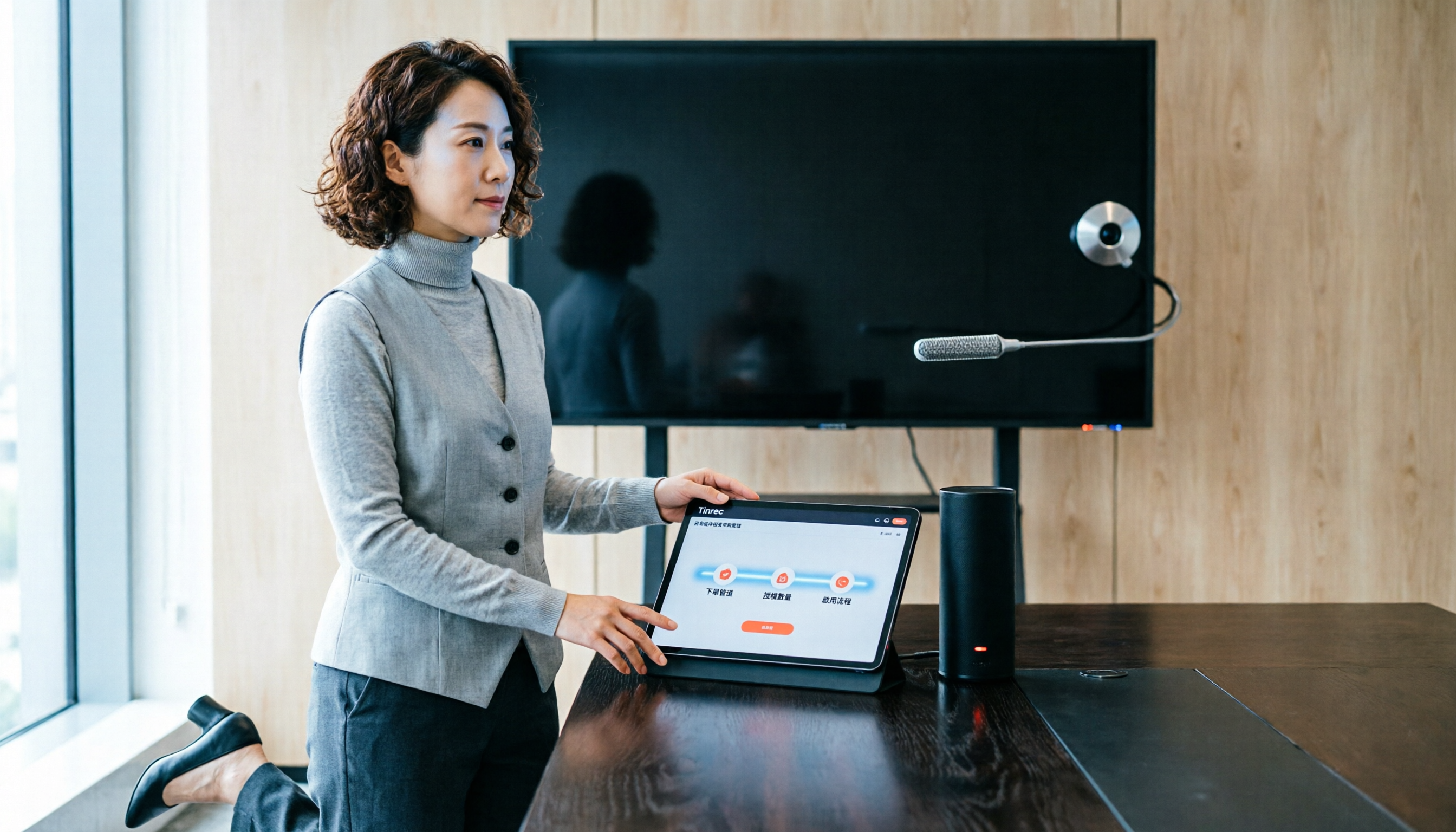
2026 Google Meet Hardware License Buying Guide: 3 Channels and Pitfalls to Avoid
Want to purchase Google Meet hardware licenses for your meeting rooms but unsure whether to order through the Admin console or a reseller? This article covers 3 purchasing channels, hidden limits on license quantities, and the complete process from ordering to device activation, helping you avoid roadblocks.

2026 Google Meet Interview Background Guide: 5 Types to Boost Your Professional Image
Using Google Meet for job interviews? A poorly chosen background can hurt your first impression. This guide covers 5 types of virtual interview backgrounds, size specs, and setup steps to help you project professionalism with confidence.

Does Otter.ai Support Chinese in 2026? Testing Simplified Chinese Limits and Traditional Chinese Meeting Alternatives
Otter.ai officially supports Simplified Chinese, but Traditional Chinese is not listed in its language options. This article covers Otter's Chinese support scope, the free 300-minute limit, practical notes for users in Taiwan, and alternative tools for Traditional Chinese meetings.

Otter.ai vs Tinrec 2026: 5-Dimension Comparison for Chinese Meetings
Does Otter support Chinese? The answer: only Simplified Chinese; Traditional Chinese, Taiwanese, and mixed Chinese-English are not officially supported. This article compares Otter.ai and Tinrec across 5 dimensions to help you choose for Chinese meetings, Taiwanese accents, and team collaboration.

The Complete Guide to Otter for Chinese Transcription in 2026: Official Support, Real Limitations, and a Better Alternative for Traditional Chinese
Can Otter.ai really transcribe Chinese? This hands-on guide cuts through the noise: official support is limited to Simplified Chinese, Traditional Chinese and Taiwanese accents are unreliable, free quotas and export limits apply, and why Tinrec is a more practical choice for Chinese-language meetings.

Using Phone Call Recordings as Evidence in 2026: 3 Legal Conditions + Key Differences Between Civil and Criminal Cases
Can phone call recordings be used as evidence? This article explores the differences between criminal and civil proceedings, outlining 3 legal conditions for recording evidence, 3 situations that may violate criminal privacy laws, and key considerations before recording calls to help you preserve conversations safely.

5 Best To-Do List Apps of 2026 Compared: TickTick, Things 3, Microsoft To Do—Which One Is Worth It?
A practical comparison of 5 to-do list apps frequently discussed on PTT, including TickTick, Things 3, and Microsoft To Do. We evaluate them based on real needs—categorization, subtasks, cross-platform support, shared lists, and home screen badge counts—to help you find the perfect task manager.

2026 AI Meeting Notes Tools Compared: How to Choose the Best Voice-to-Text App (Reddit & PTT Insights)
Spending two hours in a meeting and another two organizing the notes? This guide breaks down the AI meeting notes tools most discussed on PTT and online communities, helping you build a sustainable workflow from recording to transcript to action items to team sharing. We compare Tinrec, Otter, Notta, and others in real-world scenarios to help you find the option that actually saves you time.

4 Call Recorder Apps Tested in 2026: Which One Offers Truly Reliable Auto-Recording?
How do you choose a call recorder app? This article tests Call Recorder - CallsBox, Cube ACR, Rev Call Recorder, and the built-in iPhone feature, covering auto-recording reliability, audio quality, VoIP support, and free plans to help you find the best call recording tool.