
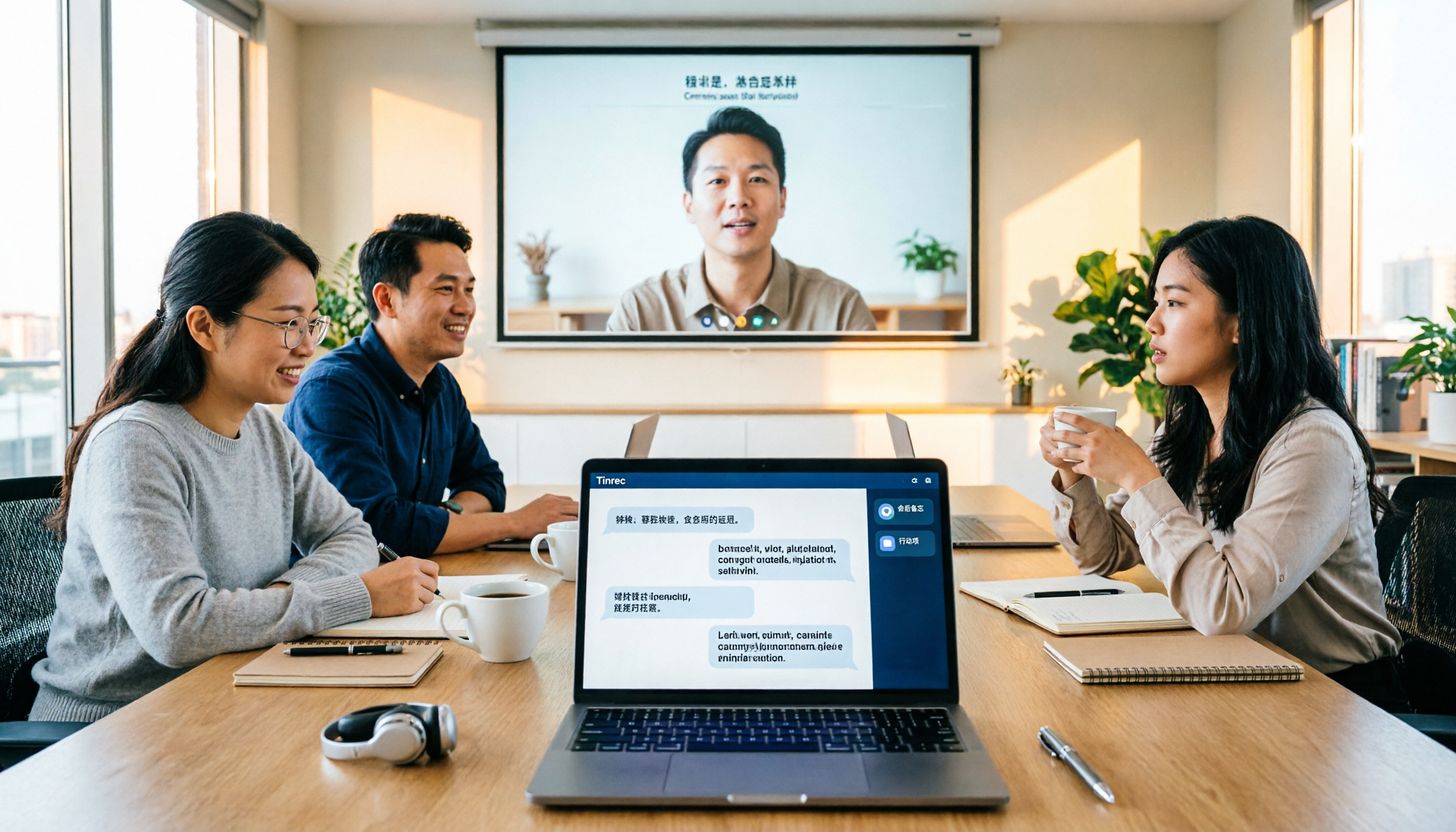
Turn recordings into transcripts and summaries in minutes
Upload audio or video for multilingual transcription, AI notes, and action items
You Only Understand Half of the Teams Meeting, But It Still Has to Finish
Have you ever had this experience? In an online meeting, the other person presents in English, Japanese, or Cantonese, and you can only stare at the screen guessing what they mean.
Asking them to repeat breaks the flow; not asking risks missing key decisions.
After the meeting, when you want to check back, you realize you didn't take any notes and have to ask someone again.
Actually, there are now several ways to do live translation in Teams meetings. The difference lies in whether you have the right license and whether the tool can retain the content.
Before Choosing a Teams Live Translation Solution, Understand These 4 Key Points
1. Do you need "captions" or a "transcript"?
Understanding the conversation in the moment via captions and having a searchable text after the meeting are two different things. Teams does not store captions; to keep a record, you need to enable transcription separately.
2. Your license level determines whether you can translate
Live translated captions in Teams meetings are only available with Teams Premium, which is an add-on license; live translated transcription is also part of Teams Premium. Without this license, you will mostly see only the original language captions.
3. Latecomers will miss a portion
When using Teams translated transcript, past translated text records are not saved; only the original transcript is stored. Participants who join midway can only see translated content from the point they joined.
4. Can you continue using it after the meeting?
The real cost of a meeting usually comes after it ends: summarizing, extracting action items, and looking back at "who said what." Teams built-in translation does not handle this part; you need another tool to take over.
Tinrec — Turning Cross-Language Teams Meetings into Usable Data
Tinrec is an AI meeting notes and collaboration tool for individuals and teams. It supports live recording, online meeting transcription, audio/video file import, and live translation, and can generate summaries, chapters, action items, and mind maps.
Handle Teams audio without inviting a bot
Tinrec desktop version directly captures your computer's system audio, processing Zoom, Google Meet, Microsoft Teams, and Webex meetings played on your computer without needing a meeting bot to join. This does not mean an official partnership with the platforms, but it is practical for meetings where you don't want an extra participant.
Translation can be original, translated, or bilingual side-by-side
During recording, you can view the original, translation, or bilingual content directly. For parts you don't understand, look at the translation; when you need to confirm wording, switch back to the original without leaving the meeting screen.
The key is that it's still usable after recording
After the meeting, Tinrec generates a transcript, summary, chapters, and action items, and you can also do AI Q&A around the meeting content. The easiest thing to miss in cross-language meetings is details. Asking directly afterward, "What did the client say about the delivery deadline?" is much faster than re-reading a 40-minute transcript. Results can also be exported to Notion, Google Docs, OneNote, Dropbox, and other tools for further processing.
Limitations should also be clear
Actual recognition accuracy can be affected by recording quality, noise, accents, overlapping speech, and technical terminology. It is not recommended to treat it as a 100% accuracy guarantee. The free version provides a basic quota, sufficient for trial; long-term or high-frequency use requires a paid plan.
If it's for a team
Stop organizing recordings by hand
Upload audio or video and automatically get a transcript, summary, and action items
Tinrec team version is a separate team space where meeting data belongs to the team, and it provides member, role, seat management, usage analytics, and audit logs. Members without a seat can still view and play team data, but recording, uploading, and editing require an assigned seat. Teams that qualify for the first time can enjoy a 7-day trial, 1 free seat, and 300 minutes of shared import quota; paid seats are USD 29.80 per month or USD 199 per year.
Who is it for
People who frequently handle Chinese or mixed Chinese-English meetings, don't want to add a meeting bot, and want to use AI to find key points directly after the meeting.
Besides Tinrec, What Other Translation Methods Are There for Teams Meetings?
Microsoft Teams built-in live translated captions
The easiest method, directly enabled in meeting controls, using Azure Cognitive Services speech translation technology. In town halls and live events, organizers can choose from over 50 languages, with 6 for standard and 10 for Premium. However, note that live translated captions are part of Teams Premium license, and captions are not stored. You need to check with your IT admin to confirm whether your organization has it enabled. It lacks post-meeting AI Q&A and action item extraction, and cannot manage meeting data across platforms.
Otter.ai
A mature choice for English meetings. Basic free version offers 300 minutes per month; Pro annual billing is about USD 8.49 per user per month with 1,200 minutes per month. If you mainly hold English meetings, it is a more cost-effective option than Tinrec; but Chinese and mixed Chinese-English meetings are not its strong suit, and it lacks Tinrec desktop's bot-free Chinese meeting organization workflow.
Notta
Good multilingual transcription and translation capabilities. Free version offers 120 minutes per month, with a maximum of 3 minutes per single content; Pro annual billing is about USD 8.17 per month with 1,800 minutes per month. Suitable for document transcription and subtitle-focused needs, but team space, seat governance, and audit capabilities are not as complete as Tinrec team version.
Pitfall Guide: The 3 Most Common Pitfalls When Setting Up Teams Live Translation
Pitfall 1: Thinking Teams built-in translation is a free feature. In fact, live translated captions and live translated transcription are both part of Teams Premium. Confirm your organization's license first, then decide whether to look for third-party tools.
Pitfall 2: Having transcription on, but can't find translated captions. To allow other participants to access the spoken language of the meeting, you must turn off transcription; if there is ongoing transcription, turn it off first and then manually re-enable translated captions.
Pitfall 3: Assuming captions will be saved automatically. Teams does not store captions, and translated transcripts only save the original language. To keep a record, you need to enable transcription yourself or switch to a tool that saves data.
Summary: Which One Should Your Teams Meeting Use?
Need Chinese or mixed Chinese-English meetings, want to compare original and translation → Tinrec (live translation + bilingual view)
Don't want to add a meeting bot, only use computer for meetings → Tinrec (desktop captures system audio)
Need post-meeting summary, action items, and AI Q&A → Tinrec (post-transcription organization and processing)
Team needs to share meeting data, manage seats and usage → Tinrec team version
Organization already has Teams Premium, just want to understand in the moment → Teams built-in live translated captions
Pure English meetings, limited budget → Otter.ai
If you're stuck on "Teams built-in translation requires a license, and captions can't be saved," you can try Tinrec free version first, test it with a real cross-language meeting, and then decide whether to upgrade.
References
- 5 Steps to Live Translate Teams Meetings | AI Live Translated Captions
- Start, stop, and download live transcripts in Microsoft Teams meetings | Microsoft Support
- Use live captions in Microsoft Teams meetings - Microsoft Support
- National Yunlin University of Science and Technology Microsoft Teams Live Translation Operation Manual
- Start, stop, and download live transcripts in Microsoft Teams meetings - Microsoft Support
Turn every recording into actionable outcomes
Get 60 free transcription minutes when you sign in. No credit card required.
Related Reading
You might also like

2026 Google Meet Note-Taking Tools Compared: Tinrec Leads for Chinese Transcription
Google Meet can't be purchased separately; business use requires a Google Workspace subscription. This article breaks down the differences between Google Meet free and paid versions, and compares Tinrec, Otter.ai, and Notta to help you find the best post-meeting solution for Chinese meetings.

Google Meet 2026 Update Review: Built-in Notes vs. Tinrec — Which Saves More Time?
We break down Google Meet's 2026 updates and compare its built-in meeting notes with Tinrec's AI recorder across recording methods, Chinese transcription, post-meeting organization, export, and team collaboration to help you decide which fits your meeting workflow.

Tinrec vs Notta 2026: 5-Dimension Comparison for Chinese Meeting Notes
Searching for Tenrec App brings up unrelated results. The real comparison is between meeting transcription tools. This article uses Tinrec as an example to walk through 5 steps from recording to meeting minutes, and compares Tinrec and Notta across 5 dimensions to help you decide which is better for your Chinese meeting scenarios.

2026 Comparison of 4 Google Meet Meeting Note Solutions: How Tinrec Turns Transcripts into Actionable Data
Google has never separately disclosed Google Meet revenue; 2024 figures are hidden within Workspace subscriptions and cloud business. This article compiles verifiable revenue context and compares the practical differences among four types of meeting note solutions, explaining how Tinrec uses bot-free desktop recording to turn meeting content from Google Meet, Teams, and Zoom into searchable, actionable team data.

Google Meet Transcription vs. Tinrec: Which Meeting Notes Tool Wins in 2026?
Google Meet's plans are tied to Google Workspace, with separate pricing and bundles in India. But built-in transcription only handles a single meeting—post-meeting organization, cross-platform consolidation, and team knowledge retention remain gaps. From a mid-level manager's practical perspective, this article explains how Tinrec fills these gaps with bot-free recording, AI Q&A, action item extraction, and team spaces.
How to Buy Google Meet Recording in 2026: 4 Steps to the Best Deal
Does Google Meet recording cost money? Why can't free users find the record button? Starting from a student budget, this guide uses 4 steps to help you decide whether to upgrade to Workspace, use built-in recording, or switch to a bot-free AI meeting notes tool like Tinrec, with buying criteria and pitfalls to avoid.

Tinrec vs Google Meet in 2026: 4 Key Differences to Know Before You Pay
People searching for Google Meet purchase price usually want to know: Do I need to pay for meetings, and where should the money go? This article breaks down Google Meet's pricing logic using real scenarios for students and small teams, and explains how Tinrec fills the gap in meeting notes, transcripts, and action items so you can decide before paying.

Arsenal vs Nottingham Forest Preview 2026: 3 Key Storylines and H2H Data
On October 18, 2026, Nottingham Forest host Arsenal in Premier League Matchday 7. This preview covers kickoff time, both teams' recent form, head-to-head record, and injury lists to help you get up to speed before the match.
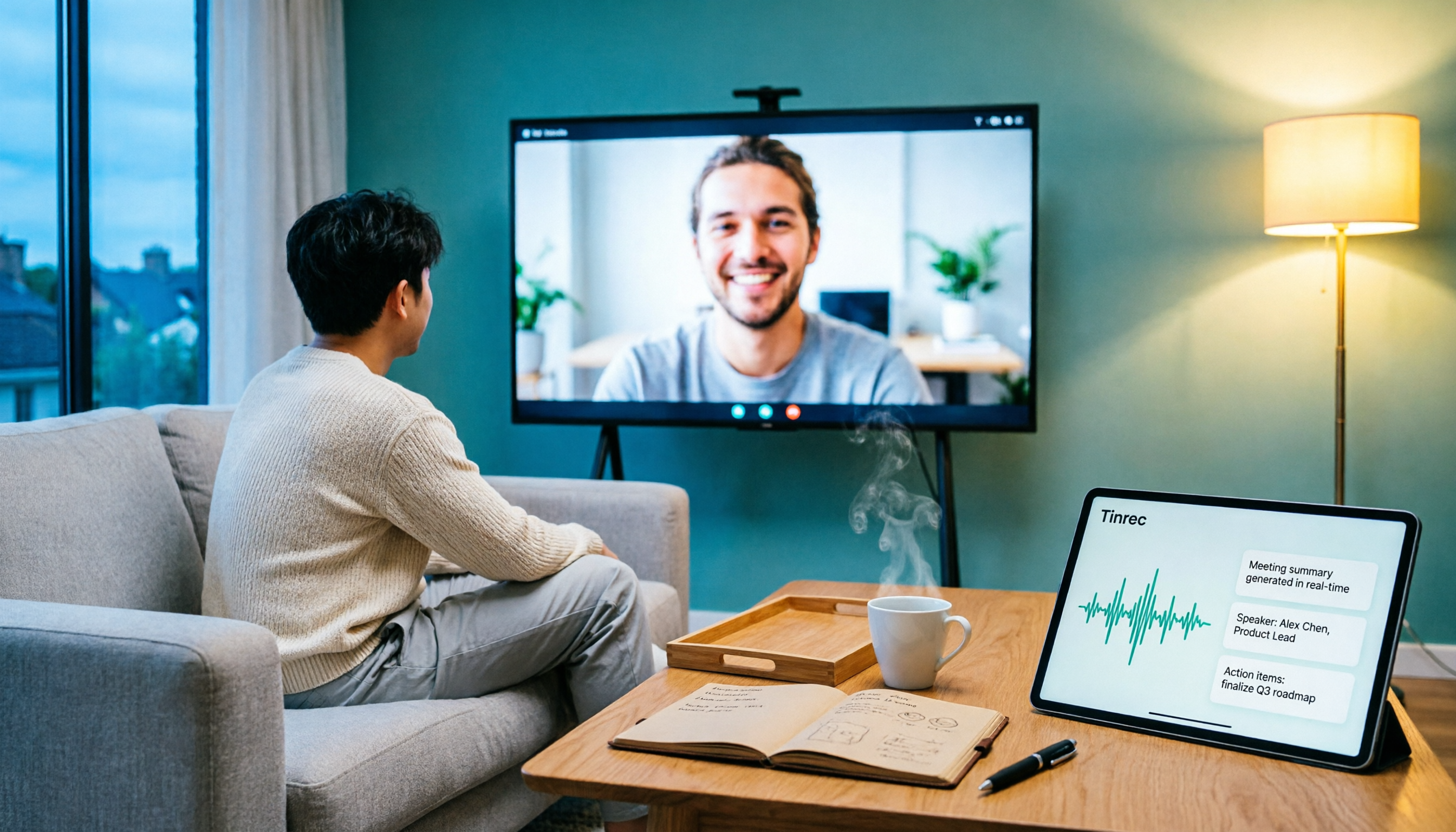
5 Ways to Put Google Meet on TV in 2026: Real-World Comparison and How to Capture Meetings on the Big Screen
To get Google Meet on your TV, you need to solve two problems: how to get the picture on the big screen, and where the meeting content goes after it ends. This guide covers 5 methods, from bot-free recording to Chromecast casting, Android TV calling, and browser-based options, explaining when each one makes sense.