

Turn recordings into transcripts and summaries in minutes
Upload audio or video for multilingual transcription, AI notes, and action items
Answering the Search Intent First: This Comparison Itself Does Not Hold
"good tape vs hockey tape" ends up in the same search box mostly because of confusion caused by the name. Good Tape is the product name of an AI speech-to-text service; hockey tape is tape on the shelves of sporting goods stores. One deals with sound and text, the other wraps around stick handles or protective gear. The two belong to different categories, have no common comparison dimension, and there is no question of "which one is better."
In workplace situations where transcripts and post-meeting records must be kept after meetings, interviews, or client communications, the truly useful thing about this set of keywords is that it reminds you of one thing: first confirm which category you need, then talk about selection. Below, we first put the two terms in their respective places, then address the problem most people actually need to solve—how to choose a suitable meeting and interview transcription tool.
What Is Good Tape: An AI Speech-to-Text Service
Good Tape belongs to the category of AI speech-to-text services, that is, tools that convert audio or video content into readable, searchable text. The work problems this type of service addresses are very specific: turning the content of meetings, interviews, and voice memos from "can only be listened to again" into text materials that "can be read, marked, and cited."
Two boundaries must be made clear first. First, the sources available for this article do not cover Good Tape's feature details, pricing, and benefits, so this article makes no judgment about its specifications, quotas, or performance; actual information should be based on the official page. Second, the reason it appears in the same set of keywords as hockey tape is the search results' matching of the literal word "tape," not a product-category association.
What Is Hockey Tape: Tape for Sports Equipment
Hockey tape is tape used for sports equipment. Common uses include wrapping stick handles, covering the bottom of sticks, and securing or tightly wrapping protective gear (such as shin guards). According to third-party equipment guides and player discussions, cloth hockey tape has several often-mentioned characteristics: it wears easily, edges peel off, and it needs to be re-wrapped repeatedly; some players also mention that cloth tape causes greater wear on glove palms.
Discussions of alternatives also stay at the equipment level. Some discussions point out that athletic tape has a similar texture and stickiness and can be used as a substitute; some equipment guides mention that tape for protective gear is more elastic than cloth tape, is waterproof, and is less likely to lose its stickiness. These are all statements from third-party equipment materials, all belonging to the selection of physical consumables, and have no comparability with digital tools.
If What You Really Want Is a Meeting and Interview Transcription Tool: Four Criteria
After clarifying the categories, what people who really need to choose a tool should ask is not "which tape is good," but "which transcription tool fits my workflow." The following four criteria are recommended to be checked in order.
| Criteria | Questions to Ask Yourself | Why It Affects Suitability |
|---|---|---|
| Input Source | What needs to be processed: live meetings, online meetings, or already-recorded audio files | Tools that can only upload files cannot handle the current meeting; tools that only do online meetings cannot handle offline interviews and historical recordings |
| Language Context | Is the meeting mainly in Chinese? Will it mix Chinese and English or require bilingual viewing? | Chinese, mixed languages, and technical terms are handled differently; terminology recognition affects whether they can be directly cited later |
| Post-meeting output | Do you need a transcript, or summaries, decisions, action items, and follow-up documents? | If you only get a transcript, the post-meeting organizing workload still remains with people |
| Data retention and sharing | Should records stay in individuals' hands, or should colleagues be able to take over and search them long term? | It determines whether meeting data is scattered across personal accounts and chat logs, or centralized in a space that can be handed off |
Among the four criteria, the last two are the easiest to overlook. The input source determines whether the tool can be used, while post-meeting output and data retention determine whether the record can ultimately be delivered.
Stop organizing recordings by hand
Upload audio or video and automatically get a transcript, summary, and action items
How Tinrec Handles Post-Meeting Work: The Stage After the Transcript
Take Tinrec as an example: its input sources cover live recording, desktop recording of online meetings, and audio file import. The desktop version captures computer system audio to handle online meetings played on a computer, such as Zoom, Google Meet, Microsoft Teams, and Webex, without separately inviting a meeting bot to join; note that this does not mean it automatically joins all meetings, and users still need to start recording themselves.
On the output side, it turns audio into transcripts, AI summaries, chapters, highlights, and action items, and supports AI Q&A around the meeting content and multi-format export. What really makes the difference is the next step: the AI assistant (Agent) uses the meeting minutes and context to help further process action items into action plans, follow-up materials, reports, tables, or documents.
Fictional teaching example: After a project weekly meeting ends, the transcript and action items are generated first, and the AI assistant then turns three of the action items into a draft action plan containing owners, deadlines, and deliverables; project members verify the content before it is sent externally. This example is only used to illustrate the workflow and does not represent any actual customer scenario or performance data.
Steps that must be manually confirmed cannot be skipped: for important commitments, materials sent externally, and key decisions, it is recommended that the responsible person verify the transcript and recording before finalizing. Tinrec also will not operate external systems on the user's behalf or automatically complete external-facing processes that have not been confirmed.
From Personal Records to Team Data: Sharing, Handoff, and Members/Roles/Seats
A common breaking point in personal use is that meeting records stay in a personal account or chat history. After someone else takes over, or a member takes leave or resigns, the transcript and to-dos for the same meeting cannot be found, or you have to ask again to piece them together. The team edition addresses exactly this part—the team edition is not multiple people sharing one personal account, but an independent team collaboration space. Meeting-related data belongs to the team, and new members can view the team's historical data.
There are two specific parts to the approach. The first is the team space: after creating or switching to a team space, invite members with a join link. Meeting data is stored centrally, so transcripts, summaries, and to-dos can be searched, queried further, and further processed, rather than scattered across individual devices and conversations. The second is sharing meeting data: the same meeting record is visible to team members, and post-meeting outputs can continue to be followed up. When a member exits, is removed, or loses a seat, the team resources they are responsible for need to be handed over to other active members, and the data does not lose its ownership just because an individual leaves.
For permissions, three concepts must be clearly distinguished. Membership determines whether a person belongs to the team; role determines who can manage the team, members, audits, and team settings; seat determines whether a member can record, upload, edit, import/export, and use team resources. Active members without a seat can still view, play, and read team data, but cannot perform the above resource-use operations. The current team edition focuses on collaboration-friendly team-level sharing; it is not file-level or member-level granular permission control.
If the work involves producing meeting records and external materials on a fixed weekly basis, you can first use the personal edition to get the transcript and to-do workflow running smoothly, then move meetings that require multiple people to take over and long-term retrieval into the team space. Before rollout, it is recommended to confirm with the team how members, roles, and seats will be allocated, to avoid unclear ownership of record responsibilities.
Conclusion: When It Fits, and When Human Confirmation Cannot Be Skipped
When is Tinrec a good fit: work where meetings and interviews are primarily in Chinese, you need to handle both live recordings and existing audio files, you need to deliver summaries and to-dos after meetings, and these records need to be taken over by colleagues and retrieved long term. When should you not rely on the tool yet: content that requires formal external commitments, meetings involving sensitive data, and decisions that must be made by a person should all be used only after human verification.
Back to the original keywords: good tape and hockey tape are not the same kind of thing, and this comparison itself does not hold. If what readers are really looking for is a meeting and interview transcription tool, the order of judgment should be to first confirm the category and input source, then look at post-meeting outputs and data retention, and only then look at team collaboration and permission arrangements.
Tinrec does more than produce a transcript. After summaries, highlights, and action items are extracted, Agent can use the meeting context to help turn follow-up tasks into practical deliverables such as an action plan, follow-up material, a report, a table, or a document. Important commitments and external messages should still be reviewed by a person.
Tinrec for Teams then keeps the meeting materials, action items, and resulting deliverables in a shared team workspace so members can continue the work, search the context, and retain it over time. Capabilities selected for this scenario include 团队空间、共享会议资料.
If these records need to be maintained by more than one person, consider Tinrec for Teams for a more consistent collaboration workflow.
Sources
- How to Choose the Best Hockey Stick Tape - Pro Stock Hockey: https://www.prostockhockey.com/blog/best-hockey-stick-tape/
- Good alternatives to Hockey tape? - Sports Stack Exchange: https://sports.stackexchange.com/questions/29917/good-alternatives-to-hockey-tape
- Top 10 Best Hockey Tape for 2026 – Grip, Durability & Value - Hockey Monkey: https://www.hockeymonkey.com/learn/best-hockey-tape
- Hockey Grip Tape Explained: Complete Guide to Choosing Hockey Stick Tape - VukGripz: https://vukgripz.com/blogs/hockey/hockey-grip-tape-explained-the-complete-guide
- r/hockeyplayers on Reddit: Different types of tape: https://www.reddit.com/r/hockeyplayers/comments/8ho11e/different_types_of_tape/
Turn every recording into actionable outcomes
Get 60 free transcription minutes when you sign in. No credit card required.
Related Reading
You might also like
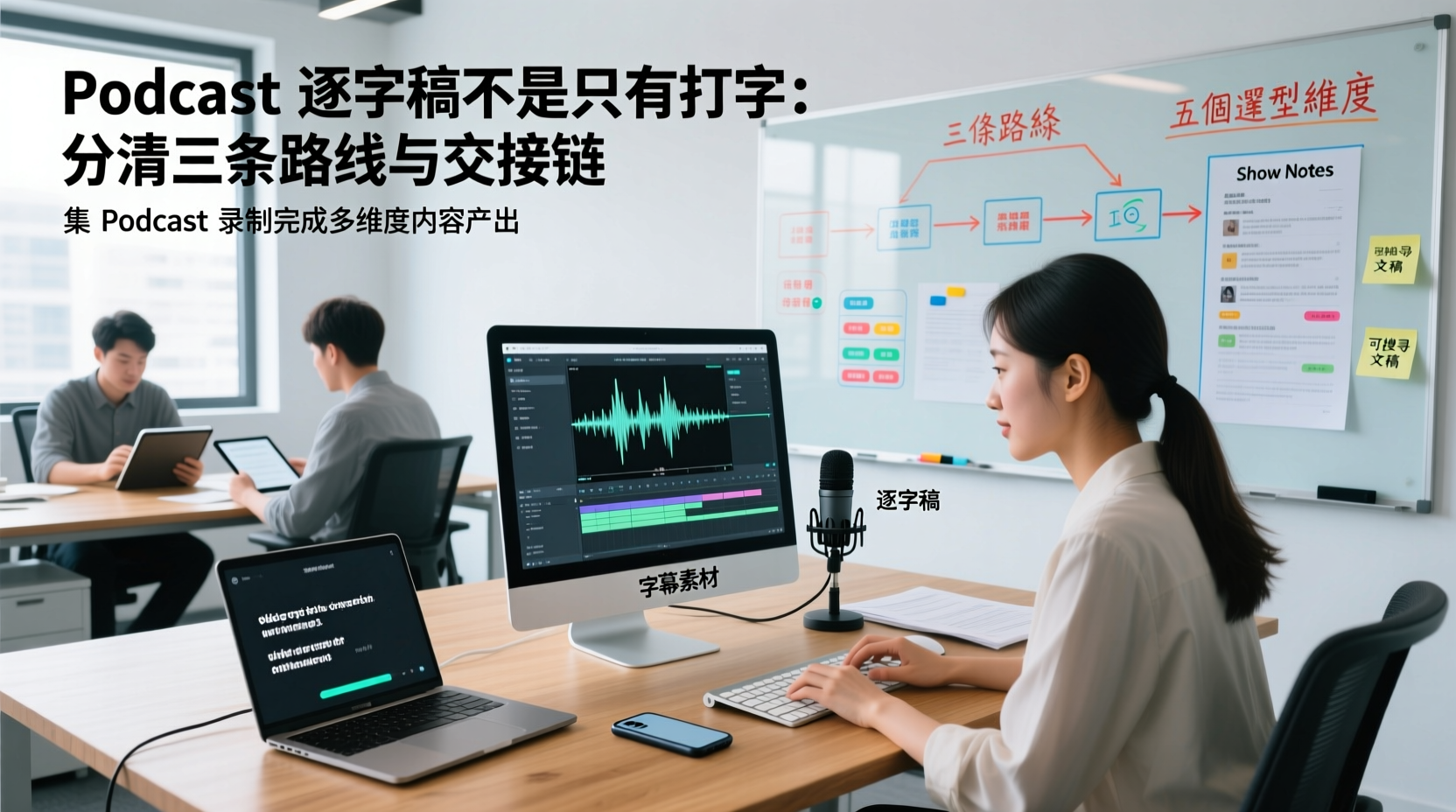
A Podcast Transcript Isn't Just Typing: Separate the Three Paths and Handoff Chain to Connect Audio to Captions, Show Notes, and Searchable Text
A finished podcast episode doesn't just need a transcript—it also needs caption assets, Show Notes, and searchable text, each with different people taking over. This article breaks down three common paths and five selection dimensions, explaining the handoff chain from audio file to each output, which fields must be filled in first, which steps still require human proofreading, and how assets are centralized, shared, and handed off in multi-person production.
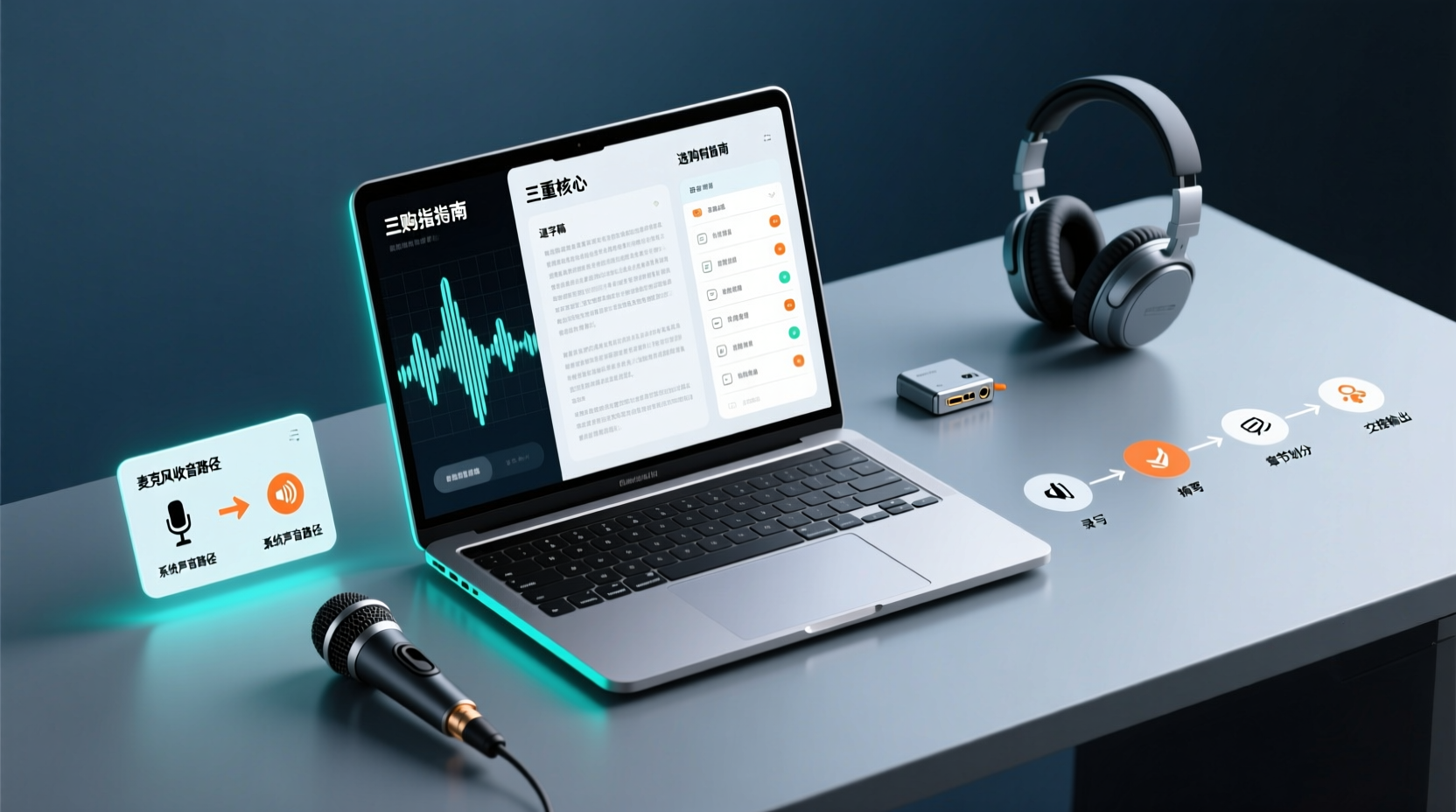
How Do You Choose PC Recording Software? First Tell Microphone Capture Apart From System Audio, Then Handle the Transcript and Action Items
Recording audio on a computer doesn't end with one button press. First determine whether your sound source is microphone capture, system audio, or an existing audio file, then verify the platform, output, and language requirements. After recording, you still have to produce the transcript, summary, chapters, and action items, and share and hand off in a team space. This article follows the order of buying decisions to explain when each path applies and where its factual limits lie.

How Should You Choose a Podcast Transcription App? Run 5 Criteria First, Then Compare Four Types of Solutions: The Workflow from Audio File to Show Notes
Between finishing a recording and publishing an episode, transcripts, segmentation, and show notes are the stages most likely to stall the production line. This article lays out 5 checkable criteria, compares four common approaches, and shows how to use Tinrec to go from an audio file to a transcript, key points, and deliverable assets — while explaining which steps require human confirmation and how a show team shares and hands off the work.
Notta vs Fireflies: How to Choose — From Meeting Capture Architecture and Chinese Bilingual Limits to Team Data Ownership, a Selection Conclusion for 5–20 Person Teams
The difference between Notta and Fireflies isn't just price and minutes — it's how a meeting actually gets recorded. This article compares the two in order: their meeting capture methods, the limits of their Chinese and bilingual experience, what you get after the transcript, and team data ownership and member handover. It then narrows the conclusion into three team selection scenarios, explaining under what conditions you should evaluate a bot-free approach like Tinrec.

How to Choose a Budget Voice Recorder: Check 4 Specs, Avoid 3 Pitfalls, and Calculate the Real Transcription Cost After Recording
Shopping for a voice recorder on a budget of a few hundred to NT$2,000? First understand where cheaper models cut corners, how to evaluate 4 key specs, how 3 common setups compare, and the practical workflow for turning recordings into transcripts, key points, and action items using free quotas.

5 Online Meeting Transcription Solutions Compared for 2026: What to Know Before Buying Google Meet
Before you buy Google Meet, do you understand the difference between the free version and paid Workspace? This article compares 5 online meeting transcription solutions, including Google Meet, Tinrec, Otter.ai, Notta, Granola, and PLAUD, breaking down pricing, Chinese language support, post-meeting organization, and team collaboration to help you choose the right solution without paying for features you won't use.

How to Use Google Meet On-the-Go in 2026: A 5-Step Guide
Complete guide to Google Meet On-the-Go mode: learn how to join meetings on the move in 5 steps, and how Tinrec fills the gap in meeting notes and organization so you never miss important to-dos.

5 Google Meet Note-Taking Tools Tested and Compared for 2026: How to Keep Meeting Records After Downloading
Downloading Google Meet takes only 30 seconds, but the real challenge is keeping meeting content after the download. This article covers three ways to download Google Meet on Android, iOS, and computer, then compares 5 tools that turn meetings into usable data, including Tinrec with bot-free recording and AI chat queries, Google Meet built-in transcription, Otter.ai, Notta, Granola, and TurboScribe. Finally, it provides clear recommendations based on budget and use cases.

Google Meet India Pricing in 2026: 4 Plans Compared — Costs, Limits, and How to Choose Meeting Notes
Google Meet in India isn't a standalone subscription — it comes with Google Workspace plans. This article breaks down the price differences, participant limits, and meeting notes restrictions across Free, Base, Starter, Standard, and Enterprise, and explains how Tinrec fills the gap for post-meeting transcripts, summaries, action items, and team knowledge retention.