

Turn recordings into transcripts and summaries in minutes
Upload audio or video for multilingual transcription, AI notes, and action items
4 Client Visit Recording Tools Tested for 2026: Which Free Version Is Enough, and Which Produces Meeting Notes Fastest?
It's 4:30 PM. You walk out of the client's office, and before you even start the car, your manager's message pops up: "How did today's meeting go?"
You vaguely remember the client said the budget was "around that range," and that procurement needs to be confirmed. But who needs to confirm it, when they'll reply, and what exactly we agreed to—it's already getting fuzzy.
This isn't a bad memory; it's a problem with how you record things. If you rely on writing visit notes after returning to the office, you'll usually end up with only conclusions, not the process; only feelings, not exact words. In this article, I'll first explain what a visit record should include, then run four tools through an actual client visit workflow to see which one really saves you time.
How to Write Client Visit Records: 5 Key Points to Understand First
A usable visit record isn't a personal diary—it's something that lets your manager, colleagues, or even you three months later pick up the next conversation.
At minimum, it should have these 8 fields: date and time, location or meeting link, purpose of visit (initial visit/needs confirmation/quotation/after-sales), client attendees' names, titles, and decision roles, our attendees, the client's current solution, what they care about most this time, and next steps with owners.
If your manager only gives you 30 seconds, you can say something like: "Today I met with Procurement Manager Wang and IT Deputy Manager Li. They're currently using Solution A, and the bottleneck is slow export. What they care about most is implementation time. We promised to provide a test account by next Wednesday, and Chen from Sales will handle it." —Who, where's the bottleneck, what they care about, what we promised, who does what—five sentences and you're done.
Dimension 1: Can the fields force you to write down "next steps"? Many records only say "client is interested," but lack an owner and deadline—such records are as good as not written. If a tool only does audio transcription, you still have to fill in the fields yourself.
Dimension 2: Are audio files retained? The biggest fear in visit records is getting numbers wrong. With audio, you can go back and check whether the client said "two million" or "within two million." Some tools only provide transcripts and don't save audio, so you can't verify tone or amounts later.
Dimension 3: How to record online meetings. Client meetings often happen on Zoom, Google Meet, or Teams. One approach is to have a bot join as a participant; another is to capture system audio from your computer. The former shows a stranger's name on the attendee list; the latter doesn't, but requires you to actively start the tool.
Dimension 4: Can you produce a summary and action items within 10 minutes after the meeting? There's usually only a short window between the end of a visit and replying to messages. If a tool can list "needs, concerns, commitments" in sections and directly extract who should do what, you can paste it into your spreadsheet and be mostly done.
Dimension 5: Does data stay with individuals or the team? It's common for visit records to be scattered across each salesperson's computer. When someone leaves or handover is needed, you discover that only they knew what the client agreed to last time.
After considering these five points, you can roughly judge which tools are just "audio-to-text" and which can truly take over post-visit work.
Tinrec (秒聽錄音) — Our Tested Choice for Client Visit Records
Tinrec (秒聽錄音) is an AI meeting notes and collaboration tool for individuals and teams, available on mobile, desktop, and web. It doesn't just convert audio to text; it organizes a visit into searchable, queryable data that can be handed off to colleagues.
First, on-site with the client. Open Tinrec on your phone and start recording; the screen shows live transcription as it records. By the end of the visit, you already have a complete conversation record, so you don't have to rely on memory. For those who like handwritten notes, matching keywords back to timestamps in the transcript is much faster than scrubbing through audio files.
Next, online meetings. Tinrec's desktop version directly captures system audio, so for Zoom, Google Meet, Microsoft Teams, Webex, and similar meetings, you don't need to add a meeting bot to the attendee list. No unfamiliar participant appears on the client's screen—this is very practical for formal visits.
Post-meeting is where it stands out. After recording, Tinrec automatically generates summaries, chapters, and action items. For a 20-minute Chinese client visit recording, the summary typically lists "client status, main concerns, our commitments" in sections, and action items identify who should do what. Paste this into the 8-field table mentioned earlier, and a visit record is mostly complete.
Even better is AI Q&A. You can directly ask: "What budget did the client mention this time?" "Who is responsible for confirming the procurement process?" "What did we promise?" It organizes answers based on the meeting content, not just a bunch of keywords. For a visit covering three or four topics, this is much faster than manually scanning a 30-minute transcript.
Stop organizing recordings by hand
Upload audio or video and automatically get a transcript, summary, and action items
Output isn't limited to Tinrec. Transcripts, summaries, and action items can be exported to Notion, Google Docs, OneNote, Dropbox, etc., to continue writing visit reports or proposals. It also has Agent post-processing, which can generate reports, tables, and documents from meeting content as needed—for those who submit client visit records weekly, this saves repetitive organizing time.
For team use, Tinrec's team plan is a separate team space, not multiple people sharing a personal account. Meeting data belongs to the team, and new members can view historical visit records; admins can manage roles and seats, view usage analytics and audit logs, and deleted audio files can be restored from a 30-day recycle bin. Note that the team plan is primarily team-level sharing, with role-based governance and seat-based usage control—members without a seat can view, play, and read data but cannot upload, edit, or export. This is not file-level permission, so confirm it meets your management needs before purchasing.
Pricing: The personal plan includes a free version, weekly card, Pro monthly, and Pro annual, depending on usage frequency; the free version provides a basic quota, enough for occasional one or two visits, and long-term high-frequency users can consider upgrading. The team plan offers a 7-day trial for first-time eligible users, 1 free seat, and 300 minutes of team shared import quota; paid seats are USD 29.80/month or USD 199/year (about USD 16.58/month), with each paid seat providing 2,000 minutes of team shared import quota per month. Under an active team plan, real-time recording currently does not deduct minutes; file and web imports use the team shared quota. Actual prices and benefits are subject to the official purchase page.
Pros: First, desktop version records without a bot, so no extra person appears on the client list. Second, post-meeting summaries, chapters, action items, and AI Q&A form a workflow, not just a transcript. Third, team space keeps visit data even when people leave, and team hotwords can maintain client product terms and proper nouns.
Limitations: The free version has limited quota, so heavy users need to pay; transcription quality is affected by recording quality, accents, overlapping speech, and technical terms. For important amounts and commitments, it's recommended to listen back to the audio to verify—don't treat it as 100% accurate.
Who it's for: If you have client visits every week, need to handle both online and offline meetings, want to use AI to find key points after meetings, and value team data handover, Tinrec is currently a relatively complete choice.
Besides Tinrec, What Other Options Are There?
Granola is a bot-free AI meeting notes tool that transcribes via desktop system audio and microphone, then combines with your handwritten notes to generate meeting content. Basic is free, Business is USD 14/user/month. It's more suitable for those who already take their own notes and only have online meetings. Note that it doesn't support uploading pre-recorded audio files and doesn't save meeting audio; if you want to listen back to the client's exact words, Tinrec supports importing audio and video files and retains audio, which better fits visit record needs.
TurboScribe focuses on cost-effective file transcription: Free allows 3 files per day, up to 30 minutes per file; Unlimited is USD 120/year, paid version supports up to 10 hours or 5GB per file, and up to 50 files at once. It's suitable for transcribing a batch of existing recordings at once. Its positioning is file transcription; real-time meeting recording, action item extraction, and team meeting space are not its focus. If you want to record and transcribe during the visit and generate action items right after, Tinrec's workflow is closer.
PLAUD NotePin/Note Pro is AI recording hardware, device price starting at USD 159, membership Starter 300 minutes/month, Pro annual USD 99.99. It's suitable for those who frequently visit physical clients and are used to recording with a dedicated device; in-person visits and phone calls are its strengths. Downsides: you need to carry an extra device, remember to charge and sync; Tinrec requires no extra hardware, works on phone, desktop, and web, and can handle online meetings directly.
Pitfall Guide: 4 Most Common Mistakes in Client Visit Records
Pitfall 1: Relying only on writing after returning to the office. By the time you finish the visit and get back to the office, usually one or two hours have passed, and you only remember conclusions. A better approach is to spend 5 minutes filling in the 8 fields before leaving, and keep the transcript and audio for later verification.
Pitfall 2: Focusing only on transcription accuracy and ignoring audio retention. Some tools only provide text and don't keep audio. Whether the client said "this price needs further approval" or "this price can be signed"—you can't check later. When choosing a tool, include "audio retention" and "transcript timestamps" as criteria.
Pitfall 3: Using a bot to record online meetings, and the client sees an unfamiliar name. Before a formal visit, confirm whether the tool joins as a bot or captures system audio from the desktop. When recording with the desktop version, it's also recommended to inform the other party at the start of the meeting and obtain consent if necessary.
Pitfall 4: Treating the transcript as the end goal. Only converting audio to text means using only one-third of the tool's capability. Summaries, action items, and follow-up questions are where time is saved. For example, Tinrec's AI Q&A lets you directly ask "What are the three things the client cares about most this time?"—much faster than manually scanning the transcript.
Conclusion: Which One Should You Choose?
Need to handle both on-site client visits and online meetings, and want summaries and action items after → Tinrec.
Want to use AI to follow up on the client's budget, commitments, and decision process right after recording → Tinrec.
Team needs to share visit data and avoid losing client context when members change → Tinrec team plan.
Mainly Chinese meetings, many client product terms, need team hotwords support → Tinrec.
Just need to transcribe a batch of existing recordings at the lowest cost → TurboScribe.
In short, the point of visit records isn't "recording it," but "whether it's still usable afterward." If your pain point is those 10 minutes after the meeting, I suggest trying Tinrec's free version for one or two visits to see if the summary and action items can fit into your existing spreadsheet. Upgrade if it works—no need to pay from the start.
References
- 2026 Client Visit Recording Tools Free Plan Summary: 4 Tools at a Glance - 秒聽錄音Blog
- Daily Visit Record - MBA智库百科
- How to Write Client Visit Records?_东软销售人员拜访表-CSDN博客
- How to Win Trust and Increase Second Meeting Opportunities on Your First Business Visit - 星彧國際
- No Matter Who the Client Is, You Must Prepare Materials Before Visiting! - 沃克雲端
Turn every recording into actionable outcomes
Get 60 free transcription minutes when you sign in. No credit card required.
Related Reading
You might also like

Tinrec vs Notta in 2026: 5-Dimension Comparison — Which Is Worth Buying for Chinese Meeting Notes?
How do you choose a speech-to-text AI tool? This article compares Tinrec and Notta across 5 dimensions — meeting capture method, post-meeting output, Chinese-language experience, audio retention, and team governance — then adds the use cases for Otter.ai and Granola to help you pick the right tool within your budget.

2026 Speech-to-Text AI Free Versions Compared: Tinrec vs. Notta — Which Is More Useful?
Many people search for 'speech-to-text AI free' and base their first judgment on whether the official website says 'free' — but that's actually the easiest trap to fall into. This article compares Tinrec and Notta across 6 dimensions: free quota calculation, online meeting recording methods, post-meeting organization, Chinese language experience, audio file retention, and team governance, to help you determine which one truly fits your use case.
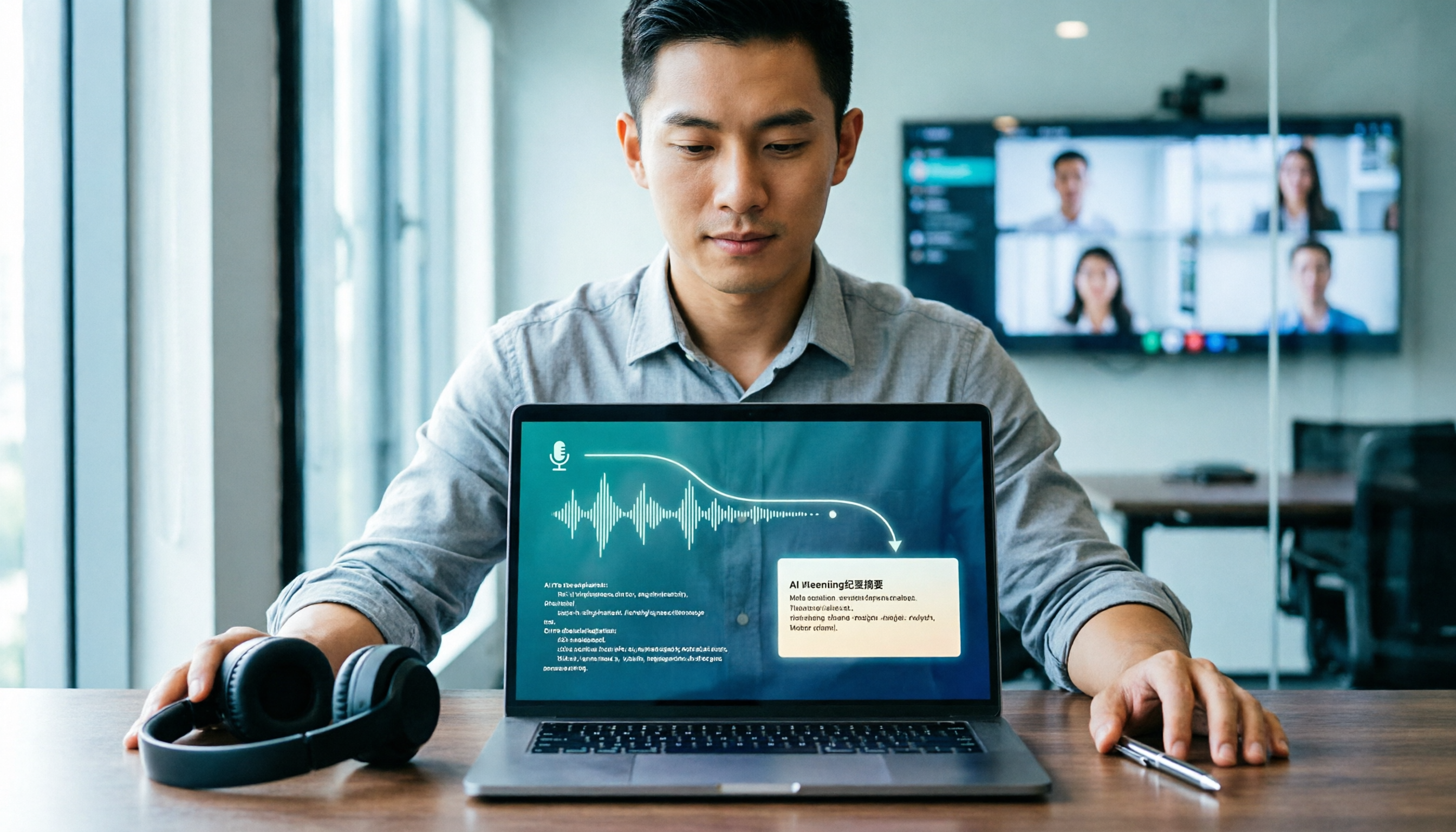
2026 Voice-to-Text App Guide: Dcard Favorites Compared + AI Meeting Notes Tested
Recorded a 100-minute meeting and spent 3 hours organizing it? Starting from common Dcard discussions, this article breaks down 4 key factors for choosing a voice-to-text app, tests Tinrec's bot-free online meeting recording, AI Q&A, and post-meeting workflow, compares Notta, Yating Transcription, and Otter.ai for different scenarios, and lists the 4 most common beginner mistakes.

2026 LINE Voice-to-Text Guide: 2 Methods Tested and Recommended
Converting LINE voice messages to text often gets stuck at extracting the audio file and dealing with inconsistent transcript versions. This article compares LINE's built-in process with Tinrec, analyzing file extraction, Chinese transcription, post-meeting organization, export, and team collaboration to help you choose the right solution.

2026 Sales Meeting Notes Tools Compared: Which One Best Fills Your Excel?
How to create sales meeting notes in Excel in 2026? Starting from the post-meeting pain points of mid-level managers, this article tests Tinrec, Otter.ai, Granola, and TurboScribe, and outlines the five types of information a sales meeting notes Excel should contain, tool selection criteria, pitfalls to avoid, and selection recommendations, helping you quickly fill customer commitments and to-dos into the spreadsheet after meetings.

2026 Sales Meeting Notes Tools Compared: From Spreadsheets to AI Auto-Organization, Which Saves the Most Post-Meeting Follow-Up Time?
A sales meeting notes spreadsheet isn't just for post-meeting reporting—it's a tool for tracking customer commitments, budget, decision timeline, and next steps. Starting from essential spreadsheet fields, this article tests and compares three approaches: Tinrec, Notta, and Granola, to help you determine which best suits your sales team's post-meeting organization and follow-up.
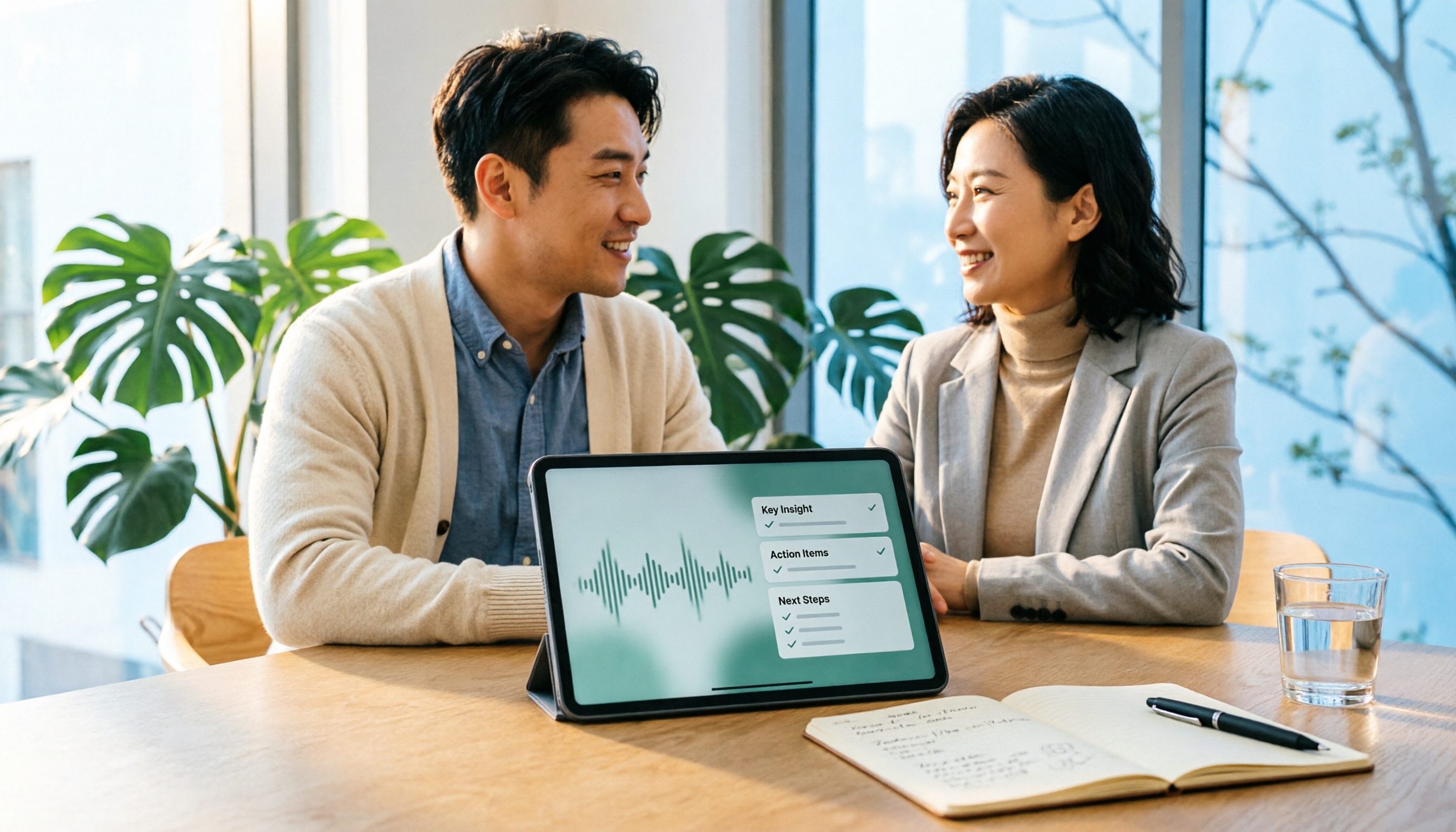
2026 Comparison of 4 Client Visit Recording Tools: How to Choose One That Completes Notes in 10 Minutes After a Meeting
After a client visit, relying on memory to fill in Excel often leads to notes like "client has concerns, to be confirmed" that you can't understand later. This article outlines recommended fields for a client visit record sheet, key points for choosing a tool, and compares Tinrec, Otter.ai, Notta, and Granola in terms of visit recording and post-meeting organization, helping you find a method to complete notes within 10 minutes after a meeting.

2026 Sales Meeting Notes Tools Compared: Tinrec, Notta, Granola vs. Traditional Templates — Which One Tracks Customer Commitments?
Many people treat sales meeting notes as verbatim transcripts, then can't find customer commitments or action items afterward. This article starts with common mistakes, compares Tinrec, Notta, Granola, and traditional templates, and outlines practical fields, AI organization workflows, and team collaboration tips for 2026 sales meeting notes.

2026 Comparison of 5 Sales Meeting Note Tools: Which Latest AI Meeting Assistant Best Tracks Commitments?
Sales meeting notes aren't just about transcribing conversations verbatim. This article addresses common misconceptions and reviews 5 sales meeting note tools in 2026, comparing Tinrec, Otter.ai, Fireflies.ai, Notta, and Granola on meeting capture, AI summaries, action item tracking, and team collaboration to help you choose the solution that tracks customer commitments.