
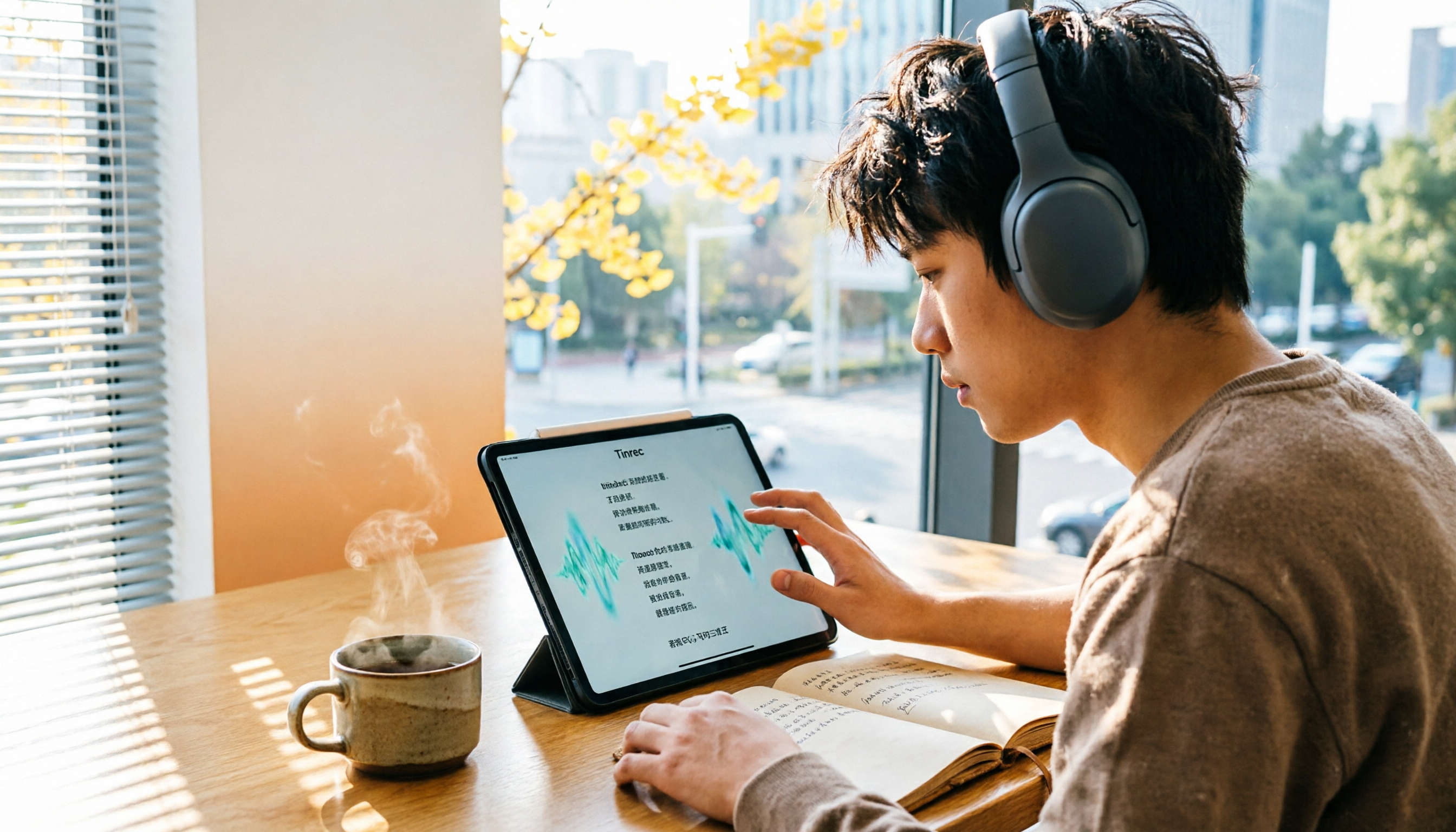
Turn recordings into transcripts and summaries in minutes
Upload audio or video for multilingual transcription, AI notes, and action items
4 Otter Chinese Lyric Translation Tools Tested: Why Translating Full Passages Beats Looking Up Words
Searching for 'otter Chinese lyrics' and still confused—what you need isn't a dictionary, but a process to understand full foreign-language passages
I remember when I was preparing my graduation project, listening to English interviews while following along with subtitles, and I got stuck on the word 'otter.' I opened a search bar and typed 'otter Chinese,' and what came up were dictionary pages and lyric websites—nothing told me what the sentence actually meant.
Let's start with the basics. 'Otter' is a noun; in Chinese, it's '水獺' (shuǐ tǎ). The Cambridge Dictionary defines it as 'a mammal with four legs, short brown fur, that swims well and eats fish.' It's pronounced /ˈɑtər/, sounding like 'ah-ter.' Its etymology comes from Old English 'otor,' originally referring to an aquatic animal. Additionally, in English gay slang, 'otter' also refers to a man with an average build and moderate body hair—this usage appears quite frequently in TV shows and interviews.
The problem is right here: you looked up 'otter' and found '水獺,' but when you put it back in the sentence, it still doesn't fit. It could be slang, a metaphor, or a pun. What truly confuses you is never just that single word, but the entire foreign-language passage.
So when you search for 'otter Chinese lyrics,' what you actually need is the ability to understand and translate entire foreign-language passages into Chinese. Looking up words one by one in a dictionary is so inefficient that it makes you want to give up.
Before Choosing a Foreign-Language Audio-to-Chinese Tool, Understand These 4 Key Points
1. Can it handle the files you have? You might have videos, mp3 audio files, or live recordings. Not every tool supports uploading pre-recorded files; some only do real-time meetings. If you need to organize interviews, lectures, or your own recordings, file import capability is the first hurdle.
2. Chinese output quality, not English-to-English. Many tools perform well in English but struggle with Chinese or mixed Chinese-English content. You need a smooth path from foreign language input to Chinese output.
3. What happens after transcription? A tool that only gives you a transcript is like handing you a long, unfocused document. Whether it can automatically generate summaries, answer questions about the content, or create bilingual comparisons determines how much extra time you'll spend afterward.
4. Free tier and paid thresholds. Students have limited budgets. Whether the free version is 'actually usable' or 'just a taste' makes a big difference; also check if paid plans are monthly or one-time purchases.
Tinrec (秒聽錄音)—My Choice After Testing
Tinrec (秒聽錄音) is an AI meeting notes and collaboration tool for individuals and teams, available on iOS, Android, and web. It doesn't just convert audio to text; it helps you organize content into searchable, queryable, and further processable data.
How I actually use it for foreign-language content. I usually drop interview or lecture audio files into Tinrec, and it generates a transcript. The most useful feature is real-time translation—during recording, you can switch between original text, translation, or bilingual view. This is super helpful for questions like 'what does otter mean in this sentence?' because you see the full context, not an isolated word.
Recording isn't the end; it's the beginning. Tinrec automatically generates summaries and chapters, breaking long content into readable sections. I used this for midterm review—a two-hour class, I'd scan the summary first, then go back to parts I wasn't familiar with. It also extracts action items from discussions into to-dos, which was especially useful for our group graduation project—everyone knew what to do, and it can generate mind maps to help understand the structure of issues.
What surprised me most was the AI Q&A. After recording, you can directly ask it: 'What is this content mainly about?' 'What does that word mentioned earlier mean?' It doesn't give you keyword search results; it answers directly. I've used it several times to look up unfamiliar words in foreign-language content—much faster than flipping through a dictionary. After processing, files can be exported to Notion, Google Docs, OneNote, Dropbox for further use, or use Agent post-processing to generate reports, tables, and documents.
Pros:
Stop organizing recordings by hand
Upload audio or video and automatically get a transcript, summary, and action items
- No bot recording for online meetings. The desktop version directly captures computer system audio, so when handling Zoom, Google Meet, Microsoft Teams, Webex meetings, you don't need to add an extra bot to the meeting room.
- Complete input sources. Real-time recording, online meetings, audio/video files, phone recordings can all be processed, and some web link imports are also supported.
- Team space available. For group projects, you can centralize data in a team space for members to share and view; admins can manage roles, seats, team hotwords, usage, and operation logs, and when members leave, resources can be transferred to others, not lost with the individual.
Limitations (still need to be clear):
- The free version provides basic quota, suitable for occasional organization of one or two audio segments. If you're a heavy user processing large amounts of content weekly, you'll need a paid plan.
- Accuracy doesn't have an official guaranteed fixed number. Actual performance is affected by recording quality, background noise, accents, and multiple people speaking simultaneously. For important content, it's recommended to cross-check with the original text and recording.
Who it's for: If you frequently learn with foreign-language content, need Chinese output, and want to directly ask questions and organize after transcription, Tinrec is a handy choice. For the team version, eligible teams get a 7-day trial with 1 free seat and 300 minutes of shared import quota; the official plan is USD 29.80 per paid seat per month, or USD 199 annually (about USD 16.58/month). Paid seats provide 2,000 minutes of shared import quota per month; real-time recording under active plans currently doesn't deduct minutes. These numbers aren't cheap for student groups, more suitable for project teams or department labs that really need shared data.
Besides Tinrec, What Other Options Are There?
Otter.ai: A veteran English meeting assistant, free version has 300 minutes per month, Pro annual billing is about USD 8.49/user/month. English business meetings are its forte. But if you need to organize Chinese content, import pre-recorded files and translate to Chinese, Tinrec is more aligned; and Tinrec's desktop version doesn't require adding a bot to meetings.
Notta: A direct competitor for multilingual transcription, free version has 120 minutes per month, max 3 minutes per session, Pro annual billing is about USD 8.17/month. The free version's 3-minute limit per session is insufficient for an interview; Tinrec offers bot-free desktop recording and post-meeting AI Q&A and Agent post-processing.
Granola: Also focuses on bot-free meeting notes, Basic is free, Business is USD 14/user/month. It has transcripts you can view and copy-search (this is often misstated online), but it doesn't support uploading pre-recorded audio files, nor does it save meeting audio. For videos or recordings you already have, it can't help; Tinrec can directly import files and retain audio for later playback and verification.
Pitfall Guide: 4 Most Common Mistakes When Choosing Such Tools
Pitfall 1: Only looking up single words, ignoring context. Otter can be a water otter or slang. What you really need is translation and understanding of the entire passage, not answers pieced together word by word.
Pitfall 2: Assuming all tools can handle 'pre-recorded files.' Tools for real-time meeting notes and tools that process historical audio are different products. Before buying, confirm it supports your file formats.
Pitfall 3: Ignoring Chinese output quality. Many tools shine in English but have big gaps in Chinese or mixed Chinese-English. It's best to test with your own audio files, not just rely on official marketing.
Pitfall 4: Using transcription tools as typewriters. If you only use it to generate transcripts, you're using only a third of its capabilities. Summaries, Q&A, to-dos, exports—these post-processing features are where real time savings happen. My biggest takeaway is directly asking AI 'what is this about,' much faster than translating a 30-minute transcript from scratch.
A reminder: Lyrics themselves are copyrighted; tools are for helping you 'understand' content, not for copying lyrics to publish. Also, before recording and transcribing, remember to comply with local laws and get consent when needed.
Conclusion: Which One Should You Choose?
In one sentence: If your core need is 'to convert foreign-language audio or video into understandable Chinese, and then directly ask questions and organize,' Tinrec is my current top choice.
- To organize foreign-language interviews, lectures, videos, and want Chinese translation for comparison → Tinrec
- After transcription, want to use AI to ask key points, extract to-dos, generate reports → Tinrec
- Need to switch between phone, computer, and web → Tinrec
- Group projects, need shared meeting data and member management → Tinrec Team version
- Only handle English meetings, budget is 0 → Otter.ai (free 300 minutes/month, the only exception recommended in this article)
I suggest starting with the free version, throw in an audio file you're really stuck on, and see if the Chinese output makes more sense. If it feels handy, consider upgrading—no need to pay upfront.
References
- otter Chinese translation | VoiceTube Learn English with Videos
- OTTER Chinese (Traditional) Translation: Cambridge Dictionary
- OTTER Chinese (Simplified) Translation: Cambridge Dictionary
- 'Otter' sounds like 'oh-ter,' associate with 'Oh! That one especially loves being in water...'
- OTTER explanation and translation in Cambridge English Dictionary
Turn every recording into actionable outcomes
Get 60 free transcription minutes when you sign in. No credit card required.
Related Reading
You might also like

2026 AI Speech-to-Text Showdown: Tinrec vs Otter for Chinese Meetings
We tested Tinrec and Otter.ai across five dimensions that matter to Chinese-speaking teams: Chinese and mixed Chinese-English transcription, bot-free online meeting recording, AI post-processing and export after transcription, recording retention and team data ownership, and quota and seat pricing. We conclude with clear recommendations based on needs and budget.
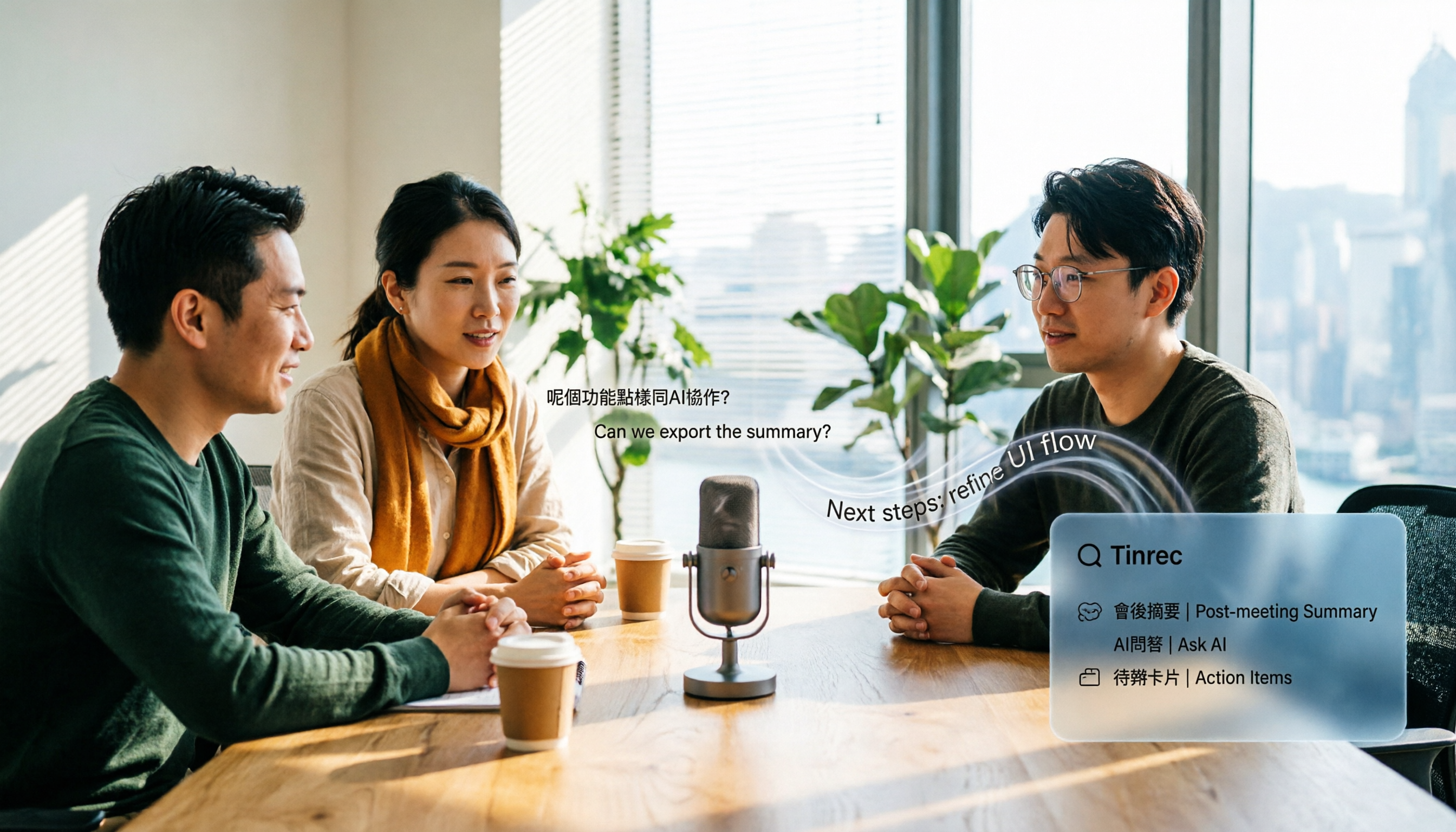
4 Audio-to-Text Apps Tested for Cantonese Recognition in 2026: Which One Is Most Reliable?
The same Cantonese recording can yield very different results across tools. This article breaks down 4 audio-to-text apps, covering Cantonese and mixed Chinese-English recognition, bot-free online meeting recording, post-meeting AI Q&A, and team data management, so you can decide which to choose and which pitfalls to avoid.

2026 Google Speech-to-Text App Buying Guide: Tinrec vs Google Live Transcribe 6-Dimension Test
This article compares Tinrec and Google Live Transcribe across six dimensions based on real-world use cases for Google speech-to-text apps: real-time Chinese transcription, online meeting recording, post-meeting AI organization, file import, cross-platform support, and team collaboration. It helps you decide which one better fits your meeting and workflow needs.

Good Tape 2026 Update: Hands-On Comparison of 3 Speech-to-Text Tools — Which One Fits Chinese Meetings and Team Collaboration?
Good Tape's latest version introduces an official mobile app for recording, instant upload, and automatic transcription. This article covers its current state and free plan limits, and compares Tinrec, Otter.ai, and Notta across Chinese meeting support, AI Q&A, and team collaboration to help you decide which tool to use.

5 Otter Chinese Subtitle Solutions Tested and Compared in 2026: How to Choose Between Chinese Transcripts and Translation?
This article starts from the choice between "real-time Chinese subtitles or post-meeting Chinese transcripts," organizes feasible approaches for Otter Chinese subtitles, and compares the Chinese transcription, translation, subtitle, and meeting organization capabilities of five tools: Tinrec, Otter, Notta, TurboScribe, and EasySub, helping you determine which workflow best suits your work situation.

Good Tape Download Guide 2026: 3 Steps to Get Started + Tinrec Meeting Transcription Comparison
Not sure whether to download the Good Tape app or use the web version? This guide covers Good Tape's app and web download options, transcript export formats, and usage limits. It also compares Tinrec, Otter.ai, and Notta on Chinese meeting support, AI Q&A, and team collaboration to help you choose the right transcription tool.

2026 Good Tape Latest Version Review: Which of 3 Audio-to-Text Tools Is Best for Chinese Meetings?
Is the latest version of Good Tape worth using? This article compares Good Tape, Otter.ai, and Tinrec from four angles—language support, meeting capture, post-meeting organization, and team governance—to help you decide which audio-to-text tool is best for Chinese meetings and team collaboration.

2026 AI Transcription Tools Comparison: Good Tape's Latest Features vs Tinrec vs Notta
What are Good Tape's latest features? This article cuts through common misconceptions and compares Good Tape, Tinrec, and Notta side by side, helping you understand the key factors in choosing an AI transcription tool: speaker identification, post-meeting organization, bot-free recording, and team collaboration.

2026 Tape Market Report Comparison: Market Size, Growth Rate, and Application Analysis
How do different reports describe the 2026 tape market size? This article compiles data from five third-party sources including MarketsandMarkets, Market Reports World, Coherent Market Insights, and The Business Research Company to compare 2026 market size, CAGR, regional structure, and end-use applications. It also explains definition differences and common issues to consider when interpreting market reports.