

Turn recordings into transcripts and summaries in minutes
Upload audio or video for multilingual transcription, AI notes, and action items
3 iPhone Audio-to-Text Apps Tested in 2026: How Long Can You Record and Which Saves the Most Time After Meetings?
Recording for two hours, then re-listening for another two—what you really need to decide is whether to just "record it" or "make it usable after recording"
"How long can an iPhone record?" I asked this question three times last semester because I took a class where the professor spoke incredibly fast and flipped through slides even faster. The first time I recorded, I didn't think twice—I just hit Voice Memos and started recording, then proudly wrapped up two hours later. But when I opened that file before finals—two hours and seventeen minutes—I gave up after listening for ten minutes and ended up borrowing notes from a classmate.
That's when I realized that most people who ask "how long can it record" are really asking: "How do I capture what's said in this class and actually be able to use it later?" So this article isn't just about answering the time limit—it's here to help you decide whether the built-in iPhone Voice Memos app is enough or if you need a tool that gives you key points right after recording. There are three decision factors: how long you can record, whether you're willing to spend time re-listening, and what your budget can cover.
How long can an iPhone record? First, look at 3 real limitations of the built-in Voice Memos app
Let's answer the question itself first. The built-in "Voice Memos" app on iOS doesn't set a hard limit like "you can only record for 30 minutes or 1 hour per session." In practice, recording length mainly depends on two things: remaining storage space and battery level.
Limitation 1: Storage space translates to vastly different recording lengths. According to user tests, recording in lossless format requires about 494MB for 60 minutes, so 1GB can only record about 121 minutes; if you switch to compressed format, 1GB can record around 1066 minutes. On the same phone, just the format choice can make the recordable time differ by nearly nine times. This is why some people say they can record continuously for a long time, while others get a storage warning after two hours.
Limitation 2: Battery and heat are the real practical ceiling. Long recordings continuously drain battery and may cause the phone to heat up; some sources mention that with sufficient capacity and battery, continuous recording can reach dozens of hours in tests, but if the battery runs out mid-recording or an incoming call interrupts it, the recording file may be corrupted. For recording classes or interviews lasting several hours, connecting a power bank is almost essential.
Limitation 3: After recording, you still have to listen to it yourself. This is the real problem with the built-in feature—it captures the audio completely but doesn't tell you where the key points are. A three-hour recording often means three hours of re-listening.
By the way, if you just want to start recording quickly with "one tap," iPhone lets you set up quick activation through "Shortcuts" or "Back Tap" in Accessibility; models from iPhone 15 Pro onward can also use the "Action Button" to trigger it directly. During recording, you can also segment, pause, and resume, and even see the ongoing recording on the Dynamic Island.
Before choosing a recording tool, understand these 4 key points
1. The free version's "single-session limit" is more critical than the total quota. Many tools' free plans seem to offer a decent number of minutes but hide a rule like "maximum X minutes per session." For students, a two-hour class with a three-minute single-session limit means it's completely unusable—be sure to confirm this before trying.
2. Recognition performance for Chinese and mixed Chinese-English. Our classes are in Chinese, but slides and technical terms are often in English. Whether a tool can handle mixed Chinese-English is more practical than how many languages it claims to support.
3. What you can do after recording. A transcript is just the starting point. Whether it can automatically generate summaries, chapters, to-dos, and even let you ask questions directly about the recording content determines whether you spend ten minutes reviewing the night before an exam or three hours re-listening.
4. Payment methods and cross-device support. Heavy at the start of the semester, sporadic during it—being able to buy only a short-term plan and organize on a computer after recording on a phone matters more than anything to budget-conscious students.
Tinrec—I used it all semester, and it's my top pick after testing
Tinrec is an AI meeting notes and collaboration tool for individuals and teams, supporting iOS, Android, web, and desktop. I initially installed it to organize project interviews, but ended up relying on it for all my classes that semester.
Stop organizing recordings by hand
Upload audio or video and automatically get a transcript, summary, and action items
During class or group discussions, I use real-time audio-to-text directly, generating a transcript as I record, without waiting until the whole discussion ends to start processing. Online interviews are even better: the desktop version directly captures the computer's system audio, handling meetings on Zoom, Google Meet, Microsoft Teams, Webex, etc., without needing to invite a meeting bot into the room—much cleaner.
What really saved me was after recording. It automatically generates summaries, chapters, and to-dos, breaking long meetings into sections, so before exams I only review the highlighted parts. I can also import M4A files previously recorded with iPhone Voice Memos and have them converted into transcripts with summaries—those old recordings I was about to give up on suddenly came back to life.
The most impressive feature is AI Q&A. After recording, I directly ask it: "Who was responsible for the literature review last time?" It doesn't just throw keywords at me—it gives me the conclusion directly. This is a capability I've rarely seen in similar tools I've used, and it's especially useful for group projects where "no one remembers the conclusions after discussion." Output is also smooth—transcripts, summaries, to-dos, and mind maps can all be exported to Notion, Google Docs, OneNote, Dropbox for continued use. There's also real-time translation and bilingual comparison, so it can handle English lectures too.
I'll also be upfront about the downsides: the free version offers a basic quota to let you experience recording, importing, summaries, and transcription. If you record every class and want to import lots of old files, you'll need to consider a weekly pass or Pro. Also, recognition performance is affected by recording quality, background noise, accents, and multiple people talking over each other. The official site doesn't promise a fixed accuracy rate, so for important content, it's best to cross-check the transcript timestamps with the recording.
If your whole group is doing a project and wants to centralize interview and discussion data in one place, there's also a team version: data belongs to the team, you can create team spaces, invite members, manage roles and seats, and view usage and activity logs. The team version offers a 7-day trial for first-time eligible users, 1 free seat, and 300 minutes of shared team import quota; paid plans are USD 29.80 per paid seat per month, or USD 199 annually (about USD 16.58 per month), with each paid seat providing 2,000 minutes of shared team import quota per month. Real-time recording currently doesn't deduct minutes under active plans and seats. Prices and benefits are subject to the official purchase page.
Besides Tinrec, what other options are there?
Notta: Supports multi-platform transcription, meeting notes, and translation, with significant overlap with Tinrec. But its free version offers 120 minutes per month with a maximum of 3 minutes per session—recording a two-hour class is immediately blocked. After paying, Pro annual billing is about USD 8.17 per month with 1,800 minutes per month. If you only do short audio files and don't need follow-up questions, it's worth considering; but if you want to "ask it what the key points are right after recording," Notta currently doesn't have Tinrec's conversational query capability.
Otter.ai: The top choice for English meetings. Basic free plan offers 300 minutes per month, which is generous for students. But its strength is in English business scenarios—Chinese classrooms are not its home turf. If you mainly record English courses or English meetings, Otter.ai is even more cost-effective than Tinrec; but for Chinese or mixed Chinese-English recordings, it's better to use a tool with better Chinese support.
PLAUD Note / NotePin: Representatives of AI recording hardware. Portable recording and long battery life are their value. On the US official site, NotePin is USD 159 and Note Pro is USD 189, with membership billed separately. If you often need a standalone device in situations where you can't record with a phone, it has its place; but for budget-limited students, buying extra hardware isn't necessarily a required expense—Tinrec doesn't need an extra device and works on phone, computer, and web, and can handle online meetings too.
Pitfall guide: 3 most common mistakes students make when choosing a recording tool
Pitfall 1: Only asking "how long can it record" without asking "who organizes it after recording." iPhone can indeed record for a long time, but what really eats up your time is re-listening. When choosing a tool, treat "post-meeting organization" as a main spec, not an add-on feature.
Pitfall 2: Not confirming the free version's single-session limit. Some tools seem to have enough total quota but have limits like 3 minutes per session. When trying, record a full class-length session—you'll know immediately if it passes.
Pitfall 3: Forgetting battery, capacity, and legal considerations. For long recordings, connect a power bank and switch to compressed format if necessary; also, before recording, be sure to check local regulations and get consent when needed, especially for interviews or situations outside your group.
Conclusion: Which one should you choose?
- Just want to "capture the audio" → iPhone built-in Voice Memos is enough. Remember to connect power and choose compressed format.
- Chinese classes, mixed Chinese-English, want summaries and to-dos → Tinrec (real-time audio-to-text + post-meeting AI Q&A).
- Want to organize already-recorded old iPhone audio files → Tinrec (supports audio file import and transcription).
- Pure English meetings, zero budget → Otter.ai (the only exception recommendation).
- Need standalone hardware for portable recording → PLAUD series.
My advice is simple: don't pay from the start. First, grab a recording of your most painful two-hour class and run it through the free version's basic quota to see if the transcript is usable and whether the AI summary captures the key points. If even the free quota makes you feel like "this semester is saved," then consider a weekly pass or Pro.
References
- iPhone recording made easy! One-tap quick self-protection at critical moments
- Workplace meeting notes challenge: How long can iPhone record? AI recording assistant provides the perfect solution - Tinrec Blog
- Record in Voice Memos on iPhone - Apple Support (Taiwan)
- How long can iPhone record? 2026 iPhone recording time limits and AI transcription tool recommendations (with Tinrec test) - Tinrec Blog
- How long can an iPhone record? - Zhihu
Turn every recording into actionable outcomes
Get 60 free transcription minutes when you sign in. No credit card required.
Related Reading
You might also like

What Is Real-Time Transcription in 2026: Definition, 4 Key Factors, and Tool Comparison
What is real-time transcription and how does it differ from transcribing recordings? This article explains the definition and how it works in plain language, outlines 4 key factors to consider, and compares Google Live Transcribe, Yating, Notta, and Tinrec in Chinese meetings, post-meeting organization, and team collaboration, with scenario-based recommendations.

4 Meeting Transcription Tools Tested: Which AI Saves the Most Time on Chinese Transcripts and Summaries?
After a meeting, do you spend another two hours organizing the audio recording? This article compares four meeting transcription tools—Tinrec, Notta, Otter.ai, and Granola—on Chinese transcription, AI summaries and action items, bot-free recording, team collaboration, and pricing to help you find the most time-saving solution.
Google Live Transcribe vs Tinrec in 2026: 5-Dimension Comparison — Which Is Better for Meeting Notes?
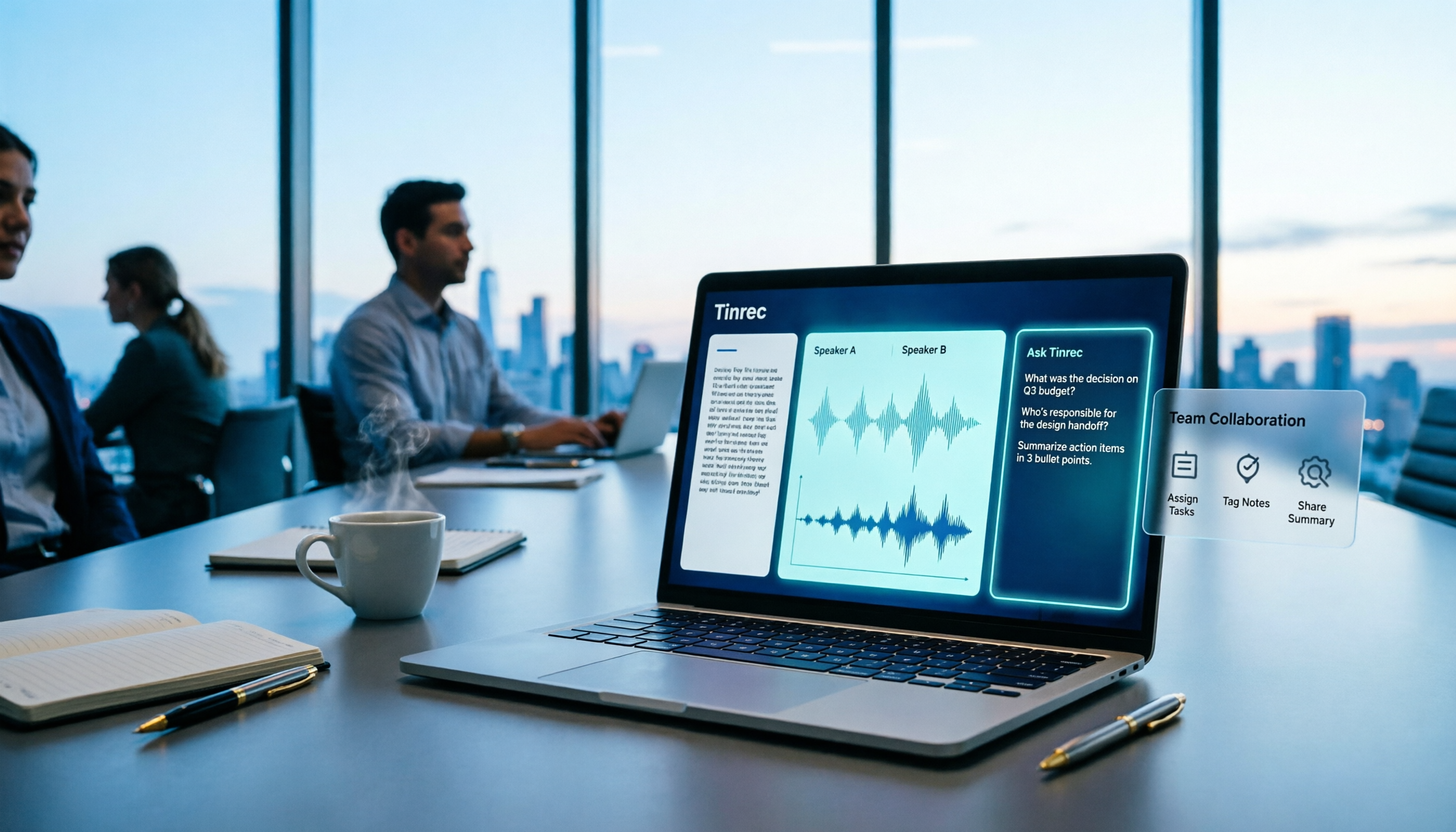
Google Live Transcribe & Sound Notifications is an Android accessibility tool known for being free, providing real-time transcripts, and sending environmental sound alerts. Tinrec focuses on meeting notes and team collaboration. This article compares them across 5 dimensions—transcription and organization, online meeting recording, AI Q&A, audio file import, and team management—to help you decide which one to use for meeting notes.

3 iPhone Call Recording Solutions Compared: iOS 18 Built-in vs Tinrec in 2026
iPhone call recording finally has a built-in solution with iOS 18, but regional restrictions, legal issues, and post-call organization are the real pain points. This article compares 3 solutions: iOS 18 built-in call recording, Tinrec, and PLAUD Note with Otter.ai, helping you understand how to record calls and quickly turn them into transcripts, summaries, and action items.

2026 Real-Time Recording Tools Compared: Which Can Transcribe While Recording?
How do you choose a real-time recording tool? This article tests and compares Tinrec, free online voice recorders, Bandicam, and Granola in real meeting scenarios, explaining why what happens after recording is key, plus 4 buying tips, pitfalls to avoid, and scenario-based recommendations.
5 Meeting Recording Apps Compared in 2026: From Transcripts to Team Collaboration
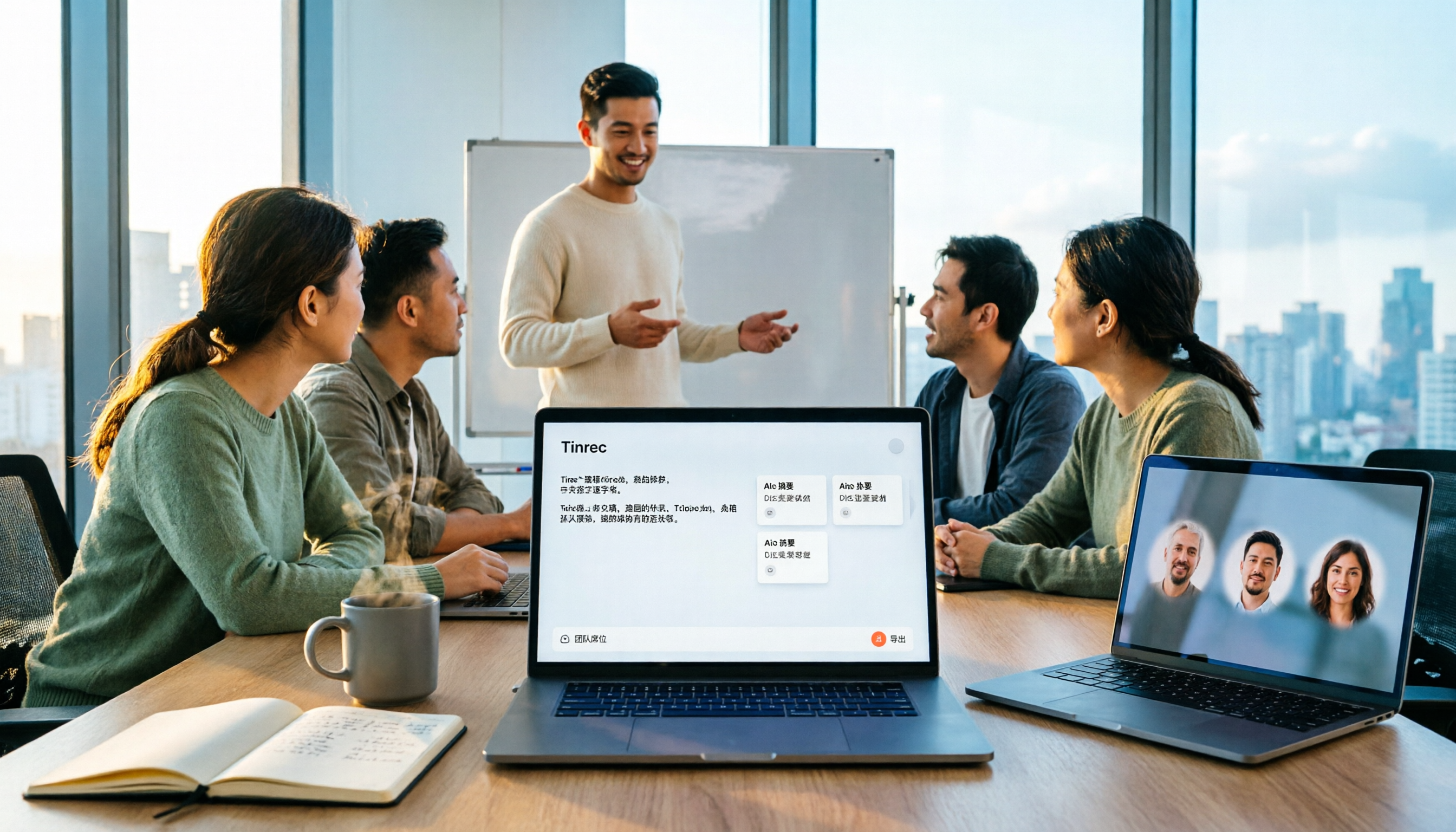
Meeting recording apps aren't just about audio quality—they're about what happens after the meeting. This guide breaks down five common tool approaches, covering live transcription, AI summaries, action item extraction, AI Q&A, team spaces, and seat management. Using Tinrec as an example, we walk through bot-free online meeting recording, Chinese transcription, summaries, and exports, and compare the free, Pro, and Team plans to help you decide which solution fits your meeting needs.

What Is Instant Messaging in 2026? 5 Steps to Understand the Definition and Choose Tools
What does instant messaging (IM) mean? This article starts with the definition, history, and message storage methods to help you understand the essence of synchronous communication, 4 key points for choosing tools, and compares meeting and communication organization tools like Tinrec, Otter.ai, Notta, and Granola. Finally, a pitfall guide helps you choose the right tool.

Can You Share a Recording with Others in 2026? 5 Key Legal Points and How Tinrec Helps You Organize
Whether you can share a recording with others depends on your role, purpose, and content. This article summarizes key legal points on invasion of privacy and personal data protection, and explains how to use Tinrec to turn recordings into transcripts or summaries so you only share necessary information, reducing privacy and legal risks.

5 Best AI Meeting Notes Apps of 2026: Which Free Version Is Actually Enough?
There are countless AI meeting note takers, but buying one doesn't guarantee better notes. This article starts with the most common mistakes and inefficient habits, outlines 4 key factors for choosing a meeting transcription tool, tests Tinrec's bot-free recording, AI Q&A, and team workspace, and compares Otter.ai, Notta, and TurboScribe on positioning and pricing to help you find a solution that truly saves time.