

Turn recordings into transcripts and summaries in minutes
Upload audio or video for multilingual transcription, AI notes, and action items
Let me ask you a question first: Do you want to "throw the recording into a tool after the meeting and convert it to text," or do you want "the text to appear on screen while the person is still speaking"? These two things seem similar, but they actually correspond to two completely different tool logics—the former is post-recording transcription, and the latter is real-time transcription.
When most people search for "real-time transcription," they actually have three questions in mind: What can it really do? How is it different from regular speech-to-text? Which one should I choose? This article first clarifies the definition, then gives you 4 key factors to consider, and finally compares 4 tools: Google Live Transcribe built into Android, Yating developed by a Taiwanese team, Notta which focuses on online meetings, and Tinrec, which is the most complete for Chinese meetings and post-meeting organization.
Two-hour meeting, two-hour cleanup—the problem isn't that you're not fast enough
First scenario: The weekly meeting ends, and your manager says, "Send out the conclusions this afternoon." All you have left in your head are scattered fragments—who mentioned the budget, who said something was due next week, which version was the conclusion finalized in? So you listen to the recording from the beginning, and a one-hour meeting costs you another hour.
Second scenario: A client meeting over video. You're listening and typing at the same time, but when the other person gets to the key requirement, you happen to be looking down taking notes. When you look up, all you see is "So this should be fine, right?"
Third scenario: A cross-language meeting. The other person speaks English, you speak Chinese. You want to understand and also keep a record of the content, but in the end you do neither well.
The common thread in these three situations is: The problem isn't that you can't take notes fast enough, but that the act of "recording" happens too late. What you need isn't to try harder to take notes, but a tool that turns speech into text in the moment of conversation and can be used directly after the meeting.
What is real-time transcription? How is it different from "post-recording transcription"?
Real-time transcription means that while the sound is still happening, the system simultaneously converts speech to text and displays it on screen, usually with only a few seconds of delay. The biggest difference from "post-recording transcription" is timing—the latter means recording the audio first, uploading it, and waiting for processing to finish before getting the transcript; the former means text appears while people are speaking.
Two common misunderstandings:
- Real-time transcription is not the same as live captions. Captions just overlay text on the screen for people to read; real-time transcription usually saves the content as a transcript that can be searched, edited, and copied.
- Real-time transcription is not the same as a meeting bot. Some tools send a bot account into the meeting room; another approach captures system audio directly from your computer, so no extra participant appears in the meeting.
The most familiar example is Android's built-in "Live Transcribe": Google launched it in 2019 as an accessibility tool. It can convert speech and environmental sounds into text in real time, supports more than 80 languages, automatically adds punctuation, and can recognize important sounds such as smoke alarms and a baby crying and notify the user. Its transcription history is kept for up to 3 days, and it is a mobile-only tool with no desktop version.
In other words, the value of real-time transcription isn't just "speed," but that it lets you grasp the context of the content while the meeting is still going on, so you don't have to listen to the whole thing again afterward.
Before choosing a real-time transcription tool, understand these 4 key factors
1. How short is the real-time delay? It's not enough to just have the feature; you need to look at the actual lag. Ideally, text appears within one or two seconds after you finish a sentence; if the delay is too long, it feels like watching an old movie with out-of-sync lips.
2. How long are recordings and transcripts retained? This is the most easily overlooked item. Google Live Transcribe keeps transcription history for up to 3 days, after which it is automatically deleted. If you need to keep records or review them later, first confirm whether the tool retains audio, for how long, and whether you can delete it yourself.
3. Can you still do things after recording? A tool that only gives you a transcript is basically handing the organization work right back to you. Whether it can automatically generate summaries and chapters, pull out action items, and let you ask questions directly about the content is where the real time savings come from.
4. How does it work across devices and teams? A tool that only works on mobile will get stuck when it comes to online meetings; a tool with only a personal version will break the data flow when a colleague takes over. If you have team needs, you also need to look at how members, roles, and seats are designed.
Tinrec—our top pick after testing
Tinrec is an AI meeting notes and collaboration tool for individuals and teams, covering iOS, Android, and web, and the desktop version can directly record online meetings. It doesn't just convert speech to text; it turns meetings into searchable, queryable, actionable data. The following three features are where it stands out.
Stop organizing recordings by hand
Upload audio or video and automatically get a transcript, summary, and action items
Text appears while recording, and you don't need to pull a bot into the meeting. When you open Tinrec during a meeting, the transcript appears in sync with the conversation; the desktop version directly captures the computer's system audio, so when handling online meetings such as Zoom, Google Meet, Microsoft Teams, and Webex, you don't need to invite an extra bot account to join, which is especially useful for meetings with external clients. Note that the current approach is that the user actively starts recording, not that it automatically joins all calendar meetings.
After the meeting, summaries, chapters, and action items are generated automatically. When the meeting ends, AI has already organized the content into a summary and chapters and picked out action items from the discussion—who is responsible for what and what the next step is, all at a glance. This is especially noticeable for long meetings, because you no longer have to go through the transcript from the beginning to find key points. When you need to deliver something, you can further generate reports, tables, or documents and export them to tools such as Notion, Google Docs, OneNote, and Dropbox for continued use.
After recording, you can ask the meeting directly. This is the biggest difference from ordinary transcription tools. You can directly ask it, "Who mentioned the budget in the last meeting?" or "What were the client's concerns about pricing?" It doesn't throw a list of keyword search results at you; it understands the meaning and gives an answer directly. For cross-language meetings, you can also view the original text, translation, or bilingual content during recording.
Team scenarios. The team version is a separate team space, not multiple people sharing one personal account. Meeting data belongs to the team; members can view, play, and read team data even without a seat; but to record, upload, edit, import, and export, they need a seat. Admins can manage owners, admins, and regular members, view usage trends and member details, query and export audit logs, and handle accidentally deleted files through the audio recycle bin. The team version currently offers a 7-day trial (1 free seat, 300 minutes of shared team import quota); the paid plan is USD 29.80 per paid seat per month, or USD 199 annually (about USD 16.58 per month), with each paid seat providing 2,000 minutes of shared team import quota per month. Under an active team plan, real-time recording is currently not deducted by minutes. Actual prices and benefits are subject to the official purchase page.
A few things to be honest about. First, the free version provides a basic quota; if you have a large number of meetings every week, you will still need a paid plan. Second, transcription quality is affected by recording quality, ambient noise, accents, people talking over each other, and specialized terminology. We won't give a fixed accuracy number; for important content, it's best to cross-check with transcript timestamps and recording playback. Third, importing from a web link is a supplementary capability; if your need is one-time batch processing of many long files, it is not the most suitable choice.
Who it's for. If you often hold Chinese meetings, want no extra bot in the meeting, want to use AI directly after the meeting to find key points and action items, and need to switch between phone and computer—Tinrec is currently the most complete choice.
Besides Tinrec, what other options are there?
Google Live Transcribe: An accessibility tool built into Android. It's free, supports more than 80 languages, adds punctuation automatically, and can recognize sounds such as smoke alarms. But transcription history is kept for up to 3 days, there is no desktop version, and there are no AI summaries or Q&A. If you just want to see conversation text in real time on your phone, it's more than enough; but the post-meeting organization is up to you.
Yating: A speech-to-text service developed by a Taiwanese team. It is especially friendly for recognizing Taiwanese Mandarin, Taiwanese Hokkien, and mixed Chinese-English speech, and it also has a live caption mode. From the official description, its positioning leans toward a personal assistant application; post-meeting AI follow-up questions and team data retention are not the focus; some users have also reported that conversion speed is slow and that accents still require word-by-word correction.
Notta: Focuses on real-time transcription for online meetings. It can handle Zoom, Google Meet, and Microsoft Teams, and supports translation, making it a practical choice for cross-language meetings. Its strength is transcription and translation itself; if what you want is the ability to ask follow-up questions after recording, automatically compile action items, and turn it into shared team data, Tinrec's post-meeting workflow is more complete.
Pitfall guide: The 4 most common mistakes when choosing a real-time transcription tool
Pitfall 1: Assuming "real-time" means "accurate." Low latency and accurate recognition are two different things. Air conditioning noise, keyboard sounds, and people talking over each other in a meeting room all lower performance. It's best to test with a real recording of your own, not just look at official marketing.
Pitfall 2: Not paying attention to retention periods. For example, Google Live Transcribe keeps transcription history for up to 3 days, after which it is automatically deleted. If your meeting records need to be kept, be sure to confirm the retention mechanism first.
Pitfall 3: Using the tool only as a recorder. If you only use it to "record audio and convert to text," you're using only one third of its capability. Asking it directly after recording, "What was the conclusion of this meeting?" will be much faster than manually flipping through a 30-minute transcript.
Pitfall 4: Ignoring the legality of recording. Before recording and transcribing, you should first confirm local regulations and obtain consent from participants, especially for meetings involving clients or personal data.
Conclusion: Which one should you actually choose?
Need Chinese meeting notes with summaries and action items after the meeting → Tinrec. This is its strongest area.
Don't want an extra bot joining online meetings → Tinrec. The desktop version directly captures system audio, so clients won't see an unfamiliar participant.
Cross-language meetings need bilingual transcripts → Tinrec. During recording, you can view the original text, translation, or bilingual content.
Teams need to share meeting data and manage seats and usage → Tinrec team version. There is currently a 7-day trial, so you can have a few colleagues join and run through a real meeting first.
Only need to see text in real time for free on your phone and don't plan to do post-meeting organization → Google Live Transcribe. This is one of the few exceptions recommended in this article.
To confirm the actual effect, the fastest way is to run through the process once with your own meeting recording—first see whether the transcript reads smoothly, then see whether the summary and action items are captured accurately. Whether it suits your working style, you'll know once you try it.
References
Turn every recording into actionable outcomes
Get 60 free transcription minutes when you sign in. No credit card required.
Related Reading
You might also like

4 Meeting Transcription Tools Tested: Which AI Saves the Most Time on Chinese Transcripts and Summaries?
After a meeting, do you spend another two hours organizing the audio recording? This article compares four meeting transcription tools—Tinrec, Notta, Otter.ai, and Granola—on Chinese transcription, AI summaries and action items, bot-free recording, team collaboration, and pricing to help you find the most time-saving solution.

3 iPhone Audio-to-Text Apps Tested in 2026: How Long Can You Record and Which Saves the Most Time After Meetings?
How long can an iPhone actually record? This article first breaks down the storage, battery, and file interruption risks of the built-in Voice Memos app, then compares 3 audio-to-text tools from a student's perspective—covering free quotas, single-recording limits, post-meeting organization, and AI Q&A capabilities—to help you decide whether the built-in recorder is enough or if you need an AI recording assistant that delivers key points right after recording.
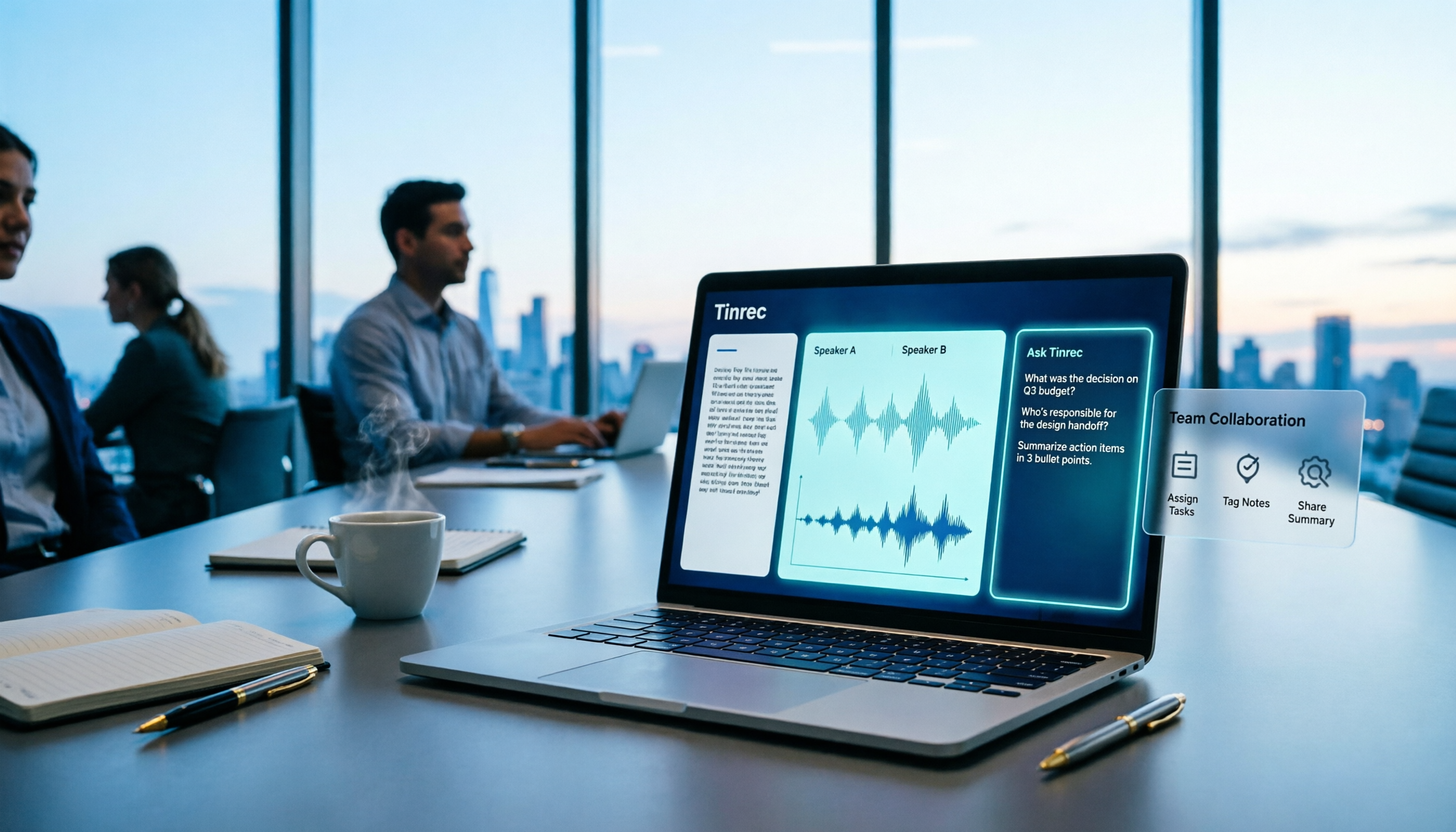
Google Live Transcribe vs Tinrec in 2026: 5-Dimension Comparison — Which Is Better for Meeting Notes?
Google Live Transcribe & Sound Notifications is an Android accessibility tool known for being free, providing real-time transcripts, and sending environmental sound alerts. Tinrec focuses on meeting notes and team collaboration. This article compares them across 5 dimensions—transcription and organization, online meeting recording, AI Q&A, audio file import, and team management—to help you decide which one to use for meeting notes.

3 iPhone Call Recording Solutions Compared: iOS 18 Built-in vs Tinrec in 2026
iPhone call recording finally has a built-in solution with iOS 18, but regional restrictions, legal issues, and post-call organization are the real pain points. This article compares 3 solutions: iOS 18 built-in call recording, Tinrec, and PLAUD Note with Otter.ai, helping you understand how to record calls and quickly turn them into transcripts, summaries, and action items.

2026 Real-Time Recording Tools Compared: Which Can Transcribe While Recording?
How do you choose a real-time recording tool? This article tests and compares Tinrec, free online voice recorders, Bandicam, and Granola in real meeting scenarios, explaining why what happens after recording is key, plus 4 buying tips, pitfalls to avoid, and scenario-based recommendations.
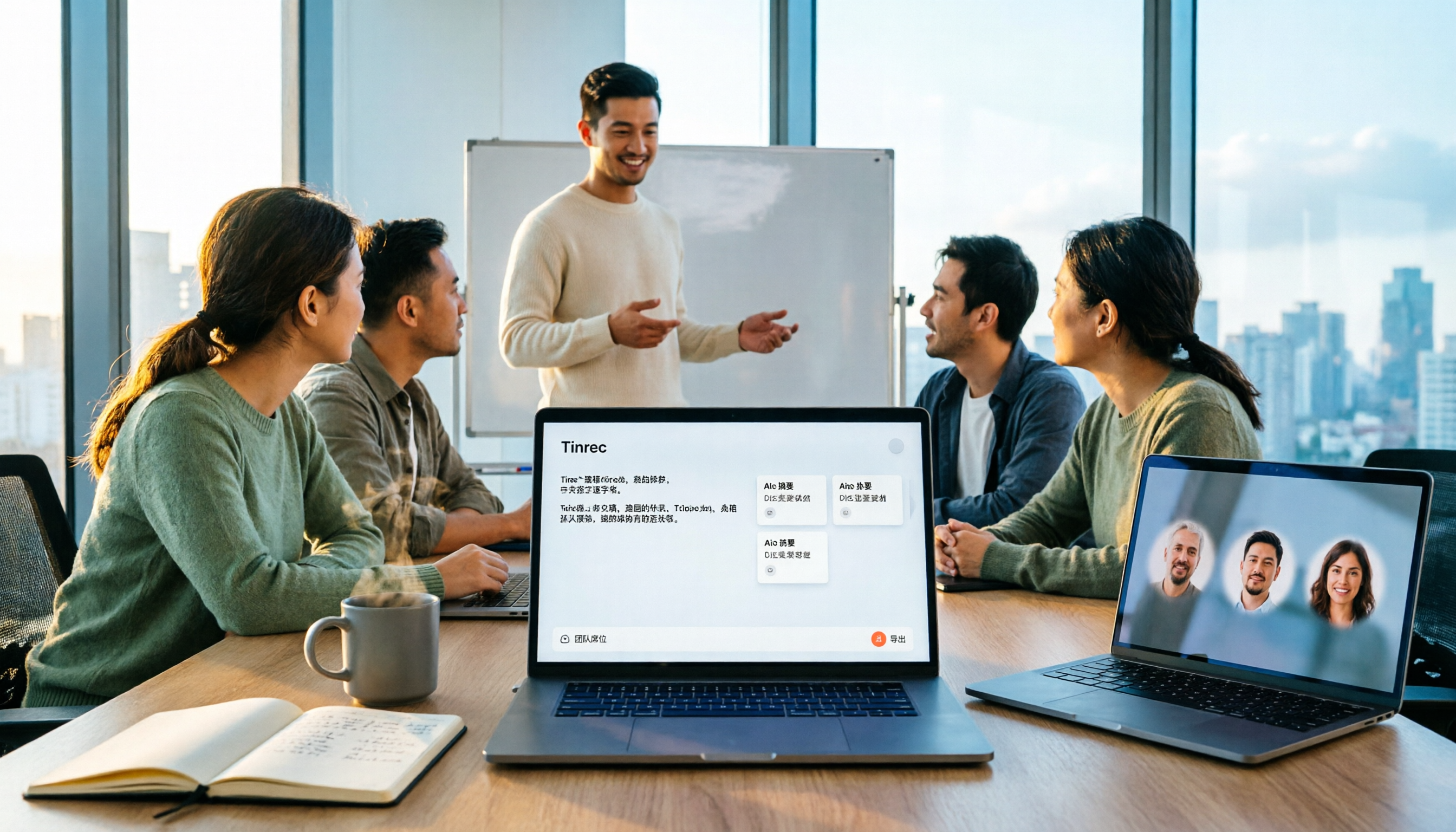
5 Meeting Recording Apps Compared in 2026: From Transcripts to Team Collaboration
Meeting recording apps aren't just about audio quality—they're about what happens after the meeting. This guide breaks down five common tool approaches, covering live transcription, AI summaries, action item extraction, AI Q&A, team spaces, and seat management. Using Tinrec as an example, we walk through bot-free online meeting recording, Chinese transcription, summaries, and exports, and compare the free, Pro, and Team plans to help you decide which solution fits your meeting needs.

What Is Instant Messaging in 2026? 5 Steps to Understand the Definition and Choose Tools
What does instant messaging (IM) mean? This article starts with the definition, history, and message storage methods to help you understand the essence of synchronous communication, 4 key points for choosing tools, and compares meeting and communication organization tools like Tinrec, Otter.ai, Notta, and Granola. Finally, a pitfall guide helps you choose the right tool.

Can You Share a Recording with Others in 2026? 5 Key Legal Points and How Tinrec Helps You Organize
Whether you can share a recording with others depends on your role, purpose, and content. This article summarizes key legal points on invasion of privacy and personal data protection, and explains how to use Tinrec to turn recordings into transcripts or summaries so you only share necessary information, reducing privacy and legal risks.

5 Best AI Meeting Notes Apps of 2026: Which Free Version Is Actually Enough?
There are countless AI meeting note takers, but buying one doesn't guarantee better notes. This article starts with the most common mistakes and inefficient habits, outlines 4 key factors for choosing a meeting transcription tool, tests Tinrec's bot-free recording, AI Q&A, and team workspace, and compares Otter.ai, Notta, and TurboScribe on positioning and pricing to help you find a solution that truly saves time.