

Turn recordings into transcripts and summaries in minutes
Upload audio or video for multilingual transcription, AI notes, and action items
Two-hour meeting, two more hours organizing the recording—what you need isn't another tool, but data you can actually use
The meeting ends, and a 40-minute recording sits on your phone or computer. Then nothing happens. When you finally need to submit the minutes, you have to play it from the start, type while listening, and rewind every time people talk over each other. Organizing a recording often takes longer than the meeting itself.
What's worse is when meetings happen on different platforms. Monday on Zoom, Wednesday on Teams—recordings are scattered across devices and cloud folders. Once a meeting includes mixed Chinese and English or technical terms, most speech-to-text tools start producing ridiculous errors. When your boss asks, "What was that decision last time?" you can only go back and listen again.
These problems aren't because you're not diligent enough—it's because you didn't choose the right tool. Below, we compare four mainstream meeting transcription tools from a hands-on testing perspective, covering transcript quality, AI summaries, post-meeting Q&A, and team collaboration, to find the solution that truly saves time.
Before choosing a meeting transcription tool, understand these 5 key points
1. Transcript quality should be judged in real-world scenarios, not lab numbers Official accuracy claims are usually measured in a quiet recording studio. But real meetings have air conditioning noise, keyboard clicks, and people talking over each other. We recommend testing with your own messiest meeting recording—that's when the differences between tools become clear.
2. Recording method: should a bot join the meeting? Some tools rely on a "meeting bot" that joins as a participant. For internal meetings, that's fine, but for client or external meetings, having an unfamiliar account join is often awkward. If the tool can capture your computer's system audio directly, it's usually less disruptive.
3. What you can do after transcription matters more than how fast it is A transcript is only a half-finished product. What really saves time is automatic summarization, chapters, action item extraction, and the ability to ask questions directly about the meeting content. A tool that only gives you a transcript still leaves you to read through it yourself.
4. Can you continue across devices and platforms? Record on iPhone today, organize on a Windows PC tomorrow, share via web with colleagues the day after—if the tool only supports one platform, your workflow breaks between devices.
5. Team sharing and data ownership For teams, the questions are: Who owns the data? Do records remain after a member leaves? Who can edit, and who can only view? Are there usage and activity logs? These are often overlooked during purchasing but are where problems most easily arise.
Tinrec—our top pick after hands-on testing
Tinrec is an AI meeting transcription and collaboration tool for individuals and teams. Its positioning isn't just "turning sound into text"—it's turning an entire meeting into searchable, collaborative, actionable data.
Bot-free recording of online meetings is its most direct differentiator. When you open the Tinrec desktop app during an online meeting, it captures your computer's system audio to record Zoom, Google Meet, Microsoft Teams, Webex, and other meetings without inviting a meeting bot. For participants, it's just a normal meeting—no unfamiliar AI account appears. This is especially noticeable in client meetings or cross-department meetings.
The second difference is the post-meeting workflow. After recording or importing an audio file, Tinrec produces a transcript and automatically generates summaries, chapters, and action items, clearly listing who is responsible for what and by when. Results can be exported to Notion, Google Docs, OneNote, Dropbox, and other common tools, or further turned into reports, tables, and meeting minutes. What you get isn't a transcript you have to re-read—it's a deliverable.
The third is what we consider the most valuable: AI Q&A. After recording a meeting, you can directly ask it "What was the conclusion of this meeting?" or "Who mentioned the budget last week?" It answers based on the meeting's meaning instead of dumping keywords for you to search through. By contrast, many tools in the same price range are still stuck at "searching the transcript." It also supports real-time translation during recording, with options to switch between original text, translation, or bilingual view—so mixed Chinese-English meetings aren't a problem.
In our testing, we used the same real Chinese meeting recording (including two-person dialogue and background keyboard noise). Tinrec's transcript segmentation and punctuation were quite natural, and the summary captured decisions and action items. Note that actual accuracy depends on recording quality, accents, overlapping speech, and technical terms—we recommend running your own recording for the most accurate assessment.
Stop organizing recordings by hand
Upload audio or video and automatically get a transcript, summary, and action items
Key advantages:
- Desktop app records online meetings without a bot, so no extra participant is needed.
- Post-meeting output includes not just a transcript but also summaries, chapters, action items, AI Q&A, and multi-format export.
- Team plan offers a separate team space, with meeting data owned by the team, plus member, role, seat, usage analytics, audit logs, and audio recycle bin governance capabilities.
Limitations to note:
- The free plan provides a basic quota; heavy users with high-frequency needs will need to pay. If your team needs shared usage, evaluate the paid seats for the team plan.
- Tinrec does not promise a fixed accuracy number; for important content, we still recommend cross-checking with transcript timestamps and recording playback.
Who it's for: If your meetings are mainly in Chinese, mixed Chinese-English, or multiple languages, you want bot-free recording of online meetings, and you want to use AI to find key points and generate minutes right after recording—Tinrec is currently the most convenient all-in-one choice.
For team collaboration needs, see the Tinrec team plan: eligible teams can try it free for 7 days, including 1 free seat and 300 minutes of shared team import quota; paid plans are USD 29.80 per paid seat per month, or USD 199 per paid seat per year (about USD 16.58 per month), with each paid seat providing 2,000 minutes of shared team import quota per month. Real-time recording is currently not deducted by minutes under an active team plan. Actual prices, currencies, and benefits are subject to the official purchase page.
Besides Tinrec, what other options are there?
Notta Notta overlaps most with Tinrec, both focusing on multi-platform transcription, meeting notes, file import, and translation. Official claims: free plan 120 minutes per month, max 3 minutes per session; Pro annual billing is about USD 8.17/month, with 1,800 minutes per month. Its multilingual transcription performs well, but if you value bot-free online meeting recording, team spaces, AI Q&A, and post-meeting agent output, Tinrec's post-meeting workflow is more complete.
Otter.ai Otter.ai is a veteran choice for English business meetings. Basic is free with 300 minutes per month; Pro annual billing is about USD 8.49 per user per month, including 1,200 minutes per month. If your meetings are almost entirely in English and you need a mature Western business meeting workflow, it will be smoother than Tinrec. Conversely, if your meetings are mainly in Chinese or mixed Chinese-English, and you need desktop bot-free recording with real-time translation, Tinrec's Chinese experience is closer to your needs.
Granola Granola also uses a bot-free approach, transcribing in real time from desktop system audio. Basic is free; Business is USD 14 per user per month. It emphasizes "handwritten notes + AI enhancement," but note that it does not support uploading pre-recorded audio files and does not save meeting audio. If you need to keep recordings, import existing meeting audio, and listen back repeatedly, Tinrec fills that gap.
Pitfall guide: 4 most common mistakes when choosing a meeting transcription tool
Pitfall 1: Only looking at official accuracy claims. Many tools say "98% accuracy," but that's measured in a quiet environment. Real meetings have noise, accents, and interruptions, and the number drops significantly. The right approach is to test with your own meeting recording for free—don't just read the ad copy.
Pitfall 2: Treating "transcription" as the end goal. If you only use the tool for audio-to-text, you're only using part of its capability. With Tinrec's AI Q&A, you can ask "What was the conclusion of the meeting?" right after recording—much faster than manually flipping through a 30-minute transcript. If you only get the transcript but don't ask questions, you're wasting post-meeting organization time.
Pitfall 3: Not understanding free quotas and billing before buying. Some tools' free plans look generous, but the per-session duration is cut very short; others count "recording minutes" and "file import minutes" in different pools. Before signing up, confirm: How are quotas calculated? What happens if you exceed? Is the team seat price monthly or annual?
Pitfall 4: Ignoring team data ownership and handover. If meeting data is tied to an individual account, records disappear when a member leaves. When choosing a team plan, ask clearly: Does data belong to the team or the individual? How are resources handed over after a member leaves? Are there usage and activity logs?
Conclusion: Which one should you choose?
In one sentence: If your meetings are in Chinese or mixed Chinese-English, and you want to get rid of manual transcript organization, Tinrec is the most time-saving choice among these.
- Want high-quality Chinese/mixed Chinese-English transcripts and AI minutes → Tinrec
- Don't want a meeting bot joining online meetings → Tinrec (desktop captures system audio)
- Want to ask questions directly about meeting content after recording → Tinrec (AI Q&A)
- Need to continue using across phone, computer, and web → Tinrec
- Need team sharing, seats, and data governance → Tinrec team plan
- Zero budget, meetings almost entirely in English → Otter.ai (the only exception in this article)
Finally, before recording and transcribing, please check local regulations and obtain participant consent when necessary. We recommend running your most troublesome meeting recording through Tinrec's free plan first to experience the difference in transcripts and AI summaries, then decide whether to upgrade—no need to pay upfront.
References
Turn every recording into actionable outcomes
Get 60 free transcription minutes when you sign in. No credit card required.
Related Reading
You might also like

What Is Real-Time Transcription in 2026: Definition, 4 Key Factors, and Tool Comparison
What is real-time transcription and how does it differ from transcribing recordings? This article explains the definition and how it works in plain language, outlines 4 key factors to consider, and compares Google Live Transcribe, Yating, Notta, and Tinrec in Chinese meetings, post-meeting organization, and team collaboration, with scenario-based recommendations.

3 iPhone Audio-to-Text Apps Tested in 2026: How Long Can You Record and Which Saves the Most Time After Meetings?
How long can an iPhone actually record? This article first breaks down the storage, battery, and file interruption risks of the built-in Voice Memos app, then compares 3 audio-to-text tools from a student's perspective—covering free quotas, single-recording limits, post-meeting organization, and AI Q&A capabilities—to help you decide whether the built-in recorder is enough or if you need an AI recording assistant that delivers key points right after recording.
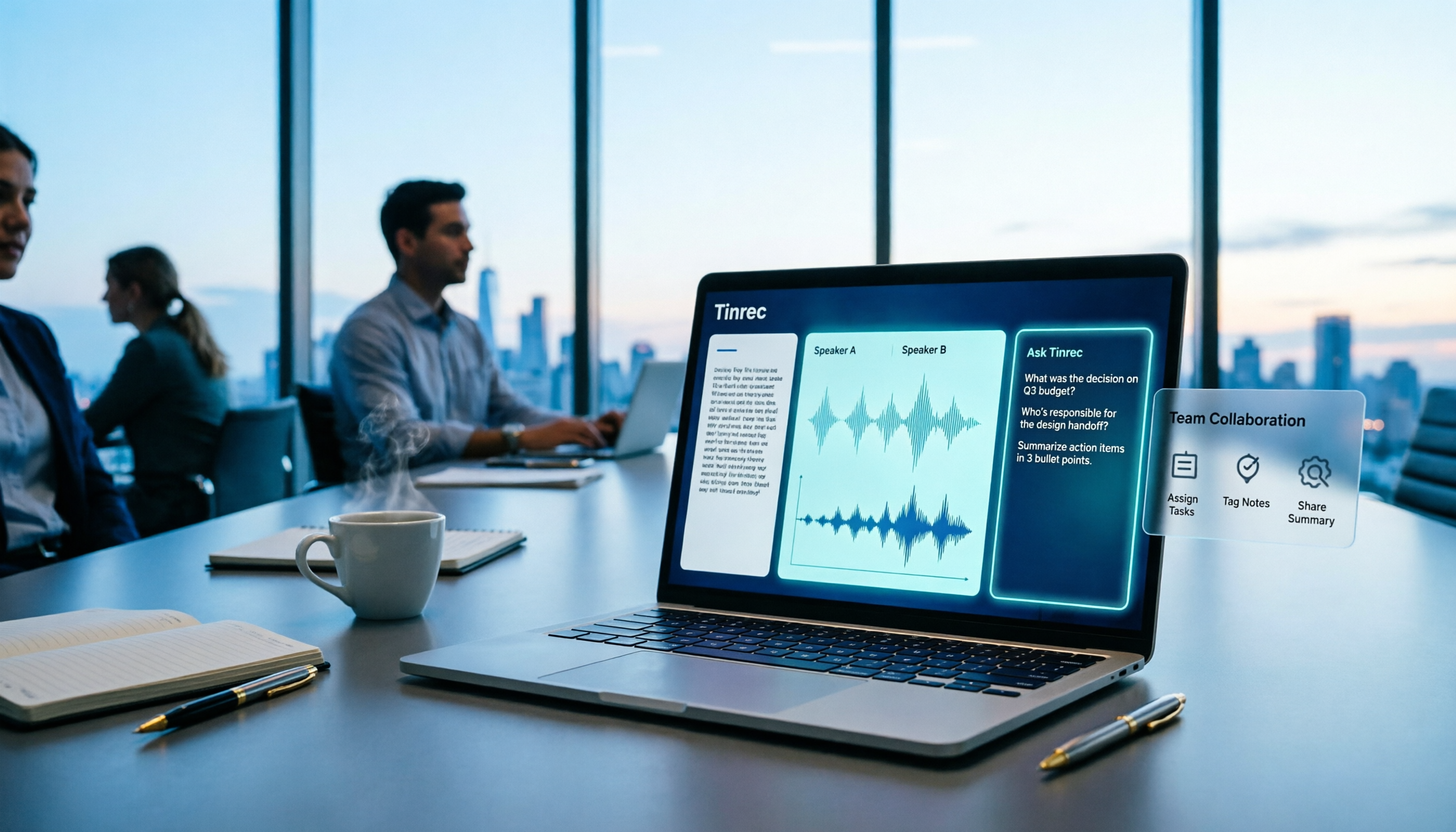
Google Live Transcribe vs Tinrec in 2026: 5-Dimension Comparison — Which Is Better for Meeting Notes?
Google Live Transcribe & Sound Notifications is an Android accessibility tool known for being free, providing real-time transcripts, and sending environmental sound alerts. Tinrec focuses on meeting notes and team collaboration. This article compares them across 5 dimensions—transcription and organization, online meeting recording, AI Q&A, audio file import, and team management—to help you decide which one to use for meeting notes.

3 iPhone Call Recording Solutions Compared: iOS 18 Built-in vs Tinrec in 2026
iPhone call recording finally has a built-in solution with iOS 18, but regional restrictions, legal issues, and post-call organization are the real pain points. This article compares 3 solutions: iOS 18 built-in call recording, Tinrec, and PLAUD Note with Otter.ai, helping you understand how to record calls and quickly turn them into transcripts, summaries, and action items.

2026 Real-Time Recording Tools Compared: Which Can Transcribe While Recording?
How do you choose a real-time recording tool? This article tests and compares Tinrec, free online voice recorders, Bandicam, and Granola in real meeting scenarios, explaining why what happens after recording is key, plus 4 buying tips, pitfalls to avoid, and scenario-based recommendations.
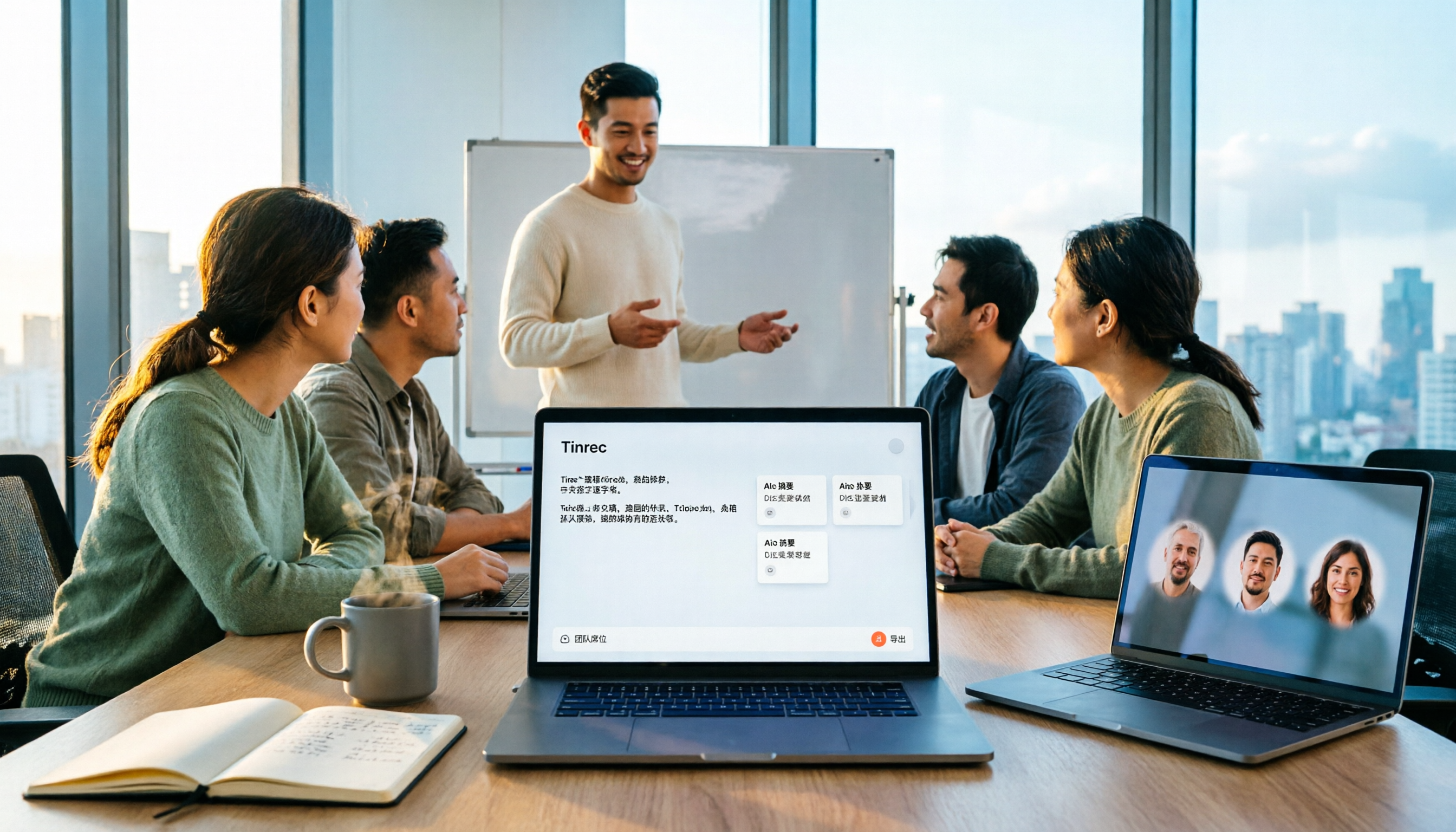
5 Meeting Recording Apps Compared in 2026: From Transcripts to Team Collaboration
Meeting recording apps aren't just about audio quality—they're about what happens after the meeting. This guide breaks down five common tool approaches, covering live transcription, AI summaries, action item extraction, AI Q&A, team spaces, and seat management. Using Tinrec as an example, we walk through bot-free online meeting recording, Chinese transcription, summaries, and exports, and compare the free, Pro, and Team plans to help you decide which solution fits your meeting needs.

What Is Instant Messaging in 2026? 5 Steps to Understand the Definition and Choose Tools
What does instant messaging (IM) mean? This article starts with the definition, history, and message storage methods to help you understand the essence of synchronous communication, 4 key points for choosing tools, and compares meeting and communication organization tools like Tinrec, Otter.ai, Notta, and Granola. Finally, a pitfall guide helps you choose the right tool.

Can You Share a Recording with Others in 2026? 5 Key Legal Points and How Tinrec Helps You Organize
Whether you can share a recording with others depends on your role, purpose, and content. This article summarizes key legal points on invasion of privacy and personal data protection, and explains how to use Tinrec to turn recordings into transcripts or summaries so you only share necessary information, reducing privacy and legal risks.

5 Best AI Meeting Notes Apps of 2026: Which Free Version Is Actually Enough?
There are countless AI meeting note takers, but buying one doesn't guarantee better notes. This article starts with the most common mistakes and inefficient habits, outlines 4 key factors for choosing a meeting transcription tool, tests Tinrec's bot-free recording, AI Q&A, and team workspace, and compares Otter.ai, Notta, and TurboScribe on positioning and pricing to help you find a solution that truly saves time.