

Turn recordings into transcripts and summaries in minutes
Upload audio or video for multilingual transcription, AI notes, and action items
Tinrec vs Windows Voice Typing in 2026: 5-Dimension Comparison — Which PC Speech-to-Text Shortcut Should You Choose?
"What exactly is the PC speech-to-text shortcut?" This is the question we hear most often when helping businesses choose tools. Most people think that once they find that shortcut, their meeting notes problems are solved—but in reality, Windows built-in Win+H voice typing and AI meeting note tools like Tinrec operate on completely different levels: the former solves "typing what you're saying now into the cursor position," while the latter solves "turning an entire meeting into searchable, queryable, handover-ready data."
Confusing these two is the most common misjudgment during procurement evaluation. Let's break down this misconception first, then discuss which one is more worth your investment.
Tinrec vs Windows Voice Typing | Quick Overview
Windows Voice Typing is a built-in dictation feature of the operating system, while Tinrec is a standalone tool focused on meeting notes and team collaboration. Their acquisition methods, pricing structures, and outputs are all different. Here's the basic information:
| Item | Tinrec | Windows Voice Typing |
|---|---|---|
| One-line positioning | AI meeting notes and team collaboration tool | Built-in Windows dictation input feature |
| Acquisition method | Web, desktop, and mobile; personal version has free tier, weekly pass, and Pro plan; team version is a separate team space | Built into Windows 10/11, no download or installation required |
| Core workflow | Record or import → transcript → summary/to-dos → Q&A/export/team knowledge base | Select a text field, press Windows logo key + H, spoken content becomes text in real time |
| Price range | Team version USD 29.80 per paid seat per month, USD 199 per paid seat per year (approx. USD 16.58/month); subject to official purchase page | Provided with the operating system, no additional cost |
The following compares 5 dimensions: activation and operation cost, online meeting capture, post-meeting output, existing audio organization, and team collaboration.
Dimension 1 | Activation and Key Operations
According to Microsoft's official documentation: after selecting a text field, press Windows logo key + H to open the voice typing toolbar and start converting dictation into text; on tablets or touchscreens, you can also tap the microphone icon on the touch keyboard to start, and say "stop dictating" to stop. Older Windows versions can enter listening mode via "Windows Speech Recognition" by saying "start listening" or clicking the microphone button; after Windows 11 22H2, this capability has been replaced by "Voice Access."
Tinrec's activation logic is different: after opening the desktop version, you start recording, and the system directly captures the sound being played—no need to add any bot to the meeting. If you just want to "type while you talk into a field," Win+H has almost no learning curve; if your goal is to generate a transcript while the meeting is happening, Tinrec's workflow is shorter.
→ This dimension: Tie, depending on whether you want "text input" or "meeting recording."
Dimension 2 | Online Meeting Capture Method
The official positioning of Windows built-in voice typing is dictation—converting what you say into the microphone into text on screen, convenient for filling out online forms or entering content in word processing programs. It is not designed with "preserving an online meeting" as its goal. Whether other participants' voices can be fully captured depends on your speaker and microphone settings, and it does not produce a separate replayable meeting audio file.
Tinrec's desktop version captures the computer's system sound, so meeting content played on Zoom, Google Meet, Microsoft Teams, and Webex on the computer can all be processed, without inviting an additional meeting bot to join. For scenarios that require preserving the original audio and verifying sentence by sentence afterward, this difference is most obvious.
→ This dimension: Tinrec wins.
Dimension 3 | Post-Meeting Output: What Comes After the Transcript
Win+H's endpoint is the text itself: after speaking, the text lands at the cursor position—no summary, no chapters, no to-do list. To organize key points, you have to read through it yourself from the beginning.
Stop organizing recordings by hand
Upload audio or video and automatically get a transcript, summary, and action items
Tinrec treats the transcript as a starting point. The same recording can produce AI summaries, chapters and key points, to-dos and mind maps, and also supports AI Q&A around the meeting content; cross-language meetings can use real-time translation, viewed in original, translated, or bilingual format; finally, it can be exported to Notion, Google Docs, OneNote, Dropbox, and other tools, or post-processed via Agent to generate reports, tables, and documents.
→ This dimension: Tinrec wins.
Dimension 4 | Organizing Existing Audio and Video Files
If you already have interview recordings, course audio, or online meeting recordings, Windows built-in voice typing can only handle them by "replaying and dictating in real time," which means spending the same amount of time again.
Tinrec supports direct upload of audio and video files for transcription, suitable for organizing historical meetings and interview materials. Note that file import consumes quota: the team version provides 2,000 minutes of team shared import quota per paid seat per month; first-time eligible team trial is 7 days, 1 free seat, 300 minutes of team shared import; and real-time recording under an active team plan and active seat currently does not deduct by minutes.
→ This dimension: Tinrec wins.
Dimension 5 | Team Collaboration and Data Retention
Win+H is a completely personal-level feature; the text produced is stored in your own files. If a member leaves or changes computers, the data scatters with them—there is no shared database, no concept of usage or auditing.
Tinrec's team version is a separate team space, not multiple people sharing a personal account: you can create and switch between multiple teams, invite members via join links, set owners/admins/regular members, and assign, revoke, or transfer seats. Here it's important to distinguish "roles" from "seats"—roles determine who can manage the team, members, and auditing; seats determine whether a member can record, upload, edit, import, and export; members who are active but have no seat can still view, play, and read team data. There are also team shared import benefits, usage trends and member rankings, audit logs, audio recycle bin, and team hotwords. Team resources belong to the team; when a member exits or is removed, the resources they are responsible for must be handed over to other active members.
→ This dimension: Tinrec wins.
What Are the Unique Advantages of Each?
Tinrec's Unique Advantages
- Bot-free desktop recording: directly captures system sound to record online meetings, so no unfamiliar participant appears in the meeting room.
- Post-meeting AI workflow: summaries, chapters, to-dos, Q&A, translation, Agent-generated reports and tables—all completed within the same tool.
- Team governance capabilities: spaces, members, roles, seats, usage, auditing, and recycle bin, turning meeting data into traceable team assets.
- Hardware-agnostic, multi-platform: usable on web, desktop, and mobile, no need to purchase additional recording equipment.
Windows Voice Typing's Unique Advantages
- Zero cost, zero installation: built into Windows 10/11, ready to use, no trial period or quota issues.
- System-level universality: can input into almost any field with a text cursor, including online forms, messages, and word processing programs.
Conclusion: Which Should You Choose?
- If you want to "quickly type what you say," fill out forms, or reply to messages without installing anything → Windows built-in voice typing is enough.
- If you need to record online meetings and don't want a bot joining the meeting room → Tinrec (desktop version bot-free recording).
- If you often get transcripts but still spend time organizing key points and to-dos → Tinrec (summaries, chapters, to-dos, Q&A all in one).
- If you have a pile of historical recordings and meeting videos to organize → Tinrec (supports audio and video file import transcription).
- If meeting data needs to be shared across members and retained even when members leave → Tinrec team version (team space plus roles, seats, usage, and auditing).
- If you only use Windows, only need occasional dictation input, and don't need post-meeting organization or team collaboration at all → Windows built-in voice typing already satisfies you.
In one sentence: Win+H solves input, Tinrec solves the entire meeting process from recording to action. For most teams that need to produce meeting notes, Tinrec is a more complete choice; we recommend first using the personal version's free quota, running a test with one of your own meeting recordings, and then deciding whether to adopt the team version.
Final reminder: recording and transcription involve personal data and local regulations; before actual use, please confirm relevant regulations and obtain participant consent when necessary.
Data Sources
- Microsoft Support: "Use voice typing to talk instead of type on your PC"
- Microsoft Support: "Use speech recognition to dictate text"
- Tinrec official product features and product configuration description (prices, quotas, and benefits subject to the official purchase page)
References
- Use speech recognition to dictate text | Microsoft Support
- 10 Windows speech-to-text software/tool recommendations Wondershare Filmora
- Use voice typing to talk instead of type on your PC | Microsoft Support
- Use speech recognition to dictate text - Microsoft Support
- No typing on computer! VoiceIn speech-to-text, speech recognition, automatic text input when speaking. (Chrome)
Turn every recording into actionable outcomes
Get 60 free transcription minutes when you sign in. No credit card required.
Related Reading
You might also like

How to Write a Meeting Summary in 2026: 5 Steps from Recording to AI Summary
Spending twice as long organizing meeting notes after the meeting ends? This article starts with common pain points in meeting summaries, outlines 4 key purchasing factors and 3 pitfalls to avoid, tests Tinrec's bot-free recording and AI summary workflow, compares it with Otter.ai, Notta, and Granola, and provides selection advice for different scenarios.

2026 Comparison of 4 Document Summarization Apps: Which Handles Recordings, Meetings, and Long Documents Best?
Are meeting, interview, and lecture recordings piling up on your phone, but you can't find a document summarization app that truly saves time? This article starts with the real limitations of free versions, breaks down 4 key purchasing points, and provides a hands-on comparison of Tinrec, Notta, TurboScribe, and Otter.ai, along with a guide to avoid pitfalls and selection advice for different needs.

2026 Comparison of 4 iPhone Speech-to-Text Tools: Built-in Transcripts Aren't Enough—Post-Meeting Organization Is Key
The built-in Voice Memos transcript on iPhone is free, but a transcript is not the same as meeting notes. This article starts with the most common misconceptions and compares Tinrec, Otter.ai, Granola, and Notta in Chinese transcription, post-meeting organization, cross-platform support, and team collaboration. It also provides key buying factors and pitfalls to help you find a solution that truly saves time.

5 Best Text-to-Speech Tools in 2026: Which Free TTS Sounds Most Natural?
We compare five text-to-speech tools—Ondoku, Luvvoice, TTSMaker, ReadOut, and ChromeVox—covering their features, free options, and ideal users. Plus, we address the reverse need: using Tinrec to turn meeting audio into transcripts, summaries, and action items.
How to Transcribe Podcasts to Text in 2026: Tinrec Audio Transcription + AI Summary Q&A
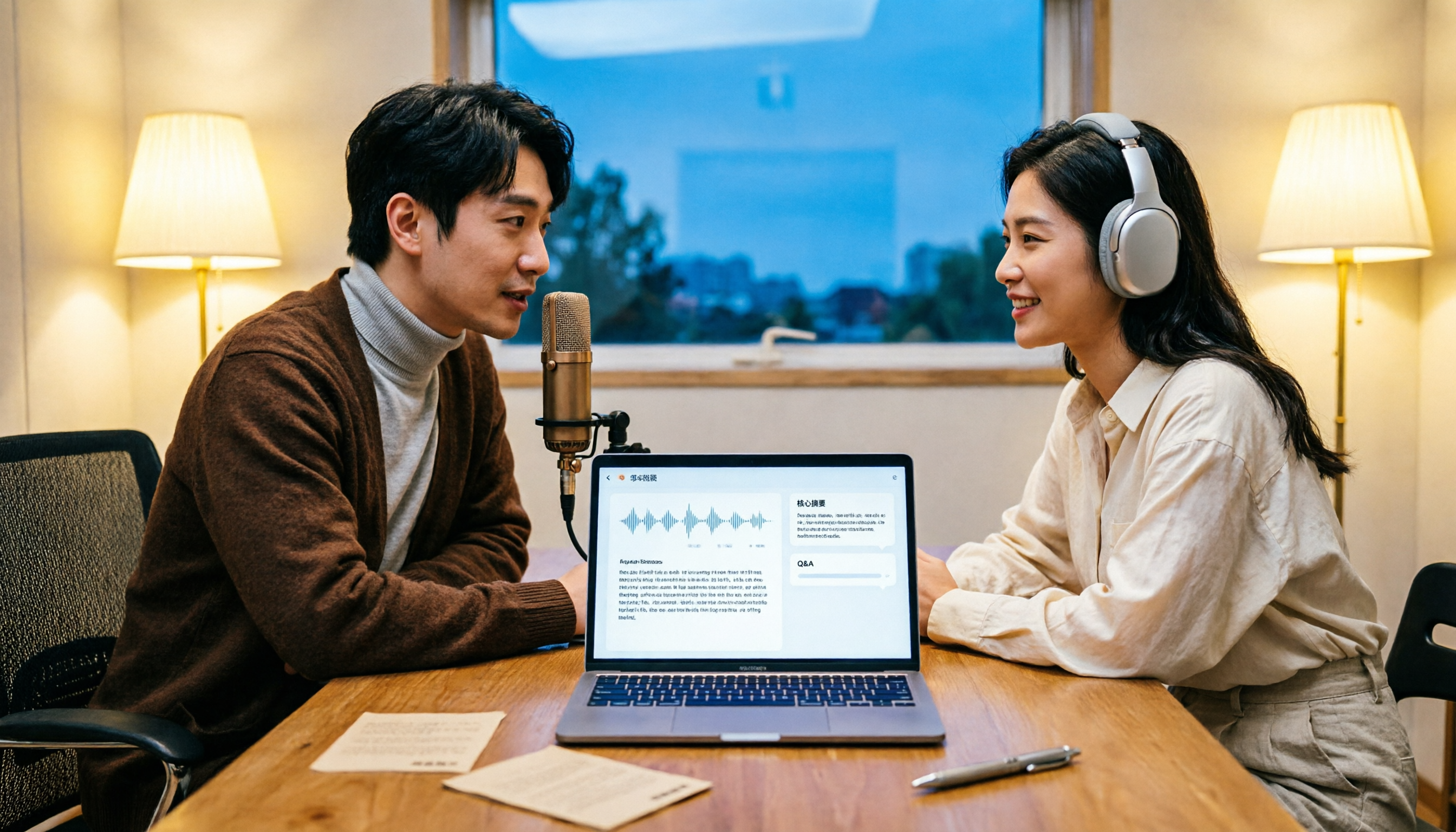
Turning a podcast into a transcript isn't the hard part—it's what you do with it afterward. This guide covers common pitfalls, the actual workflow for podcast transcription, core capabilities, and 5 key buying considerations, using Tinrec as an example to demonstrate the full process from audio upload to AI summaries and Q&A organization.

Tinrec vs Yating Transcription in 2026: 5-Dimension Comparison of Chinese Real-Time Transcription Apps
How to choose a real-time transcription app? This article focuses on Tinrec (Miaoting Recording), covering practical uses, core capabilities, and 5 key purchasing considerations for real-time transcription apps. It explains differences in bot-free online meeting recording, AI summaries and action items, AI Q&A, export options, and team spaces, with FAQs to help you decide which app is better for Chinese meetings and team collaboration.

6 Best iOS Transcription Solutions in 2026: Is the Built-in iPhone Option Enough?
We compare six iPhone recording-to-text solutions in 2026, from the built-in iOS Voice Memos to Tinrec, Otter, Notta, TurboScribe, and PLAUD. We break down free tiers, Chinese language support, AI summaries, and team collaboration to help you find the best fit.
How to Transcribe Audio to Text in 2026: A Complete 5-Step Guide
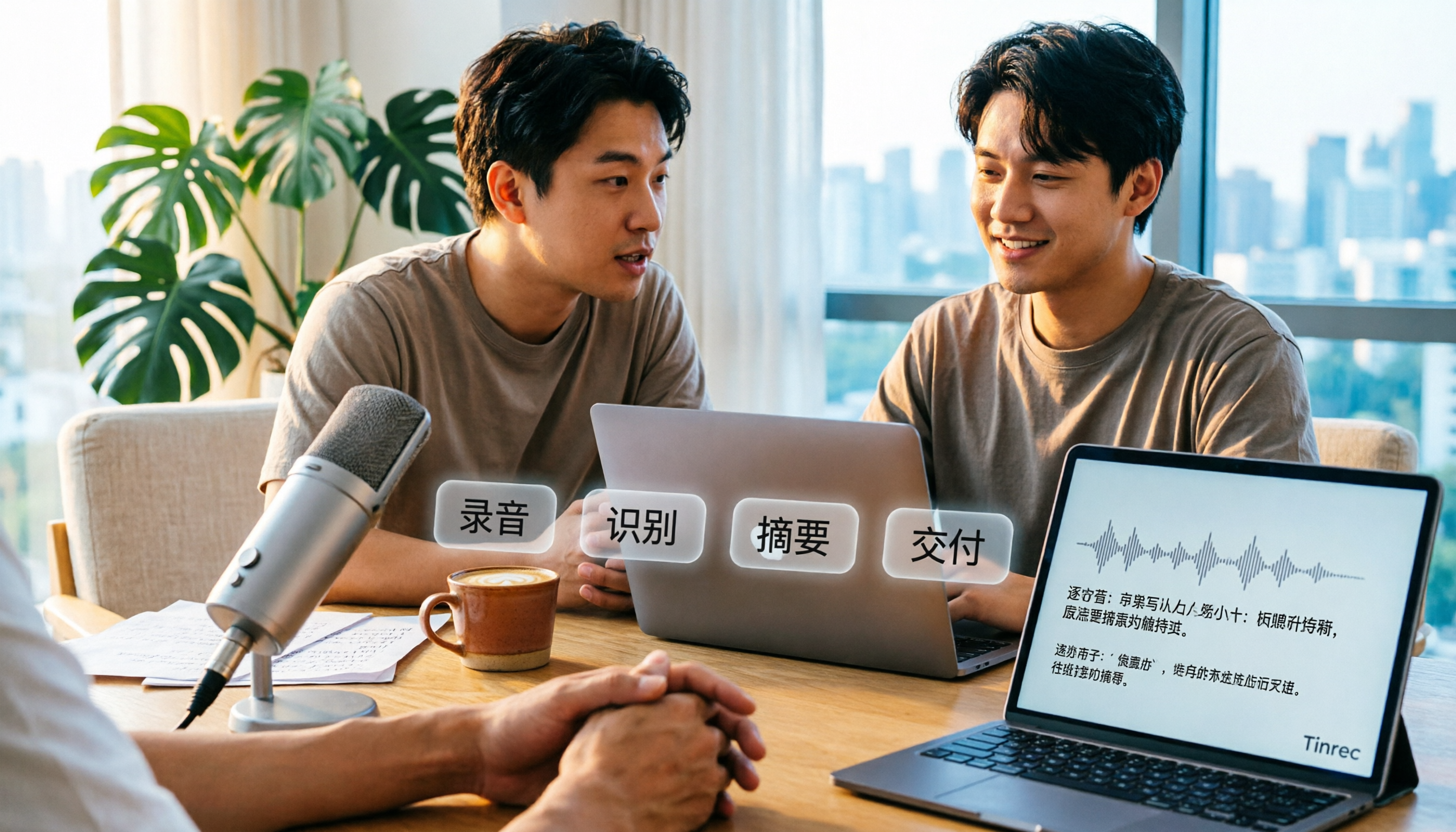
Transcribing audio doesn't have to mean typing it out yourself. This article addresses common misconceptions and compares Tinrec and Otter.ai on Chinese language support, online meeting recording methods, post-transcription organization, pricing, and team collaboration. It also provides a 5-step implementation guide and answers frequently asked questions to help you find the right audio-to-text solution.

2026 Apple Voice-to-Text Comparison: 4 Methods Tested — Is Built-in Transcription Enough?
iPhone's built-in Voice Memos now offers transcription, but is it enough? We compare 4 Apple voice-to-text methods, breaking down device and iOS version requirements, AI Q&A, cross-platform export, and free tiers. Tinrec is our top recommendation, with its bot-free desktop recording, AI summaries and action items, and team workspace. Includes a pitfalls guide and selection advice.