

Turn recordings into transcripts and summaries in minutes
Upload audio or video for multilingual transcription, AI notes, and action items
2026 Complete Guide to Online Speech Synthesis: How to Choose Free Tools and Understand the Speech-to-Text Workflow
When you want text to “speak,” the problem is often not the tool but the wrong direction
The video is edited, but you get stuck on whether to record the voiceover yourself—this is something many office workers run into every week.
Another scenario: you recorded several audio files from a full day of meetings and interviews. The meeting lasted two hours, and organizing it afterward takes another two hours. If you want to find a certain sentence, you have to listen from the beginning to the end.
Some people just want a reading audio file with a Taiwanese accent, but they first download a whole editing software suite.
These needs actually fall into two directions: one is turning text into speech (text-to-speech, TTS), and the other is turning speech into text (transcripts, summaries, to-dos). If you choose the wrong direction, even a powerful tool will not help.
This article will explain both sides clearly: how to evaluate free quotas, what to watch out for with commercial licensing, how output formats differ, and which one I would recommend after long-term use.
Before choosing an online speech synthesis tool, understand these 4 key points
First, confirm which direction you need. “Speech synthesis” means reading text aloud, commonly used for video voiceovers, teaching materials, and customer service audio; “speech-to-text” means turning meeting, interview, and course recordings into searchable transcripts. Most tools only do one side, so think clearly before choosing.
Second, the units for free quotas vary a lot. Some count by “characters,” some by “minutes,” and some limit single-file length or the number of files per day. Different units make direct comparison difficult; you need to see which type your actual usage falls into.
Third, check commercial licensing and attribution requirements first. Some services allow commercial use and do not require attribution; others have additional conditions. This matters especially when you plan to use the audio in ads or publish it in videos.
Fourth, look at output formats and the follow-up workflow. Common formats such as mp3, m4a, wav, ogg, and FLAC each have their uses. Whether they can be dropped directly into editing software or presentations determines how much time you will spend later.
Tinrec—turning speech into usable data, the one I open most often after testing
Tinrec is an AI meeting notes and collaboration tool for individuals and teams, usable on computers and phones. What it handles is not “reading text aloud,” but the other end of the speech workflow: turning the speech from meetings, interviews, and courses into data that can be searched, questioned, and handed to the team.
During meetings, it does not need to join like a meeting bot. The desktop version directly captures the computer’s system audio, and can handle online meetings on Zoom, Google Meet, Microsoft Teams, and Webex. You do not need to invite another bot into the meeting room, and you will not miss recording because you forgot to invite it. While recording, the transcript appears along with it.
After the meeting ends is where it truly saves time. The system automatically generates summaries, chapters, and key points, and extracts to-dos from the discussion—who is responsible for what and what the next step is, all at a glance. Long meetings are also organized into mind maps, which is much clearer than scrolling through the transcript from the beginning.
Even better is AI Q&A. After recording, you can ask it directly: “Who mentioned the budget in the last meeting?” “What did the client say about the delivery date?” It does not give you a pile of keyword search results; it answers directly. If you only treat a recording tool as “recording plus transcription,” you are using only one third of its capability.
Languages and translation are also covered. It can handle Chinese, mixed Chinese-English, and multilingual meetings. During recording, you can switch between the original text, translation, or bilingual view, so international meetings do not require finding a separate translator. The team version can also maintain team hotwords, making recognition more stable for terms such as product names and technical terminology.
Stop organizing recordings by hand
Upload audio or video and automatically get a transcript, summary, and action items
Export and follow-up processing are equally complete. Transcripts, summaries, and to-dos can be exported to tools such as Notion, Google Docs, OneNote, and Dropbox for continued use. You can also use Agent post-processing to generate reports, tables, and documents, turning them directly into work deliverables.
For team use, data ownership is clear. The team version provides an independent team space. Meeting data belongs to the team, and new members can view historical meetings after joining. Administrators can manage members, roles, and seats, view usage trends and member rankings, and query and export audit records. When a member leaves or loses a seat, their team resources can be handed over to other members, so data does not leave with the individual.
Note: the personal version has a free version, weekly card, Pro monthly card, and Pro annual card. The free version provides a basic quota and is suitable for trying it out first. The team version is USD 29.80 per paid seat per month, or USD 199 annually, equivalent to about USD 16.58 per month. Each paid seat provides 2,000 minutes of team shared import quota per month. Under an active plan, real-time recording currently does not deduct by minutes. Actual prices and promotions are subject to the official purchase page. In addition, transcription quality can be affected by recording quality, noise, accents, multiple people speaking at the same time, and technical terminology. For important content, it is recommended to verify against transcript timestamps and recording playback. In the team version, members who are active but do not have a seat can view, play, and read team data, but cannot upload, edit, or export.
Overall, if you need Chinese meeting notes, do not want a bot to join the meeting, and want to use AI to find answers directly after the meeting, Tinrec is currently the most suitable choice.
Besides Tinrec, what other online speech synthesis tools are there?
TTSMaker: A free online text-to-speech tool that uses a neural network inference model. It can play or download audio files. The official description says it can be used commercially without attribution. The free quota is 20,000 characters per week, and some voices do not count toward the limit. It is very useful when the need is purely to “read text aloud.” But it does not have transcripts, meeting summaries, or AI Q&A, and dropping recorded meeting audio into it will not turn it into meeting minutes.
Ondoku: Also an online text-to-speech service, usable with no initial fee. It supports 81 languages and regions including Japanese, English, Chinese, Korean, Spanish, French, and German, and provides diverse voices such as female, male, and child. It is worth considering if you want to generate multilingual reading audio. However, it does not include recording-to-text, nor can it organize a team’s historical meetings into a searchable database.
Yating Text-to-Speech: Developed by a Taiwanese team, it focuses on Taiwanese accents and uses deep learning neural network algorithms. It emphasizes intonation close to a real person’s tone. It is worth a look when you need a friendly and familiar Chinese voice. But it focuses on text-to-speech and does not have meeting recording, to-do extraction, or team collaboration spaces.
Pitfall guide: the 4 most common mistakes when choosing speech tools
Pitfall 1: Confusing “text-to-speech” with “speech-to-text.” This is the most common mistake. You want to make a video voiceover, but you buy a meeting notes tool; you want to organize a meeting, but you sign up for a TTS service. First confirm whether the input is text or speech, then choose the tool.
Pitfall 2: Only looking at the word “free” without checking how the quota is calculated. Quotas may be calculated by characters, minutes, or number of files, and may also limit single-file length. Rather than discovering later that it is not enough, it is better to understand your usage pattern from the start.
Pitfall 3: Ignoring commercial licensing and attribution. Some services allow commercial use without attribution, while others have conditional restrictions. Before using them for commercial content, be sure to confirm the terms.
Pitfall 4: Using an AI tool as a single function. If you only treat a recording tool as a voice recorder, you are using only a small part of its capability. For example, with Tinrec’s AI Q&A, after recording you can directly ask “What was the conclusion of this meeting?”, which is much faster than manually flipping through a 30-minute transcript.
Conclusion: which one should you actually use?
Need to turn articles, subtitles, or teaching materials into voiceover → TTSMaker or Ondoku (pure text-to-speech, large free quota).
Need a reading voice with a Taiwanese accent → Yating Text-to-Speech.
Need to organize online meetings and turn recordings into transcripts, summaries, and to-dos → Tinrec.
Need real-time bilingual viewing for mixed Chinese-English meetings → Tinrec.
Need cross-device use (record on computer, view on phone) and share meeting data with a team → Tinrec.
Need to ask questions about historical meetings, or turn interviews into exportable reports and tables → Tinrec.
It is recommended to start with the free version and test it once with one of your own meetings or an interview. See how much organizing time you can save after recording, then decide whether to upgrade. You do not need to pay from the start.
References
- Free Online Text-to-Speech - TTSMaker
- Speech Synthesis - Taiwan Hakka Speech Database
- [2026 Latest] Top 5 Recommended Speech Synthesis Websites! Complete Guide to Free AI Text-to-Speech Services | Text-to-Speech Software Ondoku
- Text to Speech Online - Free TTS Tools with Natural Voice
- Yating Text-to-Speech
Turn every recording into actionable outcomes
Get 60 free transcription minutes when you sign in. No credit card required.
Related Reading
You might also like

2026 YouTube Learning Video Note-Taking Free Plans Compared: 4 Tools at a Glance
Watching videos is fun, but taking notes is a pain. This article starts from the choice of whether to go manual, semi-automatic, or fully automatic, and compares the free plans of Tinrec, Notta, TurboScribe, and Granola, including per-file length limits, AI summaries and Q&A, export capabilities, team spaces, and the four most common pitfalls when choosing a video note-taking tool.

How to Extract YouTube Videos in 2026: 5 Steps from Clips to AI Summaries
From a student's perspective, we debunk the most common misconception about YouTube video extraction: do you need the video file or the content? This article walks you through 5 steps to choose the right tool, tests how Tinrec imports via web link to turn public videos into transcripts, AI summaries, and queryable notes, and compares when to use clipping tools like CutterTube and YT1s.

2026 Comparison of 5 Audio-to-Text Tools: Which Is Fastest for Chinese Meeting Transcripts?
A hands-on review of 5 audio-to-text tools, covering Chinese recognition, bot-free meeting notes, AI summary Q&A, and team collaboration, to help you choose the best fit for your meeting scenario.
5 Best Free Audio to MP3 Converters in 2026: Which One Works Without Uploading?
Need to convert audio or video files to MP3? We tested 5 free online audio-to-MP3 converters, comparing upload requirements, supported formats, batch processing, browser compatibility, and audio quality to help you pick the right one for your needs.

4 Voice Announcers Compared in 2026: Hardware Alerts, System Announcements, TTS, and Tinrec — Which to Choose?
Voice announcers come in different forms: hardware alert devices provide on-site warnings and guidance, Siri announces calls and notifications, and Google's text-to-speech reads news aloud. But if you need to capture and reuse audio from meetings, interviews, and classes, none of these three suffice. This article compares four common voice solutions and explains how Tinrec fills the gap with transcripts, summaries, action items, and team collaboration.

How to Choose an Online Transcription Tool in 2026: 5 Steps to Pick the Right One and Say Goodbye to Typing Transcripts
Online transcription tools fall into three categories: font generators, image OCR, and speech-to-text. Most people actually need the last one. This article walks you through 5 steps to choose the right tool, tests Tinrec's performance in Chinese meetings, bot-free recording, and AI Q&A, compares it with Notta, TurboScribe, and cSubtitle, and gives clear recommendations based on use cases.
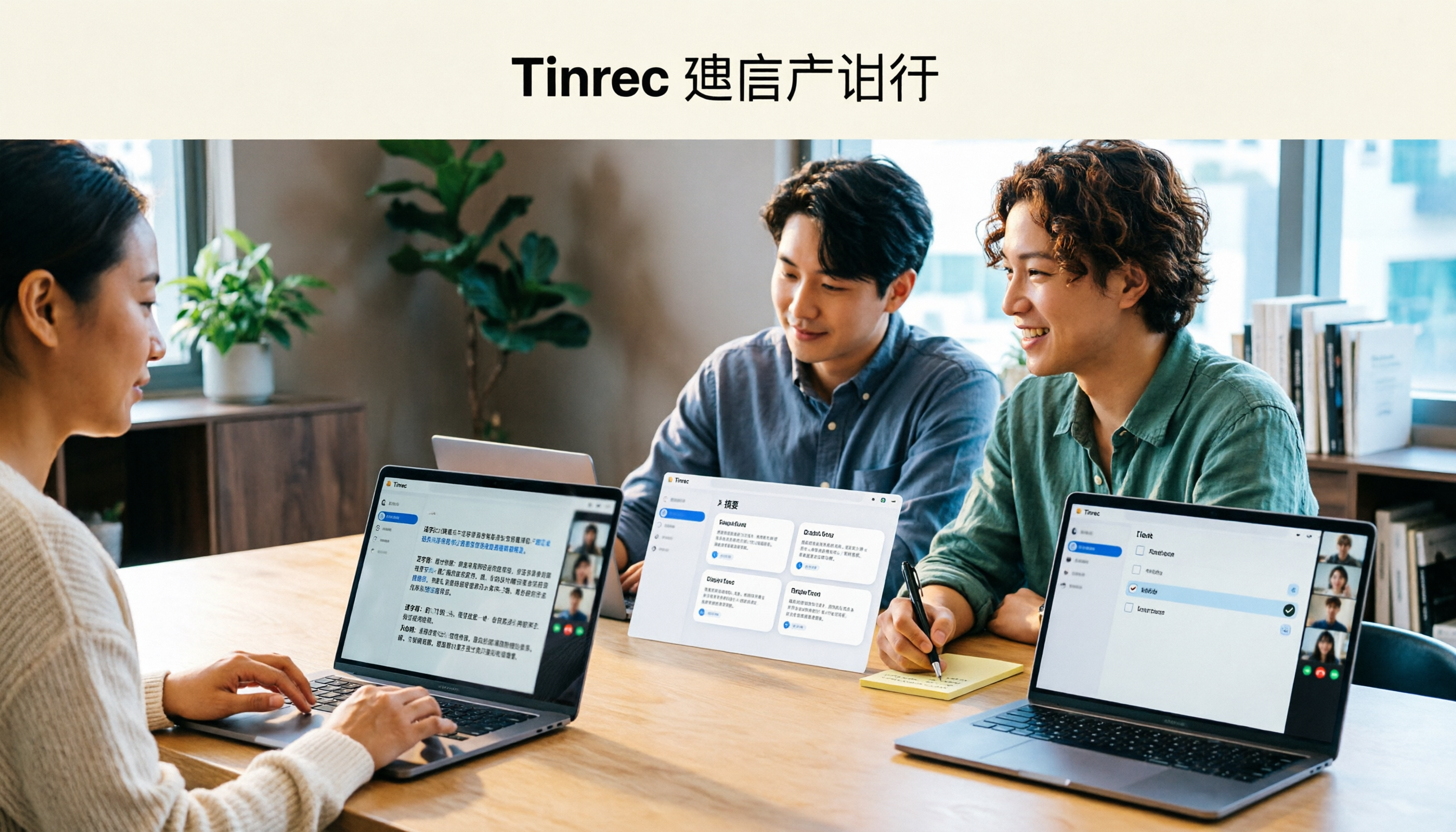
Tinrec Review 2026: AI Meeting Notes Without a Bot + Auto Summaries & Action Items
Tired of staying late to write meeting minutes? This guide breaks down what to look for in an AI meeting notes tool, explains how Tinrec captures Zoom, Meet, and Teams calls on desktop without a bot, and automatically generates transcripts, summaries, and action items. The team plan turns meetings into searchable, transferable team knowledge.
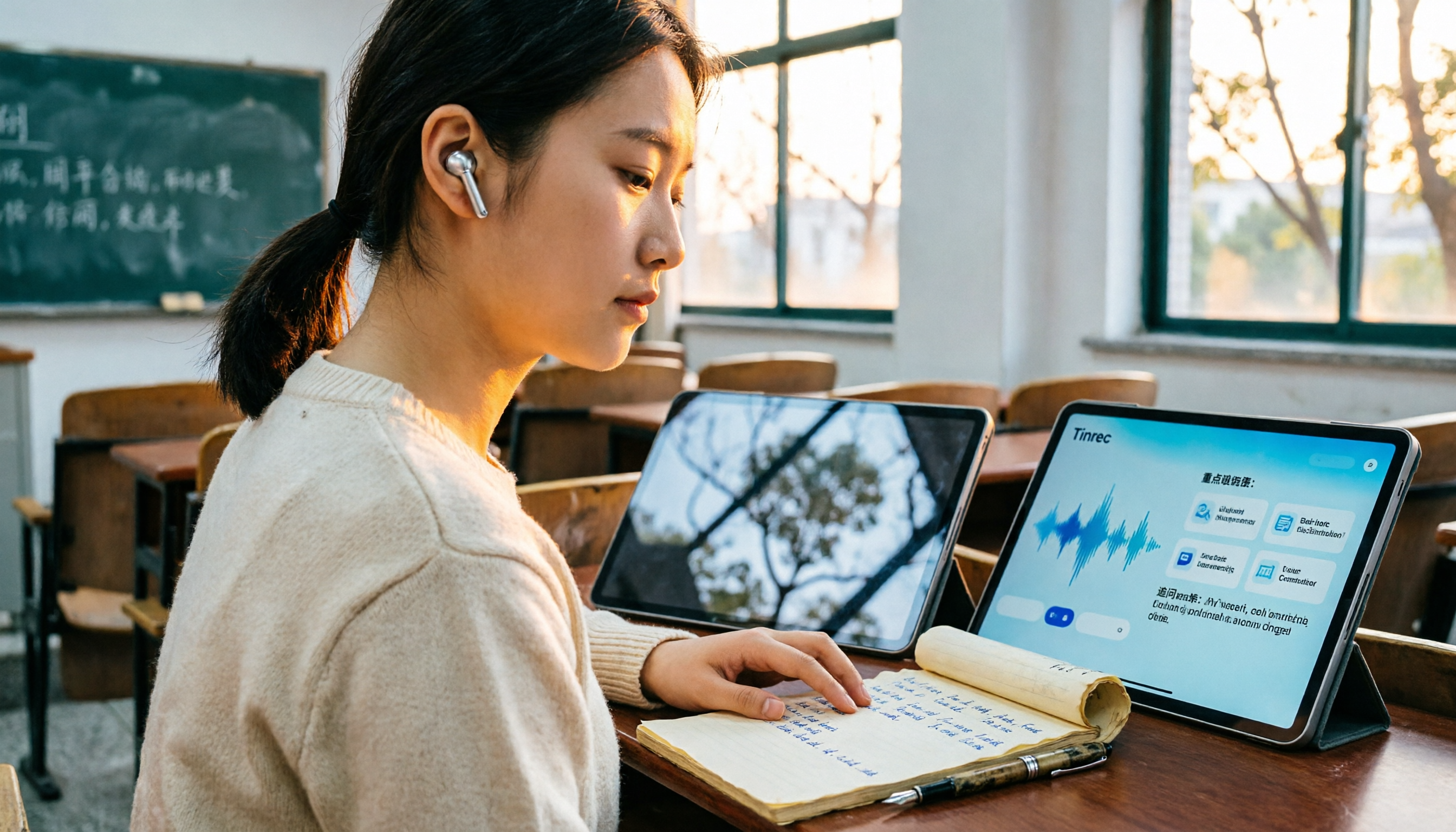
2026 Top 4 Knowledge Summary Apps Compared: From Class Recording to AI Key Points
The most common mistake in organizing knowledge points is focusing only on recording without a proper organization process. This comparison of 4 knowledge summary apps examines content sources, AI organization depth, follow-up questioning capabilities, and output to see which saves the most time, along with buying tips, pitfalls to avoid, and selection advice for different scenarios.

2026 Video Link to Text: 5 Tools Tested and Compared — Paste a Link, Get a Transcript, Which Saves the Most Time?
We tested 5 video link to text tools, analyzing their pros and cons from link import, transcription organization, AI Q&A, to team collaboration. Tinrec stood out for its no-bot meeting recording, AI conversational queries, and team data retention. This article also covers selection criteria and pitfalls to help you find the most time-saving solution.