

Turn recordings into transcripts and summaries in minutes
Upload audio or video for multilingual transcription, AI notes, and action items
The 4:30 PM Wednesday recording is eating into your off-work time
At 4:30 PM on Wednesday, the two-hour project meeting finally ends. You close Zoom, look at the 1-hour 52-minute recording on your desktop, and the notes with only three lines written—the transcript hasn't even started, and the meeting minutes are due tomorrow morning.
Another common scenario: the client explains requirements in mixed Chinese and English. You listen and take notes, only to realize later that the key quote numbers weren't captured at all, so you have to replay the recording from the beginning.
An even more frustrating one: the meeting clearly happened, but three months later when you need to check "who said to change the specs back then," you can only scroll through chat records in the group, scrolling until you doubt life.
These situations aren't because you're not diligent enough, but because you didn't choose the right tool. Speech-to-text software on Windows has improved a lot in recent years. What truly sets them apart isn't "whether it can transcribe," but "whether the transcription can be used directly afterward."
Before choosing Windows speech-to-text software, understand these 4 key points
1. How does it "hear" the meeting?
There are currently three mainstream approaches: meeting bots joining as participants, desktop apps directly capturing computer system audio, and uploading existing audio files. If you don't want an unfamiliar account in the meeting list, and don't want to ask the host to admit a bot every time, then choose a desktop tool that can directly capture system audio. Tinrec desktop version takes this path.
2. How to evaluate Chinese and mixed Chinese-English performance?
Honestly, I usually don't just look at the official accuracy numbers. Look at the test conditions—is it a quiet recording studio or a real meeting room? Is anyone interrupting? Are there many proper nouns? Actual results are affected by recording quality, noise, accent, overlapping speech, and technical terms. It's recommended to test with your own recording. Tinrec covers Chinese, Traditional Chinese, and multilingual meetings, and also provides team hotwords, so you can feed in company-specific terms first.
3. After transcription, what does it give you?
Tools that only provide transcripts still require you to read through everything yourself. If it can automatically provide summaries, chapters, and to-dos after the meeting, and you can continue asking questions about the content, then the time saved is real work hours. This is also the dividing line for AI meeting tools in recent years.
4. Are the free quota and team collaboration sufficient?
For personal use, first check if the free quota can handle one or two meetings; for team use, look more carefully—who owns the meeting data, how seats are counted, and whether usage can be checked. Tinrec's team version manages roles, seats, usage, and operation logs separately, which is where it clearly leans toward team scenarios.
Tinrec—Our top recommendation after testing
Tinrec is an AI meeting recording and collaboration tool for individuals and teams, available on desktop, web, and mobile.
During meetings: No bot invitation needed
The desktop version directly captures computer system audio, handling meeting audio played on the computer from Zoom, Google Meet, Microsoft Teams, and Webex, without needing to pull an extra bot into the meeting room. For those who frequently meet with external clients, this is quite thoughtful—no need to explain in advance that "a strange account will join later." Note that you must open Tinrec yourself to start recording; it's not the type that automatically joins all calendar meetings.
During the meeting: Live transcription
Transcription starts generating while recording. For cross-language meetings, you can switch between original text, translation, or bilingual view. Previously, you had to open two windows for translation and notes; now you can handle it on the same screen.
After the meeting: This is where it truly saves time
As soon as the meeting ends, AI summaries, chapters, and to-dos are already organized. Who is responsible for what and when to submit is clear at a glance. After recording, you can directly ask it: "In last week's meeting, what were the client's concerns about pricing?" It will give you answers based on semantics, not a bunch of keyword search results.
The organized content can be exported to common tools like Notion, Google Docs, OneNote, Dropbox, and further processed through Agent to generate reports, tables, or documents, directly continuing with post-meeting deliverables.
Our testing method
We used the same approximately 5-minute mixed Chinese-English meeting recording, played in an indoor environment with keyboard and air conditioning noise, and compared transcript readability and post-meeting organizing time. Chinese paragraphs are basically readable directly; technical terms need manual correction in a few places. Again, actual results are affected by recording quality, accent, and overlapping speech. Testing with your own recording is most accurate.
Three main advantages
- Bot-free recording of online meetings, so the meeting flow isn't interrupted by third-party tools.
- Transcript is just the starting point; summaries, to-dos, AI Q&A, export, and post-processing complete the entire "post-meeting work" chain.
- The team version centralizes meeting data in a team space, so data doesn't leave with members when they change.
Limitations to be honest about
Stop organizing recordings by hand
Upload audio or video and automatically get a transcript, summary, and action items
The free version provides a basic quota to experience recording, import, summary, and transcription. Once the quota is used up, you need to upgrade. If you have several meetings every week, evaluating Pro directly is more practical. For short-term intensive interviews, a weekly pass is available. Also, if you mainly need to batch convert large long audio files into subtitles, there are specialized tools on the market for that. Tinrec's strength is still in live meetings and post-meeting organization.
Who is it for
If you frequently have Chinese or mixed Chinese-English meetings, don't want bots in meetings, want to use AI to find key points directly after recording, or your team needs to share meeting data and check usage—Tinrec is a very worthwhile option to try first.
The team version currently offers eligible teams a 7-day trial, 1 free seat, and 300 minutes of team shared import quota. Paid seats are USD 29.80 per seat per month, or USD 199 per seat per year (about USD 16.58 per month). Each paid seat provides 2,000 minutes of team shared import quota per month. Real-time recording within an active team plan is currently not deducted by minutes; file and web link imports use the team shared quota. Prices and benefits are subject to the official purchase page.
Besides Tinrec, what other options are there?
Notta
Notta is a multi-platform transcription tool with high overlap with Tinrec, covering meeting notes, file import, translation, and team plans. The official free version offers 120 minutes per month, with a maximum of 3 minutes per single item. Pro annual payment is about USD 8.17 per month (1,800 minutes per month). It's more suitable for those whose core needs are "transcription, subtitles, translation." Tinrec additionally provides Agent post-processing, which can directly generate reports, tables, and documents from meeting content—something Notta currently doesn't emphasize.
Otter.ai
Otter.ai is a mature choice for English business meetings. The free version offers 300 minutes per month, quite generous for those who only record English meetings. Pro annual payment is about USD 8.49 per user per month. If your meetings often include Chinese or mixed Chinese-English, Tinrec's bilingual transcript, real-time translation, and team hotwords are more suited to Taiwan usage scenarios. Prices are subject to Otter's official page.
Granola
Granola also takes the bot-free route, using desktop system audio and microphone for real-time transcription, then handing your handwritten notes to AI for organization. Basic is free, Business is USD 14 per user per month. However, it doesn't support uploading pre-recorded audio files, nor does it retain meeting audio. Transcripts can be viewed and searched, but there's no original recording to replay. Tinrec retains recordings and supports importing existing audio files—this is the most practical difference between the two.
Pitfall guide: 4 most common mistakes when choosing Windows speech-to-text software
Pitfall 1: Only looking at official advertised accuracy.
Almost every company writes "high accuracy," but doesn't specify test conditions. A quiet recording studio and a large meeting room are two different worlds. It's recommended to test the free quota with your own recording, not just look at advertising numbers.
Pitfall 2: Ignoring "how to record."
If you only record your own microphone in an online meeting, you're only capturing your voice, and everything the other party says is missed. Find a tool that can stably capture computer system audio, otherwise the transcript is only half complete.
Pitfall 3: Treating the tool only as "speech-to-text."
If you only use the transcript, you're only using one-third of its power. Post-meeting summaries, to-dos, and AI Q&A are where real time is saved—asking "what was the conclusion of this meeting" directly after recording is much faster than manually flipping through a 30-minute transcript.
Pitfall 4: Teams running on personal accounts.
When a colleague leaves, meeting data disappears with the account—this is a pitfall many teams have stepped into. Team data should be placed in a team space, with seats and roles managing who can record and who can edit. Also, a reminder: follow local regulations before recording, and obtain participant consent when necessary.
Conclusion: Which one should you choose?
Overall, speech-to-text tools on Windows are no longer just "typing substitutes," but part of the meeting workflow.
- Chinese or mixed Chinese-English meetings, need both transcript and minutes → Tinrec
- Don't want to add bots to online meetings → Tinrec
- Want to use AI to follow up on key points and generate to-dos directly after recording → Tinrec
- Team needs to share meeting data, check usage and seats → Tinrec team version
- Mainly record English meetings, budget is 0 → Otter.ai free version (a rare exception in this article)
- Only want to hand handwritten notes to AI for organization, no need to replay recordings → Granola
It's recommended to first download the Tinrec free version and test with a real meeting recording of your own—whether the output can be used directly, you'll know after one meeting. If it fits, consider upgrading; no need to pay from the start.
FAQ
Q: Is the Tinrec free version enough?
The free version provides a basic quota to experience recording, import, summary, and transcription, suitable for first confirming whether the workflow is smooth. If you have regular meetings every week, consider Pro; for short-term intensive interviews or courses, a weekly pass is an option.
Q: Without inviting a bot, can it really record Zoom and Teams?
The desktop version captures computer system audio to handle meeting audio played on the computer from Zoom, Google Meet, Microsoft Teams, and Webex, without needing a bot to join. But you need to open Tinrec yourself to start recording; it's not a service that automatically joins all calendar meetings.
Q: What accuracy can be guaranteed?
It's not recommended to look at fixed numbers. Actual performance is affected by recording quality, noise, accent, overlapping speech, and technical terms. For important content, it's recommended to cross-check with transcript timestamps and original recording playback.
Q: What does "seat" mean in the team version?
Roles determine who can manage the team, members, and settings; seats determine whether members can record, upload, edit, import, and export. Active members without seats can still view, play, and read team data, but cannot perform resource-using operations. Team data belongs to the team, and handover is needed when members leave.
Q: Can team recordings be recovered after deletion?
After audio enters the team recycle bin, it can be restored before permanent cleanup begins. The current retention period is 30 days.
References
- Speech to Text - Voice Typing Assistant - Free download and install on Windows | Microsoft Store
- Speech to Text, Voice Typing Assistant - Free download and install on Windows | Microsoft Store
- 10 Windows Speech-to-Text Software/Tools Recommendations Wondershare Filmora
- Transcription - Convert speech to text - Download and install on Windows | Microsoft Store
- Tested 4 Best "Speech-to-Text" Online Tools Recommendations, Free Instant Audio to Transcript
Turn every recording into actionable outcomes
Get 60 free transcription minutes when you sign in. No credit card required.
Related Reading
You might also like
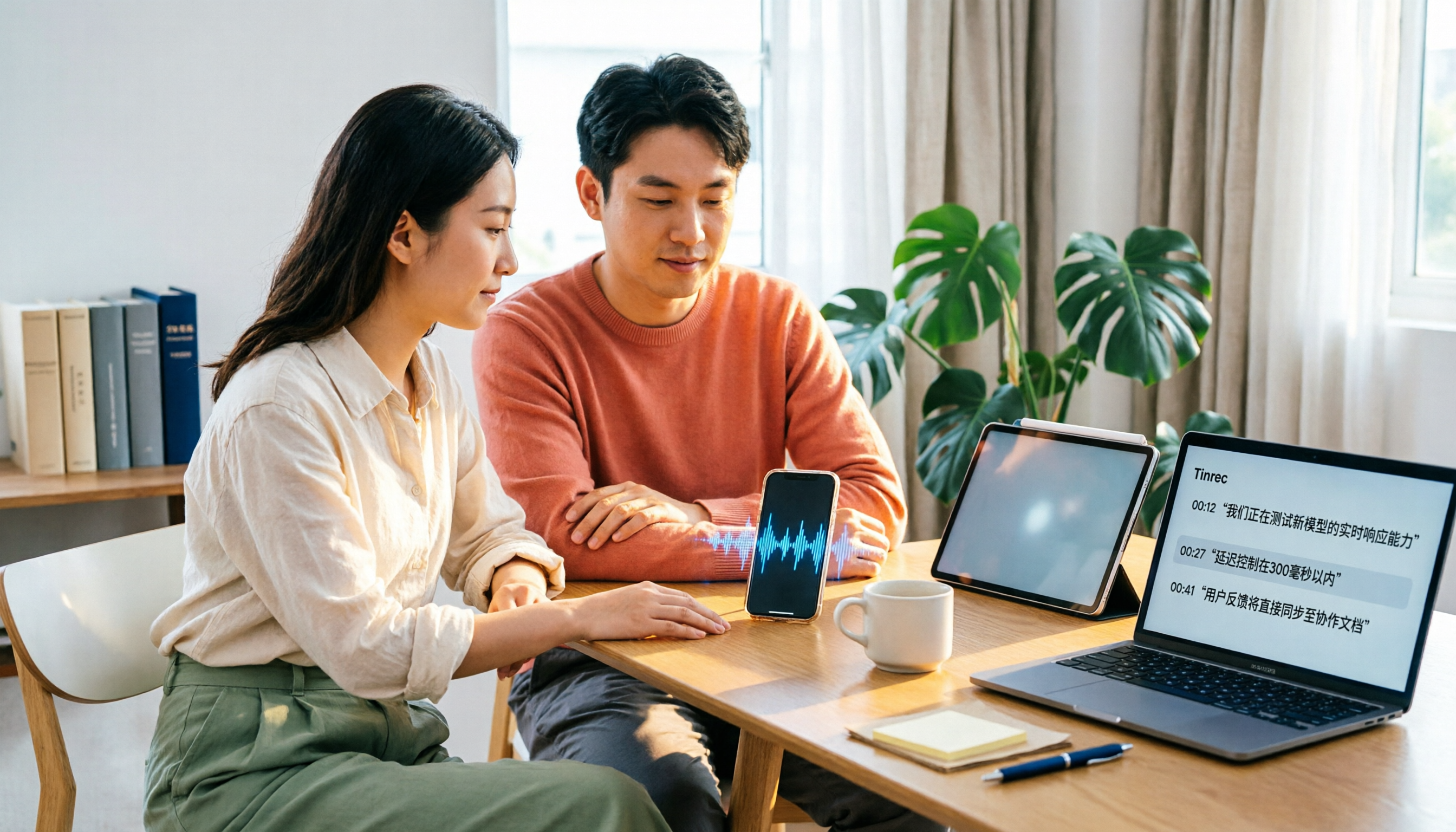
4 Xiaohongshu Video-to-Text Tools Tested for 2026: Which One Can Actually Transcribe Videos Without Subtitles?
Extracting text from Xiaohongshu videos isn't about whether a tool exists—it's about what you plan to do with the text. This article starts with three key questions and compares four tools: Tinrec, BibiGPT, Shiyi, and SnapWC. Learn the difference between grabbing subtitles and AI speech-to-text transcription, plus workflows for videos without subtitles, output formats, and tips for team sharing.

5 Huawei Phone Audio-to-Text Tools Tested in 2026: Which AI Meeting Notes Save the Most Time?
A hands-on 2026 comparison of audio-to-text tools for Huawei phones, tested in real meeting scenarios. The article compares Huawei's built-in recorder, Otter.ai, Notta, and Tinrec, and explains four key factors for choosing a tool: real-world accuracy, post-meeting organization, bot-free online meeting recording, and cross-platform export. It highlights Tinrec's AI summaries, action item extraction, and AI chat query, and concludes with recommendations for different use cases.
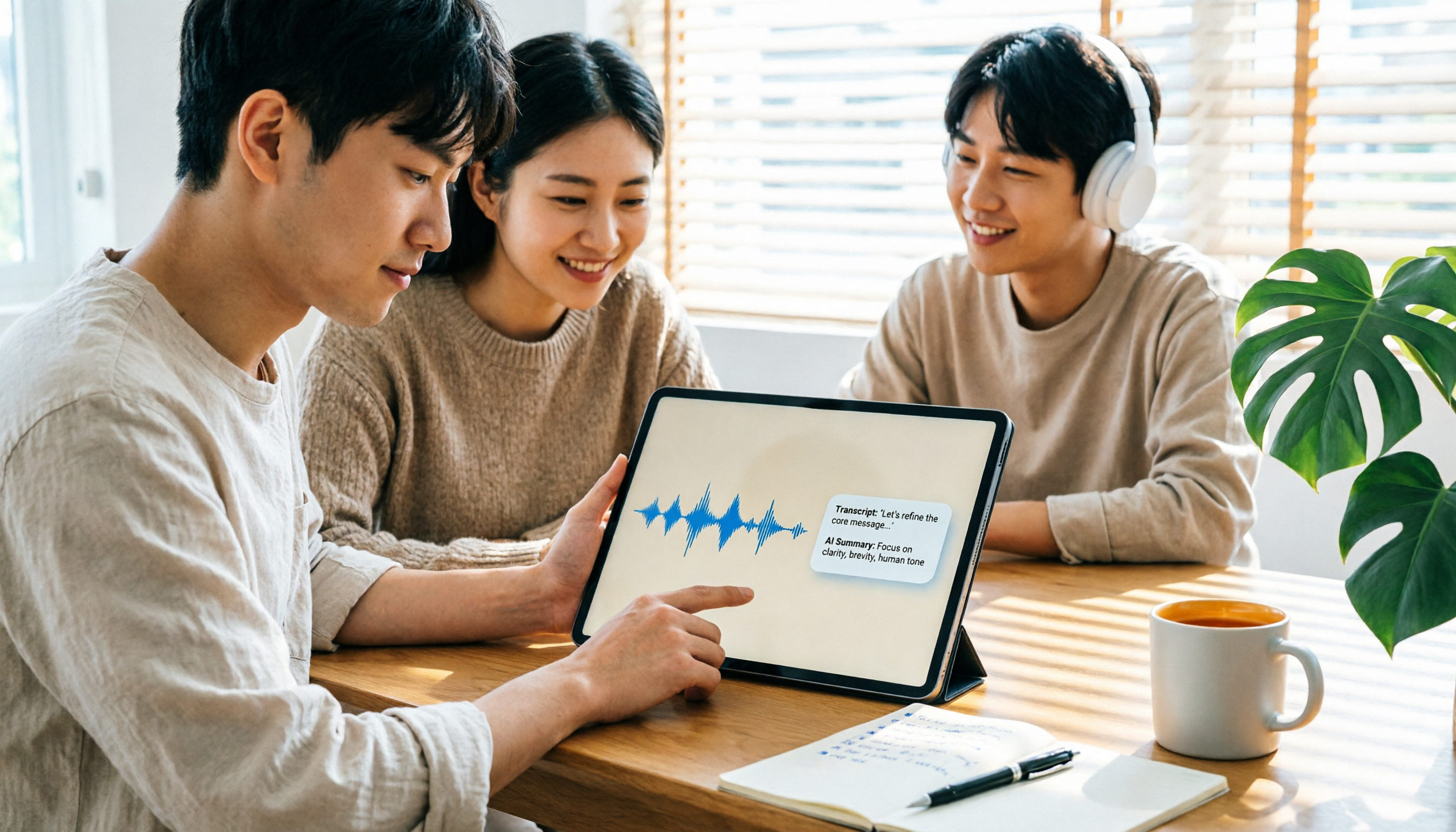
2026 iPad Audio-to-Text Note-Taking Guide: Real-Time Transcripts, AI Summaries, and Tool Selection
Should you use built-in features or third-party apps for iPad audio-to-text note-taking? This guide covers selection criteria, Chinese transcription, post-meeting AI organization, cross-platform export, and team permissions, comparing Tinrec, Apple Notes, Otter.ai, and PLAUD Note, plus practical tips to avoid pitfalls.

5 Best Browser-Based Audio-to-Text Tools in 2026: No Install, Which Handles Chinese Meetings Best?
How do you choose a browser-based audio-to-text tool without wasting time? This article examines four key factors—no installation, Chinese recognition, post-meeting organization, and team data ownership—and compares Tinrec, Notta, TurboScribe, Granola, and Otter.ai from a mid-level manager's hands-on perspective. It covers Tinrec's real-world performance and limitations in bot-free recording, AI Q&A, action item extraction, and team workspaces.

Tinrec vs OmniTranscript 2026: 5-Dimension Comparison for Chinese TikTok Transcripts
How to choose a TikTok video-to-text tool? This article reviews 5 transcript tools: Tinrec, OmniTranscript, WayinVideo, BibiGPT, and Dictationer, comparing them across Chinese language support, AI post-processing, export formats, free quotas, and team collaboration to help you find the best TikTok transcription solution.

How to Transcribe Audio on Samsung Phones in 2026: Built-in Speech-to-Text + AI Meeting Notes
Samsung phones have a built-in Voice Recorder app with a speech-to-text mode, but getting a transcript doesn't mean you have usable meeting notes. This guide covers five key factors—Chinese recognition, post-meeting organization, recording online meetings, cross-device use, and team collaboration—and compares Samsung's built-in feature, Otter.ai, Notta, and Tinrec to help you find the best audio transcription solution for your needs.
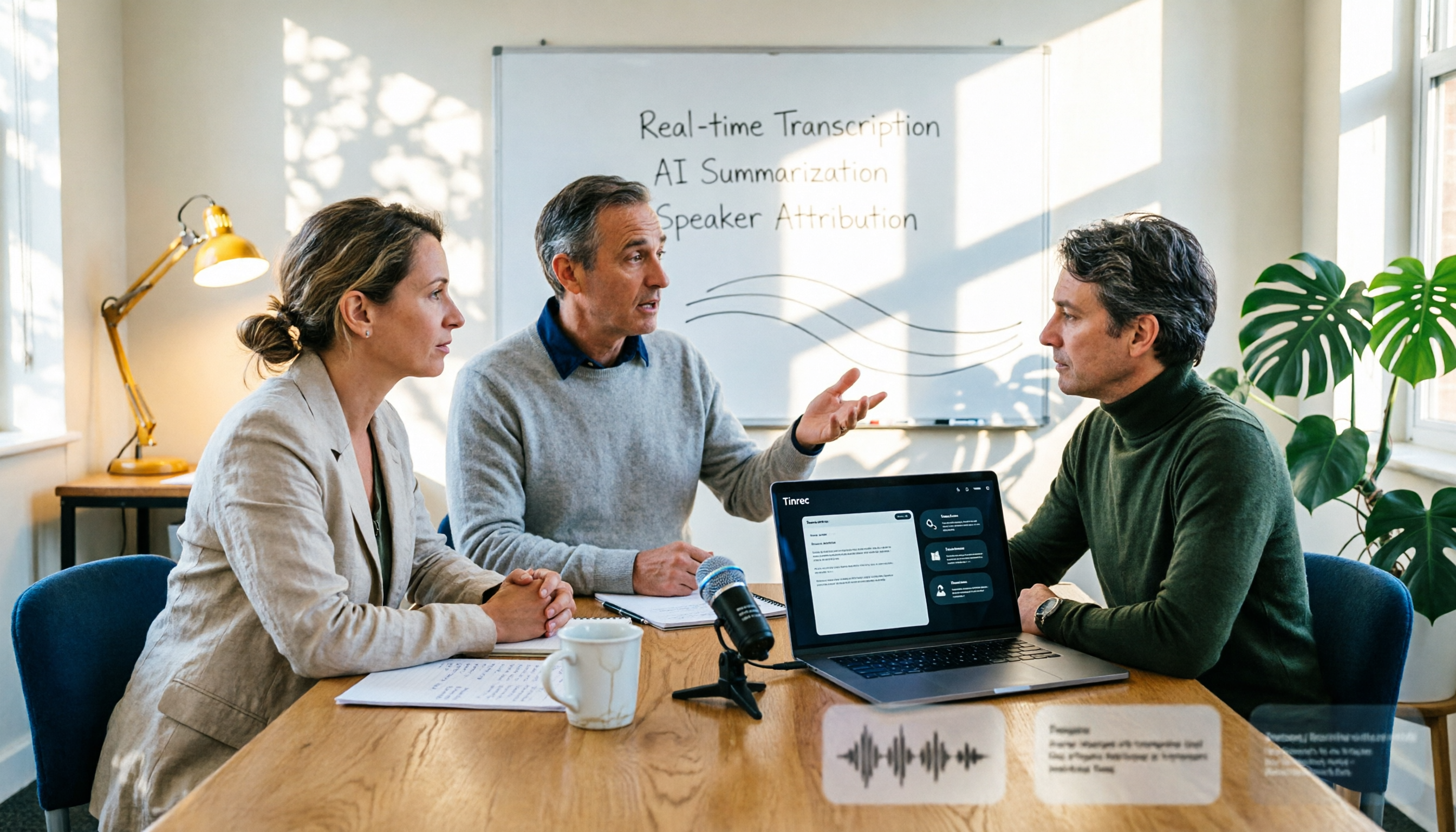
2026 AI Conference Recording Tools Compared: Which Saves More Time on Transcripts and Summaries?
The most common mistake in organizing conference recordings is 'record first, deal with it later.' This article outlines 5 key factors for choosing an AI conference recording tool, compares Tinrec with Granola, TurboScribe, and built-in platform transcription, and includes a pitfalls guide and selection advice.

3 AirPods Recording-to-Text Methods Compared: Which One Produces a Chinese Transcript?
Wearing AirPods to record audio—how do you turn it into a Chinese transcript? This article compares three methods: iOS built-in transcription, using AirPods as a microphone with Live Listen, and Tinrec's real-time transcription and post-meeting organization. It covers differences, use cases, costs, and buying considerations, plus FAQs.
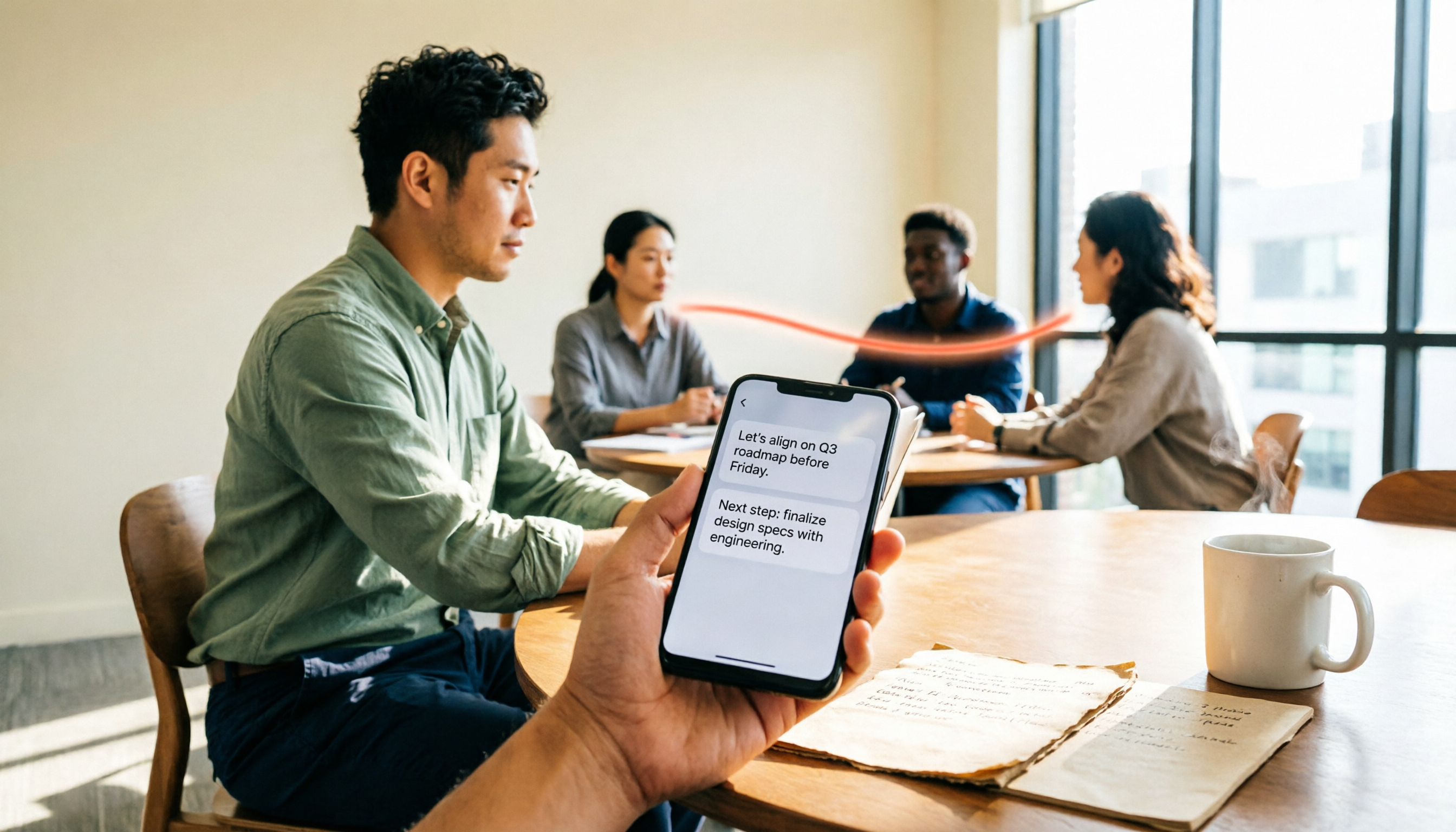
Tinrec vs Notta 2026: 5-Way Comparison for Xiaomi Phone Audio-to-Text
Compare the best audio-to-text apps for Xiaomi phones in 2026. We evaluate Tinrec and Notta across five dimensions: Chinese transcription, meeting capture, post-meeting organization, team collaboration, and pricing. Also includes positioning for Otter, Granola, TurboScribe, PLAUD, and the built-in recorder to help you find the most time-saving solution.