

Turn recordings into transcripts and summaries in minutes
Upload audio or video for multilingual transcription, AI notes, and action items
Meeting's over, but the transcript hasn't started
The hardest part of a Cantonese meeting is never understanding—it's that you understood but didn't write it down.
A 60-minute client interview with three people taking turns speaking, sentences mixed with Cantonese colloquialisms, English product names, and a few lines of Mandarin. You replay it afterward, pausing, rewinding, typing—two hours gone.
Worse, the organized files end up scattered: recordings on your phone, notes in Word, to-dos in group chats. Next week, when you need to find out "who agreed to what," you still have to listen from the beginning.
This article solves exactly that. Rather than looking for software that "turns sound into text," look for an online tool that turns meetings into searchable, handover-ready data.
Before Choosing an Online Transcription Tool, Understand These 5 Key Points
1. How it "listens" to your meeting
Some require file uploads, some send a bot to join online meetings, and some capture your computer's system audio directly. The difference lies in: whether you need to invite an extra participant, whether it can handle impromptu meetings, and whether the other party finds it odd.
2. Can it handle mixed Chinese-English?
Cantonese meetings are rarely pure Cantonese. A sentence may contain Cantonese, English proper nouns, and Mandarin—such sentences are most error-prone and best reveal a tool's true performance.
3. Does it output text or usable data?
If it only gives you a transcript, you still have to read through 60 minutes yourself. Only tools that provide summaries, chapters, and to-dos truly save time.
4. Does the team need to share?
Personal and team needs are completely different. Teams care about data ownership, member permissions, usage, and how data is handed over when members leave.
5. How is the free quota calculated?
Is it "N minutes per month" or "first N minutes per file"? Big difference. The former suits steady use; the latter suits try-before-you-buy.
Tinrec — The Top Choice After Real-World Testing
Tinrec is an AI meeting notes and collaboration tool for individuals and teams, available on web, desktop, and mobile. It doesn't just turn sound into text; it organizes meetings into searchable, summarizable, queryable, and exportable data.
Usable right during the meeting
For in-person meetings, start real-time recording and transcribe as you go. Online meetings are even easier—the desktop version captures computer system audio directly, handling Zoom, Google Meet, Microsoft Teams, Webex, and similar meetings without inviting a meeting bot. This is especially noticeable in client meetings: you don't have to explain "who that extra account is."
No need to read from the beginning after the meeting
After transcription, Tinrec generates summaries, chapters, and key points, and extracts to-dos from the discussion. The most painful part of long meetings is "I know there was a conclusion, but I don't know which minute it was in"—chapter structure solves exactly that. Mind maps are great for seeing relationships between to-dos and topics.
Ask questions about the meeting
This is where it stands out from most pure transcription tools. After recording, you can directly ask: "What were the conditions the client mentioned about the budget?" It answers based on the meeting content, rather than throwing a string of keywords for you to search yourself. Past meetings can also be cross-queried.
Mixed Chinese-English and cross-language
Tinrec covers Chinese, Traditional Chinese, and multilingual meeting scenarios, supports mixed Chinese-English content organization, and during recording you can switch between original text, translation, or bilingual view. The team version also maintains a glossary to pre-add product names, project codes, and other frequently misheard terms.
Team version keeps data within the team
Personal version data belongs to the individual account. The team version is a separate collaboration space: meeting data belongs to the team, you can create and switch between multiple teams, invite members via join links, set owners/admins/regular members, assign and reclaim seats, view usage trends and member details, plus audit logs, audio recycle bin, and team glossary. When a member leaves, their team resources are handed over to other active members and won't disappear with the account.
Stop organizing recordings by hand
Upload audio or video and automatically get a transcript, summary, and action items
Note that roles and seats are two different things: roles determine who can manage the team and view audits; seats determine whether one can record, upload, edit, import/export. Active members without seats can still view, play, and read team data, but cannot perform resource-usage operations.
Plans and pricing
Choose the personal version based on your usage rhythm: free version for occasional recording organization; weekly card for short-term intensive meetings or interviews; Pro monthly card for steady weekly needs; annual card for long-term data accumulation.
The team version offers a 7-day trial for first-time eligible users, 1 free seat, and 300 minutes of team shared import quota. Monthly payment is USD 29.80 per paid seat per month; annual payment is USD 199 per paid seat per year (equivalent to about USD 16.58 per month), with each paid seat providing 2,000 minutes of team shared import quota per month. Under an active team plan and active seats, real-time recording currently does not deduct minutes; file and web imports consume team shared quota. Actual prices and benefits are subject to the official purchase page.
Limitations and reminders
The free version is a basic quota; heavy users need to upgrade. Transcription quality is affected by recording quality, background noise, accents, simultaneous speakers, and technical terms. For important content, it's recommended to replay and verify with timestamps. Also, before recording, please confirm you have obtained participants' consent and comply with local regulations.
Who it's for
Those who have 2-3 Chinese or mixed Chinese-English meetings per week, want to get summaries and to-dos directly after meetings, and need to keep data with the team rather than on their own phone.
Besides Tinrec, What Other Options Are There?
Subanana: An online transcription service specializing in Cantonese. Upload audio files, videos, or paste YouTube links to produce speaker-separated, punctuated transcripts, with 4 combinations of spoken/written and Traditional/Simplified Chinese, and export to SRT, VTT, TXT, DOCX, XLSX, Markdown. It also supports direct recording in the browser. According to its official website, the first 15 minutes of each file can be previewed for free. If you only do subtitles and need fine control over spoken-to-written conversion, its positioning is clear. However, if you want post-meeting summaries, to-do extraction, AI Q&A, and team space, seats, and usage governance, these are not visible in its public documentation—that's exactly what Tinrec's team version handles.
Google Docs / Google Keep voice input: Completely free, suitable for short-sentence real-time dictation and temporary memos. But it doesn't support uploading long audio files, nor can it distinguish speakers—insufficient for real meeting notes.
Pitfalls Guide: The 3 Most Common Mistakes When Choosing Cantonese Transcription Software
Pitfall 1: Only looking at advertised accuracy numbers
Most tools tout a beautiful recognition rate, but that's usually measured in quiet environments, single language, and clear microphones. Real meetings have air conditioning noise, keyboard sounds, and three people talking over each other. Test with your own meeting recordings, don't just read the website copy.
Pitfall 2: Ignoring the "during the meeting" workflow
Many people only compare the quality of transcribed text, but forget to ask: how does this tool get the audio? If it requires sending a bot, external meetings will have an extra account; if it only supports post-meeting upload, you have to wait until the meeting ends to start processing. This step often affects whether you'll keep using it more than recognition rate.
Pitfall 3: Treating the transcript as the end goal
The transcript is just raw material. If the tool also provides summaries, chapters, and to-dos, you save not just an hour of typing but the entire meeting review time. Using only transcription is like using only one-third of the tool.
Conclusion: Which One Should You Choose?
In one sentence: If you want to "turn meetings into data you can keep working with," Tinrec is the more complete of the two options.
- Need to record online meetings without inviting a bot → Tinrec (desktop captures system audio)
- Meetings mainly in Chinese and mixed Chinese-English, need summaries and to-dos afterward → Tinrec
- Want to directly ask "what was the conclusion" after recording → Tinrec (AI Q&A)
- Team needs shared data, seat and usage management, member transition handover → Tinrec team version
- Only doing subtitles, need spoken-to-written conversion and multi-format subtitle files → Subanana
- Just short memos, zero budget → Google Docs voice input
We recommend running a segment with your own meeting recording first. The free quota is enough to experience one or two complete workflows; upgrade when it fits, no need to pay upfront.
References
- Free Cantonese audio-to-text app 2026 | Subanana
- Online AI speech, video, audio file auto transcription - free trial - cSubtitle
- Tested 4 best online speech-to-text tools, free instant audio-to-transcript
- SoundType AI ultra-accurate transcript, speech-to-text, AI dictation - Google Play
- 2026 latest 4 Cantonese audio-to-text tools: solving mixed Chinese-English and meeting notes pain points - Tinrec Blog
Turn every recording into actionable outcomes
Get 60 free transcription minutes when you sign in. No credit card required.
Related Reading
You might also like

2026 Free Cantonese Speech-to-Text Guide: 3 Steps to Pick the Right Tool + Tinrec Post-Meeting Workflow
I used to think any free tool would do, but Cantonese recordings came out as gibberish. Based on a student group discussion, this guide covers 3 steps to choose a tool, 2 free alternatives, and my experience using Tinrec for transcripts, AI summaries, action items, and post-meeting Q&A—helping you avoid fake-free traps and poor recognition.
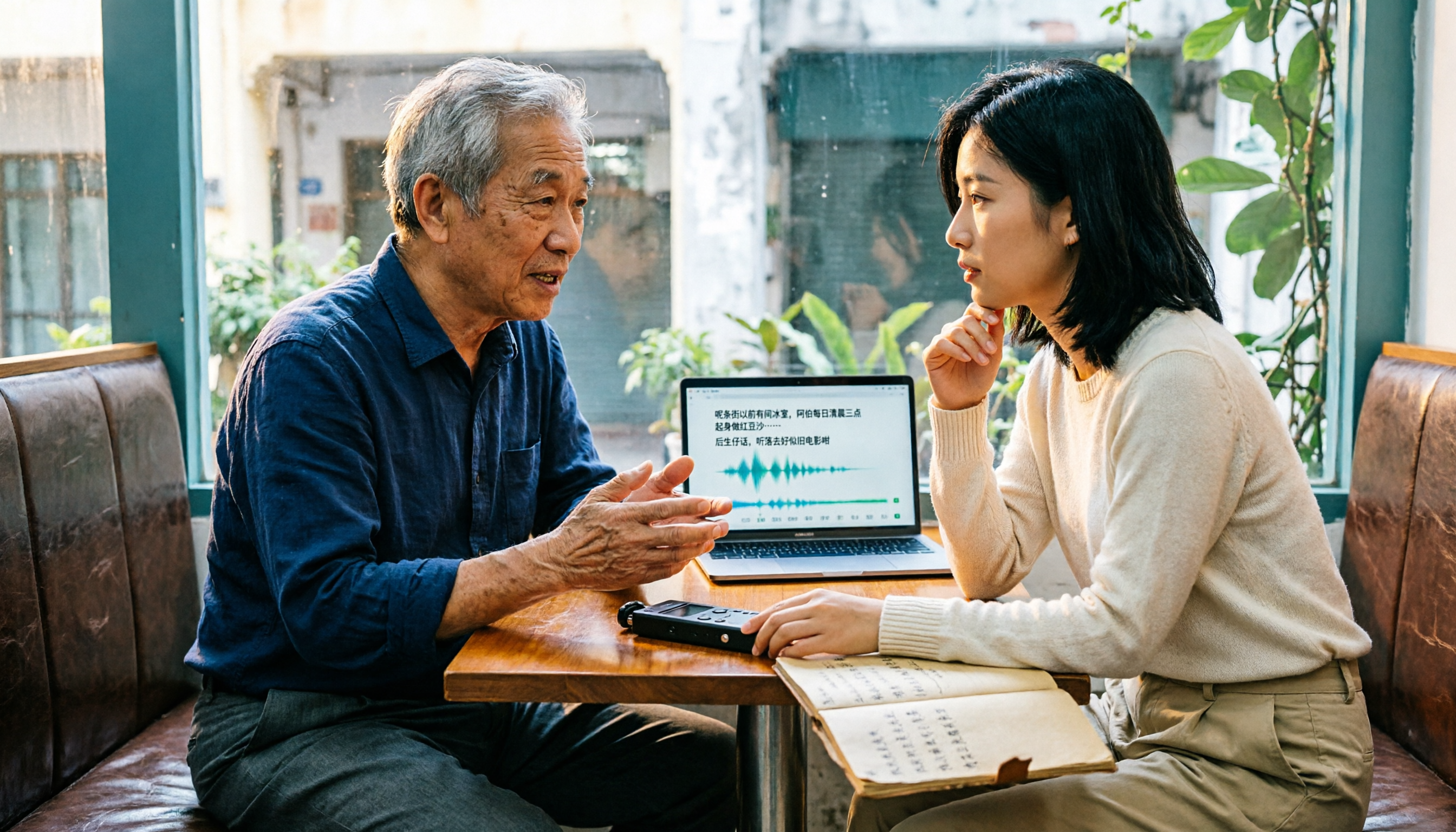
5 Free Cantonese Speech-to-Text Tools Tested for 2026: Which Offers the Best Free Tier and Cantonese Accuracy?
A comparison of five free or trial-based speech-to-text solutions that handle Cantonese audio, including Tinrec, cSubtitle, Subanana, Google AI Studio (Gemini), and Notta. We detail free quotas, Cantonese support, output formats, and ideal use cases to help you choose based on budget and post-meeting needs.

4 Cantonese Speech-to-Text Apps Tested for 2026: Which Free Tier Is Actually Enough?
Searching for 'Cantonese speech to text free' and downloading a bunch of apps, only to end up typing transcripts manually? The problem isn't free—it's the limits of free. We tested Tinrec, Subanana, cSubtitle, and Notely Voice with the same Cantonese meeting recording containing mixed Chinese and English, comparing their free rules, Cantonese recognition, output formats, and post-meeting usability. Plus, we cover 3 common pitfalls to help you complete a full task without spending money.

2026 Comparison of 2 Cantonese Speech-to-Text Apps: Tinrec vs Plaud Note — Which Is More Worth Recommending?
This article compares Tinrec and Plaud Note across 5 dimensions—Cantonese meetings, post-meeting organization, team collaboration, and cost barriers—to help you decide between a software workflow and a portable hardware recorder, with practical testing suggestions.

2026 Comparison of 5 Cantonese Speech-to-Text Apps: Which Free Tier Is Most Usable?
There are many free Cantonese speech-to-text apps, but the boundaries of 'free' vary widely. This article uses a real meeting recording workflow to compare the free tiers and post-meeting processing capabilities of Tinrec, Subanana, cSubtitle, Notely Voice, and other options. It outlines 3 key purchasing criteria and 4 common pitfalls, and provides clear recommendations based on short files, long meetings, and team collaboration.
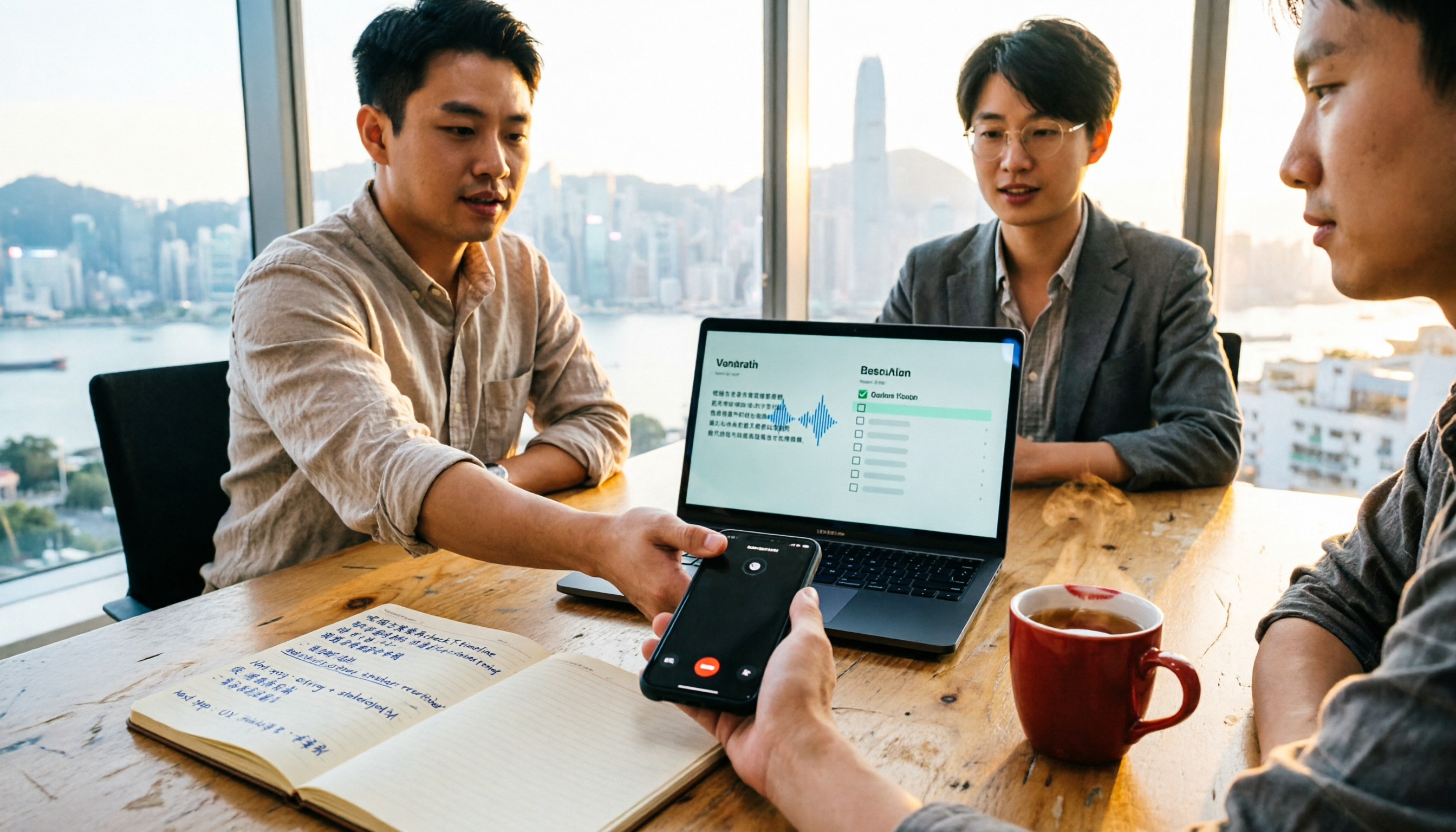
4 Best Cantonese Speech-to-Text Apps in 2026: Comparison of Transcripts, Free Tiers, and Export Formats
A side-by-side comparison of four Cantonese speech-to-text apps in 2026, with an in-depth look at Tinrec and Otter.ai regarding Cantonese and mixed Chinese-English recognition, meeting capture methods, post-meeting summaries and action items, export formats, free tiers, and team collaboration, helping you choose the right tool for your scenario.

Tinrec vs Notta 2026: 5-Dimension Comparison for Cantonese Audio Transcription and Post-Meeting Organization
Compare Tinrec and Notta across 5 dimensions for Cantonese online audio transcription, post-meeting organization, and team collaboration to determine which tool better fits your workflow.

2026 Cantonese Speech-to-Text Showdown: Tinrec vs Subanana for Your Meetings
Cantonese transcription often stumbles on two things: mixed Chinese-English speech and the need to organize the transcript afterward. This hands-on comparison of Tinrec, Subanana, Google Docs voice typing, and Yating covers meeting audio capture, post-meeting organization, export, team collaboration, and free tiers, with a deep dive into Tinrec vs Subanana to help you choose the right tool for your Cantonese meeting needs.

2026 Comparison of 3 Free Cantonese Speech-to-Text Tools: Which Is Best for Cantonese Transcripts and Post-Meeting Organization?
A hands-on comparison of three free Cantonese speech-to-text tools in 2026, evaluating Tinrec, Subanana, and cSubtitle across five dimensions: free quota, Cantonese and mixed Chinese-English recognition, post-meeting organization, online meeting support, and team collaboration. Practical selection advice is provided from the perspective of a mid-level manager.