

Turn recordings into transcripts and summaries in minutes
Upload audio or video for multilingual transcription, AI notes, and action items
At 5:30 PM, people file out of the meeting room, leaving you with a one-hour-and-forty-seven-minute recording. Your boss says, "Give me the meeting conclusions and action items by tomorrow morning," but you're thinking: where do I even start listening?
This isn't a listening problem; it's an information density problem. In a meeting, the truly useful content might only take ten minutes, but you have to listen to the whole thing to know where those ten minutes are hidden.
Recording summary tools are designed to solve this—turning "re-listening" into "scanning," and "I think someone mentioned it" into "just ask and get an answer."
Below, I'll use Tinrec as the main example to organize what these tools can actually do, how to choose one, and the differences between common approaches into a guide you can follow.
What Can Recording Summary Tools Do for You?
Scenario 1: Generate meeting minutes within five minutes after a meeting Previously, a two-hour meeting required another hour of post-meeting organization. With Tinrec, for example, the transcript is generated while recording, and after the meeting, AI has already organized the summary, chapters, and action items—who is responsible for what and when it's due is immediately clear.
Scenario 2: No need to listen to interview recordings from start to finish The most painful part of user interviews is re-listening to the entire recording just to find a quote. Tinrec keeps the full transcript and timeline, so you can first look at the summary to get the direction, then go back to verify the original statement, and have paragraphs for reference when quoting.
Scenario 3: Turn past meetings into a queryable database Questions like "What exactly did the client request in the last meeting?" used to require flipping through notes or asking colleagues. Tinrec supports AI Q&A around meeting content, using semantic search to find answers directly, without having to guess keywords with Ctrl+F.
Scenario 4: No need to wait for a translator in cross-language meetings For online meetings with mixed Chinese and English or multiple languages, Tinrec provides real-time translation, allowing you to switch between original text, translation, or bilingual view, so you can follow the content during the meeting.
What Are the Core Capabilities of Recording Summary Tools?
Real-time transcription It's not transcription after recording; text appears while recording. During a meeting, you can simultaneously check the text to confirm no key points are missed, and ask for clarification on unclear parts on the spot.
Bot-free recording of online meetings This is a difference many people overlook. Tinrec's desktop version directly captures the computer's system audio, processing meeting audio played from platforms like Zoom, Google Meet, Microsoft Teams, and Webex, without needing an extra bot account to join the meeting room.
Note that this does not mean "automatically joining all meetings on your calendar"—you still need to open Tinrec yourself to start recording.
AI summaries and chapters A good summary isn't just condensing the transcript into a paragraph; it's structured organization: what the meeting topic was, what conclusions were reached, and what remains undecided. Tinrec automatically splits chapters, so you can quickly skim even long meetings.
Action item extraction The easiest thing to miss in a meeting is "who does what." Tinrec organizes action items from the discussion, so you can confirm against the list right after the meeting without going back to the recording.
AI Q&A After transcription, you can ask questions directly—"What was the budget cap discussed?" "Which competitors did the client mention?"—and AI will answer based on semantics and cite the source paragraphs. This is something traditional recorders simply cannot do.
Export and post-processing Organized content should be portable. Tinrec supports export to common tools like Word, Notion, Google Docs, OneNote, and Dropbox, and can also output mind maps; when further output is needed, you can use Agent post-processing to generate reports, tables, and documents.
Practical Application Scenarios
Weekly stand-ups and project meetings Regular meetings are best for accumulation. Record each weekly meeting with Tinrec, and transcripts, summaries, and action items are automatically archived. Before the next meeting, scan the previous conclusions—much faster than scrolling through group messages.
Client interviews and requirements communication Clients often discuss requirements in a non-linear way, mixing complaints, expectations, and spontaneous ideas. Tinrec's transcript plus AI Q&A lets you ask a round of questions before writing a proposal: "What concerns does the client have about the delivery date?" "What budget range did they mention?"
Classes, lectures, and internal training In a two-hour class, the key points might only take twenty minutes. After recording with Tinrec, first look at the chapters and summary, and when you need to review, go back to the corresponding section—saving a lot of time compared to re-listening to the whole thing.
Stop organizing recordings by hand
Upload audio or video and automatically get a transcript, summary, and action items
Content creation and interview organization When writing articles, making podcasts, or videos, the most time-consuming part is often transcription. Tinrec directly converts audio files into editable text and can export to Notion for further processing, leaving time for the parts that truly require thinking.
Team knowledge retention If meeting materials are scattered on everyone's computers, data is lost when people leave. Tinrec's team version centralizes meeting recordings, transcripts, summaries, and action items in a team space. New members can view past meetings after joining, and resources can be handed over to other members when someone leaves.
5 Things to Consider When Choosing a Recording Summary Tool
1. Recognition performance for Chinese and mixed Chinese-English Meetings in Taiwan are rarely pure Chinese; they usually mix Chinese with English terms. When choosing a tool, it's best to test with a real recording from your company—more accurate than official numbers. Tinrec covers Chinese, Traditional Chinese, and multilingual scenarios, and offers a team hotword feature to add commonly used company terms and improve recognition of professional vocabulary.
2. Is the meeting "joined" or "recorded"? Some tools rely on a meeting bot joining as a participant, which can be awkward for external meetings or when clients don't want an extra account on the list. Tinrec takes the approach of capturing system audio on the desktop, so no extra participant appears.
3. Can you still use it after transcription? A tool with only transcripts just swaps typing work for reading work. When choosing, check whether there are summary, chapter, action item, and Q&A capabilities after transcription—that's where real time savings come from.
4. How is the quota calculated and how is pricing structured? Tinrec's personal version has a free tier with basic quota for体验. For short-term intensive use, consider a weekly card; for steady weekly needs, a Pro monthly card is suitable; for long-term data retention, the Pro annual card has a lower monthly equivalent.
The team version is priced per seat: monthly USD 29.80 per paid seat per month, annual USD 199 per paid seat per year (equivalent to about USD 16.58 per month). Eligible teams can enjoy a 7-day trial, 1 free seat, and 300 minutes of team shared import quota for the first time; paid seats provide 2,000 minutes of team shared import quota per month. Currently, real-time recording does not deduct minutes under an active team plan and active seat; file and web imports use the team shared quota. Actual prices and promotions are subject to the official purchase page.
5. Is the team permission design clear? The team version needs to distinguish between "roles" and "seats": roles determine who can manage members, audit, and team settings; seats determine whether members can record, upload, edit, and export. Active members without a seat can still view, play, and read team data, but cannot edit or upload.
Additionally, Tinrec's team version currently focuses on team-level sharing, not a fine-grained file-level permission system—confirm whether this meets your governance needs during evaluation. Administrators can also view usage trends, member rankings, export audit logs, and handle mistakenly deleted audio files through the audio recycle bin (retained for 30 days).
Frequently Asked Questions
Q1: Is the free version enough? It depends on how often you use it. For occasional meeting or class organization, the free version's basic quota is enough to experience the full process; if you have meetings to organize every week, a paid plan's quota will be more practical. We recommend running your own real recording through the free version first, then deciding whether to upgrade.
Q2: Which meeting platforms are supported? Tinrec's desktop version works by capturing computer system audio, so it can process meeting audio played on platforms like Zoom, Google Meet, Microsoft Teams, and Webex. Note that this does not mean official partnerships with these platforms; it records and transcribes audio played from the computer.
Q3: How accurate is Chinese transcription? Actual performance is affected by recording quality, ambient noise, accents, multiple people speaking simultaneously, and technical terminology—hard to summarize with a single number. A more reliable approach: use clear recordings, add team hotwords, and verify important content against transcript timestamps and recording playback.
Q4: What's the difference between the team version and the personal version? Personal version data is managed under an individual account; the team version is an independent collaboration space with member invitations, role and seat management, shared quota, usage analysis, audit logs, and an audio recycle bin. Team data belongs to the team, and when a member leaves, their responsible resources need to be handed over to other active members.
Q5: Can deleted recordings be recovered? Team version audio goes to the recycle bin and can be restored before permanent cleanup begins; the current retention period is 30 days. Note that action items are currently not covered by the recycle bin, so double-check before deleting.
Q6: What should I be aware of when using it? Recording and transcription involve others' conversations; handle according to local regulations and company policies, obtain consent from participants when necessary, and pay attention to data storage location and access permissions.
Conclusion
The value of recording summary tools is not turning sound into text, but turning "a meeting that disperses after it ends" into "a searchable, queryable, and transferable resource."
If you only occasionally need transcripts, try the free version once and you'll know if it fits; if you have meetings every week and your team often re-listens to recordings to figure out "what was said last time," it's worth spending some time trying Tinrec's full process—from recording, transcription, summary, action items to Q&A. After going through it once, you'll clearly understand which part of your time it saves.
References
- 2026 Comparison of 6 Recording Summary Tools: Which Saves the Most Overtime? - Tinrec Blog
- [AI Voice Notes] Top 5 AI Transcription Tools! Generate Transcripts and Meeting Notes, Free vs Subscription, Pros and Cons | 104 Job Bank
- Meeting Ink - 2026 AI Meeting Notes Tool Test | 7 Speech-to-Text and Summary Speed Comparison | Meeting Ink - AI Meeting Notes Assistant Automatic Transcription and Summary
- No Time Limit! 3 Free AI Transcription Tools, Highly Recommended! AI Voice Notes Generate Meeting Records, Presentations, Mind Maps | 104 Job Bank
- [Recording Notes Software] 2026 In-Depth Review of 6 Tools: How to Choose Meeting Summaries, Transcripts, and Action Items - Tinrec Blog
Turn every recording into actionable outcomes
Get 60 free transcription minutes when you sign in. No credit card required.
Related Reading
You might also like

2026 Comparison of 4 Automatic Meeting Summary Tools: Which Is More Practical—Free Quota or AI Follow-up Questions?
Just finished a meeting and realized no one took notes? This article starts with common inefficient practices and compares four automatic meeting summary tools—Tinrec, Otter.ai, Notta, and Granola—highlighting differences in free quotas, Chinese language performance, AI follow-up questions, and team data retention, helping you choose the one that truly saves time.

4 Auto-Generated Transcript Tools Tested: Which Saves the Most Time for Chinese Meetings in 2026?
Auto-generated transcripts are more than just converting audio to text. This article takes a practical workflow approach to explain that post-transcription summaries, action items, AI Q&A, and team knowledge retention are the real time-savers. Using Tinrec as an example, it breaks down real-time transcription, bot-free meeting recording, multi-format export, and team spaces, while highlighting four key pitfalls to avoid when choosing a tool and answering common questions.

5 Best Meeting Transcription Tools in 2026: Tinrec vs. Popular Options
How to choose a meeting transcription tool? This article compares Tinrec with common approaches, covering meeting capture, transcript organization, post-meeting workflows, and team collaboration. It also summarizes free tiers, team pricing, and purchasing considerations to help professionals and small teams find the right solution.

4 Audio Summary Tools Tested in 2026: Which Saves the Most Time on Chinese Meeting Summaries?
Starting from the pain points of actually organizing audio files, this comparison covers Tinrec, Notta, TurboScribe, and Granola's audio summarization workflows, free tiers, paid plans, and team collaboration capabilities to help you decide which one is best for Chinese meetings, interviews, and long audio file organization.

2026 Cantonese Speech-to-Text AI Comparison: Tinrec vs CantoSub vs Subanana — Which Turns Transcripts into Action Items?
Starting from real decision points in Cantonese meeting notes, this comparison examines Tinrec, CantoSub, and Subanana across Cantonese transcription, post-meeting organization, team collaboration, and free tiers to help you decide which fits your recording workflow.

How to Transcribe Cantonese iPhone Recordings in 2026: Built-in Transcript in 3 Steps + AI Meeting Summaries
A practical guide to transcribing Cantonese audio on iPhone, covering the built-in Voice Memos transcript in iOS 18.4 and Tinrec's AI summaries, action items, and team meeting organization, helping you choose the right tool for your needs.
2026 Cantonese Speech-to-Text AI Comparison: Which Tool Produces Usable Transcripts?
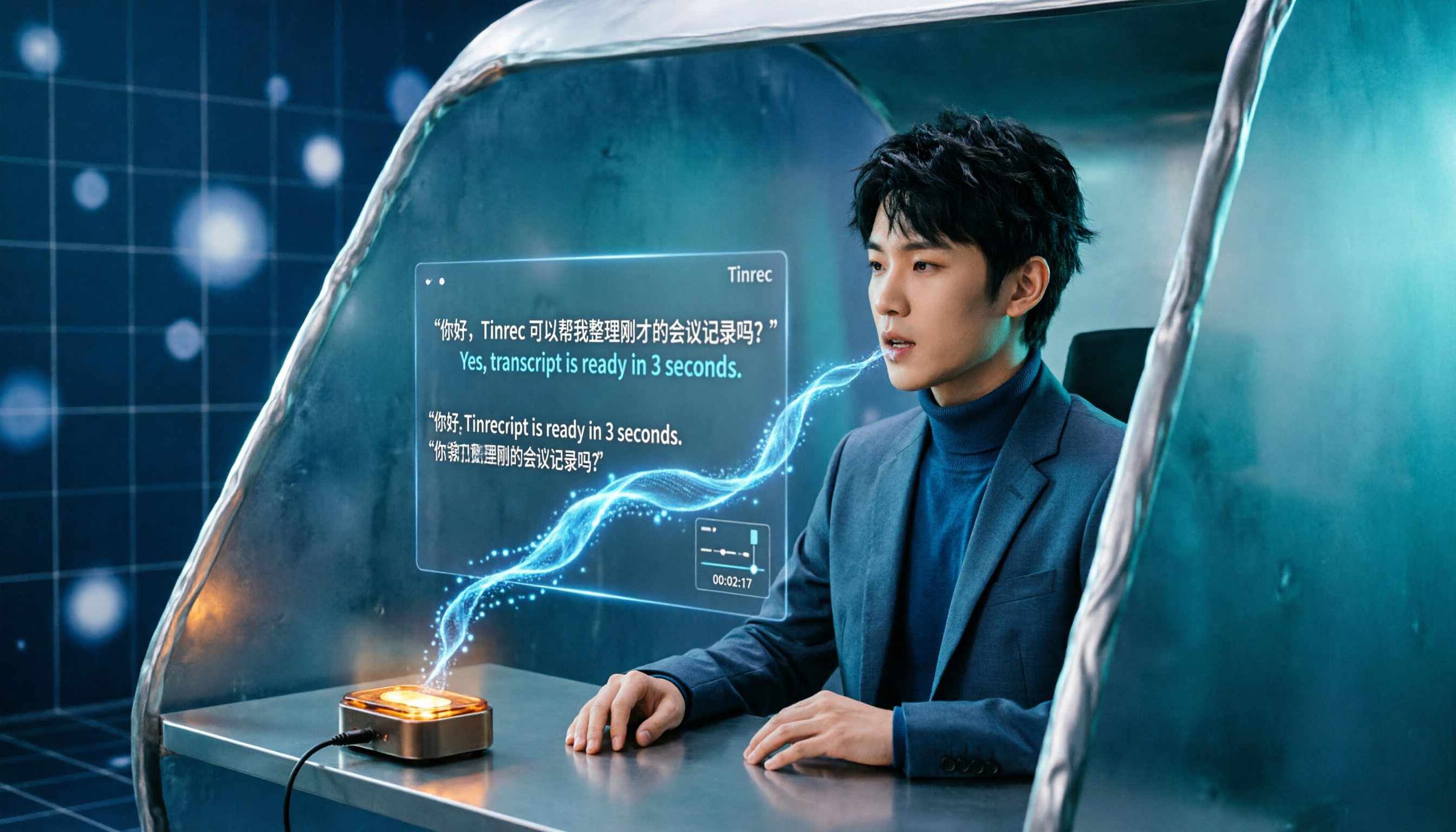
The challenge with Cantonese speech-to-text isn't whether AI can understand the language—it's converting spoken Cantonese to written Chinese, handling mixed Chinese-English, and post-meeting organization. This article addresses common misconceptions, outlines four key selection criteria, tests and compares Tinrec, Notta, PLAUD, and Otter.ai, and summarizes three common pitfalls and scenario-based recommendations.
iPhone Live Translation vs Tinrec in 2026: 5-Dimension Comparison — Which One for Cantonese Meetings?
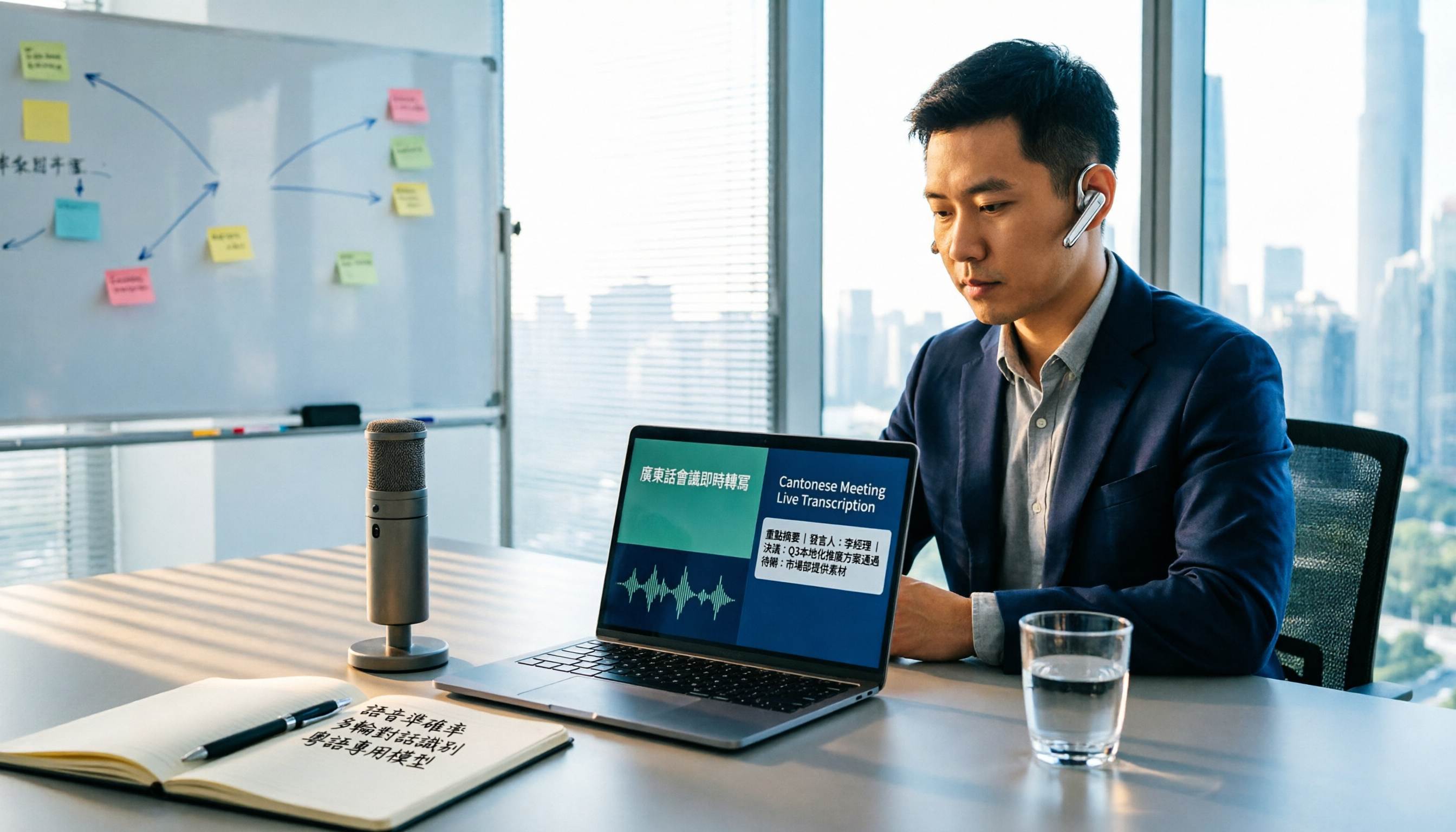
Can iPhone's built-in Live Translation handle Cantonese, and can it be used in Zoom meetings? This article compares it with Tinrec across 5 dimensions, from language barriers and meeting scenarios to post-meeting organization and team governance, to directly tell you which one to choose in which situation.

2026 Comparison of 3 iPhone Cantonese Speech-to-Text Solutions: Built-in, Dictation, and Tinrec — Which to Choose?
On iPhone, there are now three ways to turn Cantonese recordings into text: the built-in Voice Memos transcription, keyboard dictation, and AI meeting tools like Tinrec. This article compares features and workflows, starting with decision questions, then contrasting transcription scope, long meeting handling, post-meeting organization, cross-device export, and team collaboration, noting which data readers should verify themselves, and finally offering selection advice by use case.