
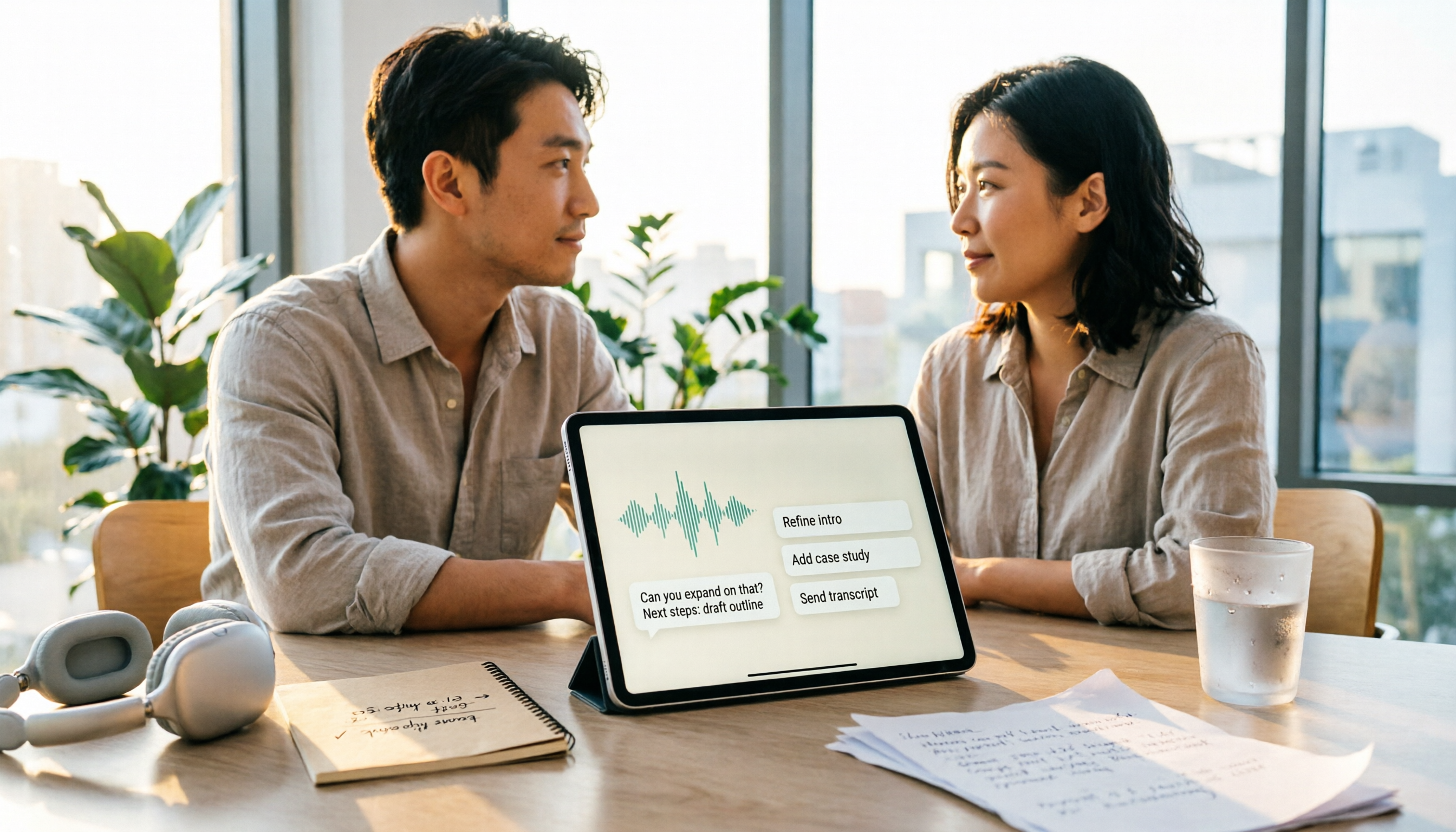
Turn recordings into transcripts and summaries in minutes
Upload audio or video for multilingual transcription, AI notes, and action items
When it comes to using a tablet for speech-to-text, the first thing you need to decide isn't which app to download.
It's this: in your workflow, is the tablet a "recording entry point" or an "organization workstation"?
These two roles lead to completely different choices. If it's just a recording entry point, you need stable recording, fast transcription, and files you can export. If it's a workstation, you need to see whether it can generate summaries after transcription, whether you can ask follow-up questions, and whether you can carry the data over to a computer to keep working.
I've seen too many people get stuck at this stage: they buy the tablet, install the app, record three times, and then it sits there. It's not that the tool is bad—it's that they didn't think through which part of the work it should take over.
Before Choosing a Tablet Speech-to-Text Tool, Understand These 5 Key Points
1. Is the tablet a recording device or a workstation?
Most people's real workflow is "record on tablet, organize on computer." So when choosing a tool, don't look at how pretty the tablet app is—look at whether the same data can continue across phone, tablet, computer, and web. Tools that can't cross over will just leave you with a pile of scattered recording files.
2. Chinese and mixed Chinese-English recognition performance
Meetings in Taiwan are rarely pure Chinese—they're usually something like "this campaign's ROI needs to be recalculated." If a tool can only recognize one language, the transcript becomes hard to read. Instead of looking at the official accuracy rate, try it with a recording of your own meeting—that's more accurate than any promotional number.
3. Can you use it right after transcription?
The transcript is just raw material. What really saves time is summaries, chapters, action items, and follow-up questions like "who said this and what was the conclusion?" If a service only gives you a big block of text, you still have to read through it yourself.
4. Are recordings kept, and can you find them again?
Some tools only keep text and not audio, so you can't verify a specific sentence later. This is especially critical for interviews, legal communications, and client meetings.
5. Pricing: by minutes or by seats?
For individual users, monthly minutes are enough. But if you're using it for a team, the rule becomes "paid seats × shared monthly quota," which is completely different from individual plans—mixing them up easily leads to miscalculations.
Tinrec — Our Main Choice After Hands-On Testing
Tinrec is an AI meeting notes and collaboration tool for individuals and teams, available on mobile, desktop, and web. Tablet use falls under the mobile scenario, mainly for recording and real-time transcription; when you're back at your desk, you can open the web or desktop version to continue organizing.
Real-time recording and transcription on tablet
For offline meetings, interviews, or classes, open Tinrec on your tablet and get a live transcript while recording—no need to spend an hour transcribing afterward. When the meeting ends, the summary and chapters are already on the same page, so you don't have to scroll through long meetings from the beginning.
The real value comes after recording: summaries, action items, AI Q&A
Tinrec automatically generates summaries, chapters, key points, and action items—who's responsible for what and when it's due, listed directly. Even better is AI Q&A: after recording, you can ask it "who mentioned the budget in the last meeting?" and it gives you answers based on semantic understanding, not keyword search results.
Cross-device and post-meeting output
Audio recorded on the tablet can be imported directly for organization, and it can also handle existing audio files from phones or recorders. After organizing, you can export to Notion, Google Docs, OneNote, Dropbox, and other tools, or use Agent post-processing to generate reports, tables, and meeting minutes. For cross-language meetings, there's real-time translation with options to view original, translated, or bilingual text.
The desktop version is a different division of labor
To record online meetings like Zoom, Google Meet, Microsoft Teams, or Webex, the Tinrec desktop version captures computer system audio directly—no need to invite an extra meeting bot. Note that the tablet can't do this; it requires the user to actively start recording on the computer, and it doesn't automatically join all calendar meetings. There's also no official partnership with these platforms.
About accuracy: we don't give fixed numbers
Stop organizing recordings by hand
Upload audio or video and automatically get a transcript, summary, and action items
Tinrec doesn't publicly promise a fixed accuracy rate, and we don't recommend using numbers like "98%" as a purchasing basis. Actual performance is affected by recording quality, ambient noise, accents, overlapping speakers, and technical terminology. A more honest statement is that it performs reliably with clear audio sources in quiet environments.
Limitations to be clear about
The free version has a basic quota, enough for light use; heavy users need to look at plans. Individual plans include Free, Weekly Pass, Pro Monthly, and Pro Annual—the principle is to choose by task: use Free for occasional transcription, Weekly Pass for short bursts of intensive meetings, and Pro if you have weekly needs.
Also, while the team version offers members, seats, usage analytics, and audit logs, it's team-level sharing, not fine-grained file-level permissions. Members without seats can view, play, and read data but cannot upload, edit, or export.
Who it's for
If you record meetings, interviews, or classes on a tablet and want to get summaries and action items right after recording—or even ask questions about the recording—Tinrec is currently the most complete option in terms of workflow.
Besides Tinrec, What Other Options Are There for Tablets?
Built-in platform transcription (iPad Notes, Samsung Galaxy Voice Transcribe Assistant)
Free, no installation, supports real-time Chinese and English transcription—handy for quick notes. But it's tied to a single device and system, and after transcription it stays in Notes with no summaries, action items, cross-meeting Q&A, and it's hard to build a long-term database.
Notta
A multi-platform transcription tool supporting meeting notes, file import, translation, and team plans. Free version: 120 minutes per month, max 3 minutes per session; Pro annual billing works out to about USD 8.17/month (1,800 minutes per month). Suitable for those mainly doing file transcription, but lacks Tinrec's Agent post-processing and team audit governance.
TurboScribe
A cost-effective file transcription service: free version allows 3 files per day, max 30 minutes per file; Unlimited annual plan is USD 120 (about USD 10/month), paid version supports up to 10 hours or 5 GB per file and up to 50 files at once. If you need to transcribe large volumes of long recordings, it's more suitable than Tinrec; but it's not a real-time meeting notes tool and lacks AI Q&A and action item extraction.
Pitfall Guide: The 5 Most Common Mistakes When Doing Speech-to-Text on a Tablet
Pitfall 1: Only looking at monthly free minutes, not the per-session limit. Some services seem generous with monthly quotas, but allow only 3 or 30 minutes per session—a two-hour meeting has to be uploaded in several parts. When choosing a tool, look at both numbers together.
Pitfall 2: Laying the tablet flat on the table as a universal microphone. When a tablet is flat, sound reflection is severe, and with air conditioning and keyboard noise, recognition quality drops noticeably. Elevating it, placing it closer to speakers, or using an external microphone makes a big difference.
Pitfall 3: Thinking the transcript is the end. Using the tool only as "audio-to-text" means you're using only a third of its capabilities. The real time savings happen with summaries, action items, and follow-up questions.
Pitfall 4: Treating built-in transcription as a long-term database. It doesn't cross devices, is hard to export, and breaks when you switch devices. Fine for temporary notes, not for formal meeting records.
Pitfall 5: Sharing one personal account across a team. Personal account data belongs to the individual and leaves with them. The team version is a separate team space where data belongs to the team; roles govern administration, seats determine access, and when members change, handover is possible—data doesn't disappear.
One final reminder: recording and transcription involve other people. Before use, please ensure compliance with local regulations and obtain consent from participants when necessary.
Conclusion: Which One Should You Choose?
In one sentence: The tablet records, the tool organizes, and everything must flow back into your workflow.
- Record on tablet, need summaries and action items afterward → Tinrec
- Want to ask the recording "who mentioned the budget last time?" → Tinrec (AI Q&A)
- Use phone, tablet, and computer interchangeably → Tinrec (mobile + desktop + web)
- Don't want a bot in online meetings → Tinrec desktop system audio recording
- Only occasional class notes, no cross-device needs → iPad Notes or Galaxy built-in transcription is enough
- Batch transcribe large volumes of long audio files → TurboScribe
- Turn Chinese meeting records into team assets → Tinrec Team version
The current team version terms: eligible teams can try free for 7 days with 1 free seat and 300 minutes of shared team import quota; monthly billing is USD 29.80 per paid seat per month, annual billing is USD 199 per paid seat per year (about USD 16.58/month), with each paid seat providing 2,000 minutes of shared team import quota per month. Under an active team plan and active seats, real-time recording currently does not deduct minutes. Prices and benefits are subject to the official purchase page.
My own recommendation: first run a real meeting recording through the free version to see if the transcript is readable and whether the summary captures the key points. Upgrade if it works for you—no need to pay upfront.
References
- Speech to Text - Google Play App
- 7 Free and Useful Speech-to-Text Tools [for Android/iOS/Windows]
- Tested 4 Best Online Speech-to-Text Tools: Free Instant Audio Transcription
- Recommended Real-Time Speech-to-Text Apps: 1. iPhone/iPad Notes App - Supports real-time text conversion - Cost: Free - Supports Chinese and English
- How to Use Voice Transcribe Assistant on Galaxy S24 - Samsung
Turn every recording into actionable outcomes
Get 60 free transcription minutes when you sign in. No credit card required.
Related Reading
You might also like

4 Free AI Meeting Notes Tools in 2026: Free Plans & Chinese Meeting Comparison
Long meeting recordings and post-meeting note-taking are pain points for most office workers. This article compares four free AI meeting notes tools—Tinrec, Otter.ai, Granola, and Notta—covering free plans, Chinese meeting performance, post-meeting output, and team collaboration differences, with buying and pitfall-avoidance advice.

How to Do Online Audio Transcription in 2026: 5 Steps from Recording to Team Transcript
Online audio transcription tools are not just about speed. This article compares two common approaches—Tinrec and Otter.ai—across Chinese meeting handling, bot-free recording, post-meeting organization, and team knowledge retention, with a 5-step implementation guide and FAQs.

5 AI Summarization Tools Tested: Which Handles Meeting Recordings, Long Articles, and Videos Most Efficiently in 2026?
Meeting just ended and you're already being asked for key points? Need to read a dozen long articles before writing a report? This article compares 5 AI tools I've actually used that can generate summaries—from audio transcription to article summarization to post-meeting Q&A—with buying tips, free tier limits, and common pitfalls to avoid.

iPhone Live Voicemail vs. Tinrec in 2026: 3 Misconceptions About Call Forwarding to Voicemail and Better Ways to Organize
When iPhone misses a call but no voicemail appears, it's often due to roaming or Low Power Mode. This article breaks down 3 common misconceptions, explains the correct setup order for Live Voicemail, and from a student's practical perspective, shows how Tinrec fills the gap for organizing class and meeting recordings that voicemail can't handle.

4 Speech-to-Text Tools Compared for 2026: WeChat Voice-to-Text Not Working? Here's What to Use for Long Recordings
WeChat voice-to-text suddenly not working? Don't rush to restart your phone. This guide walks you through troubleshooting permissions, version, network, and audio length, then compares Tinrec, Notta, TurboScribe, and Otter.ai on features and pricing for long recording organization, helping you decide when to use built-in tools for quick voice messages and when to switch for long recordings.
2026 Comparison of 5 iFlytek Voice Recorders for Transcription: SR502, SR702, S6, S8, and Tinrec
A breakdown of transcription methods and limitations for iFlytek SR502, SR702, S6, S8, and SR301, clarifying common misconceptions about online/offline transcription, live interpretation, and lifetime free service, with a comparison to AI meeting tools like Tinrec to help you decide between hardware and software.
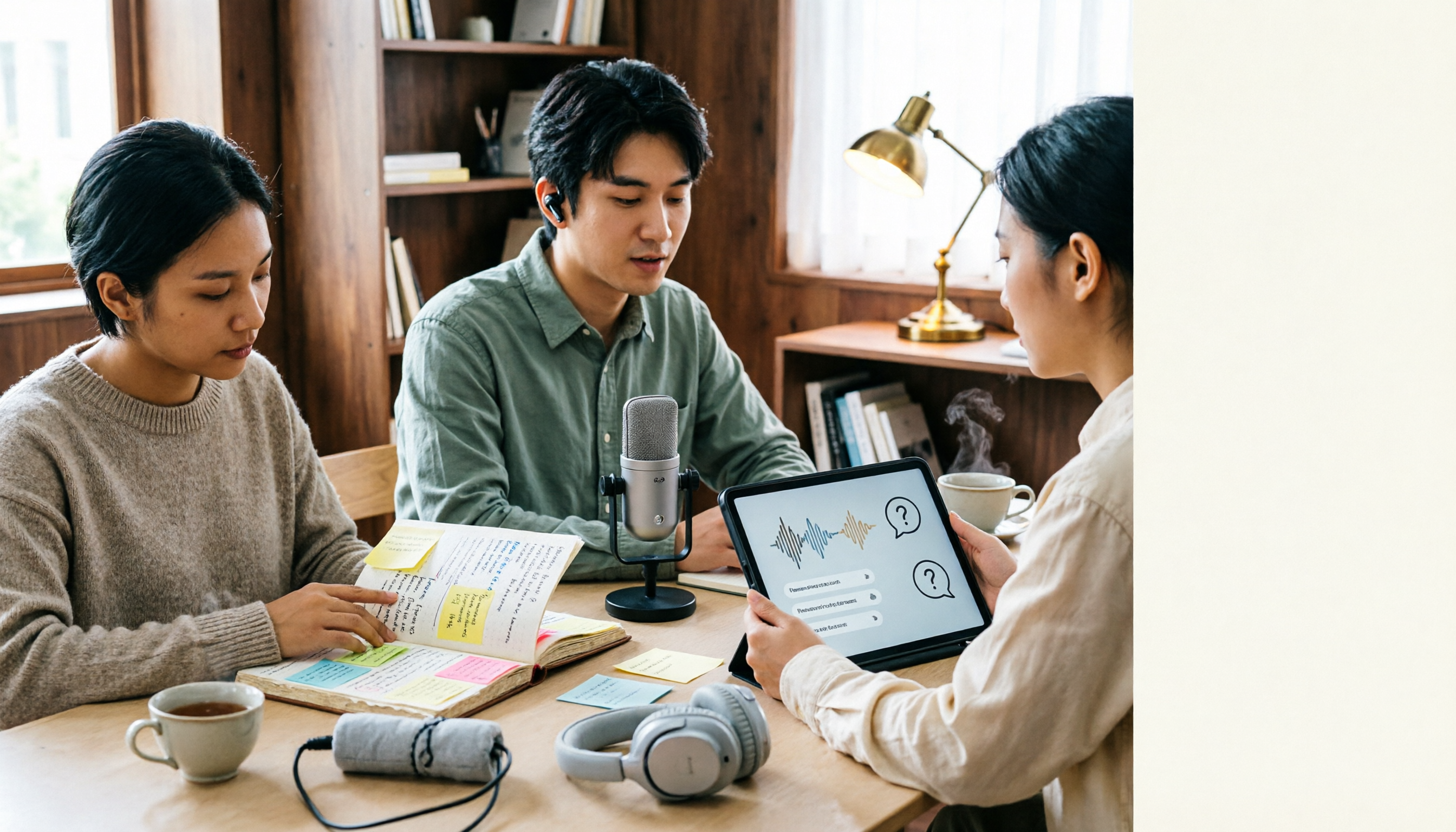
The Complete Guide to Xiaohongshu Content Summaries in 2026: How to Organize Notes, Videos, and Recordings
What's the most efficient way to create Xiaohongshu content summaries? This article breaks down workflows for organizing image-text notes, short videos, and audio materials, explains 4 key decision factors, tests Tinrec's transcription, summarization, and AI Q&A workflow, compares Otter.ai, Notta, and TurboScribe's use cases and official pricing, and finally lists the 4 most common mistakes.

Tinrec vs Notta 2026: 5-Dimension Comparison for Chinese Meeting Minutes — Which Should Your Company Choose?
Starting from what makes a qualified corporate meeting minutes document, this hands-on comparison tests Tinrec, Notta, Otter.ai, and Granola on Chinese recognition, post-meeting organization, online meeting capture methods, and team data retention. It also covers the 4 most common mistakes in writing meeting minutes to help you choose the truly time-saving approach.
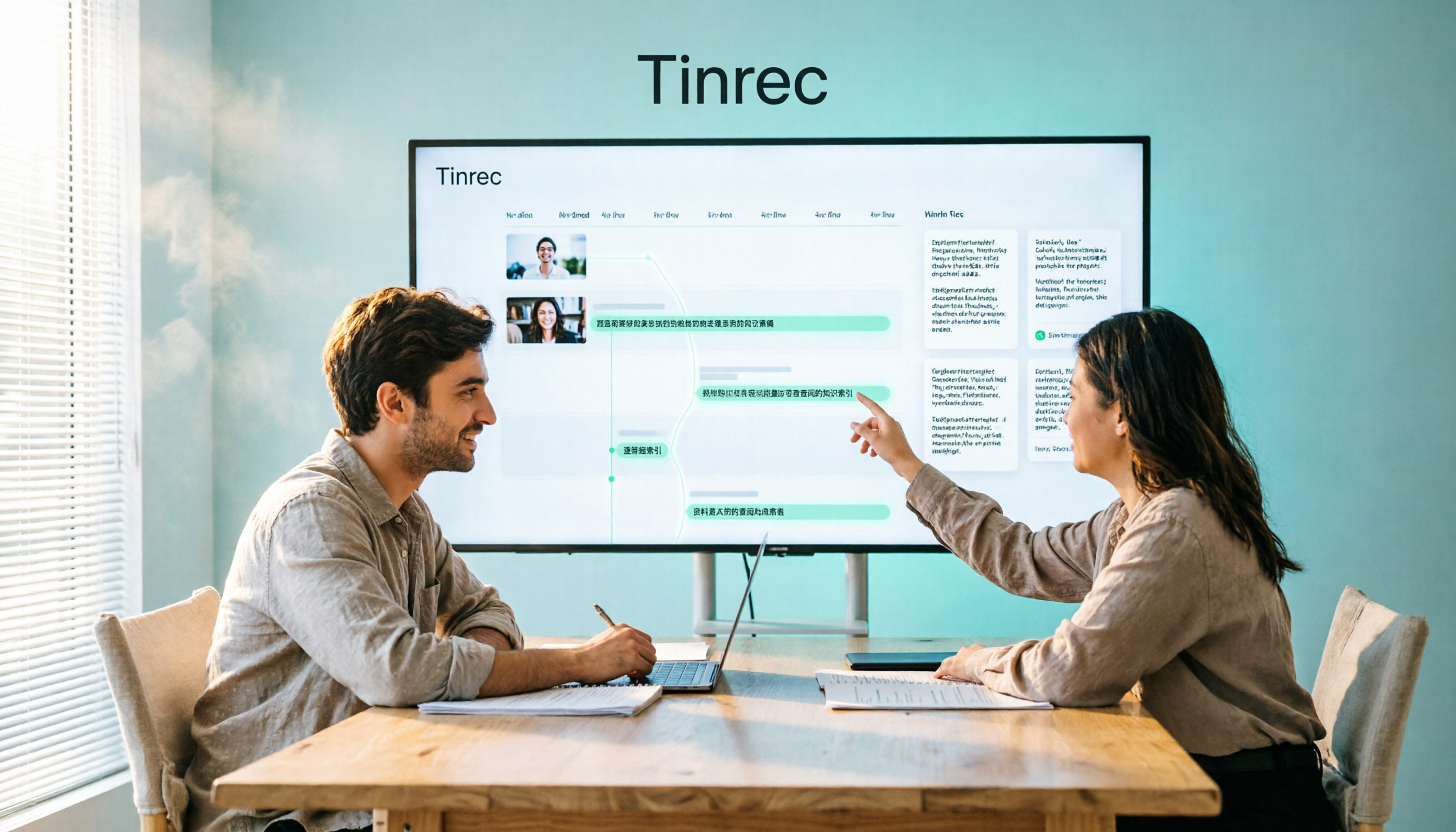
5 Best Long Video to Text Tools in 2026: How Tinrec Turns Hours of Video into Searchable Data
The real challenge with long video transcription isn't generating a transcript—it's that no one has time to read it afterward. This article addresses common misconceptions, explains a sensible workflow for transcribing long videos, and focuses on Tinrec as the main example while comparing it with Vidnoz, Wayin AI, VEED, and cSubtitle. It covers features, team collaboration, quotas, and buying considerations to help you decide based on your actual needs.