

Turn recordings into transcripts and summaries in minutes
Upload audio or video for multilingual transcription, AI notes, and action items
4 Free AI Meeting Notes Tools in 2026: Free Plans & Chinese Meeting Comparison
Data verified: August 18, 2026. Free plans, prices, and features may change; refer to each product's official page.
The Pain Starts After the Meeting—You Need Usable Meeting Notes, Not Just a Recording
A two-hour project meeting just ended on Friday afternoon, and the recording is 1 hour 47 minutes. You need to submit meeting notes Monday morning. You open the audio, drag the timeline from the start, replay when multiple people talk over each other, and pause whenever someone switches between Chinese and English.
The bigger problem: a recording only captures the conversation. It doesn't tell you what was decided, who is responsible, or when the next step is due. You don't just need a recording tool—you need a workflow that turns recordings into notes, action items, and searchable data.
This article compares four AI meeting notes tools with free plans, focusing on Chinese meetings, post-meeting output, free limits, and team collaboration.
5 Key Points to Understand Before Choosing an AI Meeting Notes Tool
1. Chinese and mixed Chinese-English recognition. Many tools are strong in English but drop words in Chinese, especially with proper nouns, Taiwanese or Hakka accents, and overlapping speakers. Instead of relying on official accuracy claims, test with your own work recordings. Tinrec focuses on Chinese, Traditional Chinese, and mixed Chinese-English meetings; actual results still depend on audio quality and accents.
2. How the meeting is recorded. Online meetings usually use one of two methods: a meeting bot joins the meeting, or a desktop app captures system audio directly. The former is convenient but adds another participant; the latter requires no bot but you must start recording yourself. Tinrec's desktop app uses the latter, suitable for those who don't want a bot joining Zoom, Meet, or Teams.
3. Is the post-meeting output sufficient? A transcript is just raw material. Check whether the tool can automatically generate summaries, chapters, key points, and action items, or even let you ask questions about the meeting content. Tinrec puts summaries, chapters, action items, mind maps, and AI Q&A into one workflow, making post-meeting organization easier.
4. How to evaluate free quotas. Don't just look at "minutes per month." Also check single-file length, daily upload limits, export availability, and feature restrictions. For example, some tools offer 120 free minutes per month but limit each upload to 3 minutes. Tinrec's free plan provides a basic quota to try recording, importing, summaries, and transcription; actual quotas are subject to the official website.
5. Team data ownership and permissions. If meeting data lives only in personal accounts, it can be lost when members leave or switch projects. Team plans should distinguish members, roles, and seats so data belongs to the team. Tinrec's team plan puts meeting data in an independent team space, allowing resource handover when members change—friendlier for departments or project teams.
Tinrec—Our Top Pick After Testing
Tinrec is an AI meeting notes and collaboration tool for individuals and teams, available on web, desktop, and mobile. It doesn't just convert audio to text; it turns meetings into searchable, summarizable, queryable, and exportable data.
During meetings, you can record and transcribe in real time. For online meetings, the desktop app captures computer system audio, handling Zoom, Google Meet, Microsoft Teams, and Webex without inviting a meeting bot. Note: this is not "automatically joining all meetings"—you actively open Tinrec desktop to start recording. For cross-language meetings, you can enable real-time translation and view original, translated, or bilingual text.
After the meeting, Tinrec generates transcripts, AI summaries, chapters, key points, and action items, and can create mind maps. You can ask questions directly about the meeting content, such as "Who mentioned the budget in this meeting?" It organizes answers based on meeting data, so you don't have to search the transcript yourself. For post-meeting deliverables, Agent post-processing can generate reports, tables, and documents, and export to Notion, Google Docs, OneNote, Dropbox, and other tools.
Stop organizing recordings by hand
Upload audio or video and automatically get a transcript, summary, and action items
For team use, the team plan provides an independent team space where meeting data belongs to the team; roles determine who can manage the team, members, and audits; seats determine who can record, upload, edit, and import/export. Valid members without seats can still view, play, and read team data. The team plan also offers team hotwords for maintaining professional terminology. Team monthly billing is USD 29.80 per paid seat per month; annual billing is USD 199 per paid seat per year (about USD 16.58/month). Each paid seat includes 2,000 minutes of team shared import quota per month; under an active plan and seat, real-time recording currently does not deduct minutes. The first eligible team trial is 7 days, 1 free seat, and 300 minutes of team shared import quota.
Limitations to note: the free plan has only a basic quota; heavy use requires payment. Transcription quality is affected by audio quality, accents, noise, overlapping speech, and technical terms; do not rely on AI notes as the only version. The team plan is team-level sharing with role and seat governance, not fine-grained document permissions.
Overall, Tinrec is best for Chinese meetings, mixed Chinese-English discussions, bot-free online meeting recording, and those who want to use AI Q&A and team spaces to retain data after meetings.
Besides Tinrec, What Other Options Are There?
Otter.ai: A mature English meeting assistant. Basic is free with 300 minutes per month; Pro annual billing is about USD 8.49/user/month, including 1,200 minutes per month and 10 file imports. It excels in English business meetings and Zoom, Meet, Teams integration. If you mainly record English, the free quota is a good deal. But Chinese meeting recognition and organization is not its strength; Tinrec is more suitable for mixed Chinese-English, Traditional Chinese, and team data retention.
Granola: Basic is free; Business is USD 14/user/month. Like Tinrec, it uses bot-free desktop audio capture, but Granola does not support uploading pre-recorded audio files and does not save meeting audio. If you need to keep recordings, import files afterward, and organize notes in Chinese, Tinrec is more complete; Tinrec can also export results to Notion, Google Docs, and other tools.
Notta: Free is 120 minutes per month, but each upload is limited to 3 minutes; Pro annual billing is about USD 8.17/month with 1,800 minutes per month; Business annual billing is about USD 16.67/seat/month. It suits multilingual transcription and file organization, but the free plan's 3-minute limit per upload is not enough for real meetings. Tinrec offers bot-free online meeting recording, team spaces, and Agent post-meeting output, more complete for Chinese meetings and team data retention.
Pitfall Guide: 4 Common Mistakes When Choosing an AI Meeting Notes Tool
Pitfall 1: Only looking at free minutes, ignoring single-file and feature limits. Some tools seem to offer large free quotas, but each session can only handle a few minutes, or export requires payment. Instead of comparing total minutes, first calculate how long your meetings are, how many you have per week, and whether you need export and team sharing.
Pitfall 2: Treating transcripts as meeting notes. Transcripts are raw material; notes should include discussion highlights, decisions, action items, owners, and deadlines. Tinrec automatically generates summaries, chapters, and action items, and lets you ask follow-up questions via AI Q&A—much faster than manually searching transcripts.
Pitfall 3: Ignoring Chinese and accent testing. Many tools perform well in English meetings but drop words in Chinese. Test with a real meeting recording, especially mixed Chinese-English, proper nouns, and overlapping speakers. Tinrec focuses on Chinese meetings, but still verify important content against the original text and recording.
Pitfall 4: Ignoring team data ownership and seats. Sharing meeting data via personal accounts is convenient short-term but leads to scattered data and lost access when members leave. Tinrec's team plan puts data in a team space and manages usage permissions via roles and seats; confirm member count and seat needs before purchasing.
Conclusion: Which One Should You Choose?
In one sentence: if you want "usable meeting notes directly after recording," Tinrec is the top pick in this article.
- Need summaries and action items for Chinese and mixed Chinese-English meetings → Tinrec.
- Don't want a meeting bot in online meetings → Tinrec desktop app, start recording manually.
- Want to use AI Q&A to find key points, generate reports or tables after meetings → Tinrec.
- Team needs to share meeting data, hand over when members change, and managers need usage and audit views → Tinrec team plan.
- Mainly record English meetings with zero budget → Otter.ai Basic is a reasonable exception, free 300 minutes per month.
- Need batch transcription of long documents → look for dedicated transcription tools; real-time meetings and team data retention are not their focus.
We recommend starting with the free plan and testing Chinese recognition, summary structure, and action items with a real meeting to see if they fit your workflow. Free quotas and prices are subject to official pages; no need to pay upfront.
Data verified: August 18, 2026.
References
- AI Meeting Notes Generator
- Master Meeting Notes! How to Use AI Speech-to-Transcript? Gemini Notebook, Gemini, EchoScript Operation Analysis | 104 Career Power
- AI Meeting Minutes Generator – Create Meeting Minutes for Free
- 2026 Latest 6 AI Meeting Notes Tools: Solving Project Discussion Recording-to-Text and Action Item Challenges - Tinrec Blog
- Want to Improve Meeting Efficiency? 6 AI Recording Tools to Automatically Generate Notes and Action Items - Tinrec Blog
Turn every recording into actionable outcomes
Get 60 free transcription minutes when you sign in. No credit card required.
Related Reading
You might also like

How to Do Online Audio Transcription in 2026: 5 Steps from Recording to Team Transcript
Online audio transcription tools are not just about speed. This article compares two common approaches—Tinrec and Otter.ai—across Chinese meeting handling, bot-free recording, post-meeting organization, and team knowledge retention, with a 5-step implementation guide and FAQs.

5 AI Summarization Tools Tested: Which Handles Meeting Recordings, Long Articles, and Videos Most Efficiently in 2026?
Meeting just ended and you're already being asked for key points? Need to read a dozen long articles before writing a report? This article compares 5 AI tools I've actually used that can generate summaries—from audio transcription to article summarization to post-meeting Q&A—with buying tips, free tier limits, and common pitfalls to avoid.

iPhone Live Voicemail vs. Tinrec in 2026: 3 Misconceptions About Call Forwarding to Voicemail and Better Ways to Organize
When iPhone misses a call but no voicemail appears, it's often due to roaming or Low Power Mode. This article breaks down 3 common misconceptions, explains the correct setup order for Live Voicemail, and from a student's practical perspective, shows how Tinrec fills the gap for organizing class and meeting recordings that voicemail can't handle.

4 Speech-to-Text Tools Compared for 2026: WeChat Voice-to-Text Not Working? Here's What to Use for Long Recordings
WeChat voice-to-text suddenly not working? Don't rush to restart your phone. This guide walks you through troubleshooting permissions, version, network, and audio length, then compares Tinrec, Notta, TurboScribe, and Otter.ai on features and pricing for long recording organization, helping you decide when to use built-in tools for quick voice messages and when to switch for long recordings.
2026 Comparison of 5 iFlytek Voice Recorders for Transcription: SR502, SR702, S6, S8, and Tinrec
A breakdown of transcription methods and limitations for iFlytek SR502, SR702, S6, S8, and SR301, clarifying common misconceptions about online/offline transcription, live interpretation, and lifetime free service, with a comparison to AI meeting tools like Tinrec to help you decide between hardware and software.

The Complete Guide to Xiaohongshu Content Summaries in 2026: How to Organize Notes, Videos, and Recordings
What's the most efficient way to create Xiaohongshu content summaries? This article breaks down workflows for organizing image-text notes, short videos, and audio materials, explains 4 key decision factors, tests Tinrec's transcription, summarization, and AI Q&A workflow, compares Otter.ai, Notta, and TurboScribe's use cases and official pricing, and finally lists the 4 most common mistakes.
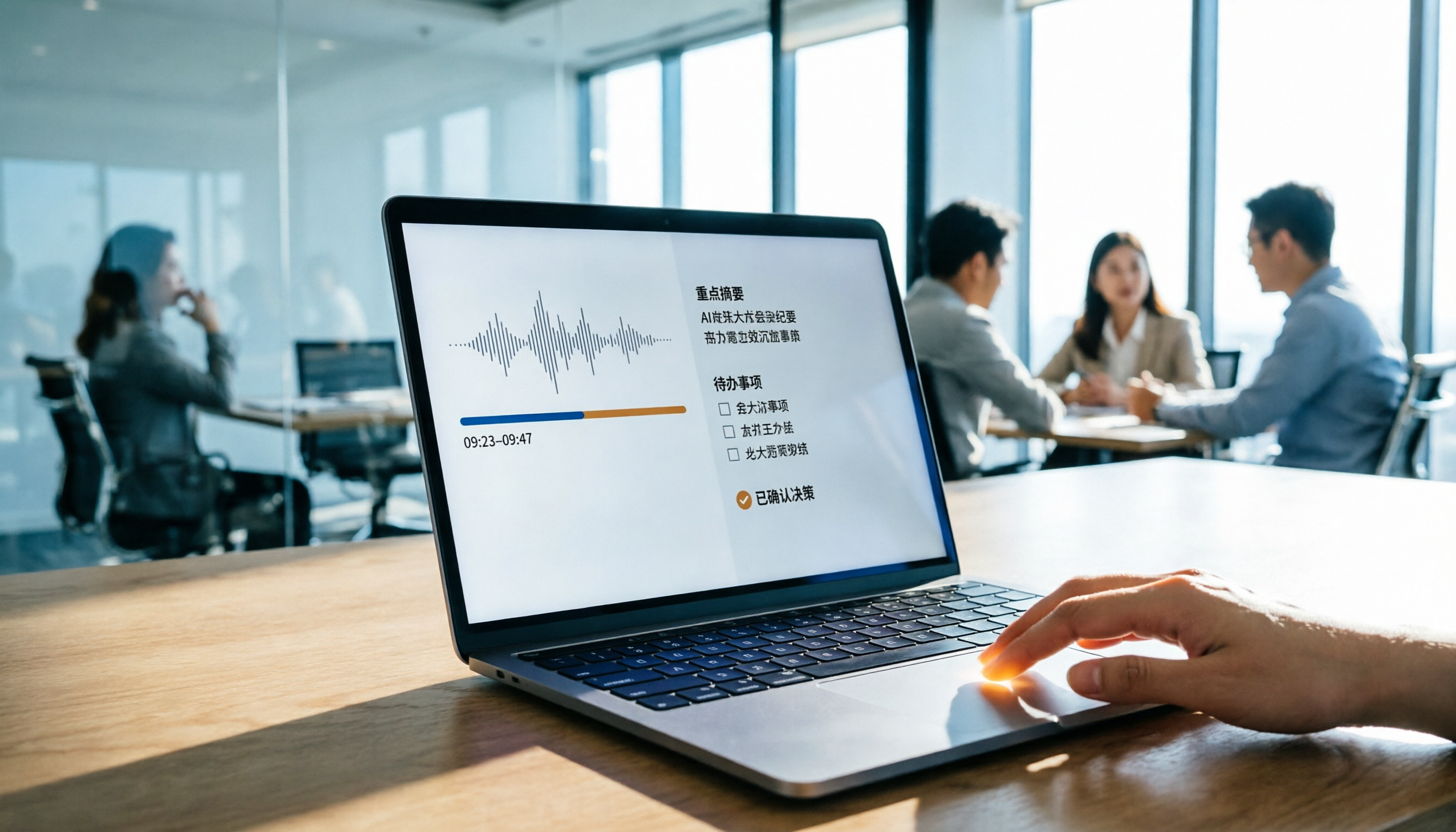
Tinrec vs Notta 2026: 5-Dimension Comparison for Chinese Meeting Minutes — Which Should Your Company Choose?
Starting from what makes a qualified corporate meeting minutes document, this hands-on comparison tests Tinrec, Notta, Otter.ai, and Granola on Chinese recognition, post-meeting organization, online meeting capture methods, and team data retention. It also covers the 4 most common mistakes in writing meeting minutes to help you choose the truly time-saving approach.
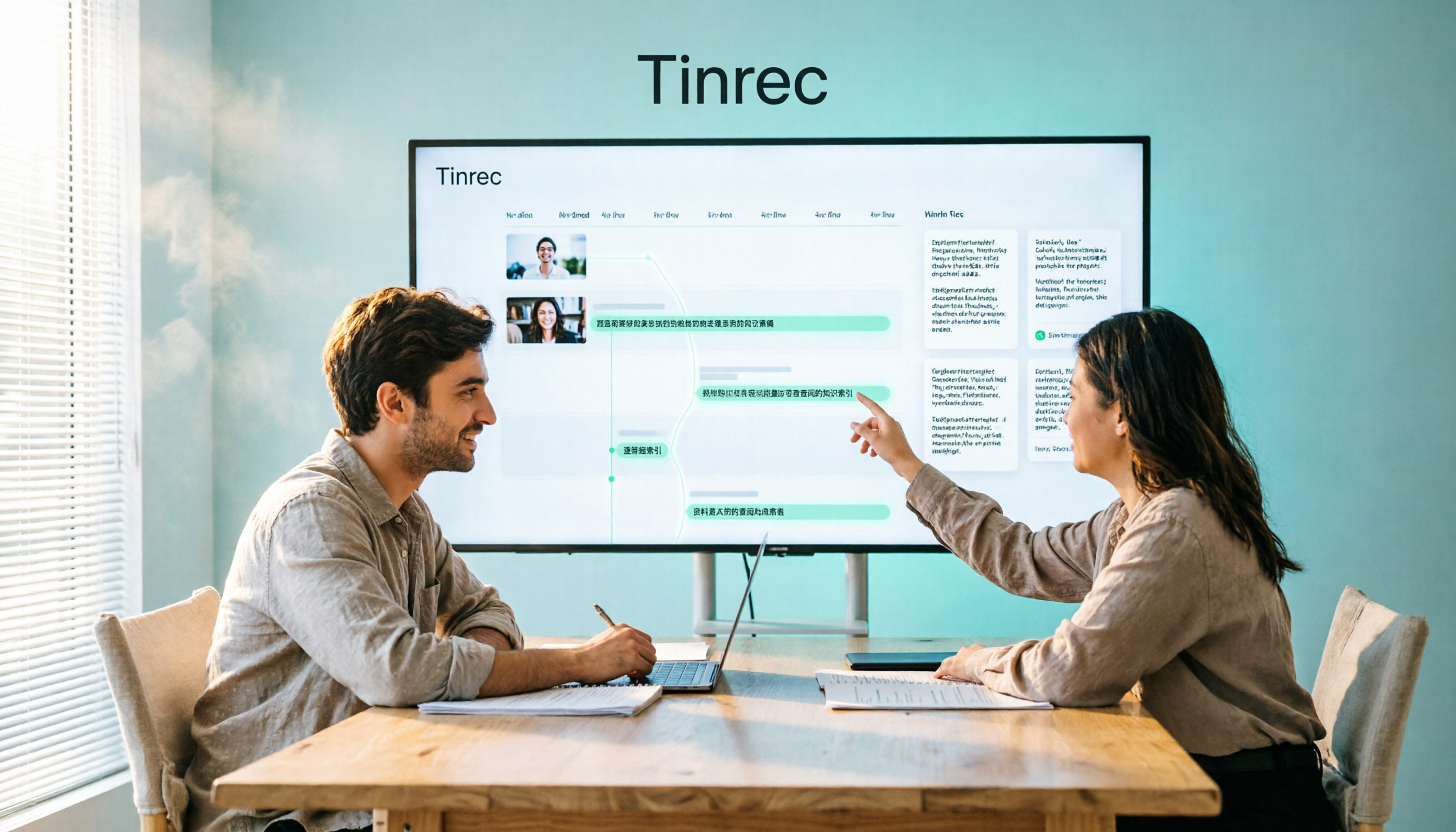
5 Best Long Video to Text Tools in 2026: How Tinrec Turns Hours of Video into Searchable Data
The real challenge with long video transcription isn't generating a transcript—it's that no one has time to read it afterward. This article addresses common misconceptions, explains a sensible workflow for transcribing long videos, and focuses on Tinrec as the main example while comparing it with Vidnoz, Wayin AI, VEED, and cSubtitle. It covers features, team collaboration, quotas, and buying considerations to help you decide based on your actual needs.

4 Real-Time Transcription Apps Tested for 2026: Which Saves the Most Time in Chinese Meetings?
Starting from real meeting pain points, we compare Tinrec, Otter.ai, Notta, and Granola on real-time transcription, Chinese language handling, post-meeting organization, team collaboration, and pricing to help you decide which one best fits your meeting scenario.