

Turn recordings into transcripts and summaries in minutes
Upload audio or video for multilingual transcription, AI notes, and action items
The moment a meeting ends, what you need most isn't the recording file
It's 3 PM on a Wednesday, and you've just stepped out of the meeting room. Your phone holds a 48-minute recording. Your manager asks in the group chat: "Who said they'd deliver next week?" You remember someone mentioned it, but you're not sure which part.
So you put on your headphones and drag the progress bar back and forth. Ten minutes later, you've confirmed only two things: first, the recording is long; second, you don't want to listen to it a second time.
That's exactly the moment real-time transcription apps are meant to solve: not just recording the audio, but letting you see the text while the meeting is still going, highlight key points, and find answers directly afterward.
Before Choosing a Real-Time Transcription App, Understand These 4 Key Points
1. Real-time transcription is just the entry ticket; post-meeting organization is where the difference lies
Some tools transcribe smoothly while recording, but afterward just give you a big block of text. What truly saves time is summaries, chapters, action items, and the ability to ask follow-up questions. Rather than checking if it can transcribe, look at what it can do for you after transcription.
2. Test Chinese and mixed Chinese-English with your own recordings
Don't just rely on the accuracy rates claimed by vendors. Real meetings have air conditioning noise, keyboard sounds, accents, multiple people talking over each other, and mixed Chinese-English terminology. Testing with a recording from your own work will be more accurate than looking at spec sheets.
3. How you capture audio in online meetings determines whether you'll be blocked by bots
Zoom, Google Meet, Microsoft Teams, and Webex are all common, but each tool captures audio differently. Some use a meeting bot to join, while others use a desktop app to directly capture system audio. The latter doesn't require an extra participant and is especially useful for external meetings.
4. Consider free quotas, export options, and team data ownership together
Whether the free version can upload a one-hour meeting, whether you can export, and who owns team data are more important than simply comparing minutes. Especially for team use, sharing a personal account is not the same as having a true team workspace.
Tinrec — My Top Recommendation After Testing
Tinrec is an AI meeting notes and collaboration tool for individuals and teams, available on web, desktop, and mobile. It doesn't just convert audio to text; it organizes meetings into searchable, summarizable, queryable, and exportable data.
For in-person meetings, open real-time recording, and the transcript appears on screen as you record. After the meeting, AI summaries, chapters, key points, and action items are already organized. You don't need to listen from the beginning again; just read the summary to know what was discussed and who is responsible for what.
For online meetings, it's even more practical: the desktop version directly captures computer system audio and can handle Zoom, Google Meet, Microsoft Teams, and Webex without requiring an extra bot to join the meeting. Note that this doesn't automatically join all calendar meetings; you actively open Tinrec to start recording.
If you have existing audio or video files, you can also upload them for transcription. After the meeting, you can ask questions directly about the meeting content, such as "What was the budget cap the client mentioned?" This approach is closer to actual searching than Ctrl+F for keywords.
Output doesn't stop at the transcript. Summaries, action items, mind maps, reports, tables, and documents can all be generated and exported to tools like Notion, Google Docs, OneNote, and Dropbox for further processing.
For this comparison, I set the test conditions on a Chinese meeting recording that included mixed Chinese-English and two people talking over each other, running it once on mobile and once on desktop. These conditions are closer to real meetings than quiet recordings and make it easier to see whether a tool merely transcribes text or truly helps you organize.
I recommend Tinrec for three reasons. First, Chinese meetings and mixed Chinese-English content are its clear focus, and it supports real-time translation and bilingual viewing. Second, bot-free desktop recording is very practical for online meetings, with no worry about an extra participant. Third, after the meeting, it doesn't just dump a transcript on you; it connects summaries, action items, Q&A, export, and team workspace.
Stop organizing recordings by hand
Upload audio or video and automatically get a transcript, summary, and action items
Limitations should also be clear: the free version has a basic quota, and heavy use requires payment; actual transcription quality is affected by recording quality, noise, accents, overlapping speech, and technical terminology, so it's not recommended to treat it as a 100% error-free guarantee.
The personal plan includes Free, Weekly, Pro Monthly, and Pro Annual. For occasional recording organization, start with the free version; for short-term intensive meetings or interviews, consider the weekly card; for steady weekly needs, Pro is more suitable; for long-term accumulation of recording data, the annual card is more cost-effective.
For team use, the team version is a separate workspace, not multiple people sharing a personal account. First-time eligible users get 7 days, 1 free seat, and 300 minutes of shared team import quota; monthly payment is USD 29.80 per paid seat per month, annual payment is USD 199 per paid seat per year (about USD 16.58 per month). Paid seats include 2,000 minutes of shared team import quota per month; real-time recording is currently not deducted by minutes under valid plans and seats.
Who it's for: people who frequently hold Chinese meetings, need post-meeting summaries and action items, don't want bots in online meetings, and want to turn historical meetings into searchable data.
Besides Tinrec, What Other Options Are There?
Otter.ai
One of the top choices for English meetings. Basic is free with 300 minutes per month; Pro annual billing is about USD 8.49 per user per month, with 1,200 minutes of in-app recording and 10 file imports per month. Its strength is English business meetings; if your meetings are mainly in Chinese or mixed Chinese-English, Tinrec's Chinese meeting organization and real-time translation are more aligned with your needs.
Notta
Highly overlapping with Tinrec. Free is 120 minutes per month, up to 3 minutes per session; Pro annual billing is about USD 8.17 per month, 1,800 minutes per month; Business annual billing is about USD 16.67 per seat per month. Notta is suitable for multilingual transcription and team plans; Tinrec puts bot-free desktop recording, AI Q&A, Agent post-processing, and team audit and audio recycle bin in the same workflow.
Granola
A bot-free meeting notes tool. Basic is free, Business is USD 14 per user per month, Enterprise is USD 35 per user per month. It emphasizes handwritten notes plus AI enhancement, but does not support uploading pre-recorded audio files and does not save meeting audio; Tinrec can import existing audio and video and retain recordings, suitable for teams that need to review and accumulate after meetings.
Pitfall Guide: The 4 Most Common Mistakes When Choosing a Real-Time Transcription App
Pitfall 1: Treating system dictation as a meeting notes tool
Features like iPhone dictation and Google Live Transcribe are suitable for real-time voice input, but cannot handle recording files and lack timestamps, speaker identification, and post-meeting organization needed for meeting notes. If you need meeting minutes, these tools are usually not enough.
Pitfall 2: Only looking at free minutes, not single-session limits and export
Some free plans look generous in total, but single sessions are only a few minutes, or export formats are limited. Rather than just looking at total volume, check whether you can upload a one-hour meeting and whether you can export transcripts and summaries.
Pitfall 3: Ignoring how online meetings capture audio
Meeting bots joining is convenient, but some external meetings are not suitable for an extra bot. The desktop version's system audio capture doesn't require a bot, but you must actively open the tool to record. Confirm your meeting scenario first, then choose the capture method.
Pitfall 4: Teams buying only personal versions and sharing accounts
Team and personal versions are not the same. The team version has roles, seats, shared benefits, usage analytics, and audit logs; members without seats can view, play, and read team data but cannot upload, edit, or import/export. Rather than sharing accounts, clarify team workspace and seat rules first.
Conclusion: Which One Should You Choose?
Need Chinese meetings, mixed Chinese-English, post-meeting summaries and action items → Tinrec
Online meetings via Zoom, Meet, Teams, Webex, no bots wanted → Tinrec desktop version
Have historical audio or video to organize → Tinrec
Team needs to share meeting data, manage seats, view usage and audit → Tinrec team version
Almost only record English, want a larger free quota → Otter.ai is worth comparing
Only need bot-free meeting notes, no organizing existing audio files → Granola is worth a look
My advice is to first try it with a meeting you truly care about. See if it can directly answer "who said what, what's the next step" after the meeting ends. That's faster than reading ten spec sheets.
Prices and plan benefits are subject to the official purchase page; team version specifications are based on product general knowledge as of 2026-08-18. When recording and transcribing, please comply with local laws and obtain participant consent when necessary.
References
Turn every recording into actionable outcomes
Get 60 free transcription minutes when you sign in. No credit card required.
Related Reading
You might also like

4 Free AI Meeting Notes Tools in 2026: Free Plans & Chinese Meeting Comparison
Long meeting recordings and post-meeting note-taking are pain points for most office workers. This article compares four free AI meeting notes tools—Tinrec, Otter.ai, Granola, and Notta—covering free plans, Chinese meeting performance, post-meeting output, and team collaboration differences, with buying and pitfall-avoidance advice.

How to Do Online Audio Transcription in 2026: 5 Steps from Recording to Team Transcript
Online audio transcription tools are not just about speed. This article compares two common approaches—Tinrec and Otter.ai—across Chinese meeting handling, bot-free recording, post-meeting organization, and team knowledge retention, with a 5-step implementation guide and FAQs.

5 AI Summarization Tools Tested: Which Handles Meeting Recordings, Long Articles, and Videos Most Efficiently in 2026?
Meeting just ended and you're already being asked for key points? Need to read a dozen long articles before writing a report? This article compares 5 AI tools I've actually used that can generate summaries—from audio transcription to article summarization to post-meeting Q&A—with buying tips, free tier limits, and common pitfalls to avoid.

iPhone Live Voicemail vs. Tinrec in 2026: 3 Misconceptions About Call Forwarding to Voicemail and Better Ways to Organize
When iPhone misses a call but no voicemail appears, it's often due to roaming or Low Power Mode. This article breaks down 3 common misconceptions, explains the correct setup order for Live Voicemail, and from a student's practical perspective, shows how Tinrec fills the gap for organizing class and meeting recordings that voicemail can't handle.

4 Speech-to-Text Tools Compared for 2026: WeChat Voice-to-Text Not Working? Here's What to Use for Long Recordings
WeChat voice-to-text suddenly not working? Don't rush to restart your phone. This guide walks you through troubleshooting permissions, version, network, and audio length, then compares Tinrec, Notta, TurboScribe, and Otter.ai on features and pricing for long recording organization, helping you decide when to use built-in tools for quick voice messages and when to switch for long recordings.
2026 Comparison of 5 iFlytek Voice Recorders for Transcription: SR502, SR702, S6, S8, and Tinrec
A breakdown of transcription methods and limitations for iFlytek SR502, SR702, S6, S8, and SR301, clarifying common misconceptions about online/offline transcription, live interpretation, and lifetime free service, with a comparison to AI meeting tools like Tinrec to help you decide between hardware and software.

The Complete Guide to Xiaohongshu Content Summaries in 2026: How to Organize Notes, Videos, and Recordings
What's the most efficient way to create Xiaohongshu content summaries? This article breaks down workflows for organizing image-text notes, short videos, and audio materials, explains 4 key decision factors, tests Tinrec's transcription, summarization, and AI Q&A workflow, compares Otter.ai, Notta, and TurboScribe's use cases and official pricing, and finally lists the 4 most common mistakes.
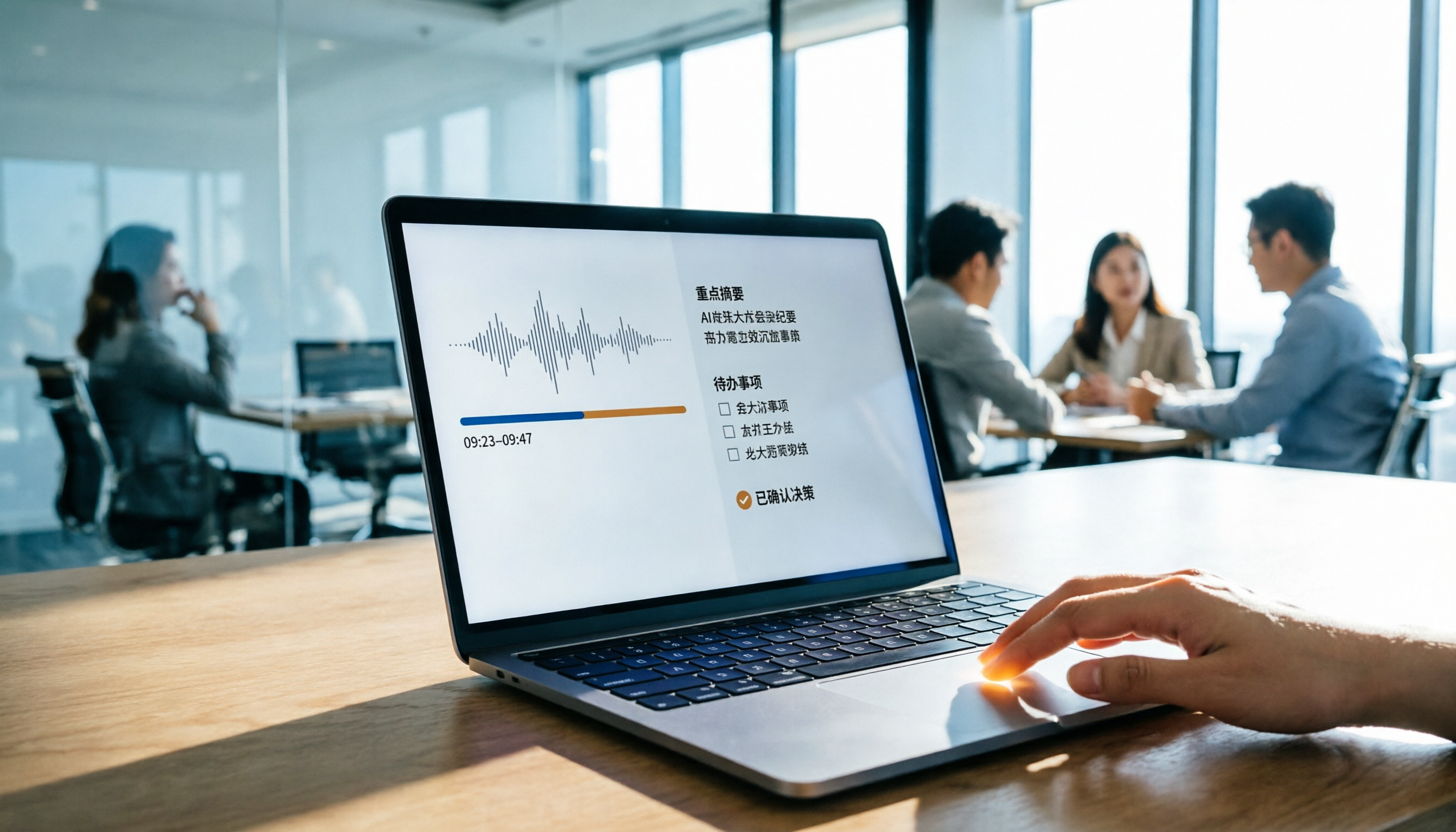
Tinrec vs Notta 2026: 5-Dimension Comparison for Chinese Meeting Minutes — Which Should Your Company Choose?
Starting from what makes a qualified corporate meeting minutes document, this hands-on comparison tests Tinrec, Notta, Otter.ai, and Granola on Chinese recognition, post-meeting organization, online meeting capture methods, and team data retention. It also covers the 4 most common mistakes in writing meeting minutes to help you choose the truly time-saving approach.
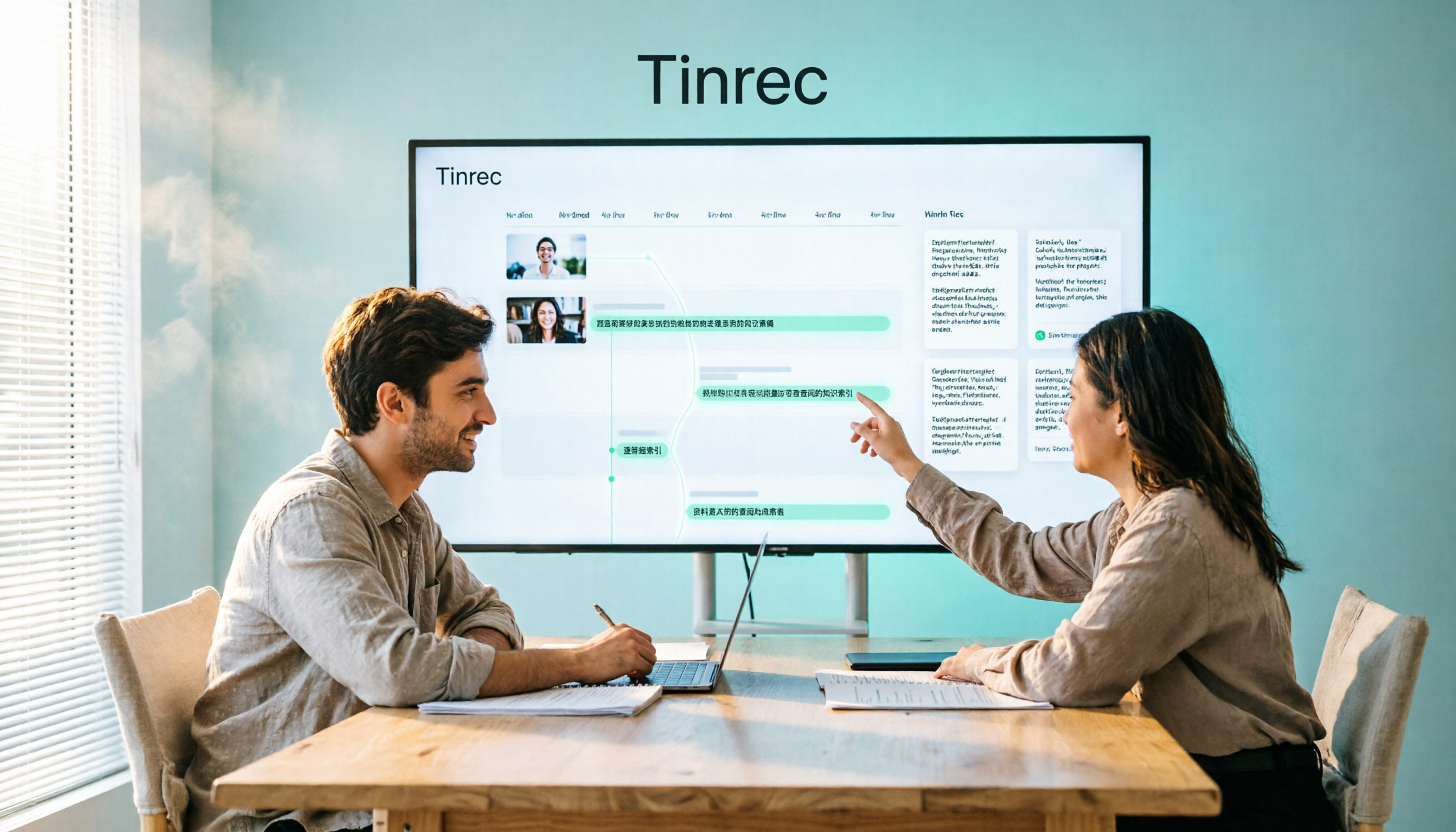
5 Best Long Video to Text Tools in 2026: How Tinrec Turns Hours of Video into Searchable Data
The real challenge with long video transcription isn't generating a transcript—it's that no one has time to read it afterward. This article addresses common misconceptions, explains a sensible workflow for transcribing long videos, and focuses on Tinrec as the main example while comparing it with Vidnoz, Wayin AI, VEED, and cSubtitle. It covers features, team collaboration, quotas, and buying considerations to help you decide based on your actual needs.