
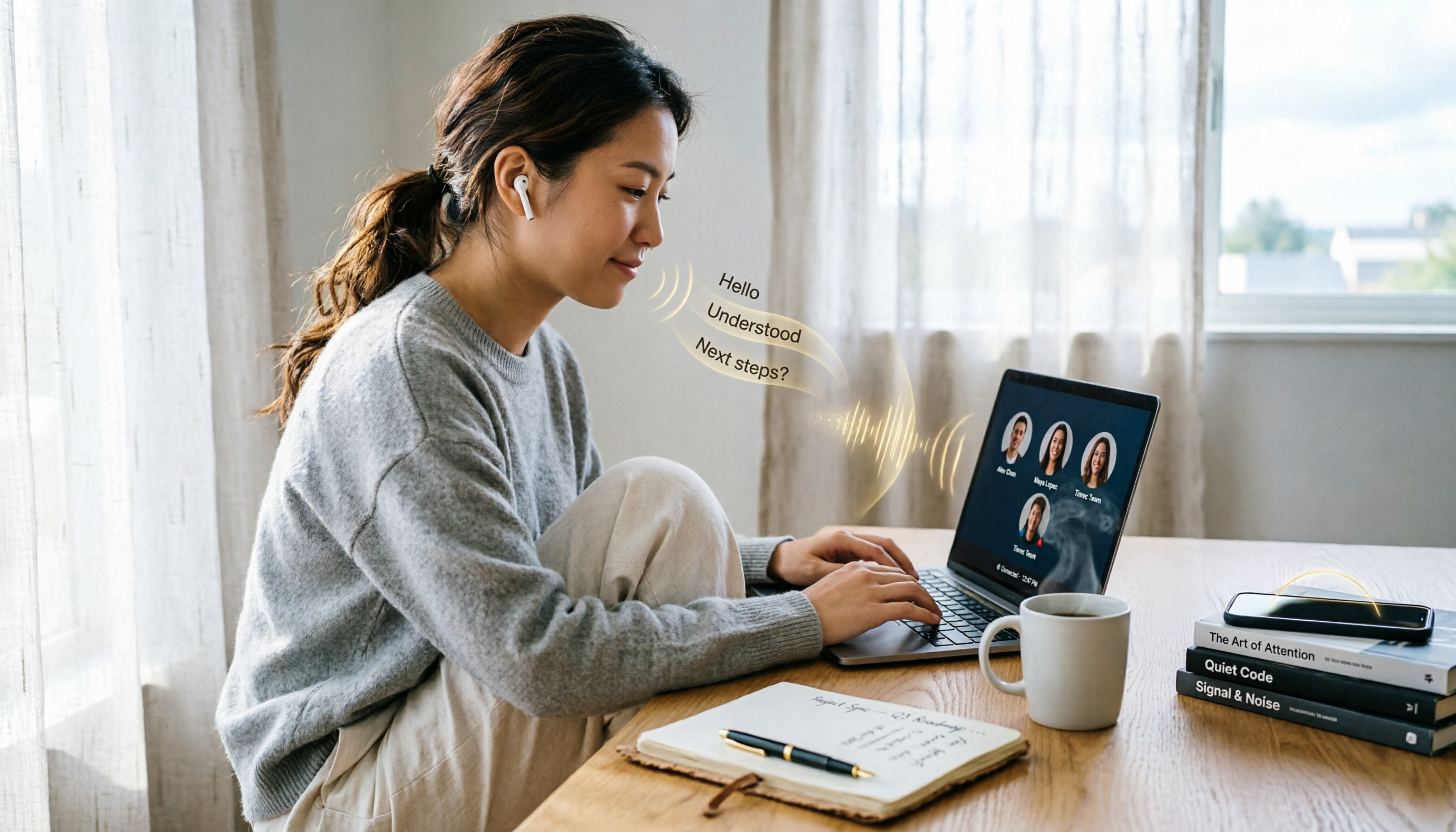
Turn recordings into transcripts and summaries in minutes
Upload audio or video for multilingual transcription, AI notes, and action items
What Can Google Meet Meeting Minutes Do for You?
Before, the worst part of a Google Meet wasn't the discussion itself, but not being able to remember who said what afterward. I tried three methods: using Google Meet's built-in recording, frantically typing notes during the meeting, or relying on memory—but each had its drawbacks. Only after switching to Tinrec did I find a solution that is both discreet and automatically organizes key points.
Scenario 1: Meeting minutes ready 5 minutes after the meeting ends
After a two-hour Google Meet, I used to spend at least another hour listening to the replay and transcribing. With Tinrec, I just click Start Recording before the meeting; it automatically captures the system audio. As soon as the meeting ends, the transcript, AI summary, and action items are all generated. I just quickly scan for any missed key decisions and send it straight to my boss or team.
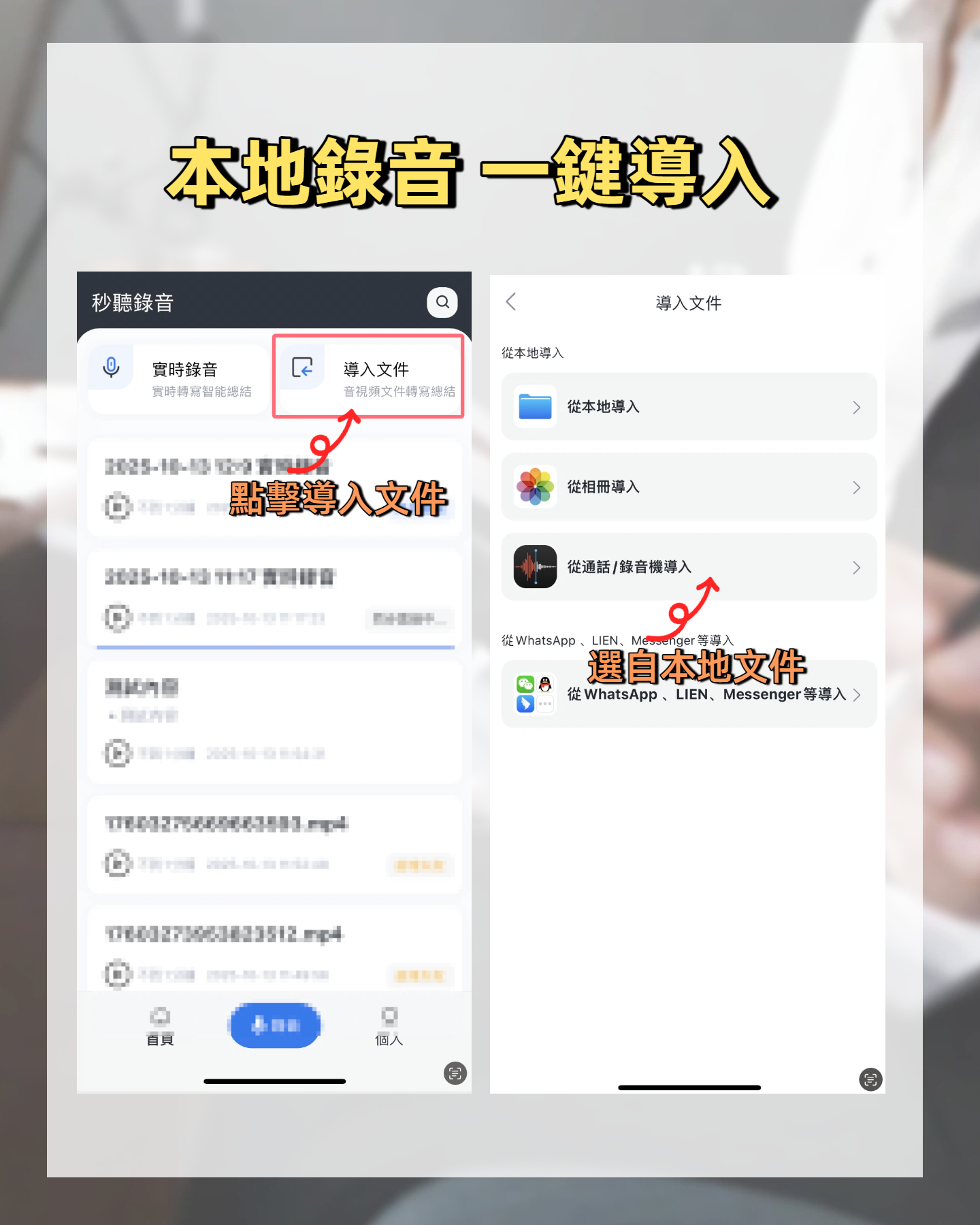
Scenario 2: Boss suddenly asks, 'What was the conclusion of the last meeting?'
Before, I had to dig through Google Drive for the recording, scrub through the timeline to find a specific sentence—infuriating. Now, with Tinrec's AI Q&A feature, I just type 'What was the client's feedback on the pricing proposal from last Friday's meeting?' and within seconds, the original paragraph and summary appear. I can reply to my boss faster than he can brew coffee.
Scenario 3: The nightmare of task assignment after cross-department meetings
A meeting with five or six departments—just organizing 'who does what and by when' would take half a day. Tinrec not only transcribes the conversation but also automatically extracts action items, with assignees and deadlines clearly listed. I copy the generated to-do list directly to our Slack group, and no one ever says 'I forgot' anymore.
What Are the Core Features of Google Meet Meeting Minutes?
1. Real-time voice-to-text
Tinrec transcribes while recording with less than 1 second of delay. During Google Meet, I usually put the transcription on my second monitor to verify that the content is captured in real-time, saving the need to replay later.
2. AI Summary: Condense a one-hour meeting into 300-word key points
It's not just shortening the transcript; it structures the content into meeting topics, discussion conclusions, action items, and responsible persons. For someone with over a dozen meetings a week, it saves not just time but mental energy.
3. AI Q&A: Turn old meetings into a searchable database
After transcription, you can ask Tinrec like a colleague: 'In last week's design discussion, who suggested switching to Figma?' or 'What was the boss's bottom line on the budget last time?' It pulls answers from past meeting content without luck-based file hunting.
4. Multiple export formats: Seamlessly integrate with your workflow
After a meeting, I need to submit reports, assign tasks, and archive for reference. Tinrec can export results as TXT, DOCX, or sync directly to Notion or Google Docs. For someone using five or six tools, not having to copy-paste between apps is a blessing.
5. Stealth recording: does not trigger Google Meet's recording notification
This is my favorite aspect. Google Meet's screen recording openly tells everyone 'someone is recording.' Previously, when I used third-party screen recorders, a red dot would appear in the corner of the screen, making it obvious to everyone—super awkward. Tinrec takes the system audio recording approach, capturing only the computer's playback sound and microphone, without triggering any Google Meet recording notification, completely unobtrusive during meetings.
Stop organizing recordings by hand
Upload audio or video and automatically get a transcript, summary, and action items
Real-World Use Cases
1. One-on-one coaching sessions
In monthly one-on-ones with team members, I used to take notes while listening, easily missing subtle expressions or tonal shifts. Later, I used Tinrec to record, staying fully engaged in the conversation, and reviewed the transcript afterward. The AI summary also extracts key points into personal files. The key point: the other person doesn't know I'm recording, avoiding the feeling of being watched.
2. Project status meetings
These meetings are usually information-heavy and jump topics quickly; handwriting notes can't keep up. With Tinrec's real-time transcription, I can jot down thoughts in the side notes while listening. By the time the meeting ends, the summary and action items are already auto-organized. I just take a screenshot and send it to the project group, saving the time of re-listening to the recording.
3. Online training sessions
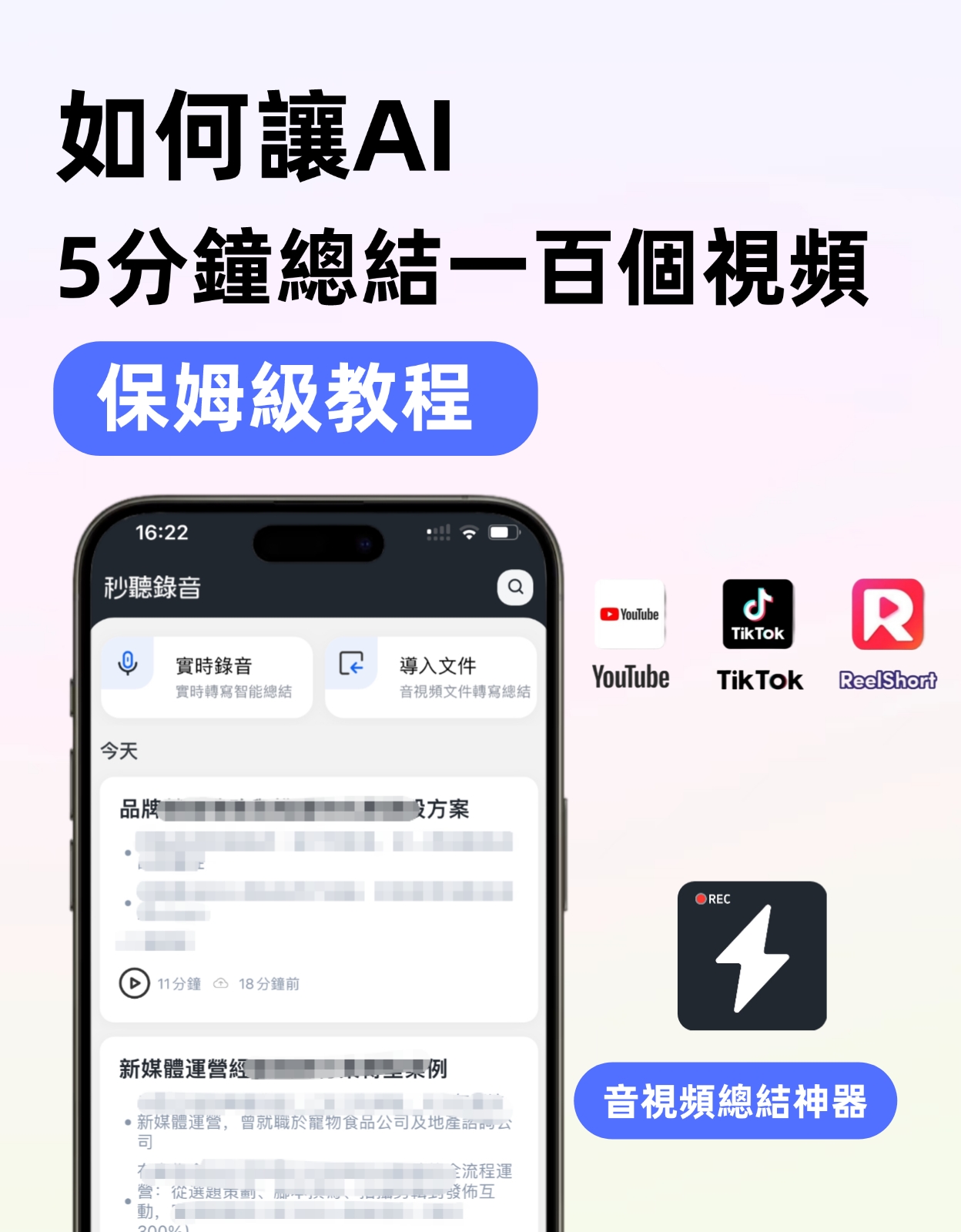
Company training sessions are often held on Google Meet, with the instructor sharing slides. Before, I used screen recording plus audio, and organizing the video afterward was very time-consuming. Now I only use Tinrec to record audio, which converts to a transcript, then AI summary extracts key points by section. When reviewing, I skip directly to relevant parts—10 times faster than replaying video.
4 Things to Consider When Choosing a Google Meet Meeting Recording Tool
1. Stealth of recording method
Some tools directly initiate screen recording at the browser level, instantly triggering Google Meet's recording red dot, putting everyone on alert. Tinrec uses system-level audio recording, completely undetectable by Google Meet, suitable for those who want to keep records without disrupting the meeting atmosphere.
2. Not just transcription, but AI organization
Pure transcription tools give you a transcript too long to read through—still requiring manual review. Tinrec's core value lies in post-transcription summaries, action items, and Q&A, turning meeting content directly into actionable tasks.
3. Language support and accuracy
My team has foreign colleagues, so meetings often mix Chinese and English. Tinrec supports 14 languages, and its mixed Chinese-English transcription is highly usable. Of course, if pronunciation is unclear or multiple people speak simultaneously, accuracy drops slightly—but in practice, it saves about 80% of manual organization time.
4. Cross-platform and ease of use
My desktop runs Windows, I carry a MacBook, my phone is an iPhone, but some team members use Android. Tinrec has iOS, Android, and web versions with cloud sync, so I'm not tied to a single device.
Frequently Asked Questions
Q: Does Google Meet really detect screen recording?
A: Yes. If you use Google Meet's built-in 'Record meeting' feature, all participants receive a notification, and the recording is uploaded to the cloud. If you use a browser screen recording extension, some are blocked by Google Meet or display a red dot. But tools like Tinrec, which operate at the system audio level, only capture the computer's audio output without interacting with the browser, thus triggering no recording alerts—completely stealthy.
Q: Are there legal issues with using Tinrec to record Google Meet meetings?
A: It depends on your location and company policy. Many jurisdictions allow one-party consent (you can record as long as you consent). But to be safe, I usually say at the start of a meeting, 'I'll be taking notes to share a summary afterward,' without specifically mentioning recording, as a preemptive measure. Most importantly: don't arbitrarily share or misuse the recordings.
Q: How do I set up Tinrec for computer meeting recording?
A: Download the Tinrec desktop version or open the web version, select 'Computer Audio' recording mode. It captures both system audio (e.g., Google Meet participants' voices) and your microphone sound. Press record before the meeting starts, and it automatically saves and transcribes afterward—no need to deal with the screen.
Q: Is the free version enough for my meeting needs?
A: Tinrec's free version offers 100 minutes of transcription per month. If you only have two or three short meetings a week, it's sufficient. But for someone like me with over 15 meetings a week, it runs out in a few weeks. In that case, upgrade to the Pro monthly plan—it costs about the same as two bubble teas a month and gives you an extra hour a day with family. Totally worth it.
Conclusion
After struggling with notes, screen recording, and built-in recording, my reason for sticking with Tinrec is simple: it lets me focus solely on the discussion during meetings, and afterward automatically delivers a searchable database with summaries and action items. Especially on platforms like Google Meet that actively alert others, system-level audio recording is both discreet and safe—no more worrying about awkward red dots. If you're tired of spending effort on meeting minutes, try the free version of Tinrec. With 100 minutes per month, a couple of meetings will show you the difference—once you've experienced AI-assisted meeting notes, there's no going back.
Turn every recording into actionable outcomes
Get 60 free transcription minutes when you sign in. No credit card required.
Related Reading
You might also like

How to Take Meeting Minutes on Google Meet in 2026? 5 Steps with Tinrec for Free
Tired of being overwhelmed by post-meeting notes after Google Meet calls? A mid-level manager tested 5 steps using Tinrec for free to convert meeting recordings into summaries and action items, saving over an hour a day from manual work.

Tinrec vs Google Meet 2026: 4-Dimension Comparison, Which Is Better for Meeting Minutes?
This article compares Tinrec and Google Meet on meeting recording and organization across four dimensions—language support, AI capabilities, and cost—to help you choose the best post-meeting tool.
2026 Testing 5 Google Meet Alternatives: Which Captures Meetings Best?
Reddit users rave about Google Meet alternatives that not only improve meetings but also auto-transcribe, summarize, and create to-dos. A hands-on test of Tinrec and 4 other tools.

Tinrec vs Otter.ai 2026: A 5-Dimension Showdown – Which Is Better for Chinese Meeting Transcription?
With Google Meet background reversal and frequent online meetings, which recording tool should you use to organize meeting content? This article deeply compares Tinrec and Otter.ai from 5 dimensions: input sources, Chinese accuracy, AI organization features, cross-platform support, and price, to help you choose the best solution for Chinese users and cross-source audio/video data organization.

2026 Google Meet Meeting Notes Free Plan Roundup: Tinrec at a Glance
Thinking about buying a Google Meet account just to record meetings? There's a more cost-effective choice. This article covers Tinrec's free and paid plans, showing you how to automatically get meeting transcripts, summaries, and action items without spending extra on an account.

2026 In-Depth Comparison of 3 AI Transcription Tools: Essential for Saving Time in Google Meet Meetings
Tired of spending hours after Google Meet calls transcribing meeting minutes? This article tests three AI transcription tools that work with Google Meet, comparing Cantonese accuracy, AI Q&A features, and free tiers to help you find the best option. Tinrec stands out overall.

Best Google Meet Screen Sharing Meeting Notes Tools: 3 Tested in 2026, Top Pick for Traditional Chinese
Struggling with meeting notes after Google Meet screen sharing? We tested 3 voice-to-text tools on accuracy, Chinese support, AI features, and pricing to find the best solution for Traditional Chinese users.
2026 Side-by-Side Test of 2 Google Meet Recording Methods: Which Saves More Post-Meeting Effort?
This article compares Google Meet's built-in recording with AI tool Tinrec for meeting capture and post-meeting organization. It analyzes recording thresholds, Chinese subtitles, AI summaries, task extraction, and cross-platform sharing to determine which method saves you more time.
2026 Google Meet Recording: No Hardware License Needed + AI Auto Meeting Minutes
Worried about Google Meet hardware license costs? Actually, you can use Tinrec to record meetings directly on your computer, automatically generating transcripts, summaries, and action items—no hardware needed. This guide walks you through setup to save on licensing fees.