

Turn recordings into transcripts and summaries in minutes
Upload audio or video for multilingual transcription, AI notes, and action items
2026 Real-World Comparison: Google Meet Built-in vs Tinrec for Meeting Notes – Which Saves Time & Money?
Google Meet vs Tinrec – Quick Overview
I have about 15 meetings a week — standups, project syncs, one-on-ones, cross-departmental coordination. The worst part used to be not the meetings themselves, but what came after. With dozens of decisions and action items to organize after each session, Google Meet’s built-in transcription just wasn’t enough. Then my team tried Tinrec, and I found the meeting notes workstation I’d been missing.
- Google Meet Built-in Transcription: Live captions are okay, but getting a full transcript and AI-powered summaries depends on your Workspace plan, and it’s locked into Google’s ecosystem.
- Tinrec: It handles not only meetings but also lectures, interviews, and YouTube videos — turning them into text, auto-generating summaries and action items, and even allowing you to query the content like a database.
Based on my team’s real experience, this article compares the two solutions across five dimensions so you can see at a glance which one is worth your money (or whether you should spend at all).
Dimension 1 – Completeness of Meeting Notes
Google Meet’s built-in transcription provides live captions during meetings, but if you want a complete transcript, you usually have to manually copy the captions or rely on Google Drive recordings for post-meeting conversion — an extra step that’s prone to accuracy issues from network or audio quality. Plus, it only captures real-time conversation; you can’t add notes or mark highlights afterward.
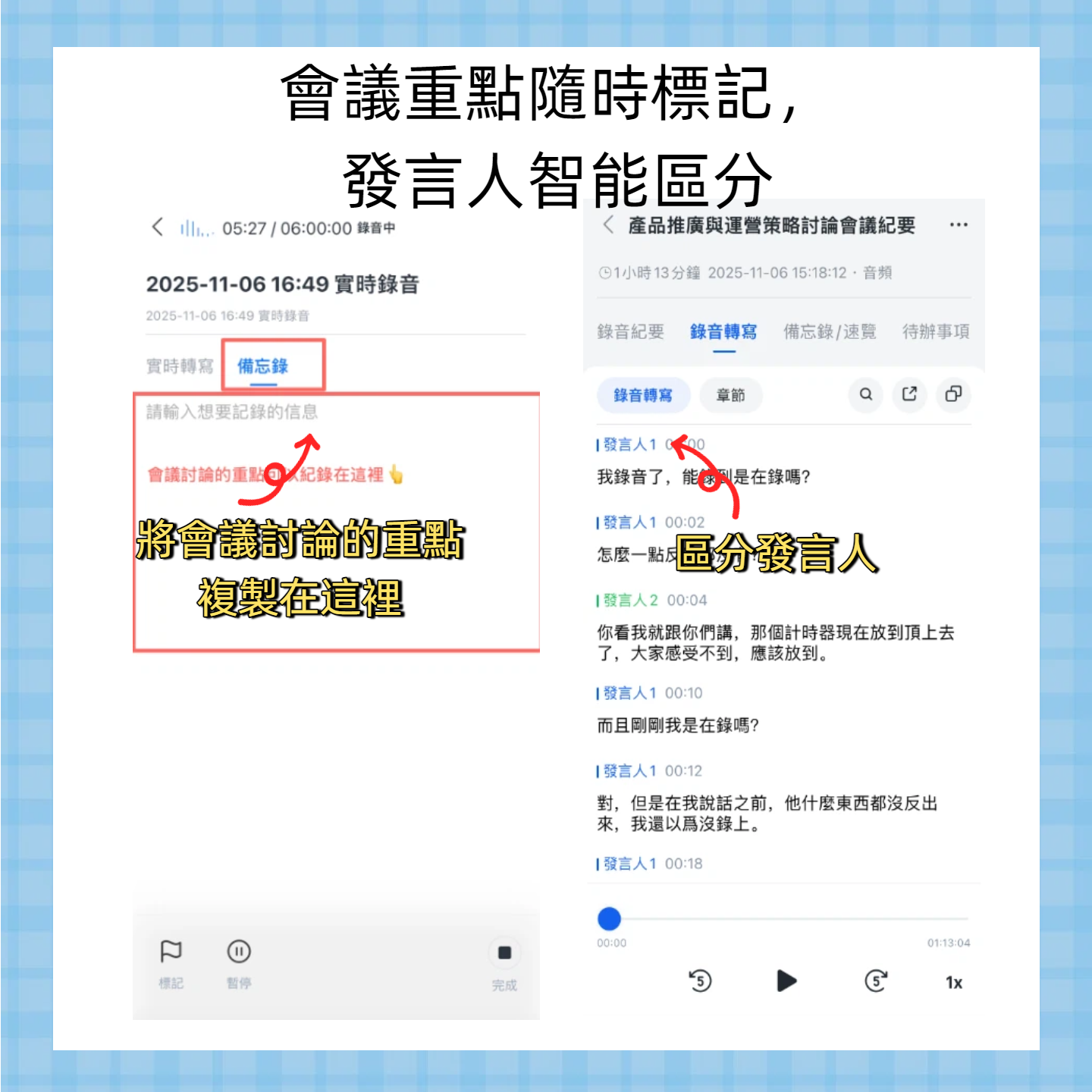
Tinrec is in a completely different league. While you’re in a meeting, it transcribes in real time, and the moment the meeting ends, you get a structured transcript, AI summary, chapter segmentation, and even speaker differentiation. In a real test with a 30-minute Google Meet meeting, Tinrec saved our team at least 40 minutes of manual note-taking and summarization.
→ Verdict: Tinrec wins clearly.
Dimension 2 – AI Processing & Follow-Up
After Google Meet transcribes, you’re left with a raw text file. Want to extract key points or action items? You’ll have to sift through it manually. Cross-referencing across past meetings? Forget it — hundreds of recordings sit in Drive, never to be opened again.
Tinrec’s AI automatically generates summaries, highlights key points, extracts action items, and even splits long meetings into chapters for quick navigation. The feature that blew me away is “AI Q&A”: last month I forgot details from a vendor price negotiation — I simply asked Tinrec in plain English, “What was the bottom line for the XX company quote?” It instantly pulled the relevant segment from the recording, 10x faster than digging through notes.
→ Verdict: Tinrec wins clearly.
Dimension 3 – Cross-Platform & Data Integration
Google Meet’s transcription and recordings are locked into the Google ecosystem. If you also use Zoom, Teams, or need to export meeting notes to Notion or OneNote, you have to do it manually. And it only handles meetings, not your lecture recordings, interview files, or YouTube video links.
Stop organizing recordings by hand
Upload audio or video and automatically get a transcript, summary, and action items
Tinrec was designed to organize all audio/video from the start. Live recording, uploaded audio/video files, or pasted web video links — it handles everything. My favorite use: drop in industry interview YouTube videos and get instant summaries and key notes, saving tons of research time. Meeting notes can be exported to Google Docs or Notion with one click, seamlessly fitting into your existing workflow.
→ Verdict: Tinrec wins clearly.
Dimension 4 – Cost Efficiency
If you have occasional meetings, Google Meet’s free live captions are serviceable. But if you’re like me — a 10-person team with heavy weekly meetings — to get full recordings from Google Meet, you need to upgrade to Google Workspace Business Standard or higher. That’s a significant annual cost per user, and for a 10-person team, it adds up — and you’re only paying for transcription, not AI-powered organization.
Tinrec’s free plan offers basic transcription credits for a trial. Our team later went with the Pro annual plan, which costs less than two Starbucks coffees per person per month, yet covers meetings, courses, online videos, plus AI summaries and Q&A. When you factor in time saved, the yearly savings in labor far outweigh the subscription cost.
→ Verdict: For overall cost and output value, Tinrec wins hands down.
Dimension 5 – Ease of Use & Multi-Device Support
Google Meet’s transcription only works during meetings, the interface isn’t intuitive, and sometimes an admin must enable permissions first. Want to transcribe on mobile? The mobile experience is even more basic. For someone like me who often reviews meetings on an iPad or phone while on the go, it’s very unfriendly.
Tinrec offers iOS, Android, and web apps with a clean interface. Start recording before a meeting, and afterward you can view summaries, highlight key points, and replay critical segments on your phone. I can finish organizing action items from yesterday’s meeting on the bus, without waiting to get to a computer.
→ Verdict: Tinrec wins clearly.
Unique Strengths of Each
Tinrec’s Unique Strengths
- Not just meetings — all audio/video: From YouTube learning videos and podcast interviews to old recordings, everything becomes searchable, organizable content. Google Meet can’t do this at all.
- AI Q&A, turning recordings into a database: You can ask in natural language, “What was the conclusion of last month’s budget meeting?” and it mines the answer from historical recordings. For managers, this is invaluable.
- Deliverable-ready documents: Meeting minutes, action lists, key summaries — no further processing needed. Great for reporting to your boss or handing off to team members.
- Cross-platform, cross-source long-term knowledge base: All meetings, learning, and interviews are stored in one place. Your recordings become a living knowledge repository, not dead files.
Google Meet Built-in Transcription Strengths
- Zero-install, live captions during meetings: If you just need to follow spoken content roughly, Google Meet’s live captions are convenient.
- Deep integration with Google ecosystem: For teams fully on Google Workspace, recordings and captions automatically go to Google Drive, keeping the workflow consistent.
Final Verdict – Which One Should You Choose?
- If you only need live captions during meetings and don’t care about post-meeting notes or organization → Google Meet free is enough.
- If you need auto-generated transcripts, summaries, and action items without spending extra time organizing → Tinrec (higher accuracy, deeper organization).
- If you also have lectures, interviews, or online videos to process → Tinrec is the only solution that handles everything in one place.
- If you have a team of 10+ and a hefty annual Google Workspace bill, looking for a more cost-effective note-taking solution → Tinrec Pro annual plan offers excellent value.
In short: For most professionals who need to act immediately after meetings, Tinrec is the real time- and money-saver. Try the free plan on a few meetings, and you’ll understand why my team never looked back.
Turn every recording into actionable outcomes
Get 60 free transcription minutes when you sign in. No credit card required.
Related Reading
You might also like
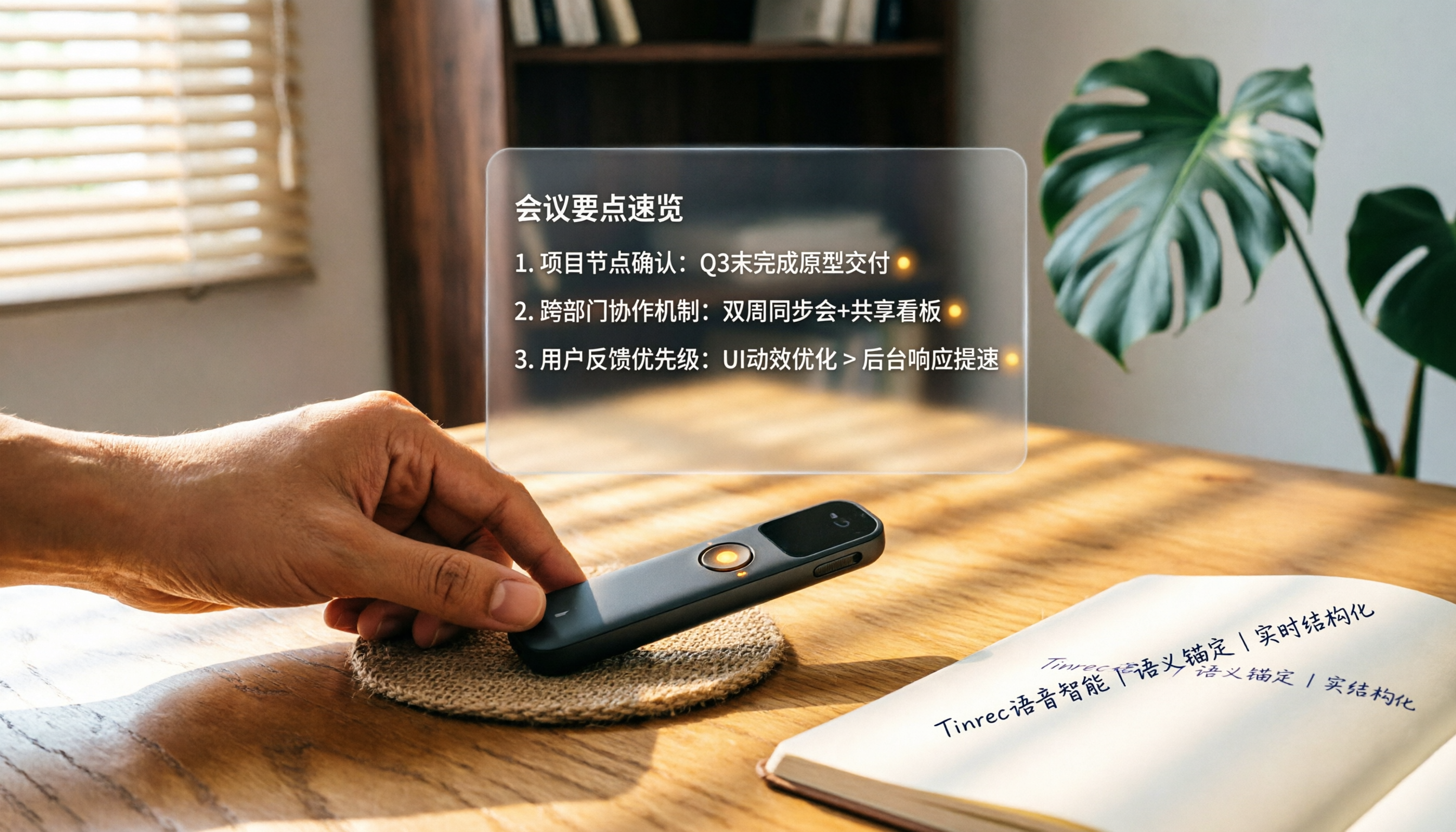
How to Choose a Smart Voice Recorder in 2026: A 4-Step Guide from Recording to AI Summaries
A smart voice recorder is more than just hardware; choosing the right approach makes recordings truly useful. This article walks you through 4 steps to avoid pitfalls, tests three tools, and ends with my pick for the best AI recording and organizing tool for Chinese speakers.
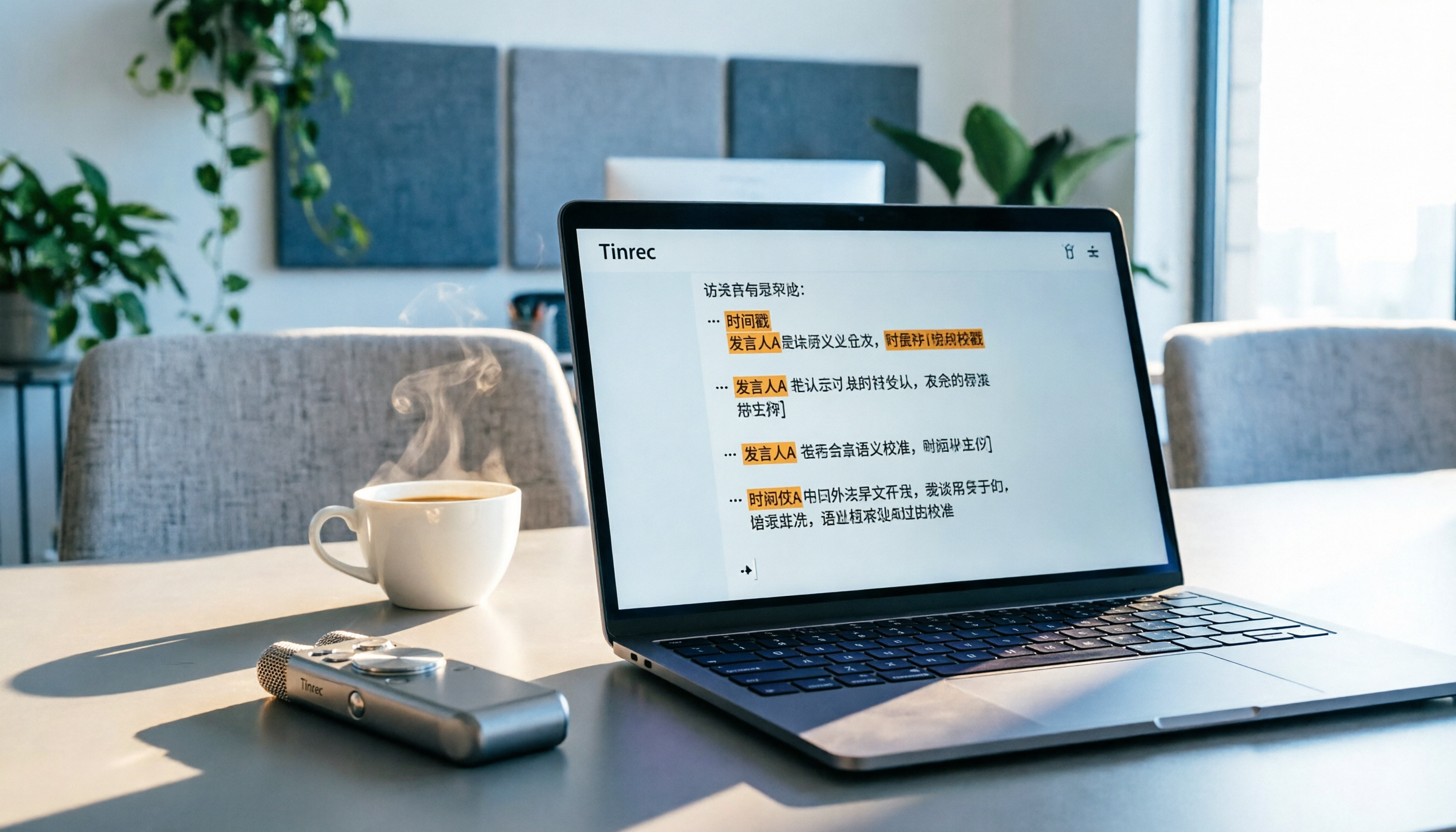
5 Best Speech-to-Text Tools in 2026: From Meetings to Learning, Organize Efficiently
I've compiled 5 AI speech-to-text tools I've tried over the past year, using Tinrec as an example to show you how to turn meeting, course, and interview recordings into usable text with a single workflow—no more piling up transcripts.

2026 Tested: 5 Recording Solutions Compared—Are Mobile Apps Really Better Than Voice Recorders?
Still debating whether to buy a voice recorder? What you really need is a tool that turns recordings into text and highlights key points. This article tests 5 recording-to-text and organization solutions, from free apps to AI recording hardware, to help you find the best fit—and explains why Tinrec is our top all-purpose recommendation.

2026 Long-Battery Voice Recorder Free Options: 5 Picks Reviewed
Running out of battery on your voice recorder during class is a nightmare? We tested 5 recording and AI organization tools, from free apps to paid plans, from a student's perspective to tell you which is best for long recordings, comparing battery life, audio quality, and AI features.

Tinrec vs Otter.ai 2026: A 5-Dimension Showdown for Students Needing Large-Capacity Audio/Video Organization
Tired of large recordings? A senior student tests Tinrec and Otter.ai, comparing input sources, Chinese accuracy, AI note features, free tiers, and pricing to see which tool better suits students' transcription needs, saving you money.

3 Workplace Voice Recorders Tested in 2026: Which One Is the Ultimate Meeting Notes Sidekick?
How should you choose a voice recorder for the workplace? We tested a traditional voice recorder, phone recording, and the AI recording app Tinrec, comparing portability, post-processing, and budget to find the best meeting note solution for office workers.

Voice Recorder vs. Phone Recording in 2026: How to Choose? 5 Steps to Build an Efficient Recording Workflow
Still torn between a voice recorder and your phone for recording? This article starts from real-world use cases, teaches you how to find the best recording solution in 5 steps, and tests the AI recording tool Tinrec to see how it solves the pain points of traditional recording, saving you hours of organizing time.

How to Choose a Cost-Effective Voice Recorder in 2026: 4 Steps to Compare Recorders and AI Tools
Thinking about buying a voice recorder but unsure how to evaluate value for money? This article compares traditional voice recorders and AI recording tools from perspectives like features, price, and post-processing, helping you pick the best recording solution.

2026 Test: AI Software vs. Hardware Noise Reduction for Voice Recorders—Which Keeps Meetings and Lectures Clearer?
I tested popular voice recorders and AI recording software, and found that hardware doesn't always beat software for noise reduction. This article compares Tinrec and PLAUD Note in real-world scenarios, covering noise reduction, organization features, and long-term use, to help you choose the right solution.