

Turn recordings into transcripts and summaries in minutes
Upload audio or video for multilingual transcription, AI notes, and action items
Why You Need a Good Google Meet Meeting Recorder Tool
After a Google Meet session, the worst part is having to piece together meeting notes from memory or scattered scribbles. If the discussion was complex or mixed with multiple languages, catching up afterward can be more exhausting than the meeting itself. Those sudden ideas and action items? They might slip away before you jot them down.
Many people rely on Google Meet's built-in recording feature, but the video files take up space and rewatching to find key points is time-consuming. What you really need isn't just "recording" but a tool that automatically turns meeting content into text, summaries, and even action lists—so you can focus on the conversation without scrambling to take notes.
4 Key Factors to Consider Before Choosing a Google Meet Recorder
Finding the right tool isn't just about price and minutes. These four aspects directly affect your experience.
1. Transcription accuracy is essential, but look for multilingual support
Many tools claim high accuracy, but most are optimized for English. If you frequently have meetings with mixed languages (e.g., Chinese and English) or specialized terms, test the tool's recognition in your primary language.
2. Beyond verbatim transcription, AI summaries and action item extraction save time
A long transcript only solves the recording problem, not the post-meeting workload. Good tools automatically generate summaries, key points, and to-do lists, letting you grasp conclusions in minutes.
3. Cross-platform support: you'll want to attend on desktop and review on mobile
Meeting recorders should sync across devices so you can access notes during commutes or away from your desk.
4. Does the free plan meet your needs? Look beyond minute limits to feature restrictions
Some free plans offer generous minutes but lock AI summaries or export functions, eventually pushing you to pay. Check if the free version includes key features you need.
Tinrec — Our Top Recommendation for Google Meet Meeting Notes After Testing
Tinrec is an AI-powered voice and video transcription tool that supports live recording, file transcription, and online video link parsing. It works seamlessly with Google Meet and other online meetings. In our tests, it offered the best balance of accuracy (especially for Mandarin Chinese) and post-processing capabilities.
Record meetings as they happen, get highlights right after
Start Tinrec before your Google Meet call—it transcribes in real time with speaker identification. When the meeting ends, AI summaries, chapter highlights, and action items are already generated. You can jump straight to conclusions without replaying the whole thing. Even better, you can ask questions like, "Who proposed the budget adjustment last meeting?" Tinrec delivers concise answers based on context, not just keyword search—a rare feature among competitors.
Not just Google Meet—transcribe online videos and old recordings too
Beyond live meetings, Tinrec can parse YouTube links to generate transcripts and summaries, great for research. You can also upload previously recorded audio files (e.g., from your phone) and Tinrec will organize them into a searchable, reusable database.
Stop organizing recordings by hand
Upload audio or video and automatically get a transcript, summary, and action items
Test results: accurate Chinese transcription and relevant summaries
We tested a 10-minute Google Meet recording (product spec discussion with mixed Chinese and English). Tinrec had noticeably lower error rates than other tools, especially with natural sentence breaks and punctuation. Its auto-generated summaries correctly captured three key decisions, saving us significant time.
Pros and Cons
Pros: High Chinese accuracy, useful auto-summaries, supports online video transcription, AI Q&A for deep content retrieval.
Cons: Free plan only gives 100 minutes per month; heavy users with over 5 hours of weekly meetings may need a paid plan. But for most light users, it's more than sufficient.
Who is it for?
If you frequently hold Google Meet meetings in Chinese and want quick summaries and action items post-meeting, Tinrec is ideal—especially if you want not just recording but also intelligent content organization.
Other Options Besides Tinrec
Otter.ai: Great for English meetings, limited Chinese support
Otter.ai is a well-known meeting note tool. The free plan offers 300 minutes per month, with smooth real-time transcription for English, AI summaries, and keyword search. However, its Chinese transcription accuracy is lower, and it doesn't support transcribing online video links. If you need cross-platform media collection, Tinrec is more practical.
Fireflies.ai: Integrates many meeting platforms, but Chinese is still weak
Fireflies.ai automatically joins Google Meet, Zoom, Teams, etc., and transcribes meetings. Paid plans include team collaboration features. Unfortunately, transcription quality suffers with mixed languages, and it lacks Tinrec's AI Q&A feature. It's better suited for English-only meetings with high teamwork needs.
Notta: Generous minutes, but weaker post-processing
Notta is a multi-language transcription tool. Its Pro plan offers 1800 minutes per month—more than Tinrec—which is attractive for high-volume transcription. However, its strength lies in transcription itself; summary and action item extraction are less accurate, and it cannot handle online video links. If you need pure bulk transcription, consider Notta; for a complete post-meeting solution, Tinrec is more comprehensive.
Common Mistakes When Choosing a Google Meet Recorder (and How to Avoid Them)
Mistake 1: Only looking at total minutes, ignoring post-meeting organization
Many choose a tool with more free minutes, but the real time sink is usually organizing notes after the meeting. A tool without strong summaries, action item extraction, or Q&A just shifts the time cost to you. First confirm how much automated organization the tool offers, then compare minutes.
Mistake 2: Overlooking actual transcription quality for non-English languages
Many international tools are English-first, and their performance in other languages varies. If your team primarily communicates in a language other than English, test with a real meeting recording to check accuracy, sentence breaks, and specialized term recognition—don't rely on claimed rates.
Mistake 3: Ignoring cross-device and cross-source compatibility
You might join a Google Meet on desktop today but review on mobile tomorrow. If the tool doesn't sync across devices, it's inconvenient. Also, your meeting materials may come from different sources (live meetings, audio recordings, online videos). A tool that handles multiple origins can build a personal "audio-video database," not just a one-time record.
Summary: Which Should You Choose?
After testing, if you need a solution that handles non-English meetings well and consolidates content from various sources, Tinrec is our top pick. Here are recommendations for common needs:
- Frequent Google Meet calls in a language other than English, need quick summaries and actions → Tinrec
- Want to ask questions about your recordings to find key points → Tinrec (AI Q&A)
- Need to transcribe YouTube videos, interview recordings, etc., in addition to meetings → Tinrec (online video link parsing)
- English-only meetings with strong team collaboration needs → Otter.ai or Fireflies.ai
- Pure high-volume transcription without strong organizational features → Notta
We suggest starting with Tinrec's free plan—100 minutes per month is enough to test its core features like live recording, AI summaries, and online video transcription. Upgrade only if you find it valuable. No need to spend money upfront.
Turn every recording into actionable outcomes
Get 60 free transcription minutes when you sign in. No credit card required.
Related Reading
You might also like
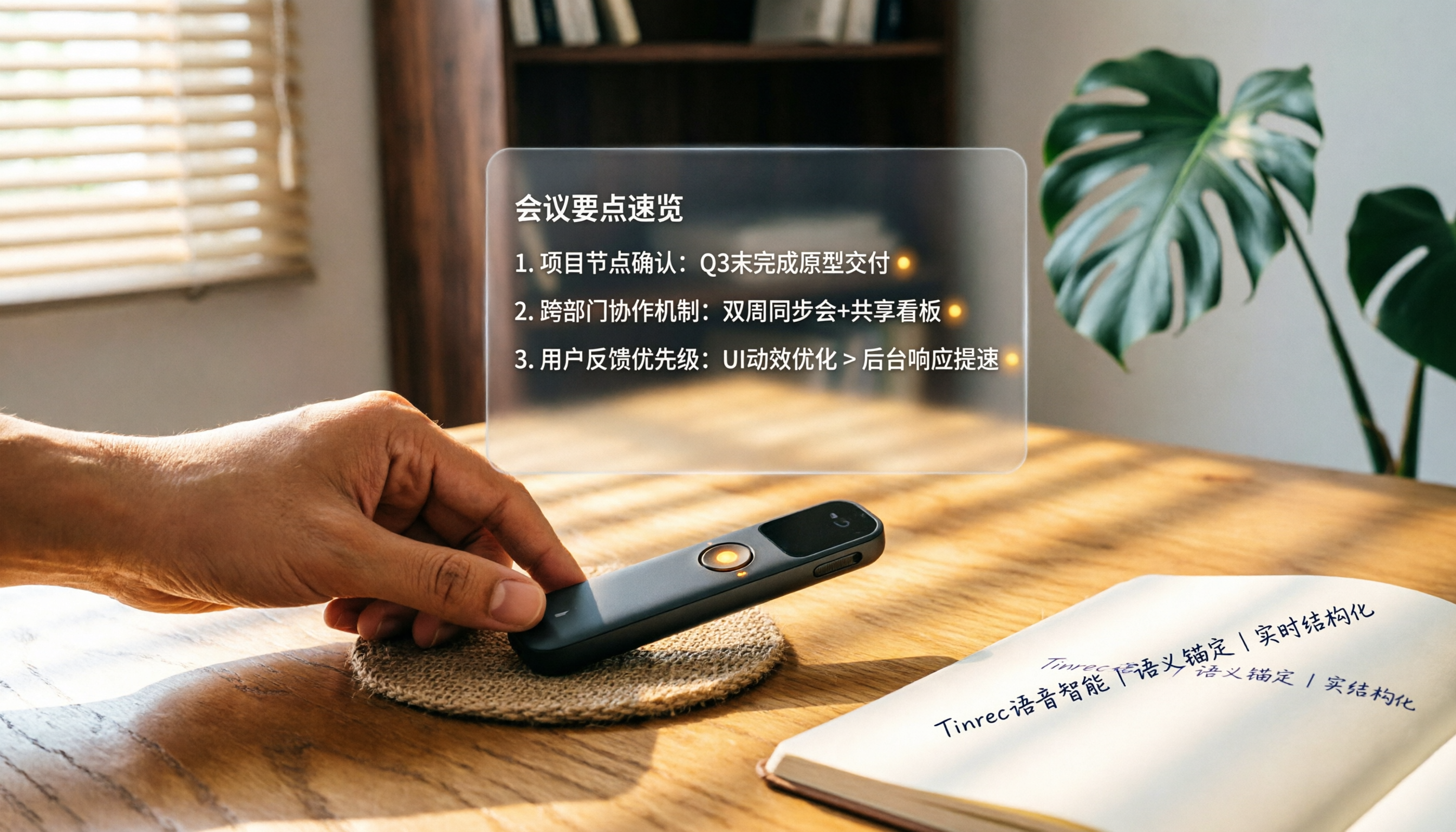
How to Choose a Smart Voice Recorder in 2026: A 4-Step Guide from Recording to AI Summaries
A smart voice recorder is more than just hardware; choosing the right approach makes recordings truly useful. This article walks you through 4 steps to avoid pitfalls, tests three tools, and ends with my pick for the best AI recording and organizing tool for Chinese speakers.
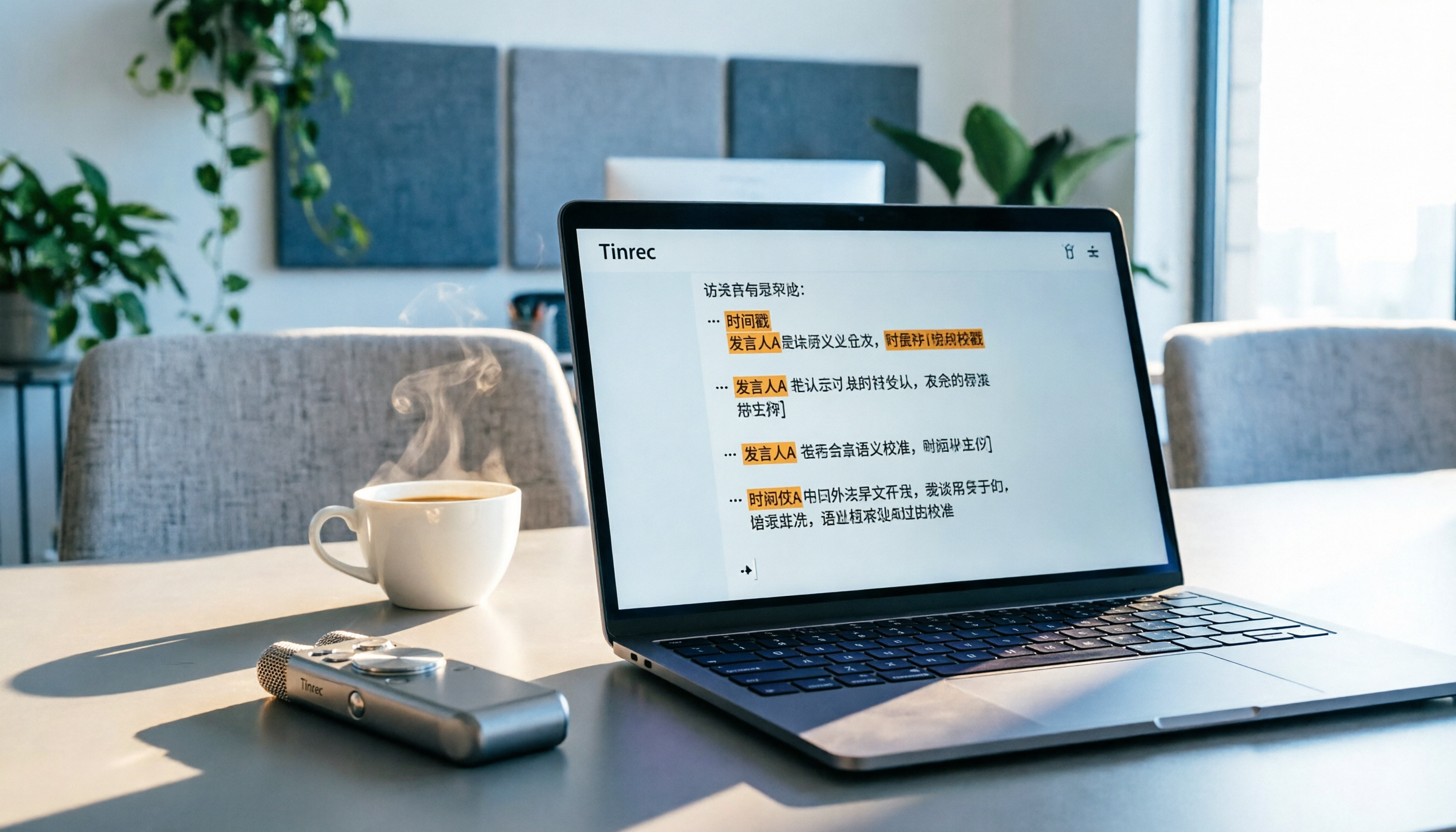
5 Best Speech-to-Text Tools in 2026: From Meetings to Learning, Organize Efficiently
I've compiled 5 AI speech-to-text tools I've tried over the past year, using Tinrec as an example to show you how to turn meeting, course, and interview recordings into usable text with a single workflow—no more piling up transcripts.

2026 Tested: 5 Recording Solutions Compared—Are Mobile Apps Really Better Than Voice Recorders?
Still debating whether to buy a voice recorder? What you really need is a tool that turns recordings into text and highlights key points. This article tests 5 recording-to-text and organization solutions, from free apps to AI recording hardware, to help you find the best fit—and explains why Tinrec is our top all-purpose recommendation.

2026 Long-Battery Voice Recorder Free Options: 5 Picks Reviewed
Running out of battery on your voice recorder during class is a nightmare? We tested 5 recording and AI organization tools, from free apps to paid plans, from a student's perspective to tell you which is best for long recordings, comparing battery life, audio quality, and AI features.

Tinrec vs Otter.ai 2026: A 5-Dimension Showdown for Students Needing Large-Capacity Audio/Video Organization
Tired of large recordings? A senior student tests Tinrec and Otter.ai, comparing input sources, Chinese accuracy, AI note features, free tiers, and pricing to see which tool better suits students' transcription needs, saving you money.

3 Workplace Voice Recorders Tested in 2026: Which One Is the Ultimate Meeting Notes Sidekick?
How should you choose a voice recorder for the workplace? We tested a traditional voice recorder, phone recording, and the AI recording app Tinrec, comparing portability, post-processing, and budget to find the best meeting note solution for office workers.

Voice Recorder vs. Phone Recording in 2026: How to Choose? 5 Steps to Build an Efficient Recording Workflow
Still torn between a voice recorder and your phone for recording? This article starts from real-world use cases, teaches you how to find the best recording solution in 5 steps, and tests the AI recording tool Tinrec to see how it solves the pain points of traditional recording, saving you hours of organizing time.

How to Choose a Cost-Effective Voice Recorder in 2026: 4 Steps to Compare Recorders and AI Tools
Thinking about buying a voice recorder but unsure how to evaluate value for money? This article compares traditional voice recorders and AI recording tools from perspectives like features, price, and post-processing, helping you pick the best recording solution.

2026 Test: AI Software vs. Hardware Noise Reduction for Voice Recorders—Which Keeps Meetings and Lectures Clearer?
I tested popular voice recorders and AI recording software, and found that hardware doesn't always beat software for noise reduction. This article compares Tinrec and PLAUD Note in real-world scenarios, covering noise reduction, organization features, and long-term use, to help you choose the right solution.