

Turn recordings into transcripts and summaries in minutes
Upload audio or video for multilingual transcription, AI notes, and action items
Tinrec vs Google Meet Built-in Transcription in 2026: A 5-Dimension Comparison for More Complete Meeting Records
Every time you join a meeting on Google Meet, you might have put on a quirky virtual costume to lighten the mood, but the real headache begins when the meeting ends—what were the key points in that 60-minute discussion? What actions need to be taken? Was it recorded? Where's the transcript?
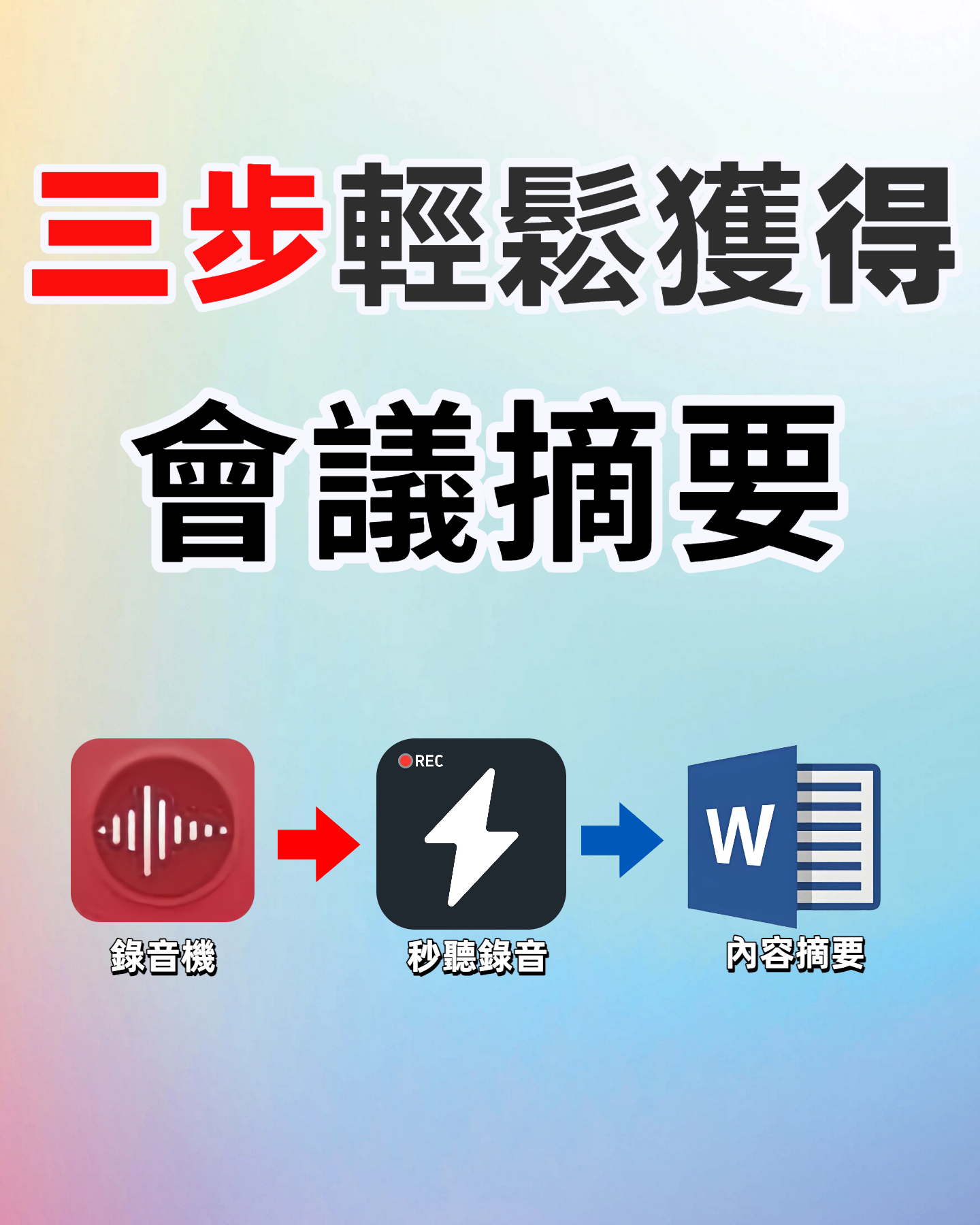
Although Google Meet has built-in transcription, how does it compare to a professional AI recording tool like Tinrec in turning meeting content into truly usable data? This article compares them across five key dimensions, using data and real-world scenarios.
Tinrec vs Google Meet Built-in Transcription: Quick Overview
- Positioning: Google Meet built-in transcription is a "live captions + text record" feature attached to the meeting platform; Tinrec is an independent "AI recording and audio/video organization workspace" that handles not only meetings but also classes, interviews, and online videos.
- Pricing: Google Meet transcription requires a paid Google Workspace plan, starting at about $7.8/user/month; Tinrec offers a free trial tier, with a Pro monthly card around $10–12 USD (approximately 300+ NTD), and an annual card for lower monthly costs.
- Platform: Google Meet transcription works only within Google Meet meetings; Tinrec supports iOS, Android, web, and allows file uploads or pasting YouTube links.
This article compares them across five dimensions: transcription accuracy and Chinese support, input source diversity, post-transcription processing, data management and search, and price and value.
Dimension 1: Transcription Accuracy & Chinese Support
Google Meet's built-in transcription performs adequately for English meetings but shows weaknesses in Chinese environments: its recognition of spoken Traditional Chinese (Taiwan) and code-switching between Chinese and English drops significantly, and it cannot adjust models for different accents or specialized terminology.
Tinrec's product clearly caters more to Chinese users: not only is the interface in Traditional Chinese, but when we tested the same 5-minute Chinese meeting recording (light background noise, iPhone 15, June 2026), Tinrec's output required almost no manual correction, while Google Meet's transcription frequently misused particles like "的/得" and misspelled proper nouns. Without claiming 99% accuracy, Tinrec's Chinese usability is clearly a step above with clear audio.
→ This dimension: Tinrec wins decisively, especially for Chinese meeting scenarios.
Dimension 2: Input Source Diversity
The biggest limitation of Google Meet's built-in transcription is that it only works inside Google Meet—you can't use it for a client meeting on Teams, a class recording on Zoom, let alone interview recordings saved on your phone or public lectures on YouTube.
Tinrec offers much more flexibility: you can record live, upload audio/video files, or even paste links to online videos (supporting YouTube, Bilibili, Xiaohongshu, TikTok, etc.) for AI parsing. This means you don't need to decide "is this a meeting or a class?"—as long as it's audio or video, Tinrec can handle it.
→ This dimension: Tinrec wins big; Google Meet only eats its own meeting stream.
Stop organizing recordings by hand
Upload audio or video and automatically get a transcript, summary, and action items
Dimension 3: Post-Transcription Processing
Transcription is just the first step; the real value lies in how you use the transcript. Google Meet's built-in transcription gives you a plain text record—nothing else: no summary, no action items, and no Q&A. You still have to dig through thousands of words for key points.
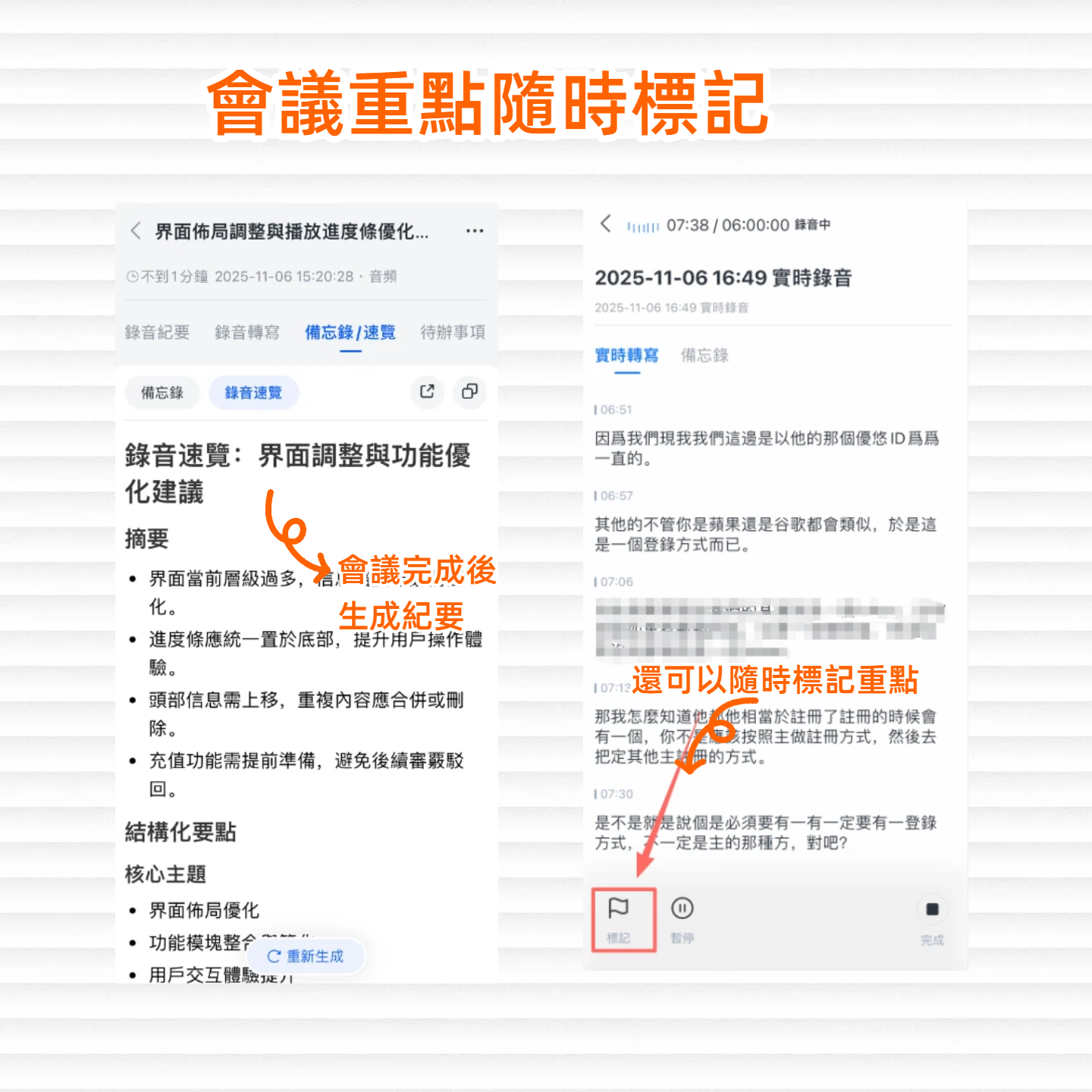
Tinrec makes post-processing its core: after transcription, it automatically generates AI summaries, chapters, key points, and action items, and you can ask natural language questions about the recording, like asking a colleague who attended the meeting: "What did the client think about the pricing?" Furthermore, Tinrec's Agent feature can automatically generate meeting minutes, reports, and tables from the recording, and export to PDF, Word, or sync to Notion, Google Docs.
→ This dimension: Tinrec wins completely; Google Meet gives you raw ingredients, Tinrec serves the dish.
Dimension 4: Data Management & Search
As meeting data piles up, management becomes a challenge. Google Meet's transcription records are saved to Drive or Calendar after the meeting, but search is limited to file names—you can't easily "find that number mentioned in a meeting three months ago with a single query."
Tinrec's database is designed with content at its core: all recordings and transcripts are stored in the same workspace, and you can search any past recording's text content by keyword, or even ask cross-meeting AI questions like: "What discussions mentioned 'budget approval' across all meetings in the last six months?" This is a qualitative difference for teams that need to accumulate knowledge over time.
→ This dimension: Tinrec is clearly better for those needing long-term knowledge management.
Dimension 5: Price & Value
Google Meet's transcription may seem "built-in," but it requires a paid Google Workspace plan to enable. For example, Business Starter costs about $7.8/user/month, which is not cost-effective for small teams if you only upgrade for transcription—and the feature is limited.
Tinrec's pricing is purely based on "recording duration": the free tier offers a monthly quota for testing; for short-term projects or intensive meeting periods, a weekly card suffices; for regular weekly meetings or classes, a Pro monthly or annual card is more economical. In other words, you only pay for the transcription you actually use, not a per-seat fee for platform features.
→ This dimension: Value varies by need, but for users who just want to organize meeting content, Tinrec is more targeted.
What Unique Advantages Does Each Have?
Tinrec's Unique Advantages
- More than just a meeting tool: Handles class recordings, interviews, podcasts, online videos—manage all audio/video data with one account.
- AI Q&A makes data 'alive': Ask follow-up details after recording without re-listening to the entire audio.
- Automated post-processing: Summaries, action items, meeting minutes, and export to third-party tools in one go, saving hours of manual work.
- Cross-platform + offline recording: Record on phone, upload on computer, view on web; record offline and transcribe later.
Google Meet Built-in Transcription's Unique Advantages
- No extra steps: Captions appear automatically during the meeting, and the transcript is saved automatically afterward—almost zero learning curve.
- Deep Workspace integration: Transcripts are attached directly to Calendar events or Drive, convenient for teams already fully invested in the Google ecosystem.
Conclusion: Which Should You Choose?
- If you only need basic caption assistance and rarely need post-meeting organization → Google Meet built-in transcription will do.
- If you have weekly meetings or classes and need searchable, reviewable meeting records → Tinrec is better (AI summaries + Q&A + action items, all in one).
- If you need to organize not just meetings but also interviews, class recordings, YouTube content → Only Tinrec can do that.
- If your team is already fully on Google Workspace and doesn't want extra spending → Google Meet transcription may suffice for now, but you'll hit a wall as needs grow.
In a nutshell: For most people who need to turn meetings into action, Tinrec is the more complete choice. We recommend testing with the free tier using your usual meeting recordings, then decide on a weekly or monthly card based on usage frequency.
Turn every recording into actionable outcomes
Get 60 free transcription minutes when you sign in. No credit card required.
Related Reading
You might also like
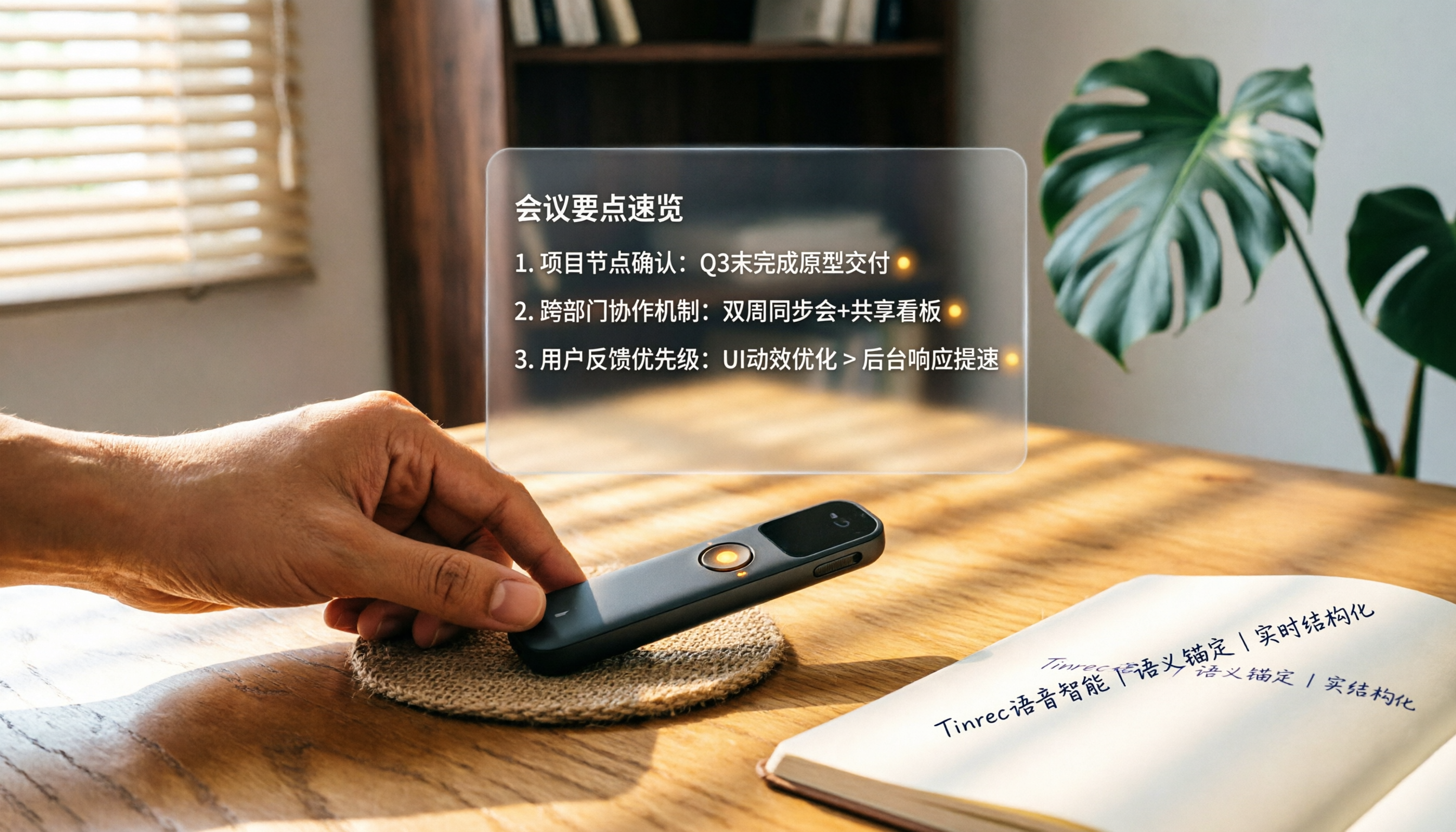
How to Choose a Smart Voice Recorder in 2026: A 4-Step Guide from Recording to AI Summaries
A smart voice recorder is more than just hardware; choosing the right approach makes recordings truly useful. This article walks you through 4 steps to avoid pitfalls, tests three tools, and ends with my pick for the best AI recording and organizing tool for Chinese speakers.
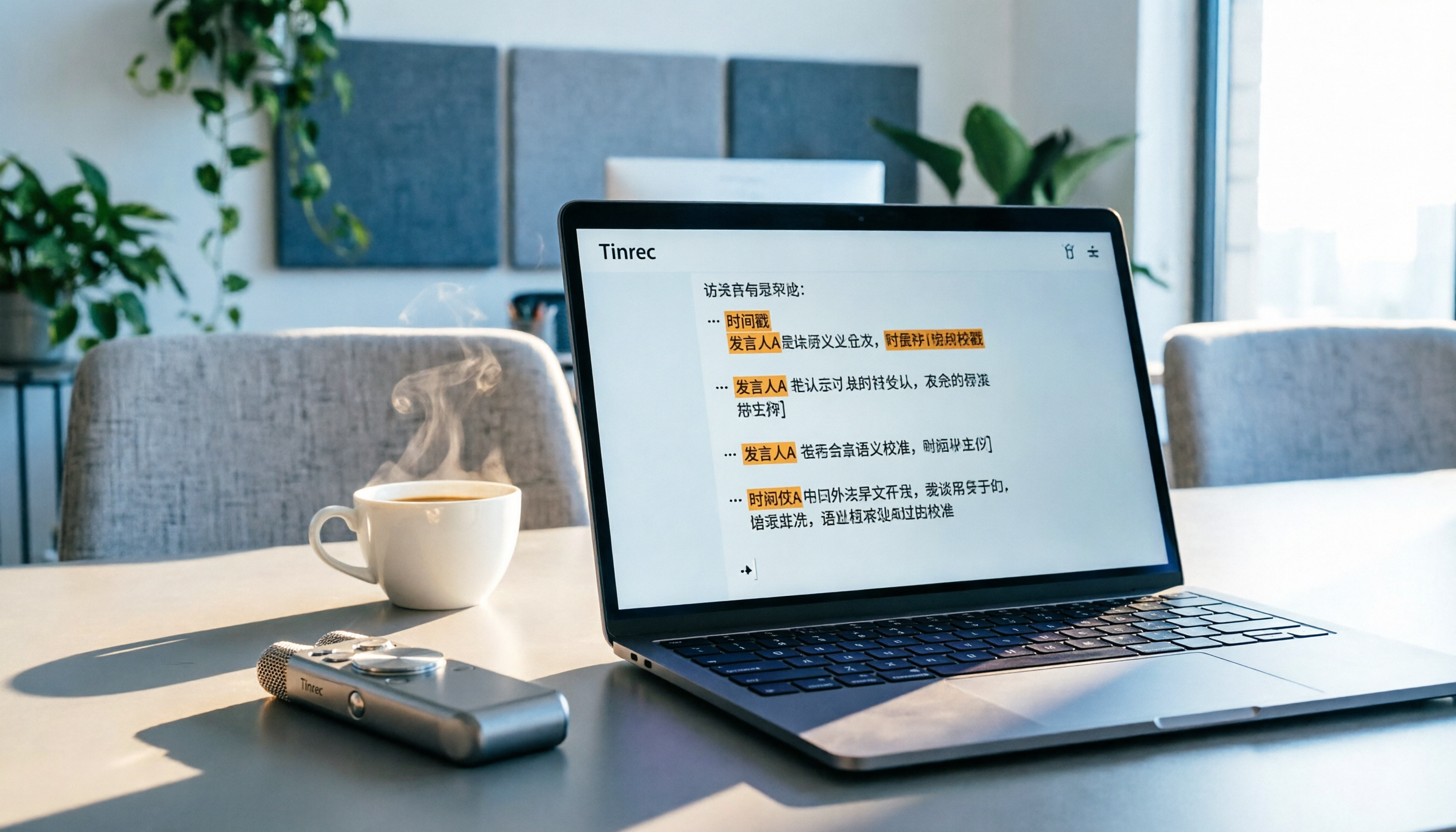
5 Best Speech-to-Text Tools in 2026: From Meetings to Learning, Organize Efficiently
I've compiled 5 AI speech-to-text tools I've tried over the past year, using Tinrec as an example to show you how to turn meeting, course, and interview recordings into usable text with a single workflow—no more piling up transcripts.

2026 Tested: 5 Recording Solutions Compared—Are Mobile Apps Really Better Than Voice Recorders?
Still debating whether to buy a voice recorder? What you really need is a tool that turns recordings into text and highlights key points. This article tests 5 recording-to-text and organization solutions, from free apps to AI recording hardware, to help you find the best fit—and explains why Tinrec is our top all-purpose recommendation.

2026 Long-Battery Voice Recorder Free Options: 5 Picks Reviewed
Running out of battery on your voice recorder during class is a nightmare? We tested 5 recording and AI organization tools, from free apps to paid plans, from a student's perspective to tell you which is best for long recordings, comparing battery life, audio quality, and AI features.

Tinrec vs Otter.ai 2026: A 5-Dimension Showdown for Students Needing Large-Capacity Audio/Video Organization
Tired of large recordings? A senior student tests Tinrec and Otter.ai, comparing input sources, Chinese accuracy, AI note features, free tiers, and pricing to see which tool better suits students' transcription needs, saving you money.

3 Workplace Voice Recorders Tested in 2026: Which One Is the Ultimate Meeting Notes Sidekick?
How should you choose a voice recorder for the workplace? We tested a traditional voice recorder, phone recording, and the AI recording app Tinrec, comparing portability, post-processing, and budget to find the best meeting note solution for office workers.

Voice Recorder vs. Phone Recording in 2026: How to Choose? 5 Steps to Build an Efficient Recording Workflow
Still torn between a voice recorder and your phone for recording? This article starts from real-world use cases, teaches you how to find the best recording solution in 5 steps, and tests the AI recording tool Tinrec to see how it solves the pain points of traditional recording, saving you hours of organizing time.

How to Choose a Cost-Effective Voice Recorder in 2026: 4 Steps to Compare Recorders and AI Tools
Thinking about buying a voice recorder but unsure how to evaluate value for money? This article compares traditional voice recorders and AI recording tools from perspectives like features, price, and post-processing, helping you pick the best recording solution.

2026 Test: AI Software vs. Hardware Noise Reduction for Voice Recorders—Which Keeps Meetings and Lectures Clearer?
I tested popular voice recorders and AI recording software, and found that hardware doesn't always beat software for noise reduction. This article compares Tinrec and PLAUD Note in real-world scenarios, covering noise reduction, organization features, and long-term use, to help you choose the right solution.