

Turn recordings into transcripts and summaries in minutes
Upload audio or video for multilingual transcription, AI notes, and action items
Last semester, I took a Supply Chain Management course taught entirely in English. The professor used Google Meet for online classes. He spoke super fast and used a ton of jargon—I understood maybe 60% at best, let alone taking notes. Before the midterm, I opened the lecture recording, a two-hour file. I listened from start to finish but couldn't find the key points. I almost failed.
Then I started researching voice-to-text tools and discovered apps that can transcribe in real time, automatically highlight key points, and even list action items. They're a lifesaver for students. If you often attend English classes or meetings on Google Meet, this review is for you.
4 Key Points to Understand Before Choosing a Transcription Tool
Accuracy: Don't Just Trust Official Numbers
Many tools claim 98% accuracy, but that's measured in a quiet recording studio. In a real Google Meet environment—background noise, multiple speakers, varying microphone quality—accuracy drops significantly. I tested with my actual lecture recordings to get real results.
Cross-Platform: You Use Your Laptop Today, Your Phone Tomorrow
I like to record lectures on my laptop but review transcripts on my phone while commuting. If a tool only works on one platform, it's a hassle. It should at least work on iOS, Android, and web.
AI Features: Transcription Is Just the Beginning
If you only use the tool as a transcript generator, you're missing out. Many apps now offer automatic summaries, action items, and the ability to ask questions about the recording. That's where the real time savings come in.
Free Quota: A Student's Lifeline
With a limited monthly budget, how many minutes the free plan offers and what the paid plans cost is crucial. Some free plans are barely trials, while others are generous. Check carefully.
Tinrec — Our Top Pick After Testing
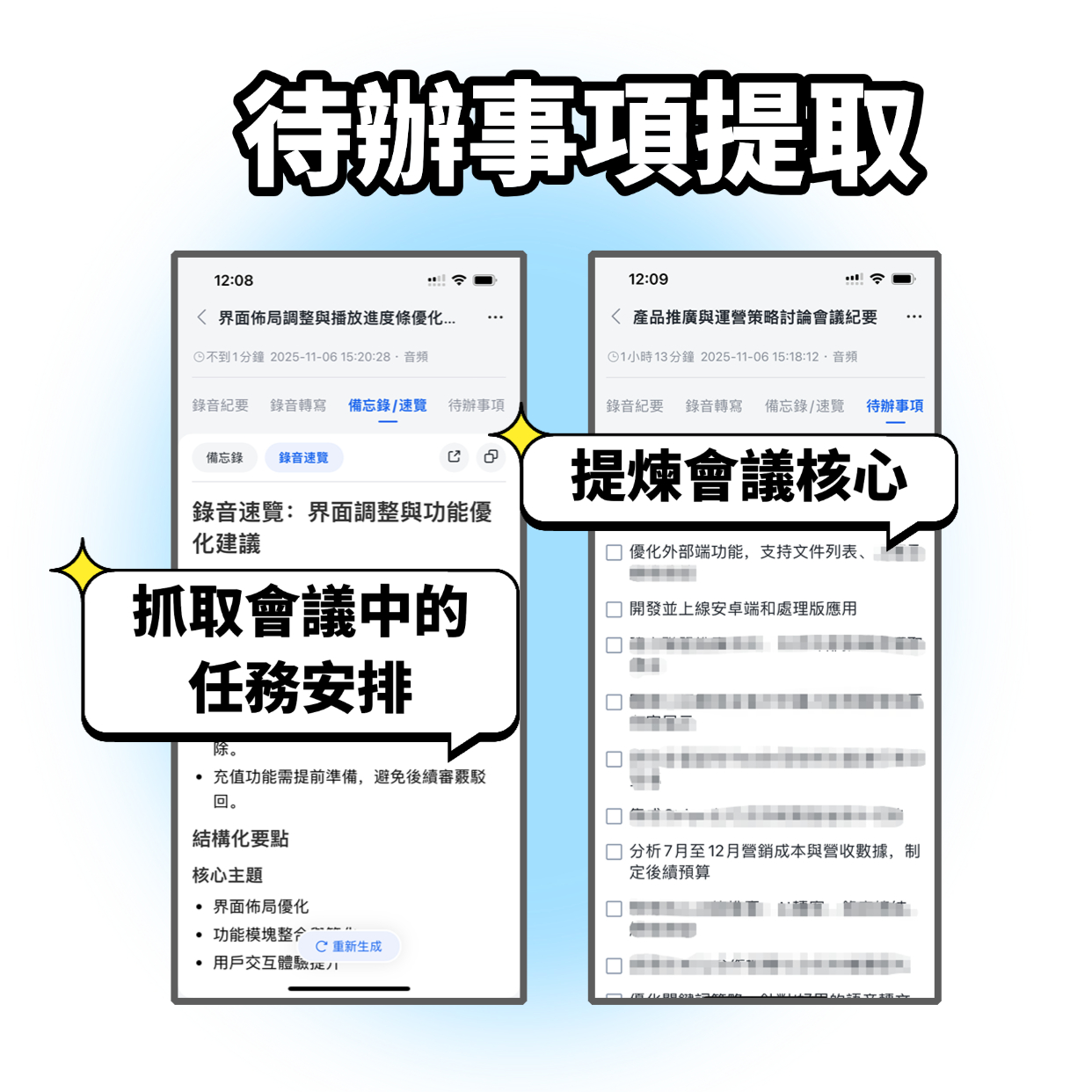
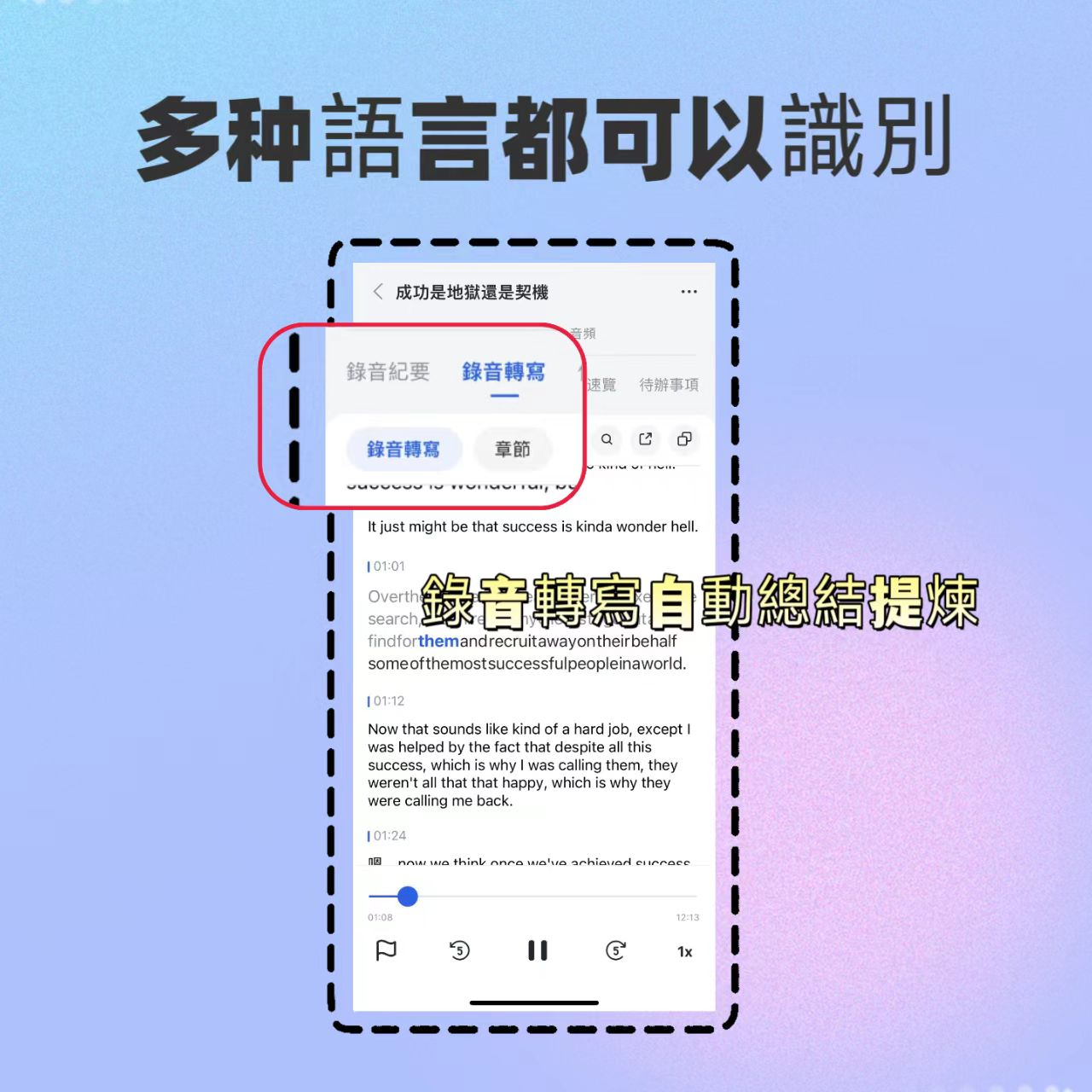
Tinrec is an AI-powered recording and audio/video organization tool that supports 14 languages. It has iOS, Android, and web apps. I was initially attracted by its ability to transcribe online videos just by pasting a link, but after using it for a whole semester, I found it's a game-changer for students.
Real-Time Transcription During Lectures
During Google Meet English classes, I open Tinrec's live recording feature, and it shows the transcript in real time with impressive speed. The best part? It can distinguish between different speakers—when the professor speaks and when a classmate asks a question, the transcript labels them clearly. That makes review super easy.
Ask the AI After Recording, No Manual Scrolling
Before, to find key points in a recording, I had to listen from start to finish. Now, after recording, I simply ask Tinrec's AI: "When is the assignment due?" or "Did the professor mention any final exam topics?" It answers based on the recording content—way more effective than Ctrl+F for keywords. Competitors at this price point rarely offer this feature.
Not Just Recordings: Web Videos Too
Once, the professor shared a long list of YouTube supplementary videos. I pasted the links into Tinrec, and it automatically turned them into text summaries. That saved me time, letting me get an extra half hour of sleep—totally worth it.
Stop organizing recordings by hand
Upload audio or video and automatically get a transcript, summary, and action items
Pros Summary
- Great Multilingual Support: It handles mixed Chinese and English courses smoothly. My roommate used it for a Cantonese class recording and said it worked well.
- Seamless Cross-Platform: Record on your laptop, view the transcript on your phone immediately. Perfect for reviewing on the go.
- Multiple Export Options: Export as Word or PDF. I compiled my notes directly into shared docs and uploaded them to the cloud for finals.
Honest Limitations
The free plan offers 100 minutes of transcription per month. If you record every class, it might not be enough. My approach: only record key classes (like fast-paced ones where I can't keep up with notes). That uses about 60–80 minutes per month. If you need to record everything, the Pro plan costs about the same as skipping two late-night snacks a month, and the student discount makes it even more affordable.
Who Is It For?
If you frequently attend English-taught courses, need to process online video materials, or want to ask AI about key points after recording, Tinrec is your best bet. Especially if you use both a laptop and a phone—its cross-platform support is very student-friendly.
Beyond Tinrec: Other Options
Otter.ai
The king of English meetings. The free plan gives 300 minutes per month, which is very generous. But it's purely meeting-oriented—it doesn't directly transcribe web videos like YouTube, and its multilingual AI Q&A (Otter Chat) only works with meeting content. If you only record English meetings and never need to process video materials, Otter is a more budget-friendly choice than Tinrec—but only in that specific scenario.
Notta
Similar features to Tinrec, including multilingual support and cross-platform. However, the free plan offers only 120 minutes per month, and AI chat query requires a paid subscription. For students on a tight budget, Notta falls short on free plan generosity. Additionally, Tinrec transcribes web videos faster—testing the same YouTube link, Tinrec produced a summary about 10 seconds quicker.
3 Common Mistakes to Avoid When Choosing a Transcription Tool
Mistake 1: Only Looking at Official Accuracy Claims
"98% accuracy" sounds impressive, but it's lab data. In a real Google Meet environment with background noise and network latency, accuracy will be lower. My advice: download the app and test it with your own lecture recording—free plans give you enough quota to try.
Mistake 2: Ignoring Cross-Platform Needs
You won't always use the same device. Today you record on your computer, tomorrow you want to review on your phone. If the tool is single-platform, you'll be frustrated. Tinrec and Notta handle this well, but Otter's web version is weaker.
Mistake 3: Only Using It for Transcription, Not AI Features
If you only use the tool as a "voice-to-text" device, you're getting only half the value. Tinrec's AI query feature lets you ask "What are the assignments?" after recording—much faster than manually skimming a 30-minute transcript. Since you've already invested time in researching the tool, make full use of it.
Bottom Line: Which One Should You Choose?
In short: Most students will be fine with Tinrec, unless you only record English content and never want to pay—only then consider Otter.
- Need to handle both English and Chinese classes, or frequently watch YouTube materials → Choose Tinrec (multilingual, web video transcription, free AI Q&A).
- Only record English meetings and have a $0 budget → Choose Otter.ai (300 free minutes/month, the only recommended alternative).
- Want AI chat query in the free plan → Choose Tinrec (Otter and Notta require payment for that feature).
- Heavy cross-platform user → Choose Tinrec (most consistent experience across iOS, Android, and web).
Final advice: download the free version of Tinrec and try it. 100 minutes per month is enough for two or three classes. Experience the convenience of AI Q&A. If you like it, consider upgrading later—no need to pay upfront. I've already recommended it to three classmates, and they're all using it to compile shared notes—finals became much easier.
Turn every recording into actionable outcomes
Get 60 free transcription minutes when you sign in. No credit card required.
Related Reading
You might also like
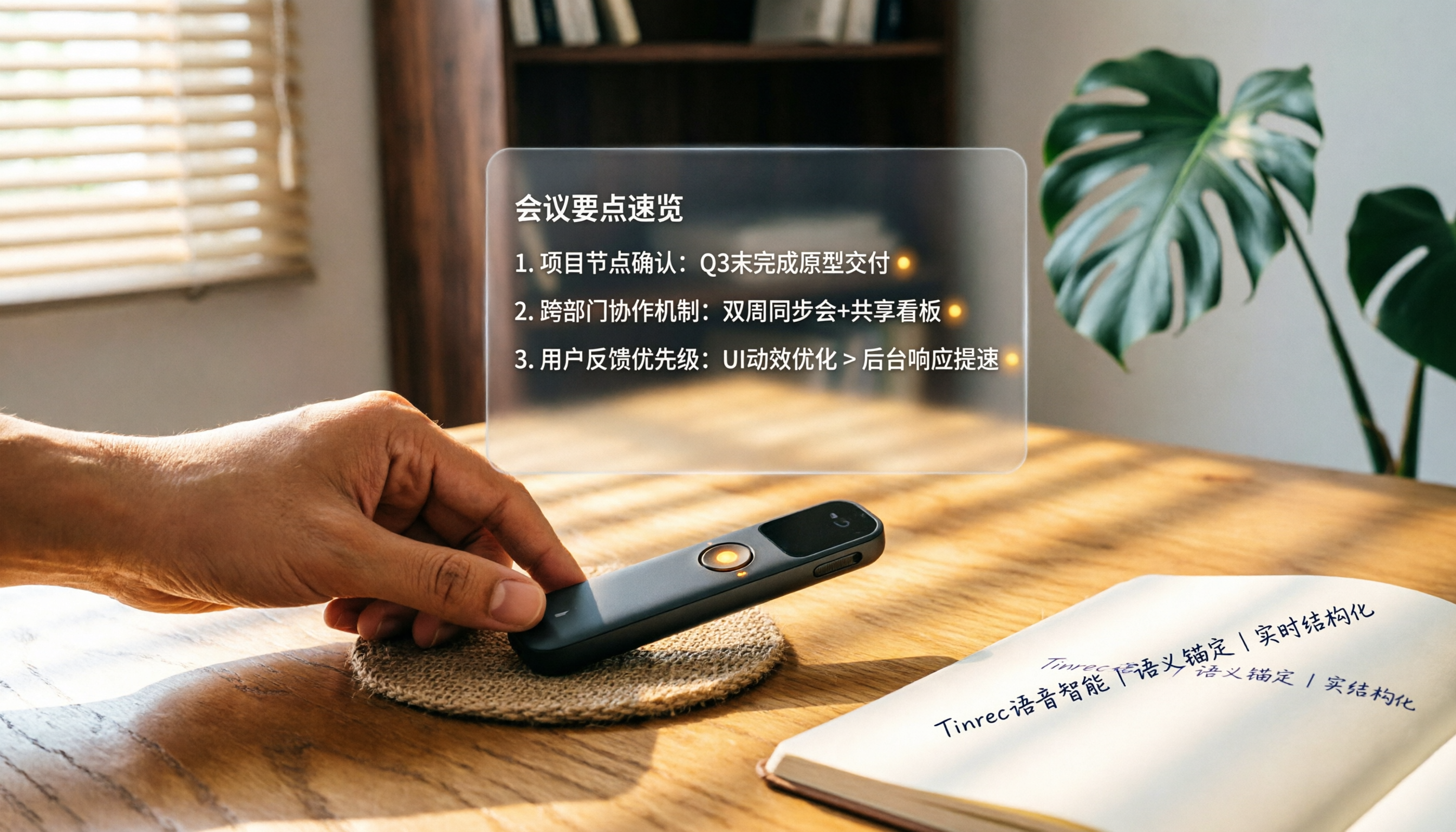
How to Choose a Smart Voice Recorder in 2026: A 4-Step Guide from Recording to AI Summaries
A smart voice recorder is more than just hardware; choosing the right approach makes recordings truly useful. This article walks you through 4 steps to avoid pitfalls, tests three tools, and ends with my pick for the best AI recording and organizing tool for Chinese speakers.
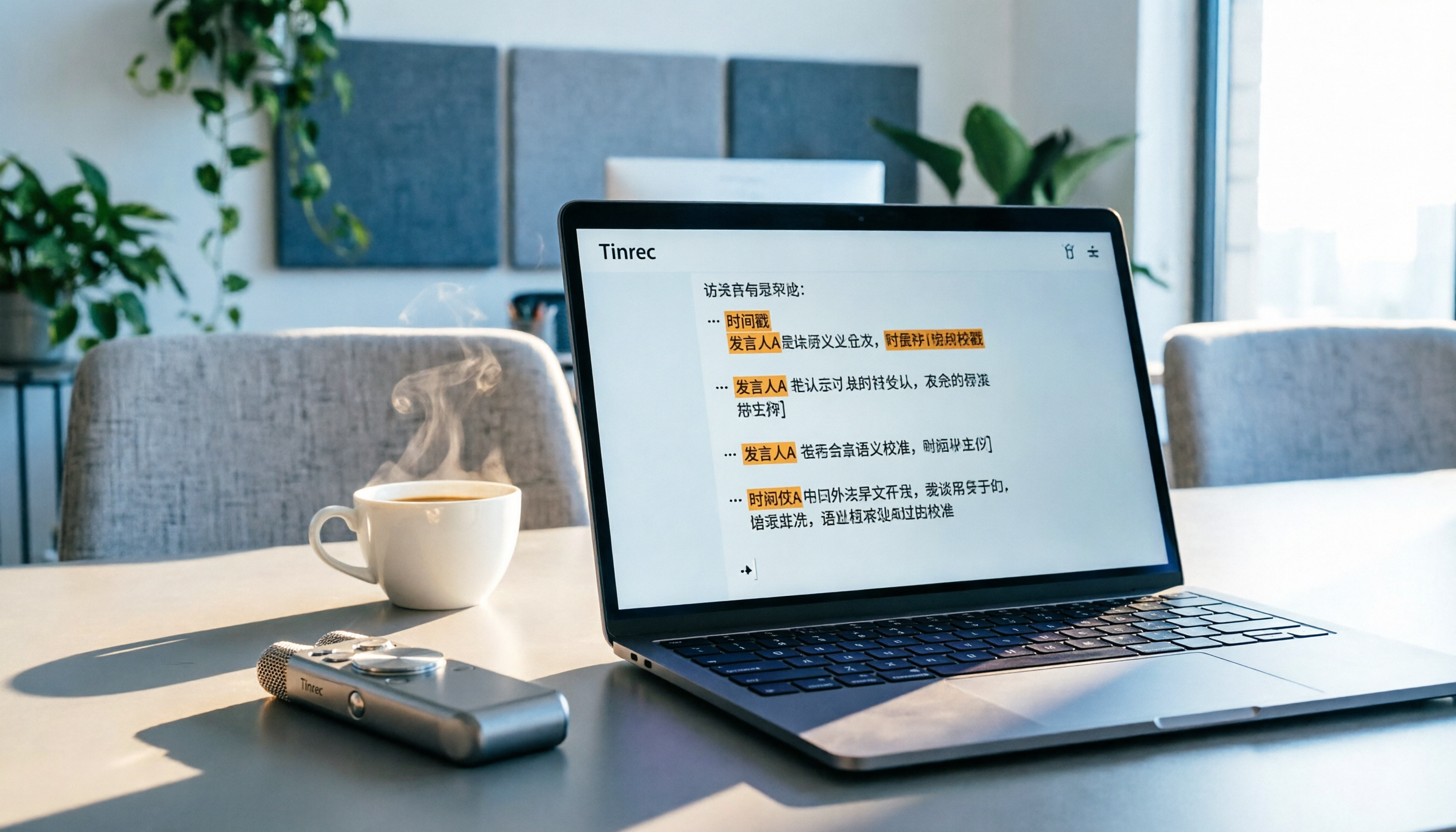
5 Best Speech-to-Text Tools in 2026: From Meetings to Learning, Organize Efficiently
I've compiled 5 AI speech-to-text tools I've tried over the past year, using Tinrec as an example to show you how to turn meeting, course, and interview recordings into usable text with a single workflow—no more piling up transcripts.

2026 Tested: 5 Recording Solutions Compared—Are Mobile Apps Really Better Than Voice Recorders?
Still debating whether to buy a voice recorder? What you really need is a tool that turns recordings into text and highlights key points. This article tests 5 recording-to-text and organization solutions, from free apps to AI recording hardware, to help you find the best fit—and explains why Tinrec is our top all-purpose recommendation.

2026 Long-Battery Voice Recorder Free Options: 5 Picks Reviewed
Running out of battery on your voice recorder during class is a nightmare? We tested 5 recording and AI organization tools, from free apps to paid plans, from a student's perspective to tell you which is best for long recordings, comparing battery life, audio quality, and AI features.

Tinrec vs Otter.ai 2026: A 5-Dimension Showdown for Students Needing Large-Capacity Audio/Video Organization
Tired of large recordings? A senior student tests Tinrec and Otter.ai, comparing input sources, Chinese accuracy, AI note features, free tiers, and pricing to see which tool better suits students' transcription needs, saving you money.

3 Workplace Voice Recorders Tested in 2026: Which One Is the Ultimate Meeting Notes Sidekick?
How should you choose a voice recorder for the workplace? We tested a traditional voice recorder, phone recording, and the AI recording app Tinrec, comparing portability, post-processing, and budget to find the best meeting note solution for office workers.

Voice Recorder vs. Phone Recording in 2026: How to Choose? 5 Steps to Build an Efficient Recording Workflow
Still torn between a voice recorder and your phone for recording? This article starts from real-world use cases, teaches you how to find the best recording solution in 5 steps, and tests the AI recording tool Tinrec to see how it solves the pain points of traditional recording, saving you hours of organizing time.

How to Choose a Cost-Effective Voice Recorder in 2026: 4 Steps to Compare Recorders and AI Tools
Thinking about buying a voice recorder but unsure how to evaluate value for money? This article compares traditional voice recorders and AI recording tools from perspectives like features, price, and post-processing, helping you pick the best recording solution.

2026 Test: AI Software vs. Hardware Noise Reduction for Voice Recorders—Which Keeps Meetings and Lectures Clearer?
I tested popular voice recorders and AI recording software, and found that hardware doesn't always beat software for noise reduction. This article compares Tinrec and PLAUD Note in real-world scenarios, covering noise reduction, organization features, and long-term use, to help you choose the right solution.