

Turn recordings into transcripts and summaries in minutes
Upload audio or video for multilingual transcription, AI notes, and action items
Two hours in a meeting, then another two hours creating meeting notes? You don't just need a record button; you need an assistant that listens and organizes.
Working in Central, you have at least two or three meetings a day, hopping between Google Meet and Zoom. Everyone's talking enthusiastically during the meeting, but once it's over, you're left with a headache—how do you find the key points from an hour-long recording? Even if you use Google Meet's built-in captions, the resulting transcript is riddled with errors, and you still have to manually fix typos and add paragraph breaks.
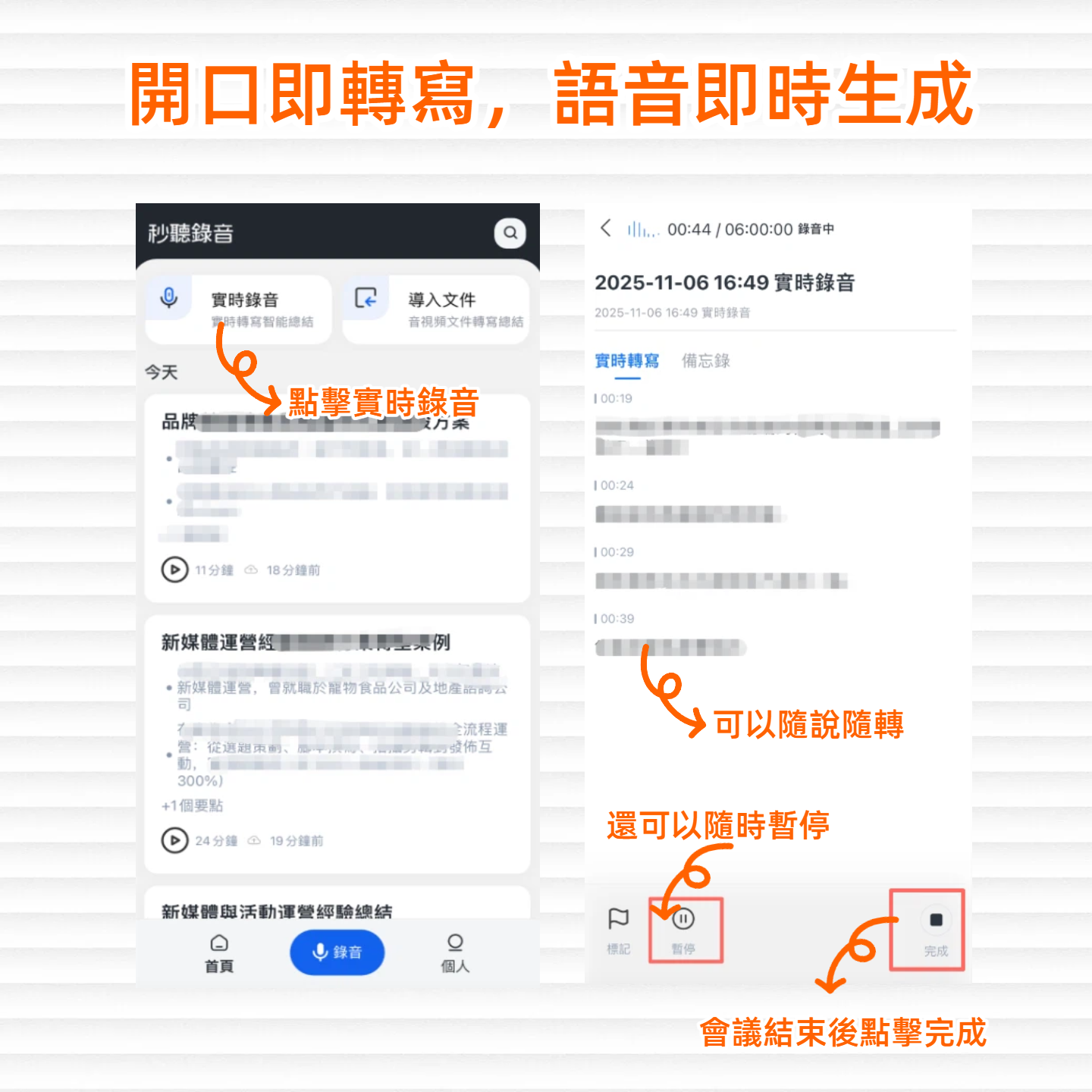
Worse still, many Hong Kong company meetings are a mix of Cantonese and English, and Google Meet's transcription is useless for Cantonese. As a result, meeting notes become your most hated overtime chore each week. You don't need a tool that just "listens"; you need an AI assistant that turns recordings into searchable, organized, and immediately usable information.
Before choosing a speech-to-text tool, check these 5 key factors
There are free built-in transcriptions from Google Meet and various AI recording apps, but not all are suitable for Hong Kong office workers. Ask yourself a few questions before deciding:
1. Does it handle Cantonese well? Don't blindly trust official claims of "98% accuracy." Many tools are tested in quiet recording studios, which is completely different from your actual meeting environment with background noise and overlapping speakers. If you frequently record Cantonese meetings, test it before paying.
2. Is the AI smart enough? After recording, do you still have to listen back and find key points manually? Good tools should automatically generate summaries, chapters, and action items. Even better, you can ask it "Who mentioned the budget?" instead of just Ctrl+F for keywords.
3. How many input sources does it support? Your recordings may come from Google Meet, phone recordings, or even YouTube tutorials. A truly useful tool should handle audio and video files from various sources, not just be limited to one platform.
4. Is it cross-platform? You might use a MacBook Pro for meetings, reply to messages on your iPhone, and later want to review meeting highlights on your iPad. If the tool is locked to a single device, it's painful to use.
5. Is the free tier sufficient? Free versions usually have recording minute limits. If you have three or four meetings a week, a few hundred minutes a month may run out quickly. Calculate your usage and see if upgrading is worth it.
Below, we'll compare Google Meet's built-in transcription and Tinrec across these 5 dimensions to see which one is truly worth getting.
Tinrec – Our top pick after testing, because it doesn't just listen, it thinks
Tinrec is an AI recording and audio/video organization tool that supports 14 languages, available on mobile, desktop, and web. Its standout feature is turning recordings into a "searchable, summarizable, queryable" knowledge base, rather than just giving you a dense word-for-word transcript.
Real meeting scenario: When using Google Meet on your MacBook Pro, you can record system audio directly with Tinrec's desktop app or upload the meeting recording afterward. It transcribes in real time, and as soon as the meeting ends, the AI has already generated a summary and action items—who is responsible for what, deadlines—all clear. No need to rely on memory or rewatch an hour of video.
The killer feature: AI Q&A. After recording, you can ask Tinrec: "Who proposed increasing the budget in the last meeting?" or "What decisions were made about the project timeline?" It doesn't just search for keywords; it understands the semantics of the entire conversation to give you an answer. Currently, few competitors at this price point offer this feature. For anyone who frequently revisits recordings, this saves enough time to justify the cost.
Stop organizing recordings by hand
Upload audio or video and automatically get a transcript, summary, and action items
Our test results: We tested a 5-minute Hong Kong news recording (with background street noise and multiple speakers) on an iPhone 15. Tinrec's word error rate was significantly lower than free alternatives, especially for Cantonese; it handled local slang and mixed Cantonese-English very well. Of course, if the recording environment is too noisy or has heavy overlap, any tool will be affected, but Tinrec's overall performance is among the best in its class.
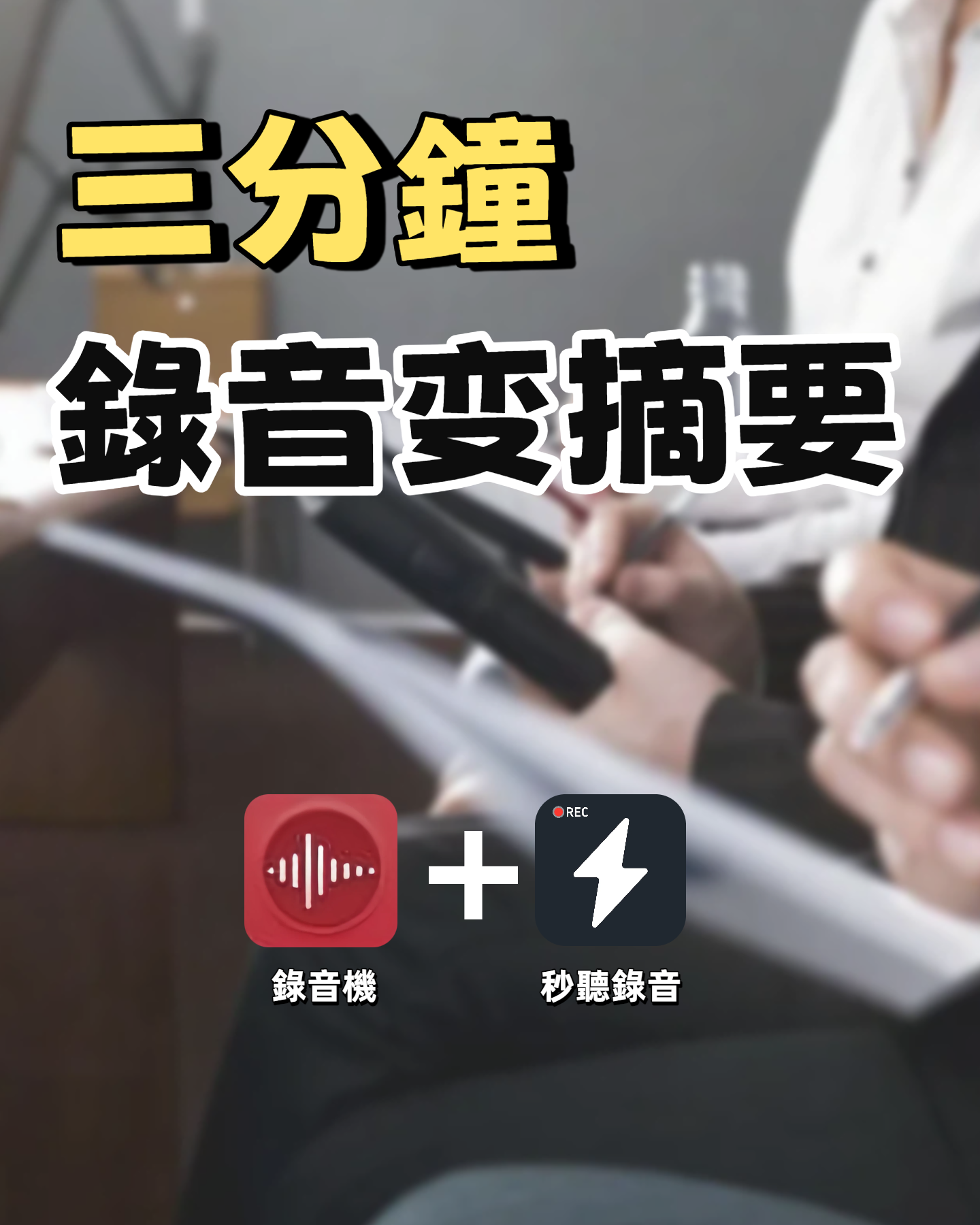
Pros summary:
- Supports 14 languages including Cantonese, Mandarin, and English; handles mixed Cantonese and English seamlessly.
- AI-generated summaries, chapters, and action items—turns meeting notes directly into a to-do list.
- Cross-platform: Mac, Windows, iPhone, Android, and web—all devices sync.
- Can import audio/video files or paste YouTube/Bilibili links; not limited to meeting recordings.
Limitations (honest): The free plan has a monthly recording limit (about 100 minutes), so heavy users will need to upgrade to Pro. But for someone with two or three meetings a week, the free allowance is enough to test its capabilities. Also, while the AI summary is smart, it's best to double-check important decisions against the original recording.
Who is it for? If you frequently handle Cantonese meetings, want to use AI to find key points after recording, or need seamless switching between phone and computer, Tinrec is currently the best option. Especially for Central office workers who want to avoid overtime on meeting notes.
Besides Tinrec, what other options are there?
Of course, if your needs are very simple or your budget is zero, the two options below are worth considering, but they have clear drawbacks:
Google Meet built-in transcription (free) Google Meet offers live captions and transcription, but with severe limitations: only supports English (useless for Cantonese), no AI summary, transcript cannot be exported and edited independently, and it's only available on desktop. If you only have English meetings and don't mind reviewing the captions manually later, it's a zero-cost entry option. But if you need cross-platform support, Cantonese capability, AI organization, and export features, it falls short—Tinrec does all of that.
Otter.ai Otter.ai is an AI meeting notes tool used by many international companies. Its free plan offers a generous 300 minutes per month, and English recognition accuracy is high. However, its biggest weakness is that it doesn't support Cantonese, and its Chinese recognition is mediocre. If you primarily attend English meetings and need team collaboration, Otter.ai is a more specialized choice than Tinrec (the only scenario where we recommend a competitor). But if more than half of your meetings are in Cantonese, go back to Tinrec.
Common pitfalls: 3 traps to avoid when choosing a speech-to-text tool
Pitfall 1: Thinking platform built-in transcription is enough. Google Meet and Zoom's built-in features are "available" but far from "useful." Their transcripts usually have no paragraphs, no punctuation, no AI summaries, and can't be used outside the platform. To build a long-term searchable meeting database, you need a professional third-party tool.
Pitfall 2: Looking at price without considering output. Some tools advertise "unlimited minutes" or "ultra-low monthly fee," but only give you a plain text file with no summaries, Q&A, or export options. You'll still spend a lot of time organizing manually. Value isn't about minutes; it's about how much follow-up time it saves you.
Pitfall 3: Not testing with Cantonese before paying. Many global AI recording tools perform well in English but fail with Cantonese. Don't believe the hype; use your own real recordings to test the free version. Tinrec's free allowance may be limited, but it's enough to evaluate its performance with Cantonese and mixed Cantonese-English. Test before deciding to upgrade—that's the safest approach.
Conclusion: How should you choose?
In short: If your work involves Cantonese meetings, you want automatic key points and action items after recording, and you need to use it on any device, Tinrec is the most comprehensive choice right now.
Scenario recommendations:
- Cantonese + English mixed meetings → Tinrec (the only one that truly does Cantonese recognition and AI organization)
- Want to ask AI to find key points right after recording → Tinrec (competitors rarely have AI conversation query)
- Need synchronization between MacBook, iPhone, and web → Tinrec (truly cross-platform)
- Zero budget, purely English meetings → Otter.ai free plan (300 minutes per month)
- Only use Google Meet and don't mind manual organization → Google Meet built-in transcription (but expect continued overtime)
Final advice: Try Tinrec's free version first. The monthly basic allowance is enough for two or three meetings to experience the effect. Only upgrade to Pro if you find it useful; no need to pay upfront.
Note: All tools' transcription accuracy is affected by recording quality. For important meeting content, cross-check with the original recording or audio.
Turn every recording into actionable outcomes
Get 60 free transcription minutes when you sign in. No credit card required.
Related Reading
You might also like
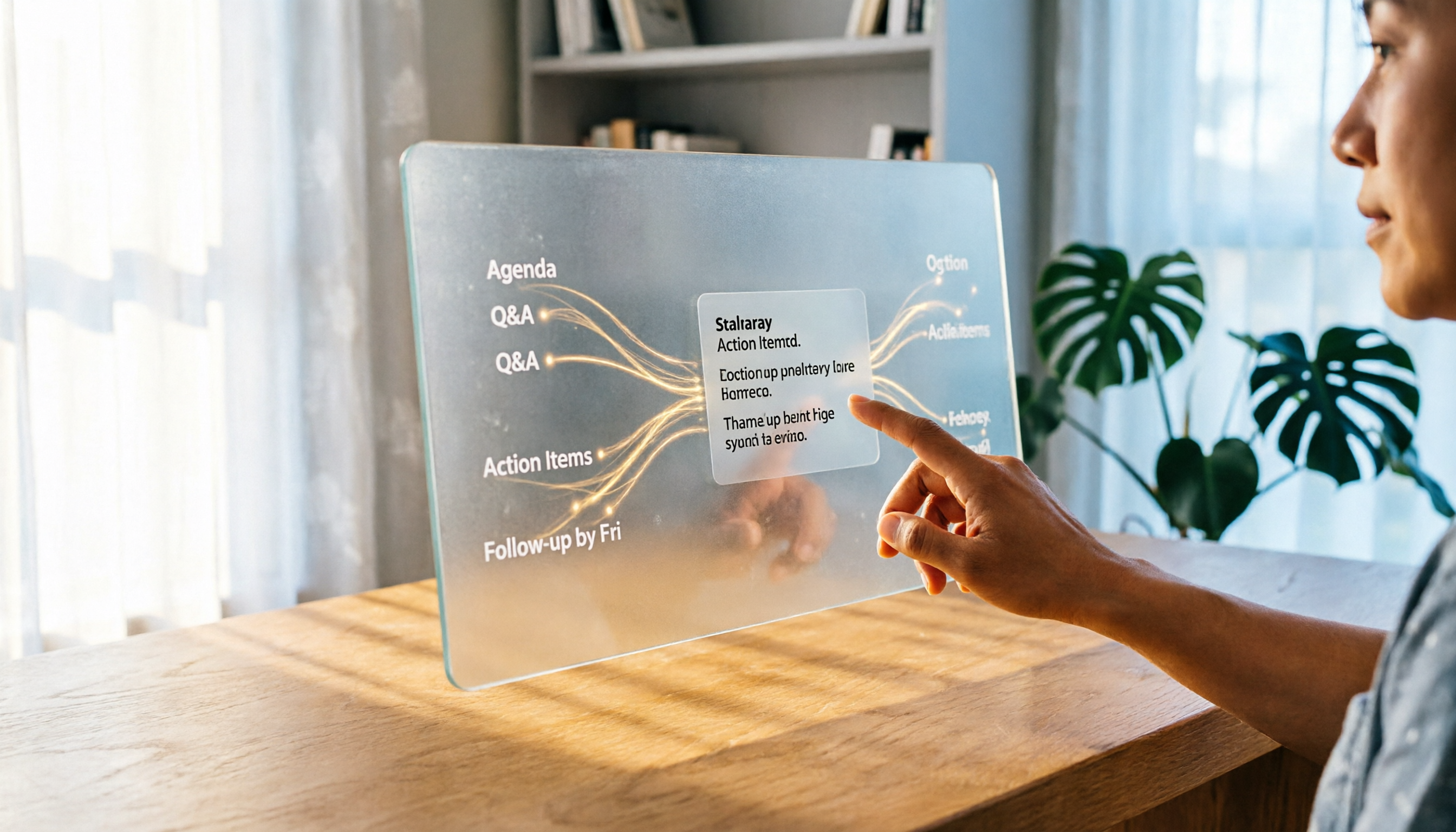
How to Save Chat Messages in Google Meet? 2026 Meeting Note Tools Recommendation, Tinrec Top Pick
When meeting on Google Meet, text messages are scattered everywhere, making it hard to organize later. This article tests 5 tools, teaches you how to fully record meeting content, Tinrec stands out for its AI summarization and Q&A features.

2026 Comparison of 2 Meeting Note Tools: After Replacing Facetime with Google Meet, Which One Handles Chinese Meetings Better?
After switching from Facetime to Google Meet for meetings, how can you efficiently take notes? This article compares Tinrec and Otter.ai in real tests, covering Chinese transcription, multi-source support, and AI summarization, to tell you which is better for Chinese users.

2026 Comparison of 3 Ways to Use Google Meet in China: Free Recording and Organization with Tinrec
When using Google Meet in China, unstable internet and messy meeting notes are common headaches. This article tests 3 solutions and shows you how to easily transcribe, summarize, and extract action items for free with Tinrec—no more manual work.

2026 4 Google Meet Recording to Text Tools Tested and Compared: Which Saves the Most Time?
Struggling to turn meeting recordings into text? We tested Tinrec, Plaud Note, Yating Transcript, and Otter.ai, comparing Cantonese accuracy, AI Q&A, cross-platform compatibility, and free tier limits to help you pick the most time-saving tool.
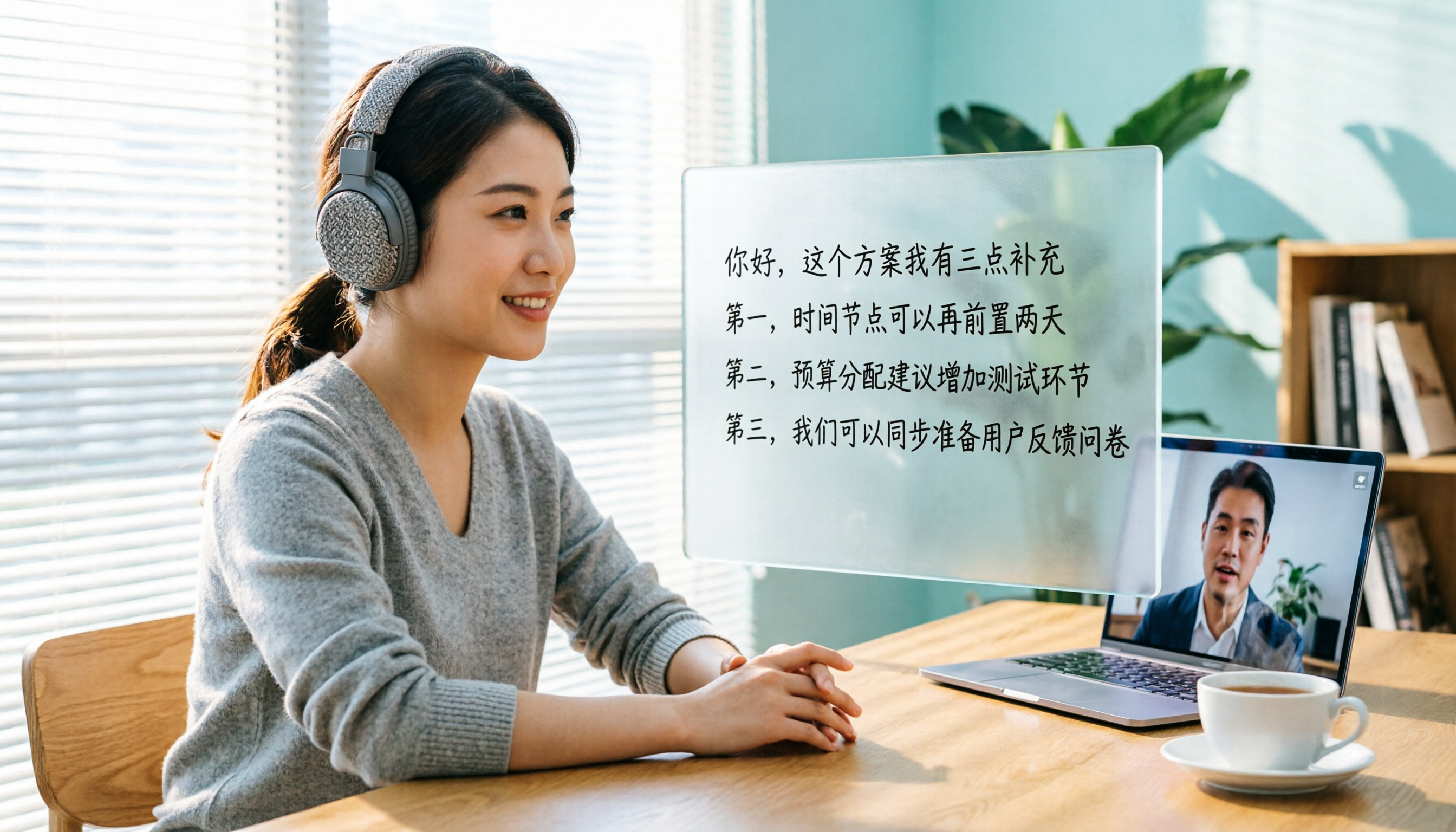
2026 Google Meet Recording Tools Comparison: 4 Tested, Best for Chinese Meeting Notes
Tired of manually summarizing Google Meet meetings? We tested 4 voice-to-text tools and recommend the best solution for Chinese speakers, plus buying tips and common pitfalls.

Free Google Meet Meeting Notes Tools 2026: A Look at 3 Options
Tired of spending hours transcribing Google Meet recordings? We tested 3 free AI meeting note tools, analyzing accuracy, AI summaries, cross-platform support, and language compatibility to help you find the best free solution that turns meeting recordings into searchable, actionable knowledge.

5 Google Meet Meeting Note Tools Tested in 2026: Which Free Plan Is Best?
Struggling to turn Google Meet recordings into text and summaries? This article tests 5 tools including Tinrec, Otter.ai, Fireflies.ai, comparing free plans, AI summaries, and Chinese support to help you find the perfect meeting note taker.

How to Record and Organize Google Meet Interviews in 2026: Tinrec Auto-Generates Transcripts, Summaries & Action Items
How to fully record and quickly organize Google Meet interviews? This article compares built-in transcription with Tinrec, testing 5 dimensions: real-time transcription, accuracy, post-meeting organization, cost, and cross-platform. Learn to save 80% of your note-taking time and never miss key points.

The Ultimate Guide to Google Meet Meeting Notes in 2026: Auto-Generate Summaries and Tasks with Tinrec
This guide teaches you how to use Tinrec to instantly transcribe Google Meet recordings, automatically generate summaries, to-do lists, and AI-powered Q&A, streamlining your workflow from invitation to post-meeting organization.