

Turn recordings into transcripts and summaries in minutes
Upload audio or video for multilingual transcription, AI notes, and action items
Have you ever counted how much time you spend after an important call trying to recall what the other person said?
A client rattles off a list of specs over the phone, you type as you listen, and after hanging up, you realize you missed two numbers.
A friend sets a time and place to meet, you think you've got it, but the next day you can't remember if it was Wednesday or Thursday.
Even trickier, some calls need to be kept as evidence or shared with colleagues, and without a recording, you're left piecing things together from memory.
In the past, the iPhone never had built-in call recording, so you had to rely on third-party apps, external devices, or even speakerphone with another phone. Now, iOS 18.1 finally brings this feature to the table, but many people still don't know how to use it or what limitations it has.
In this article, I'll walk you through the actual steps and compare several common iPhone call recording methods so you can see which one suits you best.
Before Choosing a Call Recording Solution, Understand These 4 Key Points
Will the other party be notified?
When you enable the built-in call recording on iPhone, the system plays an audio prompt saying "This call will be recorded," so both parties are aware. This is Apple's design based on privacy and legal considerations, and there's currently no official way to turn it off. If you need silent recording, you'll have to consider other methods, but those often only capture your own voice or come with legal risks.
Where are recordings saved?
This is the most confusing part for many. After a call recording ends on iPhone, the file is automatically saved to the Voice Memos app, not the Notes app. Some sources mention you can view transcripts in Notes, but the recording file itself—managing, playing, and deleting—is all done in Voice Memos.
Is the transcript reliable?
iOS 18.1's call recording automatically generates a transcript, but Apple's official documentation clearly warns that the transcript may not fully reflect the call content, so it's recommended to verify accuracy before relying on it. Don't submit the transcript directly as an official meeting record.
Watch out for legal issues.
In Taiwan, secretly recording a call without the other party's consent may violate the Criminal Code's offense of breaching privacy. Even in regions where one-party consent applies, it doesn't mean you can freely distribute the recording. The general advice is to inform the other party and get consent before recording—this is the least controversial approach.
Built-in iPhone Call Recording—The Easiest and Most Recommended Choice
The built-in call recording feature on iPhone is available starting with iOS 18.1. As long as your iPhone is eligible for the update, you can use it without installing any extra apps.
How to Enable It? Step-by-Step Guide
- First, make sure your iPhone is updated to iOS 18.1 or later. Go to Settings > General > Software Update to check.
- Use the built-in Phone app to make or answer a call.
- During the call, a recording button (waveform icon) will appear in the top-left corner of the screen.
- Tap the button, and the system will count down 3 seconds and play a recording notification, then start recording.
- After the call ends, the recording is automatically saved to the Voice Memos app.
Advantages of Built-in Call Recording
Stable audio quality. Since it's system-level recording, it captures the call audio directly, which is much clearer than placing another phone nearby. In tests, both parties' voices come through clearly.
Automatic transcript generation. After the call, the system automatically converts the content to text, making it easy to quickly review key points. However, as mentioned, the transcript isn't 100% accurate, so it's best to replay the recording for important details.
No extra cost. The built-in feature is completely free—no subscriptions or external devices needed.
Stop organizing recordings by hand
Upload audio or video and automatically get a transcript, summary, and action items
Limitations of Built-in Call Recording
The other party will always know. The recording notification cannot be turned off; it's a hard design limitation. If you need to record secretly, this method isn't for you.
Not available in some regions. Apple's official documentation lists several countries and regions where call recording isn't supported, including the EU, Russia, Saudi Arabia, South Africa, and others. Before traveling, check the iOS feature availability.
Not all models support it. If your iPhone can't upgrade to iOS 18.1, you won't be able to use this feature.
Who Is It For?
If you need to record client quotes, conference calls, or important agreements, and you don't mind the other party knowing, built-in call recording is the simplest and most stable choice. Honestly, for most people, this is more than enough.
Beyond the Built-in Feature: Other iPhone Call Recording Methods
Method 1: Third-Party Call Recording Apps
Some third-party services offer merged call recording, where a service number is added to the call, and the third party records it on your behalf. These methods usually require payment, and audio quality and stability vary by service.
Compared to the built-in feature, third-party apps may offer different notification mechanisms or recording management features, but the downsides are extra setup, potential privacy concerns, and less stability than system-level recording. If you want to avoid Apple's recording notification, third-party apps may not solve that either, as legal risks still exist.
Method 2: Speakerphone with Another Phone or Recorder
This is the most traditional method: put the call on speaker and use another phone, a voice recorder, or a computer to capture the speaker's output.
The advantage is that the other party won't receive any recording notification, but the downsides are obvious: poor audio quality, background noise, and needing two devices to operate simultaneously. If the call content is important, this method isn't recommended—the results are often disappointing.
Method 3: External Recording Devices
There are external recording devices designed specifically for phone calls, connecting via the headphone jack or Bluetooth to capture both parties' voices. These devices offer better audio quality than speakerphone recording, but the downsides are the cost of hardware, the need to carry it around, and having to set it up before every call.
If you frequently need call recording and don't mind carrying an extra gadget, this is a viable option. But for the average user, the built-in feature covers most needs, so there's no need to spend extra money.
Pitfall Guide: 4 Common Mistakes with iPhone Call Recording
Pitfall 1: Thinking recordings are saved in the Notes app.
Many people see the transcript in Notes and assume the recording is there too. Actually, the recording file is managed in the Voice Memos app. If you look for the recording in Notes, you'll never find it.
Pitfall 2: Trusting the transcript completely.
Apple itself says the transcript may not fully reflect the call content. If you use the transcript directly as meeting minutes or evidence, you could run into issues. Always replay the recording to verify important content.
Pitfall 3: Not checking regional support before traveling.
Call recording isn't available in some countries and regions, including many EU countries. If you travel to these places, the feature may simply disappear. Check the iOS feature availability before you go, so you're not caught off guard.
Pitfall 4: Ignoring legal risks.
In Taiwan, secretly recording a call without consent may be illegal. Even in two-party consent regions, it's advisable to verbally inform the other party. Don't assume "it's just for my own records" is fine—if the recording leaks, the consequences are more severe.
Summary: Which iPhone Call Recording Method Should You Choose?
Simply put, if you just need to record important calls and don't mind the other party knowing, go with the built-in call recording in iOS 18.1. It's free, has good audio quality, is easy to use, and automatically generates transcripts—making it the best choice for most people.
If you need silent recording, there's no perfect iPhone solution right now. Speakerphone recording has poor quality, third-party apps may not bypass the notification, and external devices cost extra. Think about what you really need: "recording" or "not being found out"? If it's the latter, you might want to reassess the necessity and legal risks.
One last reminder: update to iOS 18.1, watch for the recording button in the top-left corner during calls, and find your files in Voice Memos afterward. That's all there is to it—don't overcomplicate things.
References
- iPhone Call Recording Tutorial: Learn Phone Call Recording Step by Step
- How to Record iPhone Calls? 5 iPhone Call Recording Methods Revealed!
- Record and transcribe calls on iPhone - Apple Support (Taiwan)
- How to Use iPhone Call Recording? Full Analysis of Built-in iOS Call Recording and Transcription - Mr. Mad
- [Phone Guide] 2026 iPhone Built-in "Call Recording" Feature Tutorial! iOS Phone Recording/Key Points Cheat Sheet | Jyes Communication - Lowest Prices in the Phone Market
Turn every recording into actionable outcomes
Get 60 free transcription minutes when you sign in. No credit card required.
Related Reading
You might also like

for mac google meet: Audio Permissions, Recording, and Transcript Handoff for Google Meet on Mac
Recording Google Meet on a Mac usually gets stuck not because you cannot find the record button, but because macOS separates 'capture system audio' and 'use microphone' into two independent authorizations. This article proceeds in three parts—permission setup, recording, and post-meeting organization—explaining how to determine which layer is causing meeting audio not to be recorded, and how to organize the recording into a transcript, summary, and to-dos and hand it off to a colleague.

How to Change Your Google Meet Background on Mobile: Check Account and Version Requirements First, Then Follow the Pre-Meeting or In-Meeting Path
When you're told to join a client-facing meeting and only have your phone on hand, the last thing you want is to discover five minutes before the call that you can't find the background option. This article first explains what's required to use backgrounds on mobile (account type, app version, device permissions), then walks through two paths step by step—one before you join the meeting and one during it—and closes with a pre-meeting checklist and alternatives if you can't find the option.

Google Meet 2026 APK Installed: Choosing a Meeting Notes Tool on Android — First Look at the Mobile vs. Desktop Organization Gap
Installing the Google Meet 2026 APK is just the first step. This article uses four dimensions to narrow down meeting notes tools that claim to 'support Google Meet' to two or three options, focusing on the real-world gap between Android mobile and desktop post-meeting organization. Each dimension includes specific questions you should confirm with the product page or vendor.

Google Meet 2026 Meeting Notes Capability Review: Where Built-in Transcription Ends and How to Split Post-Meeting Action Items and Deliverables
A practical mid-level manager's review of Google Meet 2026 recording and transcription coverage, explaining the responsibility boundaries for post-meeting summaries, action items, and deliverables, with recommendations for Chinese and mixed Chinese-English meetings, data storage, and team handoffs.

Which Google Meet 2026 APK Should You Install? Android Install Source Guide, Meeting Prerequisites, and Backup Recording Handoff Order When Nothing Was Recorded
When you're assigned to join a Google Meet on an Android phone and handle post-meeting notes, first clarify whether you're attending, hosting, or responsible for organizing. Then decide whether to install from the official app store or a third-party APK source, what prerequisites are needed to sign in, and how to use audio recording and transcription in order to fill in the transcript and action items and hand them off when the meeting wasn't recorded.

Google Meet 2026 Meeting Notes Capabilities: Where Built-In Transcription Ends and How to Split Post-Meeting To-Dos and Deliverables
Google Meet 2026 recording and transcription are not automatically enabled by default, and post-meeting summaries, to-dos, and deliverables still have coverage boundaries. This article walks through the actual workflow to assess built-in platform capabilities, explains the differences in organizing Chinese and mixed Chinese-English meetings, the distinction between data storage and team spaces, and offers recommendations for dividing post-meeting to-dos, deliverables, and data storage.

How to Choose a Google Meet Note-Taking Tool for Windows: Four Dimensions to Narrow Down from Cross-Device Gaps to Two or Three Options
Meetings happen on Google Meet on a Windows PC, but organizing often gets picked up on a phone or another device. This article uses four dimensions (how audio gets in, how far post-meeting output goes, the organizing gap between Windows and phone, and whether data stays in a personal or team space) to narrow down candidate tools to two or three, with specific questions to ask product pages or vendors for each dimension.
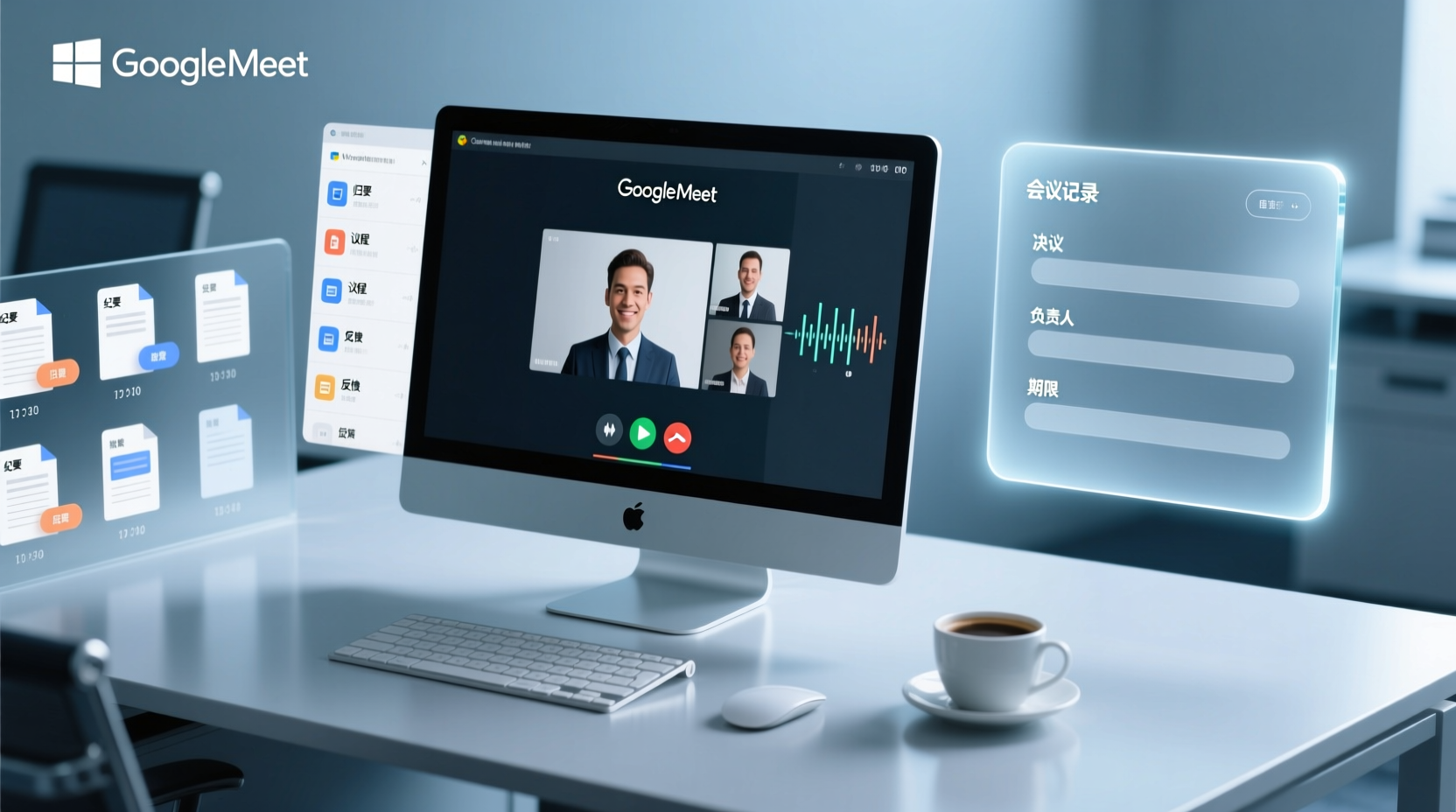
How to Choose a Google Meet Meeting Notes Tool for PC: Narrow a Dozen Options to Two or Three with Four Dimensions, and What to Confirm with Vendors for Each
After a Google Meet call on a Windows PC, what you actually need to deliver is decisions, owners, deadlines, and an archivable record. This article uses four dimensions to help you narrow a dozen tools that claim Google Meet support down to two or three, with specific questions to confirm on product pages or with vendors for each dimension.

What You Need for Google Meet: Pre-Meeting Role Checklist and Post-Meeting Handoff
From the perspective of administrative assistants and project coordinators, this guide breaks down the prerequisites for joining or hosting a Google Meet by role, including account requirements, organizational settings, recording permissions, and extra conditions for external attendees. It also provides a pre-meeting checklist and a post-meeting handoff sequence for transcripts, decisions, and action items.