
Turn recordings into transcripts and summaries in minutes
Upload audio or video for multilingual transcription, AI notes, and action items
How Much Should You Budget to Set Up a Conference Room That Works with Google Meet?
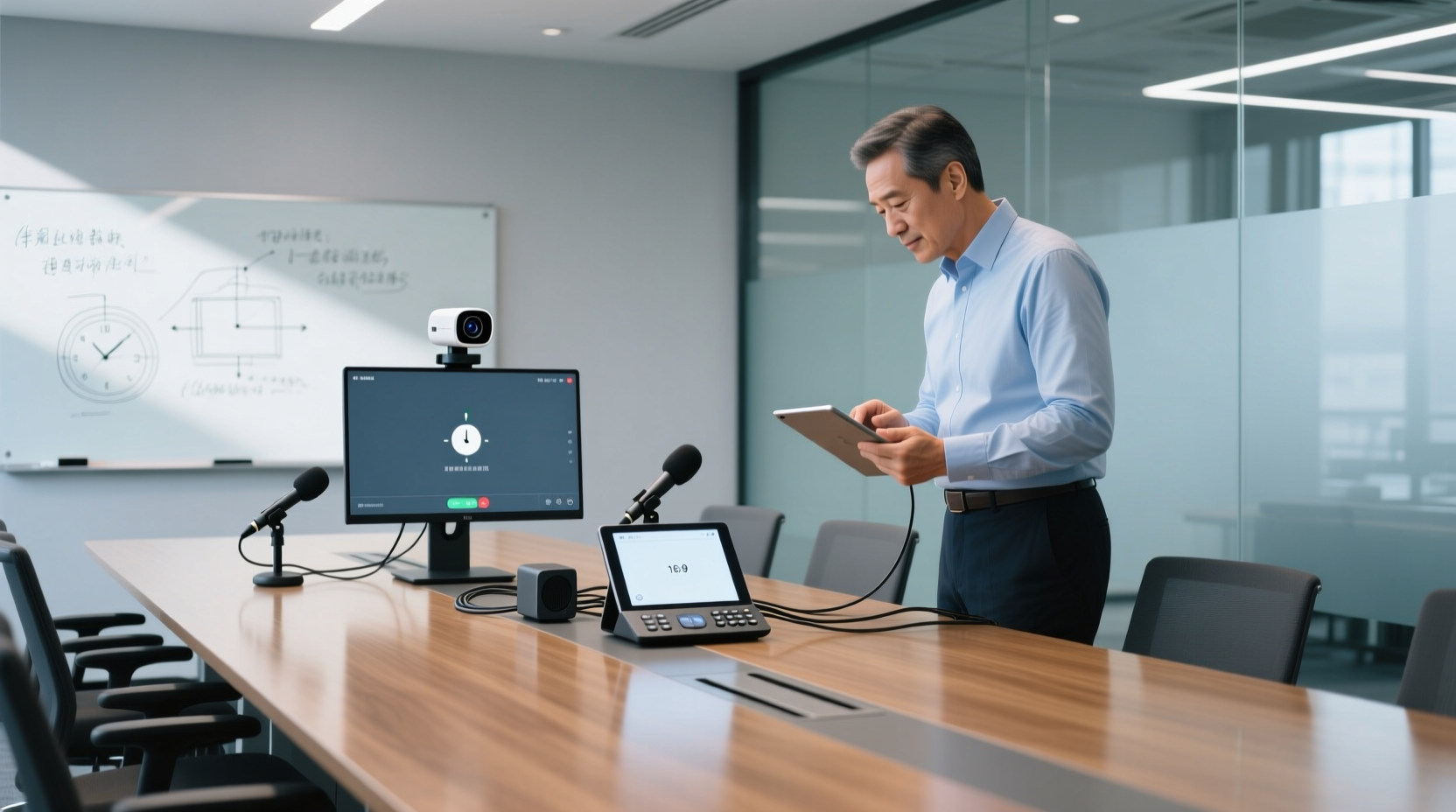
When you're tasked with "setting up a conference room that can run Google Meet," the hardest question to answer usually isn't which device to buy—it's the boss asking, "How much will this cost?" The hardware procurement budget isn't a single number; it's a set of items: camera, microphone, speaker, controller, cables, plus licensing. Miss any one of these, and the budget you report will get padded during the procurement phase.
The goal of this article is simple: break down the cost structure, explain which areas are most prone to overruns, and outline what to buy first and what can be deferred at different budget levels. We won't list specific dollar amounts because hardware prices and licensing plans change over time and vary by reseller; official quotes should always come from the manufacturer and resellers.
What Makes Up the Cost of Google Meet Conference Room Hardware?
A standard conference room's hardware can practically be broken down into five items:
| Item | Function | Common Trade-offs |
|---|---|---|
| Camera | Captures the room or the speaker | From budget USB cameras to conference room cameras with auto-framing |
| Microphone | Picks up audio; determines whether the other side can hear clearly | Omnidirectional microphone, ceiling microphone, or extension microphone |
| Speaker | Plays remote audio | Can be integrated with the microphone into an all-in-one conference device |
| Controller | Start meetings, join meetings, switch screens | Touch controller or an existing computer |
| Cables and installation | Connections, cable routing, mounting | Most easily overlooked and most likely to incur add-ons |
Beyond these five, there's one more often-missed expense: the display. According to Google Workspace official documentation, Meet hardware kits do not include a display screen; it must be purchased separately. If the conference room doesn't already have a usable TV or monitor, this cost must be listed separately.
In other words, when asked "How much for a conference room?" the correct response is to first confirm what level each of these five items plus the screen needs to be, rather than quoting a total number outright.
The Three Most Underestimated Items: Microphone, Cables, and Licensing
Microphone: Determines Meeting Quality and Is Most Prone to Add-ons
Camera specs are easy to compare, but microphones are often treated as an afterthought. In practice, the most common problem in conference rooms isn't "can't see people"—it's "the other side can't hear clearly." A small conference room usually gets by with one omnidirectional microphone; once the room gets bigger and seating increases, you'll need extension microphones or a ceiling-mounted setup, and this part of the budget is often underestimated in the first quote.
In Reddit discussions about Google Meet hardware, some users mention that budget conference cameras (like the BCC950) are "the lower limit of cheap solutions," and suggest that low-budget scenarios could consider using an old computer connected to a TV. Such approaches can indeed lower the unit price, but audio pickup and stability usually need additional reinforcement—you can't just look at the camera price.
Cables and Installation: Not a Big Amount, but Can Drag Out the Timeline
The cables themselves aren't expensive; what's expensive is routing, mounting, and labor. If the conference room requires running cables through walls, ceilings, or adding power outlets, this is usually quoted by the installer and can easily incur add-ons due to site conditions. It's advisable to list "cables and installation" as a separate line item in the budget, not lumped into equipment costs.
Licensing: Separate from Hardware
This is the most commonly confused item during procurement. Google Meet hardware licensing and Google Workspace account plans are two different things: the former relates to registration and management of conference room devices, the latter to user accounts and features. Both need to be confirmed separately; you cannot assume that because your company already has a Workspace plan, the conference room devices don't need additional licensing.
Cost Differences Between Brand Kits, Third-Party Compatible Devices, and DIY Setups
The three paths have different cost structures and suit different scenarios:
| Path | Cost Characteristics | Suitable Scenarios | Considerations |
|---|---|---|---|
| Brand kit | Higher unit price, but high integration and centralized management | Conference rooms requiring long-term stable operation and unified IT management | Kits usually don't include a screen; must be purchased separately |
| Third-party compatible devices | Lower unit price, more flexibility | Limited budget, few conference rooms | Feature support may differ from certified devices |
| DIY setup | Lowest initial cost | Temporary spaces, small conference rooms with low usage | Weaker stability and manageability; maintenance costs may shift to labor |
According to Google Workspace official pages, Google Meet hardware is compatible equipment provided by partners; Reddit discussions point out that formal Google Meet hardware systems generally offer better stability and management than DIY setups because they are designed for long-term operation and can be managed through Google Admin.
Stop organizing recordings by hand
Upload audio or video and automatically get a transcript, summary, and action items
The trade-off logic here is: DIY setups save on procurement cost but cost you ongoing maintenance and management labor. If the conference room is used daily, this usually doesn't pay off.
What to Buy First and What to Defer at Different Budget Levels
Looking at three budget tiers makes the order clearer:
Tight budget: First ensure "can hear, can see"
Priority order is microphone, camera, speaker. The controller can be replaced by an existing computer, and cables can be run exposed. The goal at this tier is to make meetings possible, not to pursue management features.
Medium budget: Add stability and management
Beyond basic audio and video, add an all-in-one conference device and controller so participants don't need to reconfigure each time. At this tier, you can start considering more stable third-party compatible models.
Ample budget: Include licensing and centralized management
In addition to the equipment itself, include hardware licensing, installation labor, and ongoing maintenance. This tier suits organizations with many conference rooms that need unified IT management.
Items that can usually be deferred: high-end auto-framing cameras, ceiling microphones, a second controller. These can be added later based on pain points after the conference room has been in use for a while, which is usually more precise than buying everything at once.
Compatibility and Licensing Prerequisites to Confirm Before Purchase
Before submitting the purchase order, confirm the following:
1. Is the device on Google's compatibility list? Even if third-party devices have similar specs, feature support may differ.
2. Are both hardware licensing and Workspace plans confirmed? They are independent expense items.
3. Does the conference room need a screen? Meet hardware kits do not include a display; it must be purchased separately.
4. Network and power conditions Cable routing and power configuration will affect installation quotes.
5. Who is responsible for ongoing management? Device registration, firmware updates, and troubleshooting require a designated person.
Once these five are confirmed, the budget you report won't get padded during execution.
Keeping Meeting Content: How to Account for Software Costs Beyond Hardware
Hardware solves "can the meeting happen," but there's another often-overlooked cost in the conference room: organizing meeting content.
Conference room hardware itself doesn't produce meeting notes. No matter how complete the equipment, after the meeting ends, transcripts, decisions, and action items still need someone to handle them. If the conference room hosts meetings daily, this labor cost accumulates with the number of meetings.
This is also worth including when evaluating conference room solutions: rather than just comparing hardware unit prices, factor in "how much labor goes into post-meeting organization."
Team Edition: Enabling Conference Room Meeting Data to Be Shared and Followed Up On
After the conference room procurement is complete, the next question usually isn't about equipment—it's "who holds the data from meetings held in the conference room?"
Tinrec's Team Edition addresses exactly this. It complements conference room hardware; it doesn't replace it.
Step 1: Turn conference room meetings into searchable data
After a meeting in the conference room ends, participants can record meeting audio via the Tinrec desktop app without inviting a meeting bot. The recording is transcribed and automatically generates summaries, chapters, and action items. Meeting content that was scattered across personal notes and chat logs becomes centralized, searchable, and reviewable.
Step 2: Put meeting data into a team space so members can follow up
The Team Edition provides a dedicated team space where meeting data belongs to the team, not an individual's account. New members can view historical meeting data; when a member leaves or loses their seat, their team resources can be handed over to other active members.
It's important to note that the Team Edition currently offers team-level sharing: all active members can read team data, roles determine who can manage the team and members, and seats determine who can record, upload, and edit. This is not file-level granular permission control.
If the conference room hosts meetings daily, rather than letting each meeting's conclusions stay in different people's notes, put meeting data into a shared team space so follow-ups have a basis.
Pre-Purchase Checklist and Usage Boundaries
Before submitting the procurement request, go through this checklist item by item:
- [ ] Are camera, microphone, speaker, controller, and cables all estimated separately?
- [ ] Does the display need to be purchased separately?
- [ ] Are both hardware licensing and Workspace plans confirmed?
- [ ] Is the device on the compatibility list?
- [ ] Have network, power, and cable routing conditions been confirmed on-site?
- [ ] Who is responsible for ongoing device management and maintenance?
- [ ] Has the labor cost of post-meeting organization been included in the evaluation?
Regarding usage boundaries, a few points to note: hardware prices and licensing plans change; actual amounts should be based on official and reseller quotes; third-party devices and DIY setups mentioned in this article may have different feature support than Google-certified devices, and should be confirmed individually before purchase; meeting recording and transcription involve participant rights, and you should confirm compliance with local regulations and obtain necessary consent before use.
Break down the costs and set the order, and this budget can be submitted—and withstand follow-up questions.
Tinrec doesn't just produce transcripts. After organizing summaries, key points, and action items, the Agent can use the meeting context to help turn action items into action plans, follow-up materials, reports, tables, or documents. Important commitments and external communications should still be confirmed by a person.
Tinrec's Team Edition puts meeting data, action items, and post-meeting outputs into a shared team space, allowing members to continue following up, search context, and accumulate long-term. The capabilities selected for this scenario include "team space, shared meeting data."
If these meeting records need to be managed by multiple people, you can further use Tinrec's Team Edition to establish a consistent collaboration process.
References
Turn every recording into actionable outcomes
Get 60 free transcription minutes when you sign in. No credit card required.
Related Reading
You might also like

Does Google Meet Cost Money? A Guide to Pricing Tiers and Choosing the Right Scale
Google Meet pricing isn't a single answer—it breaks down into four layers: account plans, add-on features, meeting room hardware, and post-meeting organization tools. This article takes a procurement evaluation perspective to help you determine how far the free version can take you, which features require a paid plan, how teams of different sizes should choose, and how to factor in the cost of meeting notes and post-meeting tools.

Can You Use a Virtual Background on Google Meet? Device, Browser Requirements, and Setup Paths
Google Meet supports virtual backgrounds, but whether you can use them depends on your device, browser, and account type. This article explains setup paths for desktop and mobile, the order to check when you can't find the button, and what virtual backgrounds can't do and the boundaries of background asset licensing.
Create a Future Google Meet: 3 Ways to Schedule a Meeting and a Post-Meeting Handoff Checklist
To create a Google Meet for a meeting that hasn't happened yet, you can go through Google Calendar, the Meet homepage, or reuse a recurring meeting code. This article follows the order of "confirm the entry point first, then set the time and permissions, and finally confirm who can join," explaining which situations each method suits, what to include in the notification, and how to turn the recording into a shareable transcript and action items after the meeting.

Does Google Meet Have Breakout Rooms? Requirements, Host Controls, and How to Consolidate Group Conclusions
Google Meet does have breakout rooms, but whether you can use them depends on your plan, role, and admin settings. This article first explains the requirements and host controls, then addresses the real bottleneck of breakout discussions: group conclusions don't come back. It provides a method to turn recordings, transcripts, summaries, and action items into deliverable post-meeting materials.

Can Google Meet Record? Recording Requirements, File Ownership, and Post-Meeting Handoff
Google Meet's built-in recording is a Workspace feature that must be started by a participant, and the recording is saved by default to the meeting organizer's Google Drive. This article explains the requirements, ownership, retention, and organization of recordings in order, covering what is truly missing during handoff, and shows how to turn a recording into a shareable transcript, action items, and team materials.
Can Google Meet Do Live Translation? The Rhythm Gap, Capability Limits, and Post-Meeting Bilingual Data Organization in Cross-Language Meetings
Google Meet's live voice translation can handle some languages, but it solves in-the-moment understanding, not post-meeting decisions and task assignments. This article breaks down what live translation currently covers, scenarios where accents and technical terms cause distortion, and provides a post-meeting workflow to turn cross-language meetings into verifiable transcripts and action items.

Does Google Meet Automatically Turn On Your Camera? Camera Off Order Before and After Joining and Post-Meeting Follow-Up
Whether Google Meet automatically turns on your camera when you join a meeting depends on your device, browser, and account settings. This article organizes a pre-meeting checklist based on default behavior, device differences, turning off the camera before joining, in-meeting controls, and what to check when you can't find the camera button, plus how to capture meeting content after turning off the camera.

When to Use Google Meet and When Not To: Three Meeting Scenarios at a Glance
Google Meet works well for impromptu meetings, external cross-organization communication, and collaboration within the Google ecosystem, but it shows its limits for formal meetings that require complete records, long-term archiving, or complex interaction. This article uses a comparison format to break down suitable and unsuitable scenarios, the feature gaps between joining via browser and app, and how to supplement transcripts and action items when built-in recording is unavailable.

What Is Google Meet Used For? From Video Meetings to Meeting Notes, Action Items, and Team Follow-Through
Google Meet is essentially a video conferencing service that brings people together in the same meeting room, but it does not produce meeting notes or action items. This article starts with the post-meeting organization burden, explains Google Meet's purpose and boundaries, and adds a post-meeting workflow from transcript to notes to team sharing.