

Turn recordings into transcripts and summaries in minutes
Upload audio or video for multilingual transcription, AI notes, and action items
Before Choosing a Platform, Ask Yourself: Do You Want a Transcript or a Ready-to-Use Meeting Record?
Most people looking for a real-time transcription platform start from the same place: during meetings, there's no time to take notes, and after the meeting, you've forgotten most of it.
In the past, creating a transcript meant wearing headphones, repeatedly pausing and playing, and typing sentence by sentence. A 60-minute meeting often took twice as long to transcribe.
Now, automatic speech recognition (ASR) technology has matured significantly, and Chinese recognition has generally improved. But this also makes choosing harder—because the difference between tools often isn't in 'how accurately it transcribes,' but in how much you can do with it after transcription.
This is the real focus for choosing a platform in 2024: real-time transcription is just the starting point. Whether you can turn the transcript into searchable, queryable, actionable meeting records is where the real differentiation lies.
Before Choosing a Real-Time Transcription Platform, Understand These 4 Key Points
1. How does it 'hear' your meeting? There are roughly two ways to record online meetings: one is to add a meeting bot as a participant, and the other is to capture system audio directly from your computer. The former is easier, but clients or managers sometimes mind having a stranger in the meeting; the latter doesn't require adding a bot—you just press start. If you frequently meet with external parties, this difference is more important than you might think.
2. After transcription, can it help you organize? Transcripts themselves are actually very long—a meeting can easily be tens of thousands of words. A good platform will automatically generate summaries, chapters, and action items after transcription, so you don't have to read from start to finish. When choosing a tool, ask directly: does it give me text, or a record I can take to a meeting?
3. Can you 'ask' this record questions? This has been the most obvious dividing line in the past two years. Some tools only give you a search box—you enter keywords, and it returns a bunch of paragraphs; others already let you ask questions directly to find answers, such as 'What was the conclusion of the last meeting?' The latter often saves more time than transcription itself.
4. Where does your team's data ultimately reside? If you're using it alone, having data in your own account is fine. But as soon as a team is involved, you need to think clearly: if a member leaves, will meeting records disappear with them? Can managers see usage and activity logs? These are governance aspects and the biggest difference between personal and team versions.
Tinrec – Our Top Recommendation After Testing
Tinrec is an AI meeting notes and collaboration tool for individuals and teams, supporting iOS, Android, and web, with a desktop version that can record online meetings directly on your computer.
During meetings, it transcribes as it records. For in-person meetings, just start recording; for online meetings, the Tinrec desktop version captures system audio, so you don't need to add a meeting bot. It can handle meeting audio from platforms like Zoom, Google Meet, Microsoft Teams, and Webex. For those who need to meet with clients, this is very practical.
When the meeting ends, summaries and action items are ready. Tinrec automatically organizes the transcript into summaries, chapters, and key points, and picks out action items from the discussion. You no longer need to manually drag the timeline or re-listen to a section—open it and see who is responsible for what.
Even better, you can ask it questions directly. After recording, you can ask questions about the meeting content, such as 'What was decided in this meeting?' or 'What concerns did the client mention?' It doesn't just throw a list of keyword search results at you; it answers directly based on semantic understanding. Currently, most transcription tools at the same price point are still stuck at keyword search.
If you need to submit reports, it can go further. Tinrec's Agent post-processing can generate reports, tables, and documents based on meeting content, and the organized results can be exported to Notion, Google Docs, OneNote, Dropbox, etc., for further editing. The audio file itself is retained for later verification against the original text. For cross-language meetings, there is real-time translation, allowing you to view in original, translated, or bilingual mode.
Stop organizing recordings by hand
Upload audio or video and automatically get a transcript, summary, and action items
For team use, data stays in the team space. Tinrec for Teams provides an independent team space where meeting data belongs to the team, not the person who uploaded it. Members can view, play, and read historical meetings; administrators can manage roles, seats, sharing permissions, usage analytics, and audit logs. When a member exits or is removed, they need to hand over team resources to other active members, so data isn't taken away.
About accuracy, I don't want to give you a pretty number. Honestly, any claim of '98% accuracy' should be taken with a grain of salt, because it's usually measured in a quiet environment, and Tinrec officially doesn't recommend promising a fixed accuracy rate. In my experience, under conditions of single-speaker and clear recording, Chinese recognition is stable; but if the meeting room has echo, multiple people talking over each other, or many technical terms, you still need to adjust by comparing with the recording. This is also a common limitation of all similar tools.
Who is it for? If you frequently hold Chinese meetings, want to use AI to find key points directly after recording, or need to store meeting data in a team space, Tinrec currently has the most complete workflow.
Things to note: The free version provides basic quota, suitable for trying out; long-term or high-frequency use requires payment. Personal plans include weekly, Pro monthly, and Pro annual options. Team plans are priced per seat. First-time eligible teams can try 7 days, 1 free seat, and 300 minutes of team shared import quota; paid seats provide 2,000 minutes of team shared import quota per month, and real-time recording within the team is currently not deducted by minutes. For pricing, team monthly is USD 29.80 per paid seat per month, annual is USD 199 per paid seat per year (about USD 16.58 per month). Actual amounts are subject to the official purchase page. Also note that the team version uses team-level sharing, not file-level granular permissions, so confirm this before evaluating.
Besides Tinrec, What Other Options Are There?
Otter.ai: A veteran choice for English meetings Otter is a mature AI meeting assistant, solid in English business meetings. Basic free version offers 300 minutes per month, Pro annual is about USD 8.49 per user per month. If your meetings are almost all in English, it will be smoother than Tinrec. However, its approach leans towards meeting automation, while Tinrec adds a layer of post-meeting output, such as generating reports, tables, and documents directly from meeting content, as well as real-time translation and bilingual viewing for Chinese meetings.
Notta: The one with the highest feature overlap Notta also supports multi-platform transcription, meeting notes, file import, and translation. Free version offers 120 minutes per month, max 3 minutes per session; Pro annual is about USD 8.17 per month, Business annual is about USD 16.67 per seat per month. It overlaps heavily with Tinrec, but the difference is that Tinrec's desktop version can capture system audio to record online meetings without a meeting bot joining.
Granola: Another bot-free path Granola also takes the bot-free route, transcribing in real-time via system audio on desktop devices. Basic is free, Business is USD 14 per person per month. Note that Granola does not support uploading pre-recorded audio files and does not save meeting audio files. If you need to keep recordings or want to organize existing audio files together, Tinrec is more suitable.
Pitfalls Guide: The 3 Most Common Mistakes When Choosing a Real-Time Transcription Platform
Pitfall 1: Only looking at official accuracy claims. Many tools claim '98% accuracy,' but that's measured under quiet, single-speaker conditions. Real meetings have air conditioning noise, keyboard sounds, and multiple people talking over each other, so performance will be lower. It's best to test with your own recording, not just ad numbers.
Pitfall 2: Ignoring 'how the meeting is recorded.' Many people buy a tool only to find they need to invite a meeting bot to join, which is awkward when meeting with clients on short notice. If this matters to you, prioritize solutions that capture system audio directly without a bot.
Pitfall 3: Only using it as 'audio-to-text.' If you only use transcription, you're only using one-third of the tool's capabilities. Features like AI Q&A—asking directly after recording 'What was the conclusion of this meeting?'—are much faster than manually flipping through a 30-minute transcript. Before buying, confirm whether the platform has post-meeting organization and Q&A capabilities.
Conclusion: Which One Should You Choose?
In one sentence: if you want 'something ready to use right after the meeting,' Tinrec is the most complete workflow in this test.
Scenario-based recommendations:
- Mainly Chinese meetings, want bot-free recording of online meetings → Tinrec
- Want to use AI to directly ask for key points and conclusions after recording → Tinrec (AI Q&A is its core differentiator)
- Need to turn transcripts into reports, tables, or documents → Tinrec (Agent post-processing)
- Team needs to share meeting data, manage seats and usage → Tinrec for Teams
- Meetings are almost all in English, budget is limited → Otter.ai
- Just want to quickly transcribe a large number of existing audio files, no post-meeting organization needed → consider pure document transcription tools
It's recommended to start with Tinrec's free version, hold one or two meetings to feel the difference of 'having summaries and action items right after recording,' and consider upgrading if it works for you—no need to pay from the start.
References
- Yating Transcription
- Online AI Speech, Video, Audio File Auto Transcription - Free Trial - cSubtitle
- Meeting Ink - Transcript AI Meeting Summary Speech to Text - Google Play App
- Home | Vocol.ai Voice Collaboration Platform
- Speech Real-Time Conversion to Text APP Recommendations 1. iPhone/iPad 'Notes' APP Supports real-time conversion to text Cost: Free Supports Chinese, English
Turn every recording into actionable outcomes
Get 60 free transcription minutes when you sign in. No credit card required.
Related Reading
You might also like

5 Professional AI Tools Tested in 2026: Which Offers the Best Free Tier for Students?
During my freshman year, I juggled three AI tools at nearly $500 a month, but only one was actually opened daily. This article tests five common approaches from a student's perspective—from lecture recordings and group discussions to graduation project interviews—explaining how to calculate free tiers, which pitfalls to avoid, and why I ultimately consolidated my notes and meeting records into Tinrec.
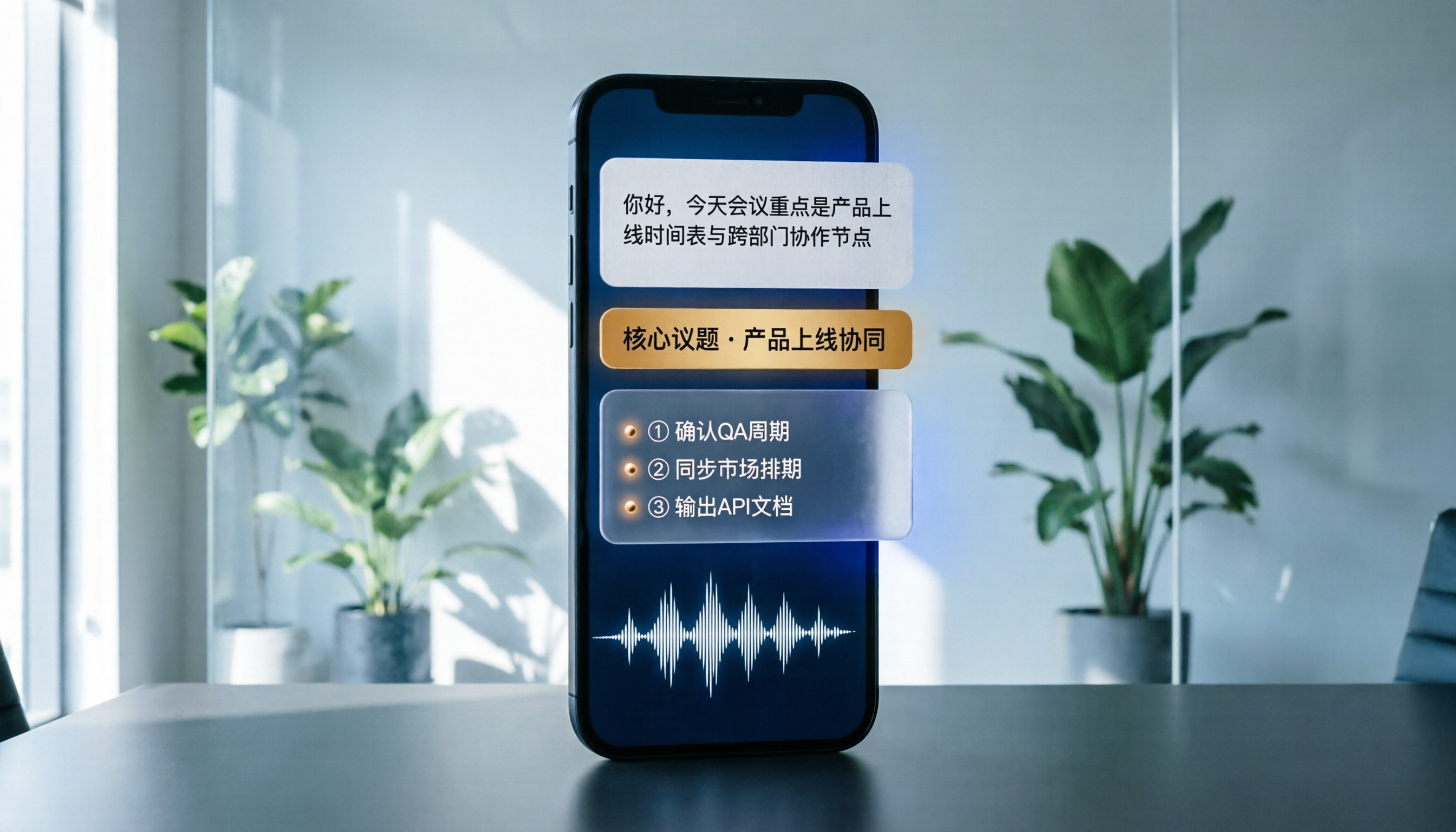
Best Phone Recording Apps in 2026: We Tested 5 — This One Makes Chinese Transcripts and Meeting Notes Easiest
Recording on your phone is easy; the hard part is what comes after. Based on real scenarios like meetings, interviews, and classes, this guide covers common iPhone recording methods, the 5 key factors to consider when choosing a recording tool, and uses Tinrec as an example to show how to turn a recording into a searchable transcript, summary, and to-do list.
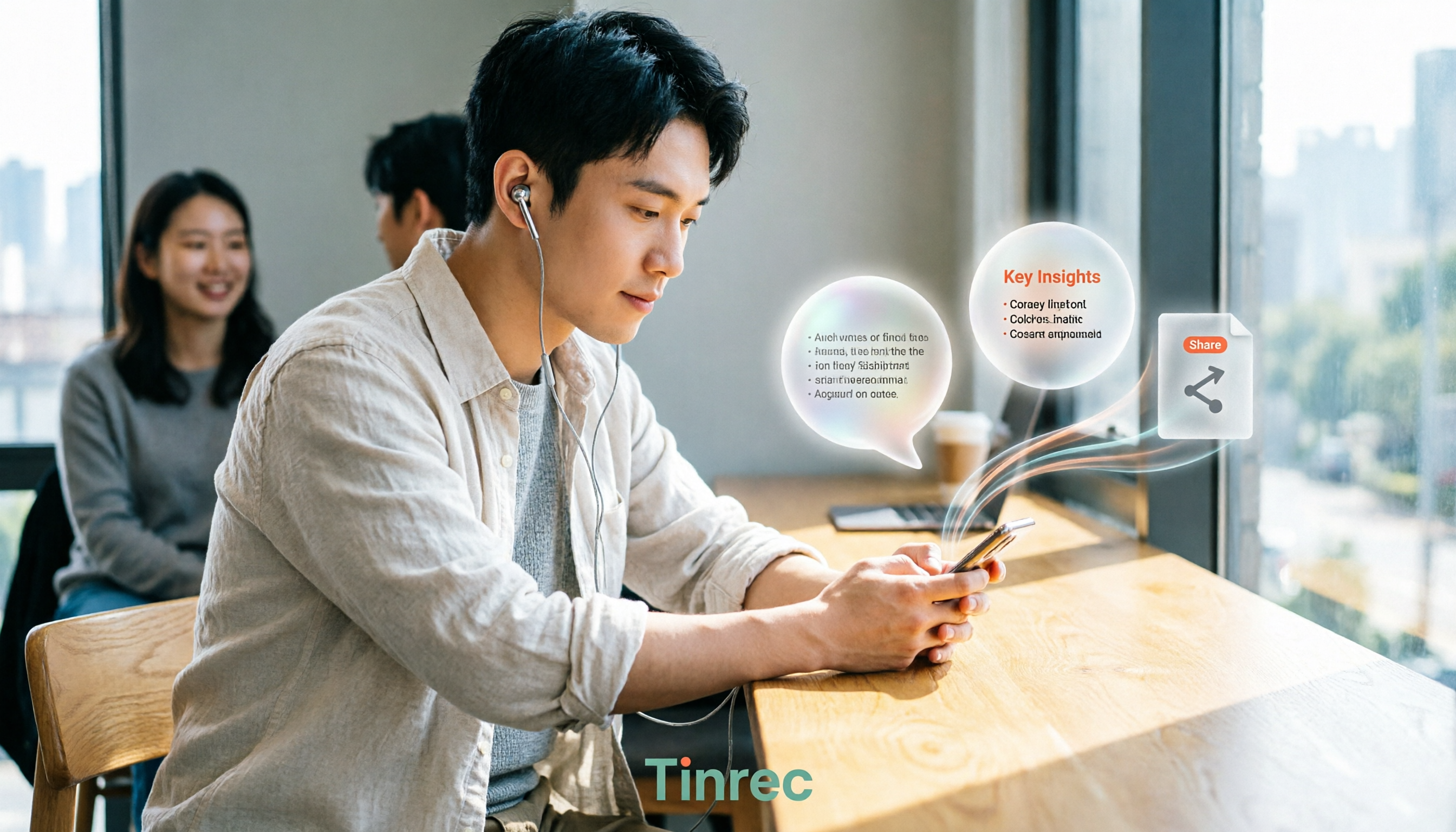
3 WeChat Voice Forwarding Alternatives Tested for 2026: How to Turn Voice Messages into Shareable Text
WeChat does not offer a voice forwarding feature, so received voice messages stay in the original chat. This article explains why this limitation exists and three common misconceptions, then uses Tinrec as an example to show how to turn voice into transcripts, summaries, and shareable documents, while comparing personal and team plans and offering buying advice.
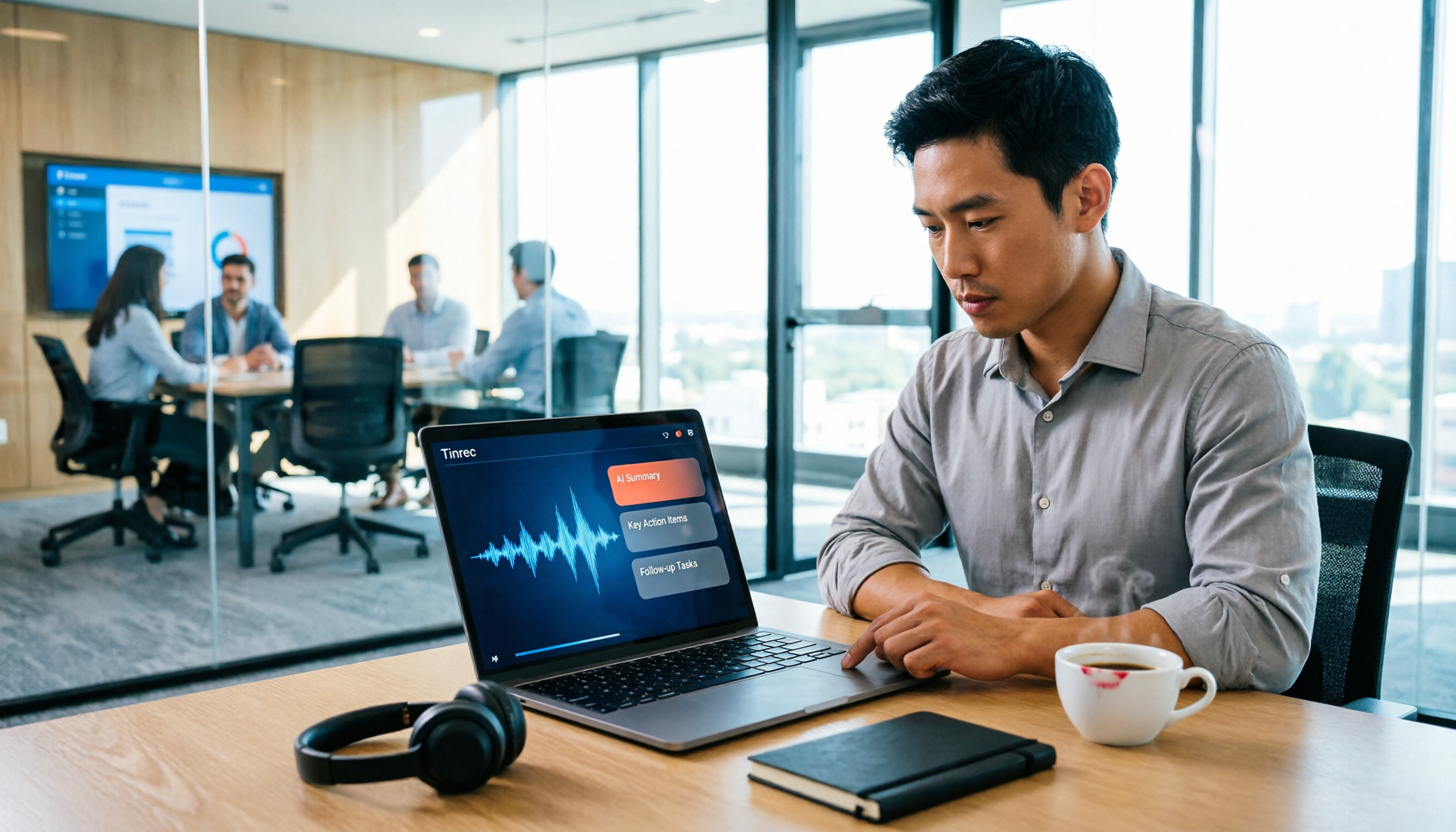
Best Real-Time Transcription Tools in 2026: 5 Options Tested, This Free One Is Enough
How much do real-time transcription tools cost? This article breaks down the pricing structure from free versions to individual paid plans and team seats, using Tinrec as an example to show how real-time transcription, AI summaries, action item extraction, and team spaces can save you from re-listening to recordings and typing transcripts manually. Suitable for office workers, managers, and team procurement evaluating transcription tool budgets.
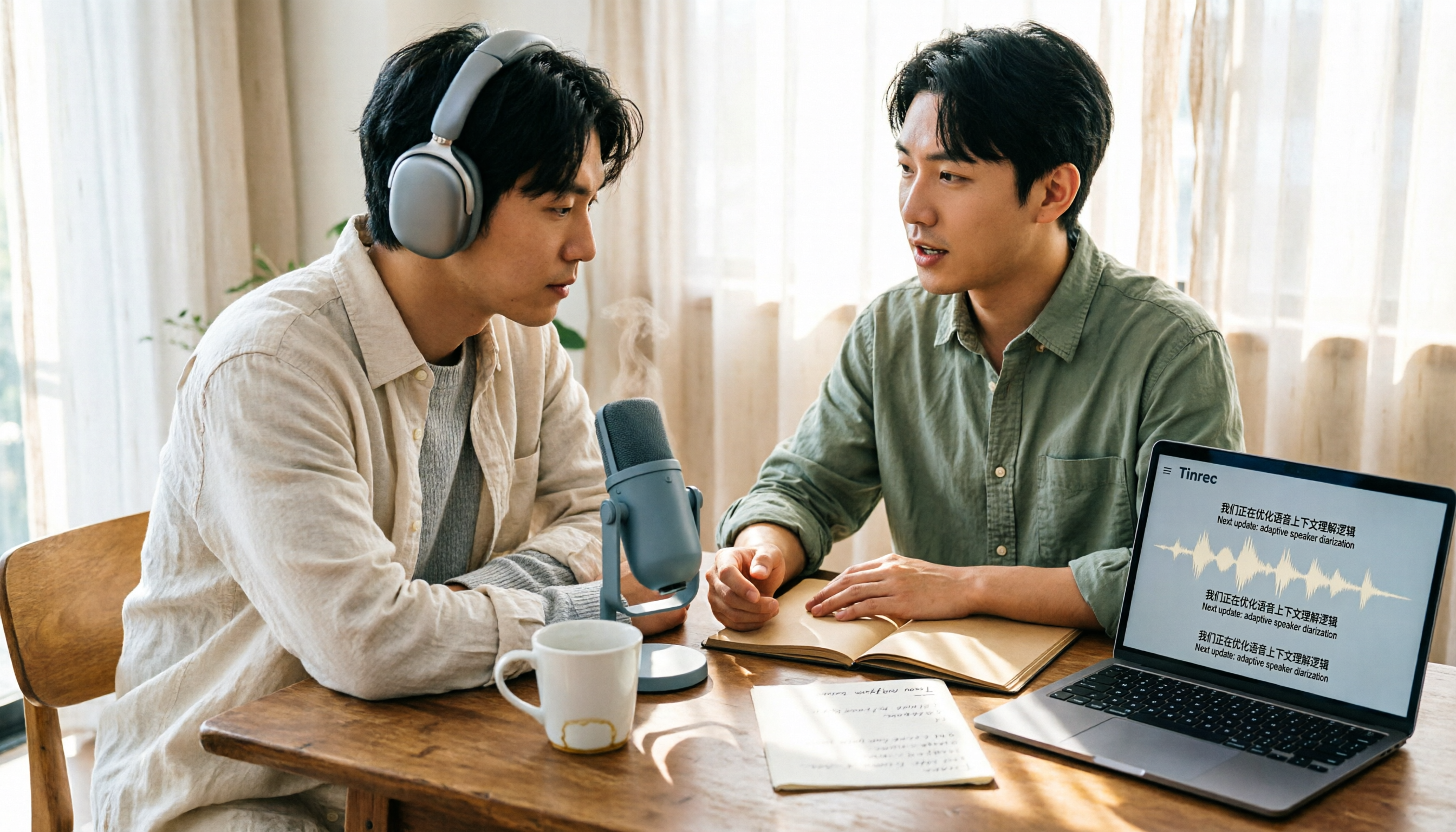
2026 Live Transcription Tools Compared: Free Tiers and Per-Minute Costs
How do you do live transcription, and how much does it cost? This article compiles actual rates for human transcription in Taiwan (general conversation NT$15-25 per minute, multi-speaker or foreign language NT$40-70, rush jobs add 50-100%), and compares free tiers, plan limits, and live transcription tutorial steps for tools like Tinrec, Notta, Granola, and Otter.ai, helping you find the most cost-effective approach within your budget.

2026 Live Transcription Tools Buying Guide: 5 Tested Picks and Recommendations
Live transcription doesn't just work by hitting record. This guide starts with common pitfalls, covers 4 key buying factors, provides a step-by-step tutorial with examples, and compares Tinrec, Notta, Otter.ai, and Granola to help you choose the right meeting notes tool.

2026 Real-Time Transcription AI Free Plans: 4 Options Compared
A mid-level manager leading a 10-person team and attending about 15 meetings a week tested real-time transcription AI. Starting from common misconceptions, this guide explains what real-time transcription can do for you, which core capabilities matter, and what to consider when choosing a plan. It also breaks down Tinrec's 4 plans from free to Pro annual, plus team plan seats and quota details.

2026 Live Transcription Tools Compared: Which One Can Transcribe Meetings in Real Time Without Losing the Recording?
Real-time transcription isn't just about accuracy. This article, from the perspective of a mid-level manager who holds 15 meetings a week, breaks down the 4 key factors to consider when choosing a live transcription tool: latency, recording retention, post-meeting processing, and team data ownership. It also compares Tinrec, Otter.ai, Notta, and Granola, with a guide to avoid pitfalls and selection advice.
2026 Comparison of 3 Real-Time Transcription Tools: How to Choose for Thesis Writing and Interviews
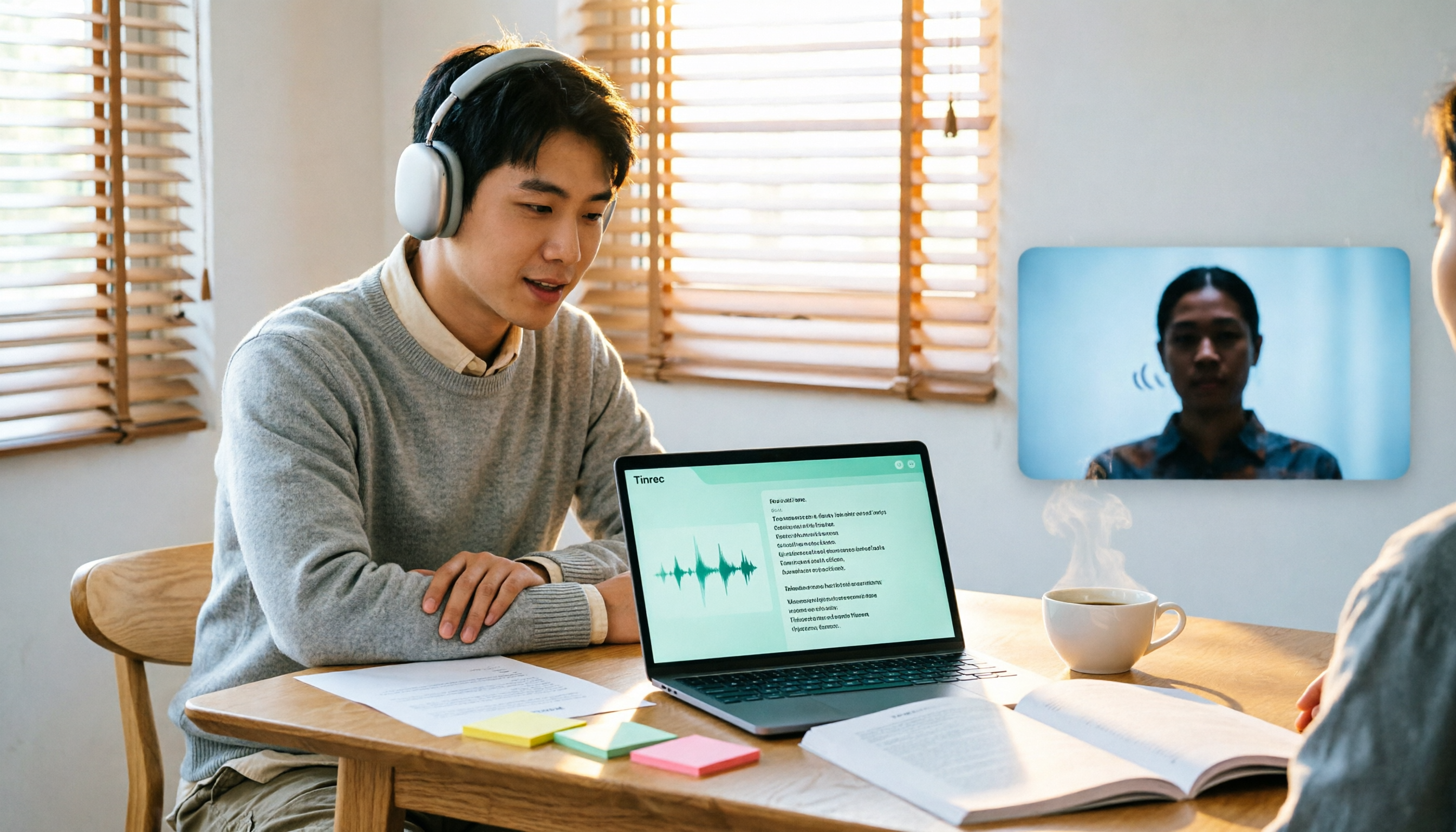
Writing a thesis often requires both real-time transcription and originality checking, which are actually different tools. This article compares Tinrec and Yating Transcription across dimensions such as Chinese transcription, online interview recording, post-meeting organization, file import, and team collaboration, and clarifies the roles of plagiarism detection systems like Turnitin and SYMSKAN.