

Turn recordings into transcripts and summaries in minutes
Upload audio or video for multilingual transcription, AI notes, and action items
Free Online Audio-to-Text Solutions in 2026: 5 Options Compared
Almost every online audio-to-text tool claims to be "free," but the real decisions come down to three things: where your audio comes from, whether you need a verbatim transcript or an organized meeting record, and who ultimately holds the data. Once you clarify these three questions, a free plan is not just a temporary stopgap—it can be a direct starting point for your daily work.
Below, we use Tinrec's actual workflow as the main thread to explain free to paid plans, capability differences, and selection criteria, then compare several common online solutions in a table.
What Can Online Audio-to-Text Do for You?
Scenario 1: No more spending an hour organizing after a meeting
A two-hour meeting used to require another hour of typing out a transcript. With Tinrec, for example, the desktop version can capture your computer's system audio directly, transcribing Zoom, Google Meet, Microsoft Teams, and Webex meetings in real time as they happen. After the meeting, AI has already prepared summaries, chapters, and action items, so you can see at a glance who is responsible for what.
Scenario 2: Quickly turn phone recordings of interviews into text
When visiting a client or conducting a spontaneous interview, record a segment on your phone, then import the audio file into Tinrec when you return to your desk. Within minutes, you have a transcript, summary, and key points, and the transcript is searchable—no need to listen from the beginning again.
Scenario 3: Understand cross-language meetings in real time
When meeting with overseas colleagues, Tinrec's real-time translation lets you choose to see only the original text, only the translation, or a bilingual view. You can confirm content while listening, instead of discovering after the meeting what the other party said.
Scenario 4: Turn historical recordings into searchable data
After organizing past meeting or course recordings into Tinrec, you can ask questions directly about a single session or multiple sessions—for example, "What was the budget the client mentioned last time?"—and retrieve key points through Q&A instead of searching through dozens of audio files.
What Are the Core Capabilities of Online Audio-to-Text Tools?
Real-time transcription: Not transcribing only after recording. Tinrec generates text simultaneously while recording, so you can follow the transcript during a meeting to check for missed key points—especially useful when you need to confirm conclusions in real time.
Bot-free online meeting recording: Tinrec's desktop version captures device system audio directly, without inviting an extra meeting bot into the room. This is especially practical for external meetings—clients won't suddenly see an unfamiliar participant.
AI summaries and chapters: Tinrec doesn't just condense a transcript into one paragraph; it breaks long meetings into topics, conclusions, and key points by meaning, so you can see the structure first and then decide whether to read the details.
Action items and key point extraction: Automatically organizes follow-up actions from discussions, so project and client meetings can move directly into tracking after they end.
AI Q&A, translation, and post-processing: After transcription, you can continue asking questions about the meeting content; for cross-language meetings, you can switch between original text, translation, or bilingual view. Tinrec also supports multi-format export for use in Notion, Google Docs, OneNote, Dropbox, and other tools, and can generate reports, tables, and meeting minutes through Agent post-processing.
Practical Use Cases
Meeting notes and team weekly meetings
For regular weekly department meetings, the hardest part isn't the meeting itself—it's having someone organize it afterward. Use Tinrec's desktop version to start bot-free recording, and after the meeting, the transcript, summary, and action items are all ready at once. The team version further centralizes this data in a team space, so new members can look up past meetings without relying on word of mouth.
Classes and lectures
Lectures are long and full of technical terms. Tinrec supports Chinese, Traditional Chinese, and multilingual transcription, and can maintain a hotword list to make technical term recognition more stable. After class, use AI Q&A to capture key points directly—reviewing is more efficient than listening to the recording again.
Interviews and user research
After importing interview recordings, get the transcript first, then use AI Q&A to cross-compare what different interviewees said. Finally, export viewpoints and quotes into documents, turning the research process from "typing what you hear" into "organizing and analyzing."
Content creation and subtitles
Podcasts and YouTube videos need transcripts and time codes. Tinrec generates text that can be exported directly, shortening the time needed for subtitles and descriptions.
Stop organizing recordings by hand
Upload audio or video and automatically get a transcript, summary, and action items
5 Things to Note When Choosing an Online Audio-to-Text Tool
- The real limits of free quotas: Free plans are usually not unusable—they just have limited quotas. Tinrec's free version provides a basic quota so you can run a complete workflow (recording, transcription, summary, export) with a real recording. If you have steady weekly needs, consider the Pro monthly or Pro annual plan; the annual plan has a lower monthly equivalent.
- Chinese and accent recognition: English tools may not handle mixed Chinese-English well. Tinrec covers Chinese, Traditional Chinese, and multilingual meetings, and provides team hotword management. Actual results are still affected by recording quality, noise, accents, and overlapping speakers, so it's best to test with your own recordings.
- Where the audio comes from: Confirm whether the tool can handle your actual sources. Tinrec supports real-time recording, desktop online meetings, audio and video files, and mobile recording. It is not a bot mode that automatically joins calendar meetings—you need to actively start recording—and it does not imply official partnerships with Zoom, Teams, or other platforms.
- What you can do after transcription: With only a transcript, you still have to organize it yourself afterward. Tinrec connects summaries, chapters, action items, Q&A, translation, export, and Agent post-processing in the same workflow.
- Data ownership and team governance: Personal tools are most likely to break down when a member leaves. Tinrec's team version makes meeting resources owned by the team and provides management capabilities such as members, roles, seats, usage analytics, audit logs, and an audio recycle bin (retained for 30 days).
Quick Comparison of 5 Online Audio-to-Text Solutions
| Solution | Free Plan Overview | Main Positioning |
|---|---|---|
| Tinrec | Free version provides a basic quota, enough to complete one full recording-to-export workflow | Integrated solution for bot-free meeting recording, post-meeting organization, and team collaboration |
| Otter.ai | Basic free, 300 minutes per month | English business meetings and meeting automation |
| Notta | Free 120 minutes per month, 3 minutes per session | Multilingual transcription and team plans |
| TurboScribe | Free 3 files per day, 30 minutes per file | Long audio files and batch file transcription |
| Granola | Basic free | Bot-free meeting notes; does not support uploading pre-recorded audio files and does not retain meeting audio |
Free quotas, prices, and benefits for each provider may change; please refer to official pages for actual details. When choosing, start with your own needs: are you occasionally organizing a recording, or do you need to turn meetings into trackable data every week?
FAQ
Is online audio-to-text really completely free?
Most tools use a "free quota plus paid upgrade" model, not unlimited free use. Tinrec's free version provides a basic quota; after it runs out, you can choose a weekly card, Pro monthly, or Pro annual plan based on your needs. The team version is billed by seat.
Can I record Zoom or Google Meet without a meeting bot?
Yes. Tinrec's desktop version captures computer system audio without an extra participant joining the meeting. It can handle meeting audio played on a computer from Zoom, Google Meet, Microsoft Teams, and Webex. This is user-initiated recording, not automatic joining of all calendar meetings.
What accuracy rate can it achieve?
Tinrec does not promise a fixed accuracy rate without conditions. Actual performance is affected by recording quality, background noise, accents, overlapping speakers, and technical terms. With clear audio sources and common scenarios, it can provide high-quality transcription. For important content, it is recommended to verify against transcript timestamps and recording playback.
Will team data disappear when a member leaves?
It will not be directly taken away by an individual. Tinrec's team version resources belong to the team. When a member exits, is removed, or loses their seat, the resources they were responsible for must be handed over to other active members. Active members without a seat can still view, play, and read team data, but cannot upload, edit, or export.
What is the difference between the free version and the team version?
Personal version data belongs to the individual account; the team version is an independent collaboration space with additional team sharing benefits, members and roles, seat allocation, usage analytics, audit logs, and an audio recycle bin. Eligible teams can try it for 7 days for the first time, with 1 free seat and 300 minutes of team shared import quota; paid seats provide 2,000 minutes of team shared import quota per month. Real-time recording under an active team plan is currently not deducted by minute. Prices and benefits are subject to the official purchase page.
Conclusion
Online audio-to-text is no longer a question of "whether it exists," but "whether you can use it directly after transcription." If your audio sources include online meetings and you want to avoid spending time organizing afterward, Tinrec puts bot-free recording, transcripts, summaries, action items, Q&A, export, and team space in one workflow—a relatively hassle-free choice for Chinese meeting scenarios. We recommend using the free version's basic quota first, running a real meeting or interview recording through it to confirm that transcription quality and organization results meet your expectations, and then deciding whether to move to Pro or the team version. Finally, note that recording and transcription involve others' privacy; please comply with local regulations and obtain participants' consent when necessary.
References
- Online AI speech, video, and audio file automatic transcription - Free trial - cSubtitle
- Online speech-to-text AI, free MP3 or audio file to text transcript - MyEdit
- Hands-on test of 4 best "speech-to-text" online tools, free instant audio file to transcript
- 5 online speech-to-text recommendations at a glance
- Audio to text - Free speech-to-text tool
Turn every recording into actionable outcomes
Get 60 free transcription minutes when you sign in. No credit card required.
Related Reading
You might also like

4 Audio-to-Text Tools Tested and Compared in 2026: Which Free Version Is Good Enough?
Want to turn audio recordings into text but not sure which tool to pick? Starting from the question "where do you want to end up?" this article tests and compares 4 common audio-to-text tools, breaking down Chinese and mixed Chinese-English recognition, AI post-meeting organization, recording retention and old file import, and team collaboration, plus 3 common pitfalls in choosing a tool, to help you pick the most time-saving approach for your situation.

4 Meeting Minutes Tools Tested and Compared in 2026: How to Write Meeting Minutes Without Turning Them Into a Transcript
The key to writing meeting minutes isn't typing speed—it's making three judgments: topics, decisions, and action items. This article covers the essentials of writing meeting minutes and common mistakes, and tests and compares four tools—Tinrec, Otter.ai, Notta, and PLAUD—to help you find the most time-saving post-meeting workflow.

4 Best Meeting Transcription Apps in 2026: Which Saves the Most Time for Chinese Meetings?
Tired of meeting notes dragging past quitting time? This article covers 5 key factors for choosing a meeting transcription app, compares Tinrec, Otter.ai, Notta, and PLAUD Note on recording method, Chinese recognition, post-meeting output, and pricing, and highlights 4 common pitfalls to help you find the one that truly saves time.
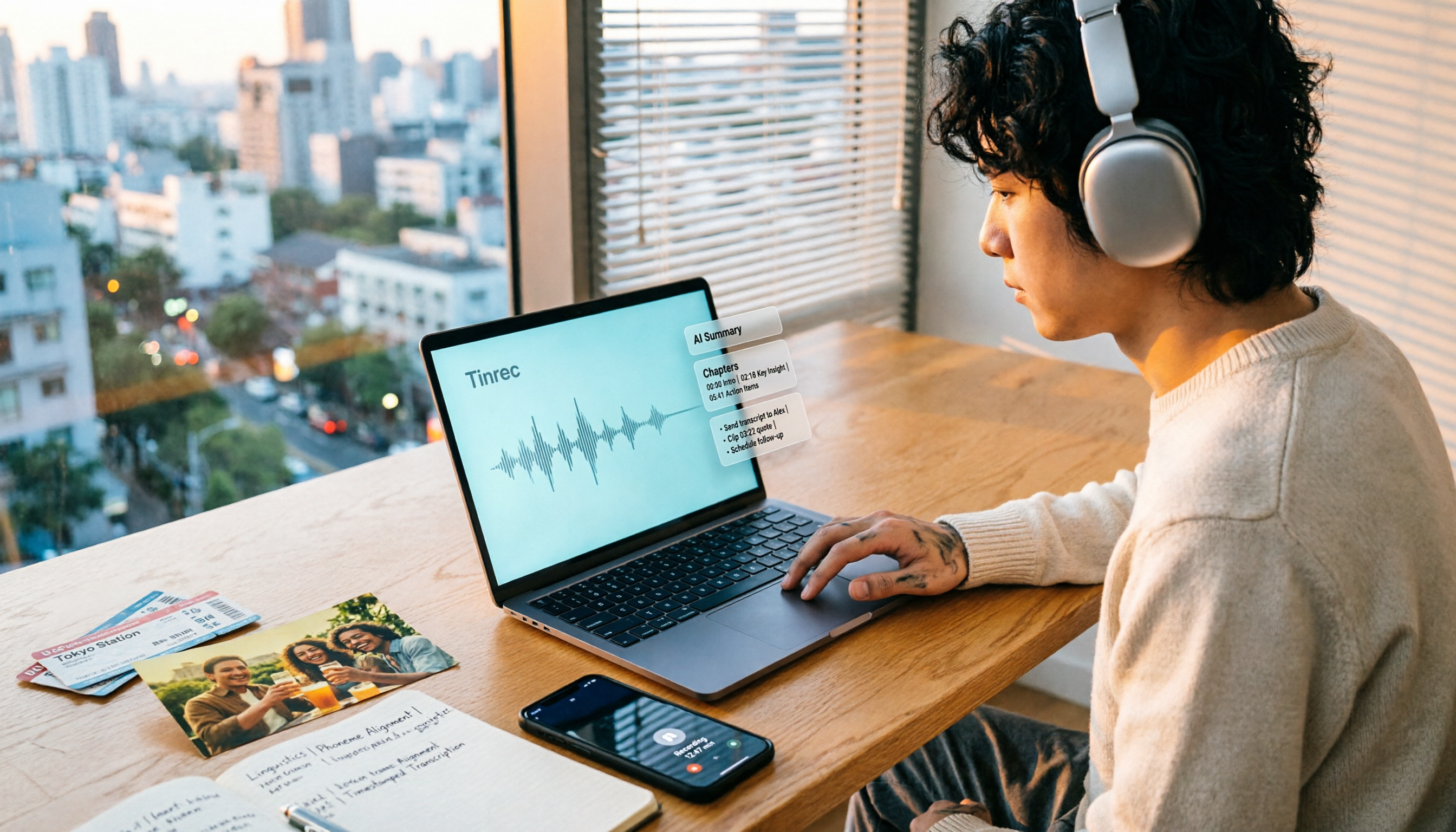
How to Make a 2026 Life Recap Video: Tinrec Audio-to-Text + AI Summary
Want to turn travel, party, or class videos into a life recap but stuck on transcripts and organization? This guide covers common pitfalls and shows how to use Tinrec to convert audio/video to transcripts, then use AI summaries, chapters, to-dos, and Q&A to organize key points. It also compares Notta, TurboScribe, and YouTube Summary with ChatGPT for different scenarios.

5 Best iPhone Audio-to-Text Solutions in 2026: Built-in Features vs. AI Meeting Tools
iPhone's built-in transcription isn't available on every model, and recording is just the beginning. This article debunks common myths and compares five solutions—Apple Voice Memos, Otter.ai, PLAUD recording hardware, and Tinrec—covering device compatibility, usage limits, cross-platform support, and team data ownership. Includes a buyer's guide and scenario-based recommendations to help you choose the most time-saving audio-to-text workflow.
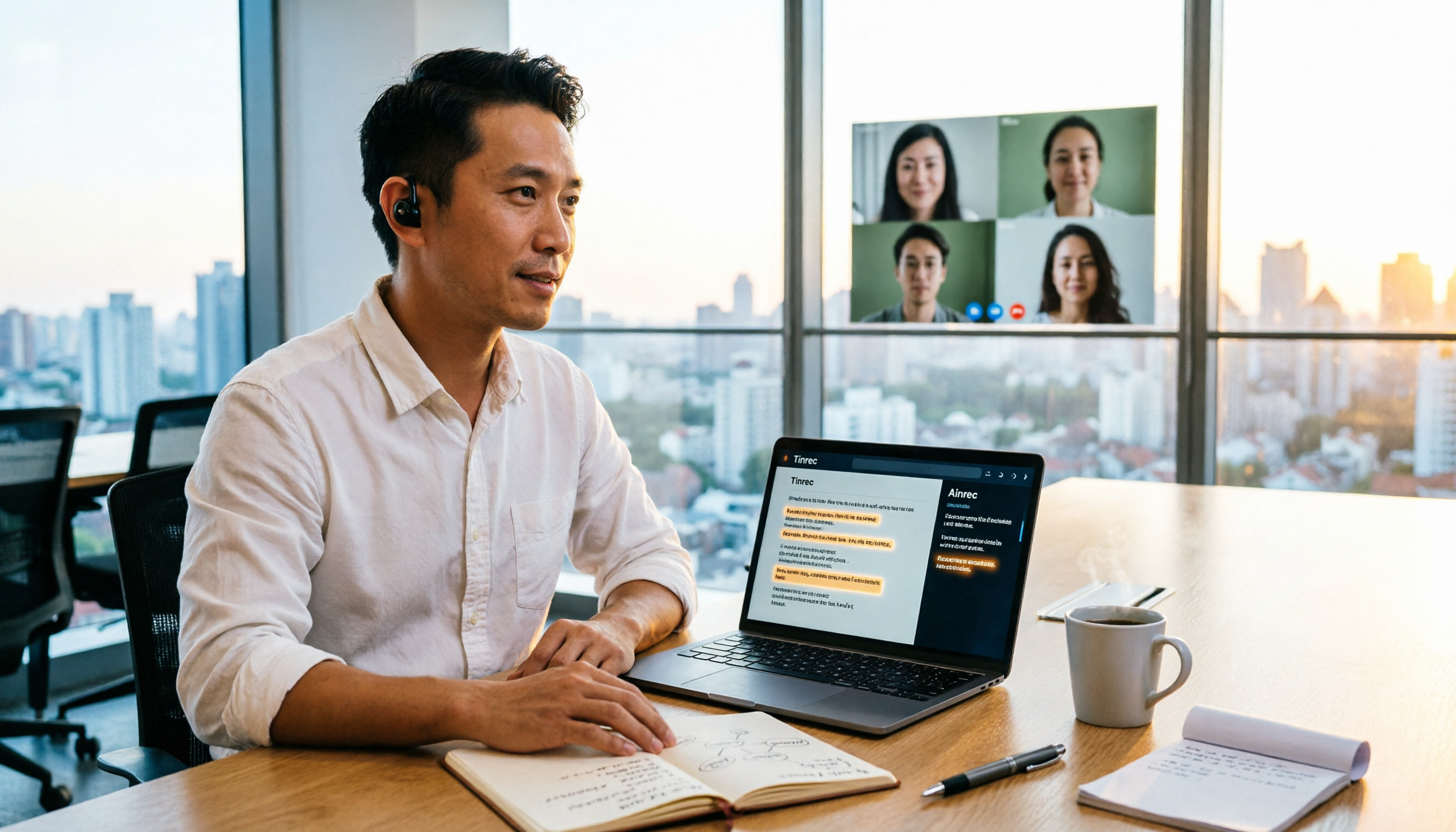
2026 Speech-to-Text Tools Compared: Which Is Best for Chinese Meeting Transcripts?
A mid-level manager who attends over a dozen meetings weekly tests four speech-to-text tools. The article first clarifies the decision focus: do you need a verbatim transcript or usable meeting data? It then covers four key selection criteria, Tinrec's real-world performance in bot-free online meeting recording and AI Q&A, suitable scenarios for the other three tools, four common pitfalls, and scenario-based recommendations.

2026 Complete Guide to Chinese-English Translation: Why Tinrec Beats Google Translate for Meetings
Chinese-English translation shouldn't be limited to translating one sentence at a time. This article focuses on meeting scenarios, breaks down common pitfalls of general translation tools, and compares Tinrec's practical approach to real-time bilingual transcripts, post-meeting organization, AI Q&A, and team collaboration—helping you decide which tool truly saves time.

Tinrec vs iPhone Voice Memos in 2026: 5-Dimension Comparison for Chinese Meeting Notes
After iOS 18, iPhone's built-in Voice Memos can transcribe audio to text, but organizing transcripts, cross-platform access, and team collaboration still fall short. This article compares Tinrec and iPhone Voice Memos across 5 dimensions to explain who should stick with personal notes and who needs meeting minutes and team knowledge retention for weekly meetings.

Tinrec vs Yating: Which Real-Time Transcription App Is Better for Chinese Meetings in 2026?
There are countless real-time transcription apps, but many users download one only to realize they need usable meeting materials, not just a transcript. This article compares Tinrec and Yating across six dimensions—online meeting recording, post-meeting organization, language support, cross-device use, team collaboration, and pricing—to help you decide which fits your workflow.