

Turn recordings into transcripts and summaries in minutes
Upload audio or video for multilingual transcription, AI notes, and action items
Bottom line: The real hurdle usually isn't whether you can start a meeting
Many people think the only requirement for using Google Meet is having a Google account. You sign up, click the link, and the meeting starts—it really seems that simple.
But problems actually arise at two specific moments: five minutes before the meeting starts, and after the meeting ends.
Five minutes before the meeting, you discover your microphone isn't working, your company account hasn't been enabled for Meet by the admin, or your browser has a dozen tabs open and is spinning.
After the meeting, you realize it's not that there are no meeting notes—it's that no one remembered to take them.
So this article not only covers "what you need for Google Meet" but also "what you need after the meeting." Google's official documentation explains the former clearly; the latter is the real pain point for office workers.
4 things you actually need to prepare for a Google Meet call
Let's clarify the basics first. According to Google's official documentation, there are roughly four items:
1. A Google account (required for the organizer)
To create a meeting room and start a meeting, you need a Google account. But if you're the invitee, it's more flexible—Google's official documentation states that after a Workspace customer creates a meeting, they can invite people without Google accounts.
2. An admin enables Meet (important for company email)
When using a company or school Google Workspace account, Meet may not be enabled by default; an admin needs to turn on the service for the organization. This is the first trap for many: you can sign in to your account but can't get into Meet.
3. A capable device and browser
Google offers several practical tips: open only one Meet tab at a time, close unused tabs and apps, disable Chrome extensions (especially Meet-related ones), and place your device on a flat, elevated surface to prevent overheating. If the video lags, Google also recommends lowering the video resolution.
4. A microphone is a must; a camera is optional
The most basic requirement for participating is a microphone; a webcam is optional. Audio-only meetings work just fine.
One commonly asked number: for personal Google accounts, the official limit is 100 participants per meeting; for company or school Workspace accounts, it depends on the plan.
Google Meet solves "having the meeting" but not "what you keep"
At this point, the meeting itself is no problem.
The question is: what do you have after the meeting ends?
Google Meet lets you finish the meeting, but turning the content into minutes you can send to your boss, a document for the project, or a record you can look up next week usually still depends on people.
My own approach: keep using Google Meet for meetings, but leave the note-taking to Tinrec.
How Tinrec fills the gap after the meeting
Tinrec is an AI meeting notes and collaboration tool for individuals and teams. It doesn't just convert audio to text; it organizes meetings into data you can keep using.
Record online meetings without a meeting bot
This is the biggest difference from many meeting tools. Tinrec's desktop app captures your computer's system audio directly, handling Zoom, Google Meet, Microsoft Teams, and Webex meetings played on your computer—no need to pull a bot into the meeting as a participant.
For Google Meet users, this is practical—you meet the way you always do, and the participant list won't suddenly show an unfamiliar account.
Live transcription while recording
Tinrec supports real-time audio-to-text; text appears as the meeting progresses. It also works for in-person meetings, interviews, and on-site discussions. If the meeting includes foreign languages, you can view the original, translation, or bilingual content during recording.
Automatic post-meeting organization: summaries, chapters, action items
The transcript is just raw material. Tinrec further generates AI summaries, breaks long meetings into chapters, and extracts action items from the discussion.
This is where I save the most time. Previously, digging out "who does what" from a one-hour transcript often took longer than the meeting itself.
Ask questions about the meeting content
After transcription, you can ask Tinrec questions directly, such as "What was the final budget decision in this meeting?" or "What concerns did the client mention?" It answers based on the meeting content, so you don't have to Ctrl+F for keywords.
Export to formats you already use
Meeting results can be exported to Google Docs, Notion, OneNote, Dropbox, and other tools for further editing; you can also use Agent post-processing to generate reports, tables, and documents.
For teams to keep meeting records, team spaces are key
For departments or project teams, Tinrec's team plan offers independent team spaces: meeting data belongs to the team, new members can view historical data, and admins can manage members, roles, and seats.
Stop organizing recordings by hand
Upload audio or video and automatically get a transcript, summary, and action items
One commonly misunderstood point: roles and seats are managed separately. Roles determine who can manage the team, members, audit, and settings; seats determine whether a member can record, upload, edit, import, and export. Members who are active but have no seat can still view, play, and read team data.
The team plan also provides usage analytics, audit logs, an audio recycle bin (currently retained for 30 days), and team hotwords to help admins monitor usage. Pricing: team monthly is USD 29.80 per paid seat per month; annual is USD 199 per paid seat per year, equivalent to about USD 16.58 per month. Each paid seat provides 2,000 minutes of team shared import quota per month; eligible teams can try 7 days with 1 free seat and 300 minutes of shared import quota. Actual amounts and benefits are subject to the official purchase page.
Real-world use cases
Scenario 1: Weekly team meeting
After a weekly meeting on Google Meet, Tinrec generates transcripts and summaries simultaneously, and action items are listed directly. No need to spend time recalling after the meeting—just paste the organized content into the group chat.
Scenario 2: Client interviews and requirements meetings
Clients speak fast and information is dense; handwritten notes will definitely miss things. Use Tinrec for real-time transcription, then use AI Q&A to confirm "the budget range the client mentioned" and "launch timeline" afterward, so requirements and commitments don't disappear when the meeting ends.
Scenario 3: Cross-language meetings
When there are foreign-language participants, real-time translation and bilingual viewing let you follow the content during the meeting without waiting for an interpreter.
Scenario 4: Organizing historical audio and video
Not every meeting can be recorded live. Existing meeting recordings, interview audio, and video files can all be uploaded to Tinrec for transcription, then summaries and action items can be generated.
5 things to consider when choosing a meeting notes tool
1. How it "enters" your meeting
Some tools need to join the meeting as a participant, adding an account to the list, which some participants find intrusive. Tinrec takes the approach of capturing system audio on the desktop, so it doesn't take a participant slot. Before choosing a tool, decide whether this matters to you.
2. Does it organize for you, or just dump a transcript
Transcripts are the baseline; the difference is what happens after transcription. Tinrec provides summaries, chapters, action items, AI Q&A, and follow-up document generation—these determine how much time you save.
3. Performance with Chinese and mixed Chinese-English
If meetings are mainly in Chinese with occasional English terms, the Chinese experience is critical. Tinrec covers Chinese, Traditional Chinese, and multilingual scenarios, and provides team hotwords for maintaining technical terms. Actual performance is affected by recording quality, accents, noise, and multiple people speaking simultaneously; it's best to test with your own recording.
4. Will meeting audio be retained
Few people ask this upfront, but it matters later. Tinrec retains audio for easy cross-checking with the transcript; the team plan also has a recycle bin to restore accidentally deleted audio. Note that not every tool retains meeting audio—confirm before choosing.
5. For team use, how are permissions managed
Personal use and team use are two different things. Tinrec's team plan manages members, roles, seats, usage, and audit separately; when a member leaves, resources can be handed over to other members, so meeting data doesn't leave with the person.
FAQ
Q: Do I need a Google account to use Google Meet?
To start a meeting, yes. But if you're invited, Google's official documentation states that meetings created by Workspace customers can invite people without Google accounts.
Q: What if my company account can't get into Google Meet?
It's likely the organization hasn't enabled the Meet service; ask your Google Workspace admin to check. Users can't configure this themselves.
Q: How many people can join a Google Meet meeting?
For personal Google accounts, the official limit is 100 participants; for company or school Workspace accounts, it depends on the plan.
Q: Does Tinrec need to add a bot to Google Meet?
No. Tinrec's desktop app captures system audio directly, so no extra account appears in the participant list. You need to actively open Tinrec to start recording.
Q: Is Tinrec's transcription accurate?
It performs well with clear audio and common meeting scenarios, but actual results are affected by recording quality, noise, accents, overlapping speech, and technical terms. For important content, cross-check with transcript timestamps and audio playback.
Q: Is the free version enough?
You can start with the free version to experience recording, importing, summaries, and transcription. If you only occasionally organize a recording, the free version lets you test the waters; if you have weekly meetings, consider upgrading.
Conclusion
Back to the original question: what do you need for Google Meet?
An account, admin-enabled permissions, a capable device and browser, plus a microphone—with these, you can have a smooth meeting.
But the value of a meeting isn't in the moment it ends; it's in what you have left afterward.
If you have several meetings every week, try Tinrec: let Google Meet handle the meeting, and let Tinrec turn it into summaries, action items, and usable data. The free version has a basic quota, enough to try a few meetings before deciding whether to use it long-term.
(Note: Recording and transcription involve personal data; comply with local regulations and obtain participant consent when necessary.)
References
- Learn what requirements you need to use Google Meet - Google Meet Help
- Learn what requirements you need to use Google Meet - Google Workspace Individual Help
- Google Meet hardware requirements | Meet Hardware | Google Workspace Help
- How to use Google Meet: Quick and easy instructions - Android Authority
- Google Meet: Online Web and Video Conferencing Calls | Google Workspace
Turn every recording into actionable outcomes
Get 60 free transcription minutes when you sign in. No credit card required.
Related Reading
You might also like

3 Google Meet Noise Cancellation Methods Tested in 2026: Is the Built-in Feature Enough?
Google Meet does have noise cancellation, but it comes in two layers: cloud-based and on-device. Whether you can enable it, and whether it's on or off by default, depends on your Google account plan, device, and admin settings. This article breaks down three noise cancellation approaches, compares their use cases, and explains how to capture, find, and use meeting notes after noise cancellation.

Google Meet Camera Auto-On in 2026: 3 Meeting Notes Tools Tested
Does Google Meet turn your camera on when you join? This article explains the logic behind it—device, browser, account settings, and how you join (preview screen, mobile app, or On-the-Go mode). Then, focusing on how to capture meeting content after turning off the camera, it compares Tinrec, Otter.ai, Granola, and Notta on input methods, post-meeting output, audio retention, and team collaboration, plus 4 common pitfalls and selection advice.

Google Meet Pricing in 2026: Is the Free Version Enough? 3 Things to Know Before You Pay
Google Meet's free version caps meetings at 100 participants, while paid plans start at about US$7 per user per month. However, recordings, transcripts, and AI summaries are not included in the free version. This article first gives the pricing conclusion, then demonstrates how to use Tinrec to record online meetings without a bot, automatically generate summaries and action items.
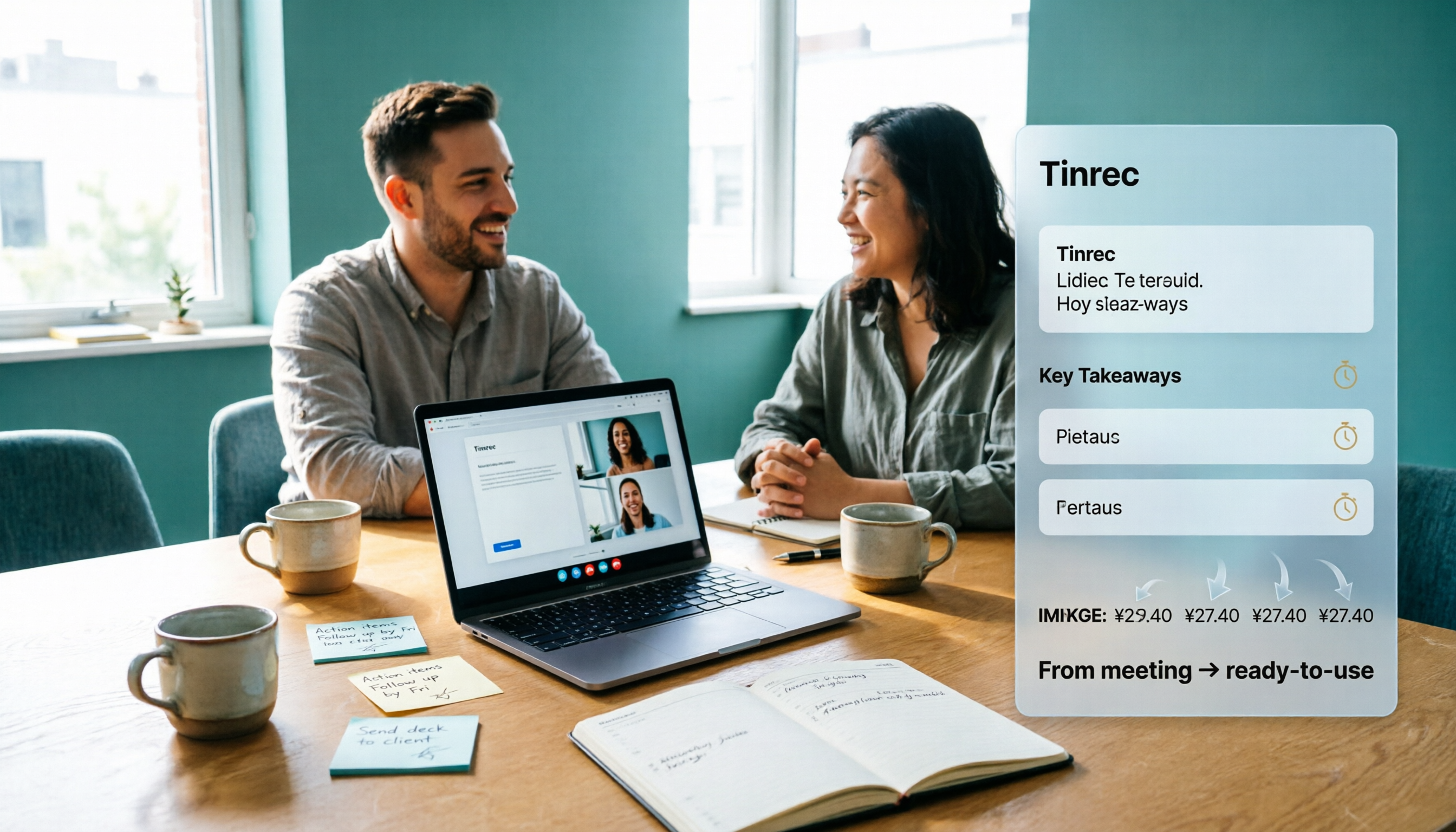
How Much Does Google Meet Cost in 2026? 5 Steps to See the Real Cost and a Time-Saving Alternative
Google Meet isn't sold separately—it's a meeting feature bundled inside Google Workspace, so the monthly fee on your bill is actually for a full suite of office tools. This article uses 5 steps to calculate the true cost of video meetings, including the post-meeting cleanup time that never appears on your bill, and explains how Tinrec can automatically generate transcripts, summaries, and action items—turning meetings from 'finished' into 'usable.'
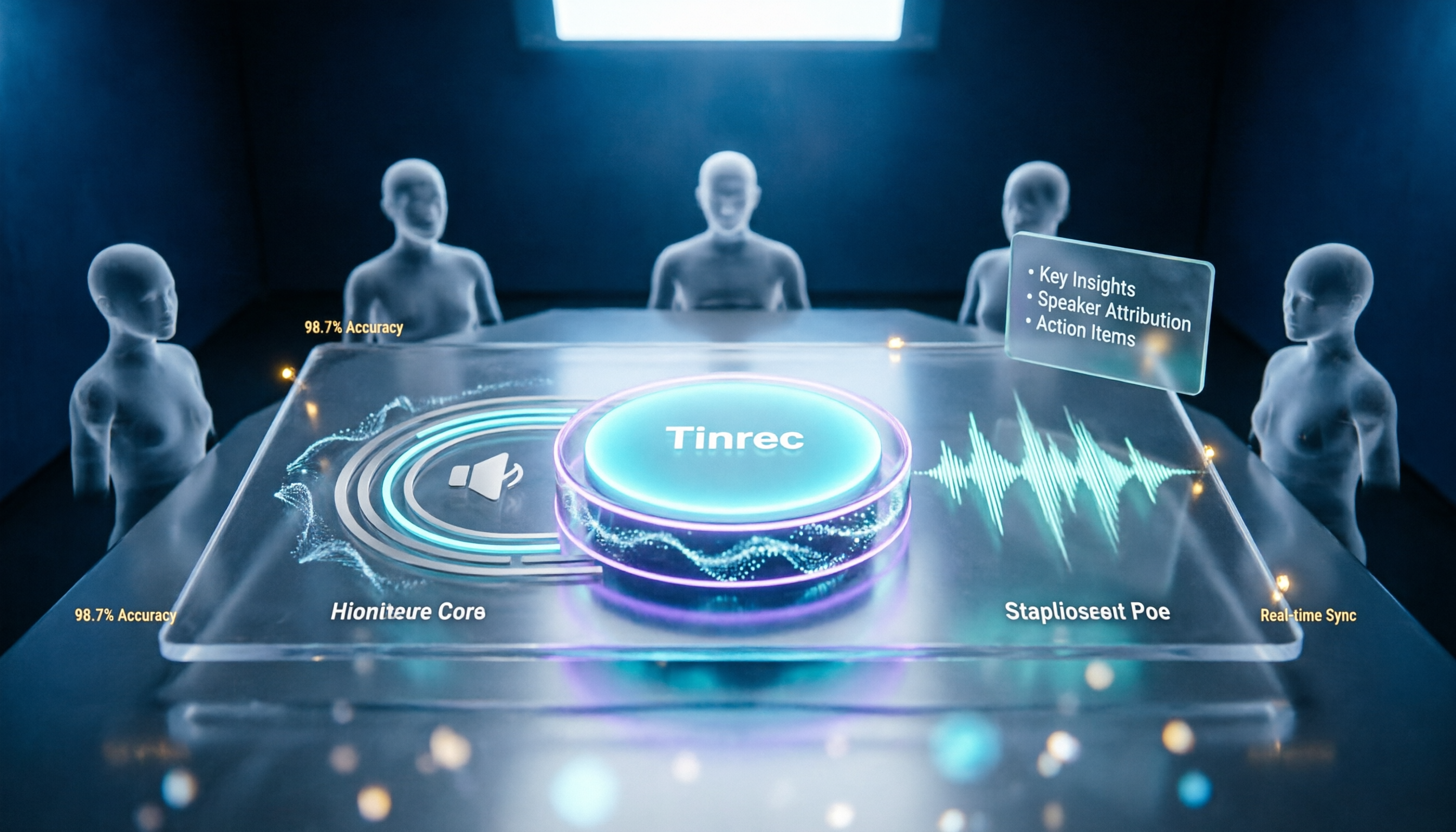
Google Meet Mute Permissions & 3 Meeting Tools Tested: Who Makes Post-Meeting Notes Easiest?
Many assume meeting hosts can always mute everyone, but Google Meet mute permissions depend on your account plan, host management settings, and your role in the meeting. This article clarifies the mute scope and limits for hosts and co-hosts, then compares Google Meet built-in transcription, Otter.ai, Notta, and Tinrec for post-meeting notes—helping you handle both 'keeping the meeting quiet' and 'finding the information afterward.'

The Complete Guide to Recording Google Meet in 2026: Free Account Limits and Bot-Free Recording Solutions
Google Meet allows recording, but free accounts, host permissions, and plan restrictions often gray out the record button. This guide covers native recording requirements, file locations, and explains how to use Tinrec desktop for bot-free recording, real-time transcription, AI summaries, and team knowledge retention.

The Complete Guide to Google Meet Recording in 2026: Limitations, Alternatives, and Post-Meeting Organization
Google Meet does support recording, but most people get stuck on admin settings, paid plans, and device limitations. This article addresses three common misconceptions, clarifies the real requirements for built-in recording in Google Meet, explains how to handle meeting notes after recording, and shows how Tinrec fills the post-meeting organization gap with bot-free recording, transcripts, AI summaries, and team spaces.

The Complete Guide to Buying a Google Meet Subscription in 2026: Plan Selection and Meeting Notes Workflow
People searching for 'buy google meet subscription' really need to decide which plan to buy and how to handle post-meeting organization. This article breaks down the choice between Google One and Google Workspace from a mid-level manager's perspective, and explains why meeting notes and action items should be handled by Tinrec.

Google Meet Screen Sharing: The Complete 2026 Guide — From Presenting to Capturing What Matters
Google Meet lets you share your screen, but sharing well and keeping a record of the meeting are two different things. Starting from real meeting scenarios, this guide explains Google Meet's three sharing modes, audio sharing, and common limitations, then shows how Tinrec's desktop app records meeting audio without a bot, filling the gap after sharing ends with transcripts, summaries, action items, and AI Q&A. It also covers team plan seats and pricing.