
Turn recordings into transcripts and summaries in minutes
Upload audio or video for multilingual transcription, AI notes, and action items
An in-depth review of TinRec Instant Recording, exploring how it solves the pain points of traditional audio note-taking. From market comparison to core feature analysis, discover why this all-in-one tool—combining call recording transcription, MP3 conversion, and AI meeting summaries—is the high-value choice for professionals.
1. The Pain Point: Why Traditional Audio Note-Taking Is Time-Consuming
In today's information-saturated workplace and academic environments, "recording" has become standard practice for capturing meetings, interviews, or lectures. However, recording is easy, but organizing is hard. Professionals commonly face these pain points:
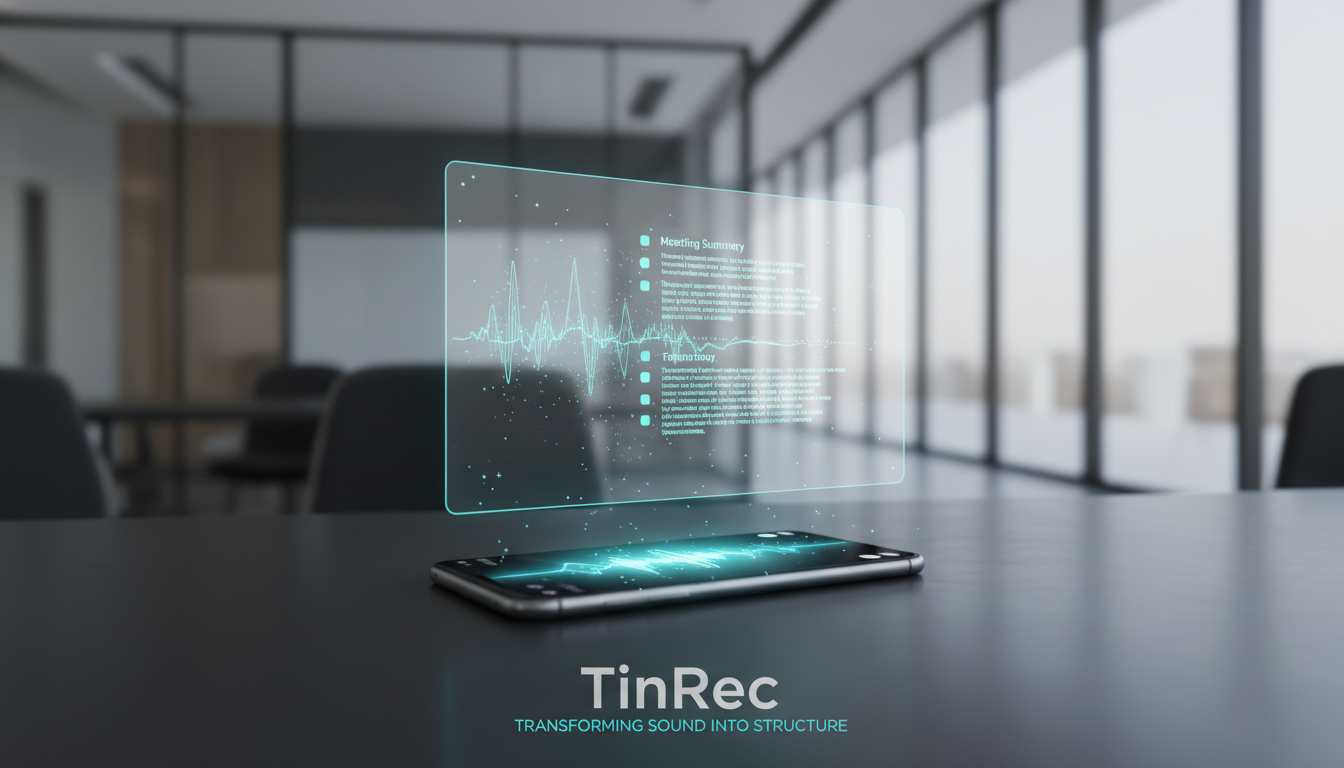
- Difficult information retrieval: With hours of audio, finding a key decision or data point often requires repeatedly scrubbing through the timeline, wasting significant time.
- The nightmare of manual transcription: Transcribing 1 hour of audio manually typically takes 3 to 4 hours. This is not only inefficient but also consumes time that could be used for deep thinking.
- Incomplete notes: Taking notes while listening can lead to distraction and missing important details; focusing on listening may result in forgetting specific action items after the meeting.
- Messy file management: Recordings from different devices (e.g., phone, recorder) are scattered across various locations without a unified management platform, making it hard to preserve knowledge.
These pain points often turn "recording" into mere psychological comfort rather than a productivity booster.
2. Market Comparison: Built-in Phone Recorder vs. Professional Recorder vs. TinRec Instant Recording
To address these challenges, the market offers three main solutions. Below is an in-depth comparison based on convenience, functionality, and intelligence.
Built-in Phone Recorder App:
- Pros: Easily accessible, no extra cost.
- Cons: Limited functionality—only records sound. No automatic transcription, basic file management, and recordings often consume large storage space, making review cumbersome.
Traditional Professional Recorder:
- Pros: High-quality audio capture, suitable for long distances or noisy environments.
- Cons: High hardware cost. The most critical issue is the "digital gap"—after recording, you need to export files via cable and then find third-party software for transcription, which is a complex process with additional subscription fees.
- TinRec (Instant Recording):
- Positioning: An integrated software-hardware AI smart recording management platform.
- Advantages: It combines the convenience of a smartphone with professional AI processing. It supports call recording transcription, one-click MP3 file processing, and AI-generated summaries. It breaks the boundary between hardware and software, instantly upgrading existing devices (phone/computer) into an advanced AI recording tool.
Stop organizing recordings by hand
Upload audio or video and automatically get a transcript, summary, and action items
3. TinRec's Core Advantage: Seamless Integration of Hardware Recording and AI Transcription
TinRec (Instant Recording) stands out in a competitive market due to its powerful software ecosystem that seamlessly integrates various recording scenarios, truly achieving "record and use immediately."
All-in-One Recording and Transcription Engine
TinRec is not just a recording app; it is a comprehensive audio processing hub. Its core features cover the most essential workplace scenarios:
- Call Recording Transcription: A lifesaver for business professionals. During phone meetings or interviews, TinRec clearly records two-way conversations and transcribes in real time, solving the common issue of phone call recording restrictions.
- MP3 to Text: For existing recorder files or old audio, users can directly import them into TinRec for fast, high-accuracy transcription.
- YouTube Subtitle Generation: For content creators and learners, TinRec supports pasting video links to automatically extract audio and generate time-stamped subtitles, greatly reducing the time needed to digest video content.
AI-Powered Meeting Brain
TinRec's value extends beyond "transcription" to "understanding." Using advanced meeting summary AI technology, it performs deep analysis of audio content:
- AI Meeting Summary: Automatically extracts the meeting's purpose, key discussion points, and conclusions, turning lengthy transcripts into a concise summary readable in 3 minutes.
- Smart Speaker Diarization: In multi-person meetings, the system accurately identifies different speakers, presenting conversations in a structured format, eliminating confusion about "who said what."
4. Efficiency Comparison: Speed and Quality of Summary Outputs from Different Solutions in the Same Meeting

To demonstrate TinRec's performance, we simulated a 60-minute product discussion meeting and compared the output of different solutions:
| Metric | Manual Transcription | Traditional Recorder + Third-Party Transcription | TinRec (Instant Recording) |
|---|---|---|---|
| Transcription Time | Approx. 180–240 minutes | Approx. 15–30 minutes (file export & upload) | Approx. 3–5 minutes (real-time/fast) |
| Summary Generation | Manual recall and summarization | Requires manual reading of transcript and writing | AI automatically generates structured summary |
| Action Items | Easily missed, requires multiple checks | Requires manual annotation | AI automatically extracts and lists action items |
| Overall Accuracy | Depends on note-taker's focus | Depends on transcription engine | High (multi-language and specialized vocabulary recognition) |
| Total Time Cost | Very high | Medium | Very low |
The data shows that TinRec reduces post-meeting organization time by over 90%. While others are still replaying recordings to take notes, TinRec users already have complete meeting summaries and to-do lists, ready to move on to the next task.
5. Review Summary: TinRec's Competitiveness in Terms of Value
Overall, TinRec (Instant Recording) demonstrates exceptional value in the current voice productivity tool market. For users who frequently handle voice information, it solves the core issues of "efficiency" and "accuracy."
It does not require expensive dedicated hardware, yet offers a smarter experience than traditional recorders. Whether it's multilingual transcription for international meetings, MP3 to text for media professionals, or daily call recording transcription, TinRec delivers stable, high-quality solutions.
If you are looking for a tool that frees your hands and allows your mind to focus on thinking, TinRec—with its powerful AI meeting summary and seamless user experience—is undoubtedly a workplace asset worth investing in. By leveraging technology to turn voice into a competitive advantage, TinRec brings maximum value to modern professionals.
Turn every recording into actionable outcomes
Get 60 free transcription minutes when you sign in. No credit card required.
Related Reading
You might also like

4 AI Meeting Note Tools Tested for 2026: Which Saves the Most Time for Chinese Meetings?
Still spending two hours writing meeting notes after the meeting? This article compares four AI meeting note tools, breaking down Chinese and mixed Chinese-English recognition, meeting recording methods, post-meeting summaries and action items, cross-platform export, and team member management. It also lists four key pitfalls to avoid when choosing a tool, helping you find a solution that truly saves time.

2026 Guide: Convert Audio to Transcripts — Stop Typing Manually & Auto-Generate Meeting Minutes with AI
Don't want to type transcripts by hand? This guide covers two scenarios—live meetings and pre-recorded files—and outlines 4 key buying factors. We tested Tinrec's bot-free meeting recording, AI summaries, and Q&A workflow, compared Notta, Granola, and PLAUD, and included the most common pitfalls to avoid.

4 AI Recording Tools Tested for 2026: Which Saves the Most Time on Chinese Meeting Notes?
Recorded a meeting but never have time to organize it? This hands-on comparison looks at four common approaches—built-in phone features, free online tools, AI recording hardware, and dedicated AI meeting note tools—and tests Tinrec on Chinese meeting transcription, summaries, and action items. Includes 6 buying considerations and FAQs.

2026 Medical Meeting Transcription Tools Compared: Which AI Saves You the Most Time with Chinese Transcripts and Summaries?
For professionals juggling over a dozen meetings a week and still stuck with post-meeting notes, which tool should you use? This article dives into practical decision points, covering 5 key factors for choosing a medical meeting transcription tool. We tested Tinrec's bot-free recording, AI summaries, action item extraction, and AI Q&A, and briefly review alternatives like Notta, Otter.ai, and PLAUD. We also provide a guide to avoid common pitfalls and final recommendations.
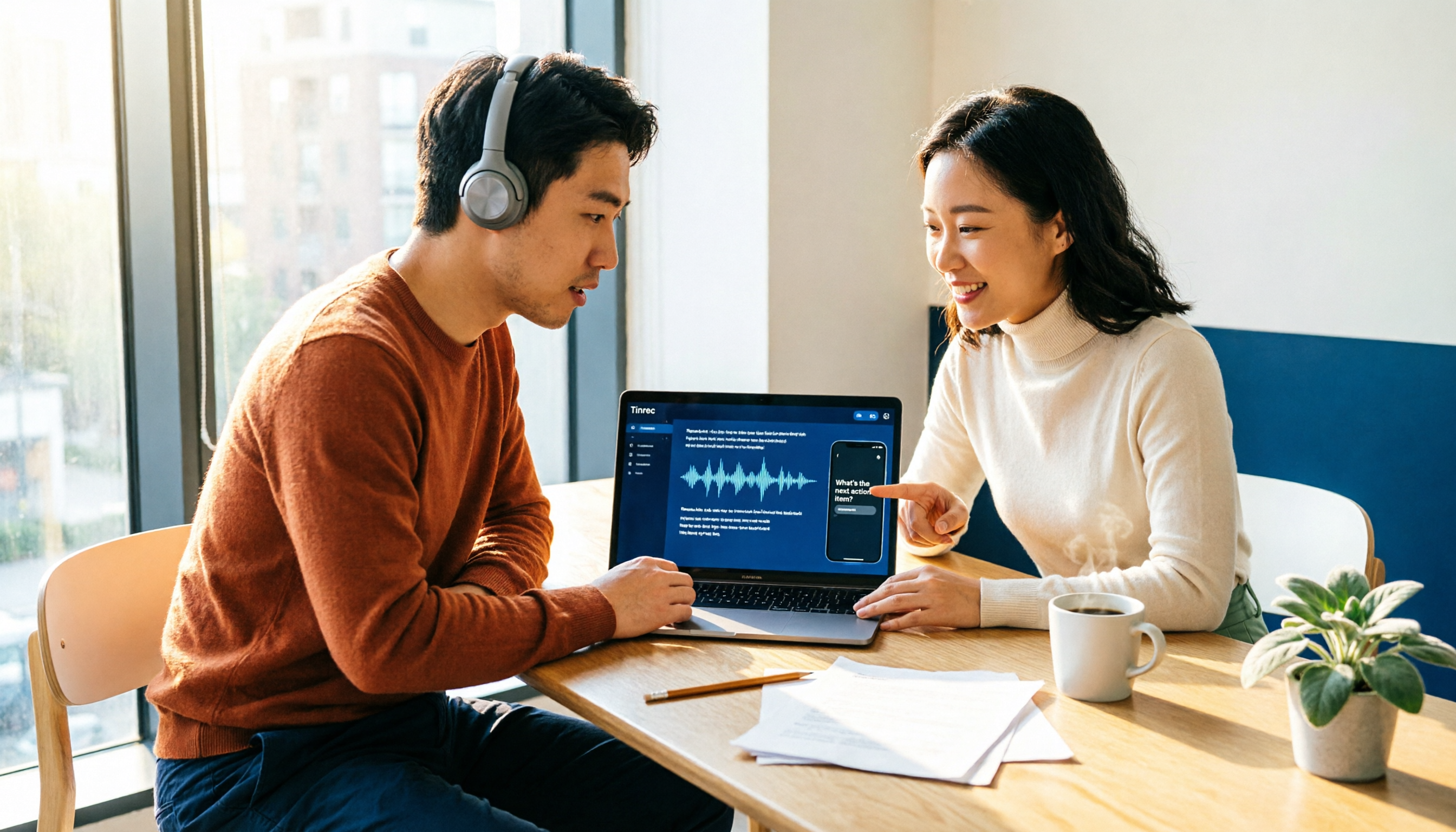
How to Choose an Automatic Transcription Tool in 2026: 5 Steps to Compare Yating Transcription and Tinrec
How do you choose an automatic transcription tool? Starting from the actual checklist I use when picking tools, I compare Yating Transcription and Tinrec across five dimensions, covering online meeting recording methods, post-meeting organization depth, AI Q&A, cross-platform team collaboration, and quota pricing, to help you determine which one better fits your workflow.

4 Best Audio-to-Text Apps in 2026: Which One Actually Saves You Post-Meeting Time?
A mid-level manager who attends 15 meetings a week shares hands-on experience. From online meeting recording methods and transcription performance for Chinese and mixed Chinese-English to post-meeting summaries and action item organization, this breaks down the differences among four types of audio-to-text apps and explains how Tinrec uses bot-free recording, AI summaries, action item extraction, and team spaces to turn meetings into searchable, collaborative, actionable data.
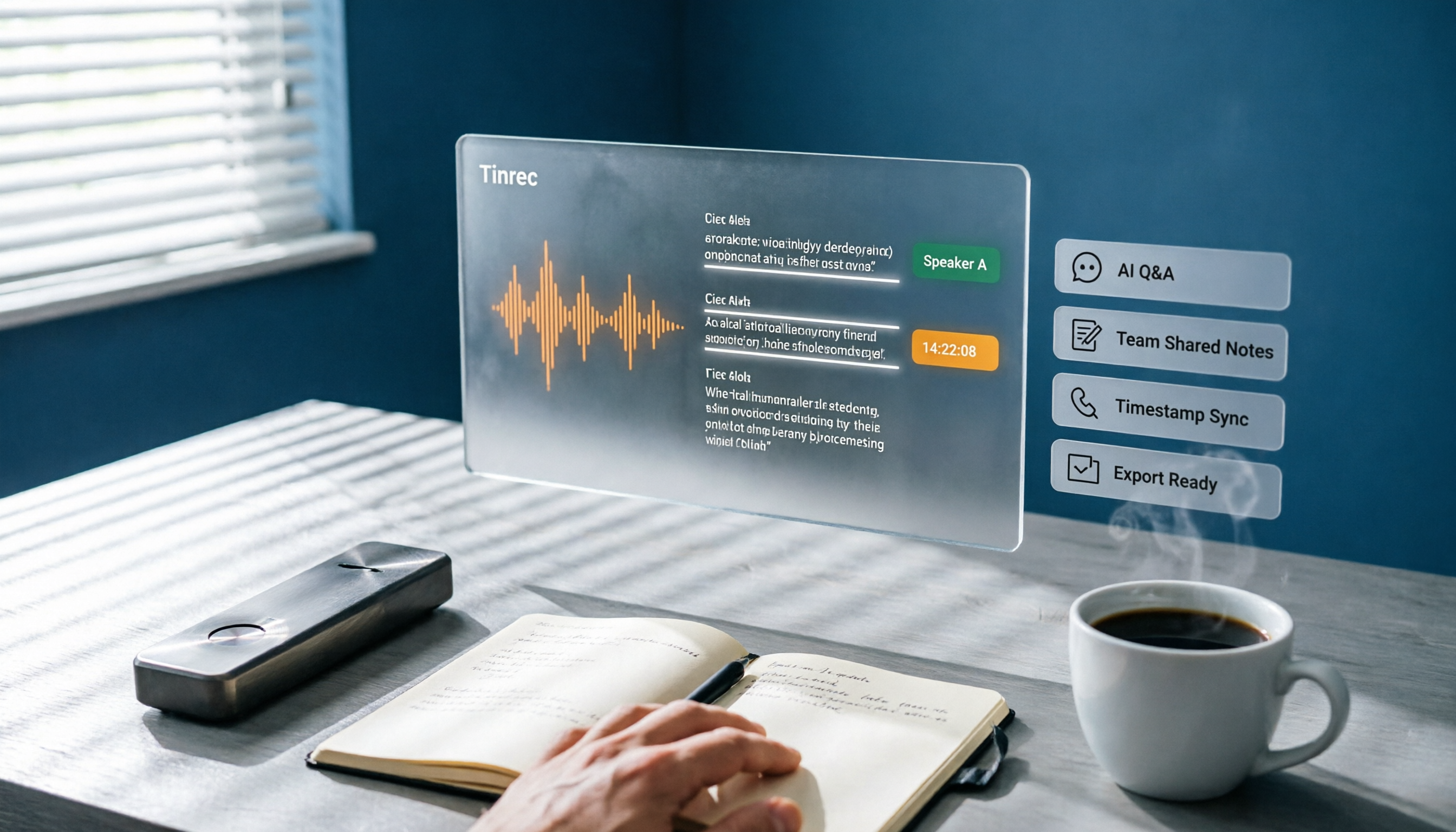
4 Interview Transcription Tools Compared in 2026: From Recording to Citable Text
After an interview, organizing the transcript often feels more exhausting than the interview itself. This article starts from 'recording to citable text' and compares 4 interview transcription tools, covering speaker labeling, AI Q&A, audio retention, and team sharing, plus common pitfalls and selection advice.

Tinrec vs Notta 2026: 5-Dimension Comparison for Chinese Meeting Transcription Tools
Starting from the decision focus of 'Do you want transcription, or usable meeting data?', this article compares Tinrec and Notta across 5 dimensions, covering selection criteria, a full breakdown of Tinrec, other options, and pitfalls to avoid, helping Chinese meeting users make a quick choice.

5 Transcription Tools Tested and Compared in 2026: Transcription Takes Too Long—Which One Actually Saves Time?
Transcription takes too long, and the problem is often not typing speed but the "listen, type, re-read" workflow. This article tests 5 transcription and AI meeting note tools, covering how to judge accuracy, post-meeting organization, audio retention and export, free quotas, and team seat licensing. It provides criteria you can follow directly and analyzes Tinrec's actual performance in bot-free recording, AI Q&A, and team knowledge retention.