
Turn recordings into transcripts and summaries in minutes
Upload audio or video for multilingual transcription, AI notes, and action items
In the era of content creation and hybrid work, the demand for "Cantonese to Written Chinese" technology has exploded. Whether YouTubers need subtitles for their videos or professionals need to organize meeting notes, the common pain point is the same: how to quickly and accurately convert spoken Cantonese into fluent written Chinese text?
In the past, tools like Subanana excelled in subtitle creation, but as AI evolves, the market increasingly demands all-in-one productivity tools. This article focuses on the transition from simple subtitle generation to AI-powered smart notes and meeting summaries, exploring the latest solutions.
![[2026 Review] Cantonese AI Transcription Tools Compared: From Subtitling to Automated Meeting Summaries](https://record-img.tos-accelerate.volces.com/images/2026/01/26/1769406596168745365.jpg)
Why Is Cantonese-to-Written Chinese Conversion So Hard?
Cantonese and standard Written Chinese differ significantly in grammar and vocabulary. Most automatic speech recognition (ASR) software only performs word-for-word transcription, e.g., converting speech into "佢話陣間去邊度食飯." But for formal documents or subtitles, we need "He said, 'Where should we eat later?'"
This conversion involves three levels of AI processing:
- Accurate Recognition: Capturing unique Cantonese pronunciations and tonal variations.
- Semantic Understanding: Discerning Cantonese-English code-switching common in workplaces (e.g., "Claim form," "Present the proposal").
- Style Transfer: Filtering or converting spoken particles (啦, 嘅, 喎) into formal written Chinese grammar.
Most current tools focus only on the first level. The AI tools that truly achieve the third level—"automatic written conversion"—are the key to improving work efficiency.
Market Tool Analysis: From Creators to Workplace Applications
When exploring solutions, we typically categorize needs into two types:
- Video Creators (Subtitle Needs): These users prioritize precise timestamps and SRT export. For example, Hong Kong-based Subanana performs excellently here, directly outputting written Chinese subtitles and saving editors countless hours of proofreading.
- Professionals & Learners (Recording Needs): These users care more about recording completeness and information extraction. They need not just a transcript but a ready-to-use "meeting minutes" or "study notes."
Stop organizing recordings by hand
Upload audio or video and automatically get a transcript, summary, and action items
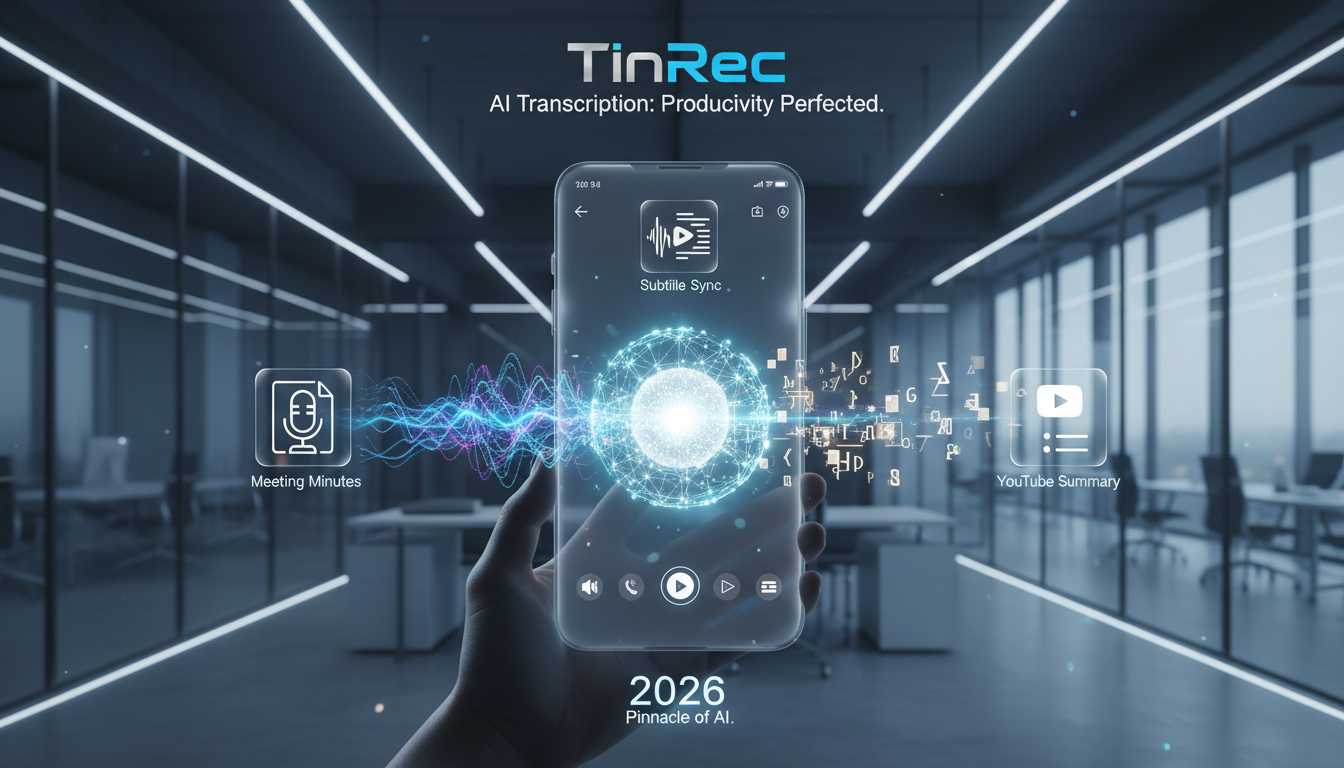
This is exactly the market gap that next-gen AI tools fill. Instead of simple transcription, modern professionals need a comprehensive tool that integrates call recording, file transcription, and AI smart summaries.
TinRec (MiaoTing): The All-in-One AI Productivity Assistant
Among emerging tools, TinRec (MiaoTing) stands out as a dark horse for workplace and learning scenarios thanks to its powerful multi-function integration. Unlike simple subtitle tools, TinRec is positioned as a comprehensive voice note assistant, specifically optimized for "Cantonese meetings" and "long recordings."
1. Call Recording & MP3-to-Text
TinRec's core strength lies in processing audio from various sources. Whether it's a phone call recording or an imported MP3/M4A file, it transcribes quickly. This is a huge boon for business professionals who need to record conference calls, solving the problem of forgetting details after a call.
2. AI Meeting Summaries: A Shortcut from Spoken to Written Chinese
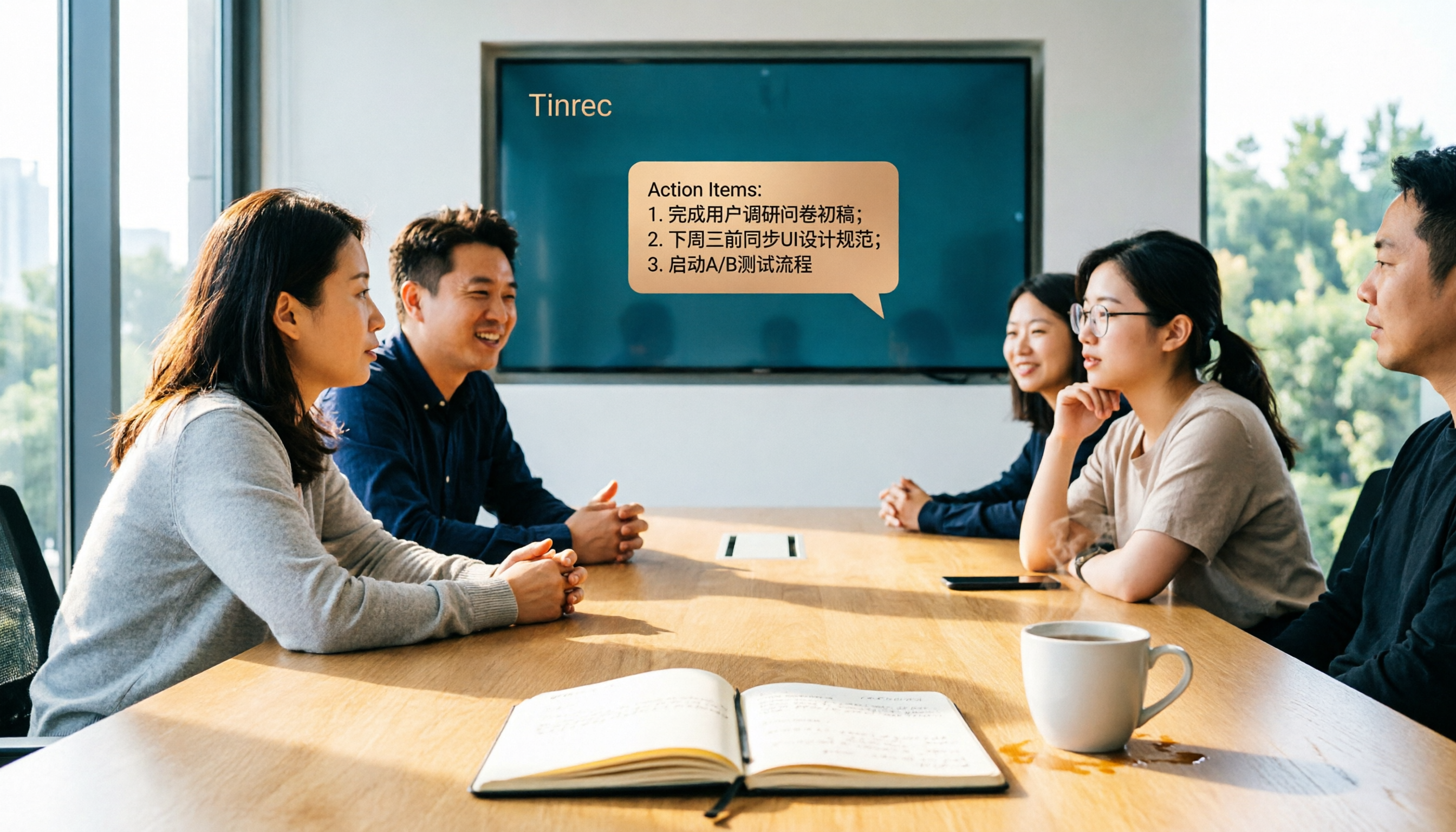
This is TinRec's most competitive feature. Even if the original recording is full of spoken Cantonese and filler words, TinRec's AI meeting minutes function automatically extracts key information and organizes fragmented conversations into clear written Chinese reports. It automatically generates:
- Key Conclusions
- Action Items
- Decision Highlights
This means you no longer need to manually change "大家傾下先" to "Discussion session"; the AI directly summarizes the discussion results for you.
Real-World Use Cases: Beyond Transcripts
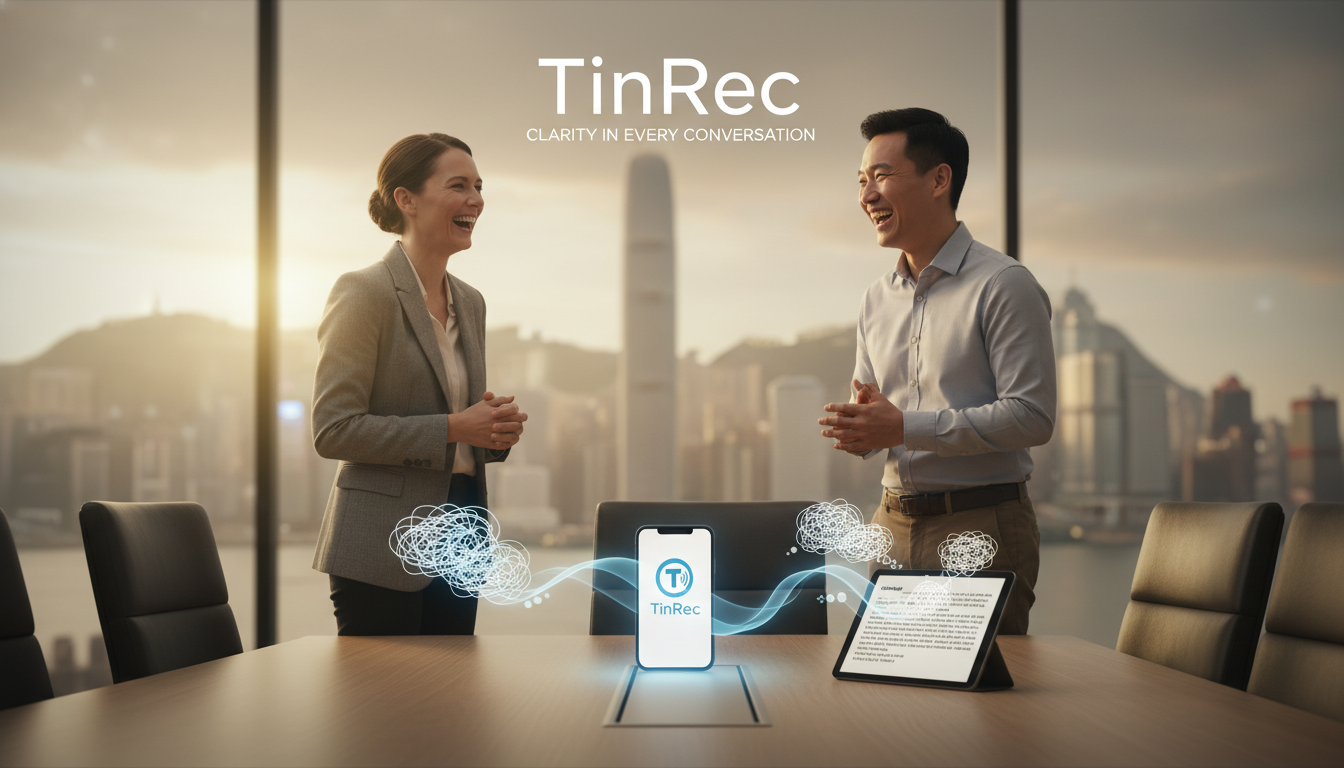
Scenario 1: Efficiently Summarizing YouTube Learning Resources
Beyond recording, TinRec also supports YouTube subtitle generation and summarization. Want to learn from a 1-hour Cantonese finance video but don't have time to watch it all? Just paste the link, and TinRec generates a transcript and provides an AI summary. This function is similar to Subanana's video processing, but TinRec focuses more on "knowledge absorption" rather than video production.
Scenario 2: Cross-Lingual Meeting Minutes
Hong Kong workplaces often mix Cantonese and English. TinRec's recognition engine is optimized for this, smoothly handling code-switching and, when generating summaries, uniformly converting to professional Chinese or English documents, significantly lowering the barrier to creating meeting minutes.
How to Choose the Right Tool for You?
When selecting a "Cantonese to Written Chinese AI," consider your primary use case:
- If you are a YouTuber or editor needing precise timeline subtitles and video output, specialized tools like Subanana are the best choice.
- If you are an administrator, student, journalist, or project manager whose pain point is "organizing messy audio files" and "writing meeting minutes," then TinRec (MiaoTing) is a more comprehensive solution. It not only transcribes accurately but also uses AI to convert spoken content into high-quality written summaries, truly achieving "instant access to key points."
Conclusion
As AI voice technology matures, "Cantonese to Written Chinese" is no longer an insurmountable challenge. From subtitle-focused Subanana to all-in-one note assistant TinRec, users now have more diverse choices. Embracing these AI tools not only frees us from tedious typing but also allows us to focus our valuable time on more meaningful thinking and creation.
Turn every recording into actionable outcomes
Get 60 free transcription minutes when you sign in. No credit card required.
Related Reading
You might also like

4 AI Meeting Note Tools Tested for 2026: Which Saves the Most Time for Chinese Meetings?
Still spending two hours writing meeting notes after the meeting? This article compares four AI meeting note tools, breaking down Chinese and mixed Chinese-English recognition, meeting recording methods, post-meeting summaries and action items, cross-platform export, and team member management. It also lists four key pitfalls to avoid when choosing a tool, helping you find a solution that truly saves time.

2026 Guide: Convert Audio to Transcripts — Stop Typing Manually & Auto-Generate Meeting Minutes with AI
Don't want to type transcripts by hand? This guide covers two scenarios—live meetings and pre-recorded files—and outlines 4 key buying factors. We tested Tinrec's bot-free meeting recording, AI summaries, and Q&A workflow, compared Notta, Granola, and PLAUD, and included the most common pitfalls to avoid.

4 AI Recording Tools Tested for 2026: Which Saves the Most Time on Chinese Meeting Notes?
Recorded a meeting but never have time to organize it? This hands-on comparison looks at four common approaches—built-in phone features, free online tools, AI recording hardware, and dedicated AI meeting note tools—and tests Tinrec on Chinese meeting transcription, summaries, and action items. Includes 6 buying considerations and FAQs.

2026 Medical Meeting Transcription Tools Compared: Which AI Saves You the Most Time with Chinese Transcripts and Summaries?
For professionals juggling over a dozen meetings a week and still stuck with post-meeting notes, which tool should you use? This article dives into practical decision points, covering 5 key factors for choosing a medical meeting transcription tool. We tested Tinrec's bot-free recording, AI summaries, action item extraction, and AI Q&A, and briefly review alternatives like Notta, Otter.ai, and PLAUD. We also provide a guide to avoid common pitfalls and final recommendations.
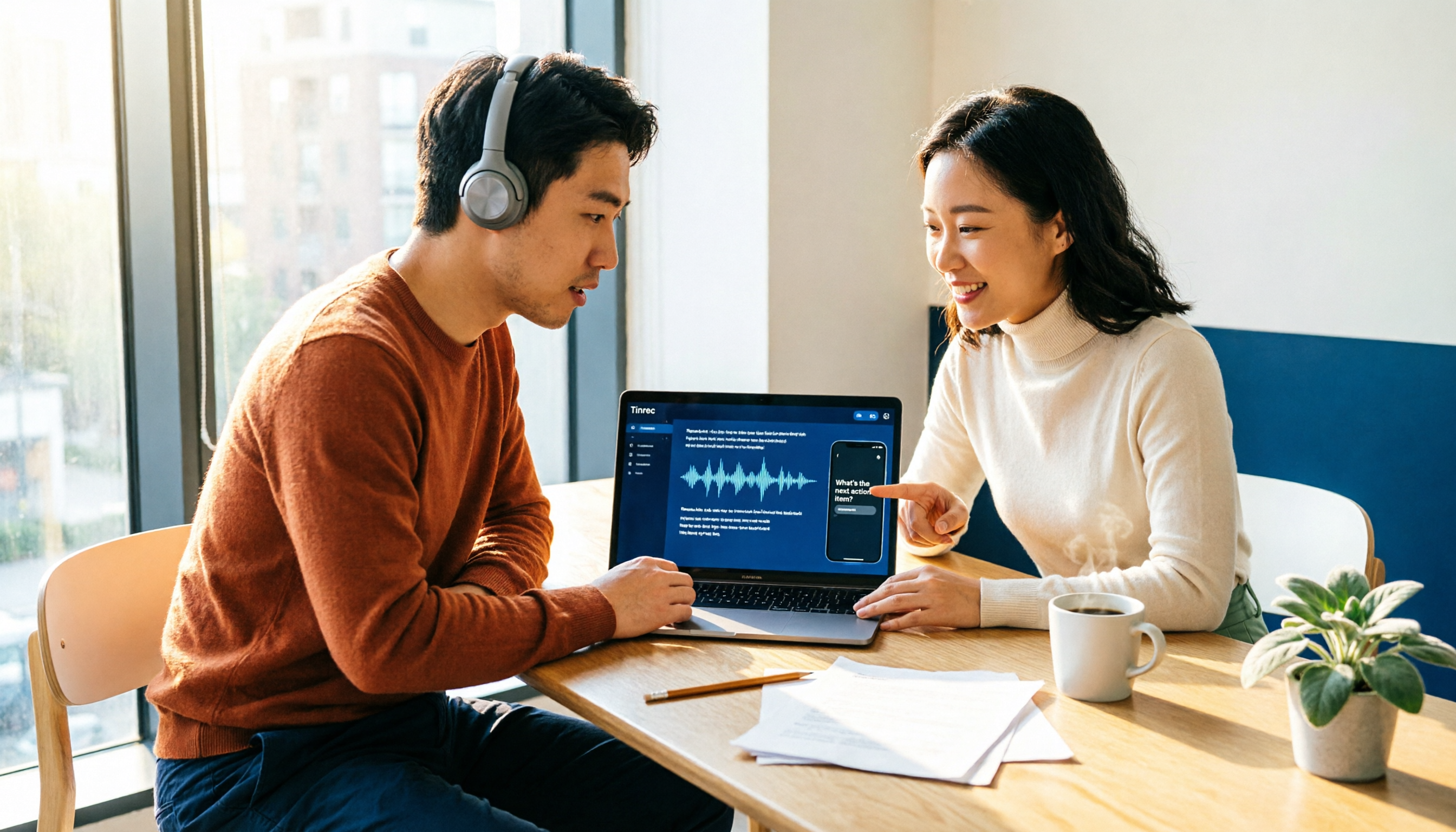
How to Choose an Automatic Transcription Tool in 2026: 5 Steps to Compare Yating Transcription and Tinrec
How do you choose an automatic transcription tool? Starting from the actual checklist I use when picking tools, I compare Yating Transcription and Tinrec across five dimensions, covering online meeting recording methods, post-meeting organization depth, AI Q&A, cross-platform team collaboration, and quota pricing, to help you determine which one better fits your workflow.

4 Best Audio-to-Text Apps in 2026: Which One Actually Saves You Post-Meeting Time?
A mid-level manager who attends 15 meetings a week shares hands-on experience. From online meeting recording methods and transcription performance for Chinese and mixed Chinese-English to post-meeting summaries and action item organization, this breaks down the differences among four types of audio-to-text apps and explains how Tinrec uses bot-free recording, AI summaries, action item extraction, and team spaces to turn meetings into searchable, collaborative, actionable data.
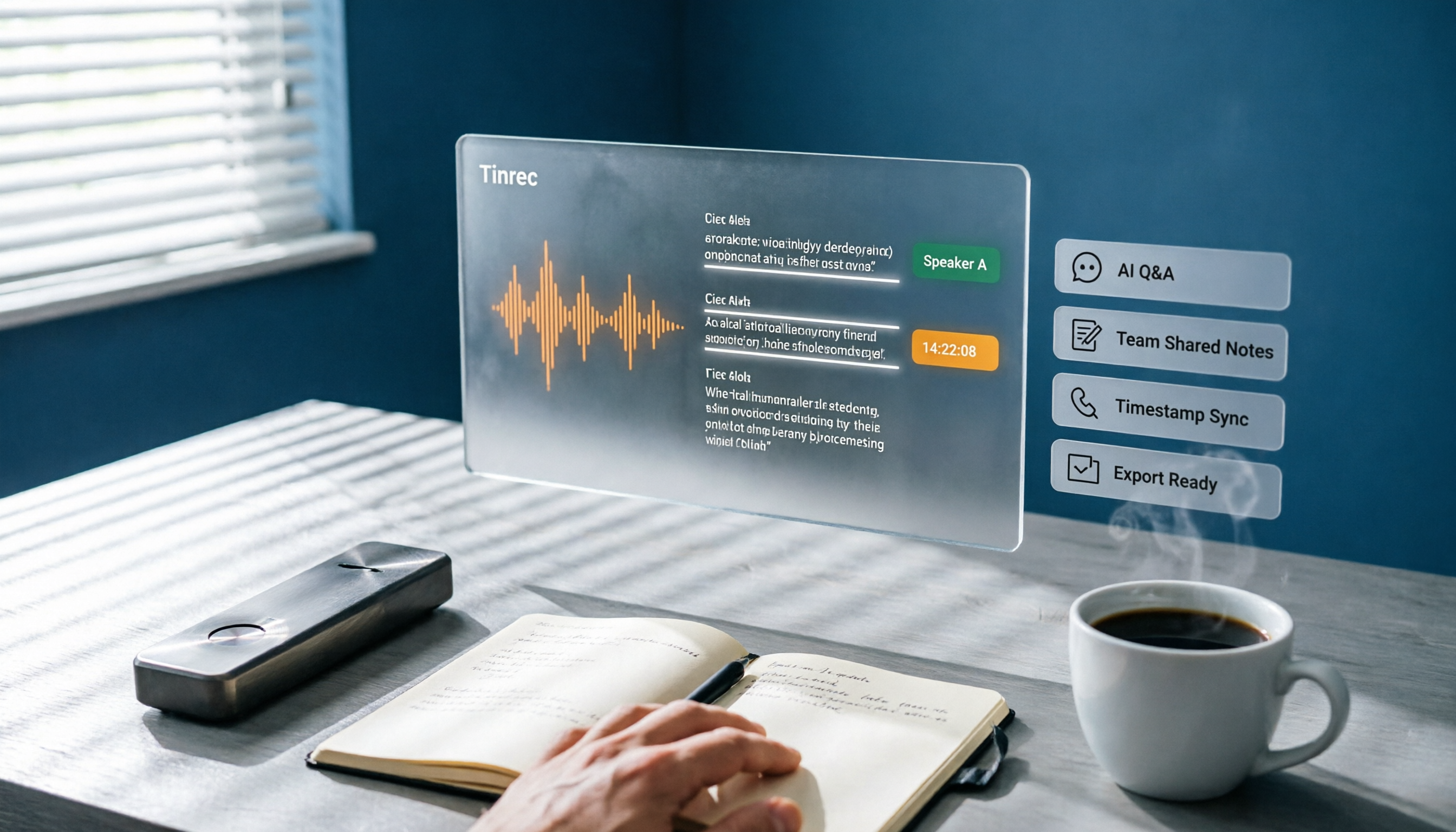
4 Interview Transcription Tools Compared in 2026: From Recording to Citable Text
After an interview, organizing the transcript often feels more exhausting than the interview itself. This article starts from 'recording to citable text' and compares 4 interview transcription tools, covering speaker labeling, AI Q&A, audio retention, and team sharing, plus common pitfalls and selection advice.
Tinrec vs Notta 2026: 5-Dimension Comparison for Chinese Meeting Transcription Tools
Starting from the decision focus of 'Do you want transcription, or usable meeting data?', this article compares Tinrec and Notta across 5 dimensions, covering selection criteria, a full breakdown of Tinrec, other options, and pitfalls to avoid, helping Chinese meeting users make a quick choice.

5 Transcription Tools Tested and Compared in 2026: Transcription Takes Too Long—Which One Actually Saves Time?
Transcription takes too long, and the problem is often not typing speed but the "listen, type, re-read" workflow. This article tests 5 transcription and AI meeting note tools, covering how to judge accuracy, post-meeting organization, audio retention and export, free quotas, and team seat licensing. It provides criteria you can follow directly and analyzes Tinrec's actual performance in bot-free recording, AI Q&A, and team knowledge retention.