

Turn recordings into transcripts and summaries in minutes
Upload audio or video for multilingual transcription, AI notes, and action items
Active Listening: Tips, Examples, and Practical Advice
Key Points
- Try 秒聽錄音 now
- 300 minutes of speech-to-text service per month
- Record up to 30 minutes per session
- Support uploading 3 audio or video files
- Start for free
- Enterprise trial: book a demo
秒聽錄音 Launches New Feature: Meeting AI Agent
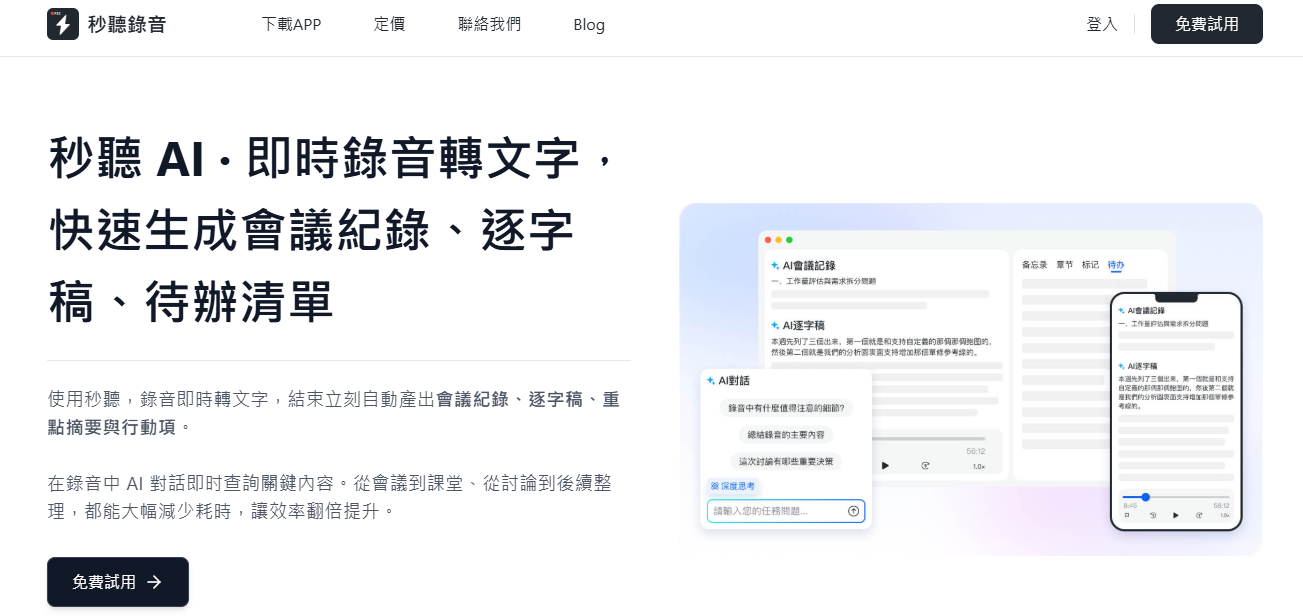
秒聽錄音 has been upgraded to a voice-activated smart meeting agent that can directly participate in meetings, answer questions, and complete tasks, making meeting notes, understanding, and follow-up actions effortless.
"What Did You Just Say?"
In a noisy office, with constant notifications and a full to-do list, it's easy to get distracted. However, focusing on the present conversation is an essential skill.
Active listening is not just about hearing sounds; it's about understanding, remembering, and engaging in the conversation. By mastering active listening skills, you can improve work efficiency and communication quality. This article will introduce practical methods, real-life application scenarios, and the benefits of truly "hearing" others.
What is Active Listening?
Active listening means fully engaging in a conversation. When you listen actively, you not only grasp the information being conveyed more clearly but also respond more thoughtfully. Common techniques include maintaining eye contact, asking open-ended questions, and paying attention to non-verbal cues such as body language and facial expressions.
Whether dealing with clients or conducting interviews, active listening enhances overall communication and builds trust. This skill not only helps establish solid interpersonal relationships but also promotes teamwork, strengthens connections, and improves efficiency.
Great listeners follow the "Three A's Principle":
- Attitude: Start conversations with curiosity and an open mind. A positive attitude shows respect and makes the speaker feel at ease.
- Attention: Small gestures like nodding or asking clarifying questions show active participation. Being present demonstrates that you are giving your full attention.
- Adjustment: Sometimes the other person needs to vent; other times they want to brainstorm together. Effective listening requires flexibility, sensing their needs, showing empathy, and fostering more meaningful dialogue.
6 Active Listening Strategies to Improve Conversation Quality
Great listeners use various communication techniques to deepen connections, truly hear others, and respond with empathy. Here are six techniques worth practicing:
- Stay Focused
Notification sounds and unread emails are easy distractions. Eliminating interruptions is key to active listening. AI tools like "秒聽錄音助手" can automatically take notes for you, preventing multitasking and allowing you to focus on the conversation without missing important details. - Summarize Key Points
Periodically restating and summarizing the content during the conversation helps ensure mutual understanding and reduces misunderstandings. This not only reinforces your memory but also shows the other person that you value their input. - Don't Interrupt
Though you may want to express your thoughts immediately, interrupting can disrupt the speaker's train of thought. Letting them complete their statement often leads to deeper dialogue. Patience shows respect and encourages team members to speak more openly. - Ask Open-Ended Questions
Yes/no questions tend to end conversations. Instead, ask questions like "How does that make you feel?" or "What is the best way to improve this situation?" to encourage deeper thinking and demonstrate interest in the other person's perspective. - Observe the Atmosphere
Active listeners not only hear words but also notice non-verbal signals such as posture, expressions, and tone. If someone's body is tense or voice is shaky, even if they deny it verbally, it may indicate anxiety. - Suspend Judgment
The goal of active listening is to understand the content and emotions behind the other person's words. Temporarily set aside personal biases and preconceived notions to focus on understanding their position. Showing empathy creates a safe space where people feel comfortable sharing honestly.
Stop organizing recordings by hand
Upload audio or video and automatically get a transcript, summary, and action items
Five Major Benefits of Active Listening
Learning to be an active listener takes time, patience, and practice. But like any new skill, the effort yields rich rewards:
- Uncover Deeper Meaning: Active listening goes beyond surface-level conversation, building genuine and meaningful connections that create a sense of belonging and community—powerful motivators. When people feel understood, collaboration and trust flourish in the workplace.
- Strengthen Teamwork: Many workplace communication barriers stem from misunderstandings, and active listening effectively reduces that risk. By carefully listening, paraphrasing, and clarifying key points, ensure everyone shares the same understanding of goals and expectations, making team operations smoother and more efficient.
- Help Resolve Conflicts: The strong relationships built through active listening are especially useful when conflicts arise. Practicing active listening helps you see issues from the other person's perspective and navigate differences with empathy. When people feel understood and respected, they are more likely to seek common ground.
- Boost Engagement and Morale: Connection and respect are like fuel for motivation. Active listening shapes a positive culture where everyone feels their voice is valued, thereby increasing morale and willingness to participate. When people know they are truly being heard, they are more eager to contribute ideas.
- Promote Continuous Growth: Every conversation is an opportunity to learn something new. Active listening exposes you to different perspectives and insights, expanding your understanding. You learn while helping others grow as well.
Three Practical Examples of Active Listening
What does active listening look like in real life? Here are three scenarios:
- During a Team Meeting
Team members gather for a project status update. Everyone turns off their phones and closes their laptops to focus. They ask insightful questions, give ample space for responses, and ultimately achieve more efficient meeting outcomes. - During a Call with a Client
Create a focused environment before the call: close unnecessary tabs, mute your phone, blur the background. When the client expresses concerns, nod appropriately and don't interrupt, showing that you take this conversation seriously. - During a Job Interview
Create a quiet, distraction-free environment for both parties. When the candidate speaks, use "秒聽錄音" to transcribe in real time, avoiding frequent note-taking that breaks eye contact. Lean in slightly and ask deep questions to further understand their experience and skills. 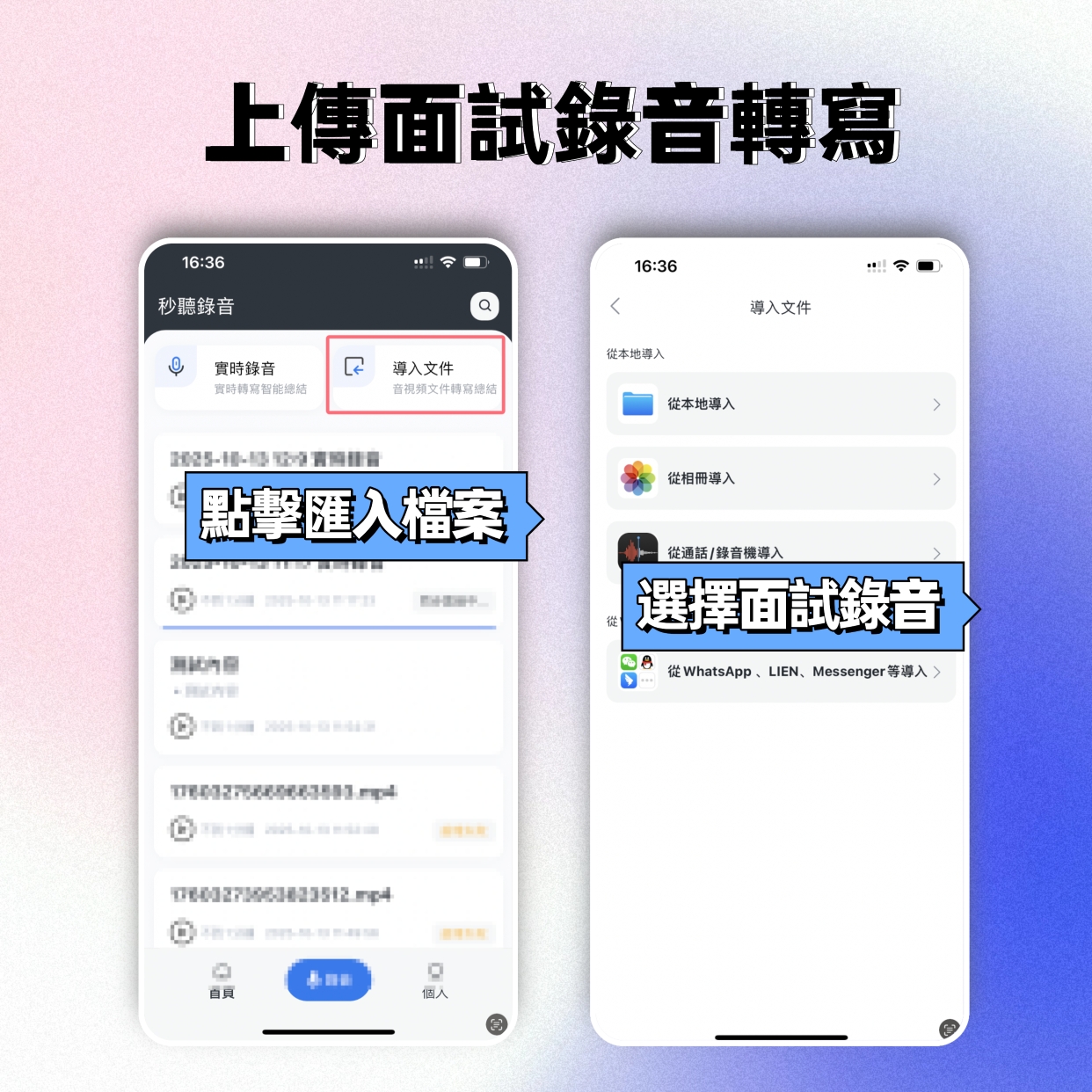
5 Tips to Improve Your Active Listening Skills
Not sure how to start practicing active listening? Pay attention to the following five suggestions:
- Ask for Feedback: After a conversation, ask a trusted colleague how you performed as a listener. Did they feel heard? Their opinion may reveal areas for improvement you hadn't noticed.
- Self-Check: It's easy to drift off during long meetings. Notice when you become distracted and remind yourself to return to the present; this is very helpful for maintaining focus.
- Stay Open: Even if you disagree with the other person's viewpoint, listen fully first. You might learn something new while building mutual respect.
- Take Breaks: Long conversations can be tiring. Feel free to ask for a moment to think, e.g., "Can I take a moment to think before responding?" This creates a win-win interaction and helps you stay clear and focused.
- Embrace Silence: Sometimes the best response is quiet. Allow pauses to give each other time to digest and reflect, avoiding the urge to fill the gap.
Remember, striving to be a great listener isn't about perfection—it's about cultivating better habits that keep you connected in every conversation. Give yourself space and grace to learn and grow.
Great Conversations Start with Great Notes — 秒聽錄音 Helps You Stay on Track
Engaging conversations need thorough records. With "秒聽錄音", you no longer have to miss parts of the conversation just to jot down key points.
"秒聽錄音" is redefining AI applications in the workplace—the first AI meeting assistant that can automatically join, share, and summarize meetings. It supports real-time transcription in multiple languages including Chinese, English, Japanese, Cantonese, and Minnan, and generates AI summaries, to-do items, and tracking lists to significantly boost efficiency. Today, AI meeting assistants have become standard equipment for businesses, saving professionals and teams an average of 4 hours per week, and significantly increasing productivity by automatically generating action items, meeting summaries, and follow-up emails.
Experience "秒聽錄音" now and feel the change brought by smart technology.300 minutes of speech-to-text per month
- Up to 30 minutes per meeting
- Can upload 3 audio or video files
Enterprise Trial Booking
- Industry-leading speech recognition technology
- Advanced AI conversation features
- Custom integration and workflows
Turn every recording into actionable outcomes
Get 60 free transcription minutes when you sign in. No credit card required.
Related Reading
You might also like

2026 Top 5 Real-Time AI Meeting Notes Compared: Tinrec vs Notta vs Plaud — Which One Should You Choose?
The real pain point of meeting notes isn't whether they can be transcribed, but how to use them after transcription. This article starts with common misconceptions, outlines the positioning of 5 highly discussed real-time AI meeting note tools, and focuses on the differences between Tinrec, Notta, and Plaud. It compares meeting capture methods, post-meeting outputs, audio retention, team governance, and pricing plans to help you decide which one fits your meeting scenario.

2026 AI Meeting Notes Guide: Tinrec's Bot-Free Recording & Auto-Generated To-Dos
How do you choose an AI meeting notes tool? This article examines Chinese recognition, recording methods, post-meeting organization, and team data ownership, comparing Tinrec, Notta, Otter.ai, and Granola, plus four common pitfalls to help you find a solution that truly saves time after meetings.

5 Best Meeting Notes Apps of 2026: Which Free Version Is Actually Enough?
Still spending an hour after every meeting writing up notes? This comparison puts five common meeting notes app approaches side by side—covering Chinese recognition, how meetings are captured, post-meeting organization, team permissions, and pricing—and explains how Tinrec handles recording, transcription, summaries, action items, and AI Q&A within its free tier.

2026 Meeting Recording Tools: Bot-Free Recording + AI Action Item Management
A mid-level manager who attends 15 meetings a week shares hands-on insights: starting from the decision point of whether to let a meeting bot join, this article breaks down 4 key factors for choosing a meeting recording tool, and explains the real-world experience, limitations, and use cases of Tinrec's desktop bot-free recording, AI summary and action items, Q&A, and team plan roles and seat management.

Tinrec vs Otter.ai: Which AI Transcription Tool Is Right for You in 2026?
Choosing an AI transcription tool isn't just about speed—it's about language support, meeting capture methods, post-meeting organization, and team data governance. This comparison of Tinrec and Otter.ai breaks down key dimensions to help you decide which tool fits your meeting needs.

What Is Real-Time Transcription in 2026: Definition, 4 Key Factors, and Tool Comparison
What is real-time transcription and how does it differ from transcribing recordings? This article explains the definition and how it works in plain language, outlines 4 key factors to consider, and compares Google Live Transcribe, Yating, Notta, and Tinrec in Chinese meetings, post-meeting organization, and team collaboration, with scenario-based recommendations.

4 Meeting Transcription Tools Tested: Which AI Saves the Most Time on Chinese Transcripts and Summaries?
After a meeting, do you spend another two hours organizing the audio recording? This article compares four meeting transcription tools—Tinrec, Notta, Otter.ai, and Granola—on Chinese transcription, AI summaries and action items, bot-free recording, team collaboration, and pricing to help you find the most time-saving solution.

3 iPhone Audio-to-Text Apps Tested in 2026: How Long Can You Record and Which Saves the Most Time After Meetings?
How long can an iPhone actually record? This article first breaks down the storage, battery, and file interruption risks of the built-in Voice Memos app, then compares 3 audio-to-text tools from a student's perspective—covering free quotas, single-recording limits, post-meeting organization, and AI Q&A capabilities—to help you decide whether the built-in recorder is enough or if you need an AI recording assistant that delivers key points right after recording.

Google Live Transcribe vs Tinrec in 2026: 5-Dimension Comparison — Which Is Better for Meeting Notes?
Google Live Transcribe & Sound Notifications is an Android accessibility tool known for being free, providing real-time transcripts, and sending environmental sound alerts. Tinrec focuses on meeting notes and team collaboration. This article compares them across 5 dimensions—transcription and organization, online meeting recording, AI Q&A, audio file import, and team management—to help you decide which one to use for meeting notes.