
Turn recordings into transcripts and summaries in minutes
Upload audio or video for multilingual transcription, AI notes, and action items
Before Your Meeting, Ask: Is This Call Really Just Between Us?
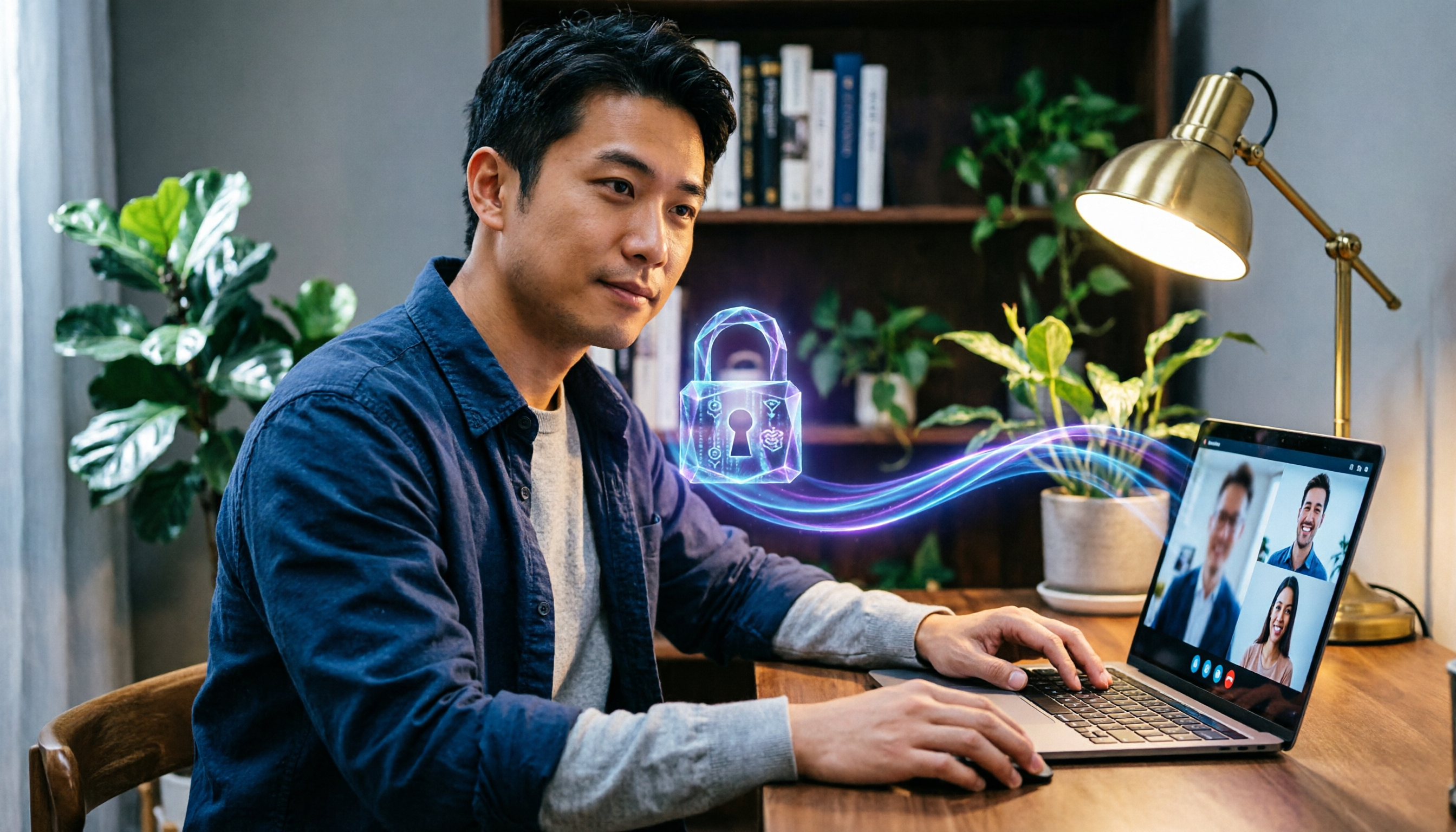
You're preparing for an online meeting that involves pricing, contract details, or product roadmaps. The meeting link has been sent, and the other party has joined Google Meet. Just before the meeting starts, a question crosses your mind: Is this call encrypted? If a competitor or an unrelated party intercepts the packets, could the content leak?
This question isn't just for tech folks. For small business owners, startup teams, and department heads, meeting content often is the business decision itself. If the encryption mechanism is unclear, you're essentially putting your company's most sensitive discussions on a channel you don't fully understand.
Google Meet's encryption actually works on multiple layers, and the level of protection differs between personal accounts and Workspace accounts. This article breaks down each layer so you know exactly which type of protection you're using before your next meeting.
Before Diving into Google Meet Encryption, Understand These 3 Terms
Cloud Encryption
Cloud encryption is Google Meet's default mechanism. All meetings and calls are encrypted during transmission between your device and Google's data centers, and recordings are stored encrypted in Google Drive. This means your data has basic protection both in transit and at rest, but Google's servers can still process audio and video content during the meeting to provide features like live captions and noise suppression.
End-to-End Encryption (E2EE)
End-to-end encryption means that call content is only decrypted on the participants' devices, and Google's servers cannot read it. According to Google's official documentation, 1:1 and group voice and video calls on the new Meet app with personal accounts are end-to-end encrypted and are not stored on Google's servers. This is a clear upgrade for personal privacy.
Client-side Encryption (CSE)
Client-side encryption is an additional layer of protection that can be enabled for Workspace Enterprise editions. All media content is encrypted directly in each participant's browser, and the encryption keys exist only on the user side, so Google's servers and other service providers cannot decrypt it. To use this feature, administrators must first connect Google Workspace to an external identity provider and an encryption key service.
Google Meet Call Encryption: Actual Differences Between Personal and Workspace Versions
Personal Accounts: End-to-End Encryption on the New Meet App
If you're using a personal Google account and initiate a 1:1 or group call through the new Meet app, your audio and video content is protected with end-to-end encryption. The media content from these calls is not stored on Google's servers, and only the sender and receiver in the call can interpret the content.
It's important to note that end-to-end encryption applies to the "call" itself. If you're using Google Meet's "meeting" format, or a standard meeting under a Workspace account, the default is still cloud encryption, not end-to-end encryption.
Workspace Accounts: Cloud Encryption by Default, Client-Side Encryption Available
Standard meetings and calls for Workspace users are encrypted by default with cloud encryption. This means both transmission and storage are encrypted, but Google's servers can still process media content during the meeting. If your business needs stricter protection, administrators can enable client-side encryption, so meeting media is encrypted directly in the browser, and Google cannot decrypt it.
A 2025 update also allows client-side encrypted meetings to be joined from Google Meet hardware devices. Importantly, hardware devices don't need a special invitation; as long as the participant's identity meets the access requirements for client-side encryption, they can join.
Stop organizing recordings by hand
Upload audio or video and automatically get a transcript, summary, and action items
Encryption Status of Call Recordings and Messages
Google's official documentation states that call recordings are protected with encryption at rest when stored in Google Drive. Messages sent in the new Meet app are stored encrypted on Google's servers. Live captions use audio data, but Google states that this data is not linked to personally identifiable information and is not stored.
Beyond Encryption: Careful Data Management After Meetings
Encryption addresses protection during transmission and storage, but after the meeting ends, how you save and share recordings, transcripts, and meeting notes is another privacy concern. Many people simply dump meeting recordings into cloud storage without considering who has access, whether the content needs to be retained, or how to find it later.
For teams that need to review meeting content repeatedly, it's better to centralize recordings in a manageable, searchable team space rather than scattering them across personal devices or chat threads. For example, Tinrec 秒听录音 captures system audio via a desktop app, so you can record meetings without adding a bot to Google Meet, and it generates transcripts, summaries, and action items in real time. Once meeting data is in the team space, you can set roles and seats, and administrators can view usage and activity logs.
This doesn't mean encryption isn't important; rather, it's a reminder: encryption protects the security of the call itself, but post-meeting data governance determines whether content can be used properly without leaking.
Pitfall Guide: 4 Common Mistakes When Evaluating Meeting Encryption
Pitfall 1: Assuming All Google Meet Meetings Are End-to-End Encrypted
Standard Google Meet meetings are encrypted with cloud encryption by default. Only calls on the new Meet app with personal accounts are end-to-end encrypted. If you're using a Workspace account or a regular meeting link, don't assume the content is end-to-end encrypted.
Pitfall 2: Equating "Encrypted" with "Google Can't See Anything"
Cloud encryption protects data in transit and at rest, but Google's servers can still process meeting content to provide features like captions and noise suppression. Only in end-to-end encryption or client-side encryption scenarios can Google not interpret the media content.
Pitfall 3: Ignoring Access Permissions for Recordings and Transcripts After Enabling Encryption
Just because the call is encrypted doesn't mean there's no risk of leakage after the meeting ends. If recordings, transcripts, and AI summaries are stored in personal cloud drives or shared in casual chat groups, access permissions might be more permissive than you think.
Pitfall 4: Using Third-Party Tools to Record Meetings Without Checking Data Flow
If you use a third-party tool to record Google Meet meetings, the recording content passes through that tool's servers or devices. Encryption protects the Meet call itself; you need to separately verify how the third-party tool handles data. Choosing a tool that keeps recordings within a team space and allows you to manage member permissions is safer than uploading recordings to an unknown cloud.
Summary: Which Encryption Option Should You Use?
First, identify your use case, then decide which level of protection you need:
- Personal 1:1 or group calls, with both parties using the new Meet app: End-to-end encryption is enabled by default, suitable for private calls.
- Workspace standard meetings that need live captions and AI features: Cloud encryption provides protection in transit and at rest, meeting the needs of most business meetings.
- Workspace meetings involving highly confidential content, and you can accept the extra setup cost: Ask your administrator to enable client-side encryption so that even Google cannot decrypt the media content.
- Need recordings, transcripts, and team collaboration after the meeting: Beyond encryption, choose a tool that centralizes team data and allows you to set roles and seats, avoiding scattered recording files.
Google Meet's encryption is more comprehensive than most people think, but "comprehensive" only applies if you know which layer you're using. Before your next meeting, check your account type and meeting format, then decide whether you need additional encryption settings. That's more practical than worrying about content leaks afterward.
References
- Learn about call & meeting encryption in Google Meet - Google Meet Help
- Understand the basics of privacy in Google Meet - Google Meet Help
- Is Google Meet Encrypted? Full Guide (2025)
- r/privacy on Reddit: Paranoid about google meet possibly storing my video calls and even my facial data without my knowledge
- Google Workspace Updates: Join a client-side encrypted meeting from a Google Meet Hardware device
Turn every recording into actionable outcomes
Get 60 free transcription minutes when you sign in. No credit card required.
Related Reading
You might also like

for mac google meet: Audio Permissions, Recording, and Transcript Handoff for Google Meet on Mac
Recording Google Meet on a Mac usually gets stuck not because you cannot find the record button, but because macOS separates 'capture system audio' and 'use microphone' into two independent authorizations. This article proceeds in three parts—permission setup, recording, and post-meeting organization—explaining how to determine which layer is causing meeting audio not to be recorded, and how to organize the recording into a transcript, summary, and to-dos and hand it off to a colleague.

How to Change Your Google Meet Background on Mobile: Check Account and Version Requirements First, Then Follow the Pre-Meeting or In-Meeting Path
When you're told to join a client-facing meeting and only have your phone on hand, the last thing you want is to discover five minutes before the call that you can't find the background option. This article first explains what's required to use backgrounds on mobile (account type, app version, device permissions), then walks through two paths step by step—one before you join the meeting and one during it—and closes with a pre-meeting checklist and alternatives if you can't find the option.

Google Meet 2026 APK Installed: Choosing a Meeting Notes Tool on Android — First Look at the Mobile vs. Desktop Organization Gap
Installing the Google Meet 2026 APK is just the first step. This article uses four dimensions to narrow down meeting notes tools that claim to 'support Google Meet' to two or three options, focusing on the real-world gap between Android mobile and desktop post-meeting organization. Each dimension includes specific questions you should confirm with the product page or vendor.

Google Meet 2026 Meeting Notes Capability Review: Where Built-in Transcription Ends and How to Split Post-Meeting Action Items and Deliverables
A practical mid-level manager's review of Google Meet 2026 recording and transcription coverage, explaining the responsibility boundaries for post-meeting summaries, action items, and deliverables, with recommendations for Chinese and mixed Chinese-English meetings, data storage, and team handoffs.

Which Google Meet 2026 APK Should You Install? Android Install Source Guide, Meeting Prerequisites, and Backup Recording Handoff Order When Nothing Was Recorded
When you're assigned to join a Google Meet on an Android phone and handle post-meeting notes, first clarify whether you're attending, hosting, or responsible for organizing. Then decide whether to install from the official app store or a third-party APK source, what prerequisites are needed to sign in, and how to use audio recording and transcription in order to fill in the transcript and action items and hand them off when the meeting wasn't recorded.

Google Meet 2026 Meeting Notes Capabilities: Where Built-In Transcription Ends and How to Split Post-Meeting To-Dos and Deliverables
Google Meet 2026 recording and transcription are not automatically enabled by default, and post-meeting summaries, to-dos, and deliverables still have coverage boundaries. This article walks through the actual workflow to assess built-in platform capabilities, explains the differences in organizing Chinese and mixed Chinese-English meetings, the distinction between data storage and team spaces, and offers recommendations for dividing post-meeting to-dos, deliverables, and data storage.
How to Choose a Google Meet Note-Taking Tool for Windows: Four Dimensions to Narrow Down from Cross-Device Gaps to Two or Three Options
Meetings happen on Google Meet on a Windows PC, but organizing often gets picked up on a phone or another device. This article uses four dimensions (how audio gets in, how far post-meeting output goes, the organizing gap between Windows and phone, and whether data stays in a personal or team space) to narrow down candidate tools to two or three, with specific questions to ask product pages or vendors for each dimension.
How to Choose a Google Meet Meeting Notes Tool for PC: Narrow a Dozen Options to Two or Three with Four Dimensions, and What to Confirm with Vendors for Each
After a Google Meet call on a Windows PC, what you actually need to deliver is decisions, owners, deadlines, and an archivable record. This article uses four dimensions to help you narrow a dozen tools that claim Google Meet support down to two or three, with specific questions to confirm on product pages or with vendors for each dimension.

What You Need for Google Meet: Pre-Meeting Role Checklist and Post-Meeting Handoff
From the perspective of administrative assistants and project coordinators, this guide breaks down the prerequisites for joining or hosting a Google Meet by role, including account requirements, organizational settings, recording permissions, and extra conditions for external attendees. It also provides a pre-meeting checklist and a post-meeting handoff sequence for transcripts, decisions, and action items.