

Turn recordings into transcripts and summaries in minutes
Upload audio or video for multilingual transcription, AI notes, and action items
2026 Comparison of 3 Meeting Minutes Templates: How Much Time Can Tinrec's Auto-Generation Save?
The meeting itself isn't tiring—it's the aftermath.
After the meeting ends, staying behind to cram discussions into a table, trying to recall who said what, and then scrolling through group messages to confirm who's delivering what—anyone who's done this once knows the pain. This article isn't asking you to copy another template: first, we'll give you 3 ready-to-copy meeting minutes templates, then discuss why many people, after filling them out a few times, simply switch to AI meeting note tools like Tinrec, letting the notes take shape during the meeting itself.
Why Is "Manual Form Filling" No Longer Enough?
Most people's first attempt at meeting minutes involves grabbing a Word or Excel table and filling in the fields after the meeting. This approach works for small, simple meetings—meeting minutes can serve as an organization's decision history; when you need to trace back how a decision was made, flipping through the minutes is fastest. In formal settings like board meetings, they may even be required documents for audits or regulatory compliance.
But in practice, several common bottlenecks arise: recalling after the meeting takes time, when discussions are extensive you only remember conclusions not reasons, action items often miss owners or deadlines, and with multiple formats it's hard to tell which version is the latest. An action item without an owner and deadline is essentially as if the meeting never happened.
If you've encountered these situations, Tinrec's approach is worth a look.
3 Ready-to-Copy Meeting Minutes Templates
A practical meeting record typically includes seven basic fields: date and time, location or platform, attendees, agenda items, discussion summary, decisions, and action items with owners and deadlines. Formal meetings (such as board meetings) also add motions, voting, quorum confirmation, and signature fields. The following three templates can be copied directly into Word or Google Docs; just fill in the actual content in the brackets.
Template 1: Standard Business Meeting Minutes
| Field | Content |
|---|---|
| Meeting Name | [ ] |
| Date/Time | [ ] |
| Location/Platform | [ ] |
| Chair | [ ] |
| Attendees | [ ] |
| Absent/Guests | [ ] |
| Agenda Items | [ ] |
| Discussion Summary | [ ] |
| Resolutions | [ ] |
| Action Items | [Owner]/[Deadline] |
| Next Meeting | [ ] |
Template 2: Project Weekly Action Tracking Table
| # | Action Item | Owner | Deadline | Status | Notes |
|---|---|---|---|---|---|
| 1 | [ ] | [ ] | [ ] | Pending/In Progress/Completed | [ ] |
| 2 | [ ] | [ ] | [ ] | Pending/In Progress/Completed | [ ] |
| 3 | [ ] | [ ] | [ ] | Pending/In Progress/Completed | [ ] |
Template 3: Formal Meeting (Board/Committee) Minutes
| Item | Content |
|---|---|
| Quorum Confirmation | [ ] |
| Motion Number | [ ] |
| Motion Content | [ ] |
| Seconded By | [ ] |
| Voting Result | In Favor [ ]/Opposed [ ]/Abstained [ ] |
| Resolution | [ ] |
| Signature | Chair [ ]/Recorder [ ] |
These three tables are all useful, but the problem is that the act of "filling in the form" itself hasn't been eliminated. Where does the content come from? You still have to recall it after the meeting.
Tinrec vs Manual Template: What's the Core Experience Difference?
1. Timing of Output: Post-Meeting Recall vs In-Meeting Sync
Manual form filling is post-meeting work—you have to recall first, then type, essentially rerunning the meeting content in your mind. Tinrec syncs during the meeting: press record, and text appears in real time. By the time the meeting ends, the transcript is complete, and summaries, chapters, and action items are also organized. The difference isn't just speed—it's that you don't have to multitask on documentation while your memory is still fresh.
2. Mixed Chinese-English and Multilingual
Meetings in Taiwan are rarely pure Chinese; product names, technical terms, and client names often include English directly. When manually filling in tables, you have to spell these by ear, and if you get it wrong, you have to re-listen to the recording. Tinrec covers Chinese, Traditional Chinese, and multilingual meeting scenarios, and can also organize mixed Chinese-English content, providing real-time translation that can be viewed in original, translated, or bilingual format—especially useful for cross-language meetings.
3. How to Find Key Points Later
Once the table is filled, it's fixed. To go back and find "who said to delay the launch," you have to scan line by line. Tinrec supports AI conversational queries—you can ask directly about meeting content, such as "What was the conclusion of this meeting?" or "Who is responsible for which item?" It understands semantics and gives answers without you having to read the entire transcript.
Stop organizing recordings by hand
Upload audio or video and automatically get a transcript, summary, and action items
4. How to Capture Online Meetings
Many online meetings' recording permissions aren't in your hands, so post-meeting notes rely on memory. Tinrec's desktop version directly captures the computer's system audio, handling meeting audio played on computers from platforms like Zoom, Google Meet, Microsoft Teams, and Webex. It doesn't require adding an extra meeting bot to the room, nor does it add an "AI participant"—especially practical for external meetings.
5. Team Collaboration and Data Ownership
Tables are usually files sent back and forth; with multiple versions, no one knows which is the latest. Tinrec's team version centralizes recordings, transcripts, summaries, and action items in a single team space: new members can directly view historical meeting data; when members leave or lose their seats, the data remains owned by the team and can be handed over to other active members.
Tinrec's Core Features at a Glance
Real-time audio to text: Open Tinrec and start recording; text appears simultaneously. During the meeting, you can check for missed key points, and by the time the meeting ends, the transcript is complete—no need to listen back and type manually.
Bot-free online meeting recording: The desktop version directly captures system audio, compatible with Zoom, Google Meet, Microsoft Teams, and Webex. Users actively open Tinrec to start recording, without inviting a meeting bot or needing extra recording permissions.
AI summaries, chapters, and action item extraction: Long meetings are automatically divided into chapters, with summaries, key points, and action items generated. The work you used to do manually—breaking down and filling into tables—is done for you here.
AI conversational queries: After recording a one-hour meeting, ask Tinrec directly "What was the conclusion?" or "Who is responsible for what?" It understands semantics and gives answers without manually reading the entire transcript.
Export and post-meeting output: Supports multiple export formats, allowing you to bring results into existing workflows like Notion, Google Docs, OneNote, and Dropbox. It can also generate reports, tables, and documents for direct post-meeting delivery.
Team space and governance: Centrally stores team meeting data and provides member and role management, seat allocation, shared quotas, usage analytics, audit logs, and an audio recycle bin. Here, distinguish between "roles" and "seats": roles determine who can manage the team and members; seats determine who can record, upload, edit, and export. Active members without seats can still view, play, and read team data.
The team version's first eligible trial is 7 days, with 1 free seat and 300 minutes of shared team import quota; paid seats provide 2,000 minutes of shared team import quota per month, at USD 29.80/seat monthly or USD 199/seat annually (about USD 16.58/month). Real-time recording under an active team plan and active seat is currently not deducted by minutes. Prices and benefits are subject to the official purchase page.
Practical Use Cases
Department weekly meetings: Regular weekly meetings easily become "out of sight, out of mind." After recording with Tinrec, check the summary and action items—who needs to deliver what is clear at a glance. Before next week's meeting, a quick review gives you immediate context.
Client interviews and requirements meetings: Client requirements, concerns, and commitments are most at risk of being missed. The transcript preserves original words; when needed, use AI Q&A to extract "the three concerns the client mentioned," and post-meeting materials take shape quickly.
Cross-language meetings: When real-time translation is needed, you can view original and translated text while recording. Bilingual transcripts are especially convenient for international teams. Actual results may still be affected by recording quality, accents, noise, and overlapping speakers; for important content, it's recommended to verify against the original audio.
Classes and personal notes: Useful for lectures, talks, and interviews. After recording, use AI summaries to capture key points and Q&A to find specific sections—much faster than repeatedly listening to recordings.
Team knowledge retention: Centralize meeting records scattered across personal devices and chat rooms into a team space. New members can directly check historical decisions, and when members change, data doesn't disappear with them.
What to Look for When Choosing an Audio-to-Text Tool
Language and mixed Chinese-English handling: First confirm the tool's support for Chinese, mixed Chinese-English, and multilingual meetings. Tinrec covers Chinese, Traditional Chinese, and multilingual scenarios, and provides team hotwords to maintain company-specific terminology.
Whether recordings are retained: Some tools keep only text, not audio, making it troublesome to verify tone or details later. Tinrec retains recordings, and the team version also provides an audio recycle bin with a current retention period of 30 days, allowing recovery before permanent deletion begins.
Depth of post-meeting processing: Transcripts are just the starting point. Tinrec also provides summaries, chapters, action items, mind maps, AI Q&A, and document generation—essentially bundling the organizing work that follows "filling in the form."
Team permission model: Distinguish between "roles" and "seats." Tinrec's team version focuses on team-level sharing; roles handle governance, seats determine whether you can record, upload, edit, and export. Active members without seats can still view and read data.
Can it integrate back into existing workflows: Exporting to tools like Notion, Google Docs, OneNote, and Dropbox prevents creating another data silo.
Conclusion: Is Tinrec Worth a Try?
Templates still have their place: when signatures are needed, formal formats are required, or for occasional meetings, manual filling is still simple and direct. But if your problem is "I have to do this every week, and it takes a long time each time," what you really need to solve isn't what the table looks like, but where the records come from.
Tinrec's value lies in three things: transcripts are generated synchronously during the meeting, and summaries and action items are ready when the meeting ends; after recording, you can use AI Q&A to follow up without reading the entire document; team data is centralized in one space, so member changes don't cause gaps.
If you have regular weekly meetings, frequently handle mixed Chinese-English content, or need to turn meeting records into team assets, Tinrec will be much more practical than a static table. We suggest starting with the free version's basic quota, recording one of your own meetings to see how accurately summaries and action items are captured—this is more direct than looking at any template. Finally, a reminder: before recording and transcribing, please confirm local regulations and obtain participant consent when needed.
References
- Form Download Meeting Format - Secretariat - Tamkang University
- [Meeting Minutes Writing 2026] Format Tutorial | Free Templates + Template Download - ProjectManager
- Attachment 6: Meeting Minutes Format Example ○○○○ ...
- Free Meeting Minutes Templates (Word, Google Docs, PDF) | HiNoter Blog
- Meeting Minutes Example
Turn every recording into actionable outcomes
Get 60 free transcription minutes when you sign in. No credit card required.
Related Reading
You might also like

Best Sales Meeting Follow-Up Tools in 2026: Tested 3 Options, This One Excels for Chinese Meetings
After a sales meeting, the real challenge is follow-up. This article compares Tinrec, Otter.ai, Notta, and Granola on Chinese meeting transcription, post-meeting to-do organization, AI Q&A, and team data retention. It also covers 4 key purchasing factors and common pitfalls to help sales and customer success teams choose the right follow-up tool.
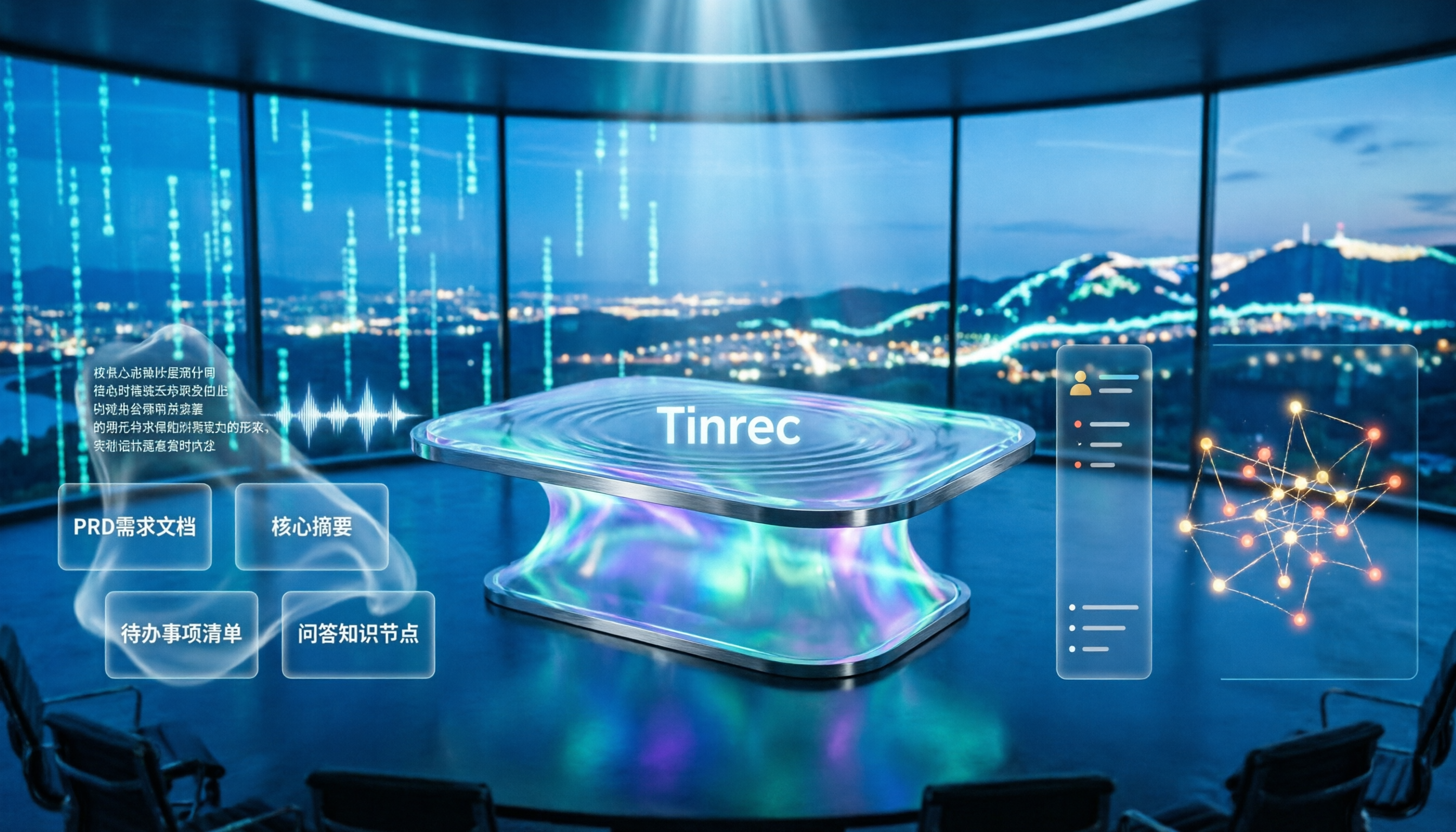
4 Meeting-to-PRD Tools Tested and Compared in 2026: Which Handles Chinese Meetings and Team Knowledge Best?
Generating a PRD from meeting notes isn't as simple as feeding a transcript to AI. This article starts with common pitfalls, breaks down the full workflow from meeting recording to PRD, and uses Tinrec to demonstrate real-time transcription, bot-free online meeting recording, AI summaries and action items, AI Q&A, multi-format export, and team spaces. It also covers 5 key buying considerations, team plan seats and pricing, practical use cases, and FAQs.

3 User Interview to PRD Tools Tested for 2026: Which One Lets AI Write Your Requirements Doc?
Turning user interview recordings into PRDs is time-consuming. We tested 3 tools, analyzing Chinese transcription, AI organization, and team collaboration. Using Tinrec as an example, we show how AI Q&A extracts requirements from interview recordings to quickly produce a PRD draft.
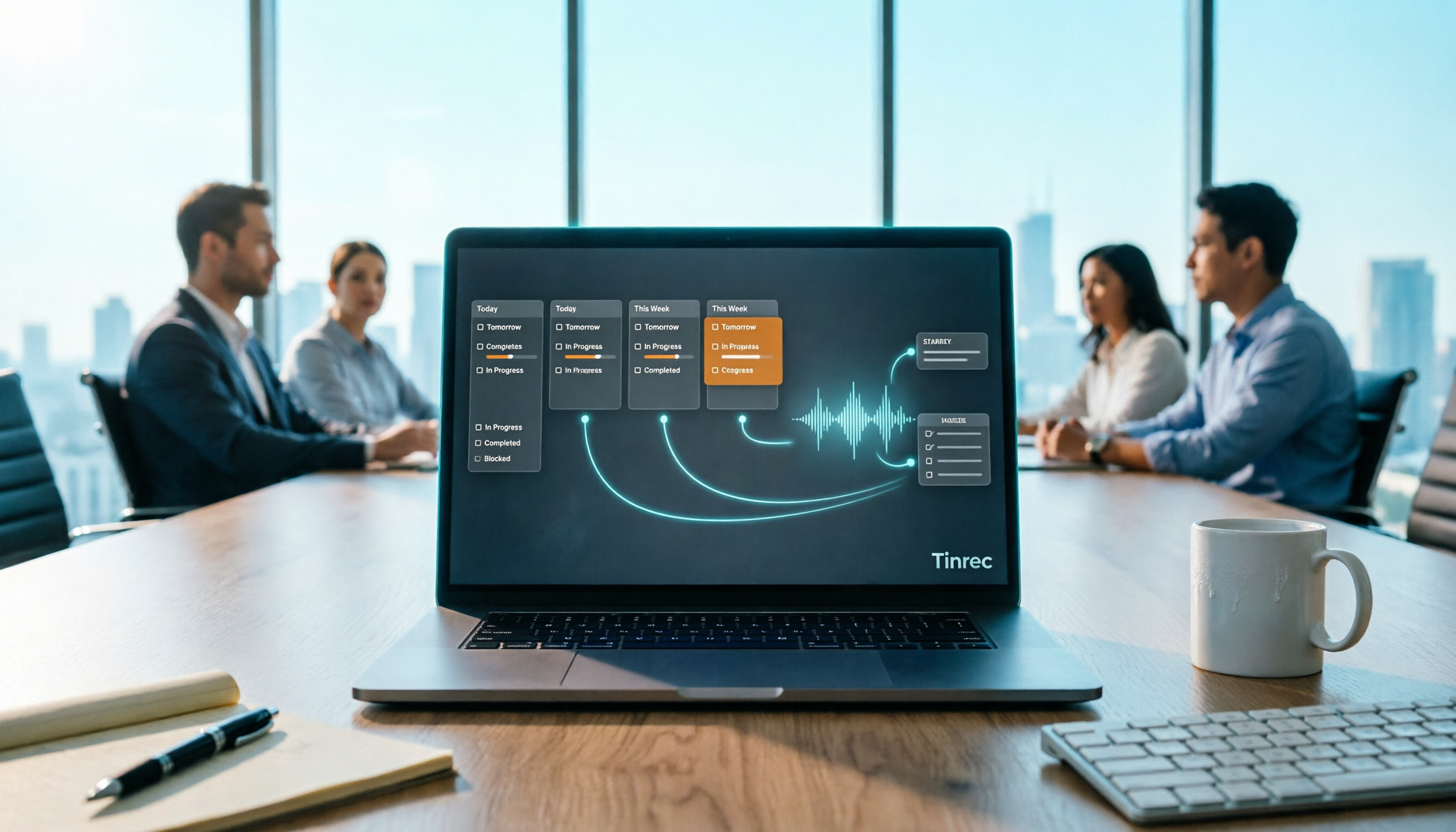
Project Meeting Task List Template 2026: 5 Essential Fields + Tinrec Automated Tracking
After a project meeting, tasks often go untracked. This article provides a ready-to-use project meeting task list template with 5 essential fields, explains how to adjust it for kickoff, weekly, and retrospective meetings, and shares how to use Tinrec to semi-automate recording, summarization, and action item extraction, so post-meeting follow-up no longer relies on memory.

Best Meeting Task Assignment Tools in 2026: 5 Tested, Tinrec Excels for Chinese Meetings
After a meeting, manually filling out a task assignment sheet often leads to missed items and poor tracking. This article examines 5 practical dimensions for choosing a meeting task assignment tool in 2026, and explains how Tinrec uses real-time transcription, to-do extraction, AI Q&A, and team spaces to shape the task list by the end of the meeting, while honestly listing free and team plan options.

How to Turn Meeting Notes into a PRD in 2026: A Complete 5-Step Guide
Meeting over, but your PRD is still blank? This guide breaks down the 5 key points and 5 practical steps for turning meeting notes into a product requirements document, and compares Tinrec, Otter.ai, Notta, and Granola on transcription, summarization, action item extraction, and team collaboration to help you choose the right workflow for writing PRDs.

Excel vs Tinrec in 2026: 5-Dimension Comparison — Which Saves More Time on Auto-Generating Meeting Action Items?
After a meeting, relying on memory to type action items into Excel often leads to missed tasks and wrong deadlines. This article compares manual Excel and Tinrec (秒聽錄音) across 5 key dimensions for organizing meeting action items, explains how to automatically extract action items, export them as tables, and bring them into Excel for tracking, and briefly reviews alternatives like Otter.ai and Notta.

Best Meeting Minutes Table Generator? 2026 Hands-On Test of 4 Tools—This One Saves the Most Time for Chinese Meetings
Downloading a template and filling in a table during the meeting is often the least efficient way to take meeting minutes. This article tests four tools—Tinrec, Notta, Granola, and Otter.ai—breaking down how to choose a meeting minutes table generator based on Chinese recognition, automatic summary and to-do generation, AI Q&A, and export workflows, plus four common pitfalls to avoid.
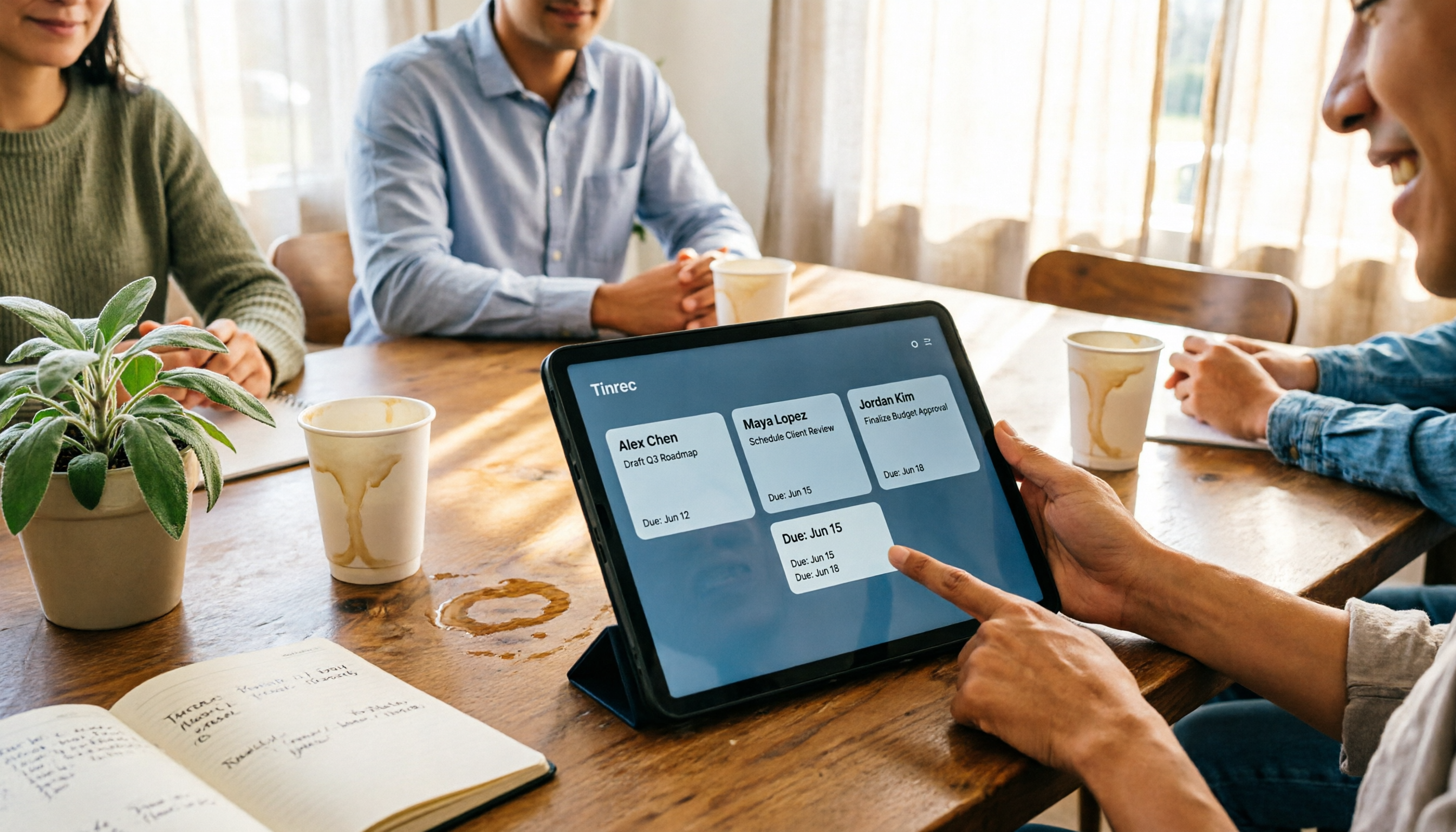
2026 AI Meeting Table Generator: Automatically Extract Owners and Export Action Items in One Click
The real pain point of meeting notes isn't the transcript—it's that after the meeting, no one knows who should do what. This guide covers 4 key factors for choosing an AI meeting table generator and compares Tinrec, Granola, TurboScribe, and Otter.ai to see which one truly turns discussions into tables with owner, task, and deadline.