

Turn recordings into transcripts and summaries in minutes
Upload audio or video for multilingual transcription, AI notes, and action items
2026 Comparison of 4 Speech-to-Text Apps: Which One Actually Saves You Time After Transcription?
At the 10 a.m. weekly meeting, you flip through materials while hitting record. When it's over, your phone holds a 47-minute audio file.
You need to submit meeting minutes that afternoon. You put on headphones and listen from the start, pausing and typing as you go. Before you know it, an hour and a half has passed.
Worse, your manager asks, "Who said the budget would be cut by 30% last week?" You remember hearing it but have no idea which minute it was in.
This article tackles exactly that: the point isn't how to record, but how to turn the recording into data you can actually use.
I've gathered the 4 speech-to-text apps most frequently mentioned by users in Taiwan and break them down by transcription performance, what you get after the meeting, and whether teams can share access.
Before Choosing a Speech-to-Text App, Understand These 4 Key Points
1. A transcript is just the starting point, not the finish line
Many people only look at "how accurate is the transcription" when picking a tool, but the real time sink is what happens after transcription. A 40-minute transcript runs tens of thousands of words—if you have to read it all, extract key points, and list action items yourself, it's not much different from typing it manually.
So the first thing to check is: does it automatically generate summaries, chapters, and action items? This is where tools currently differ the most.
2. How the meeting gets "into" the tool
There are roughly three ways to record online meetings: send a meeting bot to join, use a desktop app to capture system audio, or upload the recording file afterward.
The biggest problem with bots is that clients see an unfamiliar account in the meeting room, and some companies block them outright. Notably, Tinrec takes the desktop system audio capture route, so no extra participant is needed.
3. Performance with Chinese and mixed Chinese-English
Meetings in Taiwan are rarely pure Chinese; you'll often hear sentences like "this campaign's conversion needs more optimization." English-focused tools tend to struggle with such passages.
I recommend testing with a real recording of your own meeting, not a press release.
4. Free tier limits and team scenarios
Almost all free versions have minute limits, but what matters is what kind of limit: a monthly total or a per-file length cap.
Also, if you want to share meeting data with colleagues, first confirm whether it has a team workspace concept or only individual accounts.
Tinrec: Turning Meetings into Data You Can Keep Using
Tinrec is an AI meeting notes and collaboration tool for individuals and teams, available on web, desktop, and mobile. It doesn't just convert speech to text—it gives you searchable, queryable, shareable data right after the meeting ends.
No need to invite an extra bot to meetings
The desktop version captures your computer's system audio directly, handling Zoom, Google Meet, Microsoft Teams, and Webex without inviting an additional bot. This is especially noticeable in external meetings, because clients won't see an unknown account in the participant list.
The transcript is generated in real time as you record; if you miss a number during the meeting, you can go back and confirm it.
Get summaries, chapters, and action items right after the meeting
This is where I find the most time savings. When the meeting ends, the AI has already broken the long meeting into chapters, extracted key points, and organized action items, making it roughly clear who is responsible for what. If you need to submit a report, you can use Agent post-processing to generate documents and tables.
Ask questions directly about the meeting content
After recording, you can ask it "What was the conclusion about the budget in the last meeting?" and it answers based on semantics, rather than listing a bunch of keywords for you to filter through. Among tools in the same price range, this experience of treating meetings as a database to query is rare.
Export and team knowledge retention
Transcripts, summaries, and timeline subtitles can all be exported and taken to Notion, Google Docs, OneNote, or Dropbox for further processing.
Stop organizing recordings by hand
Upload audio or video and automatically get a transcript, summary, and action items
The team version centralizes this content in a shared team workspace: you can create multiple teams, invite members via link, and set owners, admins, and regular members. Meeting data belongs to the team; when a member leaves or loses their seat, resources can be transferred to other members and won't disappear with an individual account.
For plans and pricing, the personal version offers a free tier, weekly pass, Pro monthly, and Pro annual, so you can choose based on usage frequency; actual prices are subject to the official website. The team version offers a first-time 7-day trial, 1 free seat, and 300 minutes of shared team import quota; monthly billing is USD 29.80 per paid seat per month, annual billing is USD 199 per paid seat per year (about USD 16.58 per month), each paid seat includes 2,000 minutes of shared team import quota per month, and real-time recording under an active plan is currently not deducted by the minute.
Things to note
The free version has a quota cap, so heavy meeting users will need to pay. Also, Tinrec does not promise a fixed accuracy rate; actual performance is affected by recording quality, accents, overlapping speakers, and technical terminology. For important content, it's recommended to cross-check by replaying the recording at the transcript timestamps.
For the team version, also note that "roles" and "seats" are two different things: members without a seat can view, play, and read team data, but cannot upload, edit, or export.
Who it's for: People who frequently hold Chinese or mixed Chinese-English meetings, don't want bots joining meetings, need to write minutes or track action items afterward, and want to make meeting data available to the whole team.
Besides Tinrec, What Other Options Are There?
Otter.ai: A mature choice for English meetings. The free version offers a generous 300 minutes per month, and Pro annual billing comes to about USD 8.49 per user per month, including 1,200 minutes per month and 10 file imports. If your meetings are almost entirely in English, it's more than enough. But Chinese and mixed Chinese-English are not its strong suit; for generating reports and tables directly after meetings, Tinrec's Agent post-processing workflow is smoother.
Notta: The one that overlaps most with Tinrec, offering multi-platform transcription, translation, and team plans. The free version offers 120 minutes per month with a 3-minute cap per item, and Pro annual billing comes to about USD 8.17 per month. Suitable for users who mainly transcribe files. If you want bot-free recording of online meetings plus post-meeting AI queries and seat management, Tinrec's workflow is more complete.
Granola: Also a bot-free AI meeting notes tool. Basic is free, Business is USD 14 per person per month. It enhances the notes you type yourself along with the transcription, which feels natural for people who like to take notes while listening. Note that it doesn't support uploading existing recording files and doesn't retain meeting audio; this is a big difference from Tinrec, which supports importing audio/video files and retains recordings for later playback and verification.
Pitfall Guide: The 4 Most Common Mistakes When Choosing a Speech-to-Text App
Pitfall 1: Comparing only minutes. 300 free minutes sounds like a lot, but if the output still takes two hours to organize, you haven't saved anything. Include "post-meeting output" in your comparison.
Pitfall 2: Assuming a transcript equals a record. If transcripts only exist in individual accounts, data scatters once someone leaves or changes phones. If it's for team use, choose a tool with team workspace and data ownership design from the start.
Pitfall 3: Ignoring how the meeting gets recorded. Using a meeting bot may be blocked by the other company or seem odd to clients. First check whether the tool supports desktop system audio capture.
Pitfall 4: Buying a team version without understanding roles and seats. Roles govern who can manage the team; seats govern who can record, upload, and edit. Buying five seats doesn't mean five people can fully use it—ask clearly before purchasing.
Conclusion: Which One Should You Choose?
Overall, if you want "usable right after transcription," Tinrec is currently the more time-saving choice.
- Frequent Chinese or mixed Chinese-English meetings → Tinrec (Chinese and multilingual meetings are its focus, plus real-time translation and bilingual viewing)
- Don't want bots joining meetings → Tinrec (desktop system audio capture, no extra participant)
- Need to write minutes, track action items, and make reports after meetings → Tinrec (summaries, chapters, action items, and Agent post-processing)
- Meeting data needs to be accessible to the whole team → Tinrec team version (team workspace, seats, usage, and audit)
- Meetings almost entirely in English, limited budget → Otter.ai (300 free minutes is a reasonable start)
I suggest starting with the free version and running a real recording of your own meeting to see if you can understand the transcript and whether the summary captures the key points. Upgrade only if it fits your needs—no need to pay upfront.
References
- SoundType AI Ultra-Accurate Transcription, Speech-to-Text, AI Dictation - Google Play App
- Real-time Speech-to-Text APP Recommendations 1. iPhone/iPad "Notes" APP - Supports real-time conversion to text - Cost: Free - Supports Chinese, English
- No Time Limit! 3 Free AI Transcription Tools, Highly Recommended! AI Voice Notes Generate Meeting Minutes, Presentations, Mind Maps | 104 Job Bank
- Transcribe AI Lifetime License Free for a Limited Time! AI Speech-to-Text, Note Translation All Included - Mr. Mad
- Free iPhone Recording-to-Text APP "Aiko" No Shortcuts Required Transcription Tutorial - Mr. Mad
Turn every recording into actionable outcomes
Get 60 free transcription minutes when you sign in. No credit card required.
Related Reading
You might also like

5 Best iPhone Transcription Solutions in 2026: Built-in vs. Apps vs. Team Collaboration
Starting with the device and version limitations of iPhone's built-in transcription, we compare Tinrec, Notta, Otter.ai, and Granola on Chinese meeting support, post-meeting organization, AI follow-up questions, and team knowledge retention to help you choose the right transcription solution.

4 iPhone Audio-to-Text Methods Tested in 2026: Shortcuts Have a High Barrier, AI Tools Win on Post-Meeting Organization
How do iPhone's built-in Voice Memos transcript, Notes live transcription, and the Shortcuts 'Create Dictation Note' actually differ? Starting from real-world usage scenarios, this article tests 4 iPhone audio-to-text methods, comparing setup barriers, Chinese recognition, post-meeting organization, and team collaboration to help you decide which is the least hassle.
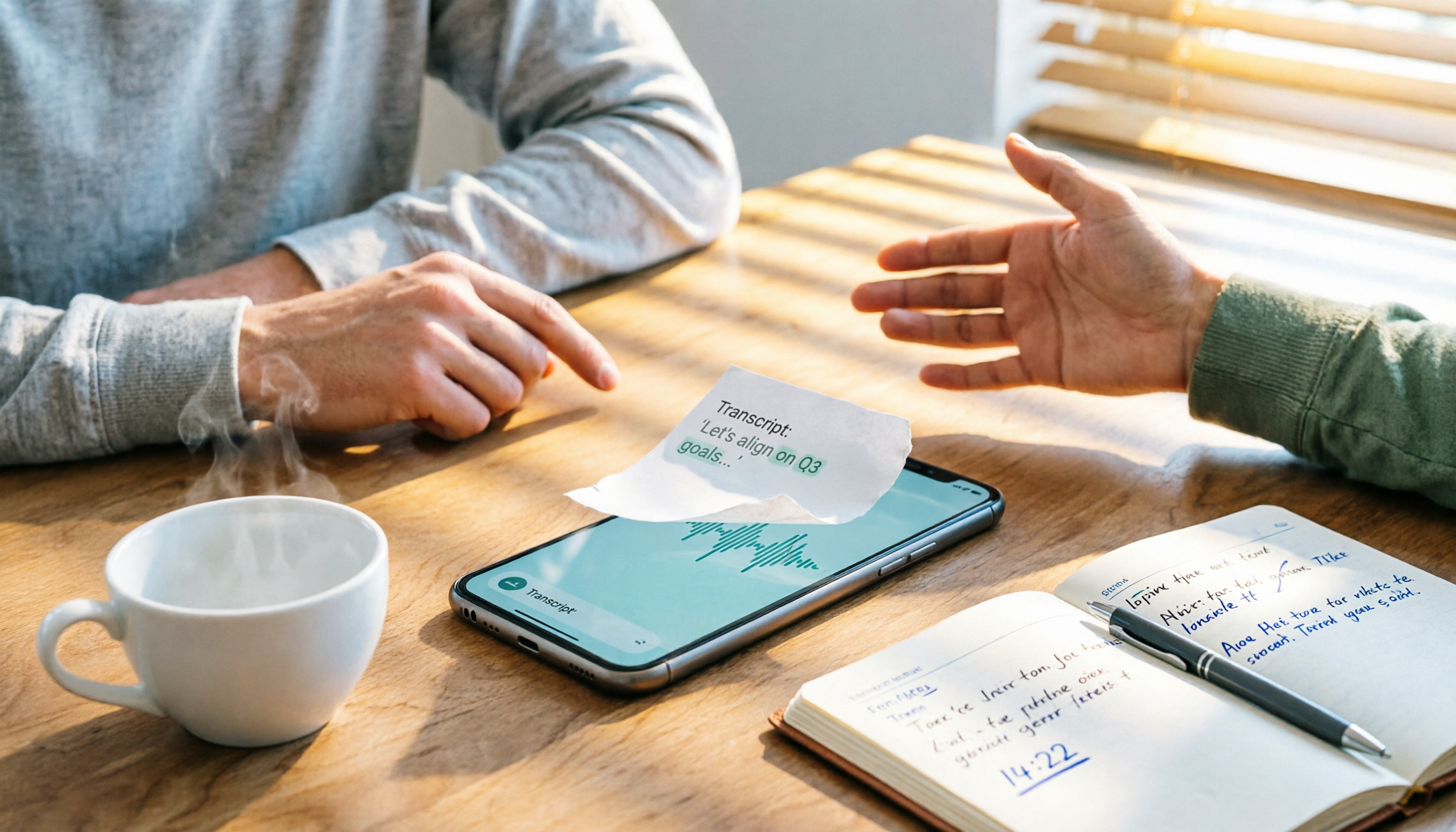
How to Transcribe iPhone Voice Memos to Text in 2026: Built-in 3-Step Guide + Turn Meetings into Queryable Data
iPhone voice-to-text transcription has version requirements: iOS 18.4 or later and iPhone 12 or later are needed for Traditional Chinese transcripts. This guide starts with the three most common order-of-operations mistakes, walks you through the 3 steps using the built-in Voice Memos app, and then compares Tinrec, Yating Transcription, Otter.ai, and PLAUD to help you decide which tool fits which scenario.

2026 Free Audio-to-Text Tools Comparison: Tinrec vs Otter.ai — Free Limits, Chinese Accuracy, and Post-Meeting Organization
How to choose a free audio-to-text tool? This article compares the free versions of Tinrec and Otter.ai across five dimensions: free quota, Chinese recognition, meeting recording methods, post-meeting organization, and team data ownership. It also includes a 3-step tutorial for the free version and FAQs to help you decide which one truly meets your needs.
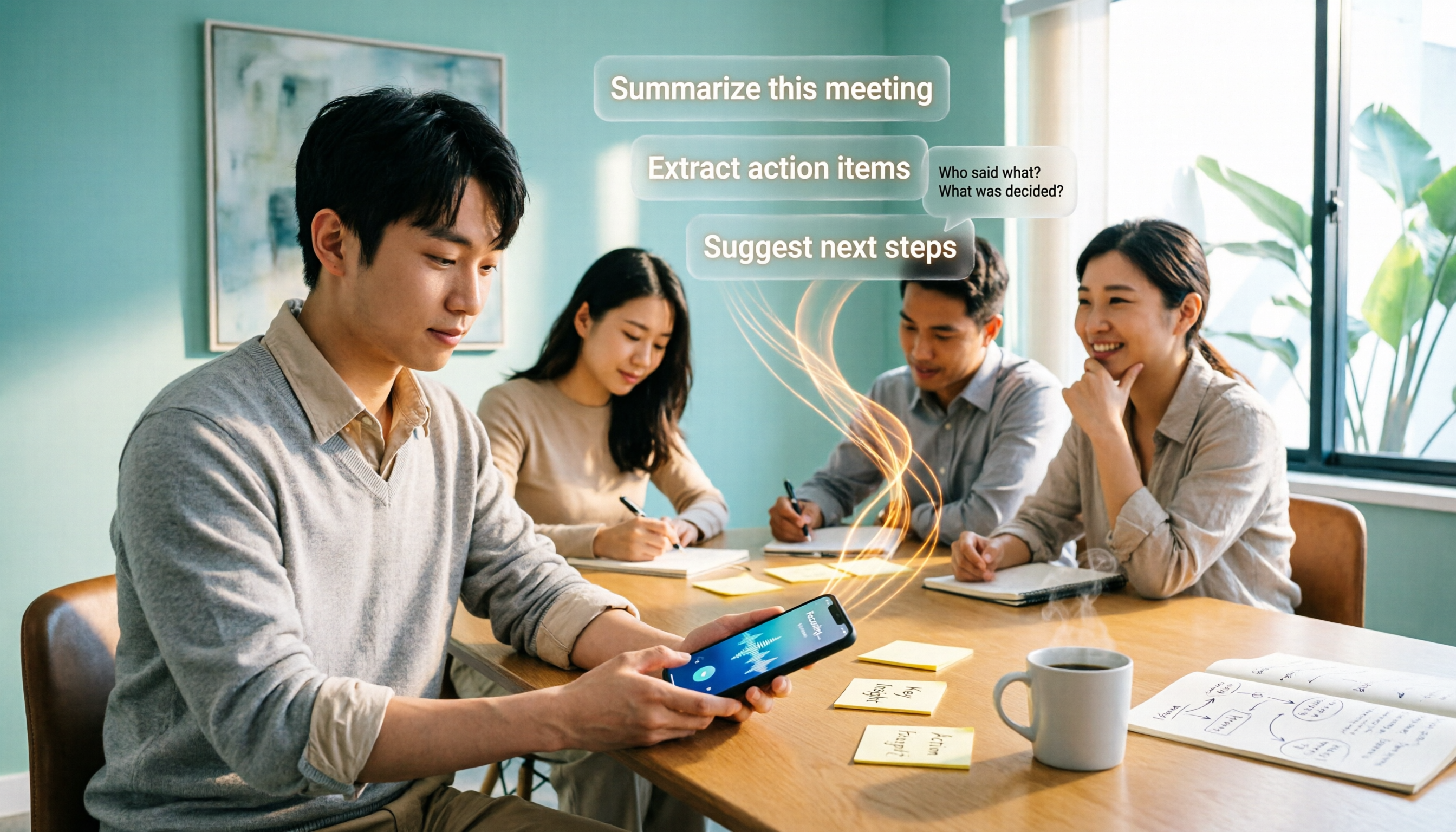
2026 Comparison of 4 Free AI Audio-to-Text Tools: Which Free Tier Is Enough and Which Lets You Ask AI Directly After Transcription?
2026 comparison of 4 free AI audio-to-text tools: from how free quotas are calculated and meeting recording methods to whether you can ask questions and organize content directly after transcription. We break down who Tinrec, Otter.ai, Notta, and TurboScribe are best for, plus 4 common pitfalls when choosing a free tool.

2026 Best 4 Audio-to-Text Tools Tested: Free Minutes Don't Mean Enough
From free quota calculations, online meeting recording methods, post-meeting organization, and team data ownership, we tested and compared Tinrec, Granola, TurboScribe, and PLAUD Note to help you find the audio-to-text tool that truly saves time.

4 Best Speech-to-Text Apps in 2026: Which Free Version Actually Works?
What are the real limits of free speech-to-text apps? We tested 4 tools (Tinrec, Otter.ai, Notta, Granola) across five dimensions: free quota, Chinese and mixed Chinese-English recognition, online meeting recording, post-meeting summaries and AI Q&A, and team data retention. Find the one that truly saves you time within your budget.

2026 Comparison of 4 Audio-to-Text Tools: Free Tiers, AI Summaries, and Team Collaboration
Audio-to-text tools are more than just free quotas. This article addresses common misconceptions, outlines 4 key selection criteria, and compares Tinrec, MyEdit, cSubtitle, and Canva in terms of transcription quality, post-meeting organization, and team collaboration. It also includes a pitfalls guide and scenario-based recommendations to help you choose the tool that truly saves time.

4 Audio-to-Text Apps Tested for 2026: Which Free Tier Is Actually Enough?
There are plenty of free audio-to-text apps, but most are just free trials. This article compares Tinrec, Notta, Otter.ai, and TurboScribe across five dimensions: free quota, per-file limits, meeting capture method, post-meeting organization, and team data ownership. It also lists four common pitfalls to help you decide which free plan is truly sufficient.