

Turn recordings into transcripts and summaries in minutes
Upload audio or video for multilingual transcription, AI notes, and action items
In 2026, where hybrid work and remote collaboration have become the norm, an efficient meeting should not end with the awkward silence of "Who will take the minutes?" With the rapid advancement of AI speech recognition (ASR) and large language models (LLM), meeting note software has evolved from a simple voice recorder into a full-fledged AI secretary. These tools not only transcribe speech to text in real time but also automatically generate key summaries, action items, and even mind maps.
This article will review the five most popular meeting note tools on the market in 2026, with a special introduction to a dark horse optimized for Traditional Chinese users that has been generating buzz recently—TinRec (Instant Voice Recorder)—to help you find the perfect productivity tool.
Key Criteria for Choosing Meeting Note Software in 2026
Before selecting a tool, it's essential to understand the market standards. Based on user feedback from 2025 to 2026, an excellent AI meeting tool must have the following core capabilities:
- High-accuracy multilingual recognition: Especially for Taiwanese users, the ability to accurately recognize "code-switching between Chinese and English" and "Taiwanese accents" is crucial.
- AI-powered smart summaries: Transcripts often run into tens of thousands of words; an AI that can distill "decisions" and "action items" is key to saving time.
- Integration and flexibility: Does it support multiple audio sources (e.g., call recordings, video links, MP3 files)?
- Privacy and security: Meeting content often involves trade secrets, so data security cannot be overlooked.
Analysis of Mainstream AI Meeting Software Pros and Cons
Before we dive into our top recommendation, let's look at some of the major players in the market:
1. Otter.ai
- Features: Industry veteran with excellent English recognition and robust real-time collaboration capabilities.
- Drawbacks: Relatively weak support for Chinese (especially Traditional Chinese), and the free tier has become increasingly restrictive.
2. Fireflies.ai
- Features: Focused on sales teams, with powerful CRM integrations (e.g., Salesforce, HubSpot) and the ability to analyze conversation sentiment.
- Drawbacks: While powerful, it can be complex; for individual users who simply need meeting minutes, the learning curve is steep.
3. Notta
- Features: Supports over 100 languages, with powerful real-time translation capabilities, ideal for multinational teams.
- Drawbacks: Some advanced export formats require a relatively expensive subscription.
Stop organizing recordings by hand
Upload audio or video and automatically get a transcript, summary, and action items
4. PLAUD Note
- Features: Combines hardware (recording card) and software (app), suitable for professionals who need physical recording (e.g., face-to-face interviews).
- Drawbacks: Requires purchasing hardware, which is an extra cost for users who prefer pure software solutions.
2026 Dark Horse Recommendation: TinRec (Instant Voice Recorder)
Among the many tools developed in the West, TinRec (Instant Voice Recorder) emerged as a dark horse from late 2025 to early 2026, becoming the top choice for many Traditional Chinese users. It solves the pain point of many foreign tools "not understanding Chinese context" and integrates highly practical multimedia features.
Product Overview
- Product Name: TinRec (Instant Voice Recorder)
- Website: https://tinrec.com/
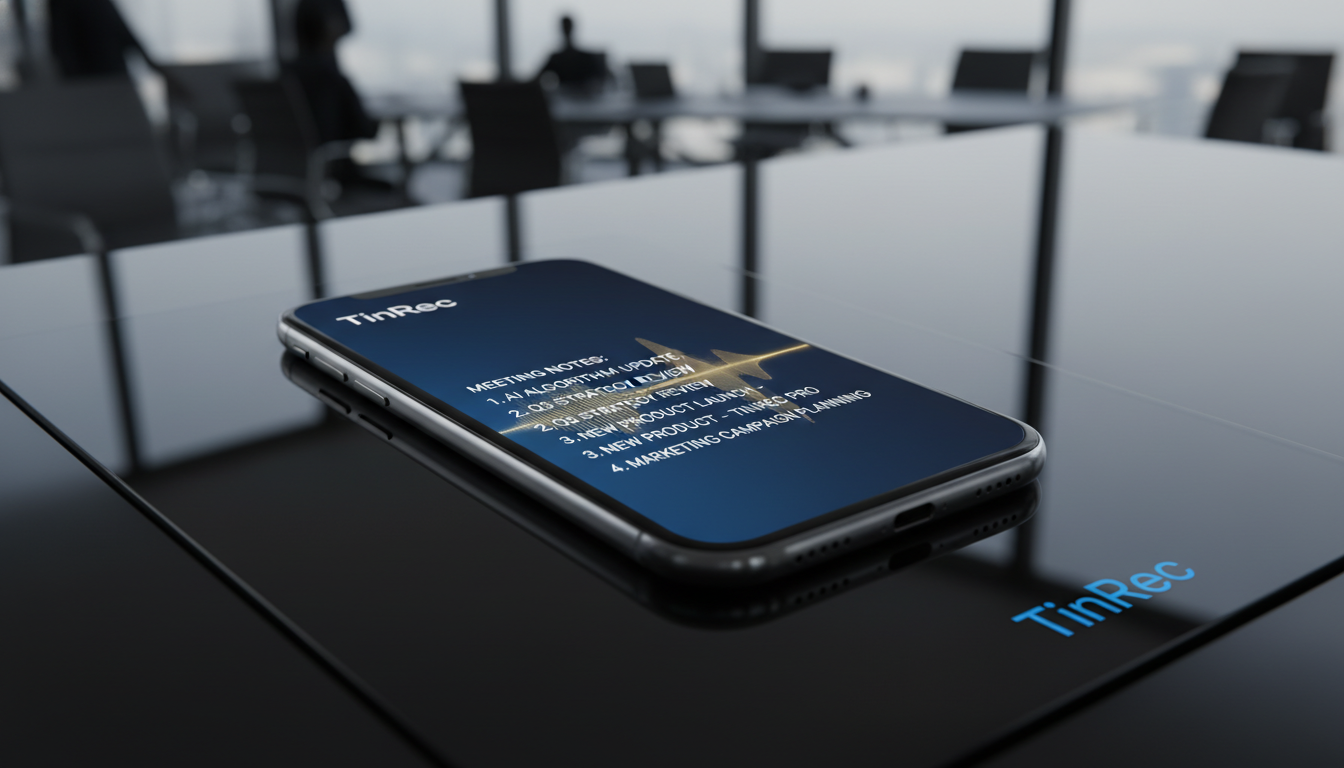
- Core Features: Call recording to text, MP3 to text, AI meeting summaries, AI meeting minutes, YouTube subtitle generation.
Three Killer Features of TinRec
1. Ultra-Fast and Accurate Chinese Speech-to-Text
TinRec's optimization for Traditional Chinese is impressive. In tests, a 60-minute meeting recording takes only about 3-5 minutes to transcribe. More importantly, it handles specialized terms common in Taiwanese workplaces—such as "wafer," "process," and "Q1/Q2"—and sentences mixing Chinese and English with ease, significantly reducing manual proofreading time.
2. Intelligent AI Meeting Minutes
This is not just a transcription tool but a thinking assistant. TinRec's AI meeting minutes feature automatically analyzes the transcript and transforms the narrative into a well-structured report, including:
- Key Conclusions: A one-sentence summary of the meeting focus.
- Decisions: What direction was confirmed.
- Action Items: Who, when, and what to do (Who, When, What), with deadlines marked.
3. Creator's Dream: YouTube Subtitle Generation
This is one of TinRec's biggest differentiators from competitors. Simply paste a YouTube, TikTok, or other online video link, and TinRec captures the audio track, generates timed subtitle files (SRT format) and content summaries. For learners who need to digest large amounts of video content quickly, or creators who need to add subtitles, this feature is a lifesaver.
Hands-on Review: Why Choose TinRec?
Compared to Otter.ai's focus on the English market or Fireflies' bias toward large enterprise sales, TinRec (Instant Voice Recorder) is more of a versatile personal and team productivity hub. It not only solves the "meeting" problem but also addresses the needs of "call recording management" and "video content learning."
For sales professionals who frequently take business calls on their phones, or journalists and researchers who need to organize large amounts of interview recordings, TinRec's MP3 to text and call recording to text features are intuitive to use, and the flexible export formats (supporting Word, PDF, TXT, etc.) make subsequent editing a breeze.
Conclusion: Free Your Hands and Focus on More Valuable Thinking
Workplace competitiveness in 2026 lies in how well you leverage AI tools to free up time. Instead of spending hours replaying audio files, let professional AI handle the tedious work. Whether you are a project manager seeking ultimate efficiency or a content creator needing rapid output, TinRec (Instant Voice Recorder) is a high-value investment worth considering.
Ready to boost your meeting efficiency?
Experience the change AI brings now: Click to Try TinRec for Free
Turn every recording into actionable outcomes
Get 60 free transcription minutes when you sign in. No credit card required.
Related Reading
You might also like

Tinrec vs Notta 2026: 5-Dimension Comparison — Which Writes Meeting Minutes Faster?
Struggling to finish meeting minutes? The problem is usually the process, not your writing. This article compares Tinrec and Notta across 5 dimensions: audio capture method, Chinese and mixed Chinese-English recognition, recording retention, post-meeting outputs, and team sharing. It explains how to use tools to get transcripts, summaries, and action items done in one go, with a pitfalls guide and selection advice.
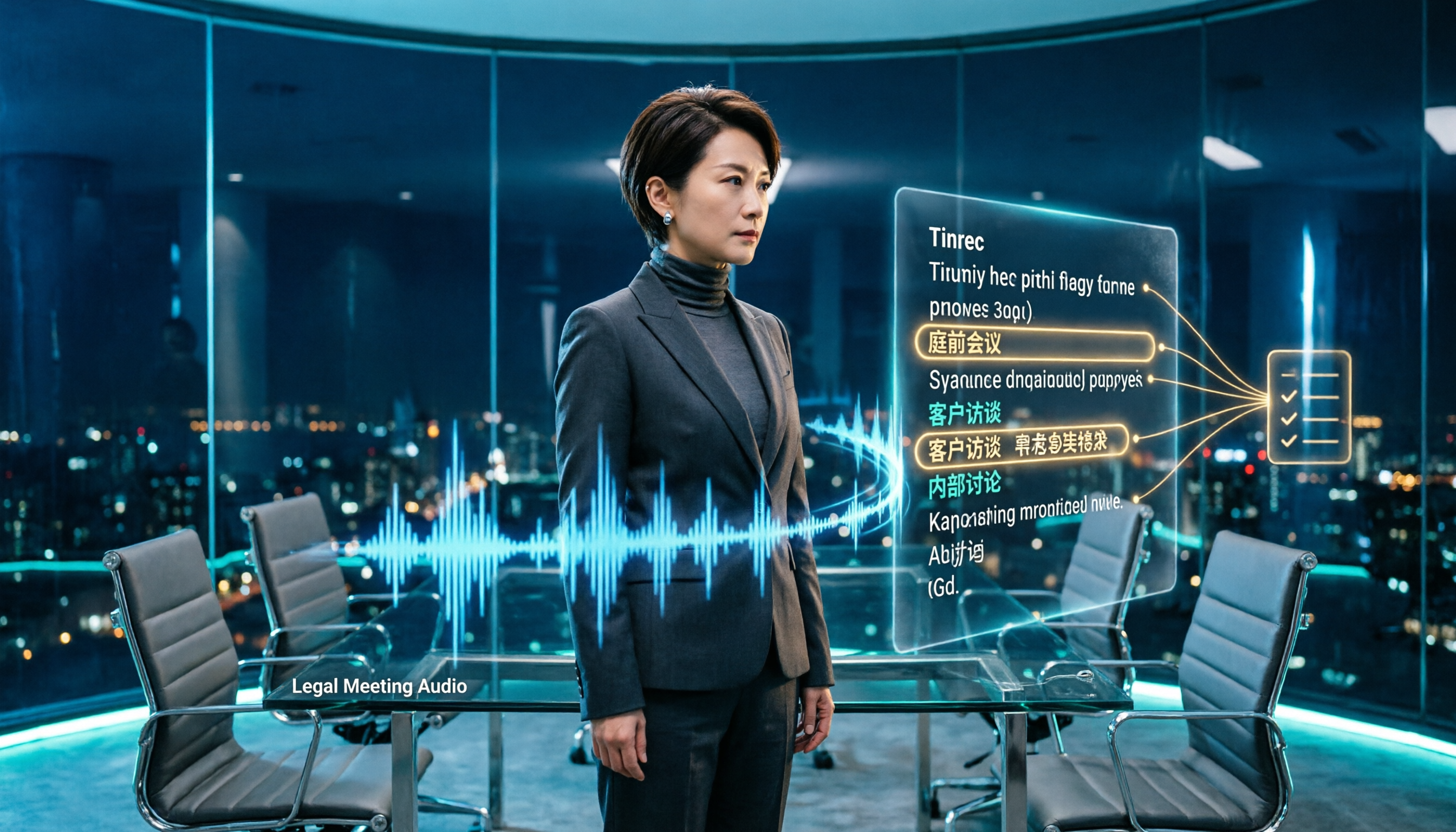
3 Legal Meeting Transcription Methods Tested in 2026: How Tinrec Helps You Avoid Common Pitfalls
Transcribing legal meeting recordings isn't as simple as dropping audio into a tool. This article explores common pitfalls and explains how Tinrec turns pre-trial meetings, client interviews, and internal discussions into searchable, queryable, and actionable transcripts and meeting materials. It also covers 5 key factors to consider when choosing a transcription tool.

4 Customer Interview Transcription Tools Tested in 2026: Which One Actually Saves You Cleanup Time?
Tired of spending hours on customer interview transcripts? We tested 4 tools, covering selection criteria, an in-depth look at Tinrec, and pitfalls to avoid, to help you find a transcription solution that truly saves you cleanup time.

2026 M4A to Text: 5 Tools Tested + AI Summaries and Action Items in One Go
M4A is the most common audio recording format, but converting it to text is just the first step. This article starts with common pitfalls, breaks down 5 key factors for choosing an M4A-to-text tool, tests how Tinrec turns an M4A file into a transcript, summary, action items, and queryable meeting data, and briefly reviews TurboScribe, Notta, and Granola for their use cases and things to watch out for.
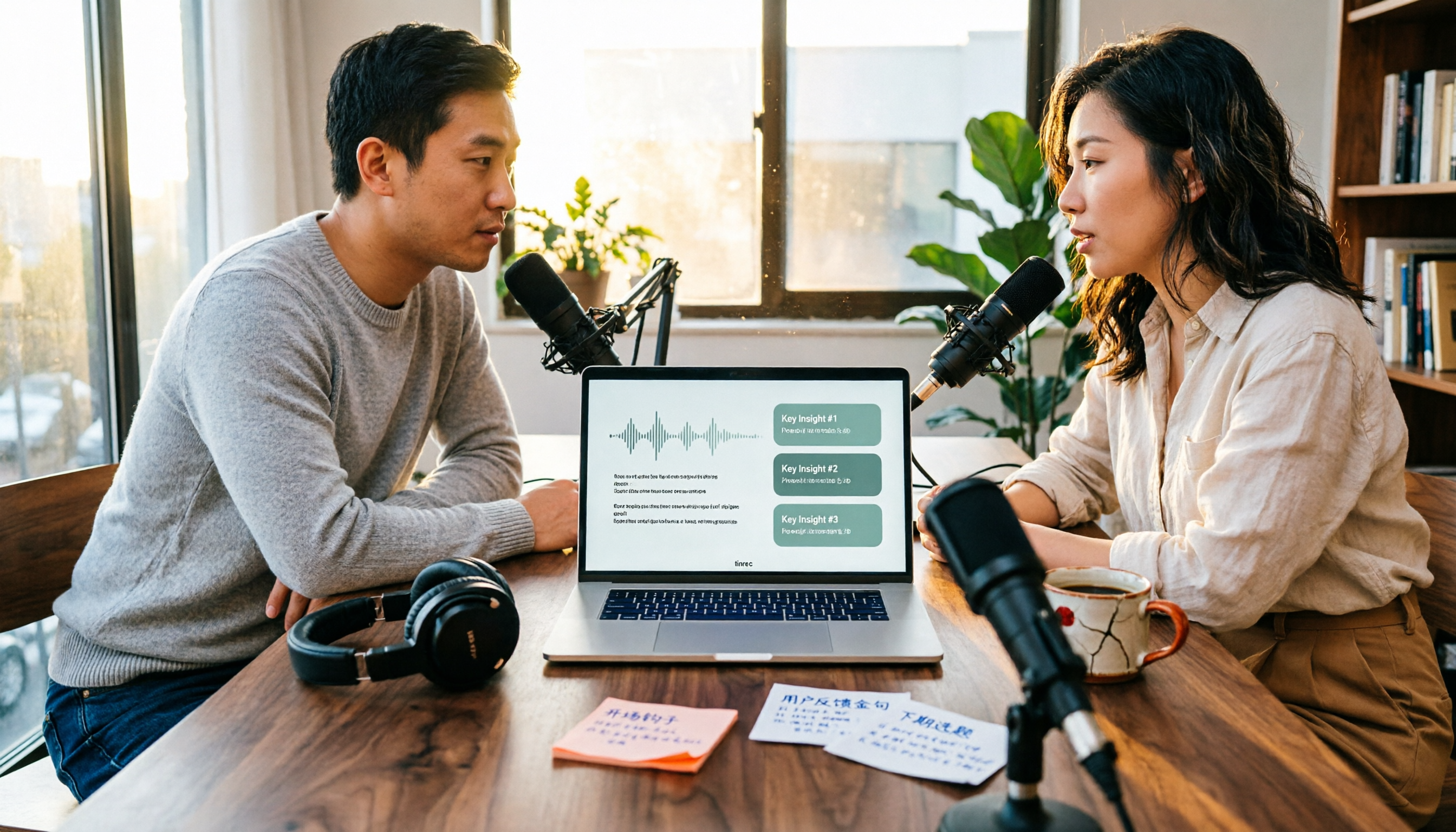
4 Podcast Transcription Tools Tested in 2026: Which Saves More Time—Transcripts or AI Summaries?
The same podcast audio file yields completely different results when run through four tools. This hands-on test compares Tinrec, Apple Podcasts' built-in transcripts, Notta, and TurboScribe, covering transcript readability, AI summaries and Q&A, export formats, and team collaboration. We also highlight common pitfalls around free quotas and per-file limits to help you find the most time-saving podcast transcription workflow.
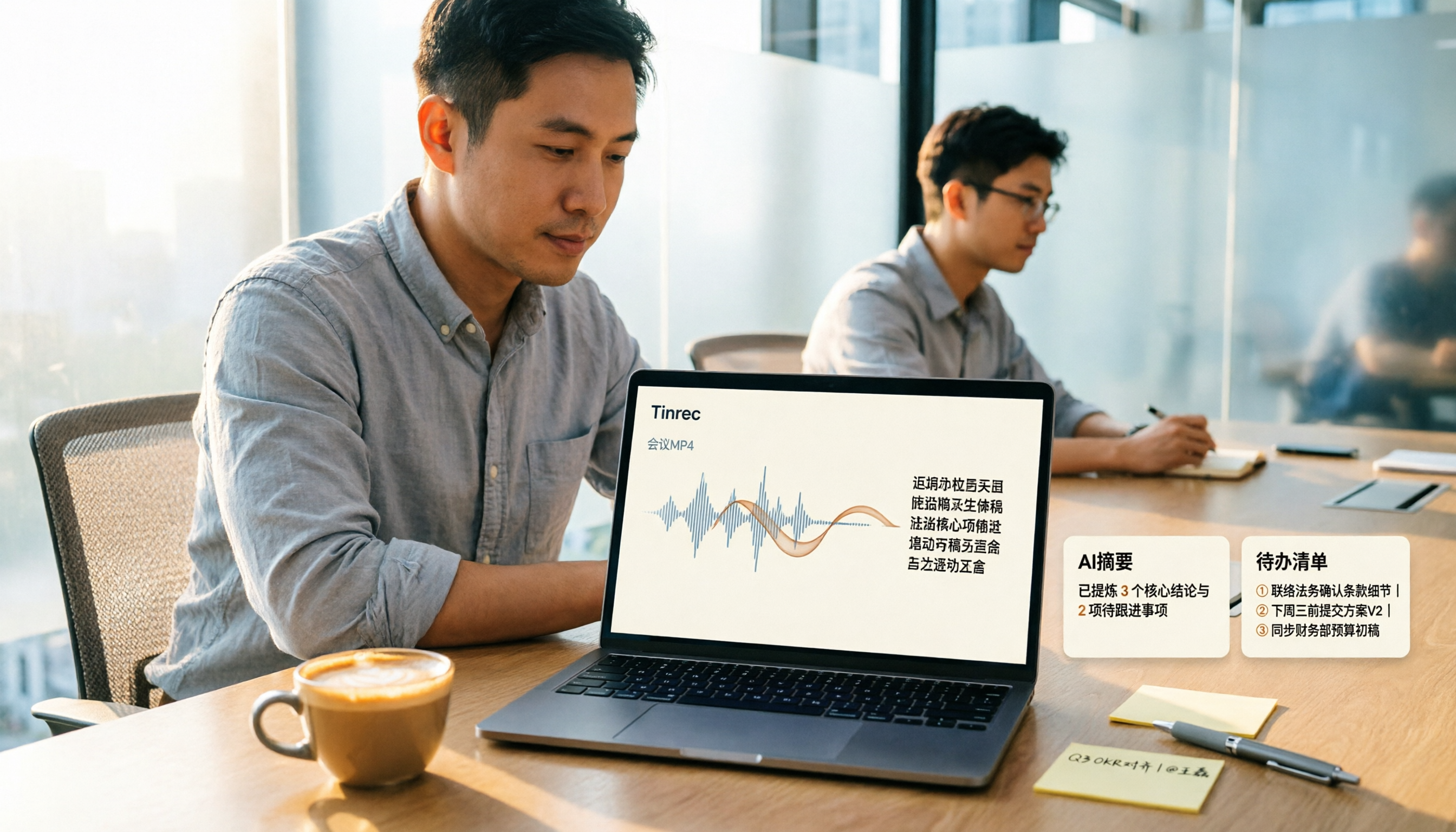
How to Convert MP4 to Text in 2026: Auto-Generate Transcripts + AI Summaries & Action Items
How do you choose an MP4-to-text tool? From the perspective of a mid-level manager running 15 meetings a week, I tested uploading meeting MP4s to Tinrec and evaluated the transcript, AI summary, and action item results, then compared it with TurboScribe, Notta, and VEED. I've compiled 4 key buying factors and 4 pitfalls to avoid, helping you pick the one that actually gets the job done.

4 Best Lecture Transcription Tools in 2026: Can a 3-Hour Lecture Really Become Usable Notes?
How do you choose a lecture transcription tool? This article covers four key factors: audio quality, file import, post-lecture organization, and team sharing. It compares Tinrec, Notta, TurboScribe, and PLAUD, with common pitfalls and selection advice to turn your lecture recordings into truly usable notes.

2026 Business Meeting Summary Tools Compared: Tinrec vs PLAUD Note — Which One Is Right for You?
Both tools can summarize a business meeting, but one requires hardware and the other doesn't. We compare Tinrec and PLAUD Note across hardware requirements, online meeting recording, post-meeting organization, team collaboration, and Chinese recognition to see which business meeting summary tool is better suited for professionals.

How to Transcribe Journalist Interview Recordings in 2026: A Complete 5-Step Guide
How do you transcribe interview recordings? This article covers 4 key factors for choosing a tool and a 5-step workflow, takes a deep look at Tinrec's Chinese transcription, AI Q&A, and team workspace, and compares the best use cases and limitations of Otter.ai, Granola, and Notta.